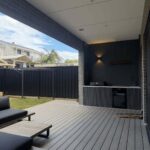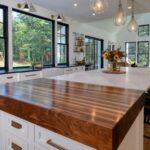
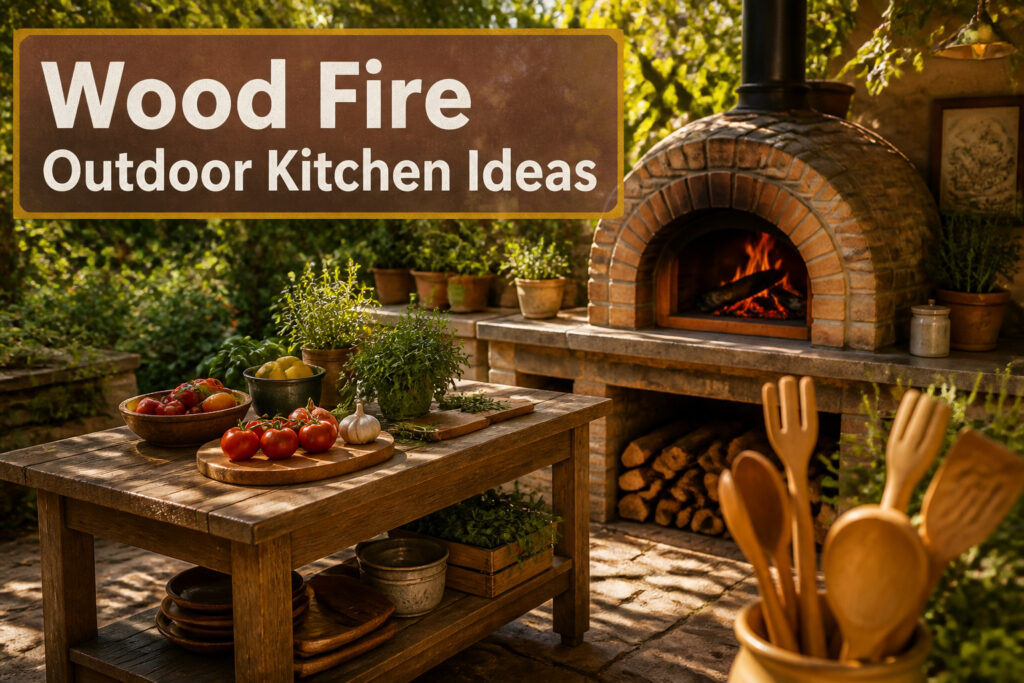
The price spread across these setups runs from under $500 in salvaged brick and poured concrete to masonry builds that swallow most of a patio budget.
What separates one choice from another is not how often you cook, but how certain you are that the layout will stay put.
A brick oven outlives you, yet that permanence is exactly what made me walk away; a rolling stainless pizza oven leaves when you do.
1. Wood-Fired Pizza Oven
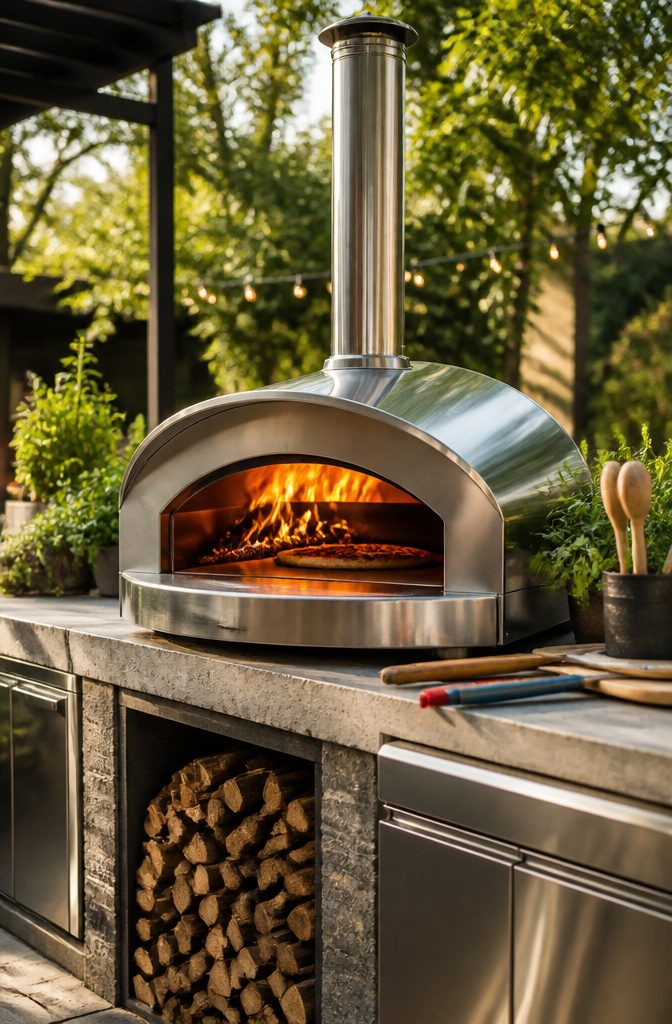
A wood-fired pizza oven is the element most people picture first, and for good reason. Brick or stone models reach the 700°F range, hot enough to crisp a Neapolitan crust in ninety seconds.
Stainless steel builds trade some of that romance for faster heat-up and less footprint, which matters when your patio is a small concrete slab off the kitchen door.
The National Association of REALTORS puts the value recovery for outdoor kitchen projects at 71%, so the expense at least carries resale weight.
What sold me, reading through the designs, was the efficiency angle: a pizza oven keeps the host outside with guests instead of ducking in for ingredients every ten minutes. The catch is the real estate.
Even compact built-ins need roughly 30–36 inches of counter run plus landing space, and the dome height fights under low pergolas. I would skip the imported Italian kit if I were renting or likely to move in three years.
A portable stainless unit on a rolling stand gives most of the cooking performance without the masonry commitment, and you can take it with you.

USDA Certified Kiln Dried: Our pizza oven wood is rigorously certified by the USDA, guaranteeing the highest quality and safety standards for your cooking needs

Premium Oak Wood Chunks: Kiln dried firewood; perfect for outdoor cooking; provides consistent heat and authentic wood fired flavor for pizza oven wood fire enthusiasts

Premium Kiln-Dried Oak Firewood: Crafted from meticulously kiln-dried oak, our mini pizza oven wood guarantees superior quality and unrivaled burning efficiency, ensuring an authentic wood-fired taste with every dish.
2. Brick Oven
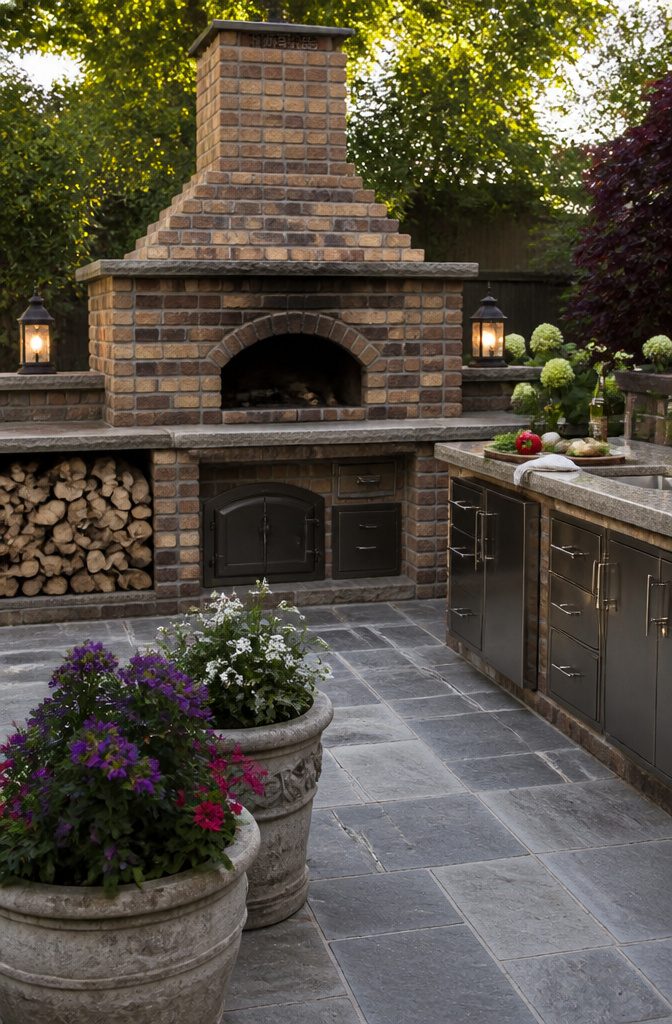
A brick oven is the permanent, masonry option that stands apart from the metal pizza ovens most people end up buying.
Four of the builders and suppliers I read through make this distinction deliberately: the brick holds heat differently, radiates it more evenly, and the structure itself becomes a landscape feature rather than a piece of equipment you wheel away.
The tradeoff is durability versus commitment. Thin brick, tile, veneer stone, or stucco cladding around the firebox will last decades, and the mass of the masonry buys you hours of retained heat after the fire dies.
Granite countertops alongside it handle hot pans without complaint, and stainless steel framing holds up where wood would eventually char or rot.
I looked hard at this for my own patio and decided against it. The footprint was too fixed for a space I might reconfigure, and the foundation work alone would have swallowed most of my budget.
For someone with the square footage and the certainty that the layout will not change, the brick oven is the choice that outlives you. For my situation, the permanence was the problem, not the feature.

🍕Large 2-Layer Cooking Capacity - Pizzello 16-inch outdoor pizza oven provides more rich cooking space than 12 inches. It features a 2-layer design, allowing you to cook 16" pizza and grill steak, fish, or vegetables simultaneously. In addition, the center cooking rack is removable to accommodate more oversized food items, even a whole turkey!

HOT NEW FEATURES – A custom designed fuel tray that maximises airflow and delivers a powerful blast of searing flame allows the Ooni Karu 12 pizza oven to maintain the ultra-high temperatures – load it up with real wood or charcoal, with no excess ash to clean

【Sturdy Design For Tough Task】 Stainless steel with anti-corrosion coating, perfect for placing a pizza oven pizza oven and pizza oven accessories, portable grill or griddle; Also creating ample workplace for outdoor cooking, kitchen or serving area with an easy to clean finish. The load capacity of the table top is 440 lbs and the shelves are 100 lbs.
3. Charcoal Grill
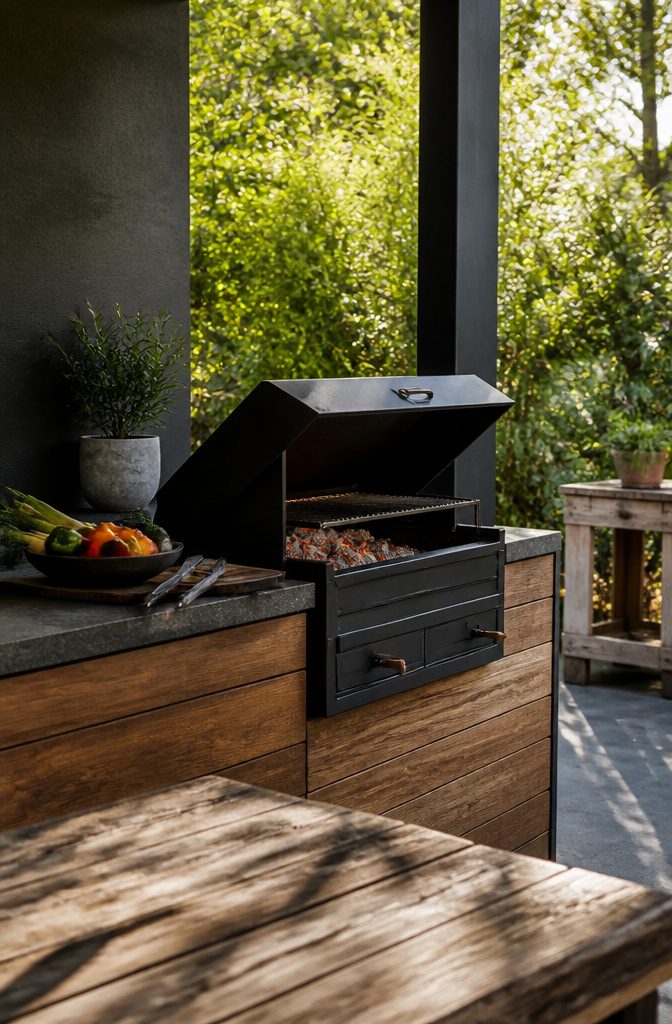
Charcoal still counts as wood fire, just in a more portable form. The Memphis Elite Built-In grill handles this well, reaching temperatures up to 700 degrees for searing or dropping low enough for smoking.
That range matters more than most people expect when they first set up an outdoor kitchen around a single fuel source.
For a compact space, a built-in charcoal unit keeps the footprint tight while giving you direct flame capability. The tradeoff is the learning curve.
Pellets feed themselves; charcoal demands you build and tend the fire. What convinced me, reading through a dozen setups, is that the hands-on control rewards patience with flavors gas simply cannot replicate.
Budget reality here is blunt. A built-in charcoal station plus minimal counter space runs past the $500 threshold fast, and that figure assumes you already own basic tools and a cover.
If your annual garden spending sits in that $500–800 range, this is the category where one appliance eats most of it.
The Memphis Elite specifically is not a budget pick, but it illustrates what wood-fired built-ins cost: the precision and insulation that hold 700 degrees steady do not come from thin metal.
For a smaller yard, a standalone kettle grill with a side table gets you wood-fired flavor at a fraction, though it will never look built-in and it will not bake.

Makes restaurant quality pizzas, bread, pastries and vegetables

EASY TO USE: Clean your pizza stone quickly and easily without soap or water using this 2-in-1 pizza oven brush and scraper — the ideal pizza stone brush and cleaning brush for effortless maintenance of any pizza oven setup.

Durable Construction and Odorless:This 12 x 12 inch pizza baking stone is made of all-natural cordierite stone, which is odourless and has excellent thermal shock resistance. It's heat-safe up to 1472°F (800°C), so you can rest assured it'll keep your pizza deliciously crispy! It's full of tiny pores that absorb moisture and heat evenly, so your pizza will be cooked to perfection
4. Outdoor Kitchen with Bar Seating
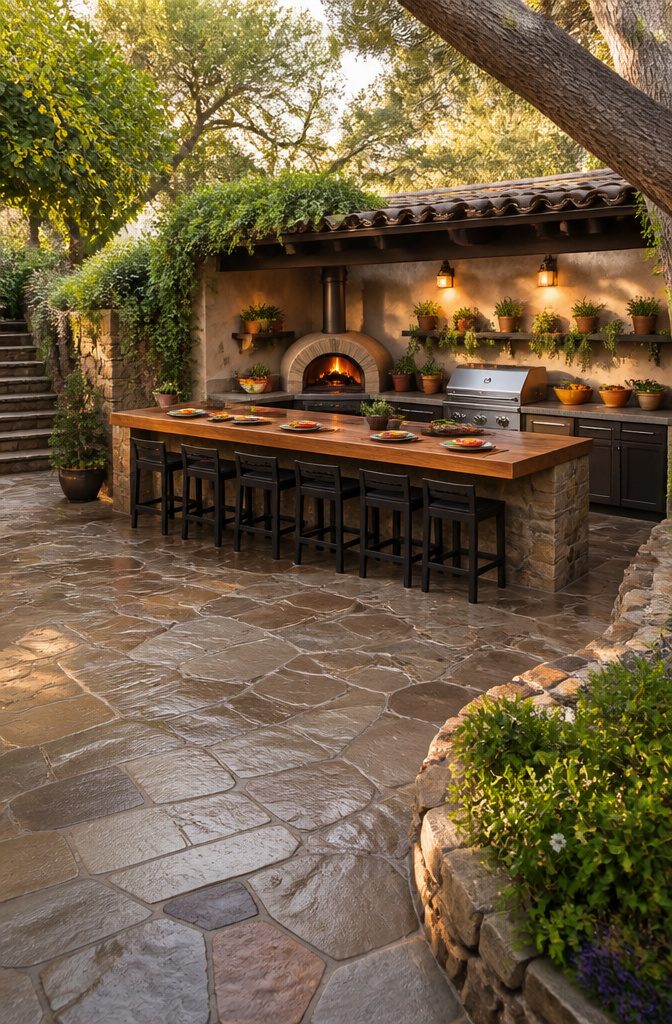
Bar seating around a wood fire outdoor kitchen lives or dies on one measurement: counter overhang depth.
I learned this the hard way when I built my first island with a twelve-inch lip, figuring that would leave plenty of knee room.
Guests ended up perched at the edge, shoulders hunched, because the stools could not slide close enough to sit properly.
For a small yard, you want at least fifteen inches of clear overhang, and an eighteen-inch depth is what actually lets someone relax with a plate in front of them.
The distance between your indoor and outdoor kitchens matters just as much. Every step you save carrying hot pans, wood splits, or a stack of plates reduces the chance of a spill or a burned hand.
Sources consistently pair wood-fire cooking with layouts that keep the two zones within a quick turn of the shoulder, not a hike across the lawn.
An L-shaped bar tucked against the house wall achieves this without demanding extra square footage, and the compact footprint still seats three or four along one run.
If your yard is truly tight, skip the dedicated dining table entirely. Bar seating doubles as your eating surface and your social perch while the fire does its work.
A small L-shape with the wood oven at the corner and the bar along one leg keeps the cook facing the guests, which is the whole point of cooking outside in the first place.
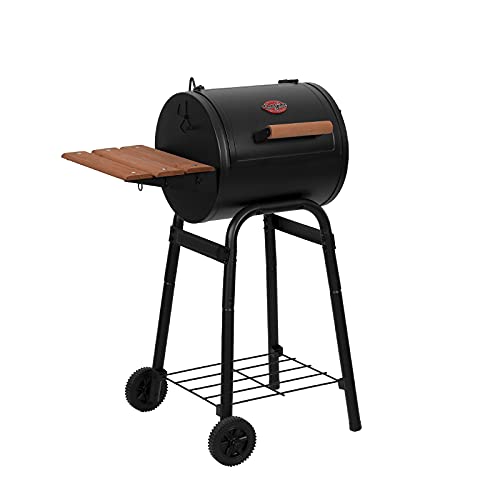
CHARCOAL GRILL - Barrel style BBQ Grill with heavy duty steel construction and powder coating finish, the perfect grilling solution for small decks, backyards, and patios

[Fun Moments Around the Grill] When it comes to spending quality time with friends and family, there's nothing quite like gathering around the grill. From the sizzling sounds of food cooking to the mouthwatering aroma that fills the air, it's the perfect setting for endless conversations with your family and friends

AUTHENTIC BBQ, PORTABLE CHARCOAL GRILLING: Cook with real charcoal flavor in this compact tabletop BBQ grill designed to travel easily without sacrificing performance or durability
5. Outdoor Kitchen with Pergola
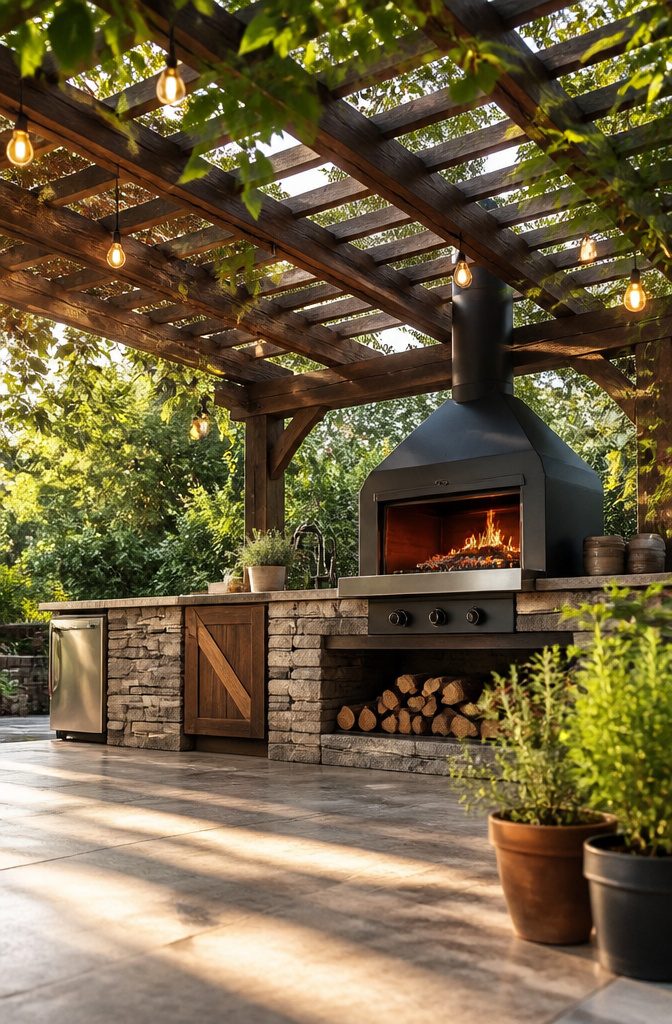
A pergola over a wood fire outdoor kitchen beats a solid roof for one reason you notice the first time you light the grill: airflow carries smoke up and away instead of trapping it against a ceiling.
The open slats vent heat and haze while still cutting the sun enough that you are not squinting at char marks through July glare.
Wood choice matters more than most people figure. Cedar and redwood handle weather without pressure treatment, and their resin content means they do not off-gas strange flavors when the grill runs hot underneath.
I spaced my slats twelve inches apart, which was wide enough for smoke to escape without letting afternoon sun stripe the cook surface.
Cost was the real decider.
My pergola ran about $800 in cedar, built from posts and beams I cut to length. A shed roof in matching materials would have pushed past $2,200 once you add sheathing, roofing, and the structural beef-up to carry the load.
For a space I use mainly in fair weather, the pergola left enough in the budget for a better grate and a chimney starter that actually works.

【14”Professional Pizza Maker】Our indoor pizza oven preheats in 15 minutes, reaching 850℉ at maximum and cooks tasty 14”pizzas in 3 minutes. Featuring an advanced PID temperature control system to maintains precision from 220-850℉, allowing you to save energy and serve hot, delicious food in advance and reduce waiting time

MAKE ANYTHING AND EVERYTHING: This all-in-one electric pizza oven is perfect for easy countertop cooking. It’s not just an indoor pizza oven; with one appliance, you get an omelet maker, pancake griddle, sandwich maker, tortilla press, and crepe maker!

MAKE ANYTHING AND EVERYTHING: This all-in-one electric pizza oven is perfect for easy countertop cooking. It’s not just an indoor pizza oven; with one appliance, you get an omelette maker, pancake griddle, sandwich maker, tortilla press, and crepe maker!
6. Outdoor Kitchen with Storage Solutions
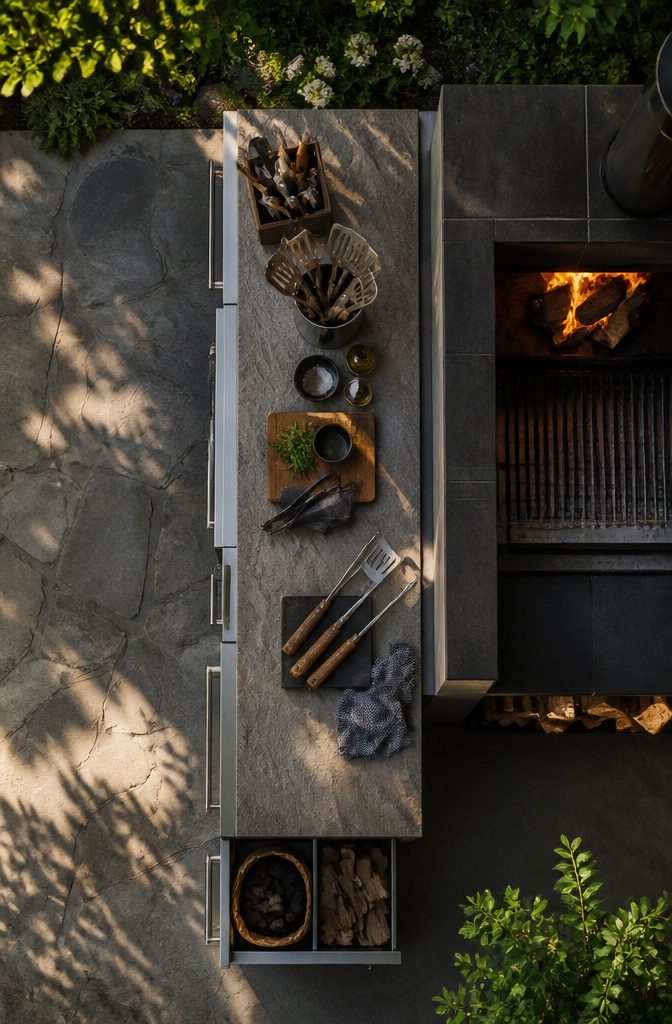
A wood fire outdoor kitchen lives or dies on how fast you can grab what you need without singeing your arm.
24-inch cabinets hit the sweet spot for most setups: deep enough for sheet pans and pizza peels, shallow enough that nothing gets lost behind the fire.
I learned that the hard way after two seasons of stacking green wood in a sealed bin under my prep counter, thinking I was being clever.
The mold taught me otherwise. Dry storage for charcoal and wood chips belongs in the same breath as your oven, but green wood needs air and distance or it rots before it burns.
Heat-resistant storage near the cooking surface matters more than most people plan for.
Metal drawers or stone-front cabinets closest to the fire save the meltable stuff for the far end. Utensils in a square basket or open caddy right at the work edge beat rummaging through doors with sooty hands.
Three-level pantries work well for pizza tools and seasonings in tight single-wall layouts, keeping the vertical space busy so the floor stays clear. Access doors below hide the tank or bulk bags and keep the sight lines clean.
Drawers beat doors for the small stuff. The less you walk back to the house mid-cook, the more you actually use the thing you built.
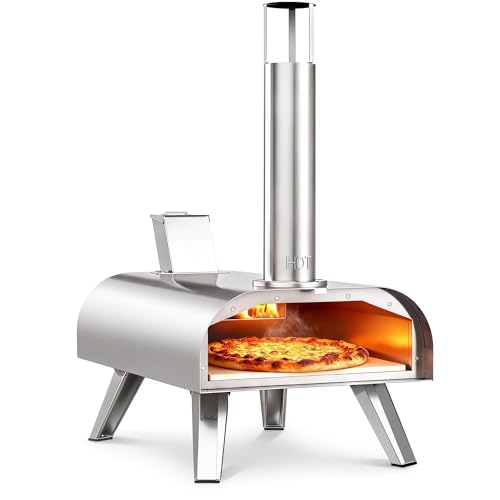
【Premium & Safe Stainless Steel】Outdoor pizza oven is constructed with high-quality stainless steel. This sturdy and compact oven is safe for cooking all types of foods

Expertly Kiln-Dried for Ultimate Quality:Each stick is expertly kiln-dried to an ideal moisture level, ensuring resistance to pests and mold while providing quick ignition and long-lasting burns for a worry-free experience.

Big Capacity - Pizzello outdoor oven has 288 square Inch of total interior cooking area, which is capable of cooking 2 pizzas at the same time, or 2 roasting tins together. The middle rack can be removed so you get a full space to accommodate a whole chicken.
7. Outdoor Kitchen with Integrated Entertainment
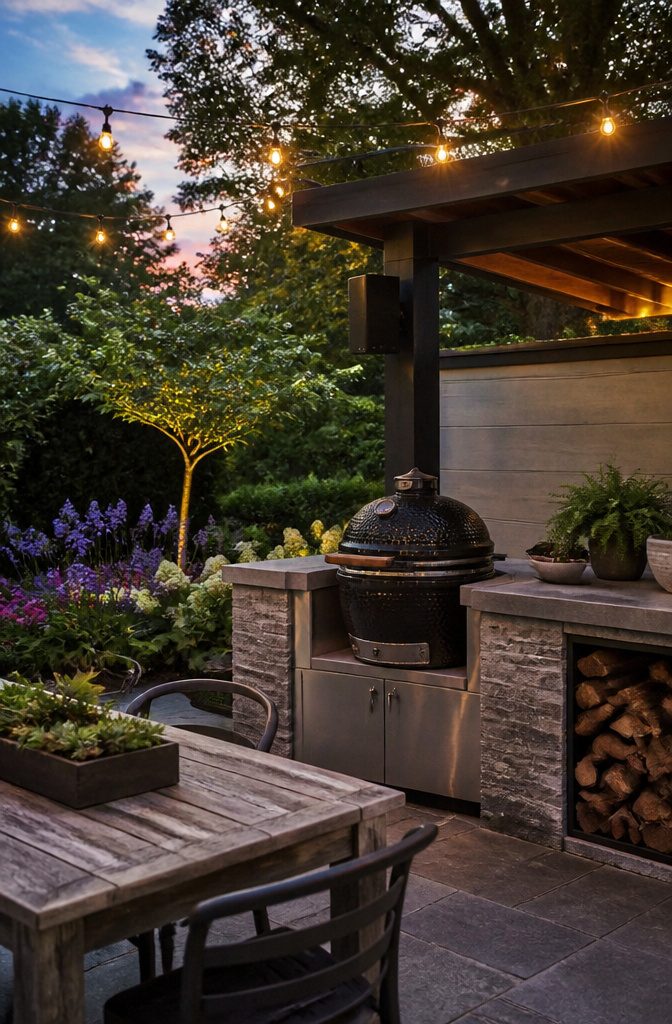
A wood fire outdoor kitchen pulls people in faster than any other kind of cooking setup, but the entertainment layer needs its own plan or it fights the fire.
Power is the place I botched it. I ran standard outdoor conduit along the ground, thinking the wet location rating was enough, and the first time I repositioned a speaker the flex point cracked the jacket.
Rigid conduit buried 18 inches deep, or schedule 80 PVC where it surfaces, is the only path that survives foot traffic and heat radiating off the firebox.
Speaker placement matters more than brand. Sources put Bluetooth speakers as the standard option, but the budget end sits too close to the cooking triangle and the housing warps.
Mount them outside the 10-foot smoke perimeter, angled toward seating, or accept that you’ll replace drivers every other season.
Sight lines are the other half. The cooking triangle still rules in a social layout: grill to prep to serve, unobstructed, so guests can circulate without crossing the fire’s path.
A TV or screen works if it faces away from the fire’s light, not into it, or the glare ruins the picture and the host keeps toggling brightness instead of tending coals.
Warming drawers and outdoor refrigeration get mentioned alongside entertainment, and they do keep the flow going, but they are not entertainment. They are infrastructure.
The mistake is building the party layer first and discovering your 120V line can’t handle both the fridge startup and the amplifier draw. Size the circuit for the load, or the breaker trips right when the pizza comes out.

【Authentic, Flavorful Pizzas】 Enjoy the taste of traditional wood or charcoal-fired pizzas right in your backyard. The heat-retaining cordierite pizza stone ensures perfect results with a quick 3-5 minute preheat at 550°F. Create delicious, restaurant-quality pizzas every time.

【Custom Fit】Dimensions: 22.5"L x 15.5"W x 23.4"H, This pizza oven cover is specially designed for aidpiza 12" Wood Pellet Pizza Ovens. Also fits for other portable gas pizza oven with similar sizes.

Perfect Temperature Treatment: Built-in Thermometer displays the max 1000℉ baking temperature in real-time, allowing you to control the fire temperature by adding and reducing charcoals accurately. With surface black baking paint, our wood fire oven possesses high thermal conductivity for efficient and even heating, providing you with delicious pizzas in a concise time.
8. Outdoor Kitchen with Fireplace
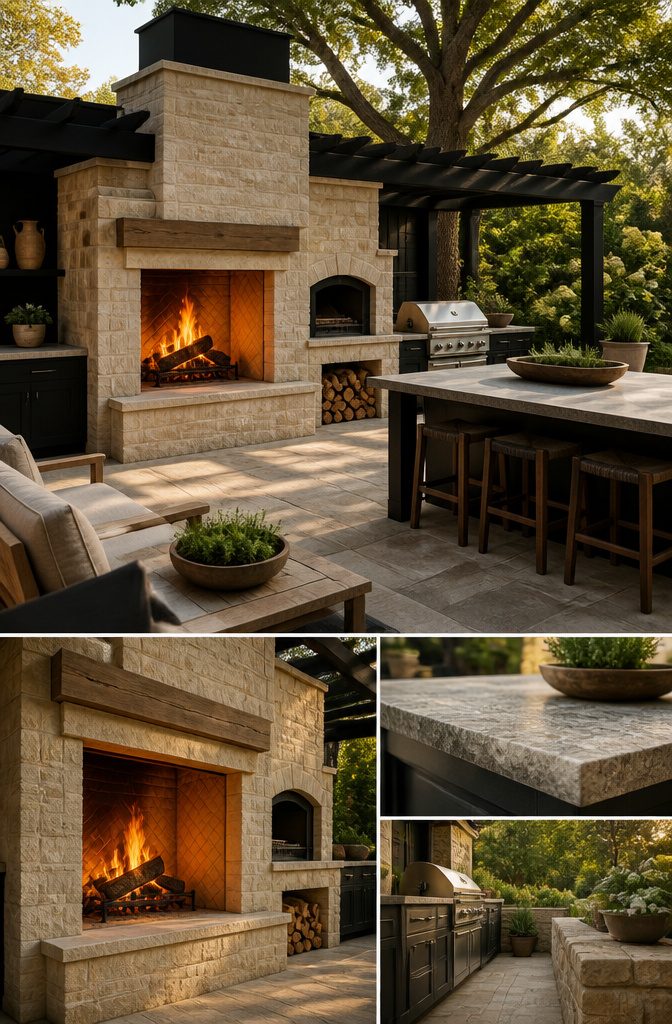
A dual-function hearth sounds like the dream until you try to keep two fires happy at once.
Cooking wood needs high, concentrated heat with a chimney that draws hard and fast. A sitting fire wants low, radiant warmth you can lean into without smelling like smoke.
Those two impulses fight each other in the same structure, and the design that solves it eats square footage like nothing else in a wood fire outdoor kitchen.
The clearances were where I misread the room, literally. I sketched the fireplace face closer to the seating arc than any code would forgive, thinking the hearth itself counted as buffer.
It does not. The masonry mass needs air gap behind it, non-combustible surround in front, and enough depth that the firebox throat does not torch the mantel or anything above.
Every inch of that depth comes out of your budget before you lay the first cooking brick.
This option runs the highest cost per square foot because it is two appliances wearing one skin: engineered chimney system, fire-rated enclosure, finished face on two sides, and the labor to make it all meet in the middle.
For a small patio or balcony cook, the footprint alone kills it.
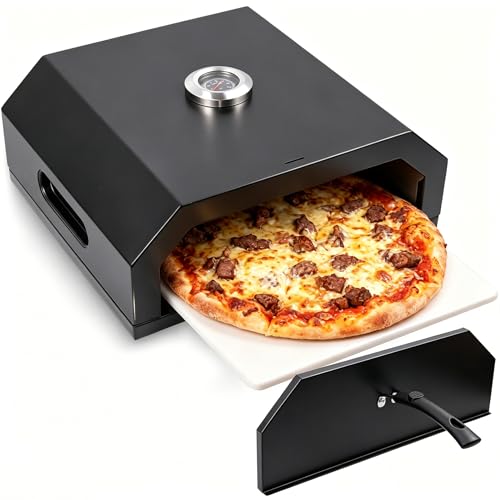
High-Quality Stone: Grill top Pizza Oven Equipped with a 12"×12" cordierite baking stone for excellent heat retention and crisp, restaurant-style brick-oven crusts.

BRICK OVEN STYLE RESULTS AT HOME Transforms your Large EGG into a brick-oven style baking setup, helping create crisp pizza crusts and evenly cooked toppings at high heat

【Patented Design】Featuring a 5-sided stone baking chamber, our pizza oven outdoor ensures even heat transfer and faster heating. Experience brick oven pizza with charred, caramelized, blistered and crispy textures, elevating flavors to a upper level
9. Compact Outdoor Kitchen Designs
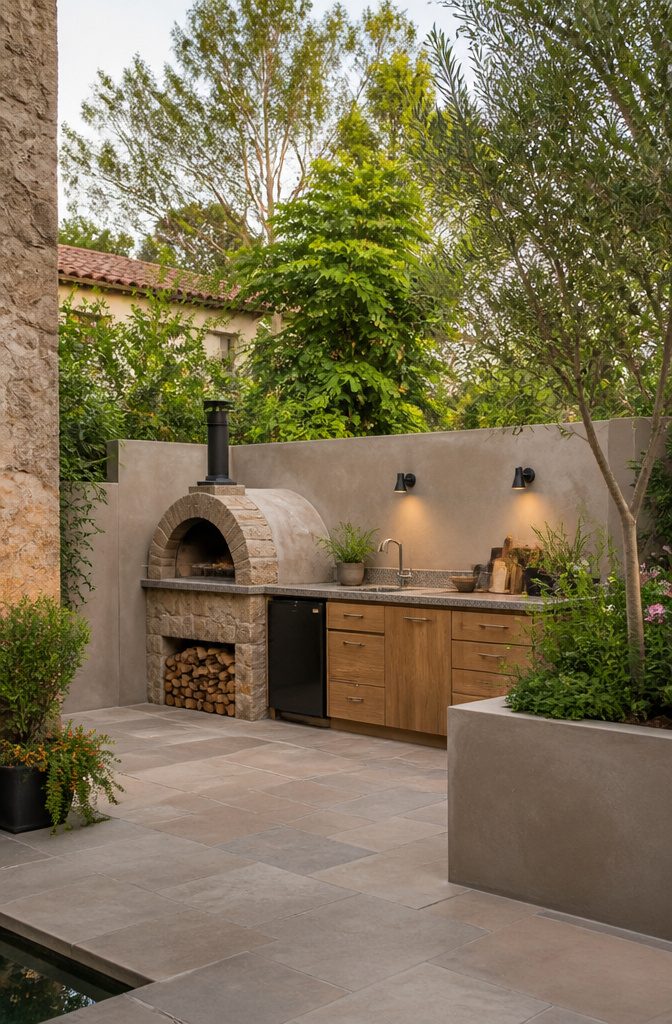
A linear layout under 8 feet is the only way most patios can fit a wood fire outdoor kitchen without swallowing the whole space.
On my 10 by 12 concrete slab, that meant running everything along the back edge and accepting that a dining table had to go.
The grill sits at one end, prep surface in the middle, and the stacked appliance column, fridge over storage drawers, anchors the other. Vertical space matters more than square footage here.
The $500 threshold is real and reachable, though it leans on salvaged material and barter.
One builder I followed laid a porch on 4×4 posts set two feet deep, used leftover brick and creek stone for counters, and kept the whole project under that line.
Two-by lumber decking would have been smarter than the 1×6 boards that cracked when stepped on.
For a wood fire setup specifically, the masonry mass of a small brick oven or hearth becomes your structure, not an added cost, if you source stone locally and stack function instead of buying islands.

Main Smoking Area: 443 sq. in. porcelain-enameled steel wire cooking grates with 184 sq. in. chrome-plated steel wire warming rack offer enough space to cook large cuts of meat.

【Portable & Lightweight】For space-saving storage and quick organization, the charcoal camping grill with compact size (13" x 10.5") is ideal. Equipped a carring case, making them compact and easy to take outdoor for bonfire, picnic, BBQ in the courtyard or garden.
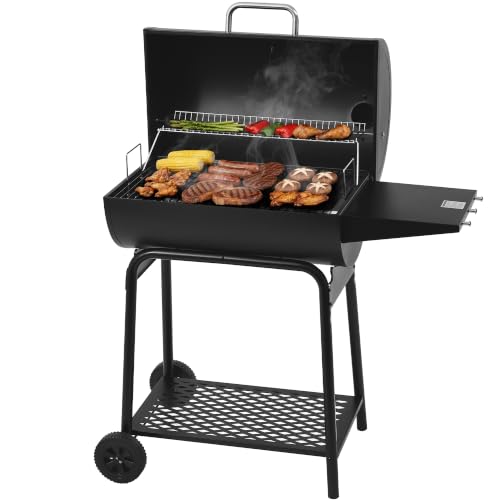
Generous Cooking Area: This charcoal grill offers a roomy 626 sq. in. cooking zone. It has 475 sq. in. porcelain-enameled steel wire cooking grates and an 151 sq. in. chrome-plated steel wire warming rack. You can easily cook large pieces of meat all at once, perfect for big family BBQs or gatherings
10. Outdoor Kitchen with Roof
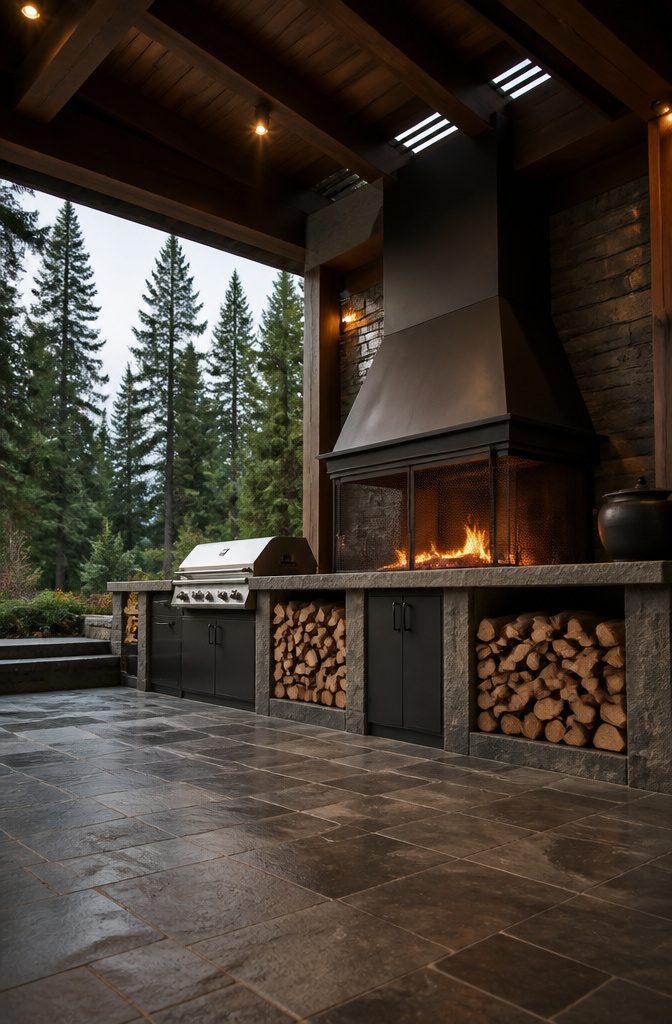
A solid roof over a wood fire outdoor kitchen changes how many months of the year you actually cook outside.
Rain, snow, and direct summer sun all become manageable instead of show-stoppers. The catch is that a solid cover demands proper venting, and the code clearances for overhead combustibles jump sharply from what a simple pergola requires.
I had to learn this the hard way: wood fire needs more breathing room above it than gas, and inspectors measure from the flame source to the nearest wood, insulation, or roofing membrane.
A pergola slats heat straight up into the sky; a shed roof or awning has to channel it somewhere or the space turns into a smoke trap.
The cost leap from open rafters to a weather-tight roof runs significant, though one builder I followed kept her whole outdoor kitchen under $500 by bartering for leftover brick and pulling rock for counters from her own creek.
That figure included decking lumber and hired help for the masonry, not the roof structure itself.
For most of us, the price lands higher, but the payoff is cooking in March drizzles and October frosts that would send an uncovered setup into hibernation.

【Premium & Safe Stainless Steel】Outdoor pizza oven is constructed with high-quality stainless steel. High temperature resistant coated stainless steel shell offers optimal heat retention. This sturdy and compact oven is safe for cooking all types of foods

Meticulously crafted from high-quality Stainless Steel and our newly designed Reveal adds a touch of modern elegance to your outdoor space while ensuring exceptional durability
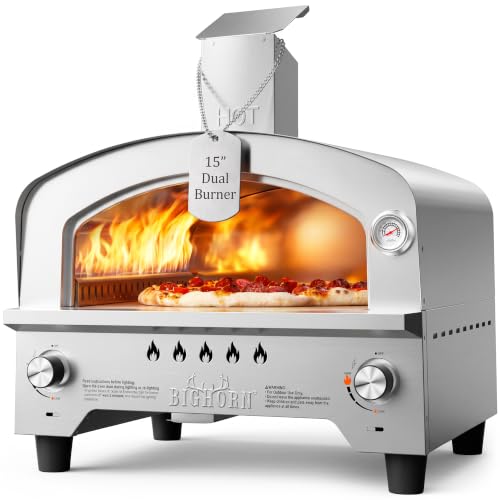
【Dual Side Burner】Powered by dual-side burners (23,000 BTU), this gas pizza oven heats up to 750°F in 10 minutes, reaching up to 1070°F at maximum. The arc-shaped chamber ensures even heat circulation, allowing you to cook perfect pizzas in 60 seconds—no rotation needed
Design Considerations
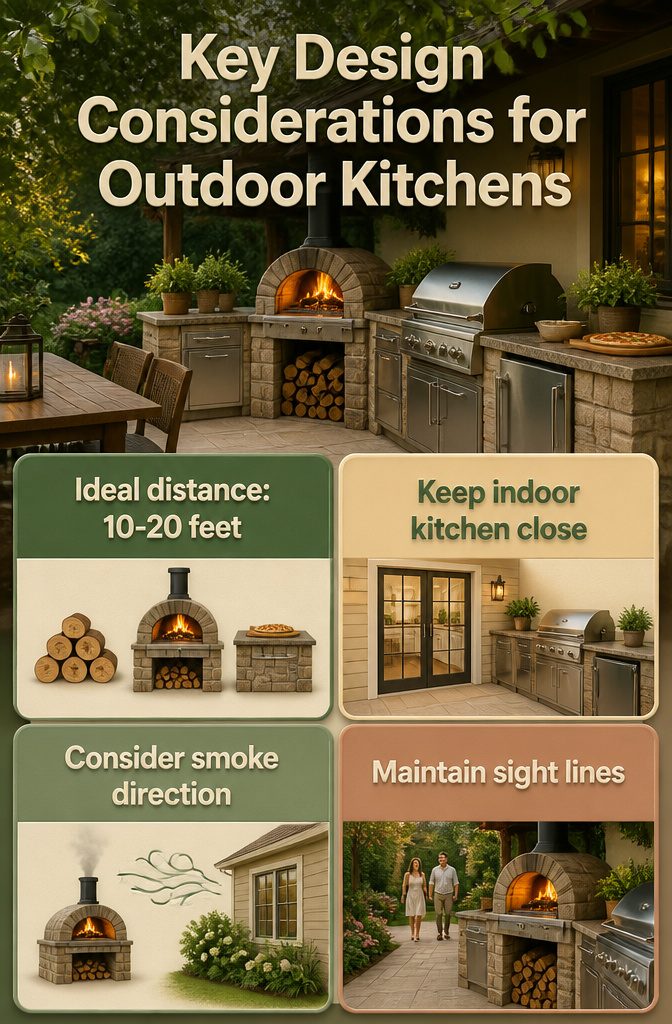
The cooking triangle still matters outside, though the distances stretch. I think of it as the path from wood storage to the fire itself to the nearest flat surface for plating.
Ten feet between those three points is workable; twenty means hot embers travel farther than they should, and cold food arrives at the table faster than you planned.
Keep the indoor kitchen close.
The sources agree on this, and my own mistake proved why. I measured the patio width for the grill placement fine, but I forgot to account for the appliance doors swinging open.
The outdoor refrigerator door and the grill lid needed the same arc of space at the same moment, and that overlap cost me six inches I did not have.
Walking lines around a live fire are not places to squeeze past someone carrying a board of pizzas.
Smoke direction is the other non-negotiable.
Place the wood fire so prevailing wind carries it away from doors and windows, not toward them. Sight lines to the house matter too; you want to see guests arriving without turning your back on open flame.
Materials That Last
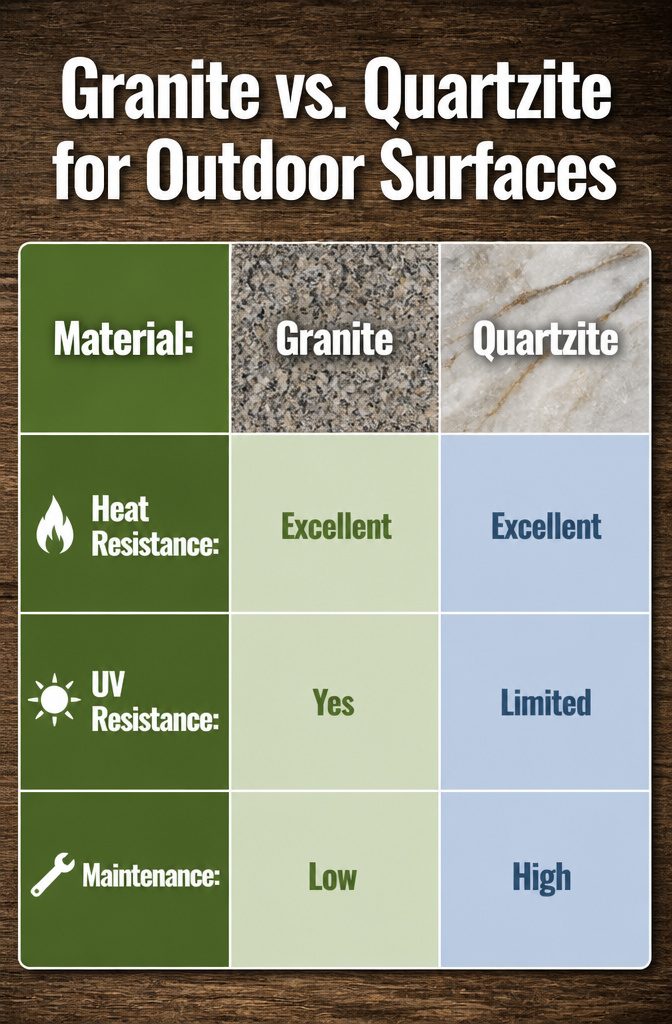
Granite handles heat without the resin problem that ruins quartz outdoors.
I learned that after watching a neighbor’s quartz countertop craze and flake where the afternoon sun hit it hardest. Quartzite and granite are the surfaces that actually survive both UV and a hot cast-iron pan straight off the flame.
Stone cladding around the firebox, thin brick or veneer, gives you the look of masonry without the weight or the hidden rot risk of wood framing.
Galvanized steel tubing underneath solves that entirely. It costs more upfront than the pressure-treated 2x4s I tried first, and replacing that warped, charred frame two seasons in ran me about what the steel would have from the start.
Stainless steel for the appliance housings and prep surfaces holds up to rain and grease splatter alike.
Tile and marble underfoot get slick when wet and stain where grease drops; concrete, brick, or natural stone are the safer bets for flooring that stays grippy through a full evening of cooking.
Appliance Choices
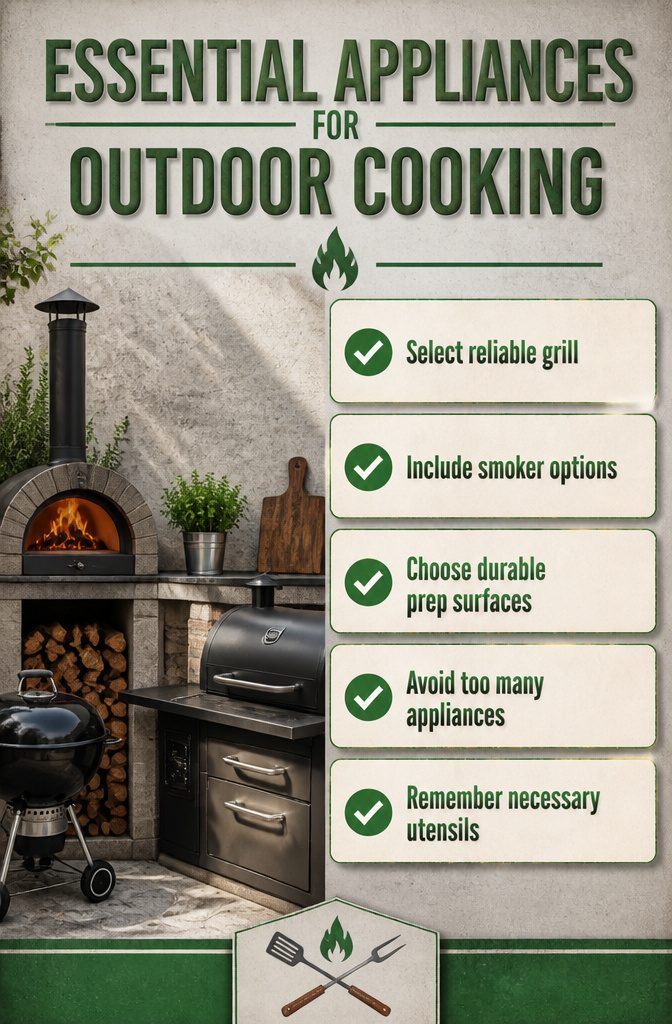
Appliance choices in a wood fire outdoor kitchen should match the cooking you already do, not the cooking you imagine. I learned this the slow way.
A built-in pellet grill with WiFi controls and a companion app sat in my setup for two seasons, used maybe six times, because weeknight dinners still happened on a $120 kettle I could light in ninety seconds.
The Memphis Elite built-in grill looks sharp against brickwork and brings matching storage drawers, but stainless steel and mountain views do not turn ribs out on a Tuesday.
Grills, smokers, and ovens each demand real estate. A griddle occupies counter space you will miss when plating for four.
The Yoder Smokers YS640s handles direct high heat and low indirect cooking together, and with its wood-fired oven and cast iron griddle attachments, the entire meal stays on one unit.
That matters more than the awards it collected in 2024. Ceramic grills, charcoal kettles, and dedicated pizza ovens all have their place, though the pizza oven in particular tends to become the party piece you fire twice a year.
If you smoke shoulders monthly, build around that habit.
If your household eats pizza weekly, the oven earns its footprint. Otherwise, it is expensive storage.
DIY Budget Realities
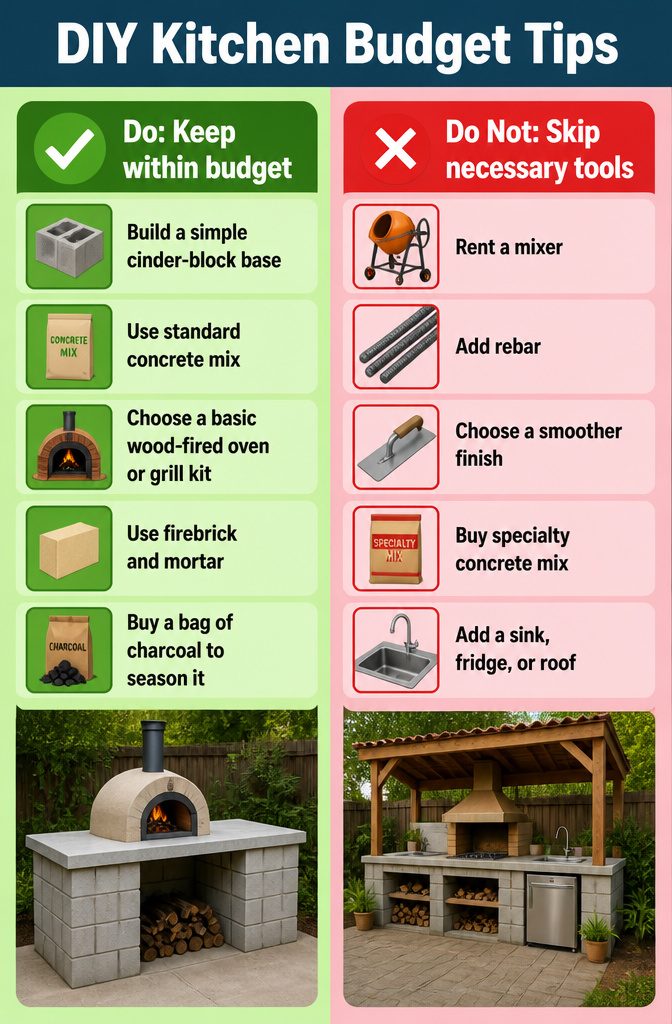
A sub-$500 wood fire outdoor kitchen is possible, but only if you stop adding things.
The bracket I kept seeing breaks down roughly like this: a simple cinder-block base and a poured concrete top run $150–250, a basic wood-fired grill or pizza oven kit another $200–300, and the rest goes to firebrick, mortar, and a bag of charcoal to season it.
That is the setup. No sink, no fridge, no roof.
Where I blew past my own number was in the foundation.
I had budgeted for blocks on compacted gravel, then talked myself into a poured slab with rebar after reading about frost heave. That decision alone doubled the material cost and added a rental fee for the mixer.
The second overrun was the countertop. Standard concrete would have worked, but I wanted a smoother finish, so I bought a $45 bag of specialty mix that I did not need and still ended up troweling by hand.
If you are working on a patio or a small yard, the real budget move is to skip the slab entirely and build directly on an existing concrete surface.
You lose some flexibility on placement, but you keep the project in the bracket where it started.
Solar and Off-Grid Options
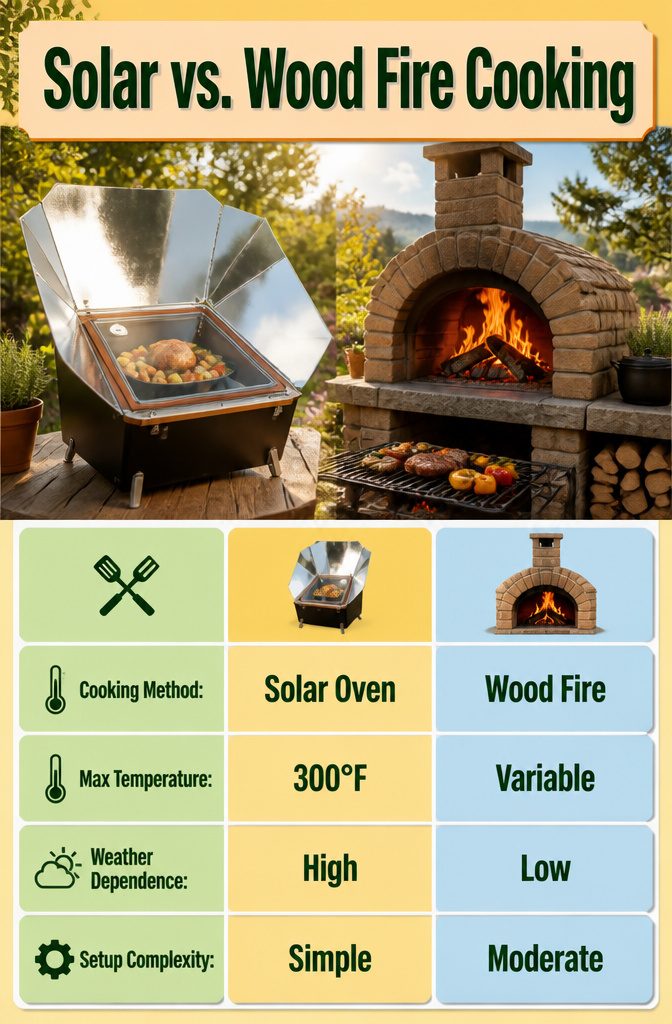
Solar ovens pull heat through reflective surfaces into a dark, insulated box with a glass lid, a setup that works like a greenhouse concentrated into something portable.
The commercial units can reach 300 degrees Fahrenheit, hot enough for slow roasting or baking on a clear afternoon, and they make sense as a summer cooking option when the sun is reliable.
Pairing one with a wood fire setup covers the gaps. Sun disappears behind clouds or drops early in winter, and that is when a brick oven or grill takes over without forcing you back inside.
I looked at this combination for my own space and decided against it.
The solar oven needs direct, unobstructed sunlight for hours, and my yard has too much tree cover to guarantee that. A shaded patio or balcony faces the same problem.
For someone with open sky and a priority on fuel-free cooking, the pairing is worth the planning. For me, the wood fire alone was the simpler path.
Frequently Asked Questions
What are the best materials for a wood fire outdoor kitchen?
Granite and quartzite handle UV rays and hot pans straight off the flame without the flaking that ruins quartz outdoors.
For the structure itself, stone cladding or thin brick around the firebox gives you masonry looks without the rot risk of wood framing, while galvanized steel tubing underneath lasts longer than pressure-treated lumber.
Stainless steel works well for appliance housings and prep surfaces, and concrete, brick, or natural stone stay grippier underfoot than tile or marble when grease and water hit them.
How much does a wood fire outdoor kitchen cost?
A bare-bones DIY setup can stay under $500 if you build a cinder-block base with a poured concrete top and stick to a basic wood-fired grill or pizza oven kit.
Once you add a poured slab foundation, built-in appliances, or a roof, the price climbs past that threshold quickly.
One builder kept the whole project under $500 by bartering for leftover brick and pulling counter stones from a creek, but most finished builds run higher.
What features should I include in a wood fire outdoor kitchen?
Plan for at least 24 inches of cabinet depth for tools and pizza peels, plus heat-resistant drawers or stone-front cabinets near the fire so nothing melts.
Leave enough counter space for prep and plating, and if you add bar seating, allow at least 15 inches of overhang so guests can actually slide their knees under the counter.
Keep the wood storage, fire, and serving surface within a tight triangle close to the house so you are not hiking across the yard with hot pans.