
The ideas below include locking-caster bartending gear you can roll away and a shipping container build with rooftop steel, so the first filter is how permanent you want this to be.
What separates one choice from another is whether you already have a roof, a slab, or neither; that single condition decides whether you are shopping for a cover, pouring footings, or calling a welder.
A 42-inch grill with 304 stainless steel holds up to salt air, but only if you have the counter width to sink it into cabinetry rather than wheeling a cart against the edge.
1. Covered Outdoor Bar
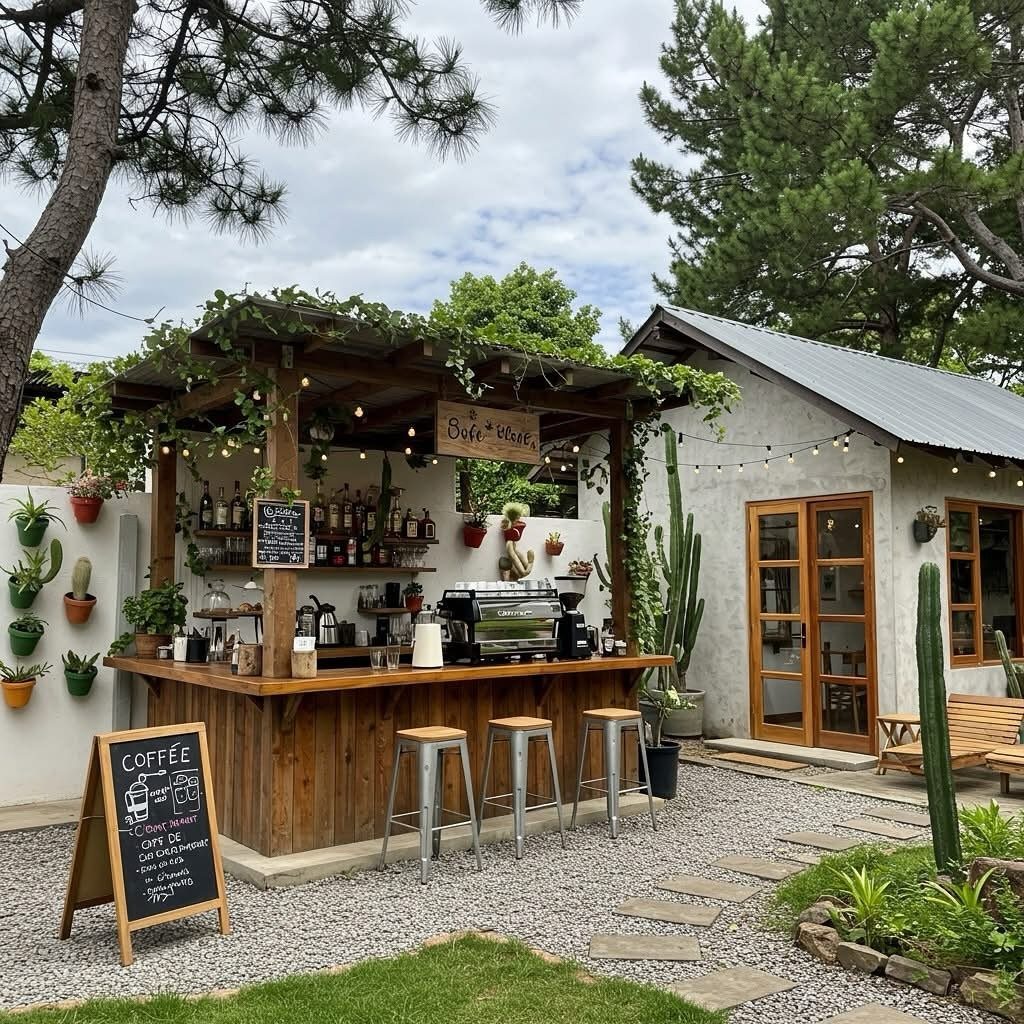
A roof over your bar changes how often you actually use it. Rain, harsh sun, even a light drizzle, all stop being reasons to head inside.
Wood beams across a simple frame give filtered shade rather than full cover, with vines filling gaps over time. Gravel underfoot drains fast and stays level without the cost of poured concrete.
I would size the overhang deeper than the counter on the serving side; guests crowd under the edge when weather turns. A freestanding frame like this one needs anchoring, whether you pour footings or bolt to an existing slab.
2. L-shaped Outdoor Kitchen Bar
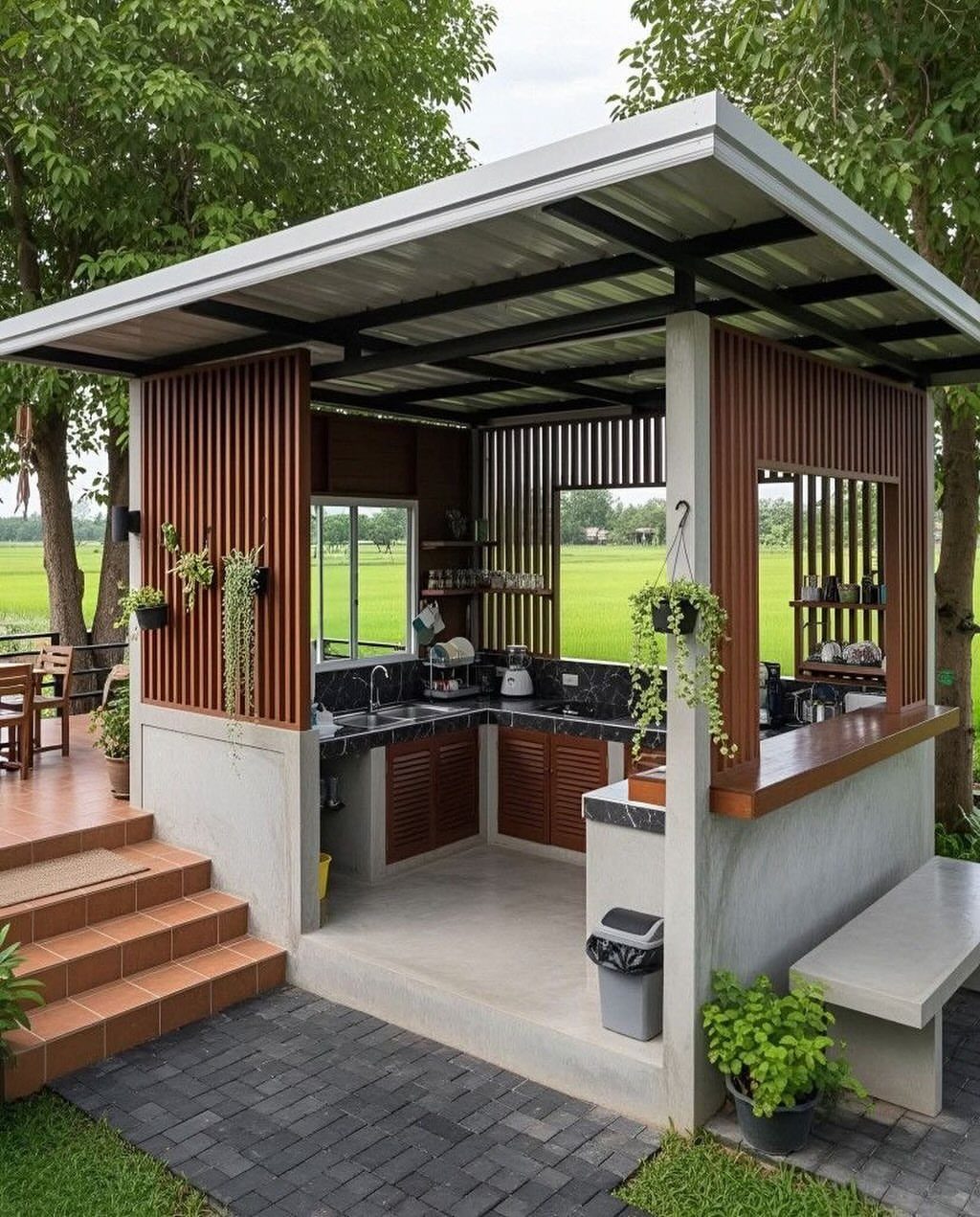
The L-shape lets one person work the cooking zone while another faces guests across the bar arm, and nobody is stuck with their back to the party.
The short leg holds the sink and prep space while the long run serves as the eating counter; concrete base cabinets stay dry and clean better than wood in open air.
I like the slat wall detail for climates with real winters; it sheds wind without trapping moisture the way solid panels do.
The bench seat opposite turns the bar into a full outdoor room rather than just a cooking station. You will sacrifice some counter length versus a straight run, but for most home cooks the trade is worth it.
3. Vertical Garden
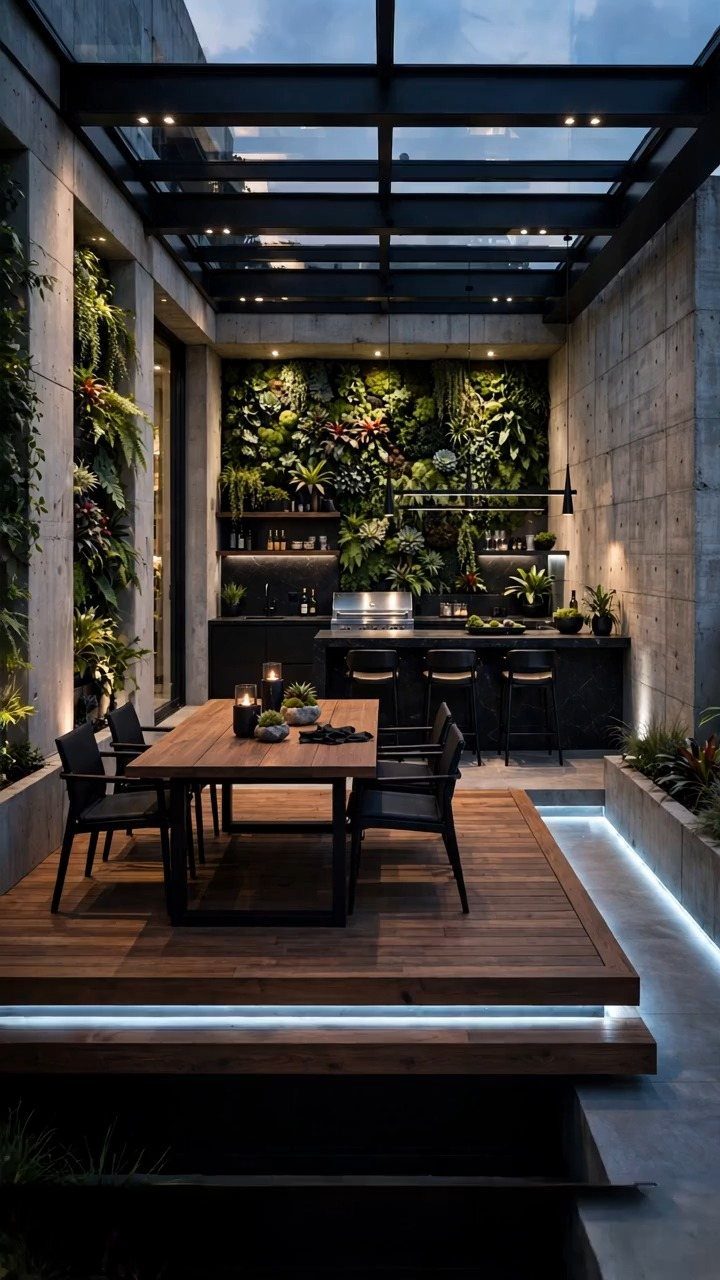
A living wall behind the bar gives guests something to look at besides the side of your house.
The installation uses a modular panel system mounted to concrete; the plants are mostly shade-tolerant tropicals that handle the reflected heat off hardscaping better than succulents would in this spot.
Maintenance is the real question. These walls need irrigation, and a drip line with a timer is not optional unless you enjoy replacing dead plants.
I would budget for an automatic system from the start; hand-watering a vertical garden gets old fast. For a lower-commitment version, a mounted grid of potted herbs gives the same green backdrop with plants you can swap out in minutes.
4. Outdoor Pizza Oven
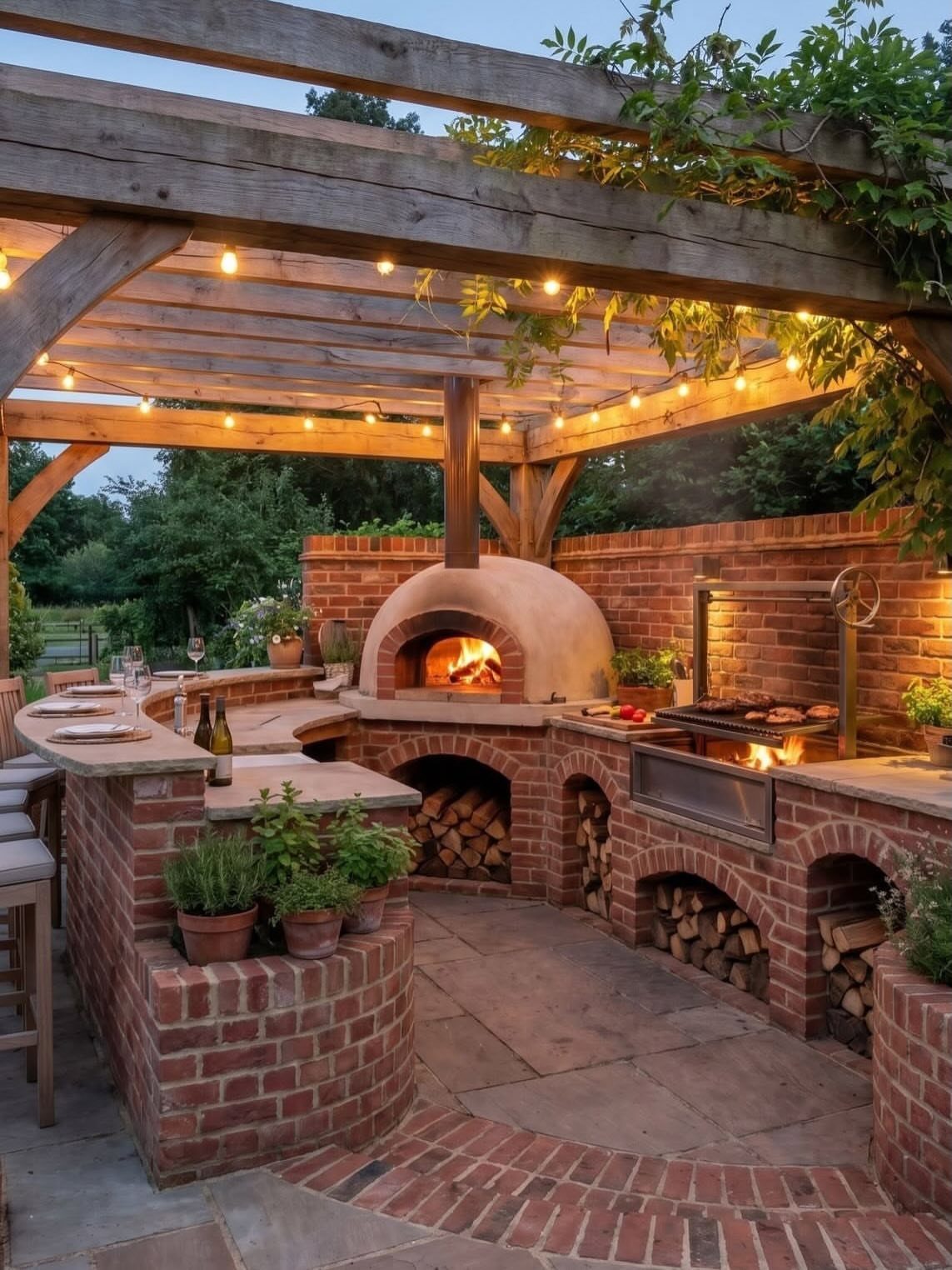
Wood-fired pizza turns a cookout into an event, and the oven’s radiant heat keeps the bar area comfortable on cool evenings.
If you are not pouring new concrete, a prefab steel oven on a steel stand is the practical alternative; it heats faster and costs less, though it lacks the thermal mass for all-evening baking.
I would still run the gas line for the grill alongside; wood alone is romantic until you want breakfast fast.
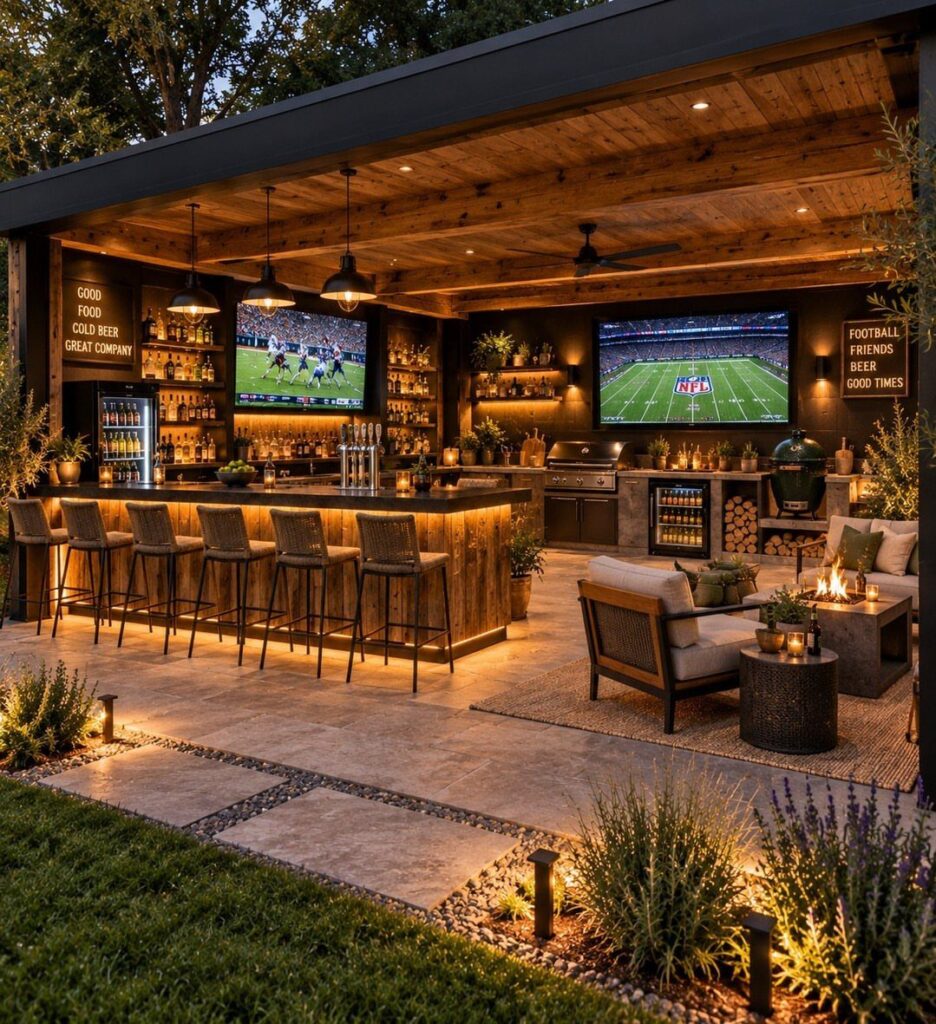
5. Outdoor Bar with TV
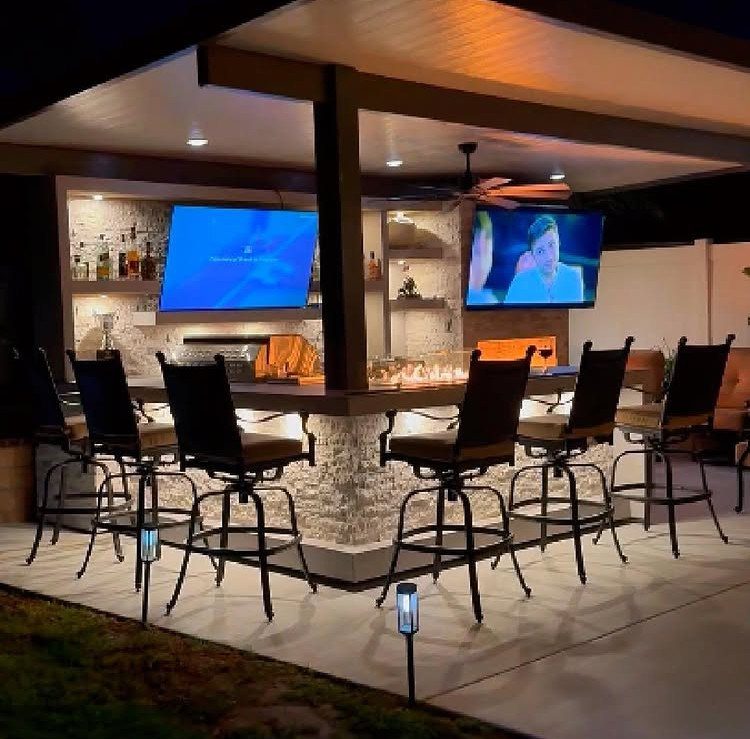
2 screens let half your group follow a game while the other half talks without either party dominating the space.
I would add a weatherproof cover on a pull-down mount, not just rely on the roof overhang.
Sound is the harder problem, and the photo gives no answer. A separate outdoor speaker system beats TV speakers every time, and your neighbors will thank you.
6. High-Quality Grill
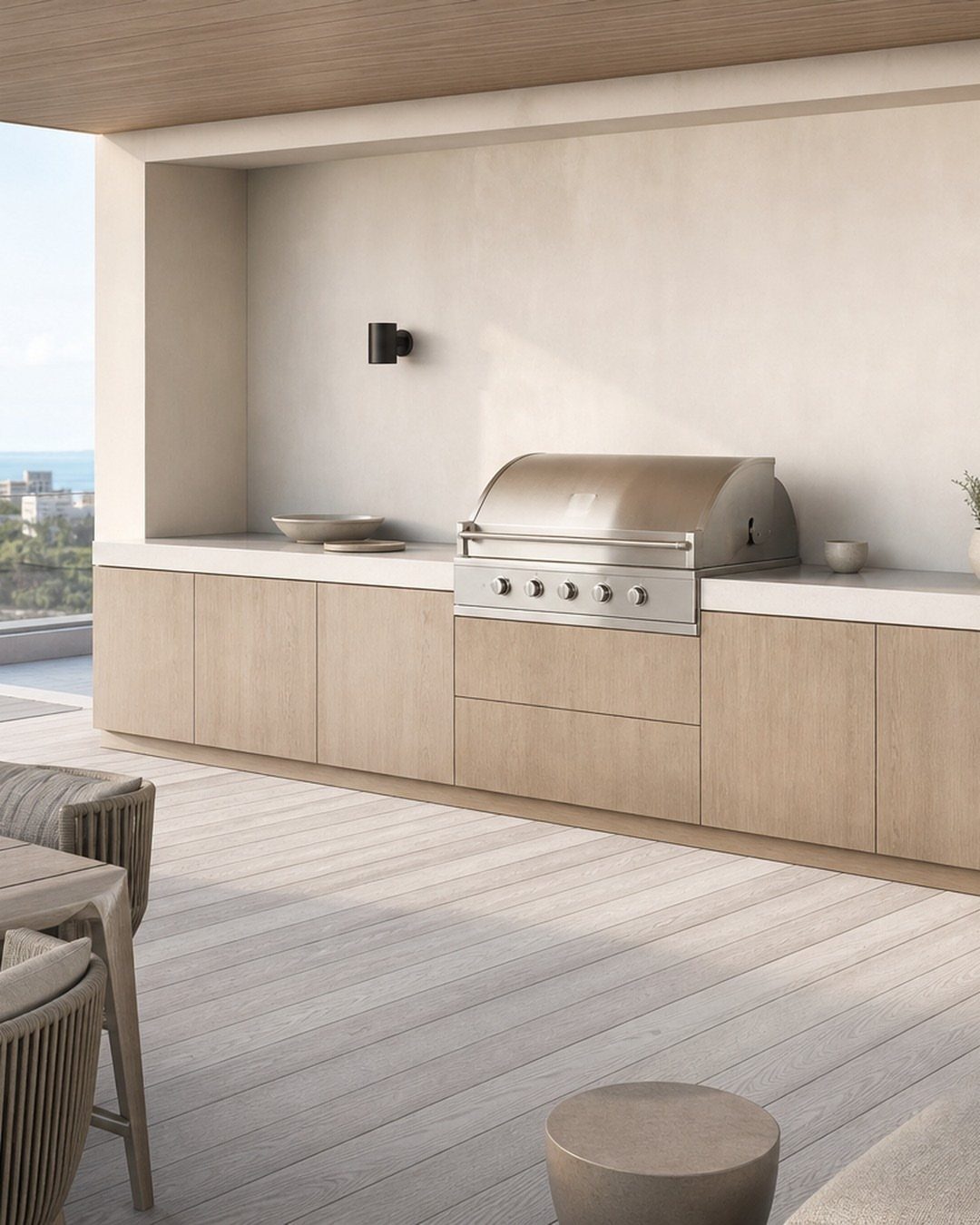
A 42-inch grill is serious equipment; that width handles a full batch of burgers at once or a full rack of ribs with room to maneuver.
The built-in look comes from a drop-in unit set into cabinetry, not a standalone cart wheeled against the counter.
The ocean view location tells me this kitchen sees salt air, which makes the stainless steel grade worth asking about; 304 holds up, 316 is better, and either beats powder-coated steel within a mile of coast.
If your grilling is mostly weeknight dinners for a few, a smaller model saves money and counter you will use more for platter space than fire.
7. Outdoor Bar Stools
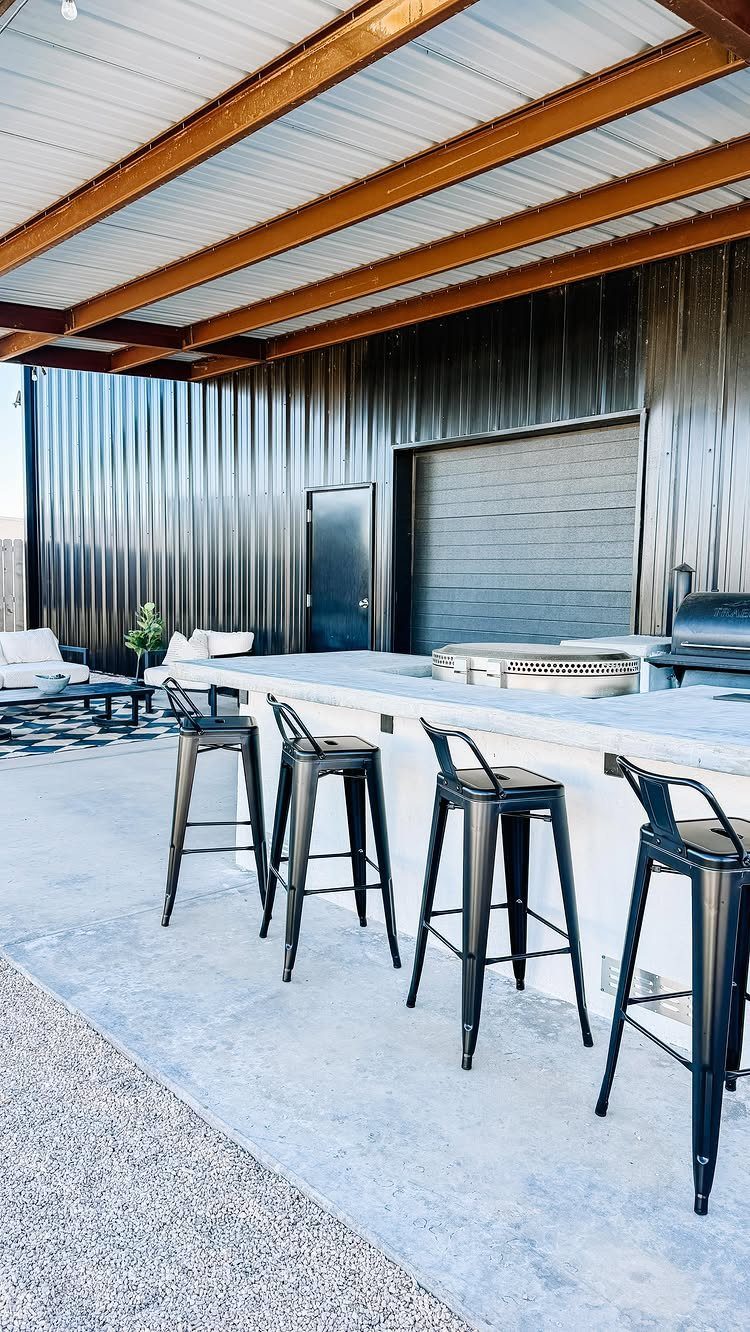
Metal stools with thin legs and no back rest slide under the counter when not in use, which matters on a narrow patio where every inch counts.
I would choose a powder-coated finish over bare steel for anything left outside year-round; the coating buys you two or three seasons before the first rust spot.
Backless seats suit short visits and standing-room crowds better than long dinners. For a balcony where the bar is the only eating surface, a low-back stool is the compromise I would make.
8. Outdoor Bar Lighting
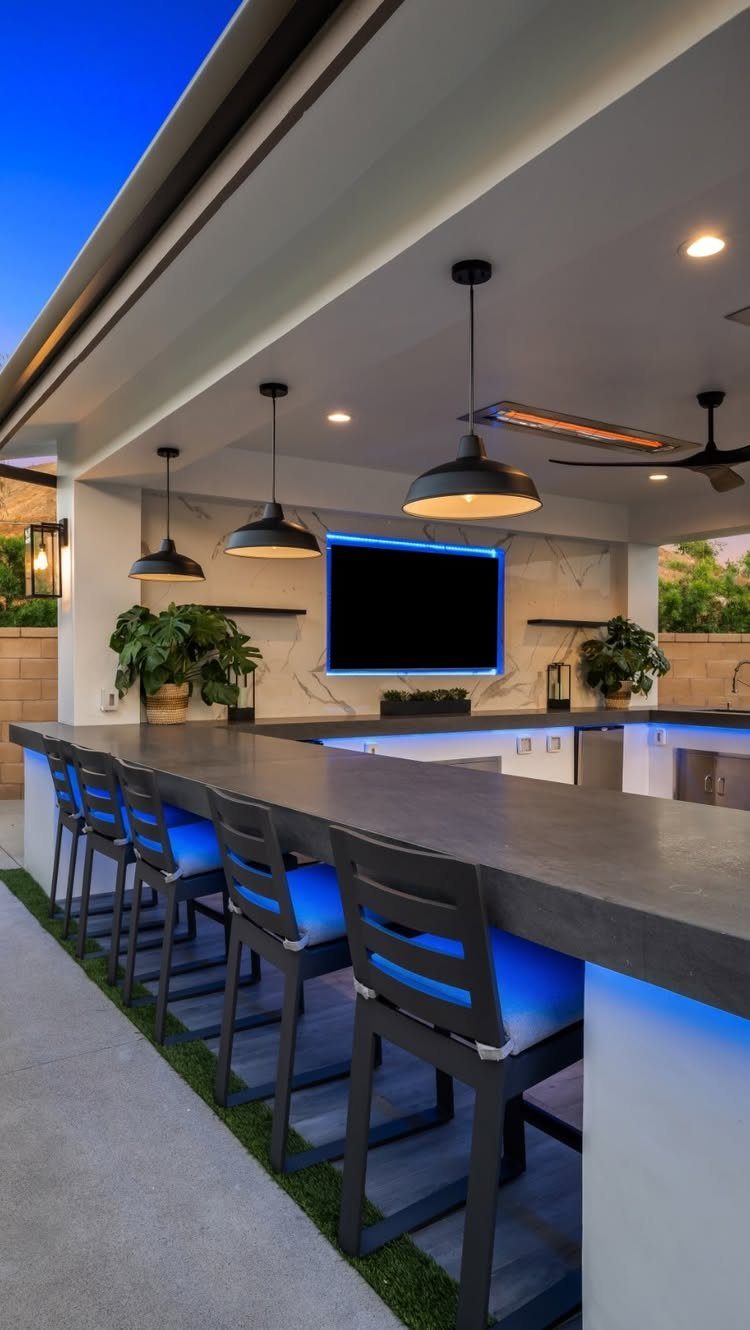
Blue LED strips under the counter rim turn the bar surface into a floating plane after dark, and the color temperature reads as intentional rather than accidental.
Pendant lights overhead need wet-location ratings; the paper tag inside the housing should say "damp" minimum, "wet" if rain can reach it directly.
I would put pendants on a dimmer, not a switch.
Full brightness for cooking, low for lingering. The under-counter glow alone is enough to navigate by without destroying night vision.
9. Outdoor Bartending Station
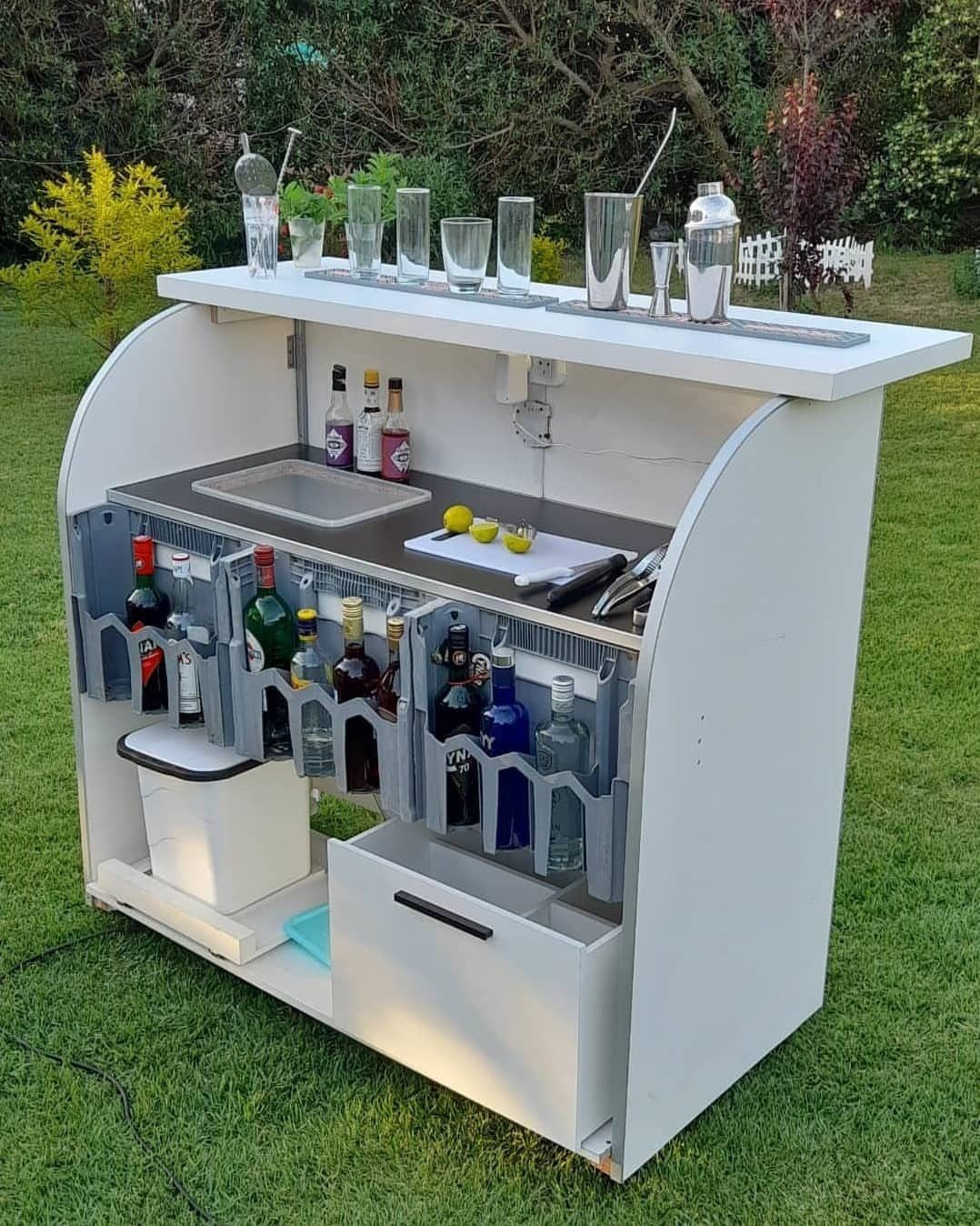
A portable station on locking casters lets you serve drinks where the party actually is, not where the contractor poured concrete.
A sink basin in an outdoor cabinet needs somewhere for the water to go; I would keep a drain bucket on hand and run it to the lawn when the weather allows, with a hose hookup ready for times when that is easier.
Stock it with shatterproof glassware.
One dropped coupe on flagstone ends the outdoor-crystal fantasy permanently. A cutting board with a juice groove contains the mess from citrus prep.
10. Integrated Kitchen and Bar
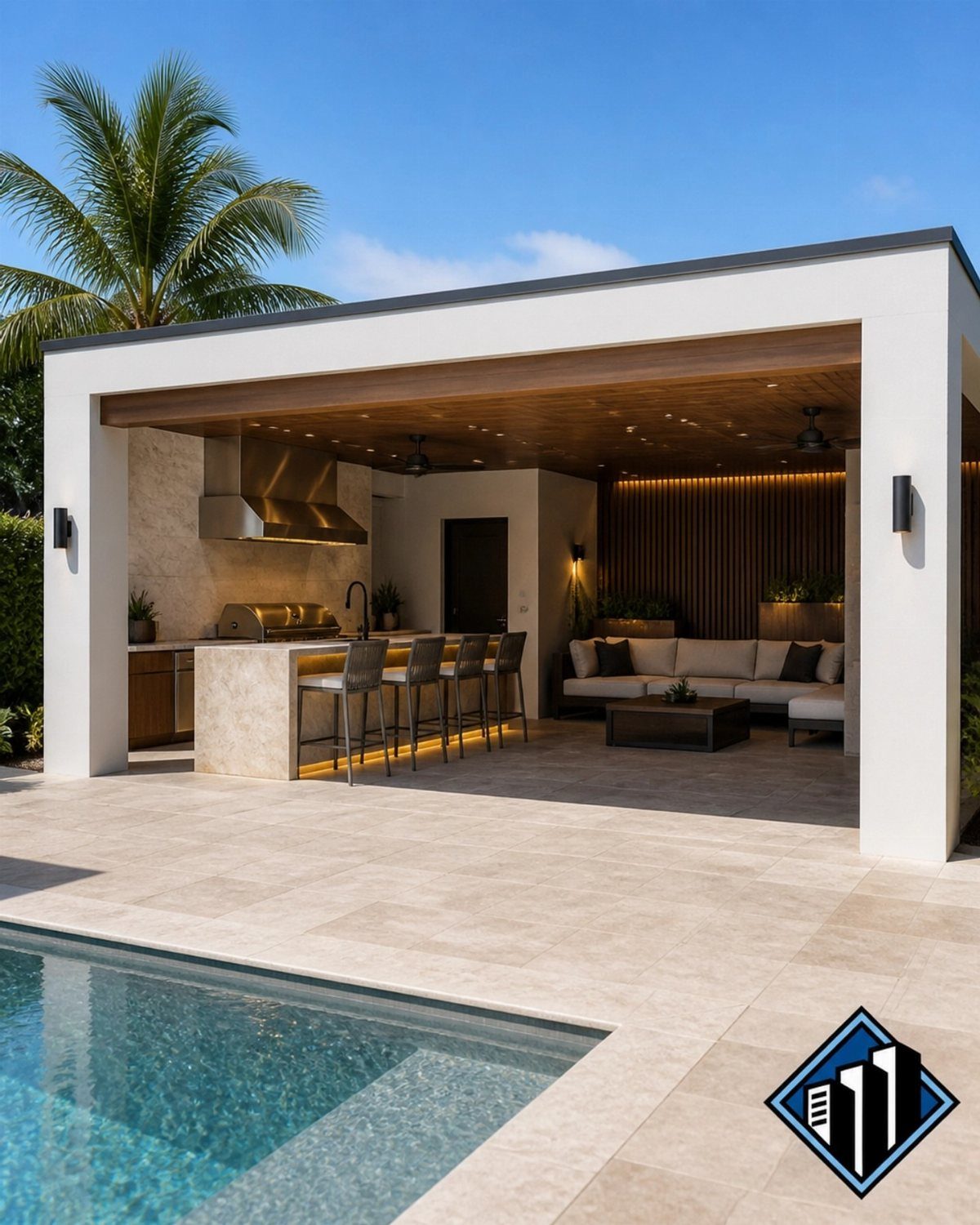
Stone counters and the same flooring running from kitchen to lounge erase the line between working and relaxing, which is the whole reason for building outside.
The hood over the grill is not decorative; a covered cabana traps smoke without one, and your clothes will announce that fact.
I would split the counter into 2 heights: standard prep level on the kitchen side and a raised bar arm facing the pool so guests can lean without looking down at the work surface.
2 levels keep dirty dishes out of sight from guests floating past on inflatables. The trade is a wider footprint than a single-height island.
11. Shipping Container Bar
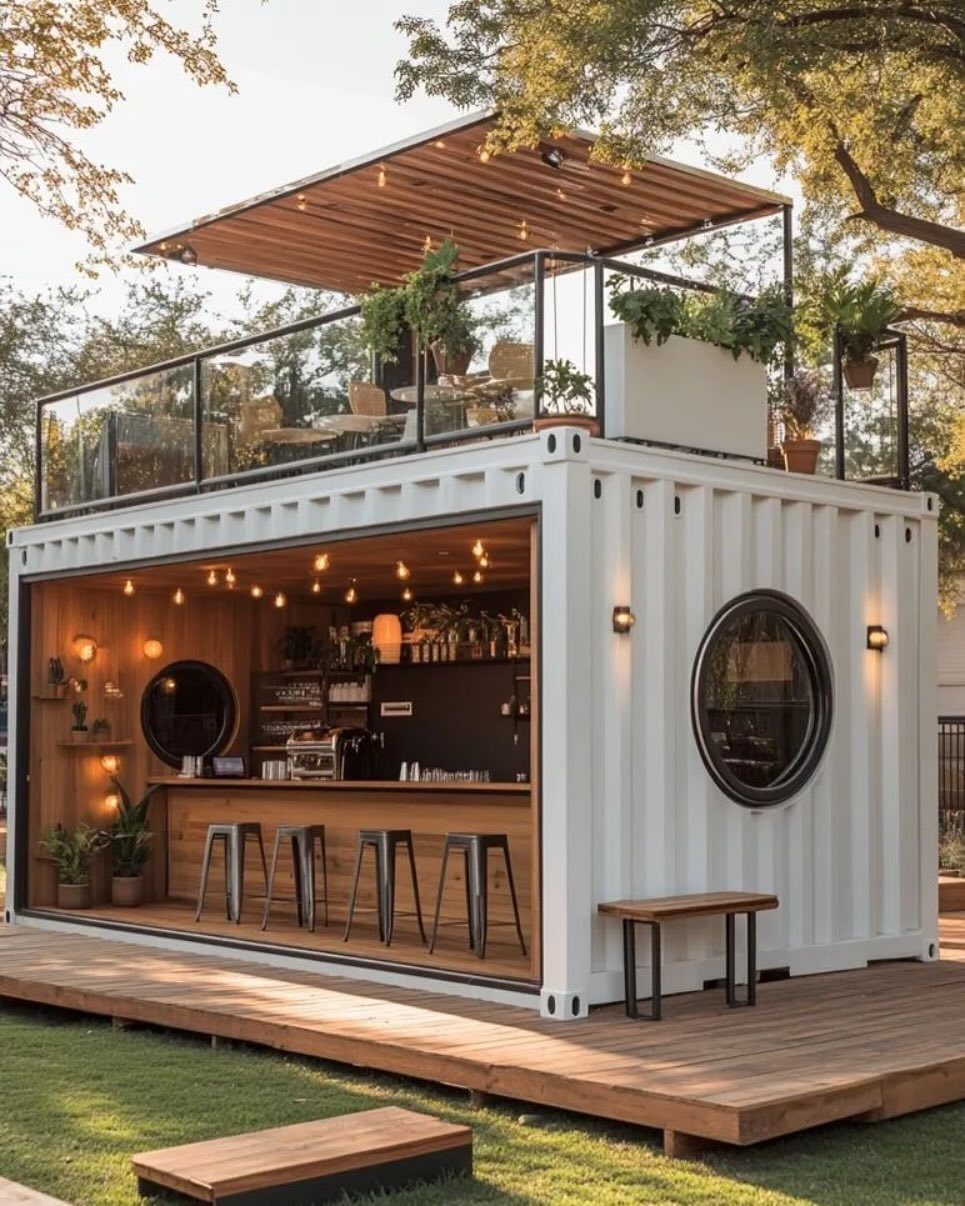
A used shipping container gives you enclosed space and a steel roof that will outlast any wood-framed structure you could build for the same money.
Porthole windows in a container bar are cutouts, not original to the box; cutting steel takes a plasma torch or a grinder and a steady hand, and every opening needs welding around the rim to keep rust from creeping in.
I would treat the rooftop as structural load from the start. Containers are designed to stack, but only at the corners; a terrace mid-span needs a steel frame inside to carry the weight of planters and guests.
12. Fire Feature Bar Counter
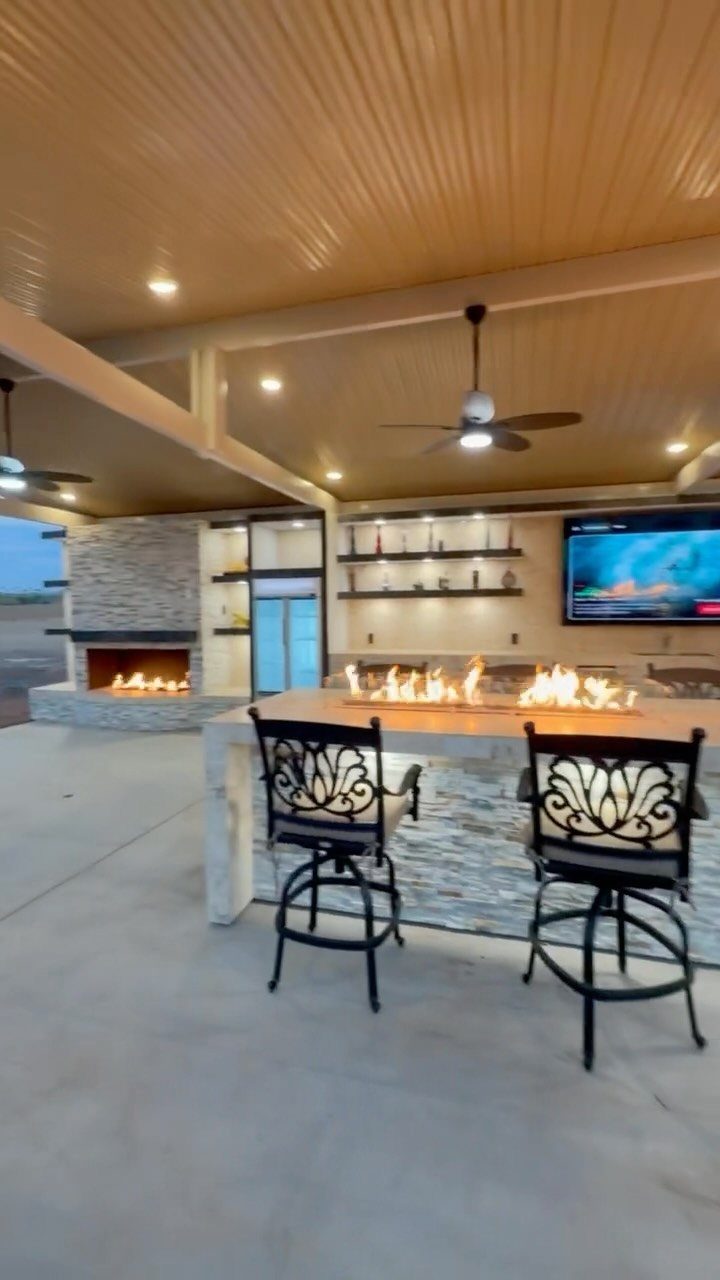
A linear flame sunk into the counter itself puts heat at elbow height, which is more social than a fire pit guests circle around.
The stone surround reads as split-face veneer over a steel frame to me; solid stone of that depth would need footings far heavier than most patios are built on.
I would keep the burner zone clear of overhang.
The temptation is to run the counter continuously across, but fabricating a stone lid that seals gas-tight and lifts easily is harder than leaving a gap. The flame needs no glass beads or fake logs; night does the decorative work.
Choosing Materials for Durability
Stainless steel, concrete, and treated wood are the materials I would actually specify for an outdoor bar that stays upright through more than a few seasons.
Wood looks warm when new, but it rots, splinters, and warps even with regular maintenance; the upkeep never really ends and the replacement bills stack up.
A steel unit built with engineered materials handles weather without the constant attention, and it pairs cleanly with stone or tile counters if you want some warmth in the look.
Composite materials are another route, though I would still check the specific UV rating before ordering; not every composite is formulated for full sun exposure.
Whatever you choose, the finish matters as much as the material: powder coating on metal, penetrating sealer on concrete, and actual treatment depth in wood, not just surface spray.
Designing for Functionality
The location of your bar relative to the kitchen deserves more thought than most people give it.
I would put the serving edge within easy reach of the cooking surface so one person can plate and pass without a trek across the yard; every step between fire and guest is a chance for food to cool and for you to miss the conversation.
The shape of the space controls how people move through it. A long straight run channels traffic in one direction, while an L-shape or island lets groups settle at angles and still see each other.
If you are adding a fire feature, dining table, and bar in one area, keep the furniture consistent; matching pieces, even something as simple as the same wood tone or cushion color, tie the zones together so the eye reads one room instead of three competing installations.
Maintenance Tips
I clean the grill grates after every use, once they cool enough to handle, and run a scraper over the flat surfaces at least weekly during the season.
Grease builds up faster outside than in, and the local wildlife will notice before you do.
Countertops need the same attention you would give inside, with the added step of checking whether your sealer is still beading water; once it soaks in, the stain is already half done.
A roof or cover over the bar is not optional in my view if you want the structure to last; even treated materials fatigue faster when they stay wet.
Before winter, I would move anything portable indoors, drain lines that could freeze, and touch up any finish that has worn through to bare substrate.
Spring start-up is the time to retighten hardware that has worked loose from thermal cycling and to replace gaskets or seals that went brittle.
A pair of maintenance sessions, one before and one after the season, will add years to anything you build.
Frequently Asked Questions
What are some easy DIY ideas for an outdoor bar?
A freestanding frame with wood beams and a gravel base keeps costs low and goes up fast without concrete work.
A portable bartending station on locking casters gives you the option to roll the whole setup to wherever people actually gather.
I would anchor any fixed frame properly, whether with poured footings or bolts to an existing slab, because a wobbly bar is a short-lived bar.
What are the trends for outdoor kitchens in 2026?
An outdoor bartending station is the feature showing up most often in new builds, with a sink basin, drain setup, and dedicated storage for glassware and prep tools.
Integrated kitchen-and-bar designs with matching materials running from cooking zone to lounge area are also common, erasing the visual line between working and relaxing.
If I were adding a vertical garden or living wall, I would still put money toward an automatic irrigation system; hand-watering gets old fast, and dead plants trend in no direction.





