Backyard family games in 2025 span from a $40 Kan Jam set to a six-wicket croquet course you can walk away from mid-match, but the right pick depends on whether your yard is flat grass, packed dirt, or a patio corner that rules out anything needing stakes. The difference between gear that gathers dust and gear that stays in rotation usually comes down to one constraint your space already enforces: a spiking net like Spikeball demands sprinting room that a ring-on-a-string Tiki Toss barely needs six feet of swing to satisfy.
1. Cornhole
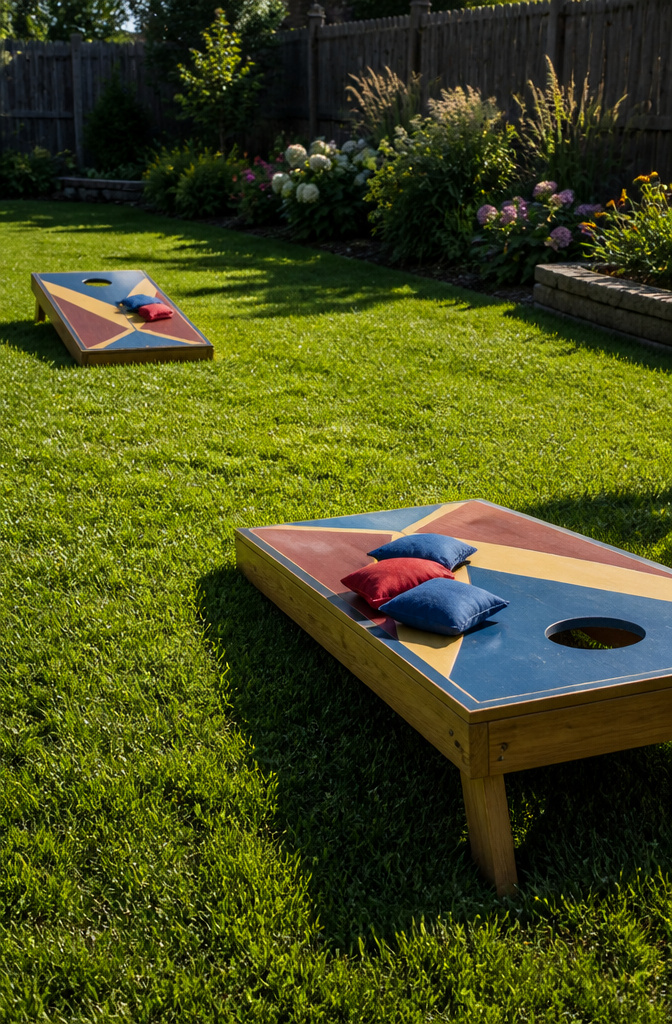
Cornhole has the rare quality of being a national pastime that actually works for a four-year-old and a forty-year-old in the same round. Players take turns throwing bags filled with corn kernels at a raised platform with a hole in it. A bag through the hole scores three points; one that lands and stays on the board scores one. The first side to twenty-one wins, though plenty of backyards run their own house rules on that number.
The game needs boards set between 12 and 27 feet apart, which is the main limit on small yards. Younger kids rarely have the arm strength for the full distance; in my experience watching families play, they usually end up running halfway and dropping the bag straight through the hole while the adults are between rounds. Nobody calls that the rules, but it keeps them in the game.
Custom sets are available if you want something that looks like it belongs to your family rather than a rental hall. Hand-painted logos, team colors, even LED lights for after-dark rounds. The standard collapsible sets with carrying cases do the same job for a fraction of the cost and store flat in a garage corner. Either way, cornhole earns its spot as a backyard staple: no learning curve, no contact, and the bags are satisfying to handle in a way that keeps people throwing "just one more round" until the mosquitoes win.
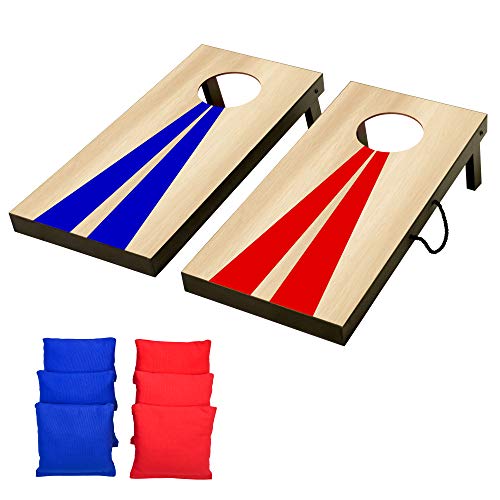
INDOOR & OUTDOOR READY: From energetic backyard cookouts to cozy indoor game nights, this versatile set instantly transforms any space into a playground; perfect for camping trips, family gatherings, and park days

Portable Cornhole Set:This cornhole board set is foldable, and features side handles for easy transportation to gatherings and outdoor games.Avoid exposing it to outdoor environments for extended periods, especially during rainy days.

100% SOLID WOOD: Premium handcrafted regulation size 4 feet x 2 feet boards made using pine wood frames and featuring mitered corner joints for authentic gameplay
2. Bocce Ball
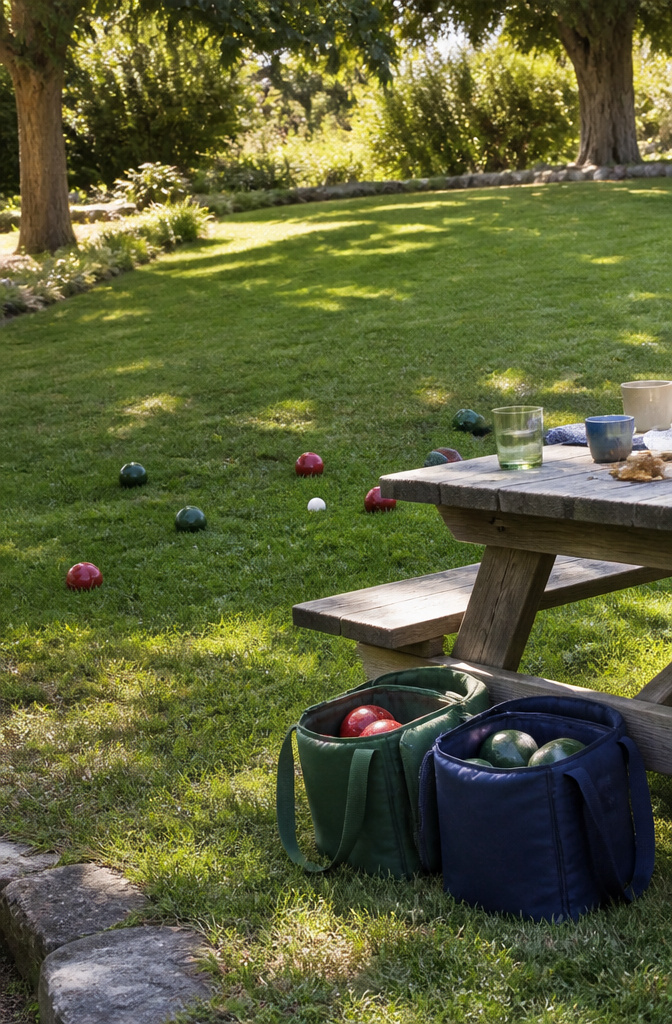
A bocce ball set travels in a bag no larger than a couple of shoeboxes, which means it comes with me to cookouts where I do not know the yard size and to my own patch when the grass is still too thin for anything that digs in. The game needs no court, just a patch of green grass, though the sets sold at Costco and Target in summer work on sand too if that is what you have. Two teams in pairs throw their colored balls toward a small white target called the pallino, and the measuring, not the throwing, is what hooks kids who otherwise need to run. I have watched children get weirdly precise with the tape measure while their grandparents stand at the same distance, and that span is why it survives as a tradition where faster games burn out. The rules take one online lookup; after that, the set just waits in its bag until the next gathering.

VOLLEYBALL AND FOURSQUARE COMBINED - Spikeball is a fun, active, easy-to-learn game that can be played anywhere by anyone. The Spikeball Standard Kit is all you need for a good time
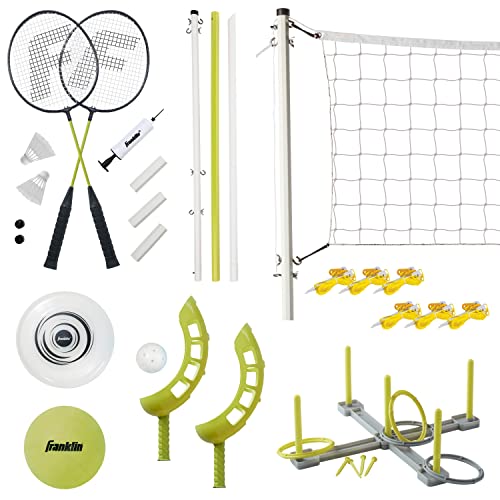
5 GAMES IN ONE: This 5 game combo set has everything kids need for a fun day at the beach, the park, or your next outdoor gathering!

FOUR PLAYER ACTION – Spikeball is a fun, active, and competitive (if you want it to be) 2 on 2 outdoor indoor sports game played on college campuses, tailgates, the lawn, yard, backyard, beach or gym with rules kind of like volleyball.
3. Croquet
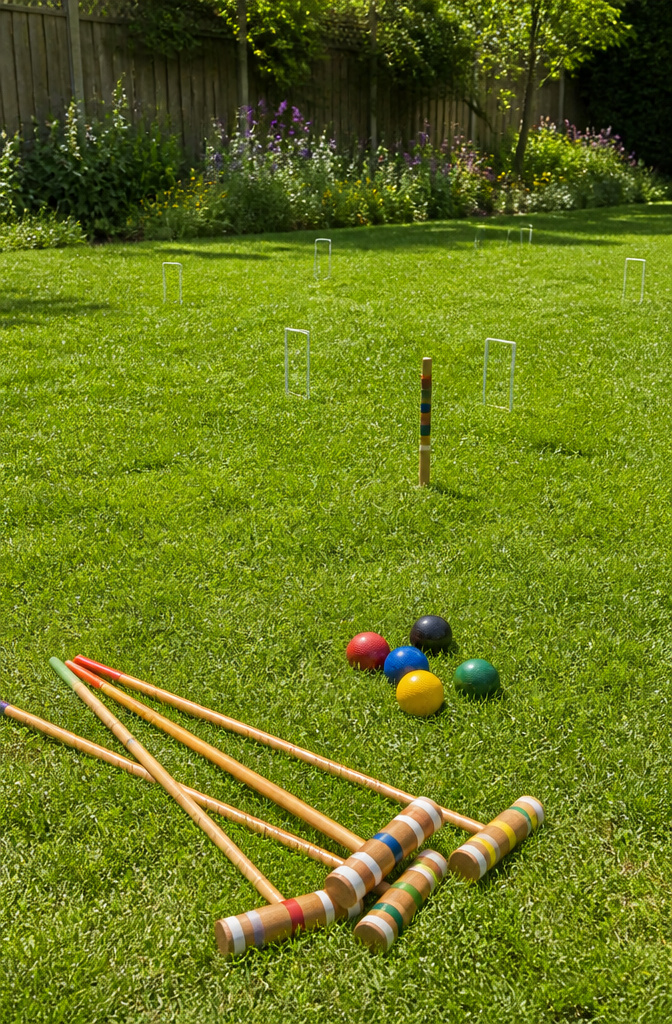
Croquet carries the kind of old-fashioned patience that makes it work across ages. The rules are simple enough that a child learning to swing a mallet can play alongside a grandparent who remembers wooden sets from the 1950s, and neither feels patronized or outmatched. A basic set is not very expensive and turns up readily at outdoor stores and online sellers, which matters when you are already balancing a backyard budget against soil and seed orders.
The pace helps too. A croquet game moves slowly enough for conversation, for a toddler to wander through the wickets, for someone to step inside and check the oven without derailing the match. Kids can reset the course pattern each round, which keeps the layout from going stale and gives them ownership of the game without adult interference.
Space requirements stay modest. A flat stretch of lawn, roughly the size of a modest backyard patio, handles a six-wicket course comfortably. The grass does not need to be pristine; slight unevenness adds character without breaking the play. In an era of beeping electronic toys, croquet offers the rare activity where the only sound is the hollow knock of ball against mallet, and where the competition stays friendly because everyone is still figuring out the next shot together.

RIVALRY - Bring out everyone’s competitive side (Ages 8+)! Ideal for parties and bar games, the Tiki Toss hook and ring game is sure to win over family, friends, and partygoers everywhere

Rich Activity Party Set: this set includes 1 luau tiki inflatable ring toss base, 6 inflatable rings, and 1 practical air pump, allowing you to start the activity right out of the box; With 6 rings, it supports multiple players to participate in the competition simultaneously, easily meeting entertainment needs for both family gatherings and large parties

RIVALRY - Bring out everyone’s competitive side (Ages 8+)! Ideal for parties and bar games, the Tiki Toss hook and ring game is sure to win over family, friends, and partygoers everywhere
4. Kan Jam
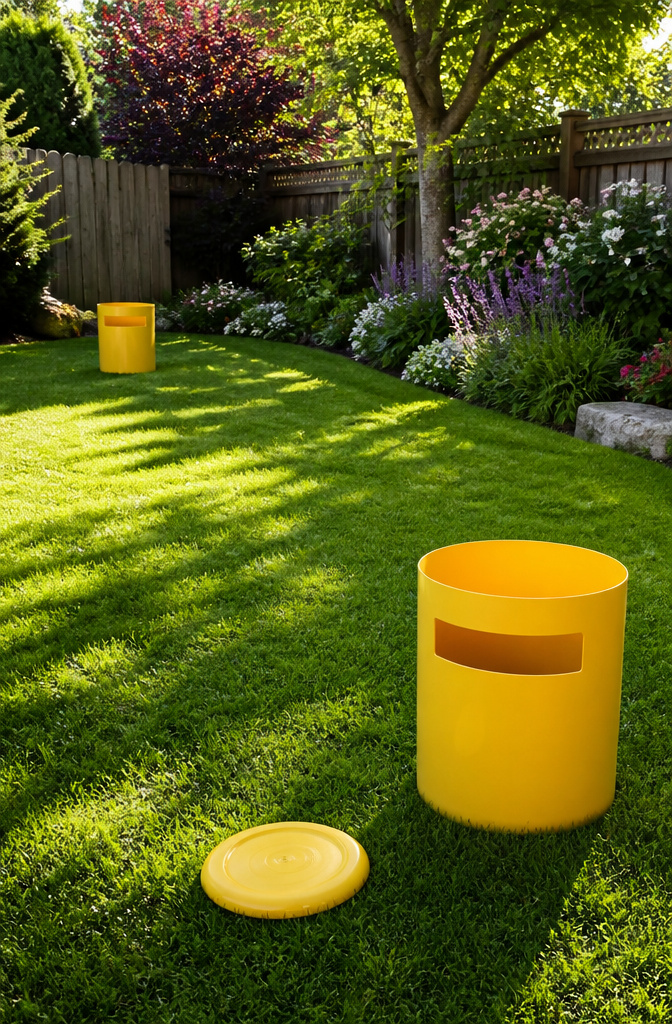
Kan Jam lands somewhere between frisbee golf and a team sport, which is why it keeps surfacing at barbecues where half the crowd already knows how to throw a disc. Two teammates face each other across the yard: one throws toward a slotted can, the other deflects the disc in mid-air, trying to slam it through the opening while the opposing pair defends and then switches roles. The back-and-forth keeps four people moving without feeling like a workout.
A set runs about $40 and holds up to rough treatment. The goals are molded plastic, heavy enough to stay put in wind but light enough to toss in a trunk for the beach or a campsite. Disc golfers tend to pick it up fast, though the pace can outrun younger kids who are still tracking airborne objects.
The real draw is the deflection. A clean throw through the slot scores, but banking it off your partner’s hand and in feels better, and that teamwork is what pulls people back for rematches.

PREMIUM RESIN CONSTRUCTION: Crafted from high-grade resin for long lasting durability; The 90 mm diameter balls weigh approximately 1 lb 10 oz each, closer to regulation bocce than lightweight sets that are nothing like real bocce

SOFT BOCCE: Same as real bocce but can be played indoors or outdoors on any surface
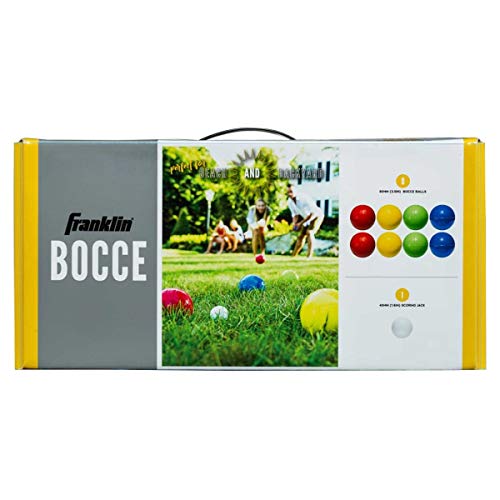
EVERYTHING YOU NEED: The perfect family afternoon starts with the perfect bocce ball set. Whether it’s your first bocce set or you’re teaching the next generation, this classic set includes everything you need
5. Spikeball
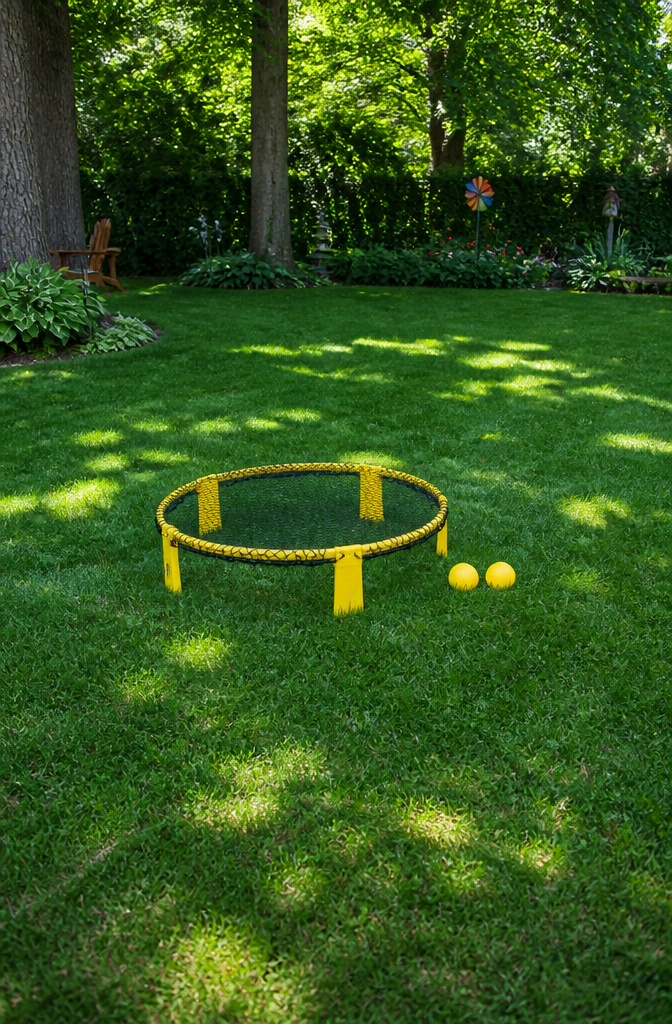
A round net stretched trampoline-tight on a frame turns any flat patch of grass into something closer to a sport court. Teams of two volley the ball off that surface, up to three hits between partners before the net must take it again. The rally ends when someone misses or the ball hits ground.
The game borrows from volleyball and four square both, but the pace is its own thing. The net sits low enough that play stays close to the ground, which means diving, sprinting, and quick directional changes happen on almost every point. Hand-eye coordination matters, and so does the ability to read your partner without stopping to talk.
For families with younger kids, the physical demand is the limiting factor. The running and reaction time skew this toward older children and adults who want a workout disguised as competition. Four players is the standard setup, though the space around the net needs room for the chase when a rally goes sideways.

Complete Croquet Set: The Sports Outdoor Croquet set comes with everything you need, like 6x 28 in Colourful Mallets, 6 Colored Croquet Balls, 2x 18 in Ending stakes, 9 Steel Wickets, a Manual and a extra Large Portable Carry Bag. Providing your family a healthy and enjoyable leisure time

【Product Dimensions】-Gothink Croquet Sets packing:30*5*3.1 inch(76x13x8cm).Mallets dimensions:4*30inch.Each ball diameter:3inch,Wickets:7*8.3inch,Stakes:14.8inch,Weigh:2.2LB,Material:Wooden,Gather your friends and family,and let the game begin!

PROFESSIONAL GRADE: The durable Starter croquet set is designed with premium quality wood and steel materials to provide hours of classic outdoor family fun year after year
6. Ladder Toss
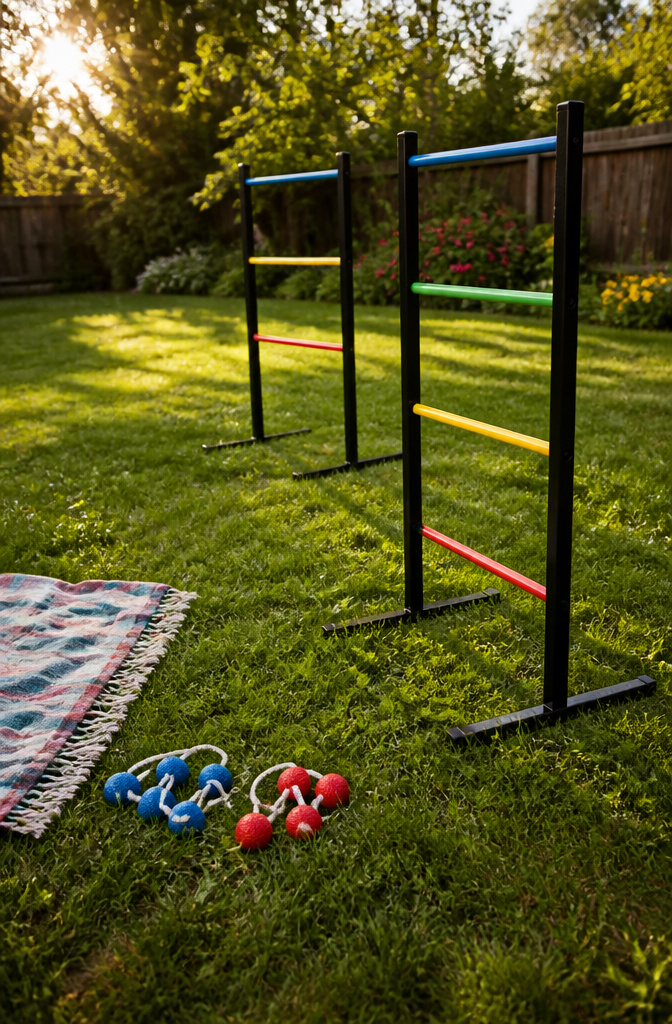
A ladder toss set takes about fifteen feet of flat space, which puts it in the same footprint as cornhole but with a different kind of throw. The bolas, two small balls connected by a short rope, spin through the air and either wrap a rung or bounce into the grass. Kids pick up the motion faster than adults expect, and the scoring, where higher rungs earn more points up to 21, gives them enough structure to feel competitive without needing a careful setup.
The EastPoint Sports Steel Ladderball Set, priced at $72 on Amazon and $99 at Walmart, is the one to buy if you are choosing between versions. The New York Times put several through testing and found this one hit the right balance:
this set provided the best mix of challenge and accessibility for our testers
What that means in practice is the steel frame stays upright on grass without staking, the bolas have enough weight to fly straight but not so much they hurt a kid’s arm, and the rung spacing rewards a clean toss over a lucky one. The first time our youngest beat her uncle, nobody had to let her win.

【Valuable Corn Hole Set with Carrying Case】The set includes 2 cornhole boards( 3x2feet), 8 bean bags(5.5x5.5inches), and 1 big carrying bag. The carrying bag can be used to pack everything up and protect the boards inside from dirt and moisture. Keep everything tidy and neat when you are not using them!


7. Giant Jenga

A tower of oversized wooden blocks starts around three feet high and climbs past five as the game wears on, each layer three blocks laid side by side with the seams staggered. The whole stack wobbles on the lawn while someone eases one free, usually with a crowd behind them calling out which block looks loose. Two players minimum, though large groups gather fastest around this one. The collapse comes with enough drama that even spectators flinch.
You can buy a set with a carrying case for storage between weekends, or build your own with two-by-fours cut to uniform lengths and sanded smooth. Either way, the oversized scale changes the physics: a block pulled wrong sends the whole tower swaying, and the fall spreads blocks across ten feet of grass. Kids tall enough to reach the middle rows play fine alongside adults, and no one needs to explain the rules. The only real requirement is flat ground and enough open space to let it come down.

PERFECT FOR BEACH OR BACKYARD: This volleyball net set is lightweight, portable and perfect for the beach or the backyard. Assembles in minutes and good for hours of fun!

Tool-Free Assembly & Disassembly-Quick Setup Roundnet Game Forget complicated click-lock poles. No click-lock notches, no alignment struggles. Just insert the rod into the sleeve — that‘s it. When the game is over, disassembly is just as fast. More playing, less setting up.
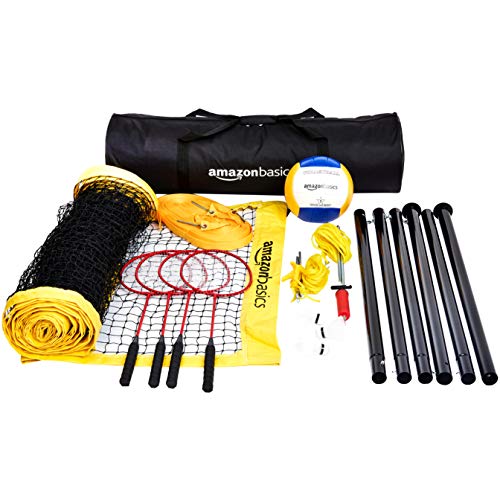
Complete volleyball and badminton set for outdoor use
8. Washers
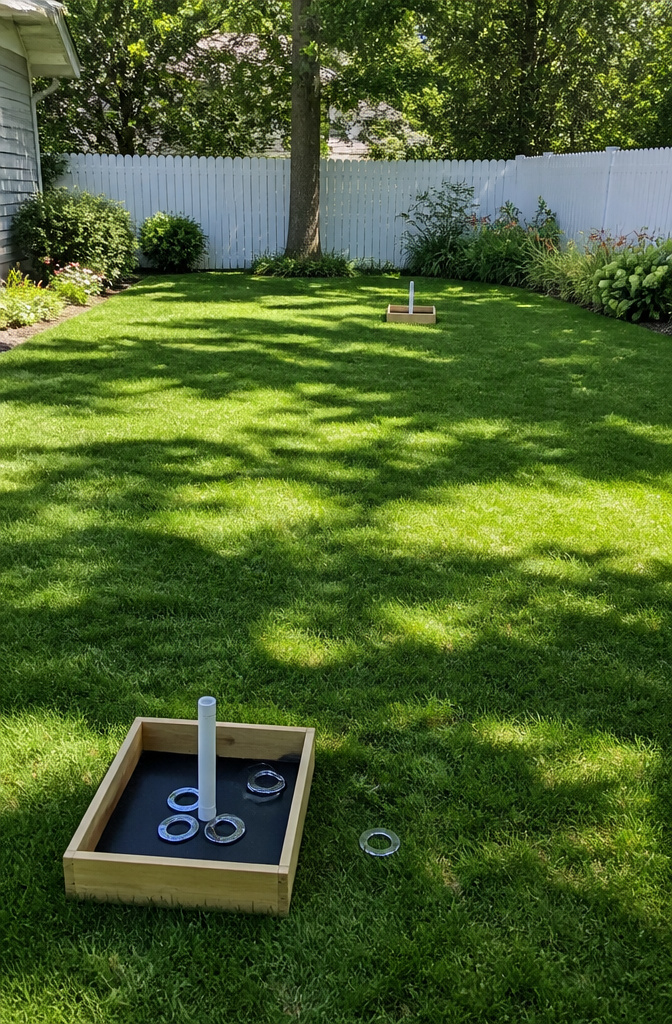
Washers handle wind that ruins lighter games, which is why the set stays in my car trunk from June through September. The boxes or boards with a center cup are compact enough to sling over a shoulder, and the metal rings themselves are heavy enough to fly straight without flipping in a gust.
The throw is simple: an underhand lob toward the target, trying to sink the washer into the hole or land it in the box for points. Sand, grass, or uneven patio stones all work; the game does not ask for a level surface the way bocce does. Two boxes, a handful of washers, and you are playing. Storage means sliding the set onto a garage shelf or under a bed, which matters when the shed is already crowded with tomato cages and potting soil.

🎉 3 in 1 Ring Toss Game Set: The carnival games package includes 12 rings (5.11 inches), 12 bean bags (2 inches), and 6 soft sports cones (7 inches), all neatly packaged in a convenient storage bag.

RIVALRY - Bring out everyone’s competitive side (Ages 8+)! Ideal for parties and bar games, the Tiki Toss hook and ring game is sure to win over family, friends, and partygoers everywhere

Tiki Party Inflatable Ring Toss Game: 1 set of inflatable summer tiki game (including 1 base approx. 31.5 x 31.5 inches and 4 tiki score toys approx. 13.39 inches high and 5.91 inches wide), and 8 pieces of rings in 4 sizes, approx. 5.31 inches/ 13.5 cm, 5.91 inches/ 15 cm, 6.3 inches/ 16 cm, and 7.09 inches/ 18 cm, 2 pieces for each size; This range in size adds an element of variability and creates different levels of difficulty for engaging and competitive gameplay
9. Mölkky
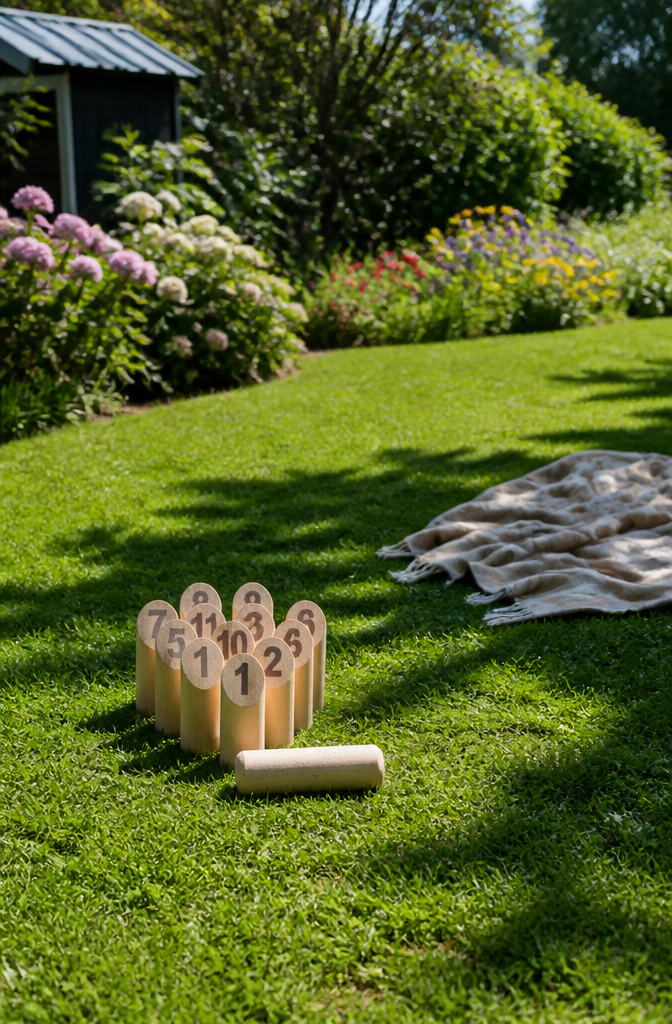
Mölkky has been turning up at more gatherings the last few years, and the comparison to outdoor bowling is the quickest way to explain it. A set of twelve numbered pins, marked 1 through 12, start upright in a tight formation. Players throw a wooden skittle underhand to knock them down, scoring the numbers that fall rather than the count of pins. The catch: exactly reaching 50 wins, but overshoot it and your score drops back to 25.
The game comes from Finland, and the sets are light enough to carry under one arm to a neighbor’s yard or a campsite. That portability matters for families who already own heavier games that rarely leave the garage. What drew me in, reading through the recommendations, was that Mölkky works on grass or packed dirt without any setup beyond standing the pins up. No stakes, no level ground, no carrying a folding frame. The pins wobble slightly on turf, which softens the challenge for younger throwers without anyone having to change the rules. Adults and children can play the same round without the adults needing to pull their throws, a balance few lawn games manage.
For a family wanting something outside the usual rotation of cornhole and ladder toss, the scoring system keeps everyone engaged longer than the simple knockdown would suggest. The arithmetic slows the pace just enough that a ten-year-old can still win on strategy while a parent does not have to pretend to try.

BOCCE BALL GAME SET - This classic bocce or petanque game set is great for outdoor yard games and includes 4 green and 4 red bocce balls to represent two teams for tournament-style play or just for hours of ball game fun.

SUITABLE FOR BEGINNER: ropoda 90mm bocce ball set uses lighter composite plastic and weigh about 15 ounces each to make play easier for beginners or kids. Our bocce ball set is a fun and fascination outdoor games suitable for all ages. Set it up anywhere and enjoy with a larger group of 2-8 players

MORE PROFESSIONAL AND FUN: ropoda 107mm bocce ball set includes 8 resin bocce balls with two distinct patterns and 4 colors(yellow, blue, green, red), one 60mm pallino (target ball), and a handy measuring stick for accurate scoring. Bright, high-quality resin bocce balls make backyard/beach/lawn activities more fun, and the more professional size and weight make the game more challenging and exciting
10. Kubb
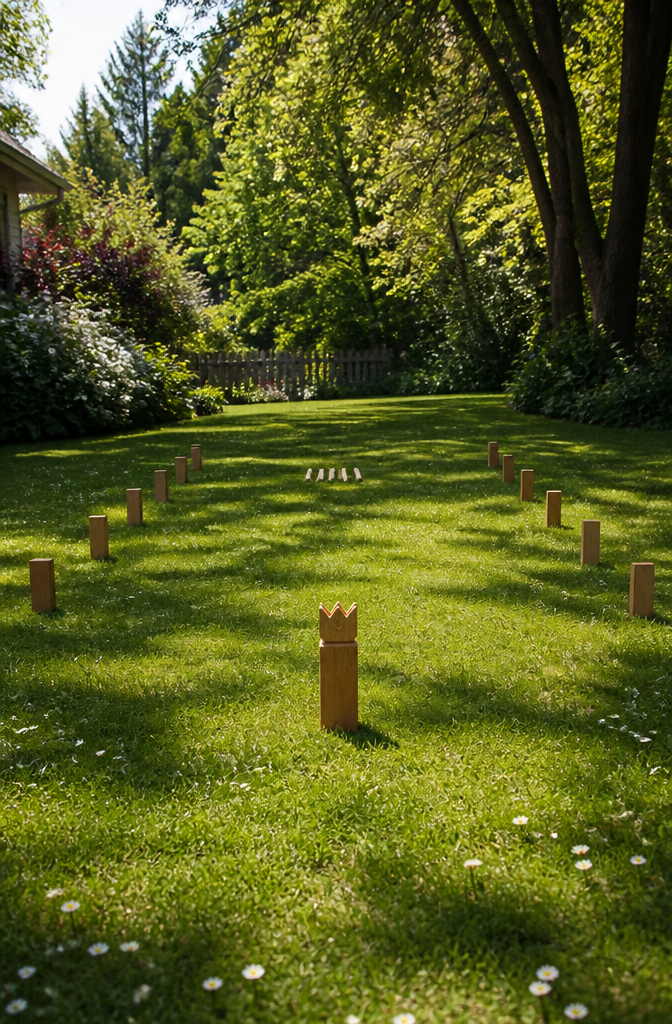
A regulation Kubb set weighs about 20 pounds, which sounds hefty until you realize that bulk keeps the blocks stable in grass and the batons satisfying to throw. The carrying case most sets include makes the whole thing reasonable to haul to a park or a friend’s cookout, though I would not want to carry it more than a few minutes.
Two teams line up on opposite ends of a rectangular pitch and take turns throwing wooden batons underhand at the opponent’s baseline kubbs, pronounced "koobs." Knock one over and the other team hurls it into your half to become a field kubb, a moving obstacle you must clear before you can attack their baseline again. Only after every kubb, field and baseline alike, has fallen does a team get to throw at the king, the taller central piece that ends the game.
The real tension comes from placement. A field kubb thrown too close to the center sits at an easy angle; throw it deep and tight to the sidelines and you force awkward, low-percentage shots. That conversation between teams, each trying to bury the other in difficult geometry, keeps the game alive long after the novelty of throwing sticks wears off.
Kubb handles two players fine but earns its keep with larger groups. Four per side feels right to me; six is manageable but starts to dilute how often anyone throws.

Pet Hobby Style: Made for human pet lovers who enjoy quiet backyard lawn games, careful planning, and cozy hobby humor.
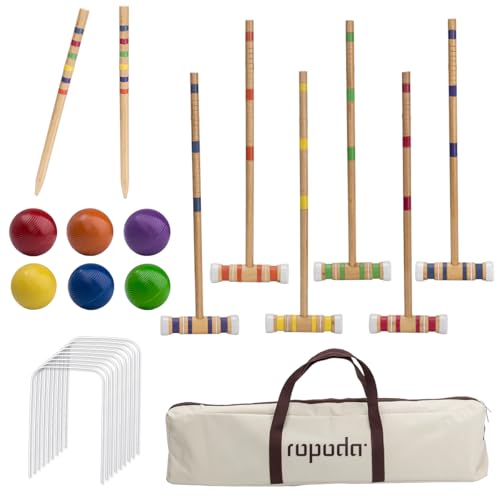
EASY AND FUNNY FOR EVERYONE: ROPODA croquet set for families/adults/kids is quite easy to learn and funny, also a great croquet set for lawn and backyard games. It can be played with 2 to 6 players and provide hours of funny

Set Of 9 Croquet Wickets: Come with 9 pack steel croquet replacement in this package. This croquet wickets in croquet game set is approximately 8 inches in height and 6.3 inches in width. You can choose this set to replace your old or damaged croquet, and it is very economical
11. Jazzminton
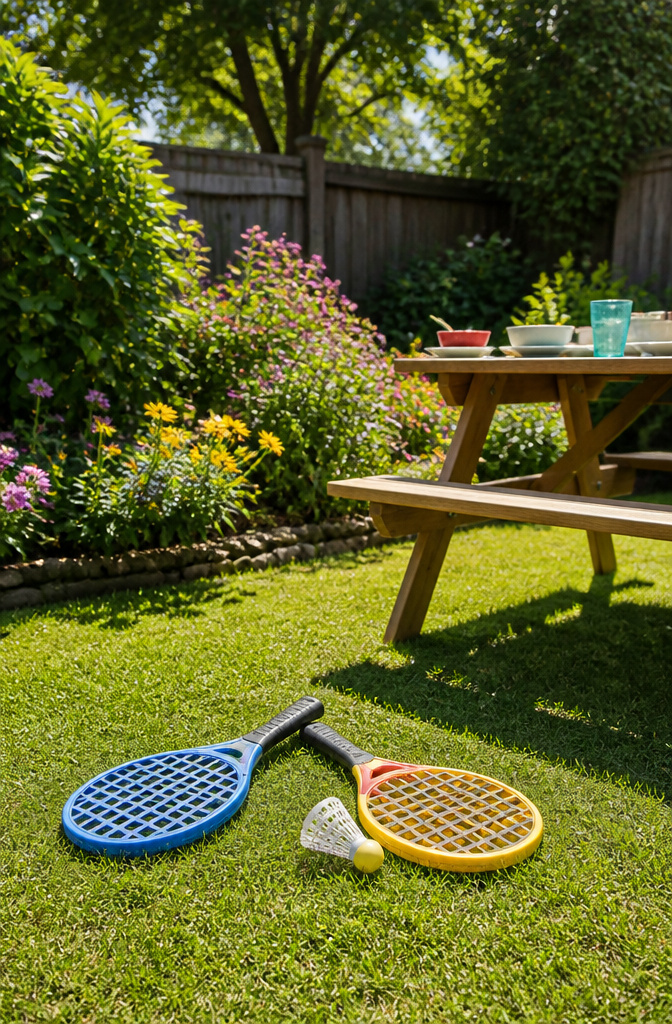
Jazzminton borrows its rhythm from badminton but strips away the net, the court lines, and the overhead clears that leave beginners swinging at air. Two players stand roughly fifteen feet apart, each with a solid paddle, and bat a lightweight birdie back and forth until someone misses or sends it into the hostas. The birdie is the whole trick: weighted with a rubber tip, it floats slower than a shuttlecock and corrects slightly in flight, so a child who connects late still sends it recoverable.
The birdie stalls and corrects mid-air, which keeps rallies alive between players who would otherwise be chasing plastic into the flower beds. My neighbor’s seven-year-old rallies with her grandfather this way; the gap in reflexes matters less when the equipment does half the forgiving.
No setup means the game starts while burgers are still on the grill and ends without pegs to pull or wickets to store. Wind above a light breeze scatters play, so late afternoon, when the yard falls calm, is the honest window. Paddles and birdies pack to the size of a book, and the whole thing costs less than a single round of mini-golf for four.
12. Sling Ball
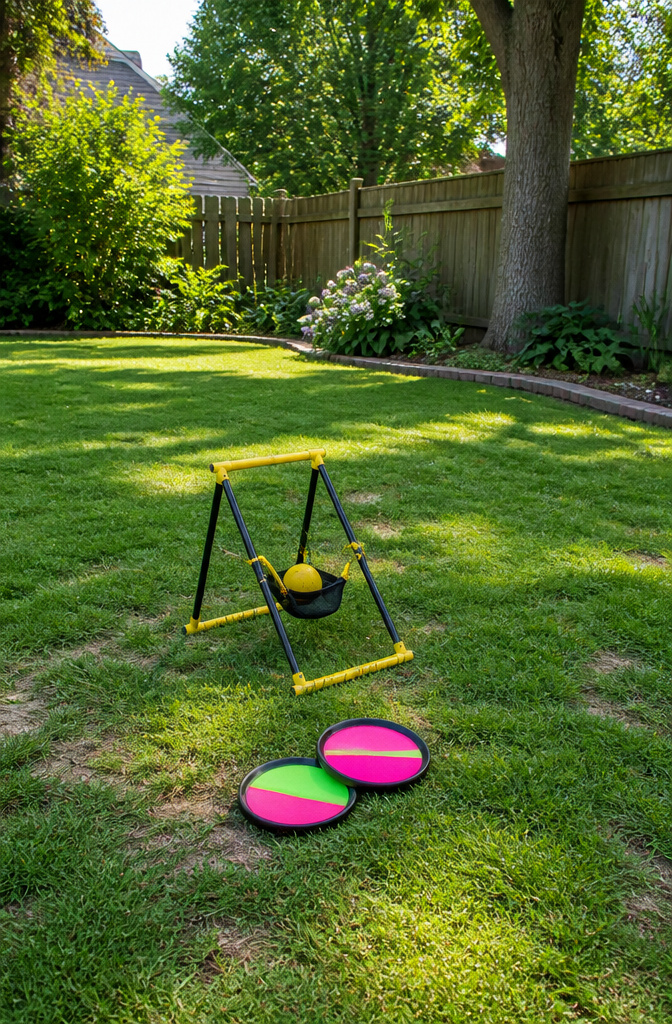
A launch mechanism changes everything about a throwing game. Sling ball rigs usually pair a small catapult or lever with a pair of handheld catching discs, turning a simple catch into something that sends the ball arcing thirty or forty feet with almost no arm strength required. The first time you see a seven-year-old launch one clean over a parent’s head, the appeal clicks.
The basic loop is straightforward: one player fires, the other catches, then you swap. Misses are common and funny, which keeps the pressure low. What sells it for families is the running. That launcher puts the ball on a high, slow trajectory, so the catcher has to sprint, read the arc, and position themselves. It is active without being exhausting, competitive without the contact that wipes out smaller kids.
Open yard space matters more here than with most backyard family games. Low branches or a narrow lawn turn those arcing shots into constant retrieval missions. A clear rectangle of grass, maybe fifty feet of depth, lets the game breathe. The novelty helps too; guests have not already played a hundred rounds at cookouts, so the learning curve becomes part of the evening rather than a barrier.
13. Tiki Toss
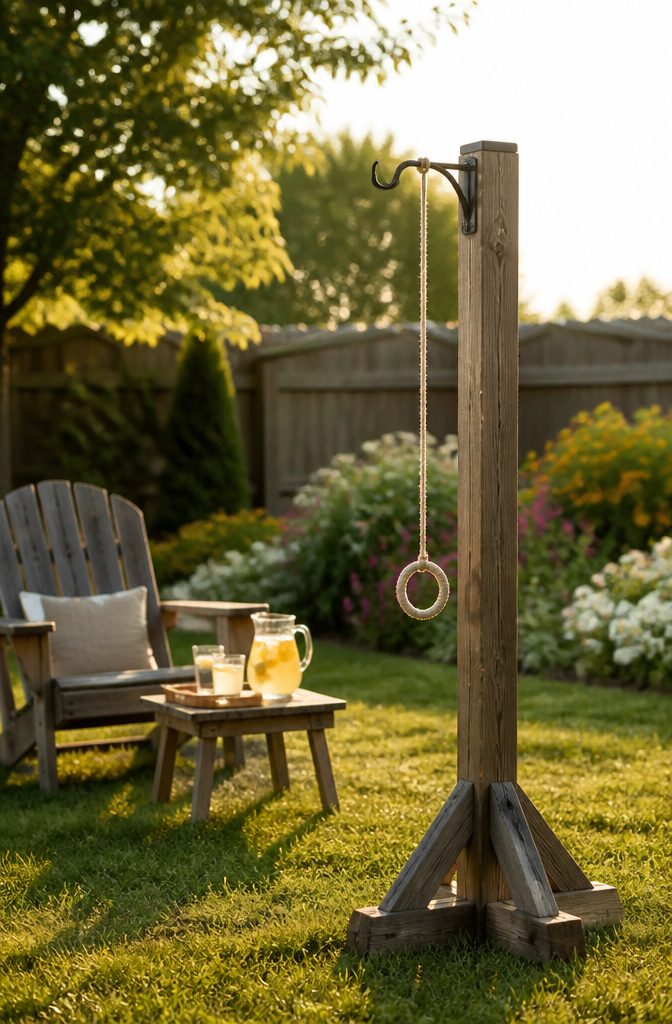
A ring on a string is the whole mechanic: you swing it toward a mounted hook and try to catch it. Tiki Toss distills that down to a board with one hook and one ring on a length of cord, usually hung on a wall or post. Adults line up for it, kids manage fine after a few tries, and the whole setup takes up about as much space as a framed picture.
The compact footprint matters more than it first appears. Cornhole needs open yard; this needs a patch of wall or a fence post and maybe six feet of swing room in front. That makes it workable on a narrow patio, a deck, or the side of a garage where larger games won’t fit. The ring travels back on its cord, so there is no chasing, no boundary to mark, no gear to retrieve from the flower bed.
Some versions stay mounted permanently, which removes setup entirely. Others hang on a single nail and come down in a minute. Either way, the barrier between "should we play something?" and actually playing is low enough that it tends to happen.
14. Yard Dice

Yard dice are exactly what the name suggests: six-sided dice blown up to lawn size, usually carved from wood blocks and finished with burned or painted pips. Any dice game you already know scales straight across. The sources mention Yardzee, Farkle, and Bunco as the usual conversions, and the rules stay identical. What changes is the physical comedy of rolling something that thuds instead of clicks, which matters less than you might think until you watch a four-year-old and a grandparent both leaning in for the same toss.
The noise is the main reason these stay outside. One source notes they clatter loudly enough to rule out indoor use entirely, which turns out to be a feature: the boundary is automatic, no negotiation required.
Best for mixed ages because the skill gap barely matters. A seven-year-old counting pips and a teenager running probability on Farkle re-rolls are both fully in the game. No advantage to height or speed, no equipment beyond the dice themselves. Storage is a sack or a box; setup is walking them out the door. For a family that wants something running in under a minute without staking boundaries or explaining complex rules, this is the lowest-friction entry point in oversized lawn games.
15. Giant Connect 4
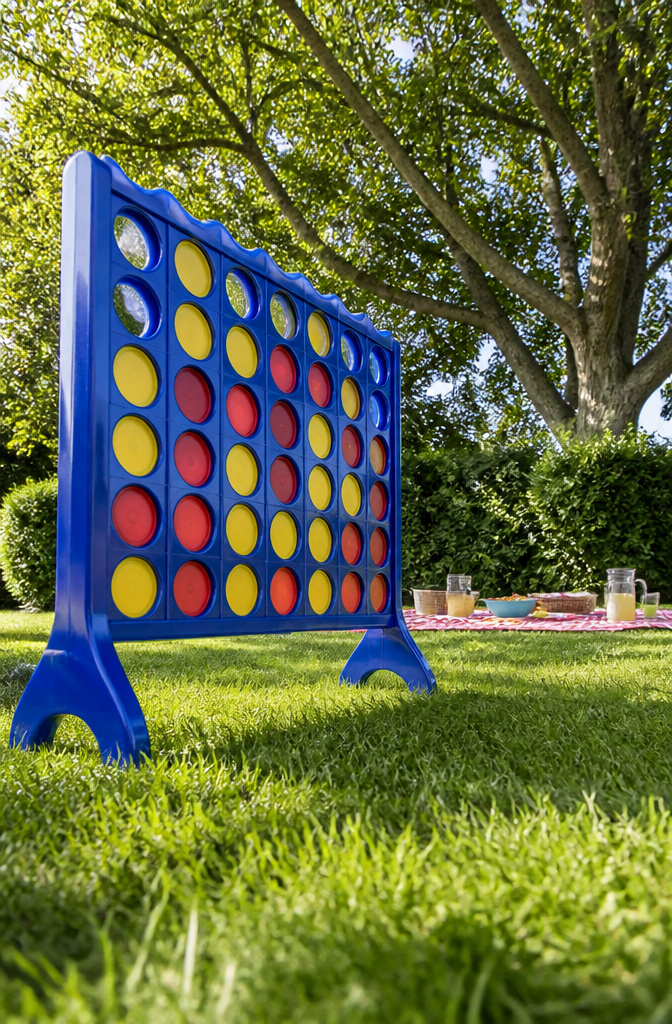
The vertical drop mechanic in giant Connect 4 changes how the whole game feels. Instead of sliding pieces across a flat grid, you’re feeding discs down a column from standing height, watching them clatter into place and immediately shift the board’s balance. That physical action keeps younger kids hooked; the strategy of blocking diagonal runs while building your own keeps adults from drifting toward their phones.
At roughly three to four feet tall, the outdoor version carries real presence in a yard. The bright plastic discs read clearly from across the lawn, and the upright frame naturally draws people over between turns at the grill. Setup takes maybe a minute: lean it against a table or let it stand on its own base, and you’re set.
The game scales to two players or four in teams, and a full match runs ten to fifteen minutes. Long enough to matter, short enough that nobody sulks through a blowout. The only real limit is storage; the frame collapses some but still needs closet real estate through winter.
16. Ring Toss
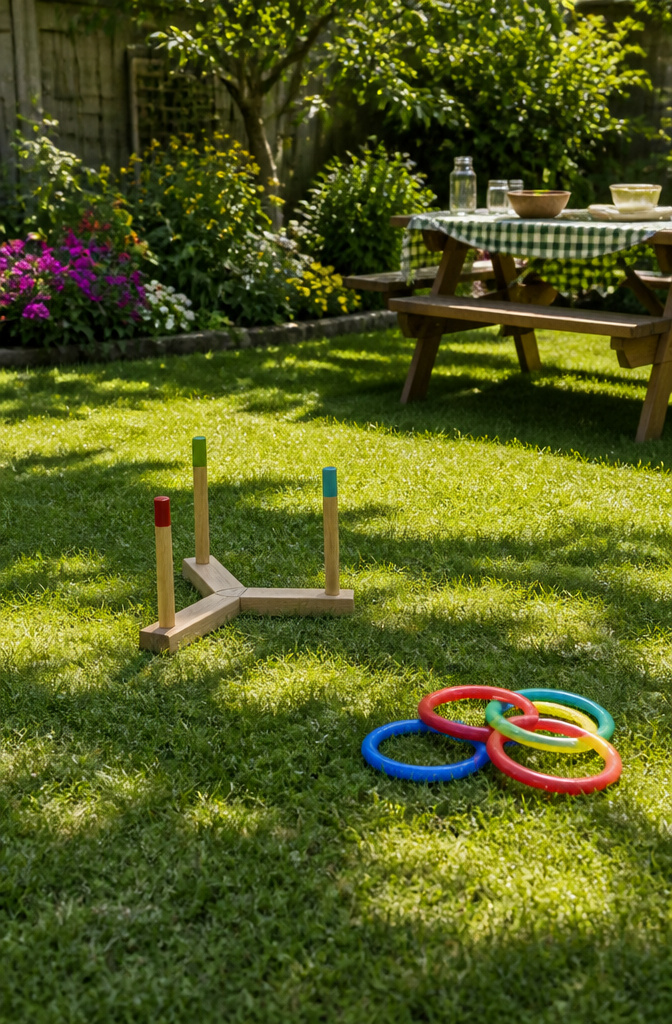
A ring toss set can live in a closet and come out when the backyard fills with people. The basic version needs posts or bottles and rings you can throw from a few feet back. I have seen it work with rebar driven into the lawn, PVC pipe weighted in buckets, or even wine bottles lined on a picnic table. The rings themselves are usually rope or plastic, heavy enough to fly straight but light enough that kids can still get them airborne.
What makes this one stick around is how little space it demands compared to something like cornhole. A strip of grass or a patio corner is plenty. You can also move the throwing line back for adults or in for younger kids without changing any other rules, which keeps a mixed-age group in the same game instead of splitting off. For parties, the no-setup part matters: you carry it out, set the posts, and start tossing. No stakes, no assembly, no instructions to read. The scoring can stay simple for casual play or borrow from hookey-style board rules if you want more structure, but most backyard gatherings never get that formal.
17. Obstacle Course
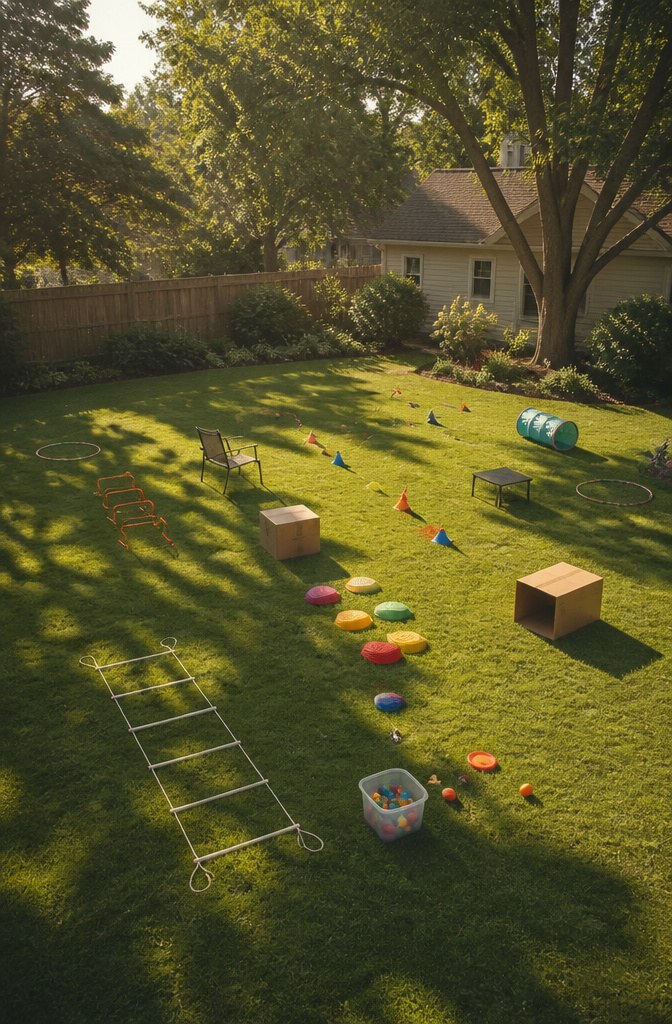
A backyard obstacle course is the one game that scales to whatever space you have and whatever mess your kids need to burn off. I watched a neighbor’s two boys turn a standard suburban lot into a lava-pit circuit using jump ropes, flattened cardboard boxes, and patio furniture they were already tripping over in the garage. No purchase required, though agility ladders or plastic stepping stones work if you want them.
The real appeal is parallel play: three kids can move through different stations at once without waiting in a line that ends in a shoving match. Hula hoops from the toy bin become rings to hop through. Pool floats become islands over imaginary water. The course gets rebuilt each time, which matters more than you’d think; the twenty minutes they spend arguing over whether the hose is a "raging river" or a "poison creek" is twenty minutes of negotiation practice dressed up as chaos.
PVC pipe sections and step stools work for crawling tunnels and balance platforms. Baseball bases mark start and finish. The only rule that holds is that whoever builds it must run it first to prove it is survivable.
18. Capture the Flag

Capture the Flag earns its spot in any lineup of backyard family games by scaling up when everything else scales down. The setup is spare: split the group into two teams, give each a flag or even a cloth napkin, and send them to opposite ends of the yard. Each team hides its flag with at least part of it still visible, no burying it completely under a rock. Then both sides try to cross into enemy territory, find the flag, and carry it back without getting caught.
What counts as caught depends on the crowd. A two-handed tag works for most ages. Water balloons land softer and feel fairer for mixed groups of kids and adults. Flashlight tagging stretches the game past sunset if the yard allows. Anyone caught either sits out or goes to a designated prison zone, where teammates can free them by crossing over, tagging them, and escorting them back without getting caught themselves.
The prison rule keeps bodies in motion instead of parked on the sidelines, which matters when you have twelve or sixteen players and only one cornhole board. Older kids stay engaged because the game rewards speed, stealth, and quick planning rather than waiting turns. A yard with a shed, some shrubs, or a fence line for cover helps, but even open grass works if the boundaries are clear. The more space to run, the better the chase.
19. Potato Sack Races
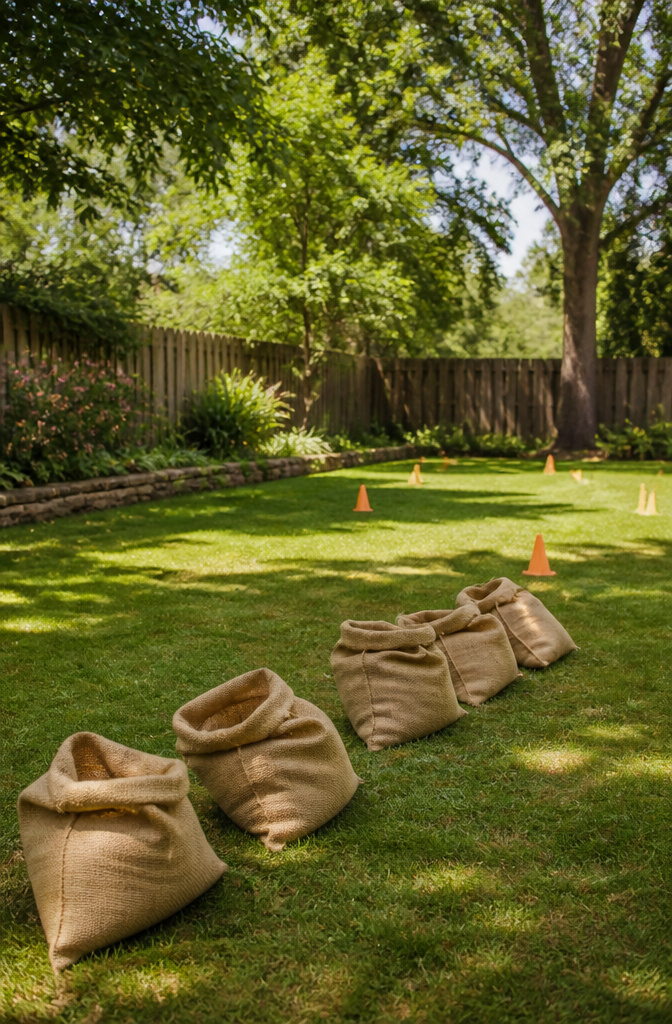
A line of kids in burlap sacks hopping across a yard and back is about as simple as a race gets, and that simplicity is exactly why it still works. The mechanic is just the hop: both feet together, sack pulled up to the waist or gripped in both hands, propelling forward in bounds that feel halfway between a kangaroo and a controlled fall. For a backyard setup, a start line and some kind of turnaround marker are all the space you need. A cone, a lawn chair, or a patient adult holding a flag does the job.
The format scales well for the multi-family cookouts where this game earns its keep. Run it as straight heats, or split into relay teams where each racer tags the next sack-wearer at the line. The relay version keeps more bodies moving and shortens the wait for turns, which matters when the age range spans from kindergarteners to grandparents. Relay heats keep the line short and the chaos distributed, and chaos is the point: the sacks tangle, the hopping throws off balance, and the first-to-return finish has none of the precision of a timed sprint. That looseness is the nostalgic appeal. Most adults who remember field day have some version of this stored away, and watching a new generation discover the indignity of hopping in a sack brings it back intact.
20. Four Square
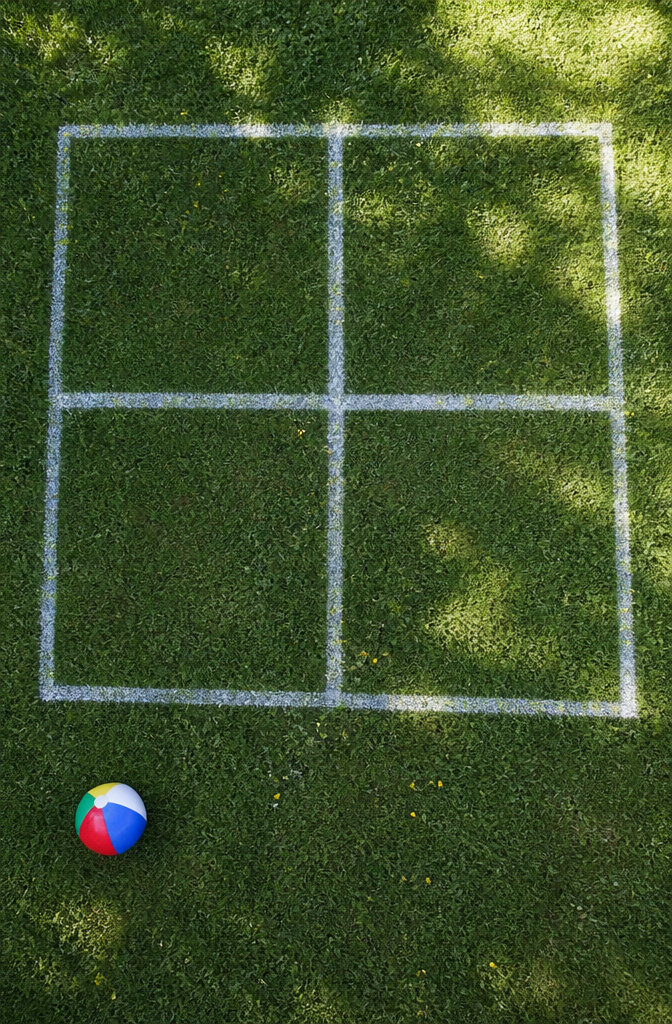
Four square needs a hard, flat patch of ground and a playground ball, plus sidewalk chalk or masking tape to mark the court. The playing surface divides into four equal squares, numbered one through four. Each player stands in a square, bouncing the ball between squares until someone misses or hits out of bounds. That player rotates out, everyone below them advances up a number, and a new player steps into square one.
Rounds last a minute or two, so kids cycle through quickly instead of waiting around. The rules take a little practice to get the hang of, but once everyone knows them, a game occupies kids for a long time. A set of court lines exists that lets you play anywhere from grass to asphalt to even beach sand, though chalk on driveway or patio works just as well. The whole setup costs next to nothing, and the constant rotation keeps bodies moving.
Frequently Asked Questions
What are some fun outdoor games for families?
Cornhole, bocce ball, croquet, Kan Jam, Spikeball, ladder toss, giant Jenga, washers, Mölkky, Kubb, Jazzminton, sling ball, Tiki Toss, yard dice, giant Connect 4, ring toss, obstacle courses, and capture the flag all work well for backyard gatherings with mixed ages.
How do you play cornhole?
Players throw bags filled with corn kernels at a raised platform with a hole in it. A bag through the hole scores three points; one that stays on the board scores one. The first side to twenty-one wins, though many households run their own rules on that number.
What is the best game for a large group?
Capture the flag and giant Jenga both draw crowds effectively. Capture the flag splits everyone into two teams with no upper limit, while giant Jenga naturally gathers spectators around the tower as it wobbles past five feet.
What are some DIY backyard games?
Giant Jenga works with two-by-fours cut to length and sanded smooth. Ring toss needs only posts or bottles and rings you can make from rope or plastic. Obstacle courses cost nothing if you repurpose jump ropes, cardboard boxes, and patio furniture you already own.
What is the best game for kids?
Ladder toss and croquet both suit children well. Kids pick up the bolas motion in ladder toss faster than adults expect, and croquet moves slowly enough for toddlers to wander through the wickets without derailing play.