
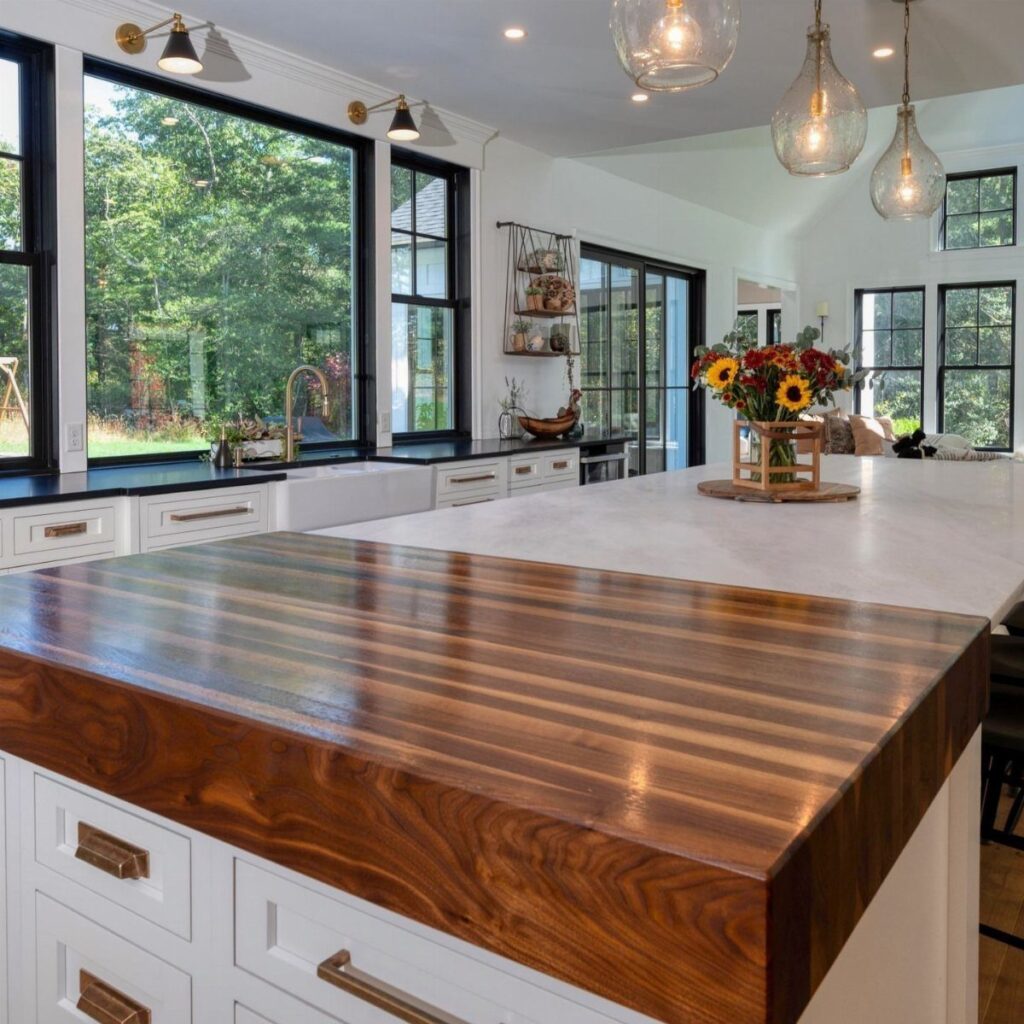
A farmhouse kitchen island can run from a repurposed vintage table you stabilize yourself to a built-in banquette with carved dark wood detailing and shiplap paneling you paint yourself.
1. Drawers and Cabinets
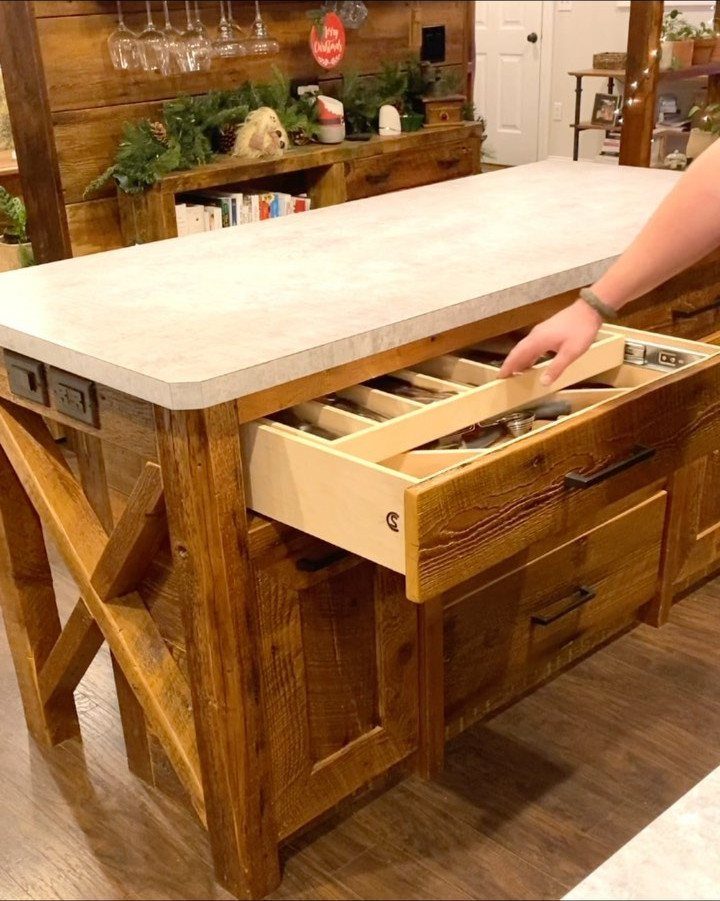
Drawers and cabinets turn an island from a table into a working pantry. I look for deep lower drawers for pots and a shallow top drawer with dividers for the tools I reach for all day long.
The hardware matters more than people think. Soft-close hinges cost a few dollars more per pair than standard and save the slam.
If your island is open on one side, face that side with matching doors and keep the back plain. The savings run substantial on cabinetry costs.
2. Elegant Butcher Block Surfaces
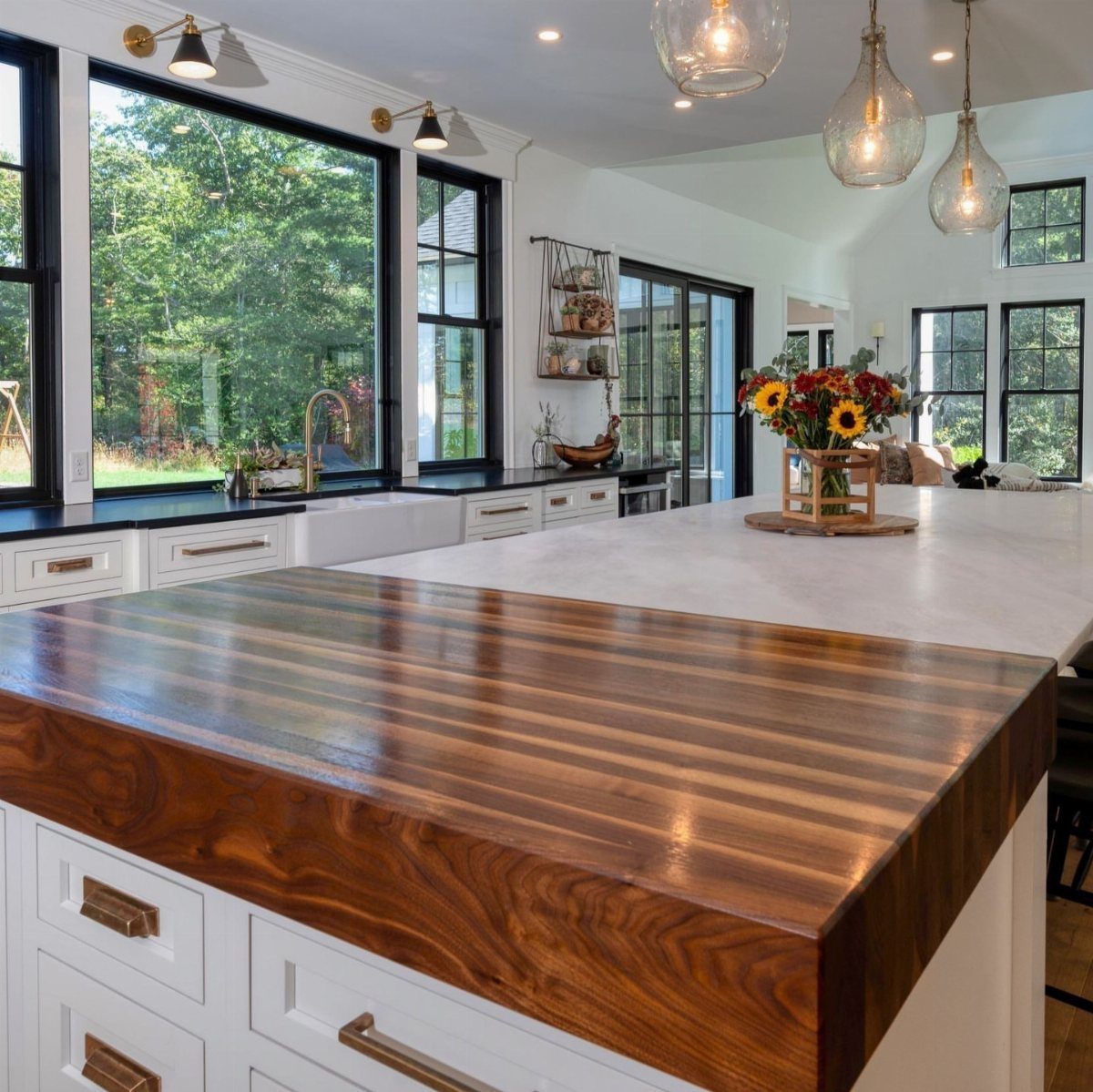
A thick butcher block surface, finished deep enough to plane later, gives you a cutting station that stone cannot. I like maple for hardness or walnut when I want the grain to carry the visual weight.
A butcher block section beside stone counters keeps the prep zone where you need it without giving up the durability of quartz or granite elsewhere.
That split lets you prep on wood and roll dough or set hot pans on the cool surface next to it.
End-grain construction, with the wood fibers standing vertical, heals better from knife marks than edge-grain or face-grain. It costs noticeably more.
3. Repurposed Vintage Table
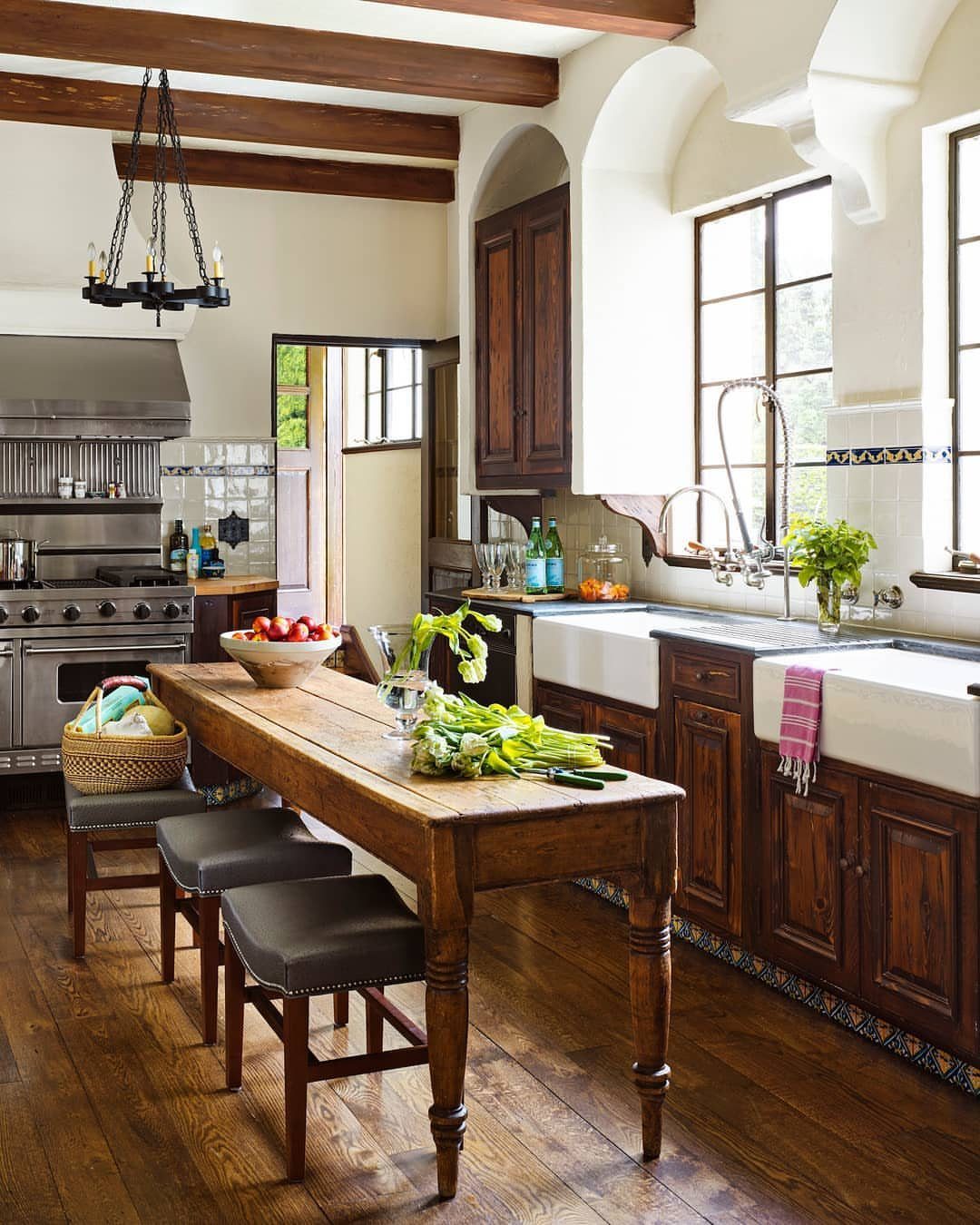
I check for solid joints first.
A table that wobbles in the barn will wobble worse on tile. Add a plywood subtop if the boards are too far gone for food contact, then lay your cutting surface or stone on that.
The best candidates run about counter height already. Much shorter and you are rebuilding legs; much taller and bar stools leave your feet dangling.
4. Farmhouse Sink
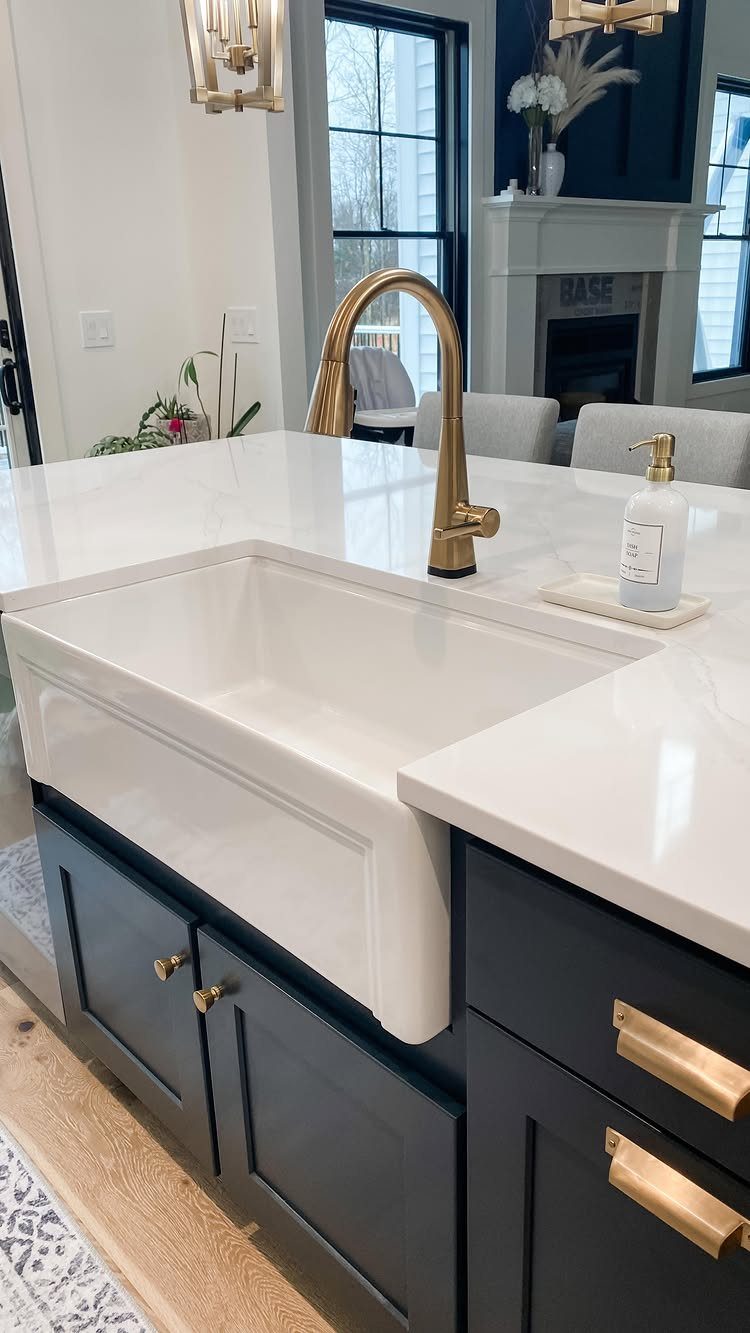
An apron-front sink in the island moves the wet zone to the room’s center, which I only like when the island is long enough to keep the dishwasher and prep space from crowding each other.
Shorter than that, you lose too much counter to the basin and landing space.
White fireclay against a dark base keeps the farmhouse feel without going country-kitsch.
That contrast reads as farmhouse because it echoes the historical pattern of white porcelain in painted wood kitchens. Fireclay resists chips better than cast iron but rings when you set a steel pot in it.
Plan your plumbing rough-in before the floor closes. An island sink needs a vent looped up through the cabinet, not a straight drop to the slab.
5. Shiplap or Beadboard Paneling
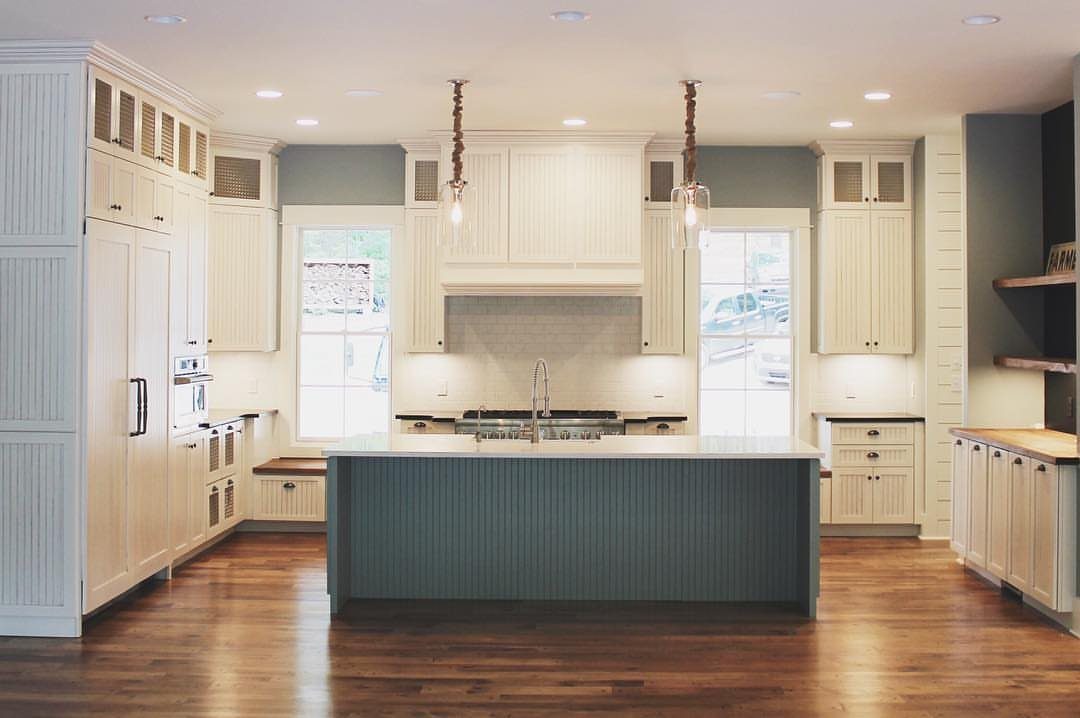
Beadboard on an island base adds shadow lines that read as furniture, not cabinetry. The vertical grooves draw the eye up, which helps in kitchens with standard ceilings where horizontal lines can feel heavy.
A blue with enough gray in it stays clear of nautical territory. I have seen cleaner blues go wrong in a kitchen with rope pulls or lantern pendants; the color itself needs no help to feel coastal.
Install beadboard as thin panels over a flat frame, not as individual boards. The panels stay stable through humidity swings that would open seams in true tongue-and-groove.
6. White Oak and Warm Whites for a Light Modern Farmhouse Look
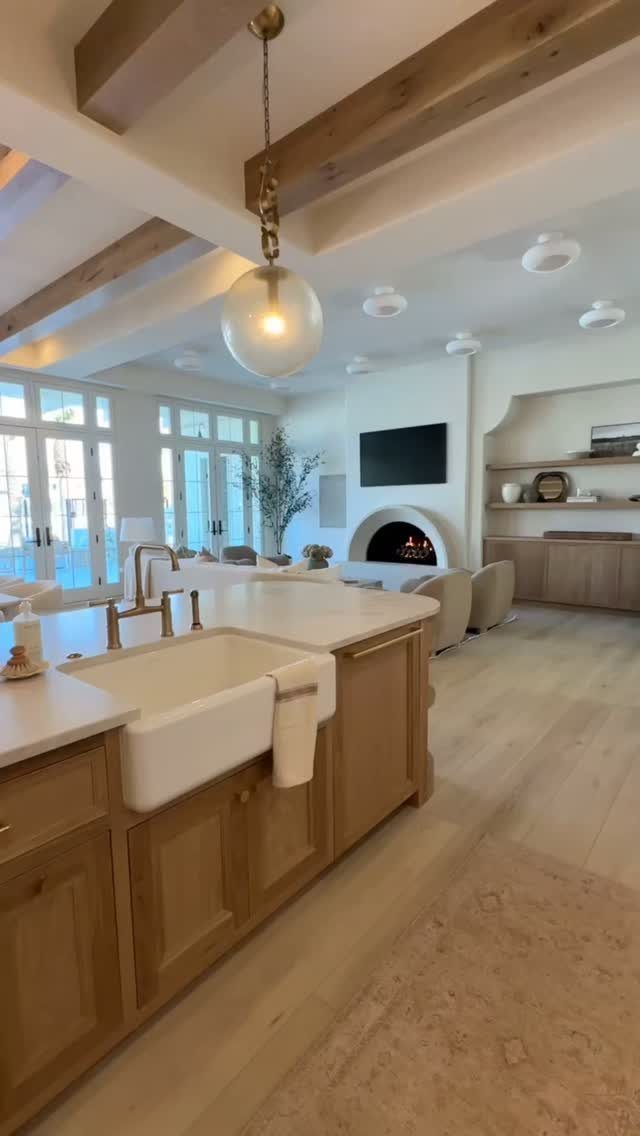
White oak with warm whites gives you the light modern farmhouse look without the sterility of cooler palettes. Natural oak, not stained, keeps the grain visible and lets the tone shift with the day’s light.
I specify rift-sawn or quarter-sawn oak for island bases.
Plain-sawn, the cheapest cut, shows cathedral grain that competes with everything else in a bright room. The straighter grain of rift-sawn calms the composition.
Warm white reads differently against oak than against painted MDF. Test your cabinet color on a sample board beside the wood, not on the wall alone; the wood reflects undertones you will not see otherwise.
7. Pendant Lights Above the Island
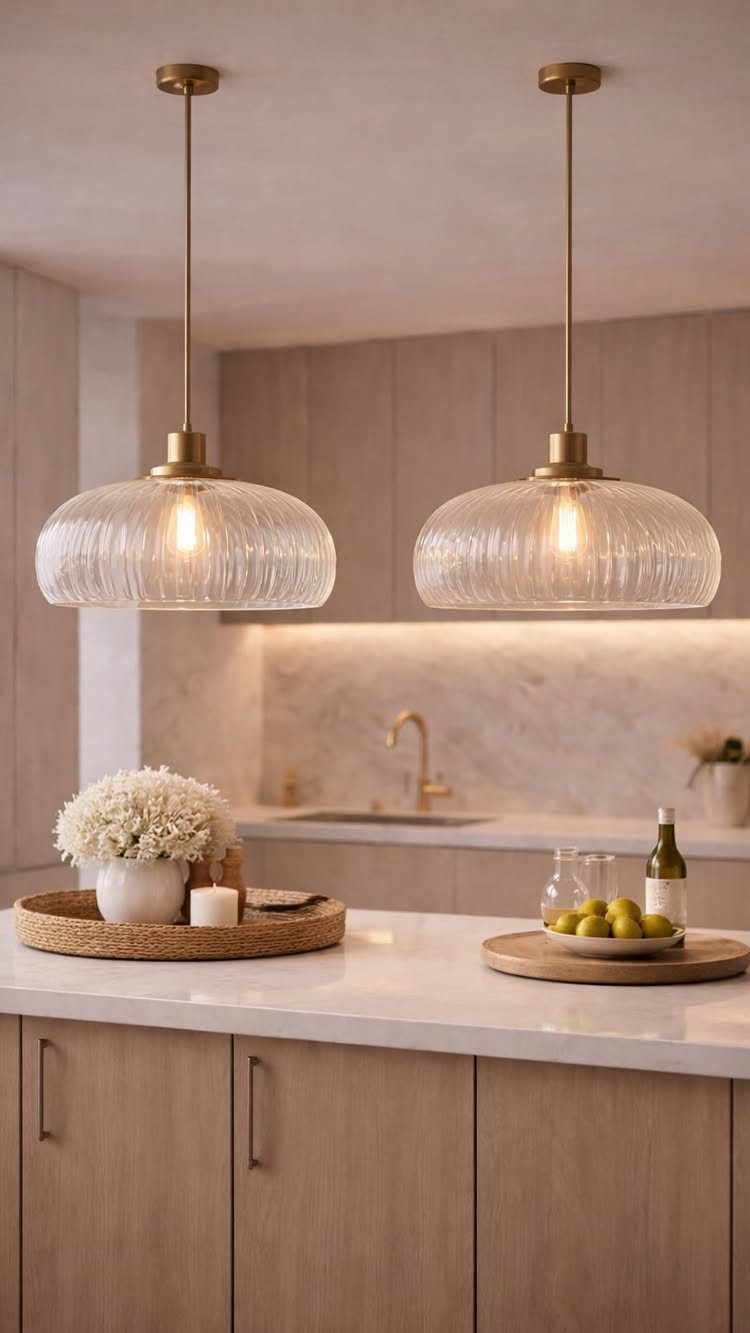
The fluted glass diffuses glare without dimming the task light you need at the island.
I mount pendants high enough to keep sightlines open but low enough that the light falls strong and warm on the work surface; too high and it goes thin and useless.
One pendant should run about one-third your island width.
Two or more should span most of the island length, spaced close enough that the light overlaps and you are not walking through dark gaps. Brass against light wood and marble warms the whole composition without competing for attention.
Glass that is ribbed or reeded hides bulb glare better than smooth. I choose that when the fixture sits at seated eye level.
8. Paint the Island
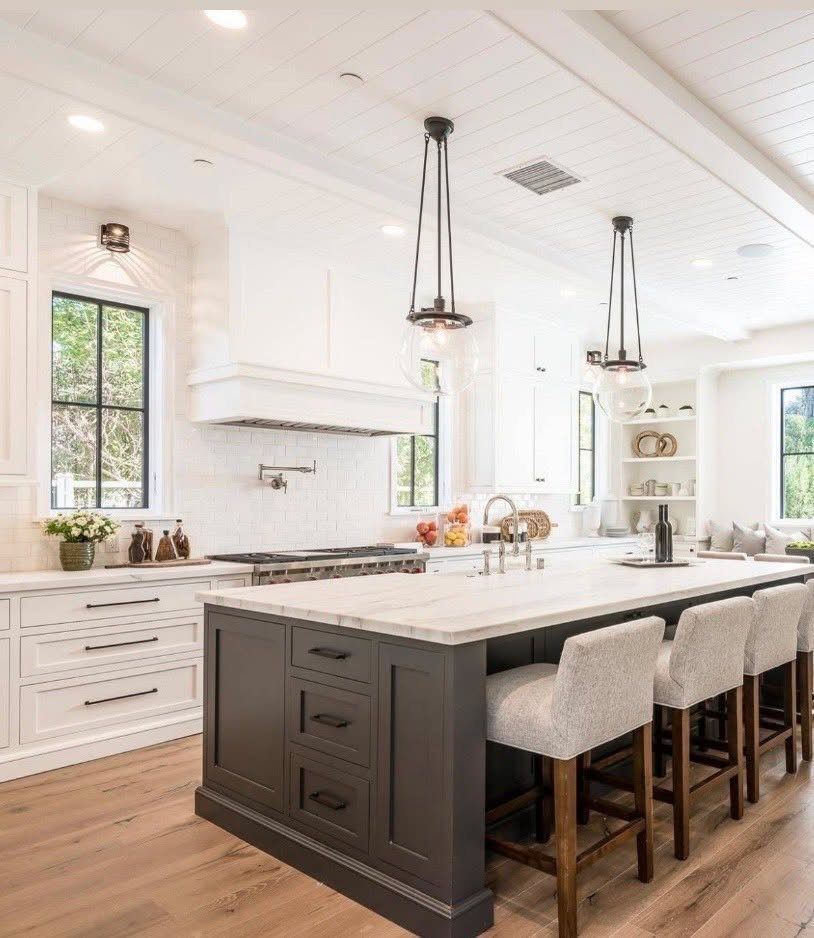
A single dark mass against white cabinetry gives the island the visual weight of furniture. I like charcoal with warm undertones; it stays soft in morning light and sharpens under pendants after dark.
The floor and the stools need to agree with the choice. When the island is the boldest color in the room, let the floors and seating stay quiet so nothing else picks a fight.
Paint-grade MDF holds the color evenly on panels and doors. Hardwood takes paint well too, but the grain can telegraph through in certain lights if the primer is thin.
9. Bar Stools
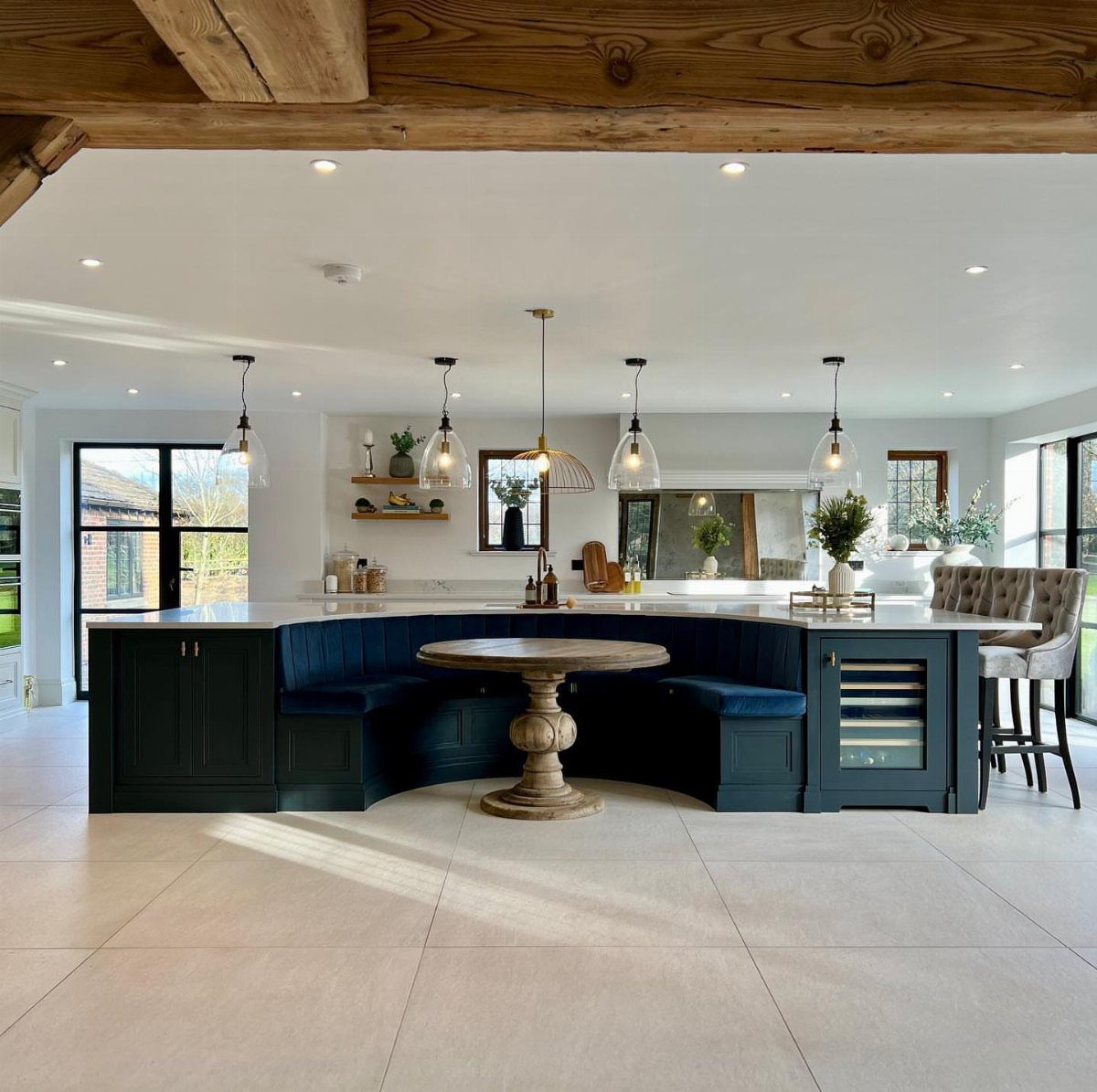
Tufted upholstery on a stool reads as dining chair, not bar seating, which softens the island’s working edge. I look for backs that support the shoulder blades; counter-height stools pair with standard kitchen counters, bar-height stools with the taller ones.
Leather or vinyl wipes clean; linen or wool looks richer but needs more care.
A small island seats two, a generous one four; leave elbow room or people will eat standing up instead. More than that, and people elbow each other reaching for their coffee.
10. Built-in Banquette Seating
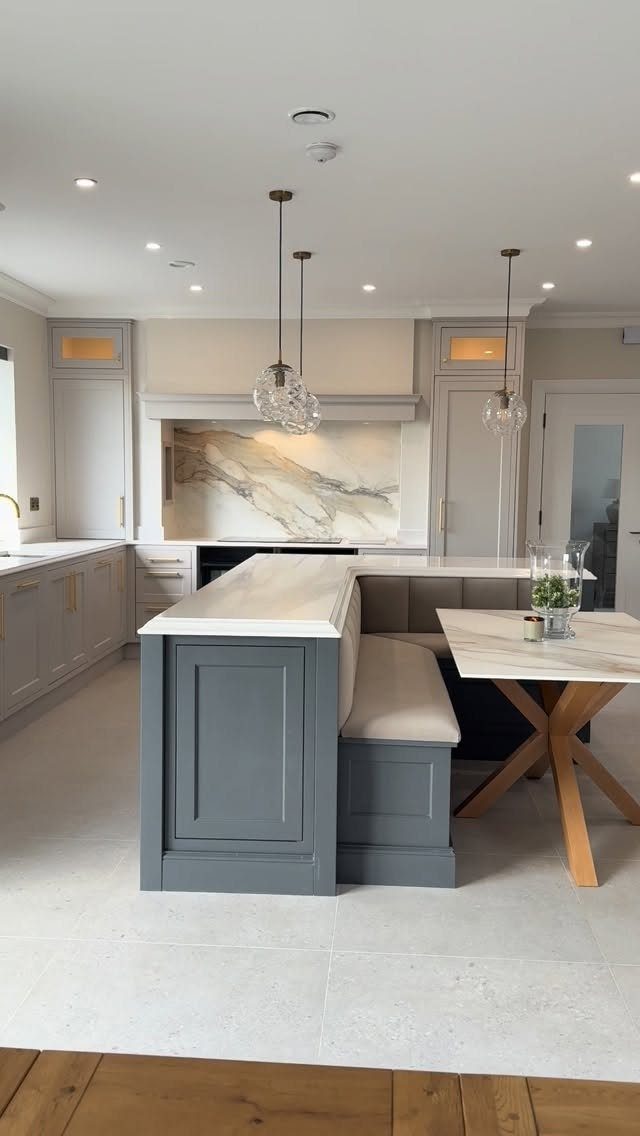
An L-shaped bench built into the island turns one end into a breakfast nook without sacrificing the prep surface. I like 50mm quartz for the counter, thick enough to read as substantial where it overhangs the seat.
The upholstery should be vinyl or a tight-weave performance fabric. Spills migrate quickly in a eating space this close to the cooking zone.
The table needs a base that clears knees.
11. Dark Wood Carved Detailing
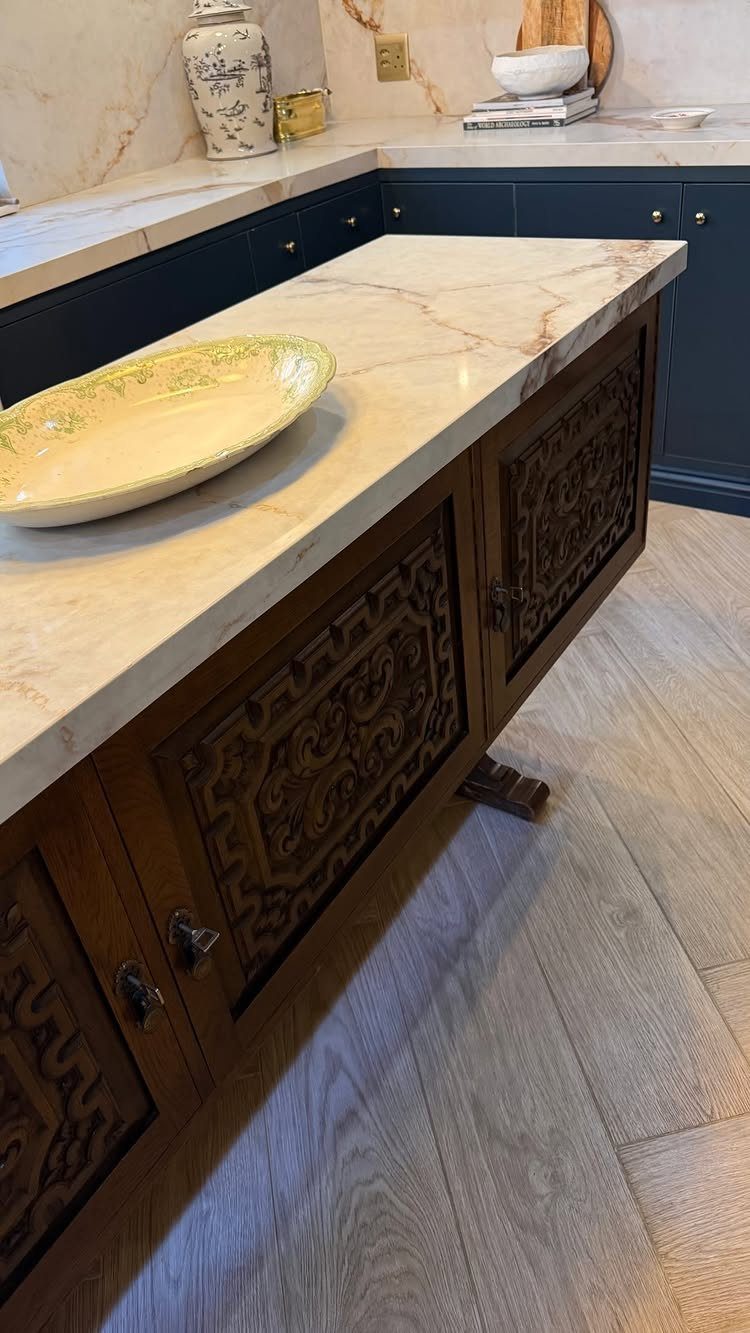
Carved panels on an island base turn storage into millwork. The depth of the carving catches shadow, so the detail reads even in flat overhead light.
I keep the top quiet when the base is busy. White marble with soft veining gives the eye a place to rest against heavy carved wood.
A dark stain on hardwood, not paint, lets the carving’s texture show through. The antique key is hardware as ornament; it suits a kitchen that borrows from furniture tradition rather than cabinetry.
Selecting the Right Island Size
I start every island sizing job with a tape measure and the traffic paths already in mind.
The smallest island I would bother building runs 24 by 48 inches. A galley kitchen that only needs prep space calls for something compact.
In a larger room, the island can carry storage, a sink, or seating, but the clearance stays non-negotiable. I measure with the cabinet doors and dishwasher open, not closed; the working clearances matter more than the static ones.
Placement follows the work triangle without forcing it. The island should not strand the refrigerator on the far side of a narrow aisle.
If the kitchen is L-shaped, the island typically sits in the open leg, parallel to the main counter. In a single-wall kitchen, it defines the second boundary of the room.
Today, the island has become ground zero for get-togethers and is one of the most frequently requested features in culinary remodels and redesigns.
— Hunker
Maintaining Farmhouse Kitchen Islands
Wood tops need regular oiling, not just when they look dry. I use food-grade mineral oil on butcher block every few weeks in a working kitchen; neglected wood cracks at the sink and around the stove where steam hits it.
Excess water is the enemy, so I wipe spills immediately and never let a plant sit in a puddle.
Stainless steel shows every fingerprint. I clean with a soft cloth and a mild cleaner, then dry in the direction of the grain to keep the surface uniform.
Distressed or reclaimed wood with a weathered finish hides wear better than smooth planes, which is part of why it suits farmhouse kitchens that actually get used.
For painted islands, I touch up chips before they expose bare wood to moisture. Manufacturer instructions vary by finish, so I follow the sheet that came with the piece, not a generic routine.
Choosing Materials for Durability
Reclaimed lumber has already done its shrinking and warping; the stability is built in.
For countertops, stone outlasts wood where heat and water are constant. Granite and soapstone handle hot pans without complaint and resist the abrasion that marks softer materials.
The stone’s texture and the wood’s wear pattern do the work; neither needs embellishment.
I avoid plain-sawn soft pine for any surface that sees knives or heavy pots. It dents too easily and the damage accumulates fast in a working kitchen.
Frequently Asked Questions
What are the key characteristics of a farmhouse kitchen island?
Natural materials, built-in storage, and a utilitarian design that still reads as furniture.
I look for wood or stone surfaces, drawers and cabinets that turn the island into a working pantry, and details like beadboard or carved panels that add shadow and texture.
The finish is usually distressed or weathered rather than pristine, and the overall feel is meant to be comfortable and inviting, not showpiece formal.
How do I decorate my farmhouse kitchen island?
Keep the palette neutral with whites, creams, or soft grays, and let the materials do the work. Reclaimed wood, shiplap or beadboard paneling, and vintage hardware like metal drawer pulls give the island its character without clutter.
I add plants or rustic objects sparingly; the island is a working surface first, and too much decoration fights the utilitarian spirit of the style.
Can I add a sink to my farmhouse kitchen island?
Yes, though I only like an apron-front sink in the island when the island is long enough to keep the dishwasher and prep space from crowding each other.
White fireclay against a dark base keeps the farmhouse feel without going country-kitsch.





