
The ideas below split between quick buys you can move to the next rig and builds that only make sense when you own the camper, and that line matters most when you answer to a rental company.
Renters should skip anything that needs screws, which rules out slide-out drawers, custom built-ins, and wall-mounted spice jars; the over-the-door organizer and the hanging containers are where your list starts.
1. Magnetic Spice Racks
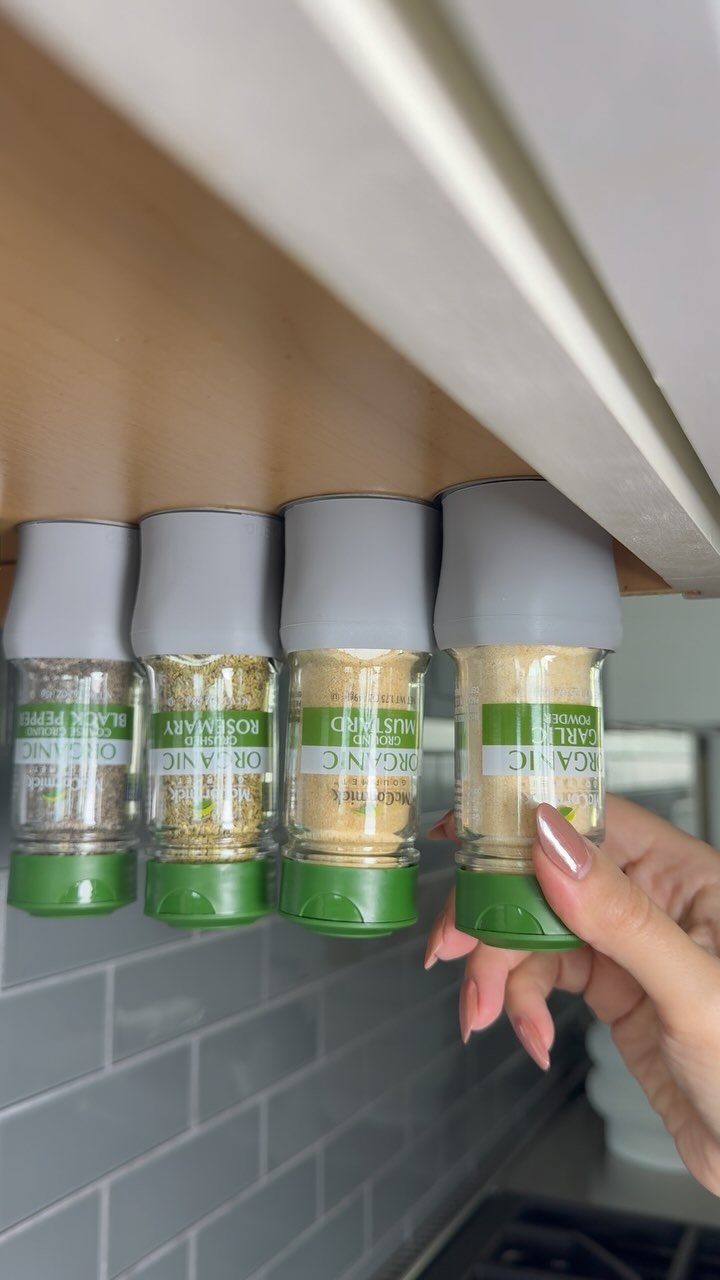
Magnetic spice racks turn the dead space beneath upper cabinets into usable storage.
The jars hang from a steel plate or magnetic strip screwed to the cabinet underside, lids gripping metal discs. Magnetic racks free shelf space for bulkier items and keep spices visible at a glance.
Check the magnet strength before you load it. Weight limits vary with the mount, so lightweight dried herbs are the safer call; oils stay on the shelf.
2. Drawer Dividers
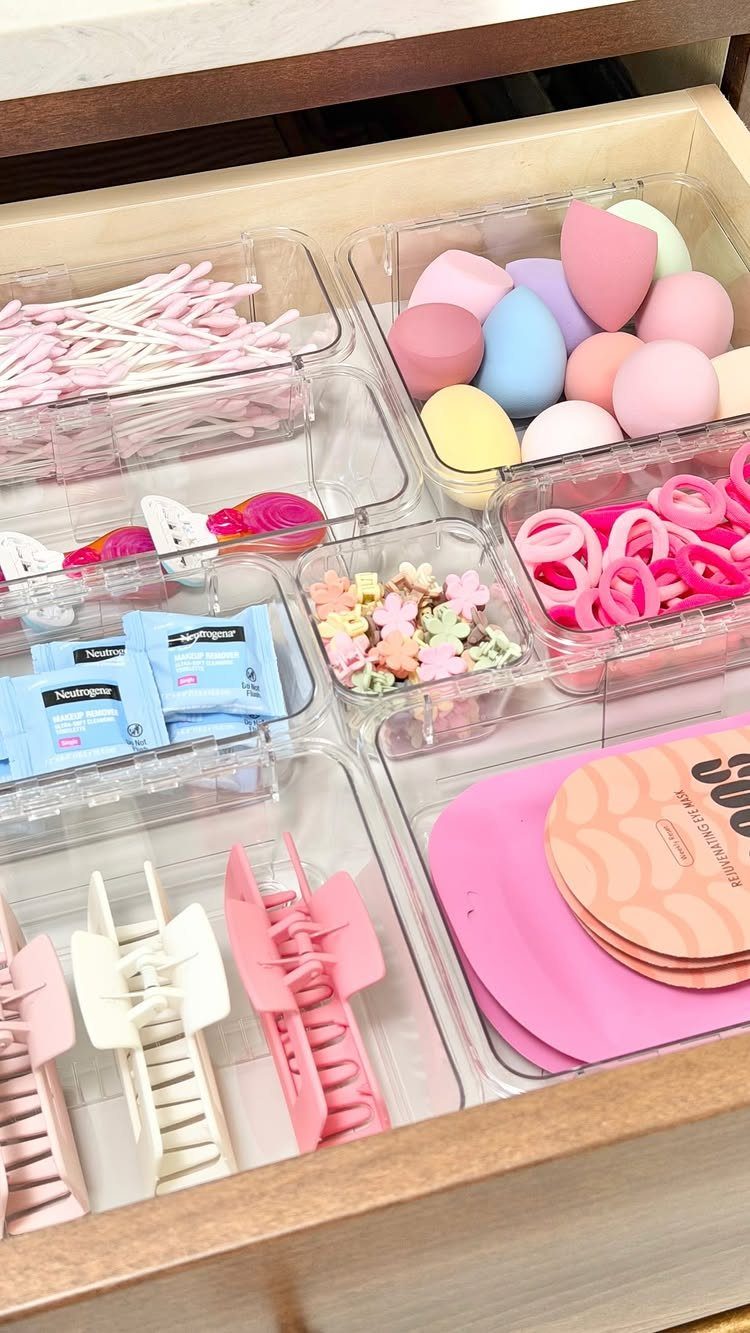
Clear acrylic dividers turn a single junk drawer into sorted zones without building anything.
Cotton swabs, hair ties, and makeup sponges each sit in their own bin; the same system handles silverware, tools, or charging cables in a camper drawer that shifts on the road.
I prefer rigid acrylic over flexible plastic because it stays put when you slam the brakes.
Measure your drawer inside width before buying; most spring-loaded sets adjust to fit a range half an inch either way of their listed size. No hardware, no screws, just fit and load.
3. Slide-Out Drawers
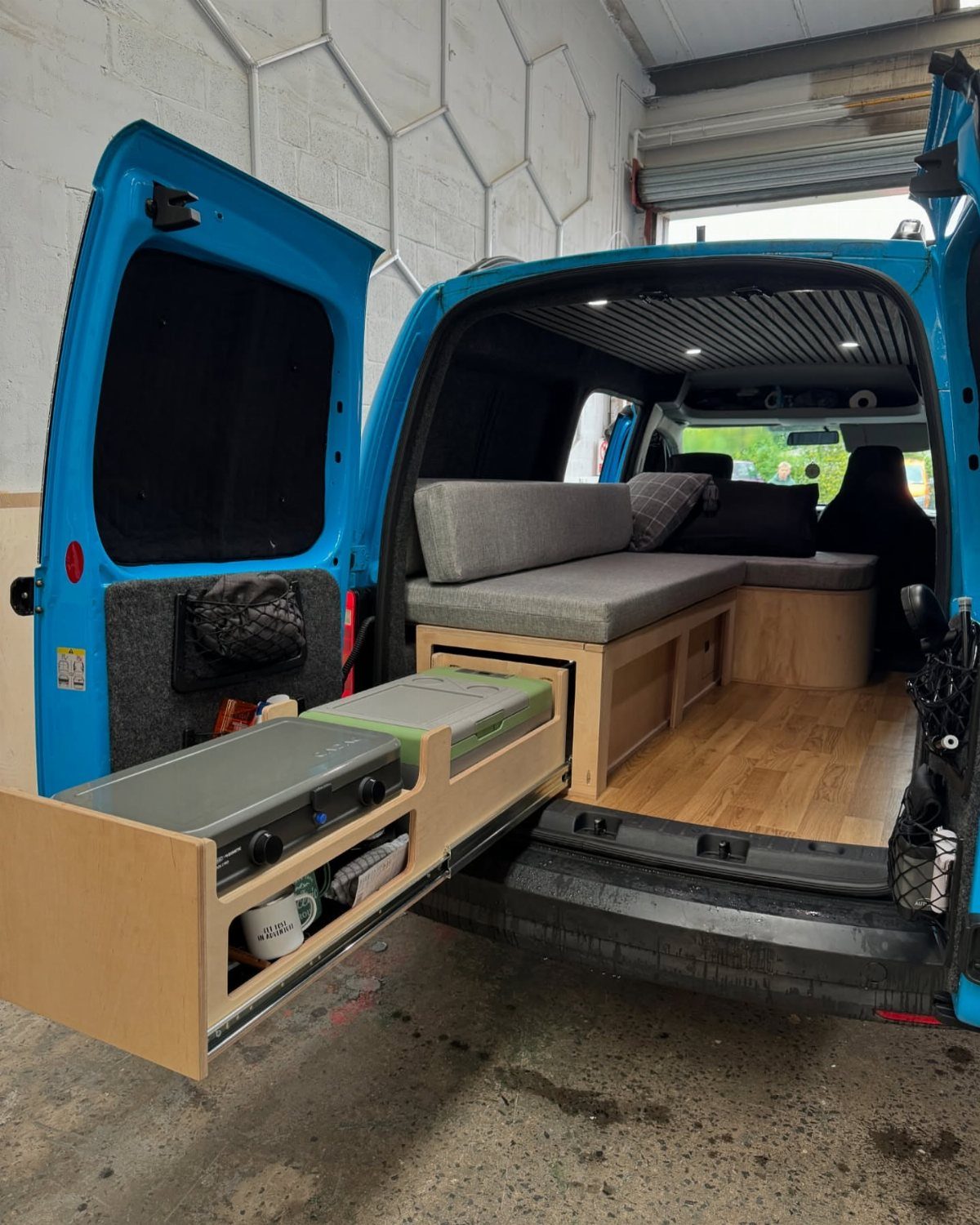
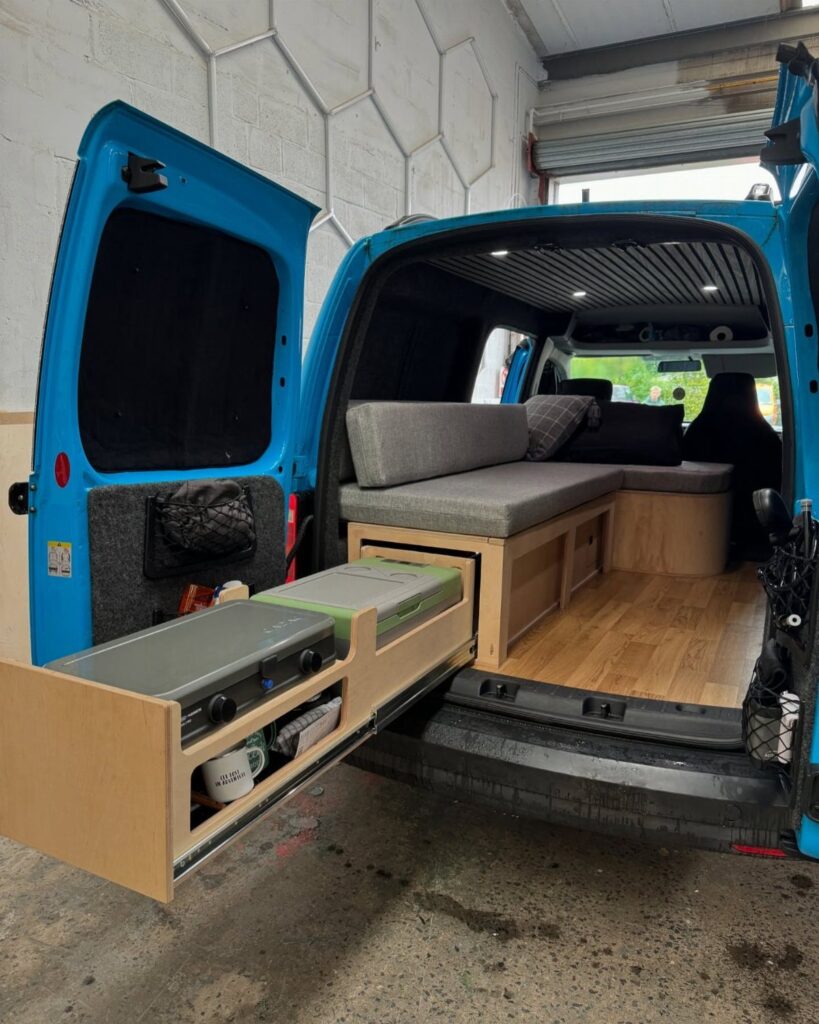
A slide-out drawer on heavy-duty glides brings the whole kitchen out to you. A plywood box on full-extension runners holds a camp stove, cooler, and mugs; the builder sized it to the van’s rear door opening.
Plywood for the box and side-mount glides rated for real weight, since camp gear adds up fast. Block the glides so the drawer cannot tip when fully extended.
A latch keeps it closed on bumpy forest roads. This trades some interior floor depth for exterior convenience, which suits vans more than towables.
4. Hanging Containers

Hanging baskets move produce off the counter and into air that helps it keep. Crocheted holders store onions and garlic, which want darkness and ventilation; the same setup handles lemons, avocados, or bread.
I use S-hooks on a tension rod or screwed eye bolts, whatever the wall material allows. The baskets need enough swing clearance that they do not knock into your shoulder working at the counter below.
Woven cotton or jute breathes better than plastic; line with linen if small items fall through. This is dead simple, but it only works where you have vertical wall space to spare.
5. Shoe Rack
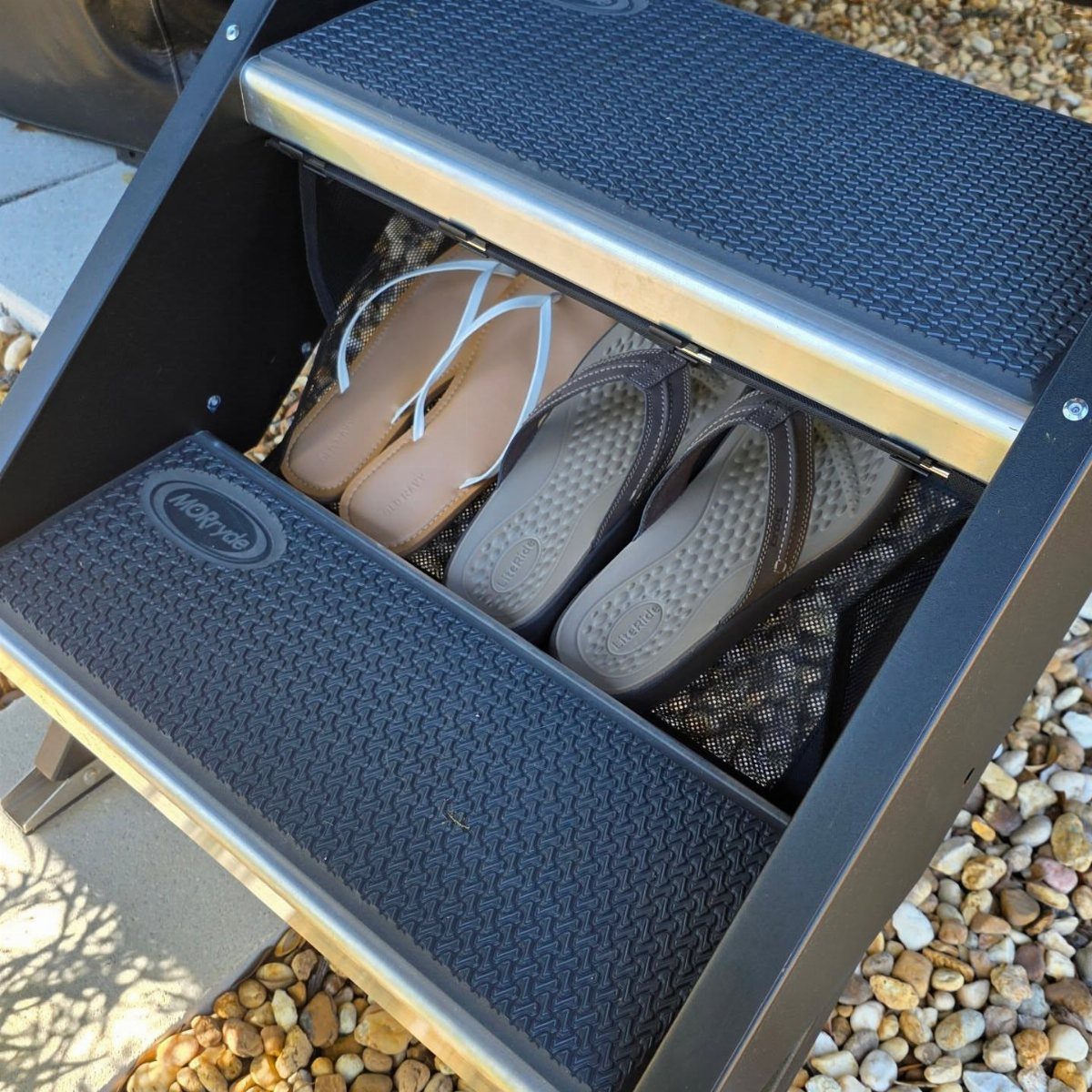
Shoes track in half the dirt that wears out camper floors. The step has a mesh compartment underneath sized for sandals; the concept works with any step that has a hollow frame or open riser.
I would add a boot tray just inside the door for wet weather, since this compartment is too small for hiking boots and too exposed for anything you mind getting dusty.
Metal with a non-slip tread is what you want; check your step’s load rating before drilling or attaching anything. For rental units or temporary setups, a lidded bin beside the step does almost the same job.
6. Over-the-Door Organizers
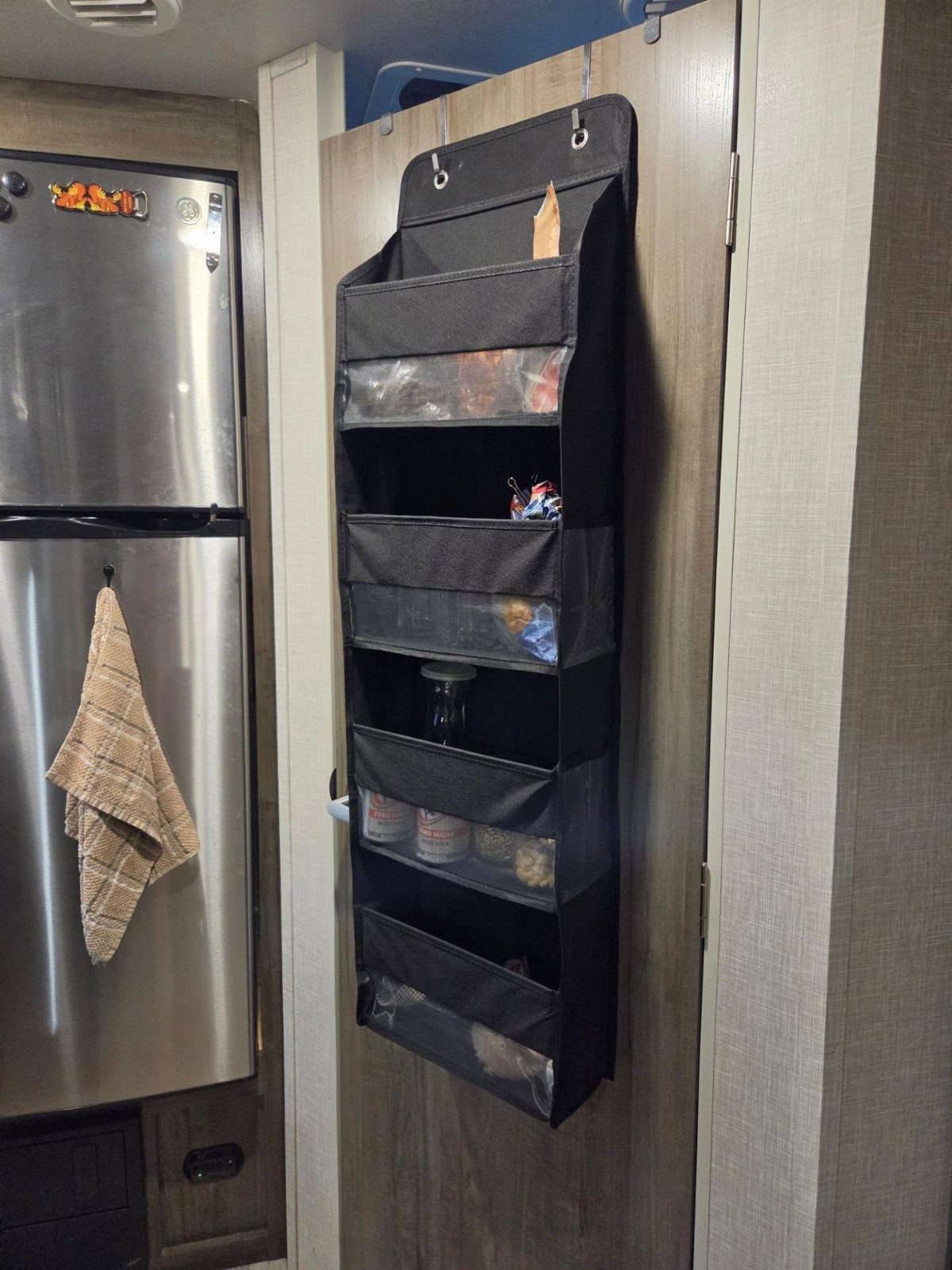
The back of a door is 10 to 20 square feet most campers leave empty. A fabric organizer with clear pockets, hung on a refrigerator-adjacent door, turns that space into pantry overflow or a cleaning station.
I would size the pocket depth to what you store: shallow for spice packets and tea bags, deeper for spray bottles and rolled towels.
The over-the-hook version installs without screws, which matters in a rental or if you are shy about drilling cabinet faces.
The trade is that a loaded organizer slaps when the door moves; I prefer the kind with a rigid top bar that stays square.
7. Under-Bench Storage Bins
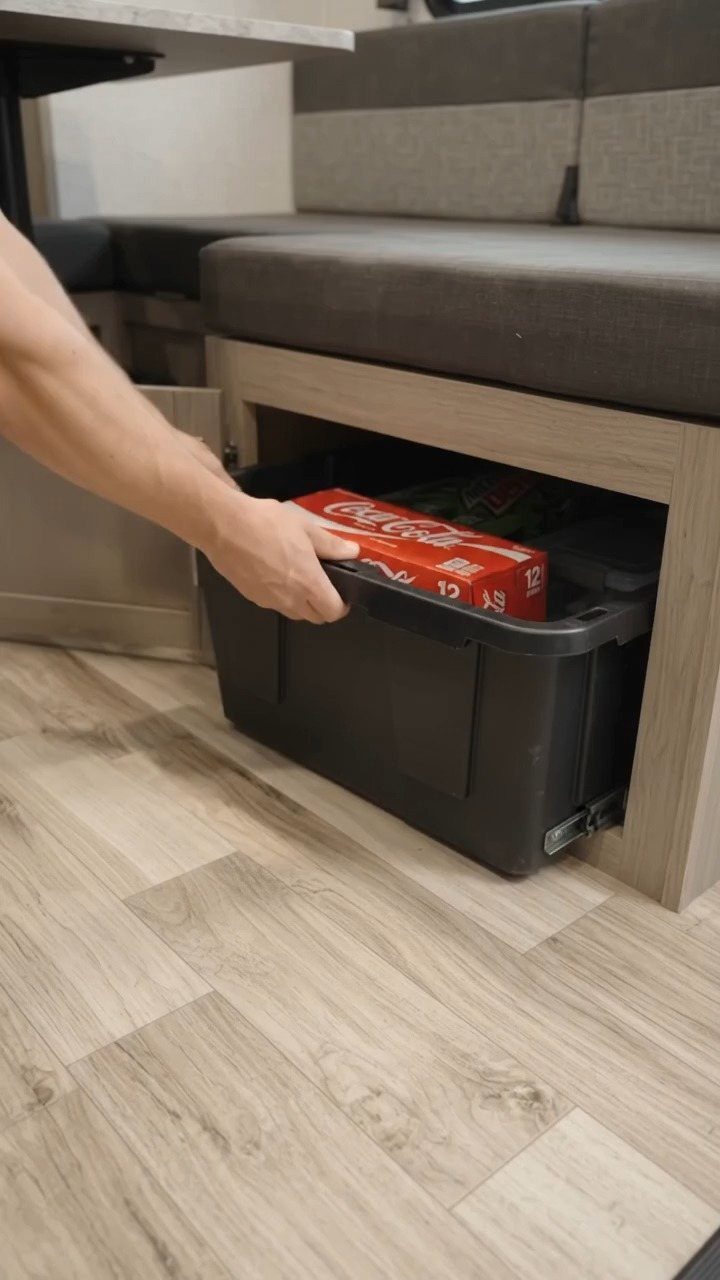
A bin on drawer slides turns the hollow beneath a bench into pull-out storage. The hardware is ordinary side-mount glides, the kind sold for kitchen cabinets, screwed to a plywood base that keeps the bin level.
I would check the bench frame first; some factory builds have so little clearance that the slide housing hits the cushion support. Black plastic hides scuffs and matches most camper interiors without trying.
8. Custom Built-In Storage Boxes
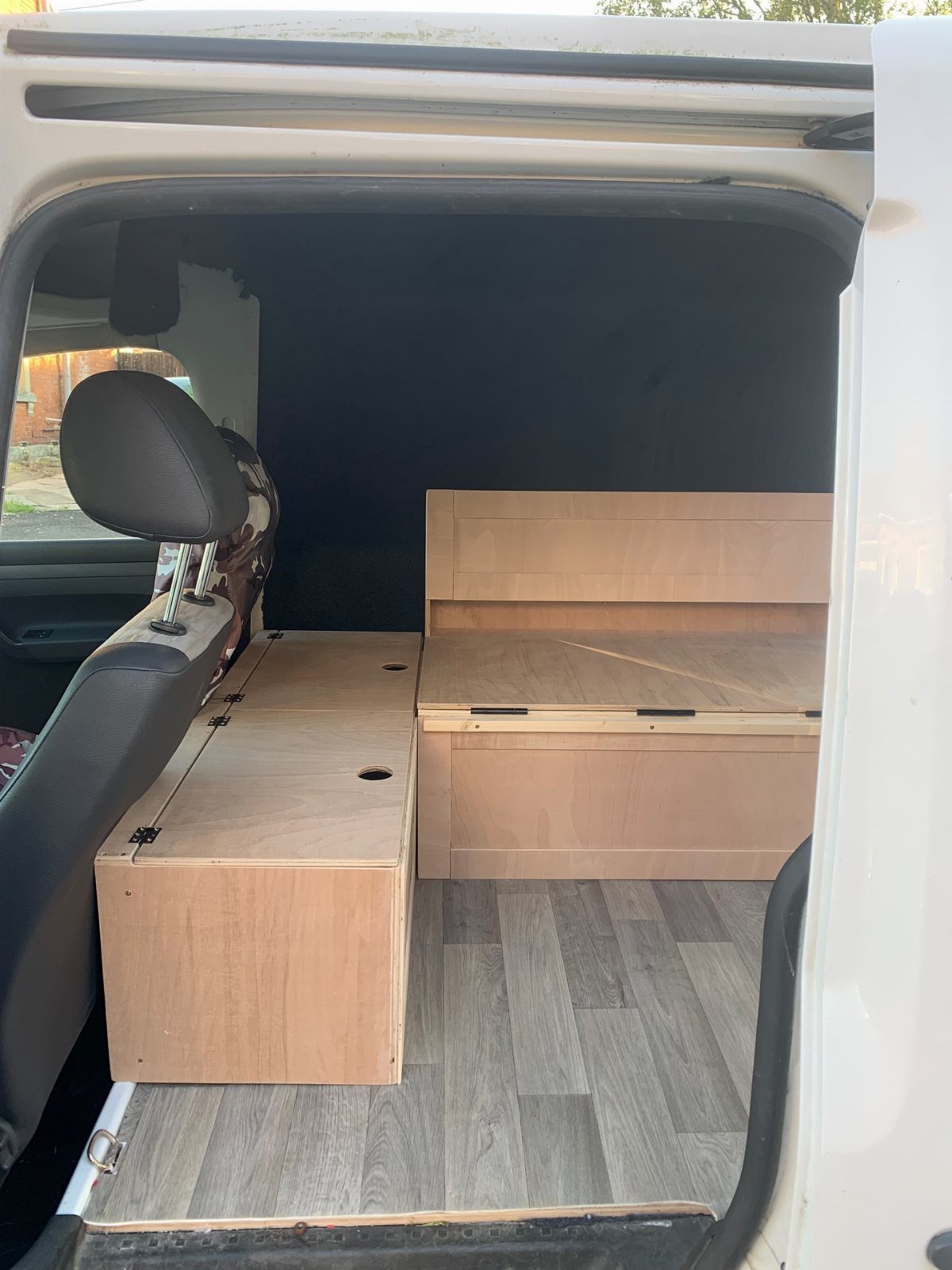
Plywood boxes built to the van’s walls and wheel wells turn every odd angle into cubby space. Hinged lids at bench height mean you sit on your storage, which is how vans get away without a separate closet.
Light wood finish on built-in boxes reflects more light than dark stain, which matters in tight camper quarters where every bit of brightness helps the space feel open.
The build takes accurate measuring, a jigsaw for wheel-well notches, and a weekend. Renters should skip this one entirely.
9. Seat Back Organizer Pockets
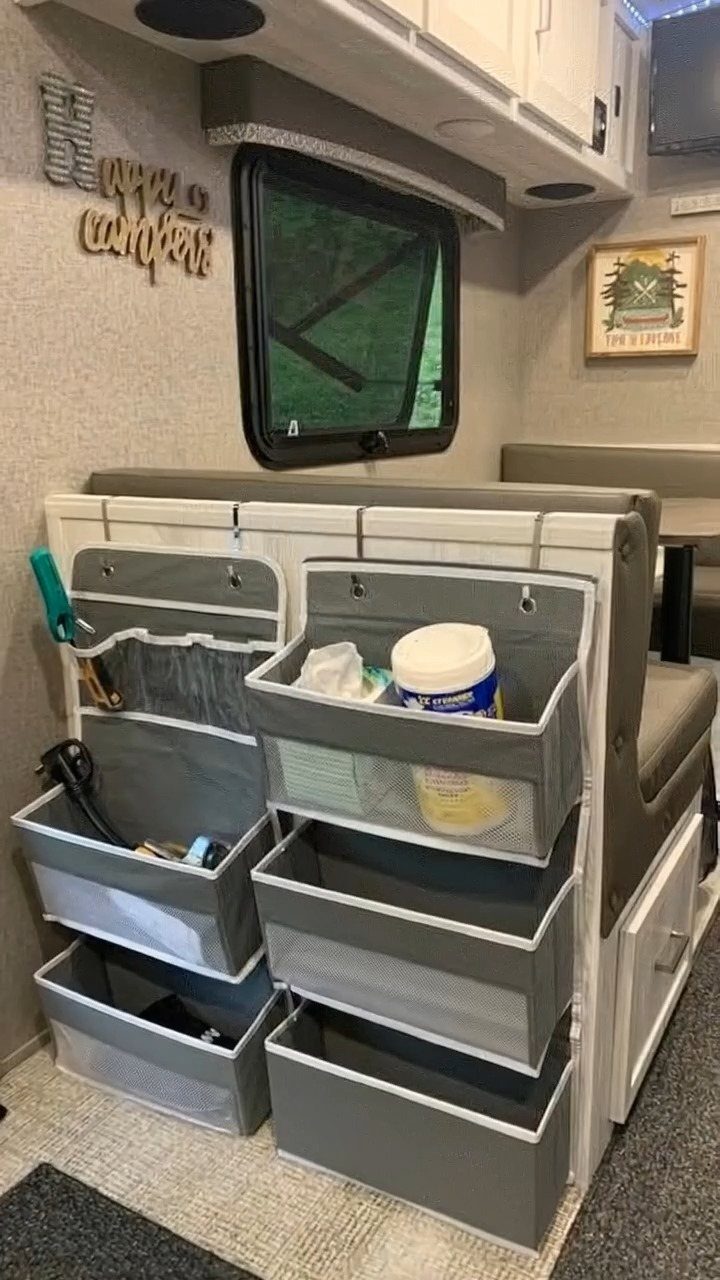
Seat-back pockets keep daily clutter off the table and out of the walkway.
Grey fabric with divided pouches, hung from the seat top or screwed to the frame back, holds wipes, tools, and the small items that otherwise migrate to every flat surface.
I would size the pockets to what you actually carry; oversized ones sag and spill. The over-the-top hook version saves your upholstery, though it shifts when the seat folds.
10. Vacuum Storage Bags

A handheld pump and valve bag shrink bulky bedding to a fraction of its volume. The electric pump runs off 12V or batteries, so check your camper’s outlet situation before buying; manual valves work too, slower but independent of power.
I use these for spare blankets and off-season clothes, not daily wear, because the seal check and repacking get old. Clear plastic lets you see what you packed, which matters more than it sounds.
11. Portable Pantry Food Bag
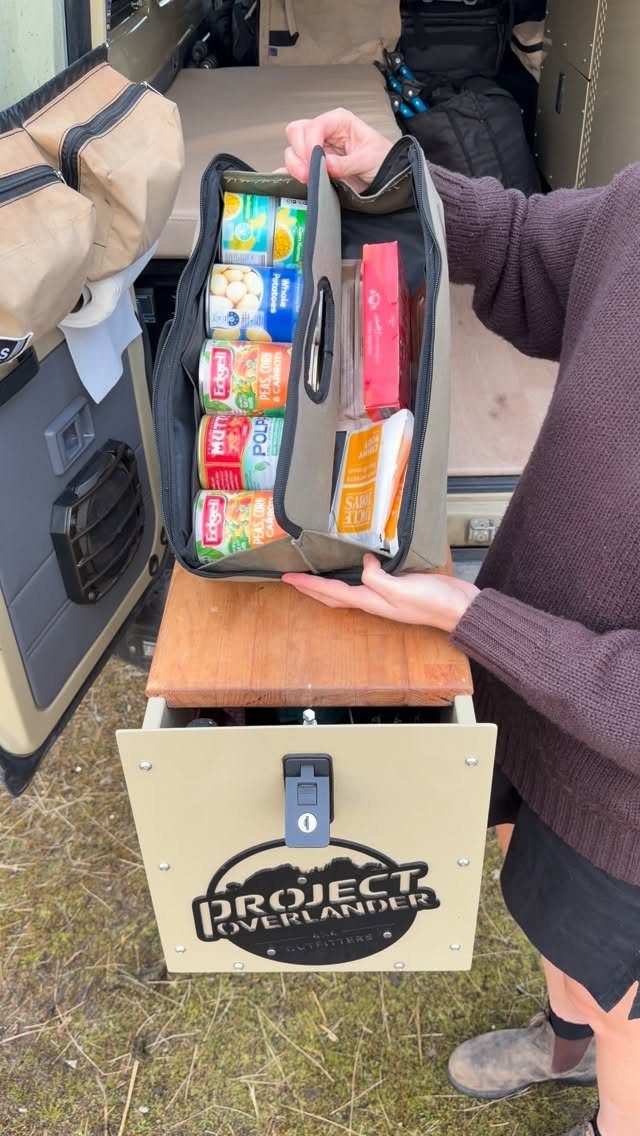
A divided canvas bag keeps pantry goods upright and grab-and-go. The compartments stop cans from rolling and clanking on the road, and the soft sides flex around whatever your cabinet shape allows.
I would look for a flat bottom that sits stable on a counter or drawer; sagging bags dump their contents when you lift them. Canvas wipes clean, though a vinyl liner handles leaks better.
12. Cabinet Shelf Spice Rack
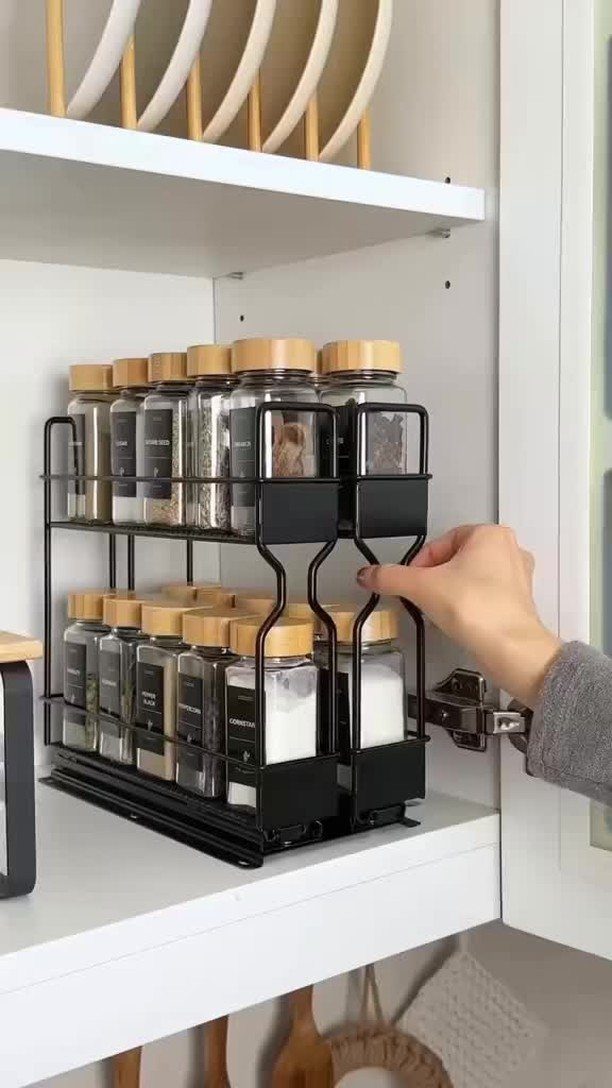
A two-tier slide-out rack doubles the usable depth of a shallow cabinet.
A black metal frame pulls forward between stacked plates and the cabinet floor, keeping spice jars in front where you can read the labels instead of lost behind the dinnerware.
I would load the back row with duplicates and the front with daily spices; the reach to the rear tier is still a stretch.
Measure your cabinet depth before ordering; an inch too long and the rack binds on the door frame.
13. Mounted Cabinet Storage Bins
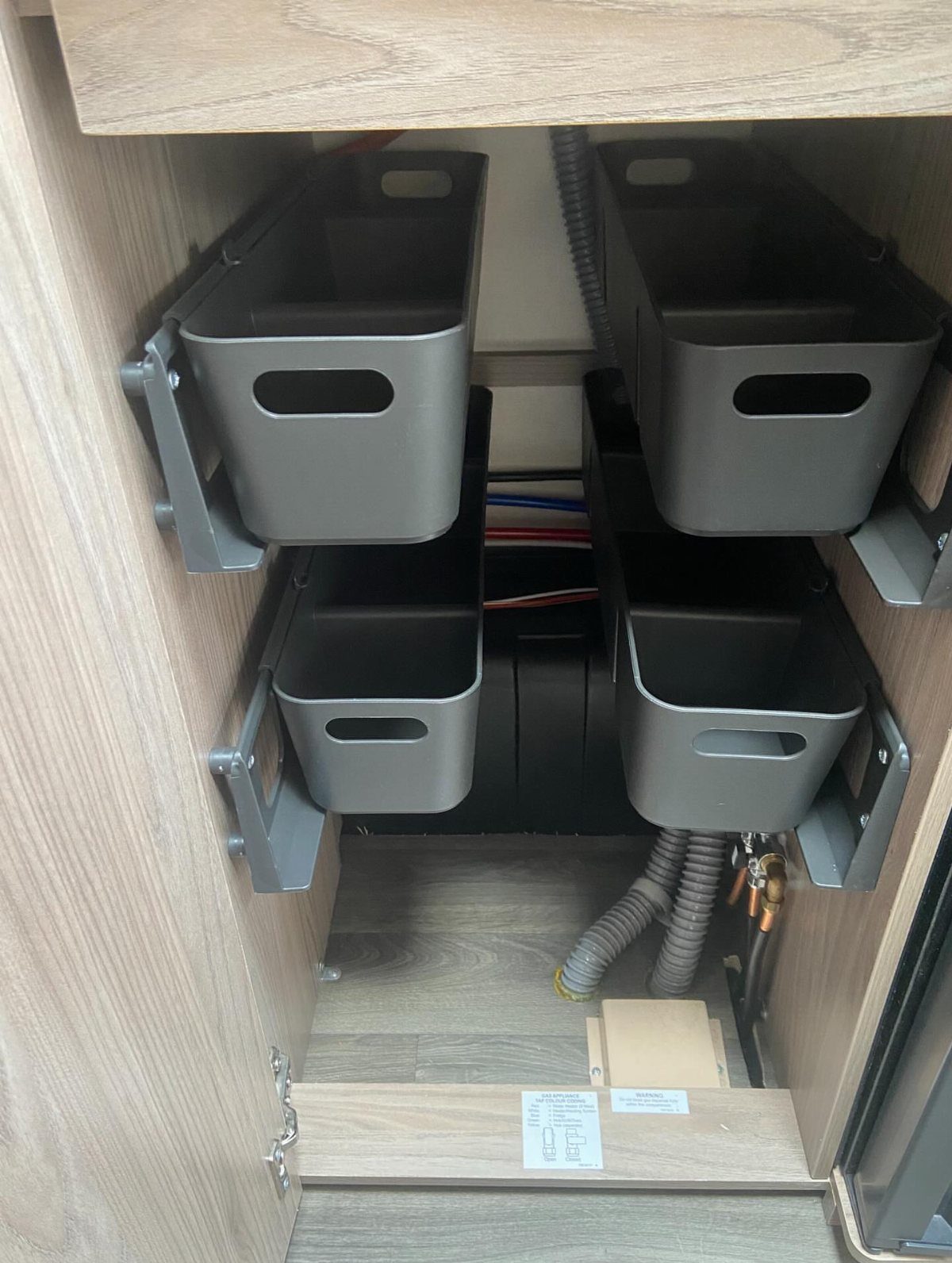
Side brackets turn the dead zone around plumbing pipes into 4 sorted bins. Grey plastic keeps the look uniform, and the bracket mount means you lift a bin out to carry to the counter rather than crouching into the cabinet.
Mounted cabinet storage bins cost less than pull-out hardware but give up the glide.
14. Wall-Mounted Spice Jars
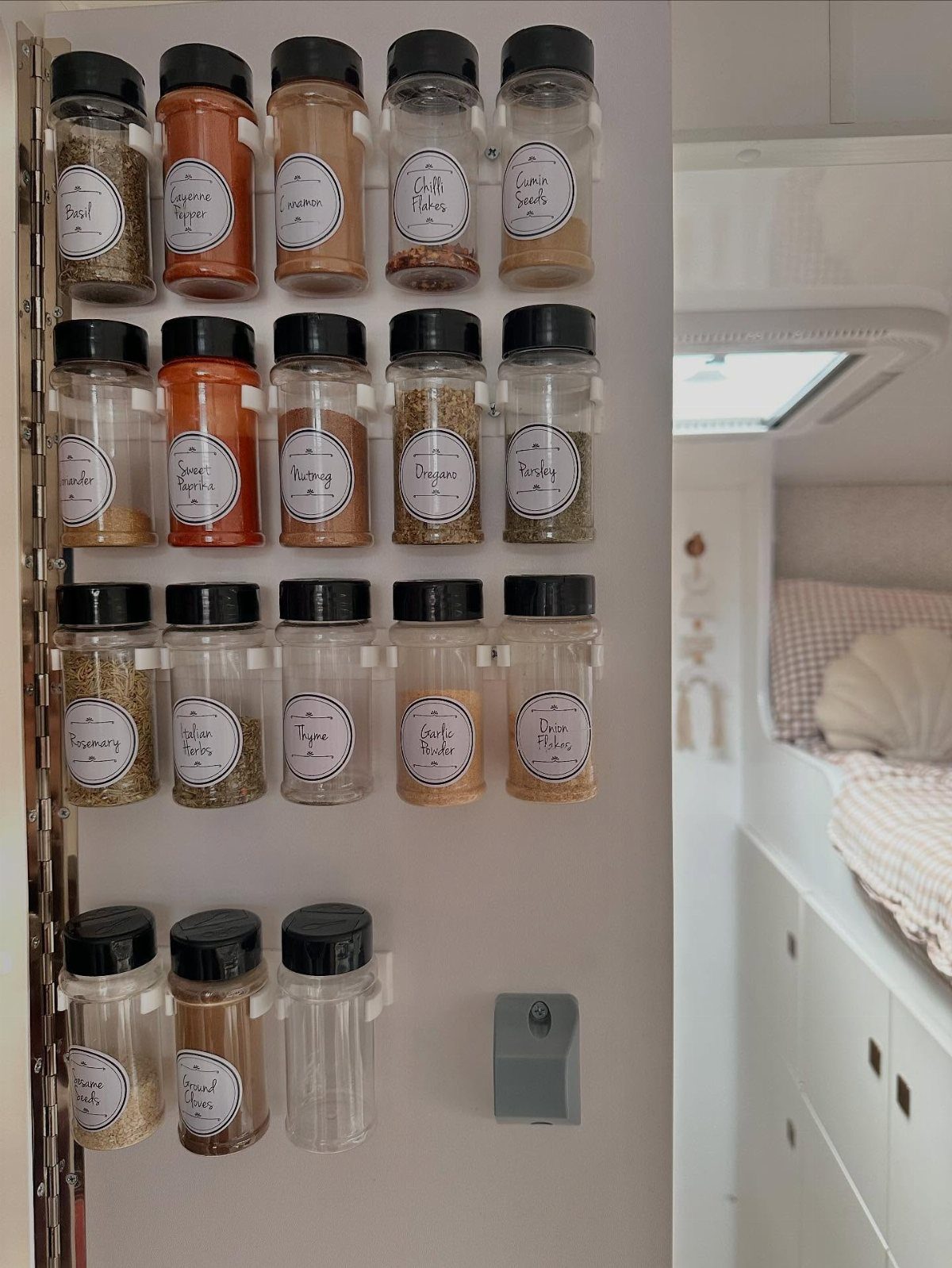
Clip-mounted jars turn an interior wall into a spice rack that costs no cabinet space at all.
Clear glass with black lids keeps the look clean, and the clip system means you add or remove jars without tools. I would mount these away from the cooking surface; grease films on jar walls are tedious to wipe.
The bed area in back suggests this is a van layout where every vertical inch matters. Labels facing outward save the guesswork.
15. Under-Bed Fabric Storage Bins
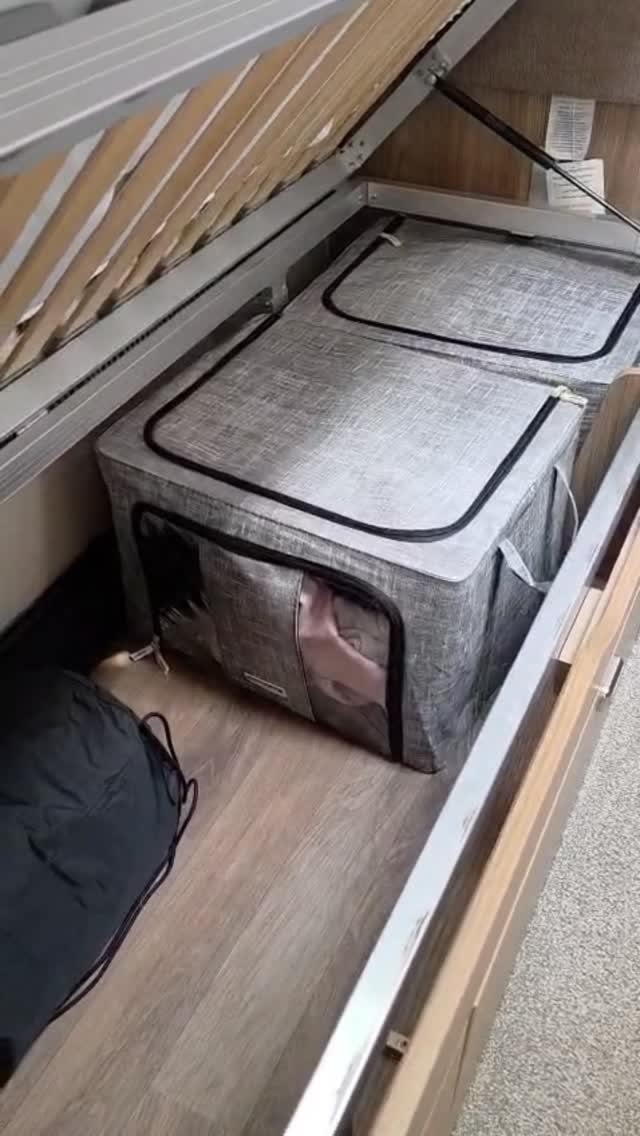
Zippered fabric boxes slide under a slatted bed on a flat surface you can sweep.
Grey keeps dust less visible than white, and the zipper tops contain what bouncing on rough roads would otherwise scatter. I would measure the frame height with the slats lifted; these boxes need an inch of clearance to slide smooth.
Wood-look flooring underneath is a nice touch but not required; any hard surface beats carpet for sliding storage in and out.
Importance of Organization
An RV that is organized is safer to move through, and that matters when you are parked on a slope or need to reach something fast in an emergency stop.
Secure storage cuts tripping hazards, which lowers accident risk in travel. The calm of a tidy space is not trivial either; a place for everything means less mental load at the end of a driving day.
Weight control is the less obvious gain. Every pound of gear you haul burns extra fuel, trip after trip, and that cost sneaks up on you.
I would rather carry collapsible containers and fill them only for specific trips than haul permanent bulk. The fuel savings from leaving unused items home are real, though they show up quarter by quarter rather than at the pump.
Decluttering Tips
I reassess what stays in my camper at season’s end, not when I am packing in a hurry.
The rule I hold myself to is one item out for every item in; the space does not grow, so the contents cannot either.
Clutter in a small RV is not just annoying, it is a hazard. A fire extinguisher you have to dig for is one you may not reach in time.
Smart organization keeps essentials accessible and emergency gear visible. I hang a basket by the door for the things I reach for every day, and keep collapsible bins sorted by task so nothing ends up scattered across the floor.
Safety Considerations
Every storage solution I install has to pass 2 tests: can it stay closed on a rough road, and does it block anything I might need in a hurry? Emergency equipment stays accessible, never buried.
Fuel and chemicals belong only in the ventilated compartments built for them, never mixed in with general storage. Weight distribution is where I see the most mistakes.
Your RV has a cargo carrying capacity, and it is a hard ceiling, not a suggestion. I check side-to-side balance and front-to-back loading; uneven weight changes how the rig handles, and not for the better.
Heavy items low and centered is the standard rule, and I follow it even when it means repacking after a grocery run.
Frequently Asked Questions
How can I determine which camper storage hacks are best for my setup?
Start with what your camper actually gives you to work with: wall space for hanging, hollow benches for slide-out bins, cabinet depth for tiered racks, or a rear door opening for exterior drawers.
Match the hack to the space and to what you store most. I would rather leave an idea unused than force it into a spot where it fights the layout.
Are there safety considerations for camper storage solutions?
Every install has to stay closed on rough roads and stay clear of anything you need in a hurry.
Check your cargo carrying capacity as a hard ceiling, and keep heavy items low and centered so weight stays balanced side to side and front to back.
Can these storage hacks be easily modified or removed?
Most of them can. Over-the-hook organizers, magnetic strips, tension rods, and clip-mounted jars come down without screws or damage.
Slide-out drawers and built-in plywood boxes are more permanent, so renters should stick to the no-drill options. Modular pieces like acrylic dividers or canvas bags can be rearranged or resized as your needs shift.





