
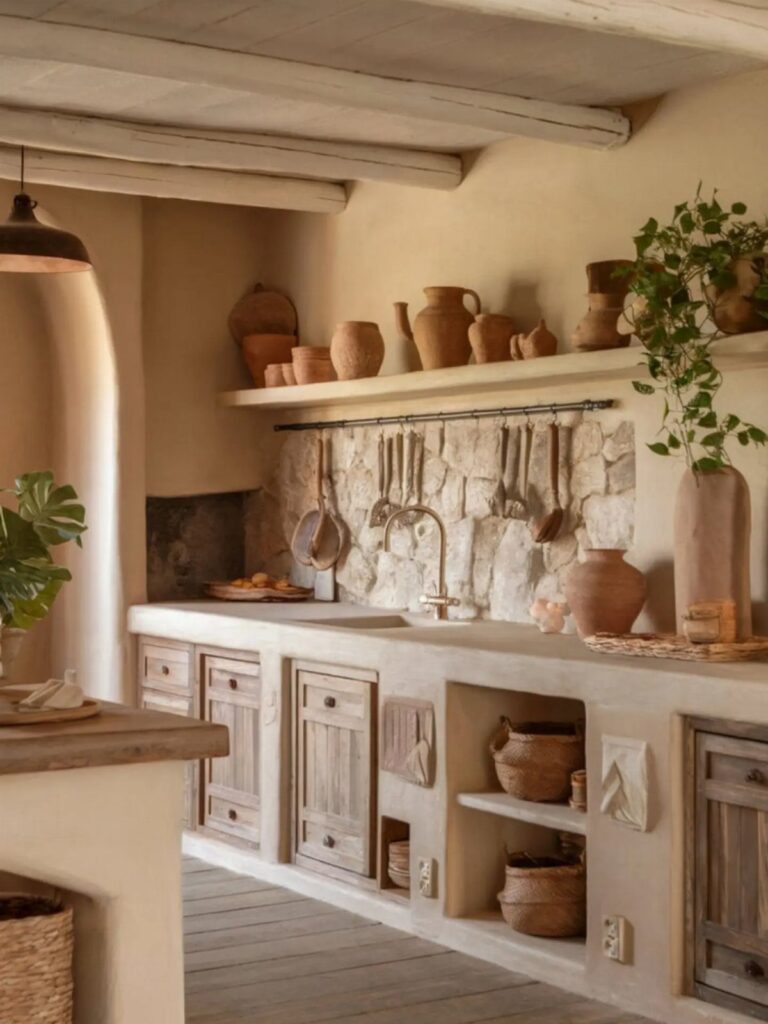
A rustic farmhouse kitchen can run from a tension rod and a few yards of cotton skirt fabric to a full brick backsplash with proper masonry backing and matte sealer.
What decides which idea belongs in your space is whether you own the walls or answer to a landlord.
I would keep the brick for a home where you can reinforce studs for barn door hardware and seal porous surfaces before grease sets in, and reach for freestanding furniture and fabric skirts anywhere a landlord needs to sign off on changes.
1. Farmhouse Sink
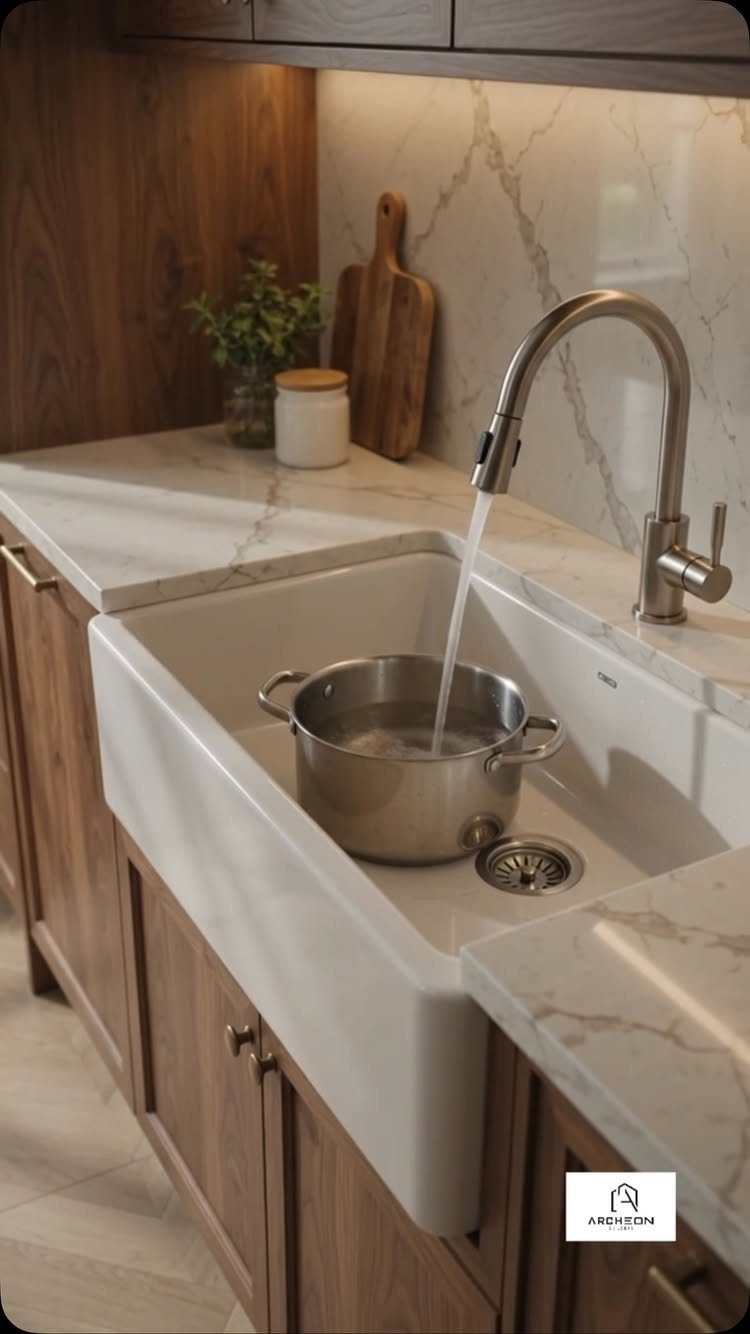
A farmhouse sink sits forward of the countertop, its apron front exposed rather than hidden behind a cabinet door. That depth matters for washing stockpots, and the single basin leaves room a divided sink never gives.
Fireclay or cast iron with enamel finish holds up to decades of use; acrylic costs less but scratches faster than I like. I would choose white every time, since it pairs with any countertop and never looks dated.
Installation is the hard part: the cabinet base must be cut to fit, and fireclay sinks are heavy enough that the support beneath needs reinforcement.
2. Open Shelving
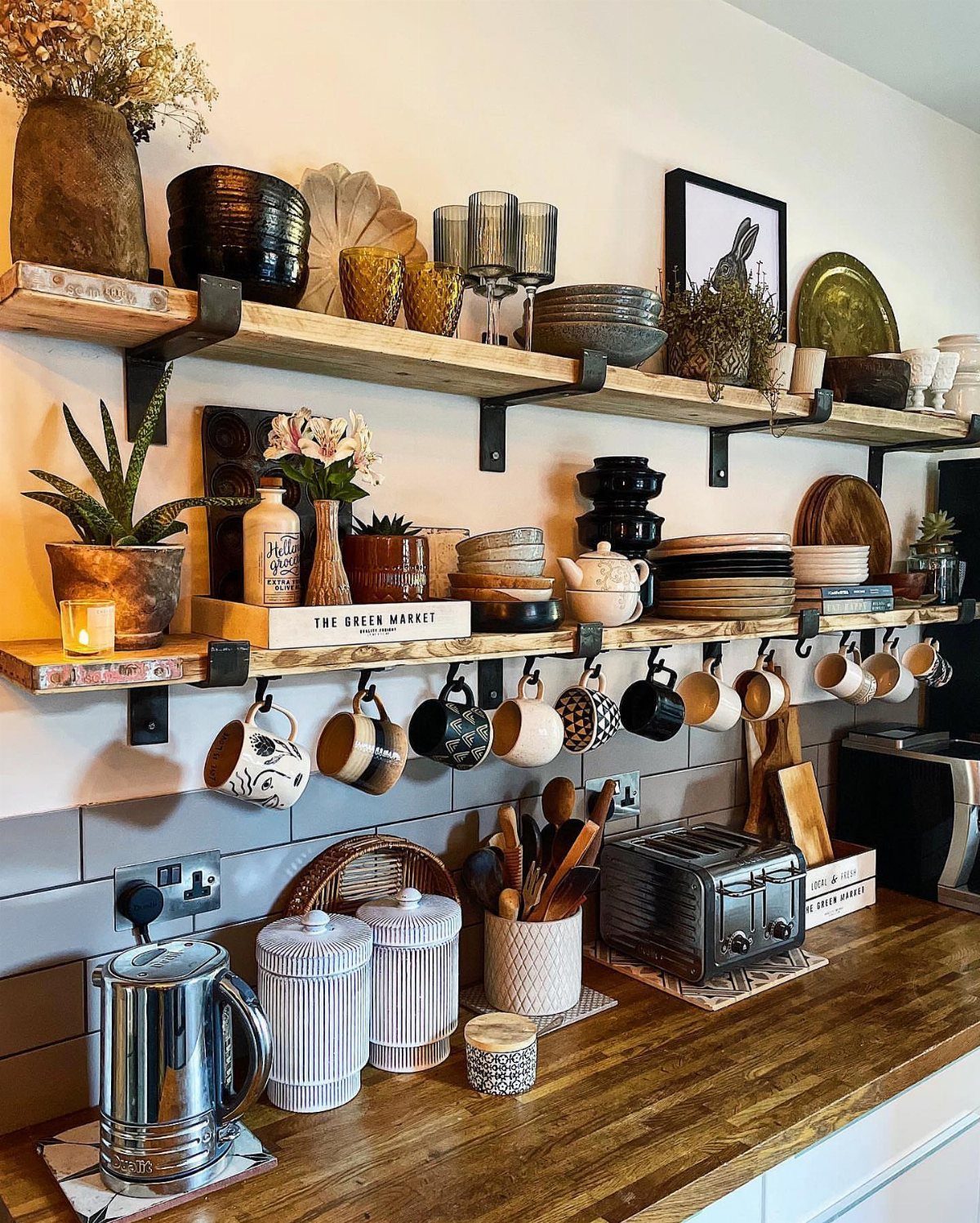
Open shelving turns dishware into display, which saves the cost of upper cabinets and opens a small kitchen visually.
Dust and grease settle on everything; I run a shelf in a spot I use daily, not above the range where cooking film builds fast.
I mount shelves high enough above the counter to clear a standing mixer, leave enough vertical space between them for plates and small bowls, and keep the front edge flush so I do not knock my head.
A short stack of everyday dishes, a row of glasses, and one plant is enough; crowded shelves read as clutter, not curation.
3. Reclaimed Wood Kitchen
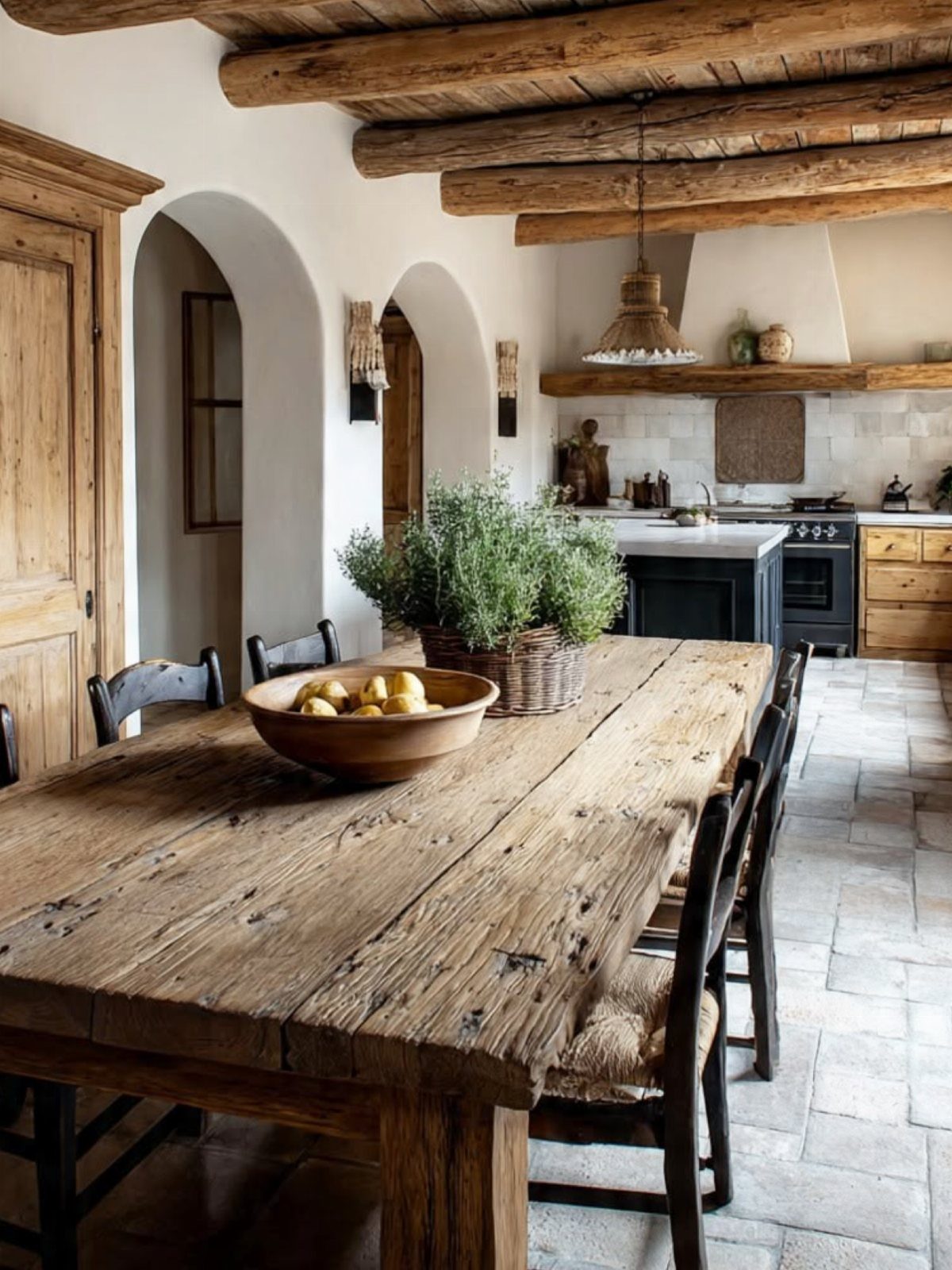
Reclaimed wood carries marks from its first life, nail holes and grain checks that new lumber cannot replicate.
In a kitchen, I use it where it will not see constant water: a dining table, ceiling beams, or an accent wall, not the sink cabinet.
Sourcing varies by region; architectural salvage yards price by the board foot, and barn wood often arrives with hardware still attached.
I check for insect damage and test old finishes for lead before bringing anything indoors. The color range, from sun-bleached gray to deep amber, means each piece stands alone.
4. Shaker-style Cabinets
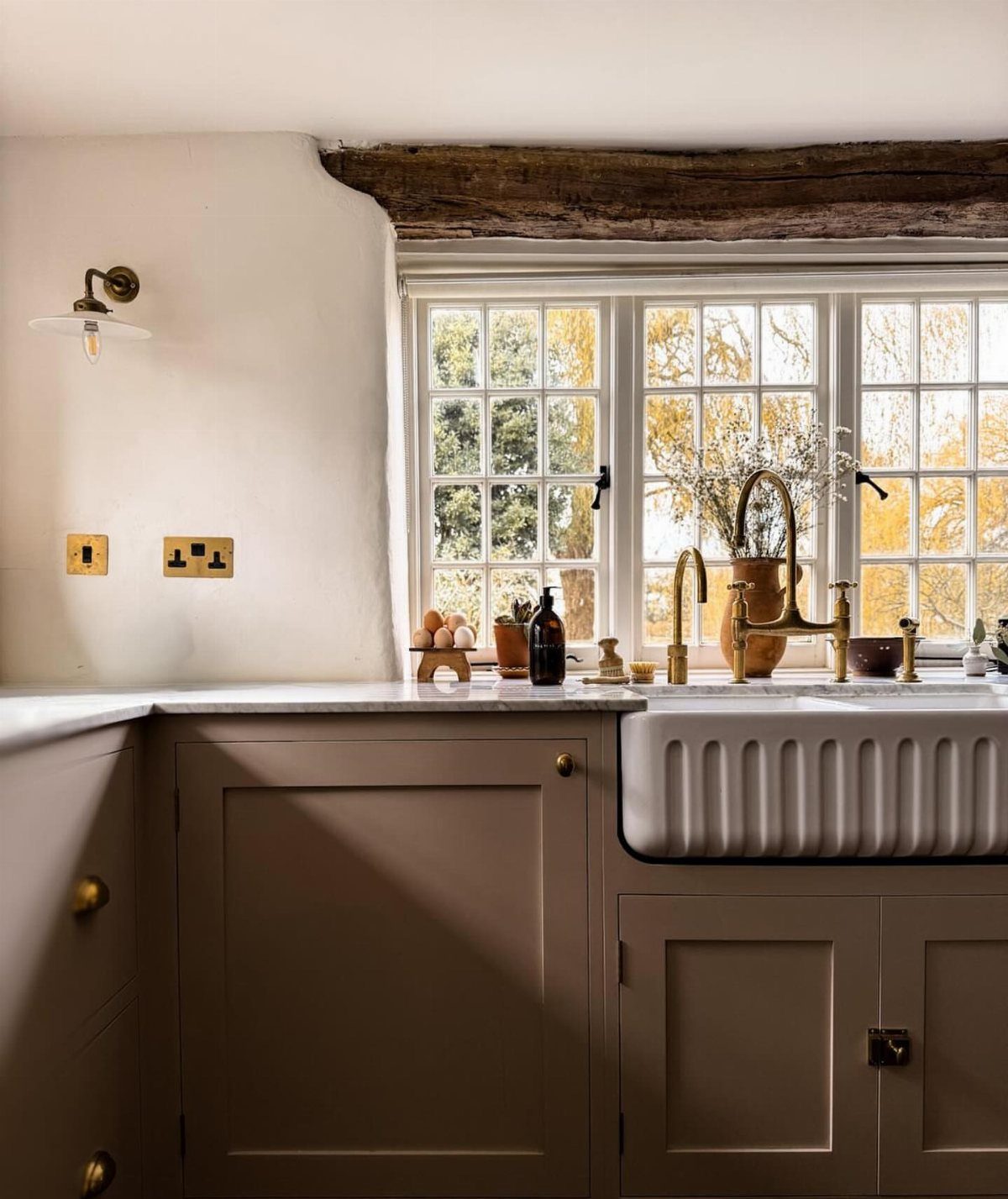
Shaker cabinets suit farmhouse kitchens because the style was born in the same practical spirit: flat center panels, square edges, no ornament beyond the frame itself.
I order sample doors before committing; paint color shifts under kitchen light, and Shaker’s simple lines leave nowhere for a bad match to hide.
Standard overlay saves money, but inset doors, flush with the frame, read as finer work and cost noticeably more. For a rental or first kitchen, I would spend that difference on solid wood over MDF and upgrade the fit later.
5. Freestanding Furniture
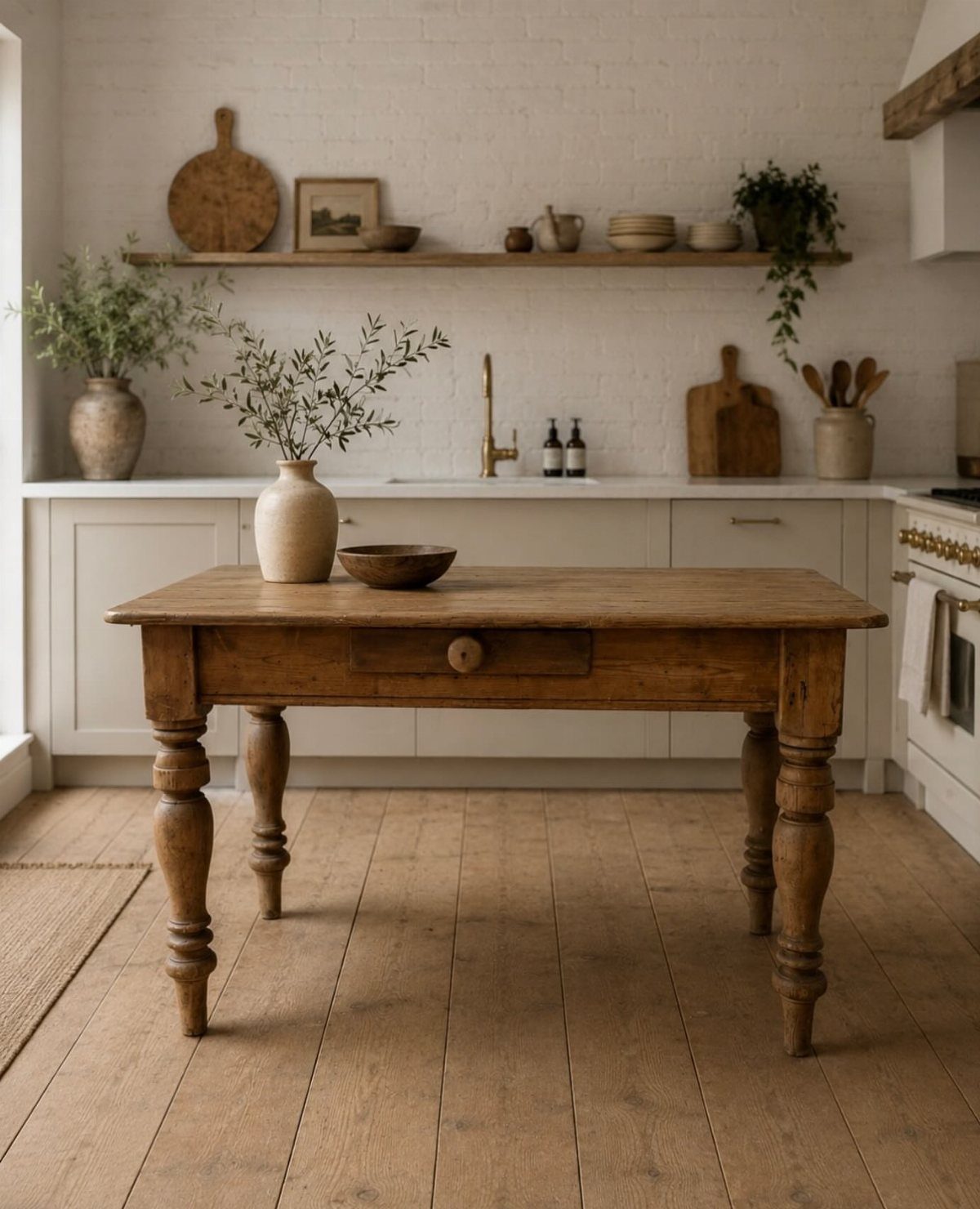
Freestanding furniture in a kitchen breaks the fitted-cabinet rhythm and gives a place to work that moves if your needs change.
I look for pieces at counter height so the work surface matches the rest of the kitchen; standard dining tables feel low for chopping.
Antique pine dents easily, which I accept as character, but I seal the top with food-safe oil or polyurethane if I will roll dough there. Casters are worth adding for anything heavy enough that dragging it would mark the floor.
6. Contrasting Upper and Lower Cabinets
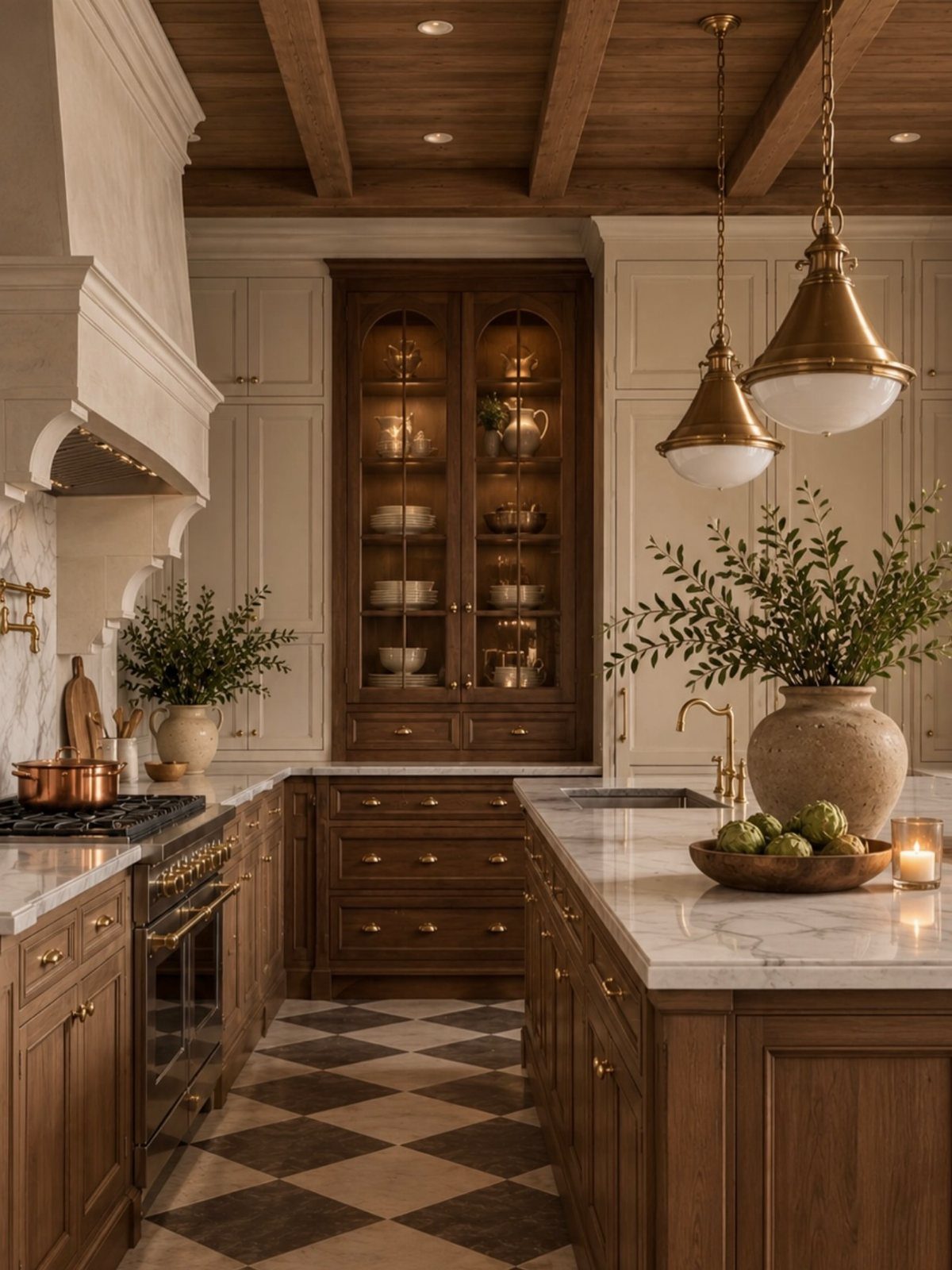
Splitting cabinet colors by height grounds a kitchen visually and lets you use two finishes you like without choosing one.
I keep the contrast clear, not subtle, or the 2 read as a mistake rather than a decision. Painted uppers cost no more than painted lowers, so the split adds nothing to the cabinet budget beyond the decision itself.
7. Layered Wood, Metal, and Textiles
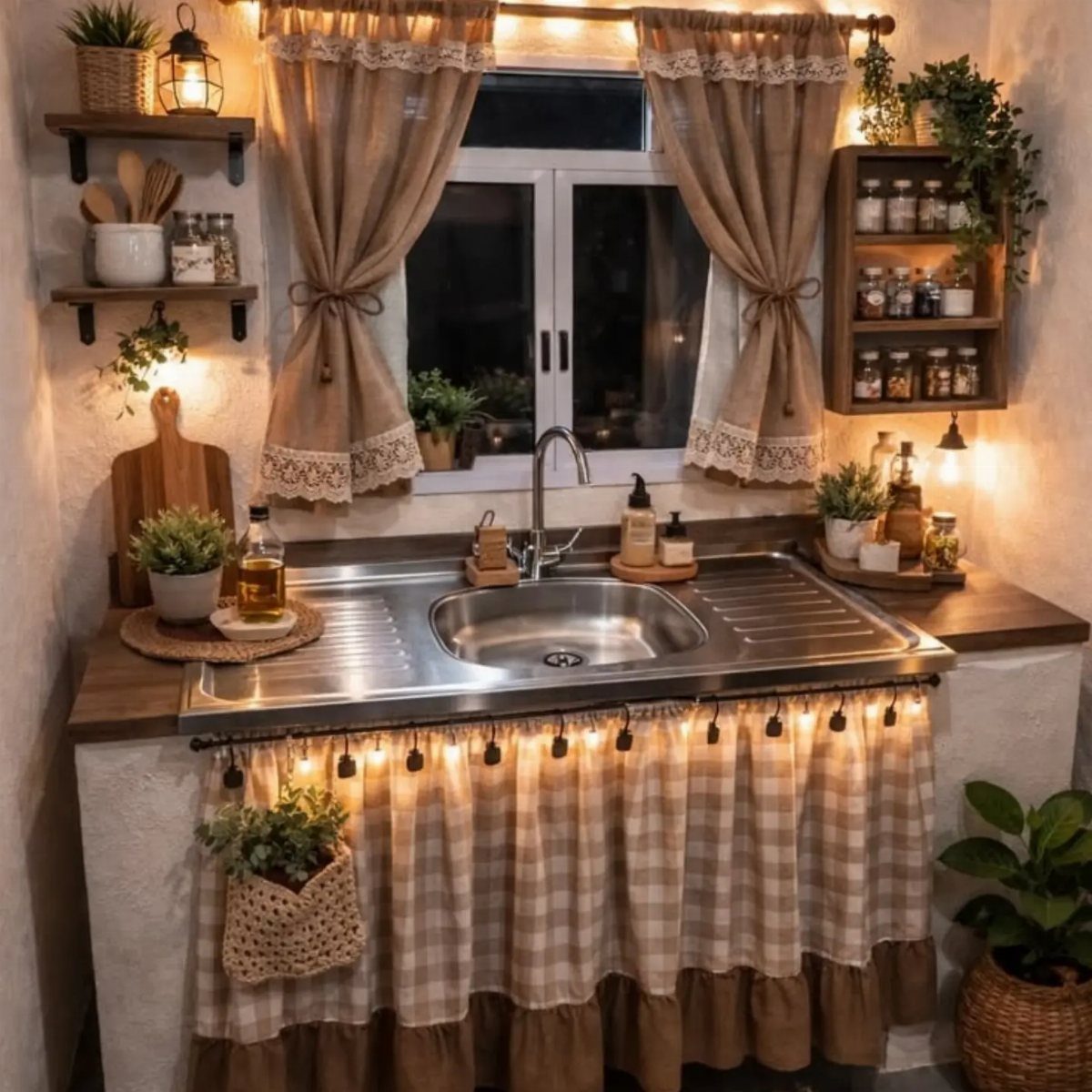
A farmhouse kitchen gains warmth when hard and soft surfaces share the same space.
I combine wood countertops with metal fixtures and fabric at the window or sink base; the mix keeps the room from feeling like a workshop or a craft fair.
Burlap and checkered cotton are inexpensive, easy to swap seasonally, and machine-washable. String lights behind a skirted sink add evening glow without a wiring change.
8. Vintage-style Pendant Lights
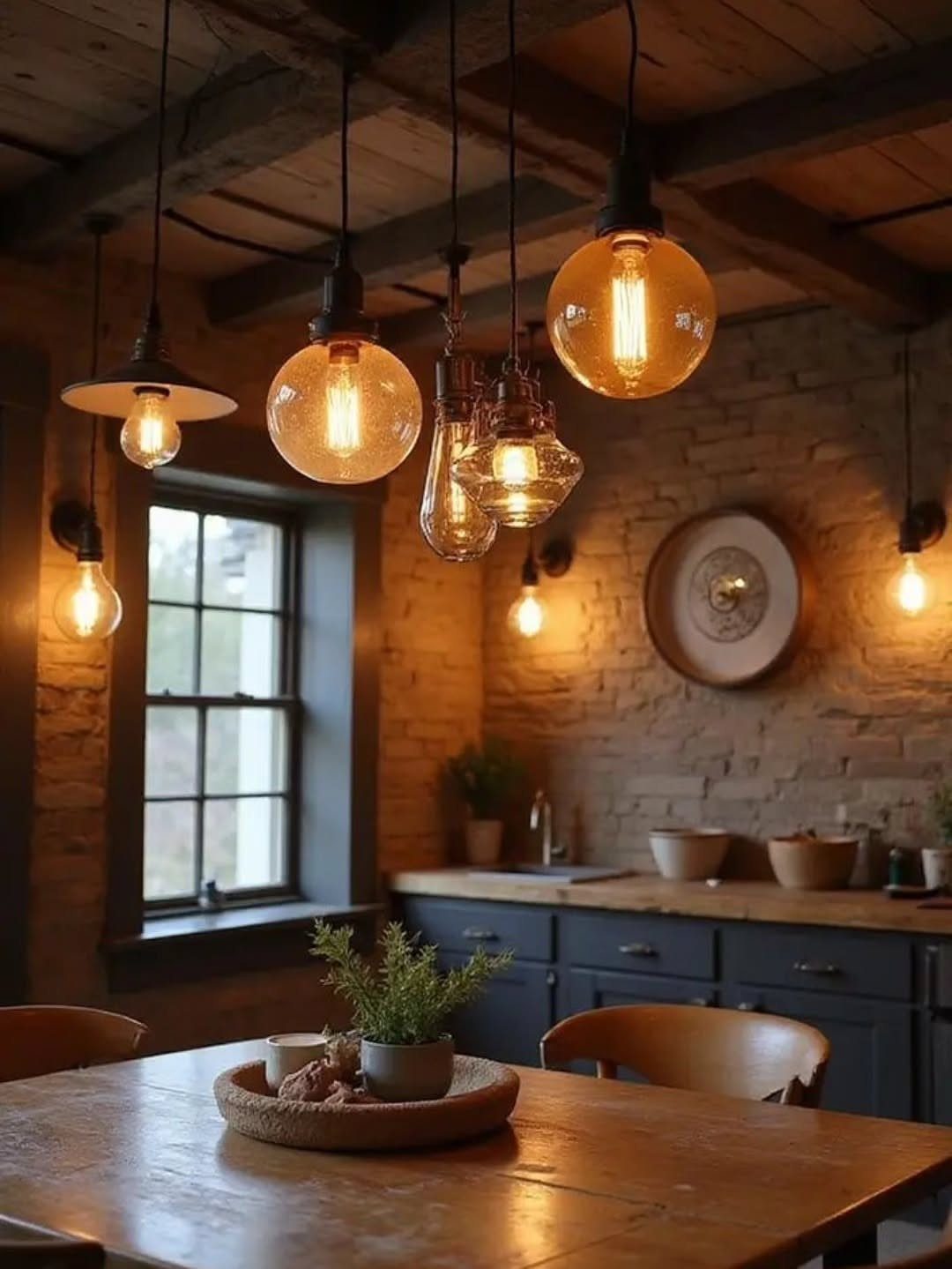
Edison bulbs in wire cages or glass domes cast the amber light that makes a kitchen feel lived-in. I hang pendants low enough for intimacy across the table but high enough that no one stands up into the light.
The wattage matters more than the fixture price; a dim filament at eye level outshines a brighter bulb lost in a high ceiling. Black cord and hardware against brick or raw wood keeps the look grounded, not precious.
9. Vintage Decor Items
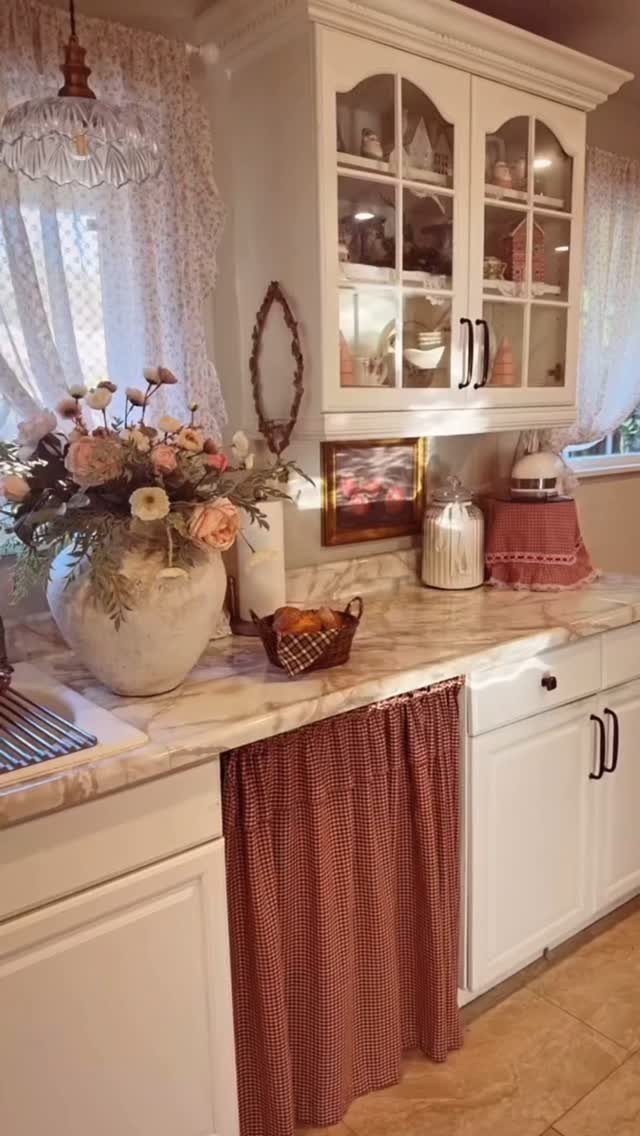
A few old pieces on a counter give a kitchen history without turning it into a display case.
I limit myself to items I use: a ceramic vase that holds utensils, glass canisters for dry goods, one arrangement of seasonal flowers.
White cabinets and a pale countertop recede, so the objects read as accents rather than clutter. A gingham curtain at the sink base costs little and nods to farm kitchens without claiming to be one.
10. Potted Herbs
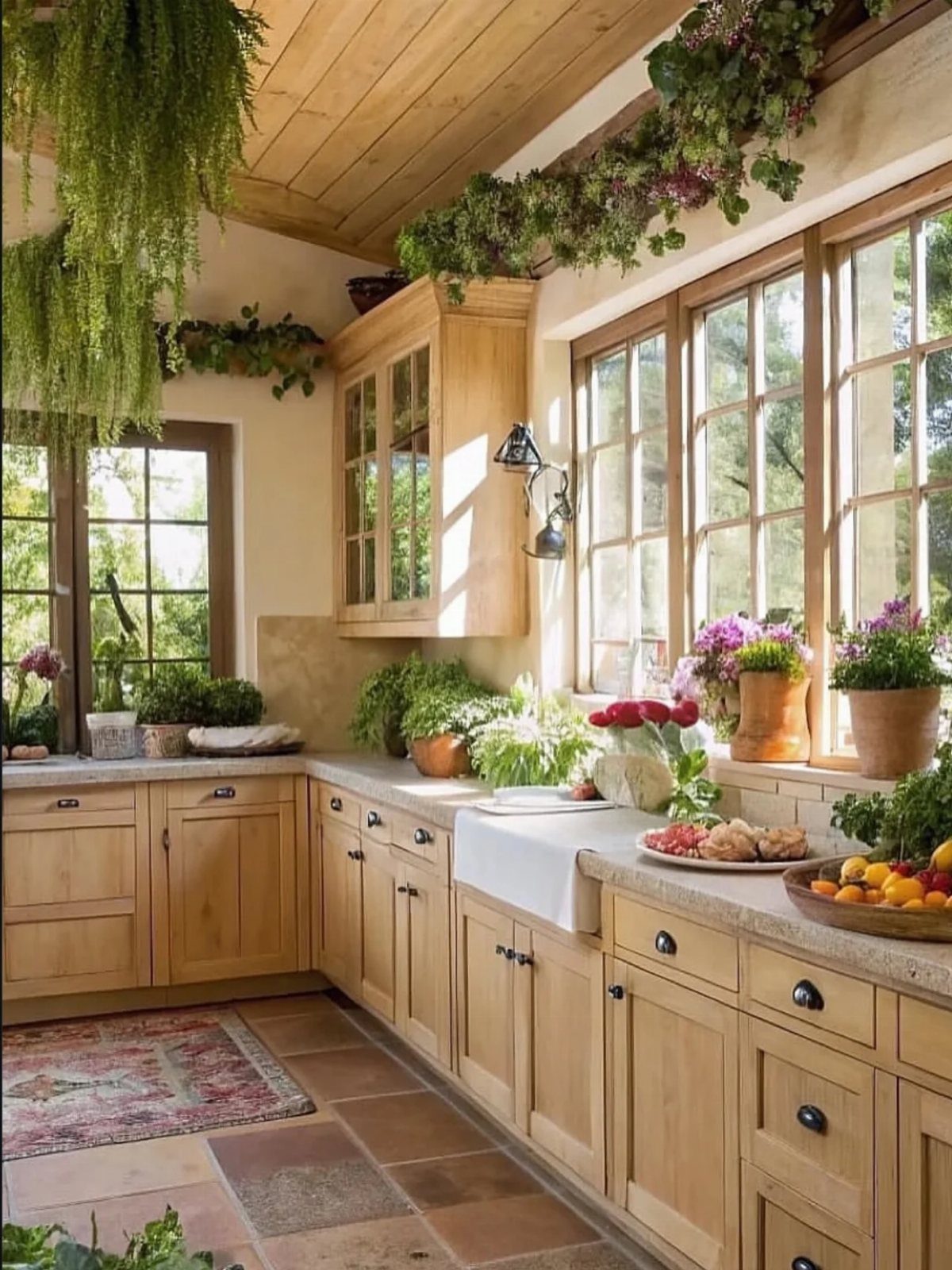
Herbs on a windowsill or counter put something green within reach and need no garden plot.
I choose terracotta for drainage and weight; plastic tips over and holds too much moisture. Basil, parsley, and chives tolerate the light of an east or south window and repay a small plant with weeks of cutting.
Hanging stems from a ceiling hook adds height, but I keep the daily-use pots where I can water without a step stool.
11. Barn Doors
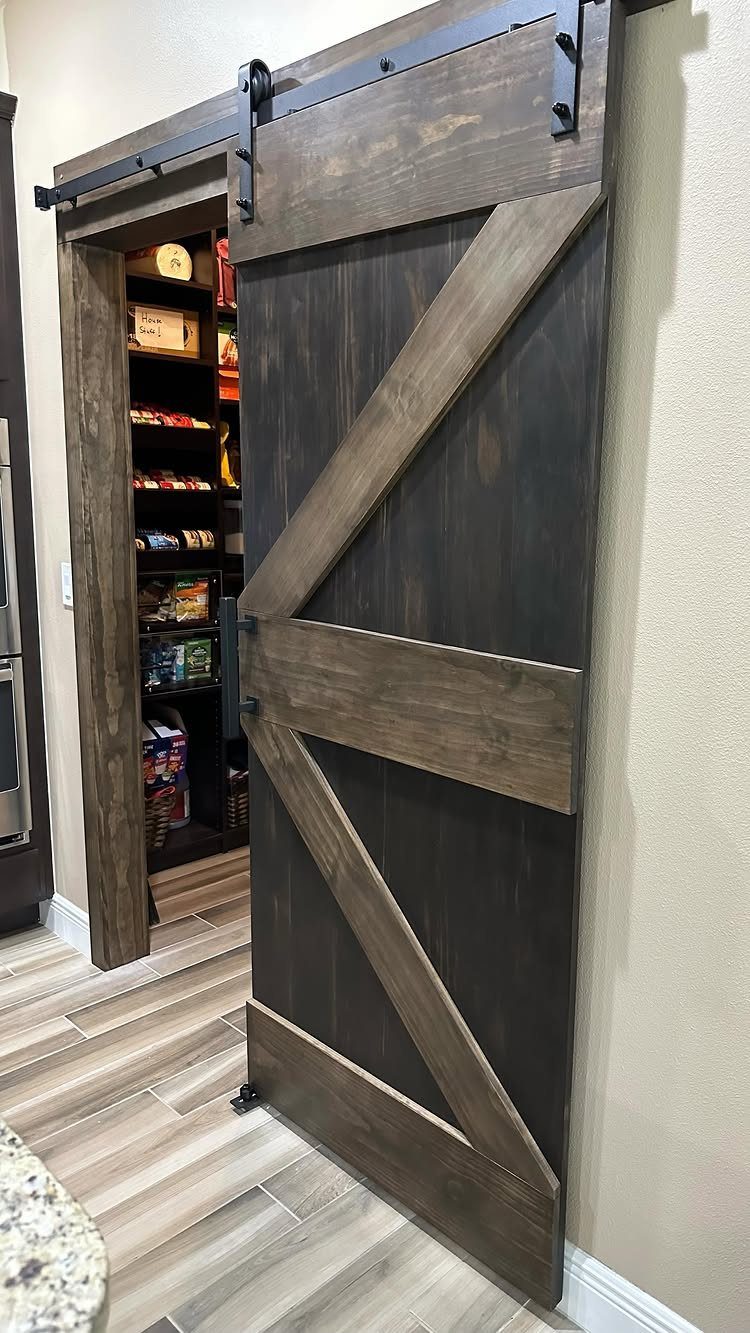
A sliding door saves the swing space a standard door needs and frames a pantry like an outbuilding entrance.
I use solid wood heavy enough to roll smoothly; hollow-core slabs wobble on the hardware. The track mounts to wall studs or a header board, and the door must overlap the opening by a few inches to cover the gap.
Black steel hardware against dark wood reads rustic; painted track and flat panels read more modern farmhouse.
12. Butcher Block
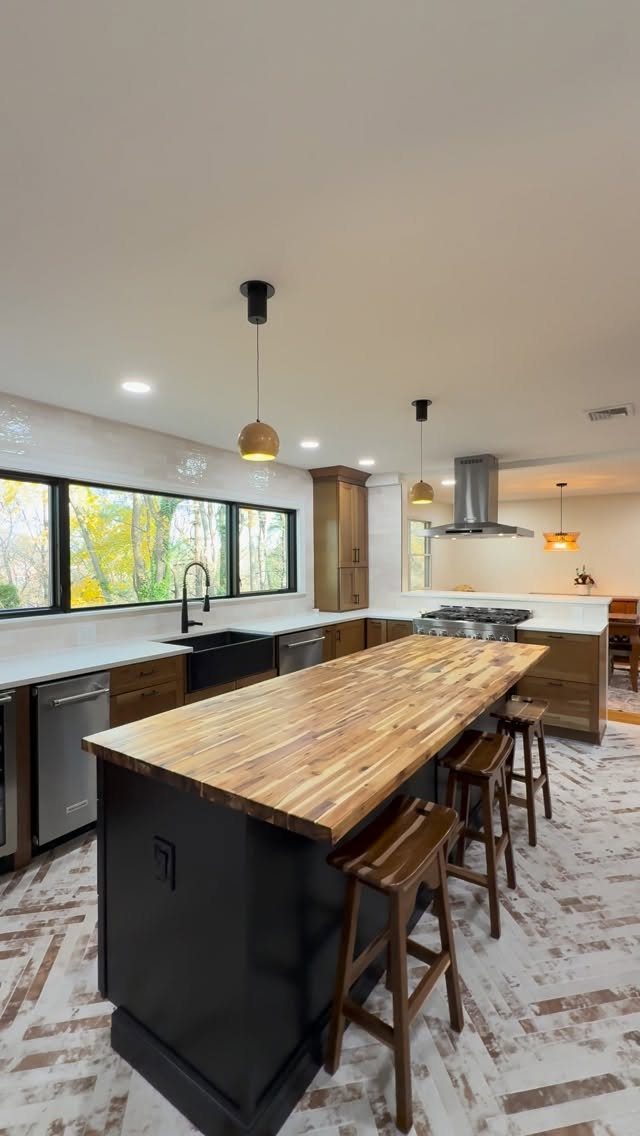
Thick wood counters take knife marks and heat scars that would ruin laminate, and they sand back to new. I oil mine monthly with food-grade mineral oil; neglected tops dry out and crack near the sink.
A thick slab on an island base gives a work surface separate from the perimeter counters, which I keep in stone or quartz for wet tasks. Herringbone floors and black painted bases pair with butcher block without competing for attention.
13. Hand-painted Ceramic Tiles
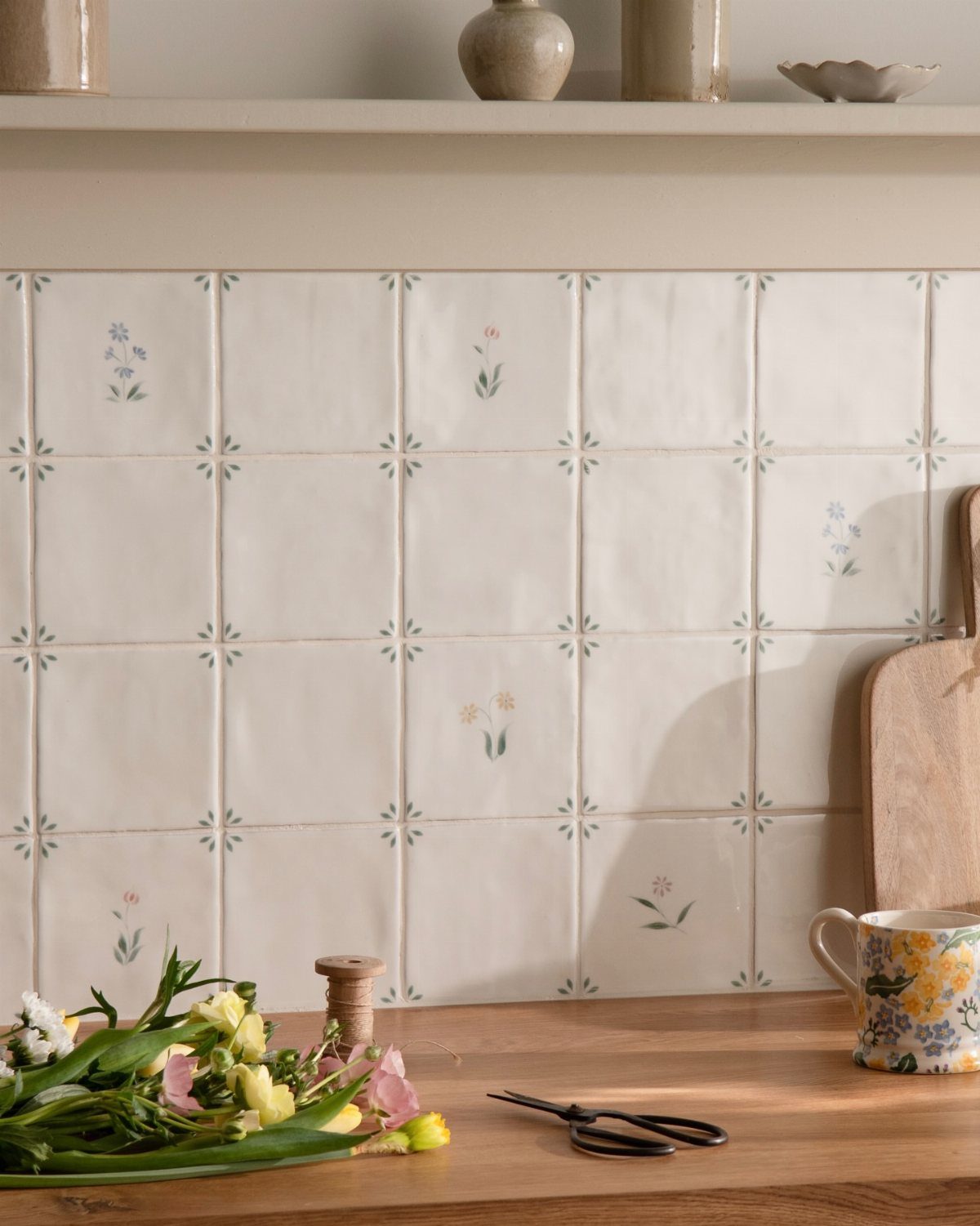
Hand-painted tiles turn a backsplash into something no big-box sheet can match. Small floral patterns in soft colors read as collected over time, not installed all at once.
I would keep the rest of the kitchen quiet, white or pale gray cabinets and a simple counter, so the tile commands attention without fighting for it.
Cost runs higher than standard subway tile, and the grout lines multiply with small formats, which means more sealing and more cleaning. For a single row above the range or a patch behind open shelves, the impact justifies the trade.
14. Skirted Fabric
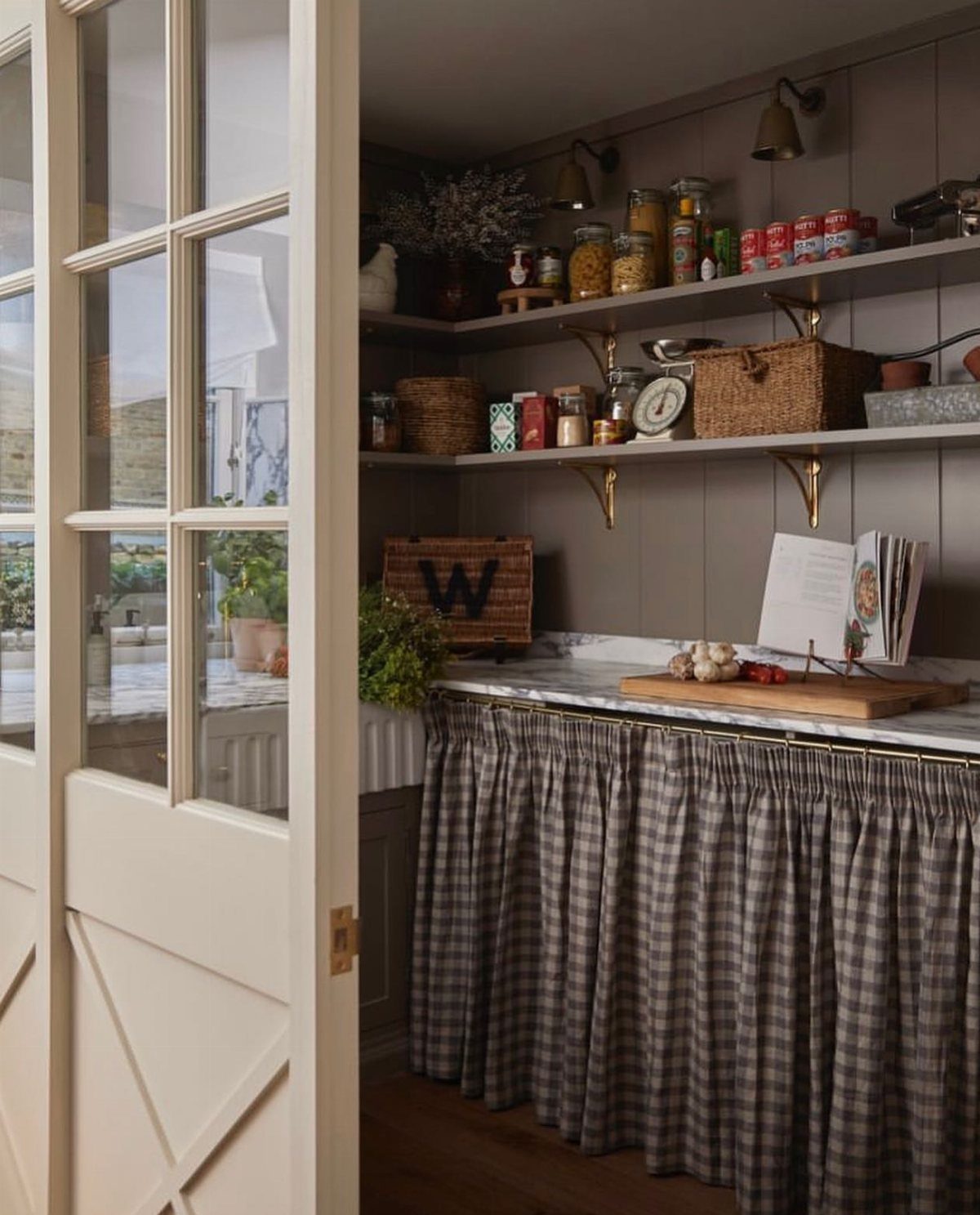
A fabric skirt hides shelves or a sink base for the cost of a few yards of cotton and a tension rod.
Checked gray reads farmhouse without drifting into costume; gingham, ticking stripe, or plain linen all work if the color ties to something else in the room.
I wash mine twice a year, more often if it sits near the stove where grease settles.
The look suits renters and anyone between cabinet decisions; it offers no protection from dust, so I would not use it on shelves I open daily. Hem the bottom to clear the floor by an inch.
15. Large Kitchen Island
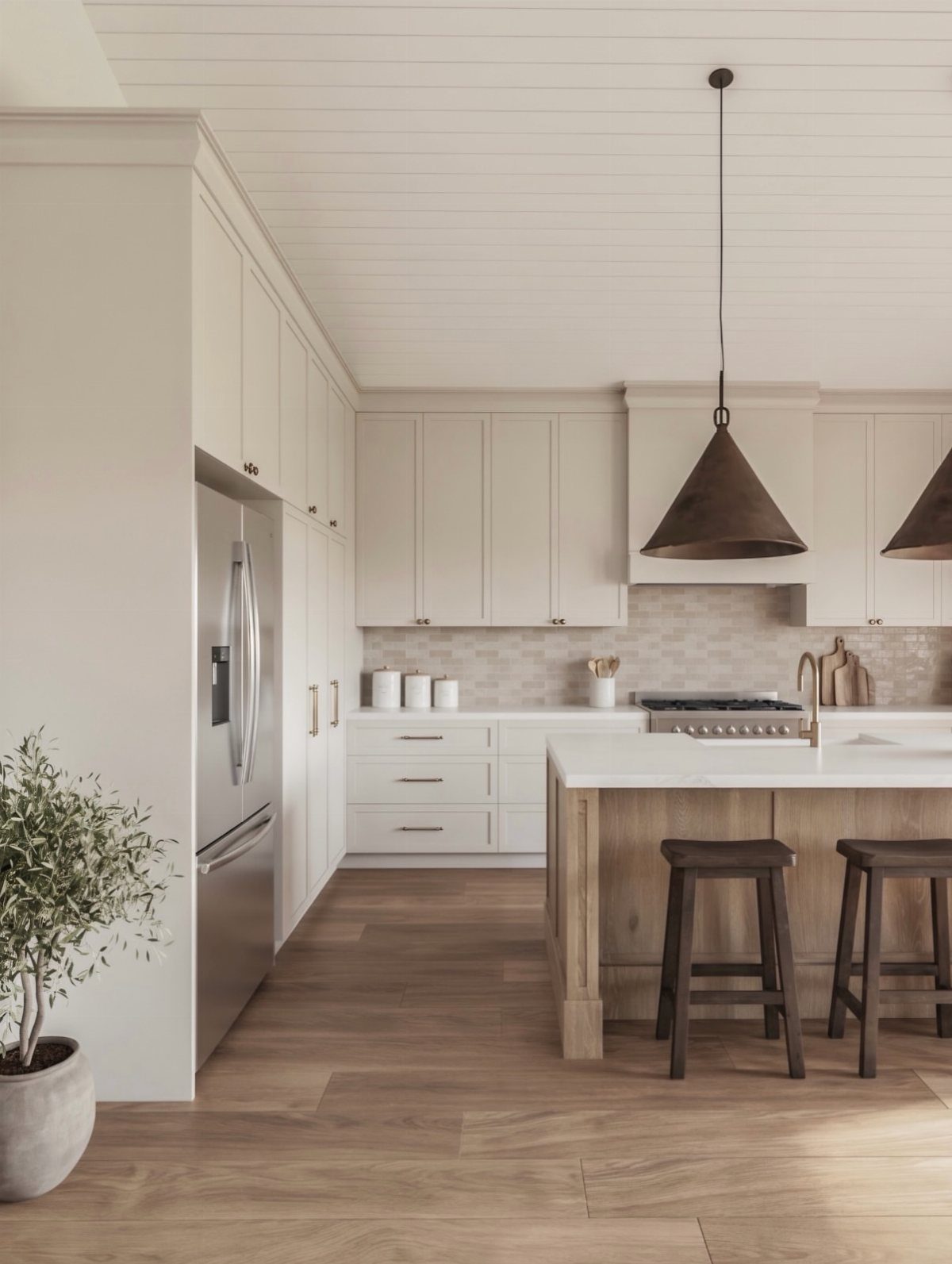
A large island gives workspace, seating, and storage that a perimeter alone never provides.
Light wood against cream cabinets keeps the room from feeling heavy; I would match the counter to the perimeter or choose something darker for deliberate contrast, never a third color that competes.
Dark stools ground the lighter island, and cone pendants hung low enough above the counter put light where hands work without blocking sightlines.
The size must leave room for traffic on all sides; anything tighter and the island becomes an obstacle. I size the overhang for the stools if they sit on one side, a bit more for comfort.
16. Brick Backsplash
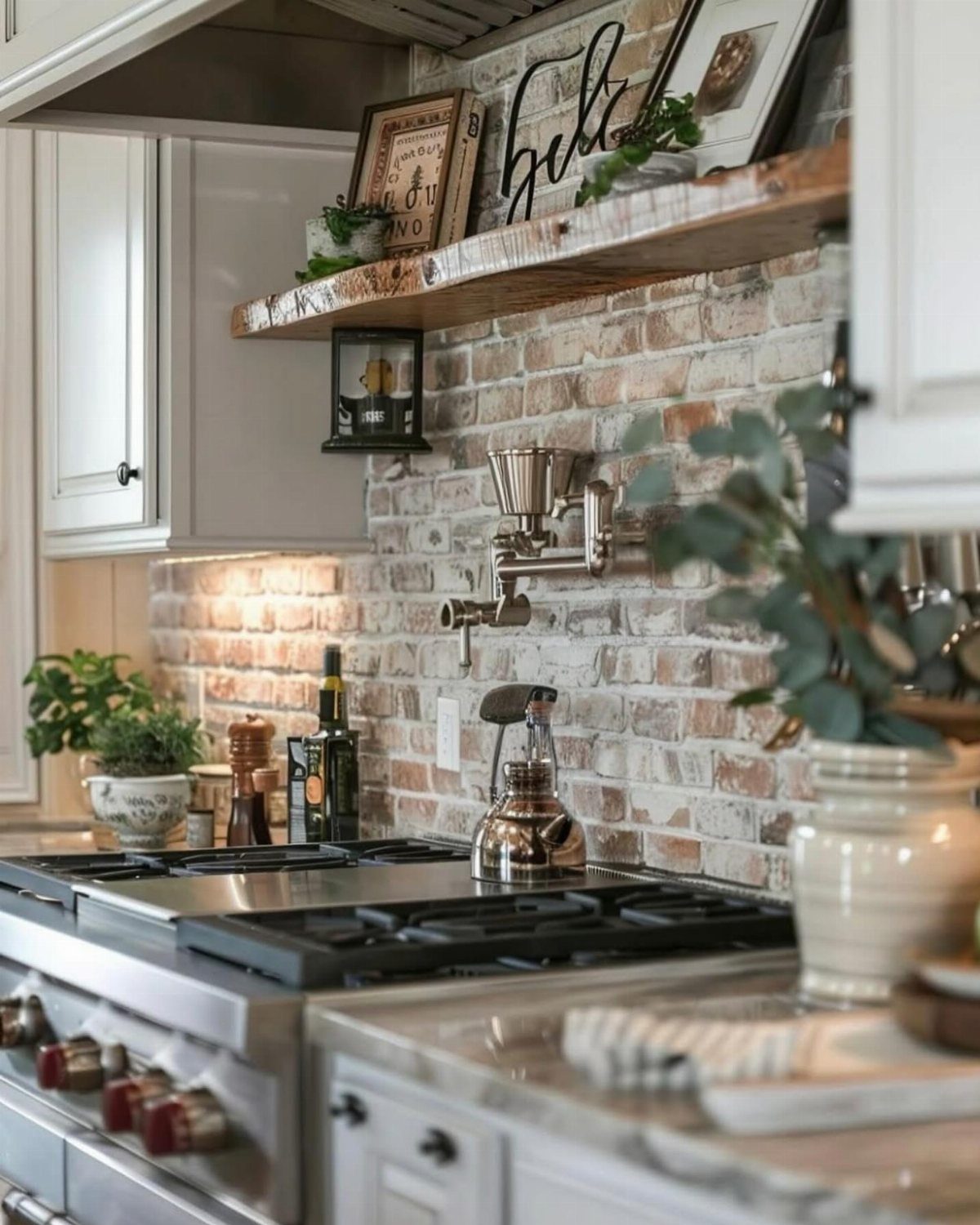
Brick behind a range carries more texture and history than any tile pattern. Whitewashed brick softens the industrial edge, keeps the kitchen bright, and hides the soot that collects near a cooktop better than raw red.
A pot filler mounted on it looks built in, not applied. I seal porous brick with a matte sealer before grouting or the grease will stain permanently; flat paint over the wash adds protection but loses some depth.
The weight demands proper backing, and the uneven surface complicates shelf mounting, so I plan bracket placement before the mason finishes. For a single focal wall, the effort pays.
Farmhouse Kitchen Trends
Farmhouse kitchens keep leaning into materials that show their age. Weathered wood, patinated metals, and hardware in antique brass or wrought iron carry a sense of history that new finishes cannot replicate.
Stone countertops, ceramic tiles, and natural fiber textiles all support the same story: a kitchen that looks inherited, not installed last month. The warmth comes from grain and wear, not polish.
For a modern take, slate grey cabinets with raw texture paired with brass details and open shelving balance contemporary lines against farmhouse roots. Honed white offers the brighter, more traditional palette if that suits the light in your room.
Either way, the timber should read as natural and grainy, not uniform or engineered. Reclaimed timber dining tables and exposed beams anchor the look more convincingly than any single fixture.
Mixing Styles
The tension between old and new is where a farmhouse kitchen finds its balance.
I like a kitchen where rough shiplap walls or exposed beams live next to smooth stainless steel or marble, because that mix actually works for real cooking while keeping the room grounded.
Found dining tables against sleek surfaces work the same way: the combination reads as personal, not staged.
Farmhouse, cottage, and rustic styles share enough DNA that mixing them rarely clashes. The shared thread is character over perfection.
I would start with one rough element you want to keep, then add the smooth counterpart, not the reverse. Too much polish first, and the rustic pieces look like props.
Creating a Cozy Atmosphere
Jute under the table, linen at the windows, woven baskets on shelves: each adds its own texture, and together they layer without shouting.
The grain gets noticed first, but the softness of these materials matters just as much to how the room feels.
A light palette risks coldness without intervention.
Warm woods, functional decor, and textiles that bring in color keep white cabinets from reading as sterile. Honed natural marble, textured tile, and metal accents in gold or aged brass give the eye places to rest.
Vaulted ceilings gain warmth from added beams with crackled, aged paint rather than smooth new timber. A cozy kitchen needs several small moments that catch the eye, not one big statement that everything else has to orbit.
I would place textiles where hands and eyes reach naturally: the sink window, the table edge, the shelf within arm’s reach.
Frequently Asked Questions
What are some rustic farmhouse kitchen decor ideas?
Natural materials anchor the look: reclaimed wood for tables or beams, open shelving with everyday dishes, and a farmhouse sink with its apron front exposed.
I add vintage pieces I actually use, like glass canisters for dry goods or a ceramic vase for utensils, and keep textiles at the sink window or table edge where hands reach them.
Grain and wear give real warmth; polish does not. Weathered wood and patinated metals earn their age honestly, which is why they outlast anything factory-distressed.
What is the difference between a rustic and a farmhouse kitchen?
Farmhouse kitchens put practicality first: shaker-style cabinets, deep sinks, and surfaces chosen for use, not display. Rustic kitchens push further into raw texture, with more rugged materials and less refinement in the finish.
The two share DNA, enough that mixing them rarely clashes, but farmhouse keeps a foot in daily function while rustic leans harder into the rough and aged.
Start with one rough element and let smoother pieces balance it. Do it the other way around and the rustic parts look like stage dressing.
What colors look good in a farmhouse-style kitchen?
White, cream, and pale gray form the backbone, since they let wood textures and natural light do the work. A white farmhouse sink pairs with any countertop and still looks right 10 years later.
Keep the palette warm, not stark. Woods and textiles keep white cabinets from reading cold.





