
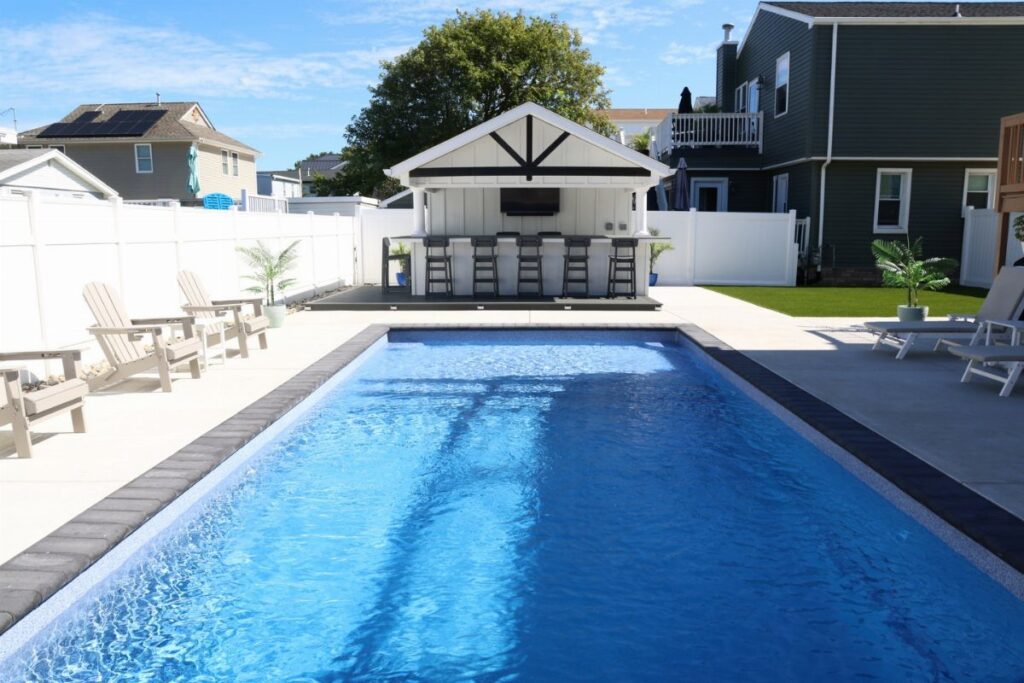
These ideas run from a simple cart to custom masonry with built-in grills and swim-up stools, so your budget and whether you already have a pool in the ground are what narrow the field.
A portable cart on locking casters suits a small patio; a swim-up bar with submerged seating needs to be planned before the shell sets.
1. Poolside Bar
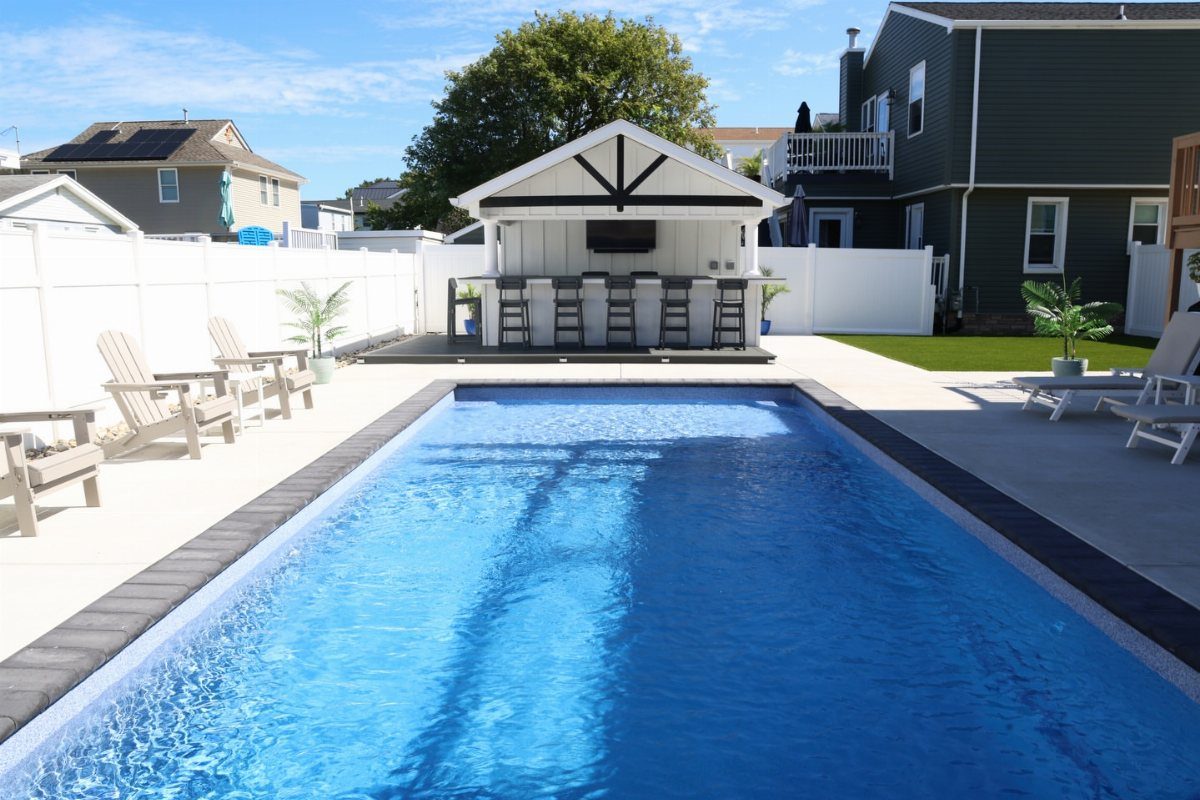
A poolside bar gives you a fixed station for drinks and snacks without anyone tracking water through the house.
A covered pavilion bar works best for households that entertain regularly and have the square footage to spare; the roof keeps sun and light rain off your bartender and your ice supply.
You will need plumbing for a sink and drainage, plus 120V outlets for a refrigerator or ice maker if you want to avoid running back to the kitchen.
Stools at counter height fit most adults comfortably; bring a tape measure to check your own counter before buying.
2. Tiki Bar
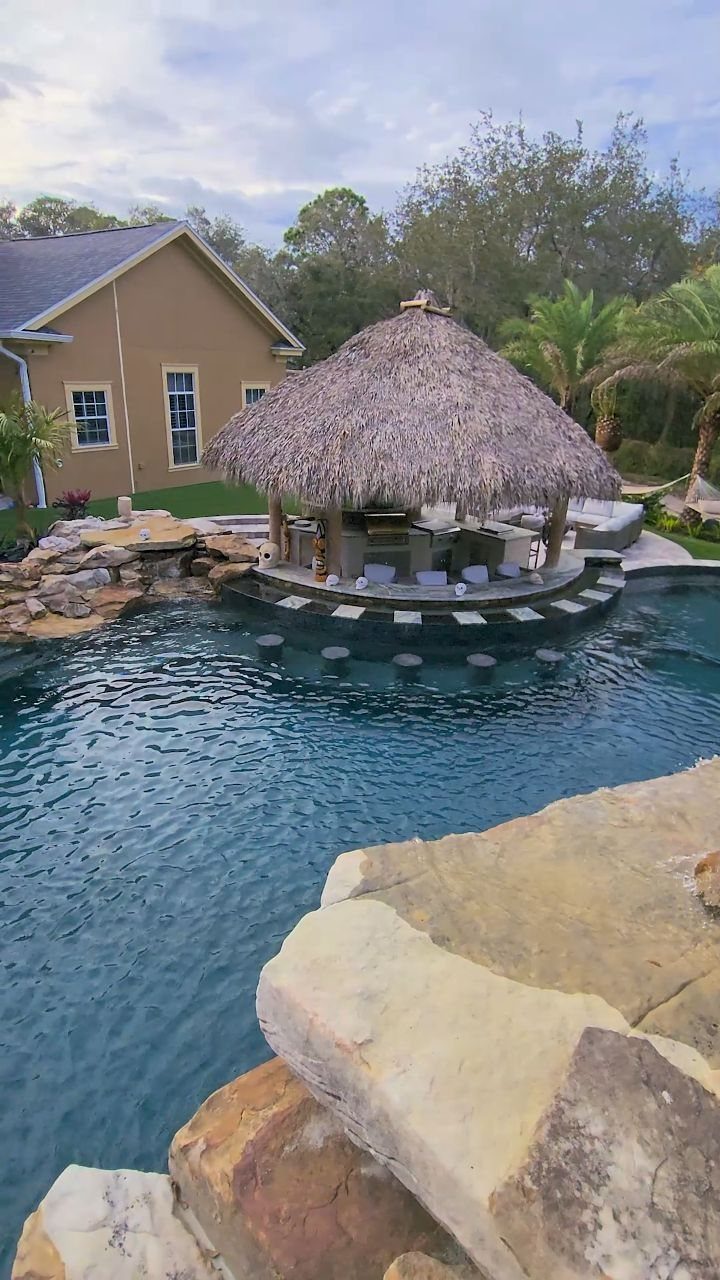
Thatch roofing over a bar changes the whole feel of a backyard without changing the fence line.
I find it works best when you commit to the theme: palm or banana plants in containers, maybe bamboo screening on one side, so the bar does not sit alone like a costume in a closet.
Built-in swim-up stools on the pool side and a service counter on the yard side let one person handle both swimmers and dry guests.
Real thatch wears out faster in a humid climate; synthetic fiber substitutes run longer but read as shinier up close.
3. Swim-Up Bar
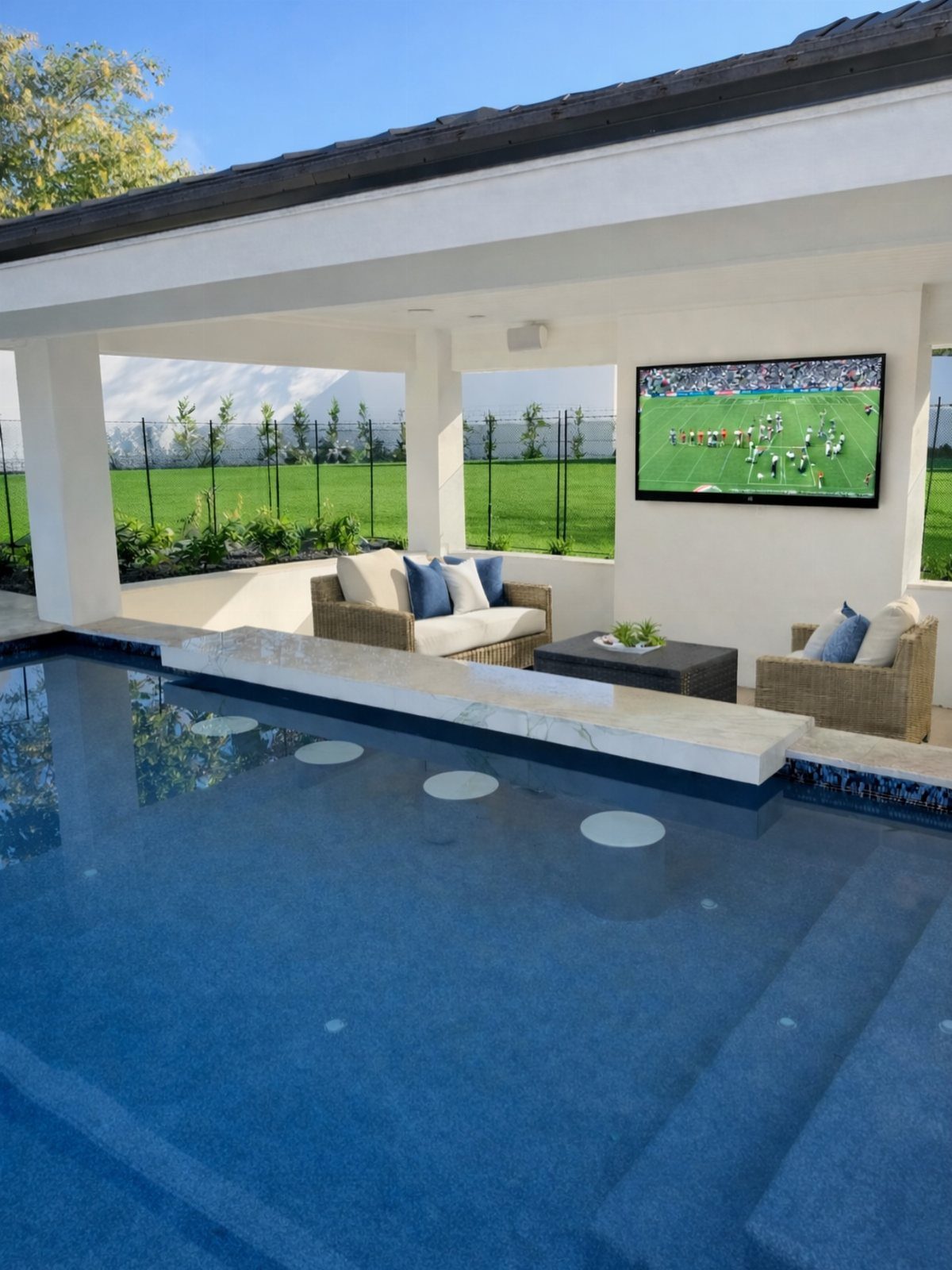
Swim-up bars solve the problem of guests who want a drink but do not want to climb out, dry off, and lose their spot in the water.
The swim-up bars that work best, with a stone ledge and submerged stools, are planned before the pool goes in; retrofitting means cutting into walls you would rather leave alone.
The ledge sits far enough below the waterline that seated guests keep their shoulders in the pool. You will want a non-slip finish on the bar top, and the bartender needs a dry work surface on the opposite side.
4. Portable Bar Cart
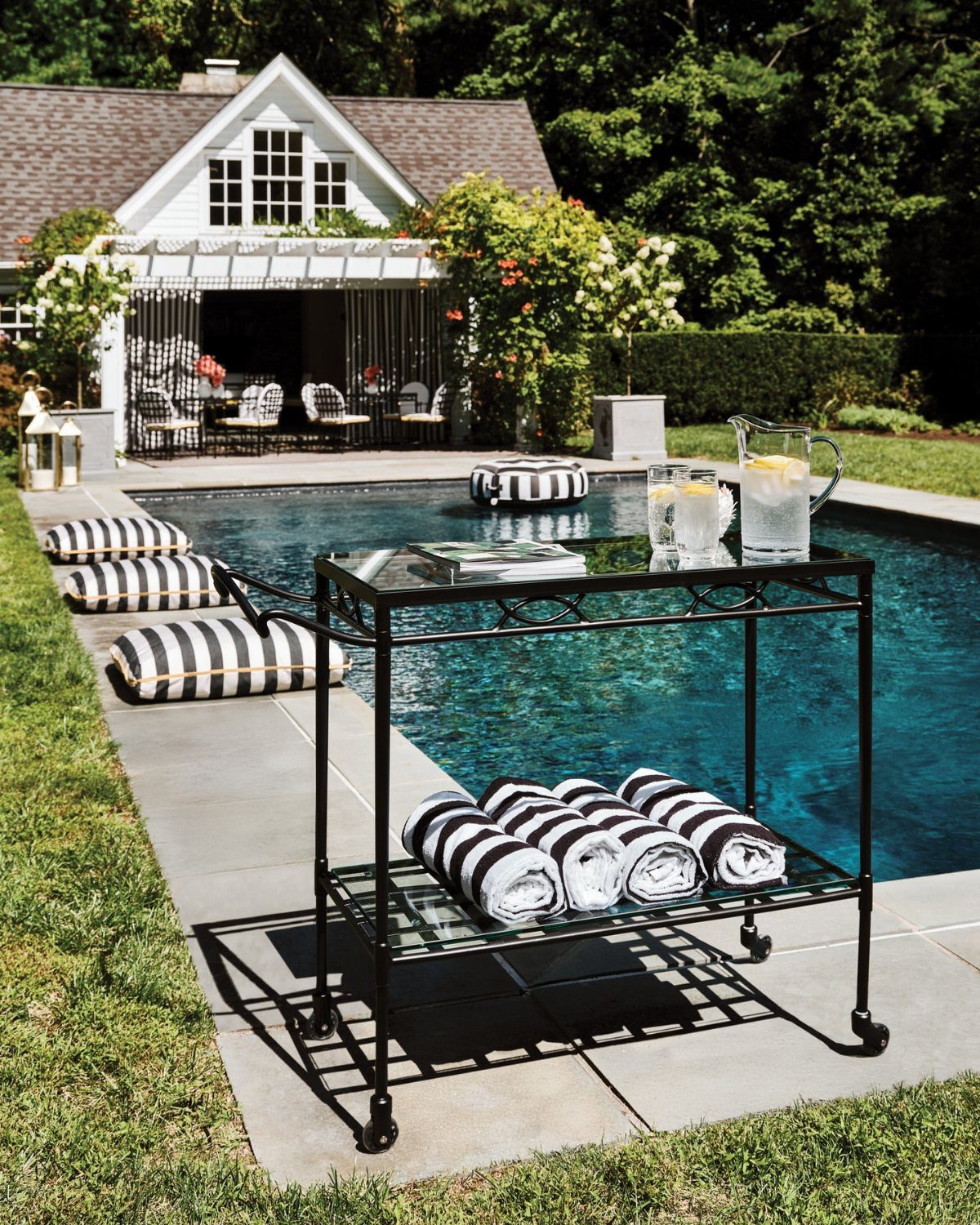
A bar cart on wheels is the right call when your pool area is small or when you want the option to roll everything indoors for the off-season.
A black metal cart holding a pitcher, glasses, and rolled towels is about the right load; overload it and it tips on uneven pavers.
I would look for casters large enough to roll smoothly, larger still if you cross grass or gravel, and a locking brake on at least 2 wheels.
No plumbing, no permit, no fixed location: setup is simply stocking it and pushing it where you need it.
5. Outdoor Kitchen Bar
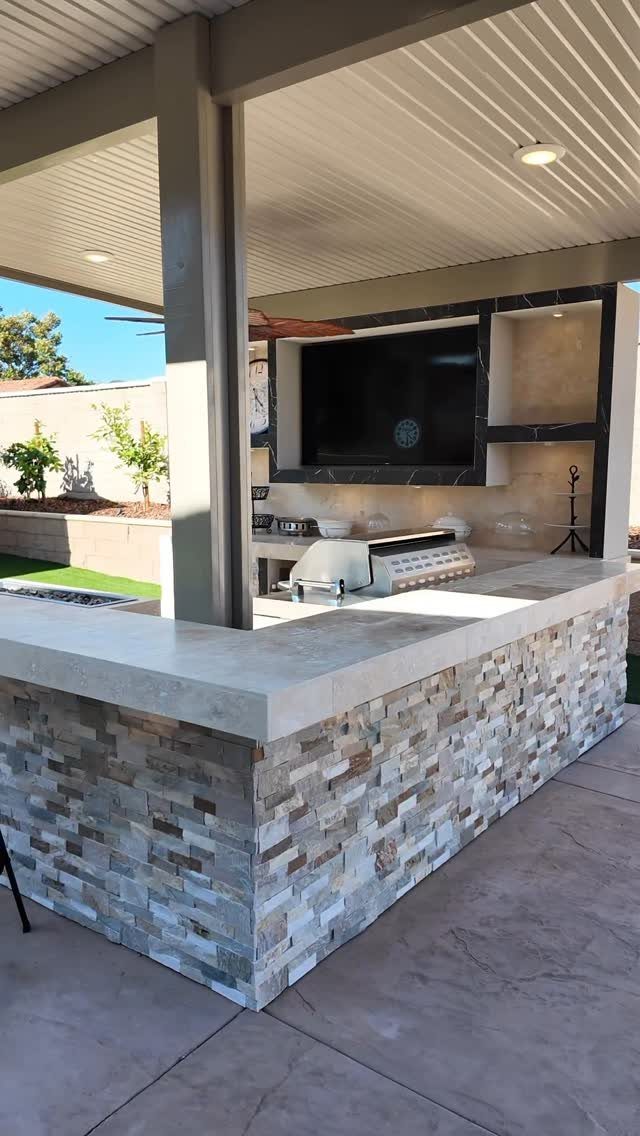
An outdoor kitchen bar asks more of your budget and your footprint but earns it back if you cook outside regularly.
Stacked stone and a thick counter suggest a built-in grill with storage below and bar seating across from the cook, which keeps conversation flowing without smoke in your guests’ faces.
Plan for generous counter depth behind the grill for safe maneuvering of hot trays. A wall-mounted TV needs a weather-rated enclosure or a very deep roof overhang; standard indoor sets fail fast outside.
6. Rustic Pool Bar
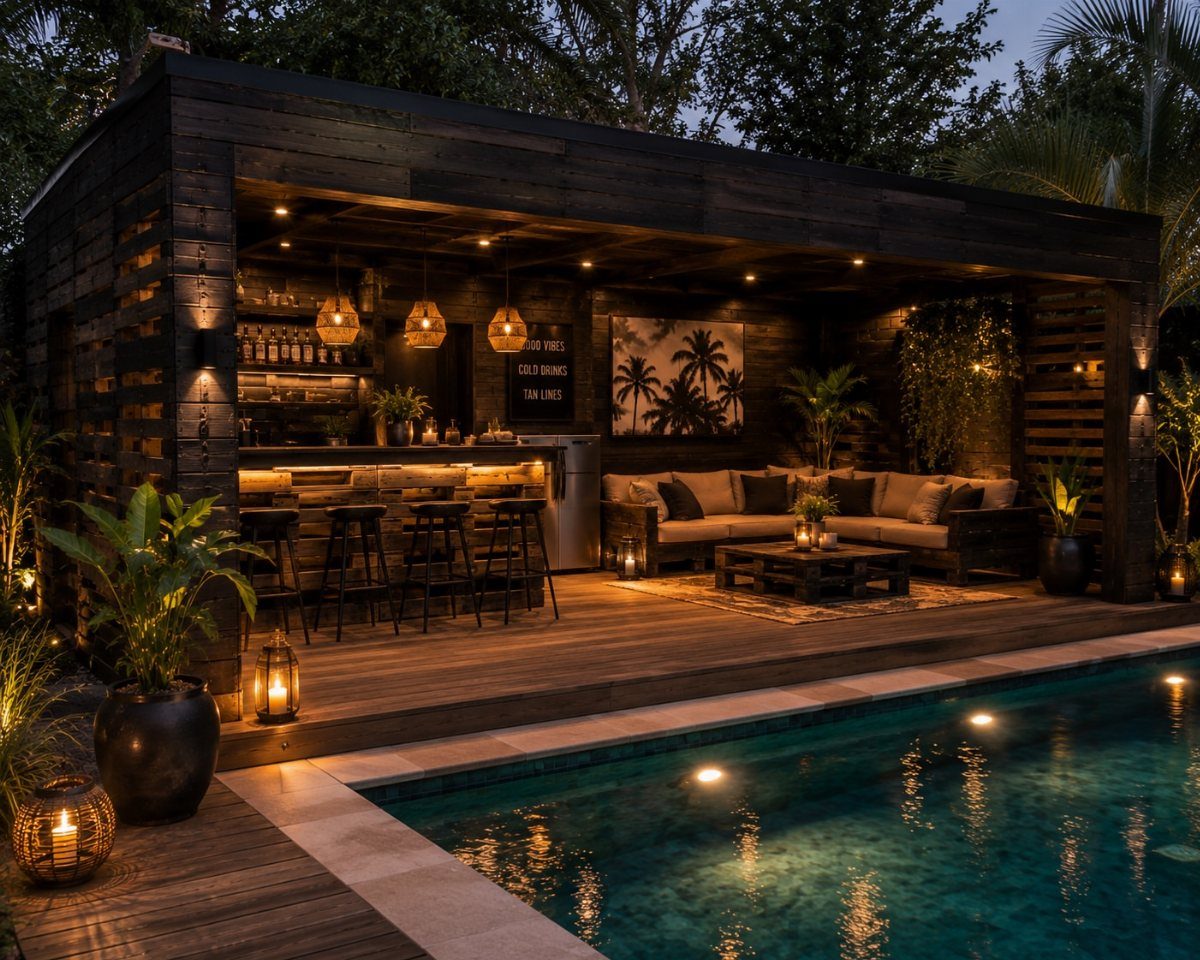
Rustic wood and warm lighting turn a pool bar into a space you actually want to spend evening hours in, not just pass through for a refill.
A cabana that mixes barstools at the counter with a lounge sofa and coffee table set back from the water gives guests 2 speeds: drinking at the bar or settling in with a plate.
I would stain or seal the wood annually in a climate with freeze-thaw cycles; unsealed timber grayed by weather reads as rustic for a season, then simply looks neglected.
The sign works because it is one gesture, not a wall of them.
7. Open-Air Patio Bar
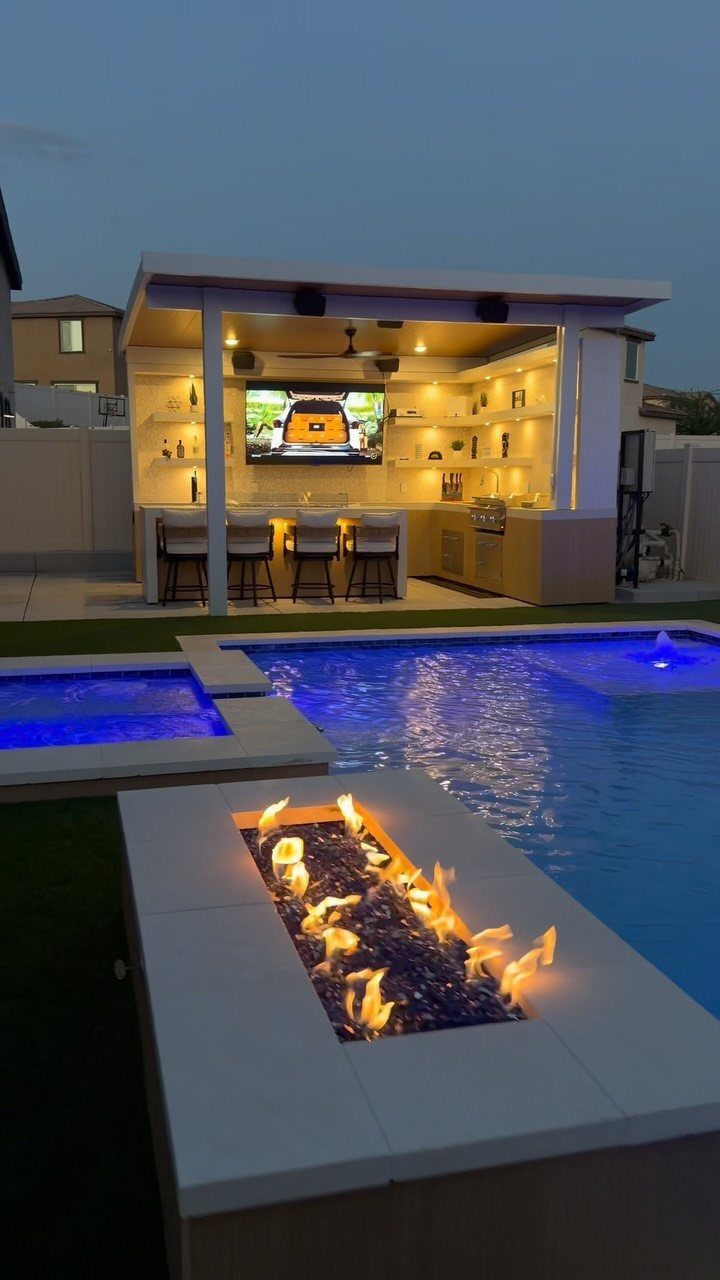
An open-air patio bar gives you partial cover without boxing you in. The roof shields your TV and your ice from direct sun and sudden rain, but the open sides keep air moving on humid July evenings.
Extension cords across wet pavers are a hazard, so I would run electrical for the television and any pendant lights before you set the posts.
Counter stools pair with counter height, though I would check your own stools against the counter before you commit.
8. Gazebo Bar
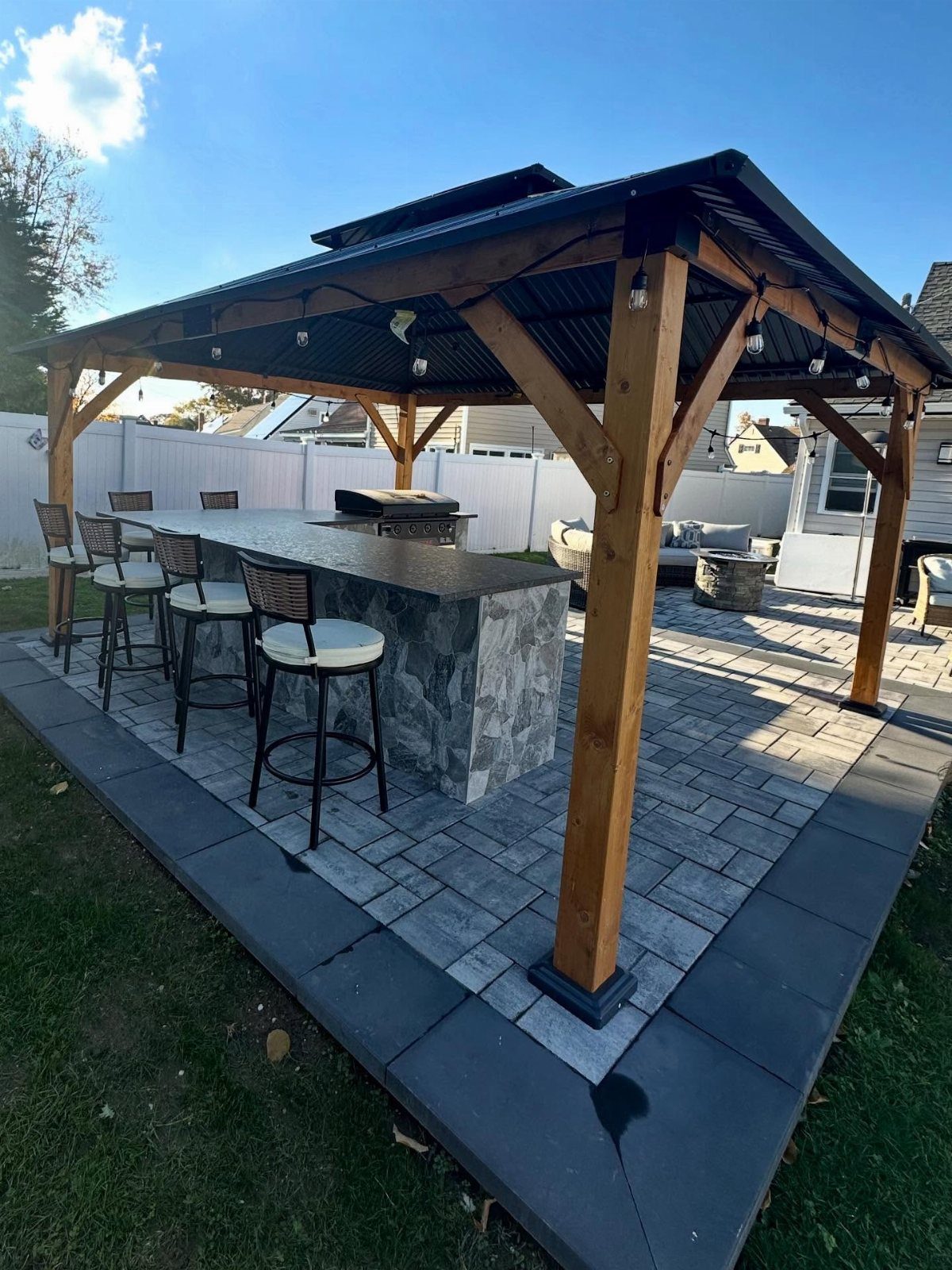
A gazebo bar turns a freestanding shelter into a true room with a purpose.
Stone facing on the counter and a built-in grill give the structure weight against the wood overhead, so it reads as deliberate, not like a picnic table that grew walls.
Barstools under a gazebo roof stay dry enough that you can leave cushions out between parties; I would still store them if your winters go below freezing.
The fire pit a few steps away extends the evening, but leave clear path width for guests moving between hot surfaces and alcohol.
9. Luxury Resort Bar
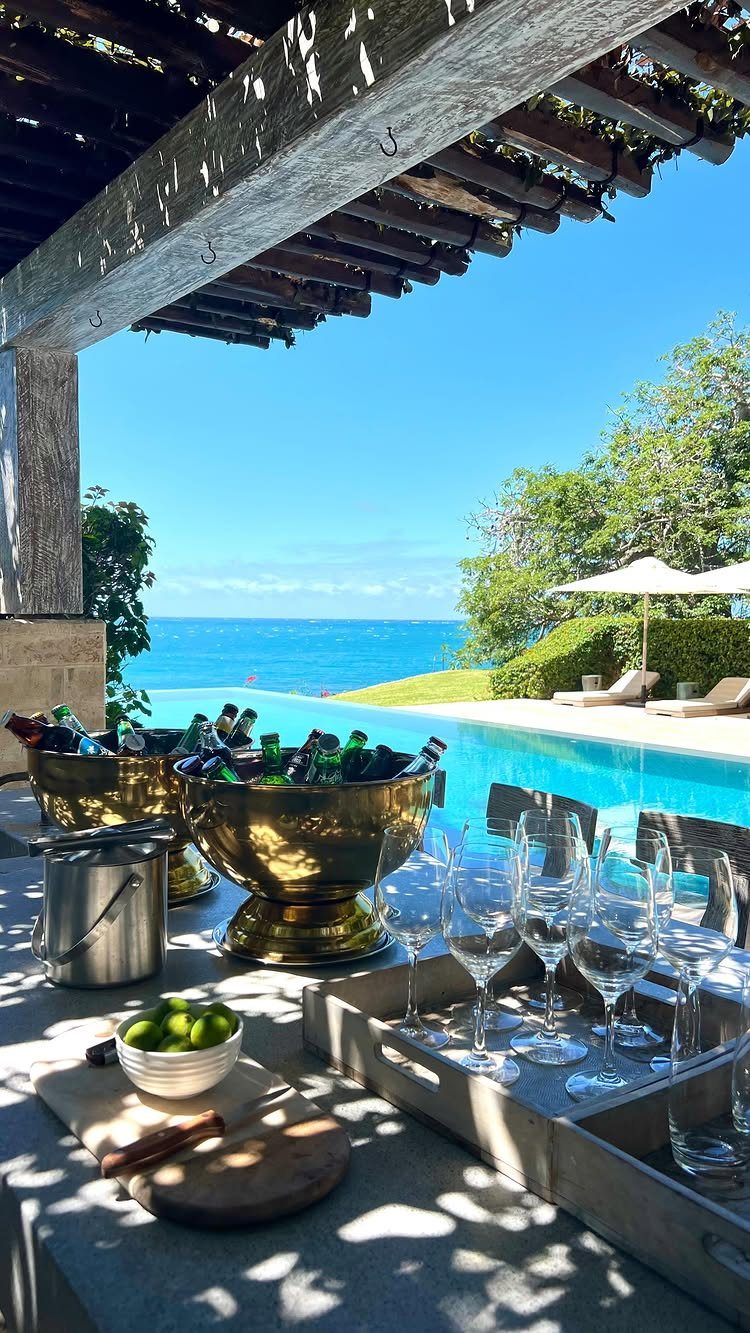
Brass and stone against open water borrow the look of a hotel you once visited; carrying it off at home without the staff takes restraint.
Gold-toned ice buckets and clear glassware catch sunset light better than colored plastic ever will, and a pergola overhead gives shade without blocking the view.
This setup asks for a pool that already faces something worth seeing, or at least a planted screen that hides the neighbor’s roofline.
I would budget for breakage; acrylic or polycarbonate drinkware and wet hands do not mix well, and replacing one piece at resort markup stings.
10. Compact Bar
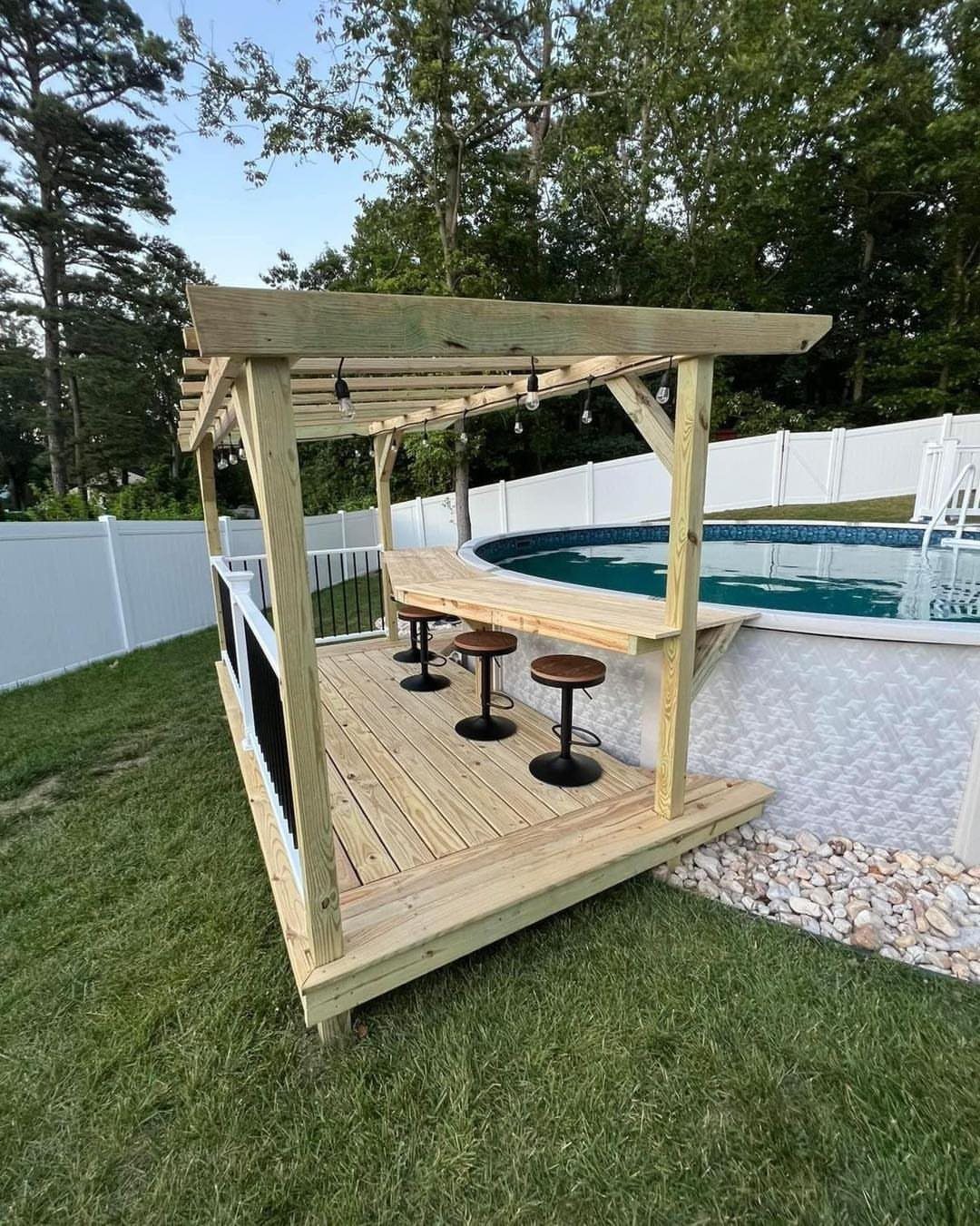
A compact bar gives swimmers a place to land even when the yard is small. Three stools under a small pergola, built onto a deck beside an above-ground pool, serve a household that entertains four or six, not forty.
I would keep the counter shallow so the deck still has walking room; a deep bar eats your platform fast.
Above-ground pools sit higher than in-ground, so check your stool height against the finished counter before you order. Pressure-treated lumber with a solid stain lasts a good while in most climates; seal the cut ends twice.
11. Modern Pool Bar
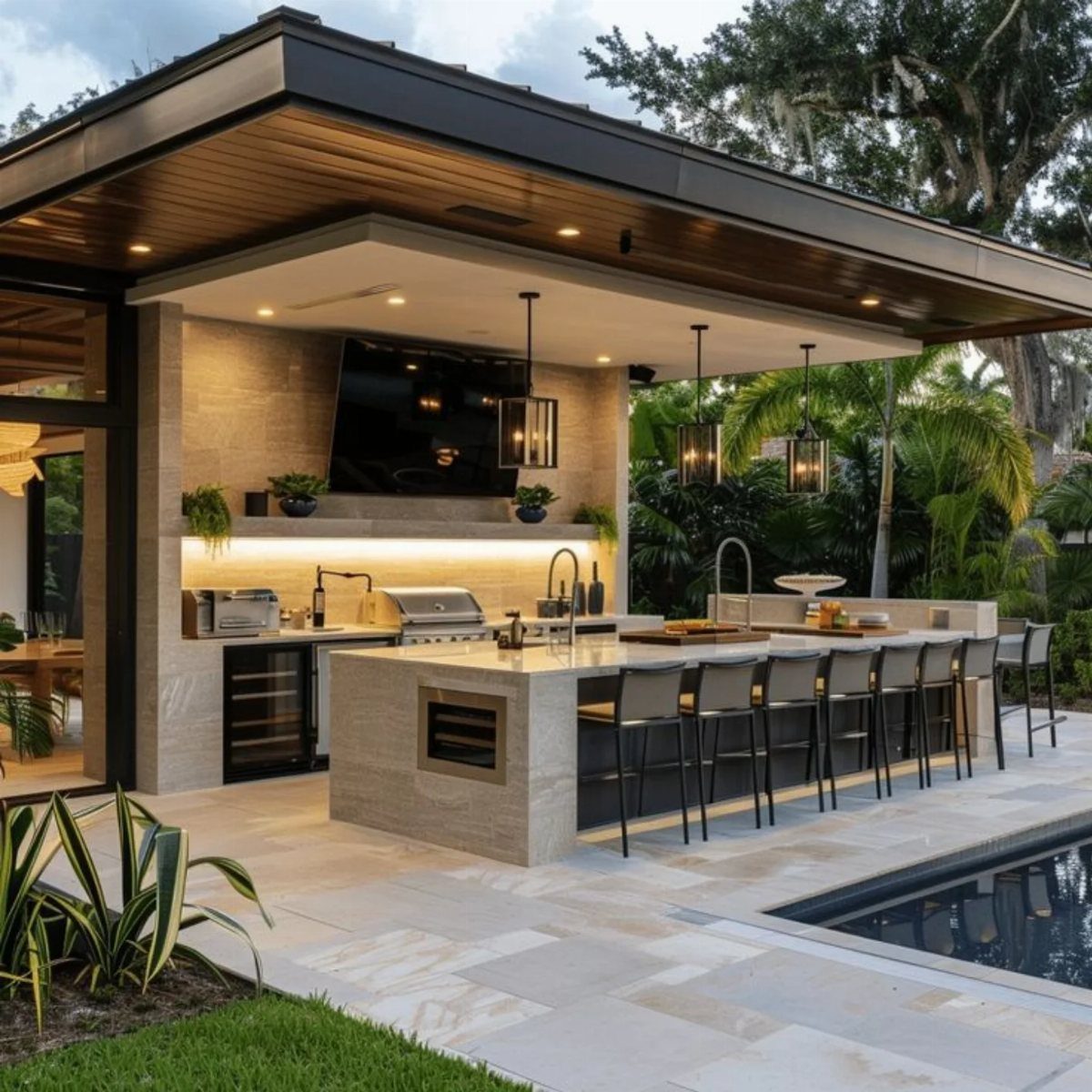
Black stools and stone counters under a solid roof give a pool bar the same clean lines you might have inside your house.
Stainless appliances survive outside only if the roof has real depth; I would want plenty of overhang to keep rain off the grill and refrigerator doors.
Pendant lighting needs GFCI protection and fixtures rated for damp locations, not just the bulbs.
Tropical planting around the perimeter softens the edges without fighting the minimal look; I would choose broad-leaf evergreens in containers rather than digging beds against the foundation.
Essential Features for Pool Bars
HDPE plastic furniture handles sun and chlorine better than standard outdoor pieces, which is worth the upgrade if your bar sits in full exposure.
Mix your seating: bar stools for the counter, maybe a bench or chaise off to the side for guests who want to settle in rather than perch.
A retractable awning buys you more hours of usable shade than a fixed roof alone, and it pulls back when you want the sky.
For the counter itself, vinyl-wrapped wood or composite surfaces clean up without the swelling and checking that unsealed timber suffers.
I would plan electrical for more than you think you need: ceiling fans, pendant lights, outlets for a blender or phone charger.
String lights, lanterns, or LED strips around the bar frame shift the mood after sunset without requiring hardwired fixtures everywhere.
Design Considerations
I would sketch the path from grill to pool to seating before anything gets built. Guests carry plates and drinks across wet surfaces; a route that pinches between the bar and a planter becomes a collision point fast.
Misting fans or a pergola with trained vines extend your comfortable season by cutting afternoon heat.
Winter means covering furniture, draining any plumbing, and storing cushions if your temperatures drop below freezing.
Retractable curtains or enclosures around a gazebo or pavilion bar let you use the space longer into cold months, though I would still shut down water lines before the first hard freeze.
Cost Estimates
A basic pool bar setup runs $2,000–$5,000. That gets you a counter, stools, and maybe a small roof, probably from a prefabricated kit if you are holding the line on budget.
Premium finishes push any tier higher.
Prefabricated structures keep costs down; custom masonry and built-ins do not. I would list what I will actually use every Saturday, then stop there; the next tier up mostly buys me cabinets full of things I forget I own.
Frequently Asked Questions
What are some creative ideas for a bar by the pool?
Swim-up bars with submerged stone ledges and stools, thatch-roofed tiki bars with bamboo screening, and wheeled portable bar carts all work well, depending on your space and budget.
A swim-up bar needs planning before the pool goes in; a tiki bar changes the feel with one gesture; a cart rolls away when the season ends.
A theme only works if it runs through the stools, the shelving, the glassware, and the lighting too; half a theme looks like you forgot to finish.
What are the trends for home bars in 2026?
Theme-based designs, personal engraving, and LED-lit or mosaic-tile surfaces are showing up more in custom work.
Reclaimed wood accents and built-in wine racks add detail without clutter. I would still put my money into shade and seating before specialty lighting; the bar gets used more when guests are comfortable.
What are some backyard pool design ideas?
You can roof a pool bar with a slatted pergola, a solid pavilion, a breezy gazebo, or a curtained cabana, and the materials can read as sleek concrete and steel or as rough cedar and thatch.
How do you make a pool area nice?
The pool area needs a place to land, a place to cool off, and a place to dry off, and one strong piece, a fire bowl or a bar counter, gives the eye somewhere to rest.





