
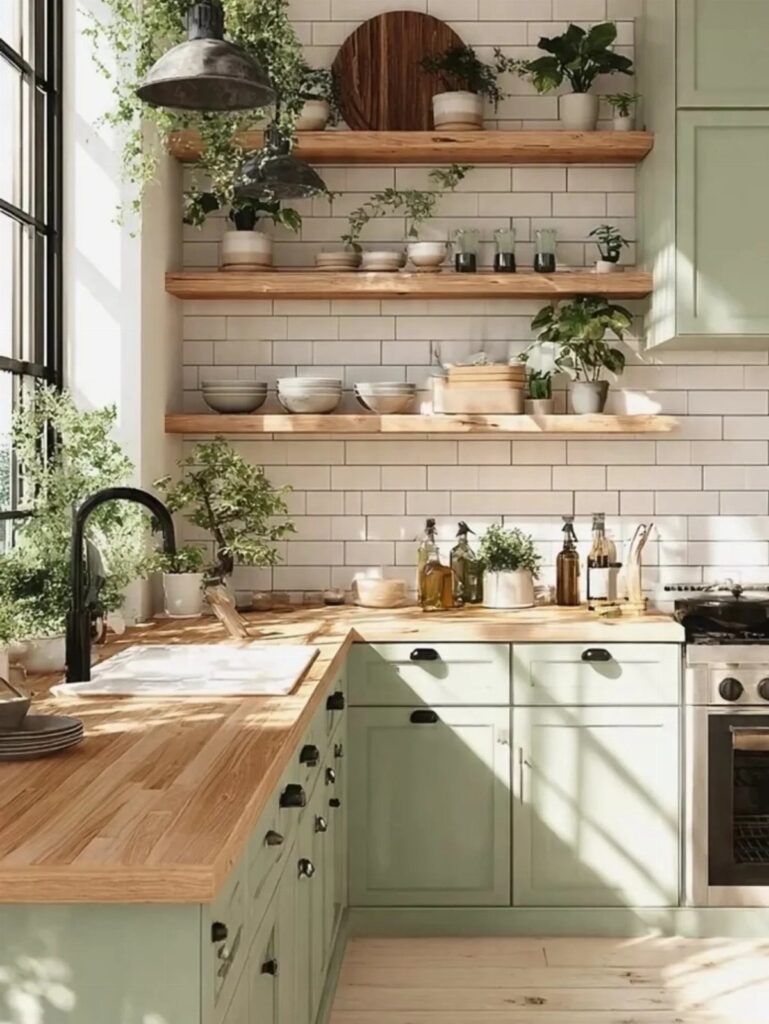
Open shelving in a kitchen can be as simple as a countertop tiered stand or as involved as stone shelves that need a steel frame and blocking in the wall.
What decides which idea is yours is whether you own the wall or might move next year; renters and rearrangers have the freestanding hutch and countertop tiered shelving, while homeowners can anchor floating shelves into studs and tile.
The 3000K cutoff for LED strip warmth under shelves shows how specific this gets; above that temperature, wood tones turn clinical.
1. Corner Shelving
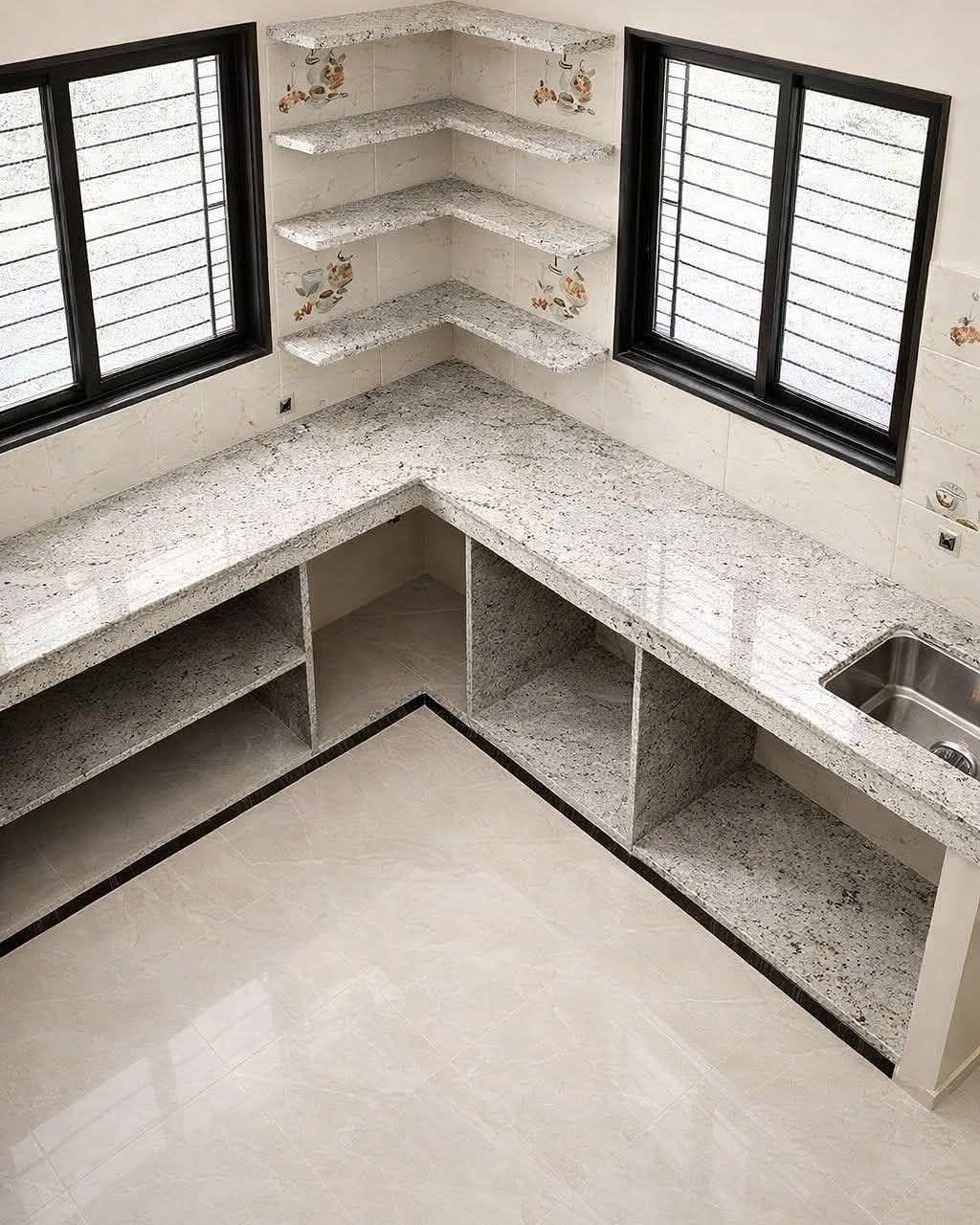
Corners in kitchens tend to collect nothing but dust and the occasional spider.
Mounting open shelving there, set into the angle where walls meet, turns that dead zone into storage for mugs, small plates, or the bowls you reach for every morning.
A shelf line that echoes the countertop shape keeps the whole corner reading as one intentional piece rather than an afterthought.
I like that this needs no special bracket hardware beyond standard concealed supports; the corner itself does half the visual work. A stud finder matters more here than elsewhere, since both walls must carry weight and corner framing gets unpredictable.
2. Open Shelves with Cabinets
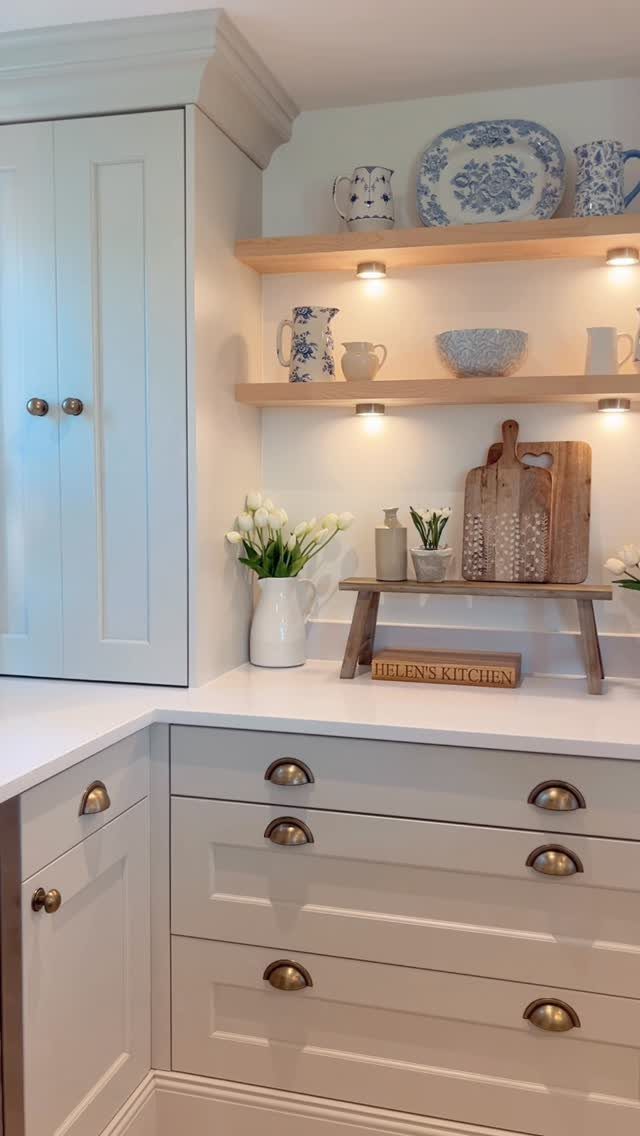
The mix of closed cabinet and open shelf lets a kitchen breathe without surrendering to clutter. A wood tone between open shelves and painted cabinets bridges the 2 worlds, warming the cabinets without matching them exactly.
Cup pulls on the cabinets keep the face simple, so the eye rests on the shelf contents rather than hardware competing for attention.
For someone working a moderate budget, this is forgiving; you can replace upper cabinets with shelves in one section only, where you want display, and leave the rest closed for the blender you never use and the roasting pan you use twice a year.
The trade is dusting: open shelves need it weekly, cabinets forgive you for months.
3. Natural Wood
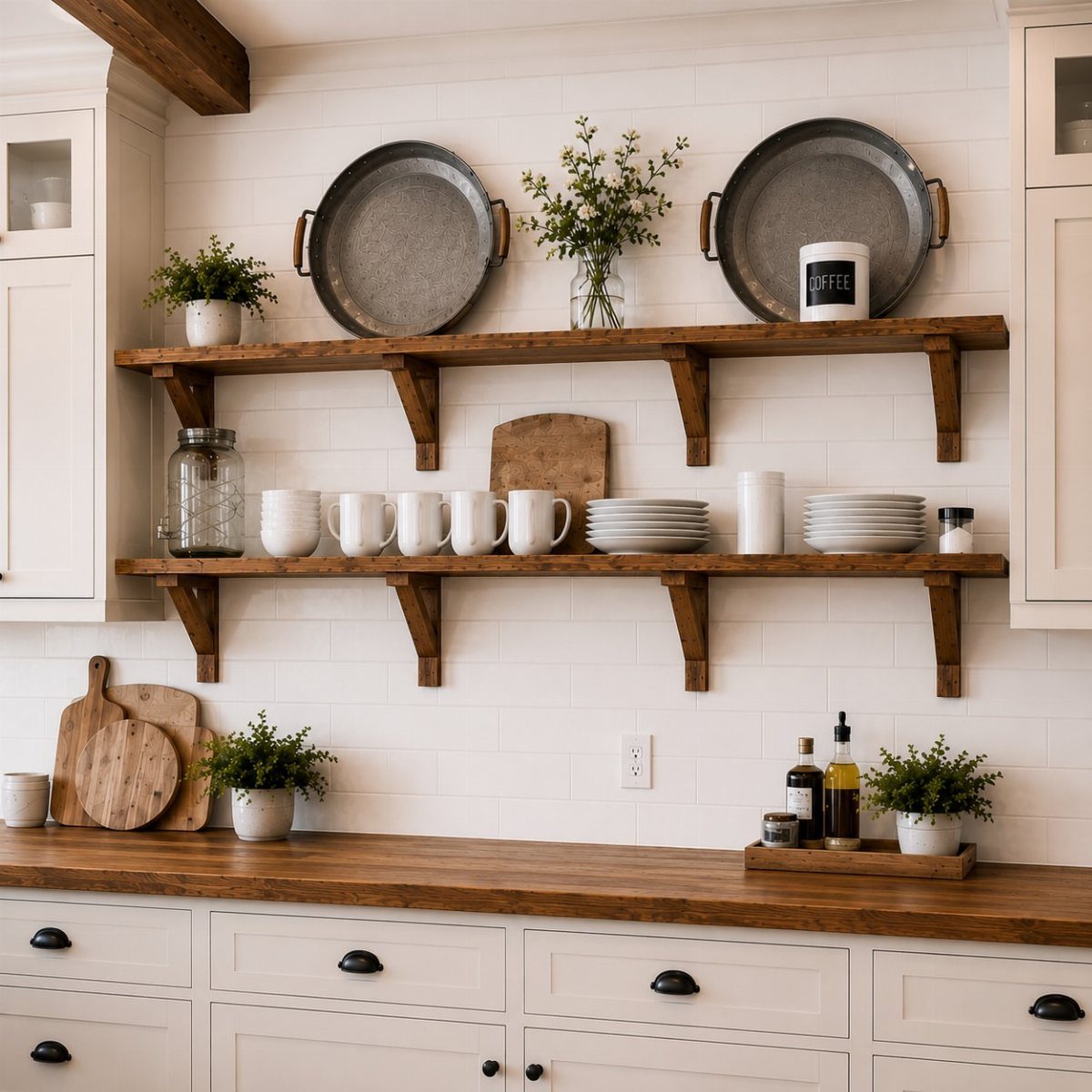
Natural wood against white tile and cabinets is the combination I would choose if I were starting fresh tomorrow.
The grain gives the kitchen something alive that paint cannot, and it ages; a water ring or knife mark becomes part of the surface rather than damage to repair.
Mid-tone oak or ash works well when the boards are thick enough to read as substantial without needing a visible bracket.
You can buy floating shelves in this material from most big-box stores now, though I prefer ordering from a local mill if you have one.
The price runs higher, but you pick the exact board, and they will cut to the length your wall actually measures rather than the standard increments that leave awkward gaps.
4. Colorful Open Shelving
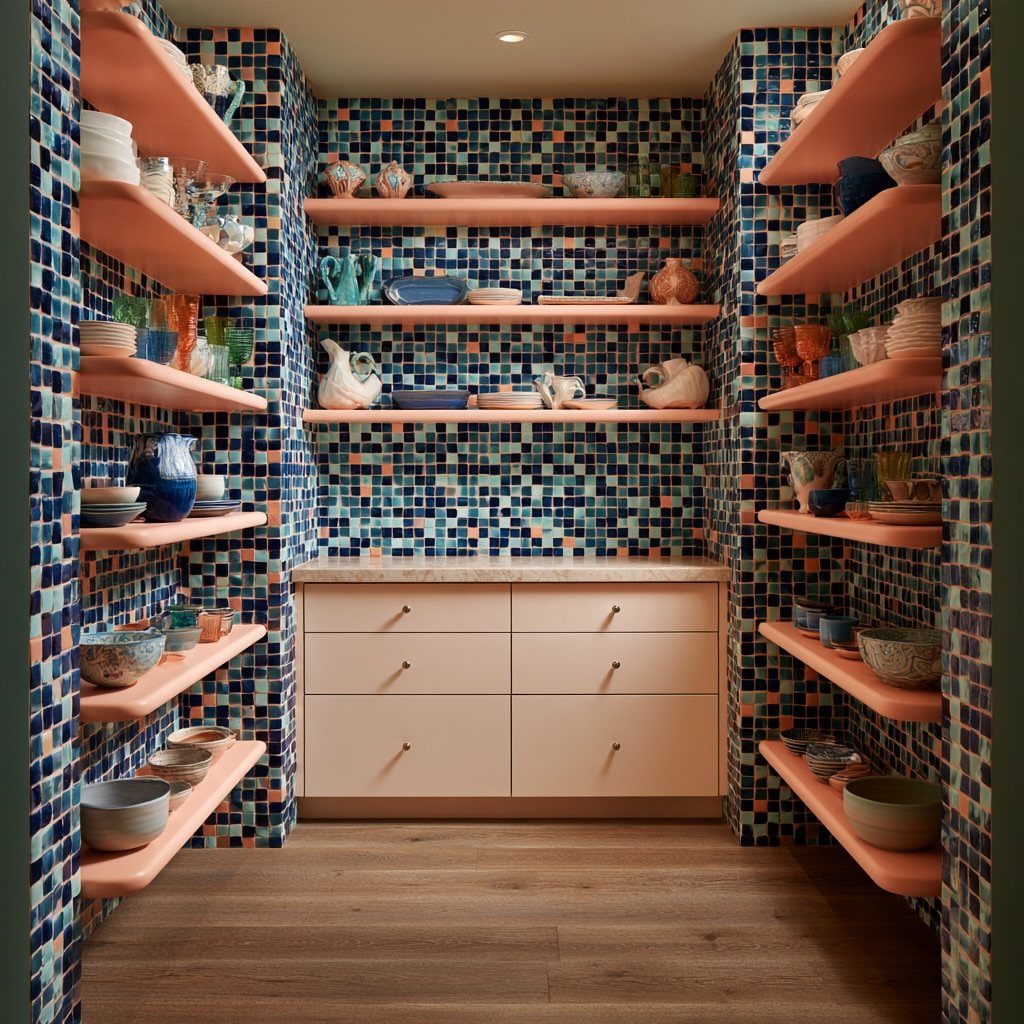
Painting shelves a color, rather than staining or leaving them raw, commits you in a way white or wood does not.
A peach-pink shelf works when the tiles already carry that note; the shelf does not introduce a new idea so much as amplify one that was waiting.
I would not attempt this in a kitchen with neutral everything else, the shelf would look stranded.
Small mosaic tile backsplashes have fallen out of favor in the last decade, which makes this feel particular to its moment.
If you are drawn to it, my advice is to keep the dishes simple, white or clear glass, so the color story stays controlled. Pattern on pattern here would exhaust the eye by Tuesday.
5. Scandinavian Kitchen with Open Shelving
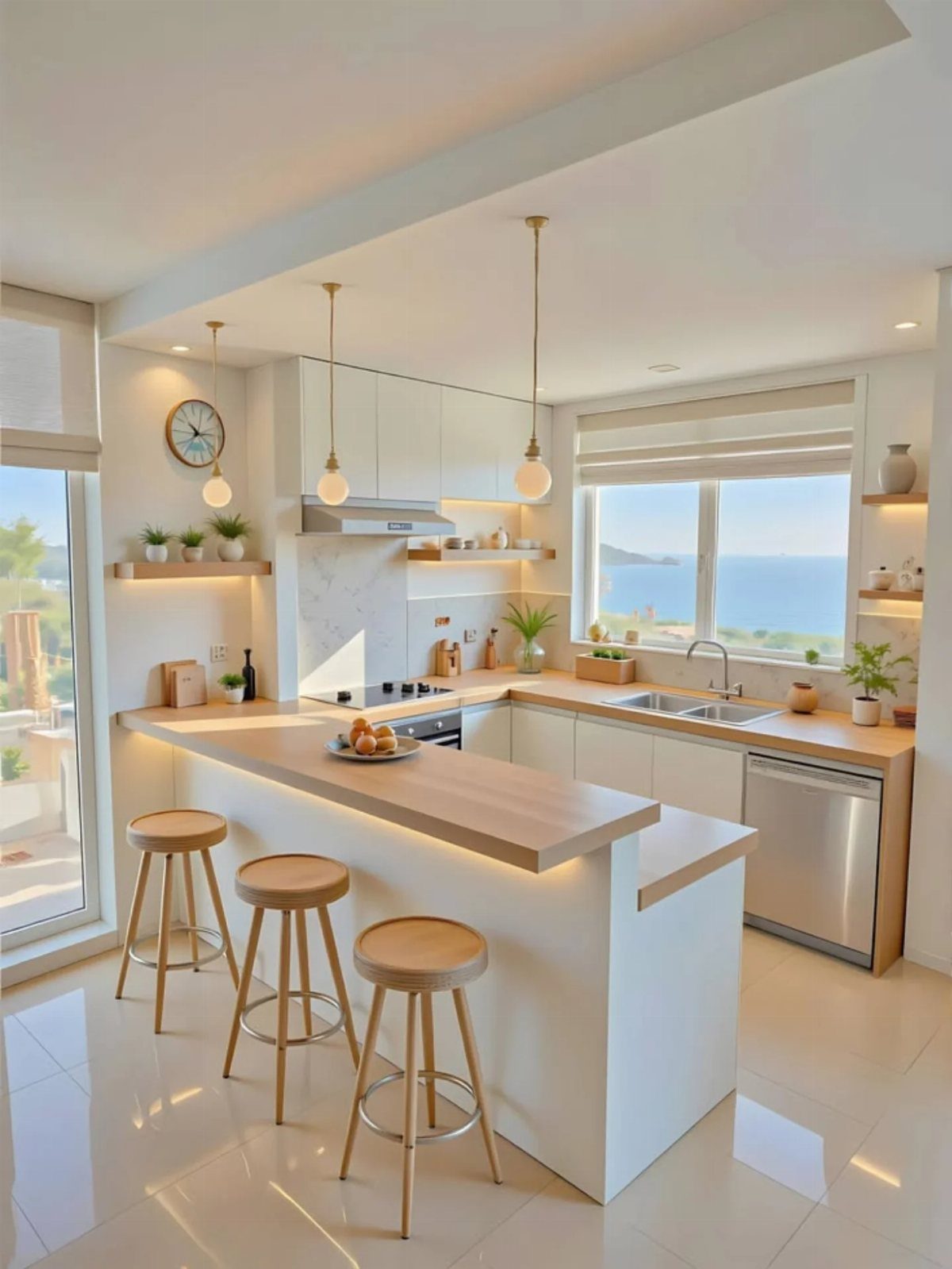
Light wood, white surfaces, and as much daylight as the windows allow: the Scandinavian formula is not complicated, which is partly why it persists.
The breakfast bar with stools turns the kitchen into a room where someone sits, not just cooks, and the open shelves at eye level keep the objects of daily use visible rather than hidden.
What distinguishes this from other light-wood-and-white kitchens is the proportion. The shelves run short stretches, never the full wall, and the lighting beneath them is warm rather than clinical.
If you are working a small space, this restraint matters more than any single material choice. I would rather have a short span of well-lit shelf than a long run that goes dim in the afternoon.
6. Floating Shelves
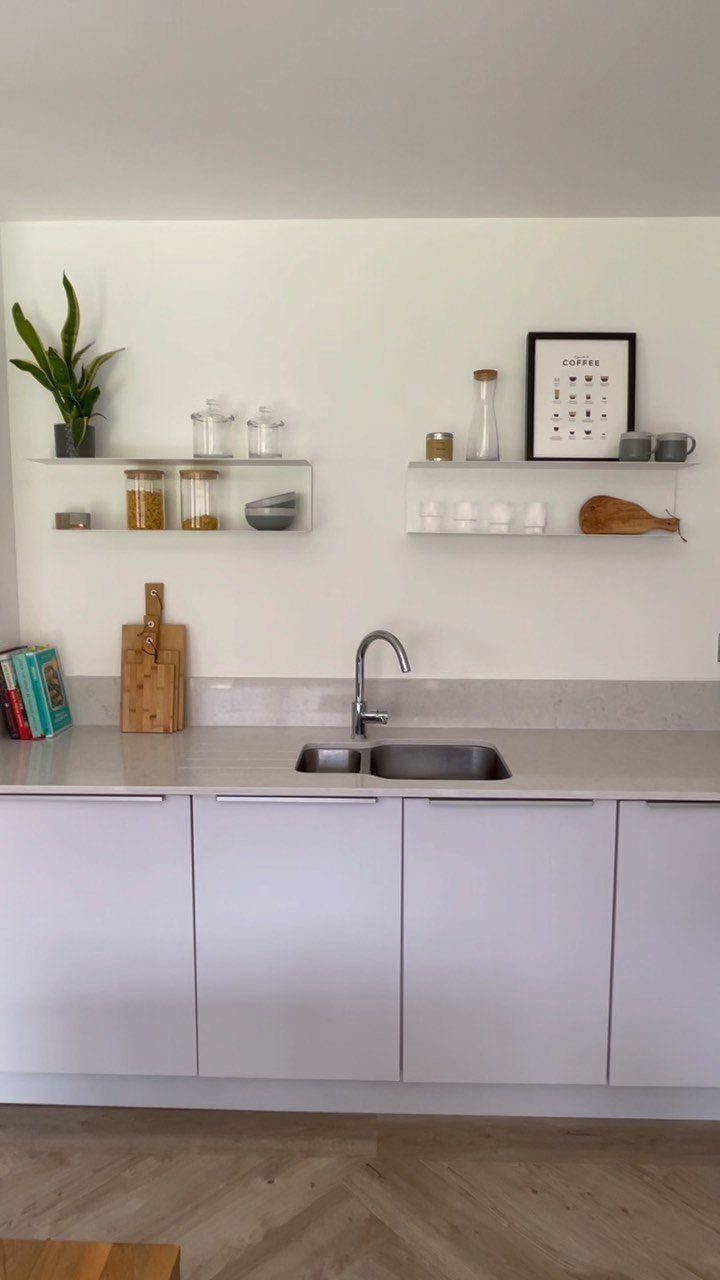
Floating shelves live or die by their mounting. White metal shelves with a thin profile read as almost nothing against the wall and put the dishes forward.
Metal can take more weight than wood of the same depth without sagging, though it conducts sound; setting down a heavy plate has a ring to it that wood absorbs.
The bracket system is hidden, usually a metal rail anchored to studs with the shelf sleeve sliding over. I have installed these alone, but a second pair of hands helps you level the rail before the anchors set.
Check your wall: a smooth painted surface like this one takes standard anchors, but tile would mean drilling through glaze with a diamond bit and patience.
Drywall is faster, but you must hit the stud or use a toggle rated for the load.
7. Shelving Above Built-in Ovens
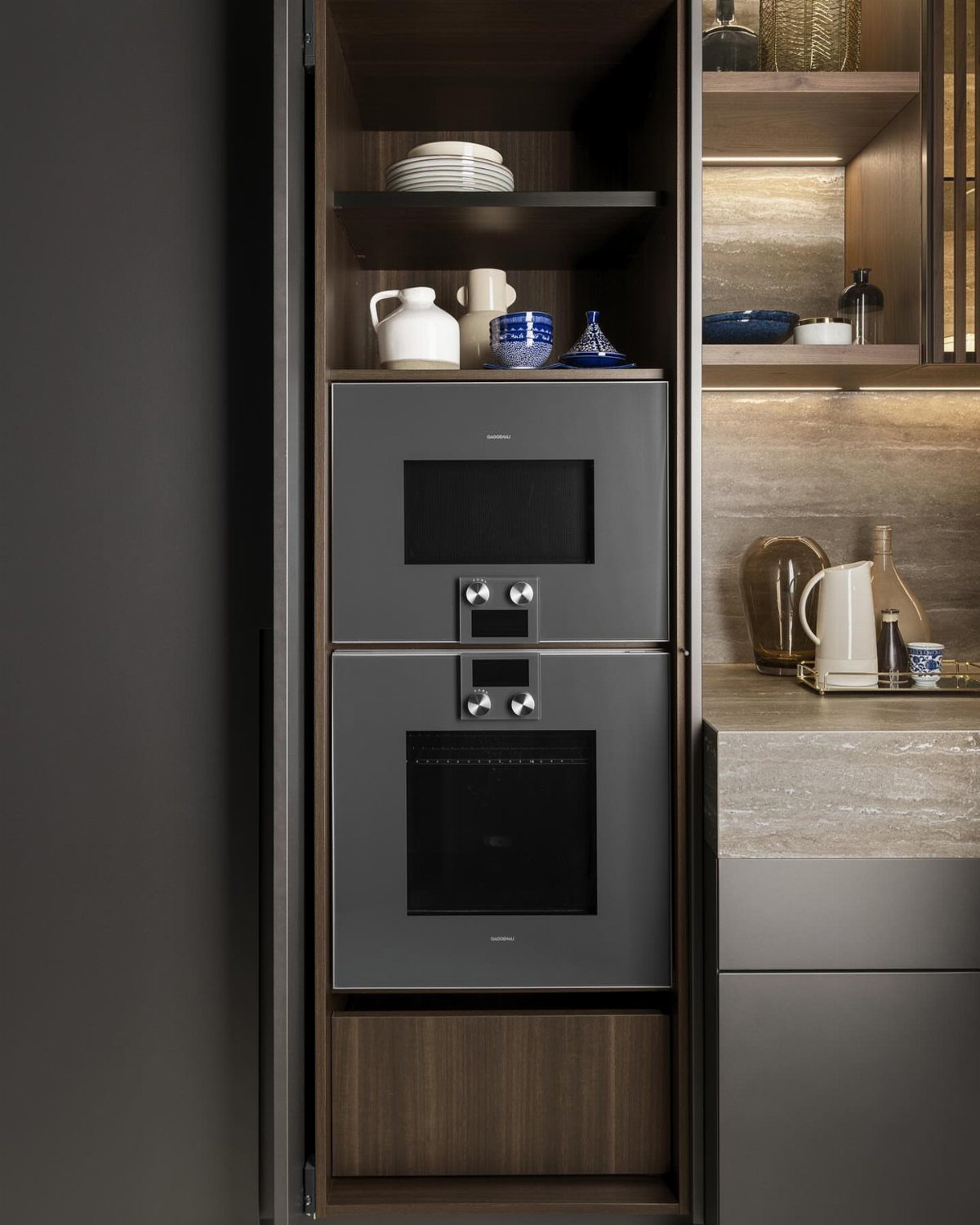
Built-in ovens free wall space exactly where you already stand, and open shelving above keeps dishes within arm’s reach for unloading. The dark wood here matches the cabinetry below so the shelf reads as an extension, not an addition.
Heat rising from the ovens limits what you store; ceramics and everyday plates handle it fine, but oils and chocolates belong lower down.
A shelf deep enough to clear the door swing still holds a dinner plate with room to spare. Check your oven specs for clearance, some manufacturers want more headroom than you would guess.
8. Shelving with Black Metal Brackets
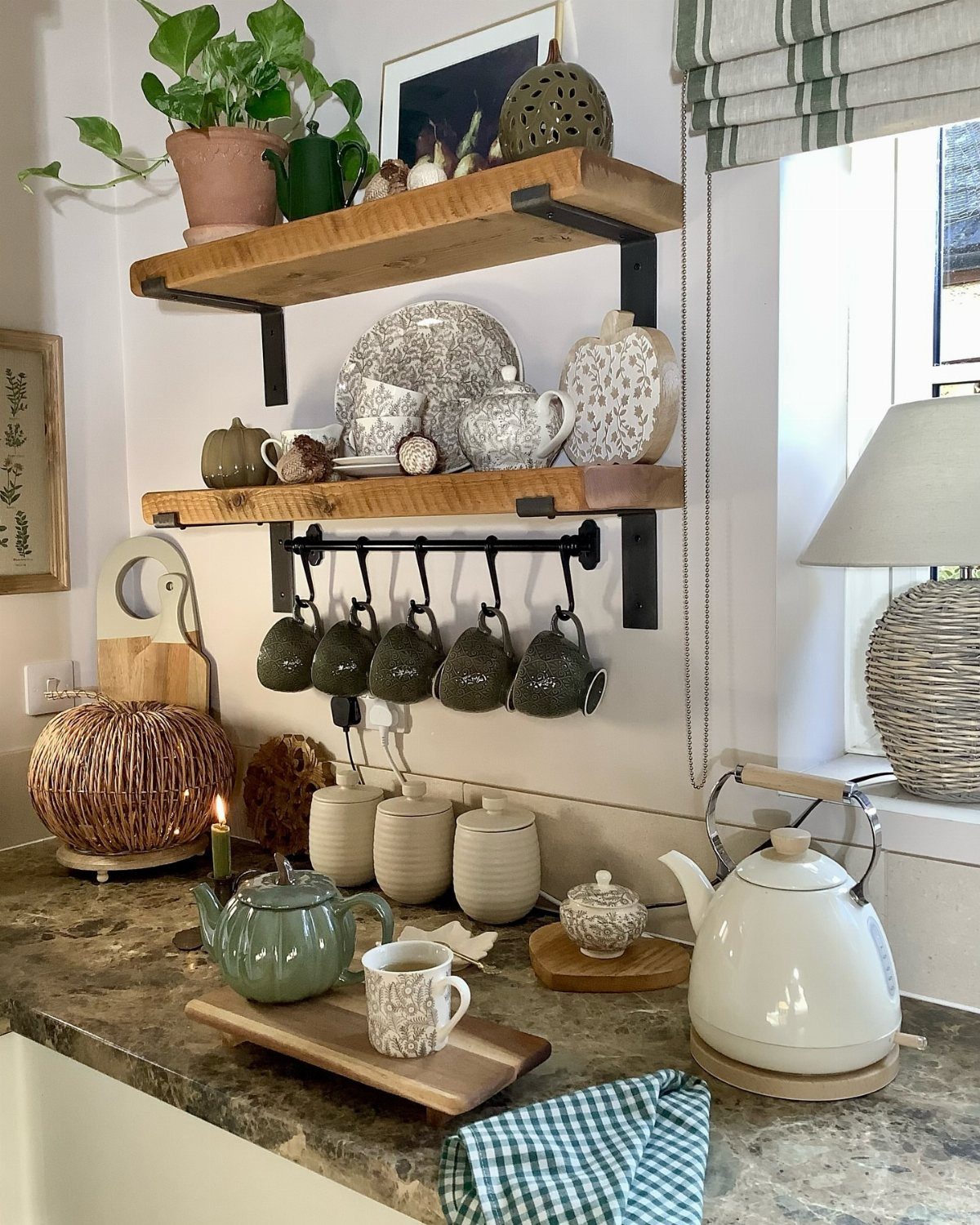
Black metal brackets turn structure into statement. The bracket shape matters more here than with hidden supports; an L-bracket fades, an angled strut or curved brace reads as intentional.
I prefer a bracket height that runs about the same as the shelf depth, the proportion looks balanced without getting busy.
The wood tone against black metal works warm or cool, but the finish on the bracket should match other metals in the room.
A matte black bracket near a stainless faucet looks accidental; near a black pendant or cabinet pull, it looks planned. Mount into studs or use toggle bolts rated well above what you plan to load them with.
9. Integrated Shelf Lighting
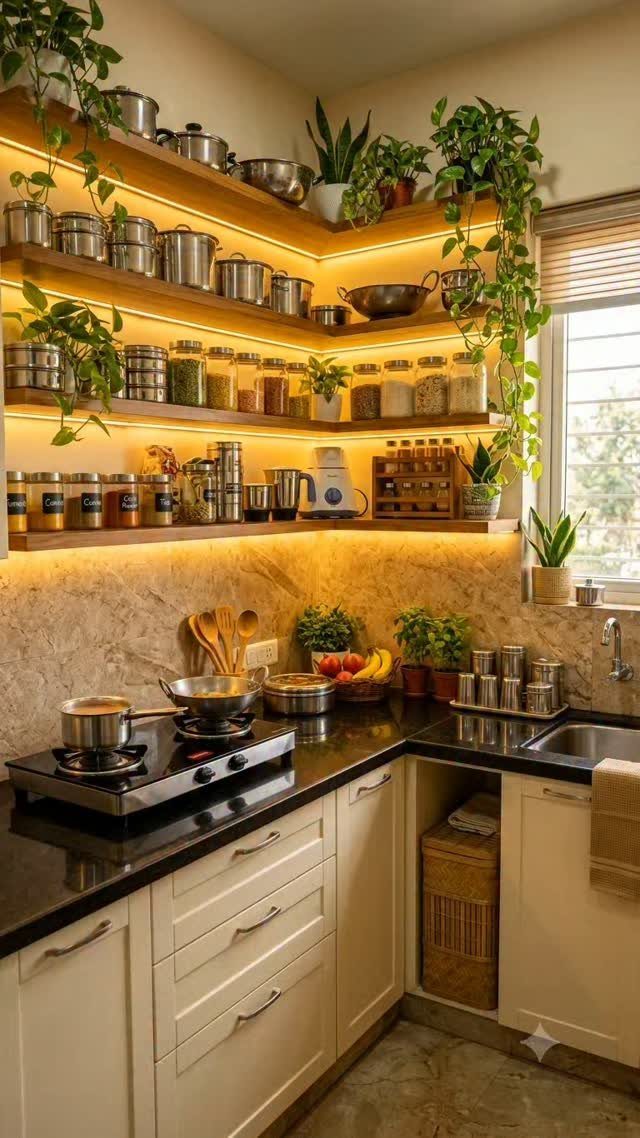
Warm LED strips tucked under each shelf turn contents into display and add task light where overhead fixtures cast your shadow across the counter.
The color temperature makes this; anything above 3000K reads clinical in a kitchen with wood tones, and anything below 2200K looks muddy.
Wiring options split between hardwired, which I prefer for a clean look, and plug-in with a cord routed behind.
Battery-powered strips have improved but still need tending every few months. The strip itself should sit recessed or behind a lip so you see the glow, not the diode dots.
10. Freestanding Open Hutch
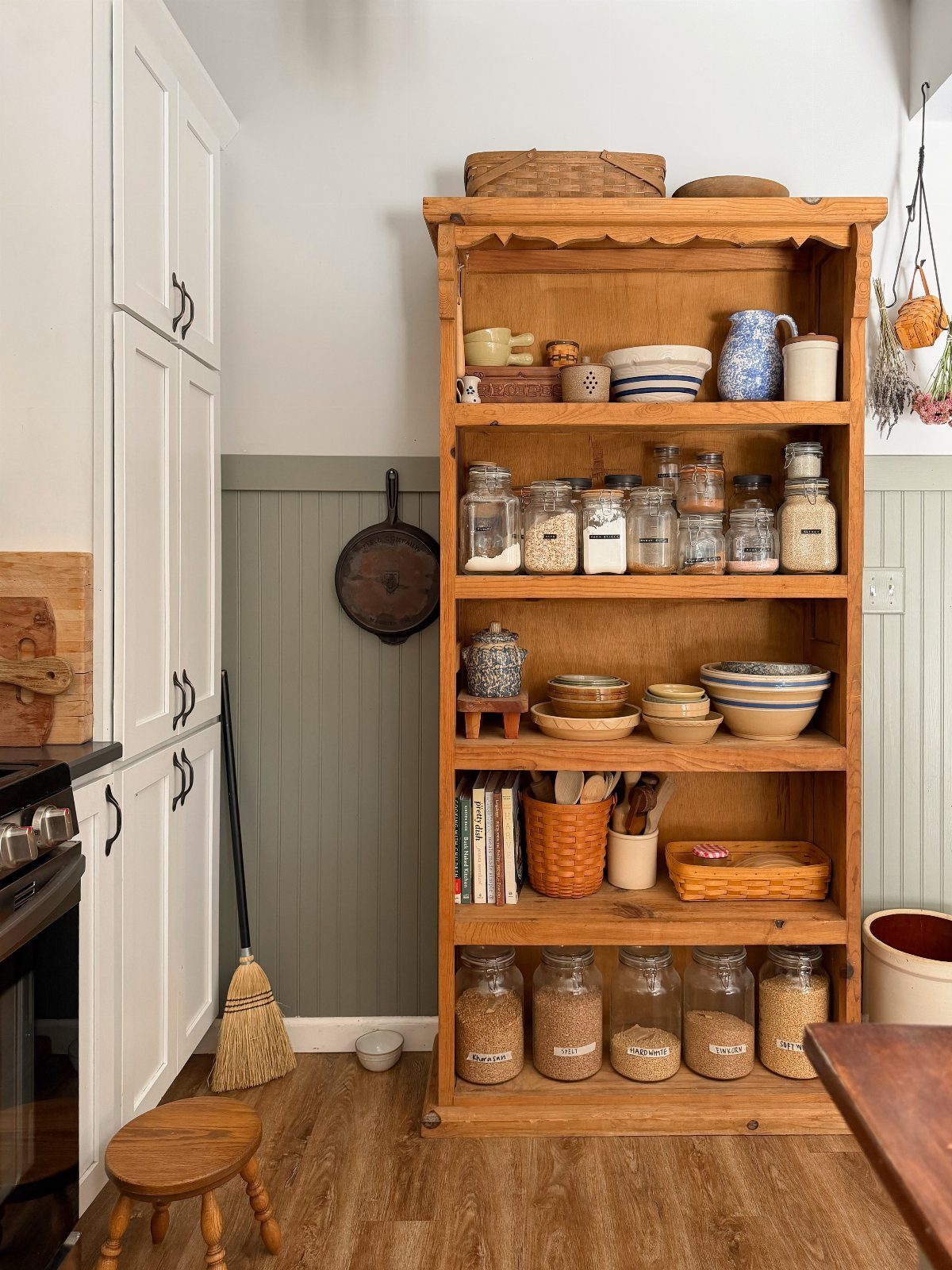
A freestanding hutch moves with you, which matters if you rent or rearrange seasonally.
The tall profile draws the eye up and fills a wall that might otherwise need art or cabinets; in a kitchen short on built-in storage, it carries the overflow of a growing collection.
I like that nothing here is fixed. You can shift shelves for a tall pitcher, add a basket for onions, or clear a shelf entirely when you need workspace.
The trade is floor space; a hutch this size needs a stretch of wall and enough depth to stand stable when loaded. Anchor it if you have children.
11. Countertop Tiered Shelving
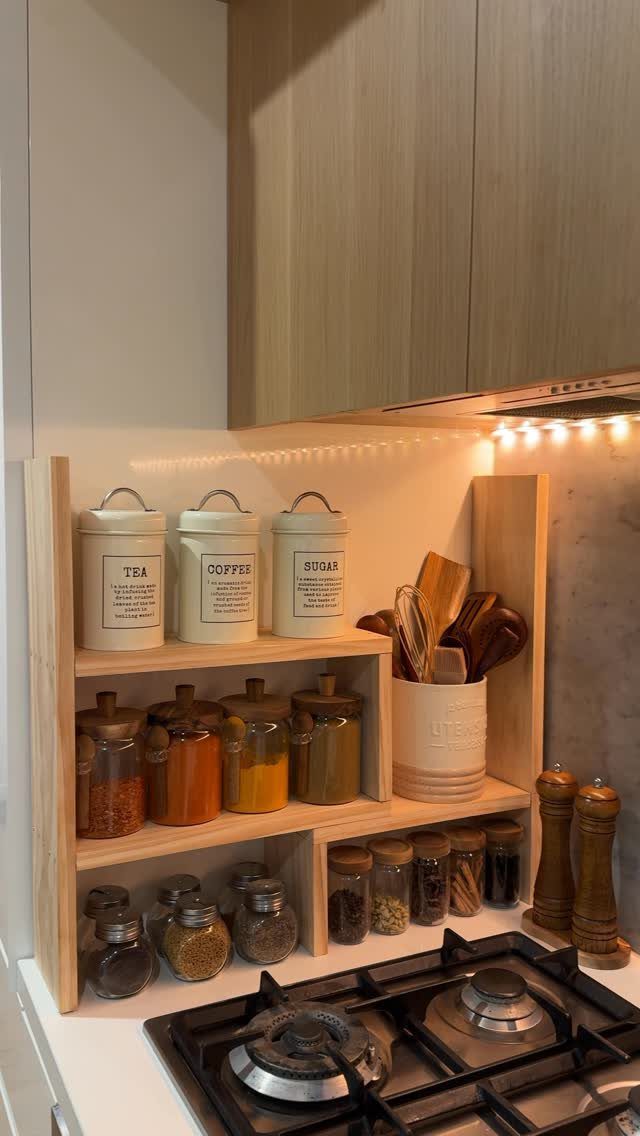
A two-tier stand keeps canisters and spices vertical on the counter, reclaiming the depth that otherwise becomes a graveyard of half-empty jars.
The labels face forward, the contents stay visible, and the footprint stays small enough that your prep space survives.
Wood here should be sealed; proximity to a gas stove means grease settles and water splashes. A damp cloth takes care of dust and splatter, and a fresh coat of oil now and then keeps the grain from drying out.
The height matters more than the width; too tall starts blocking sightlines across the kitchen, and too shallow wastes the back row.
12. Black Stone Open Shelving
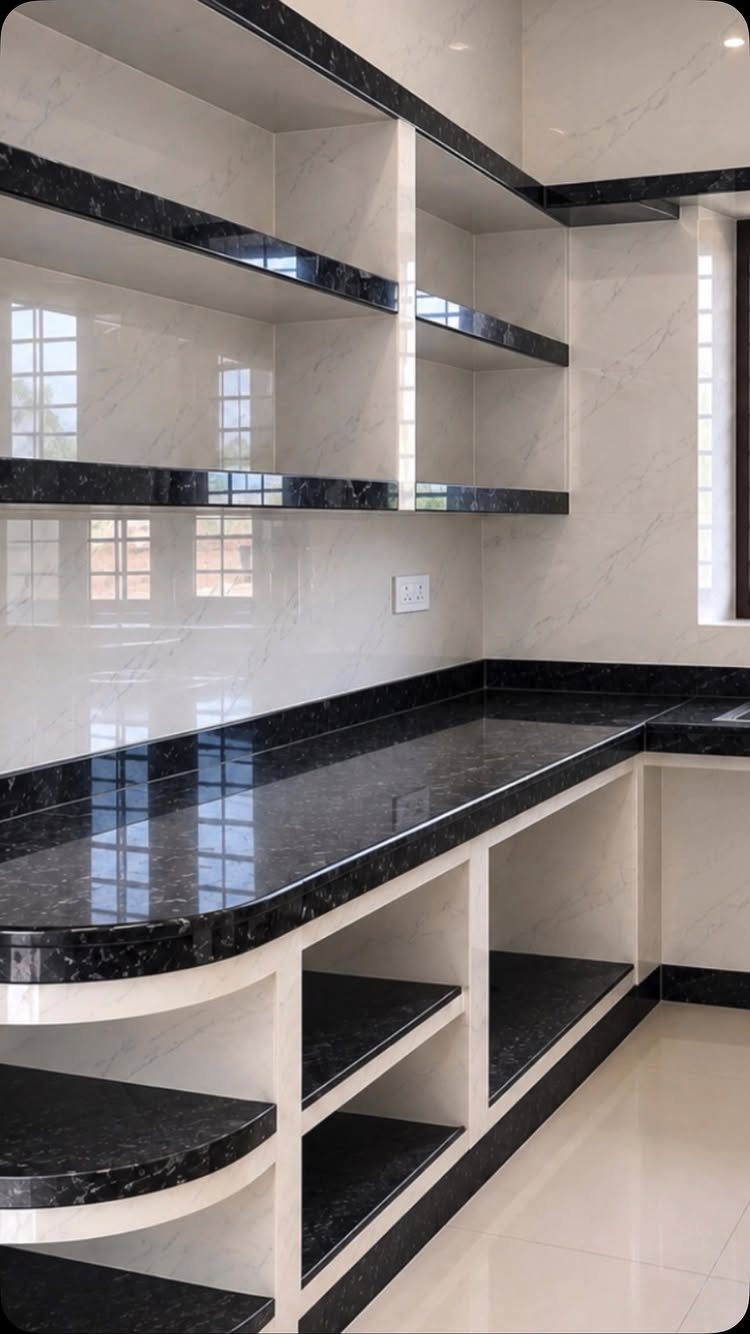
Black granite or marble shelves paired with matching countertops give a kitchen the coherence of a single material run.
The stone is cold, which keeps dough and chocolate workable, and impervious to the water that warps wood over time. I would not store delicate glass here; the surface is unforgiving.
Weight is the real consideration.
Stone this thick needs structural support, either a steel frame or substantial brackets into blocking, not just studs. The white marble tile behind it needs sealing too, or it will carry the splash marks that the black shelf hides.
Maintaining Open Shelves
I wipe my open shelves weekly with a mild soap solution and a damp cloth; grease settles fast in a kitchen, and dust shows on glossy finishes more than it does on wood with some grain to it.
Everyday dishes live on the lower shelves where my arm reaches without stretching, and the pieces I use less climb higher. I turn delicate glassware upside down so the rim stays clean.
Stacking too high is a hazard and strains the shelf, so I keep piles reasonable. Rotating what sits out keeps the display from going stale and stops any single piece from collecting all the grime.
Every few months I check the brackets and the wall anchors; a shelf that has started to give is easier to fix before it goes.
Choosing Materials
Wood, metal, glass, and reclaimed timber each read differently in a kitchen. Reclaimed wood carries its own history, which works in a farmhouse setting; glass or acrylic stays nearly invisible and keeps a small kitchen from feeling boxed.
Weight dictates the hardware.
Heavy dishes need solid wall anchors and brackets rated for the load, not the ones that came in the multipack. Color matters as much as material.
White dinnerware reflects light and reads as continuous against almost any shelf, which is why it has become the standard choice. I vary the tone slightly, warm ivory against cooler white, so the stack stays interesting without breaking the calm.
Planning Shelf Layout
I plan shelf depth at 8 to 10 inches for standard plates and bowls; anything deeper wastes space and catches clutter. Leave 16 to 18 inches of vertical clearance above the countertop so a pot lid lifts without hitting the shelf.
The real discipline is in what I put there. Open shelves punish overcrowding; every item is part of the room’s design whether I meant it or not.
I keep only the dishes I use daily, plates, bowls, mugs, and a few serving pieces, and I leave the seasonal platters in a cabinet. Coordinated daily ware reduces the visual noise and makes restocking simple.
Floating shelves need solid anchoring into studs or rated toggles, and the wall itself has to carry the weight. I check the framing before I commit to a run of shelf.
Frequently Asked Questions
How do I keep open shelves from looking cluttered?
Daily dishes earn their spot: plates, bowls, mugs, maybe one or two serving pieces.
The rest stays behind a cabinet door where seasonal clutter belongs. Matching the everyday set keeps the eye from jumping around, and restocking takes no thought at all.
What are some good items to place on open kitchen shelves?
Everyday dishes, glassware, and the pieces you reach for each morning work best. Lower shelves hold what I grab without reaching; anything above shoulder height is for the once-a-month items.
Are open shelves hard to maintain in a kitchen?
They need more attention than cabinets, but the work is manageable. A quick wipe with mild soap and a damp cloth once a week is my routine.
Grease accumulates faster than people expect, and dust announces itself on glossy finishes in a way it never does on grained wood. Using the displayed items regularly keeps them from sitting and collecting grime.
How to DIY kitchen shelves?
Start by checking your wall framing, since floating shelves need solid anchoring into studs or rated toggles.
For a rail system, level the metal strip against the wall, then slip the shelf sleeve over it. A second person is worth calling in to hold level while the anchors bite.
Tile means a diamond bit and slow going; drywall is quicker but the fastener has to find the stud or a toggle that can honestly carry the load.
What are the different types of kitchen shelves?
Corner units, floating planes, black metal brackets left visible, freestanding hutches, tiered stands that sit on the counter: each reads differently and each asks for a different wall or floor commitment.
Wall-mounted floating shelves use concealed hardware, while bracket styles range from hidden supports to angled struts that read as intentional design. Materials run from natural wood and black stone to metal with a thin profile.





