
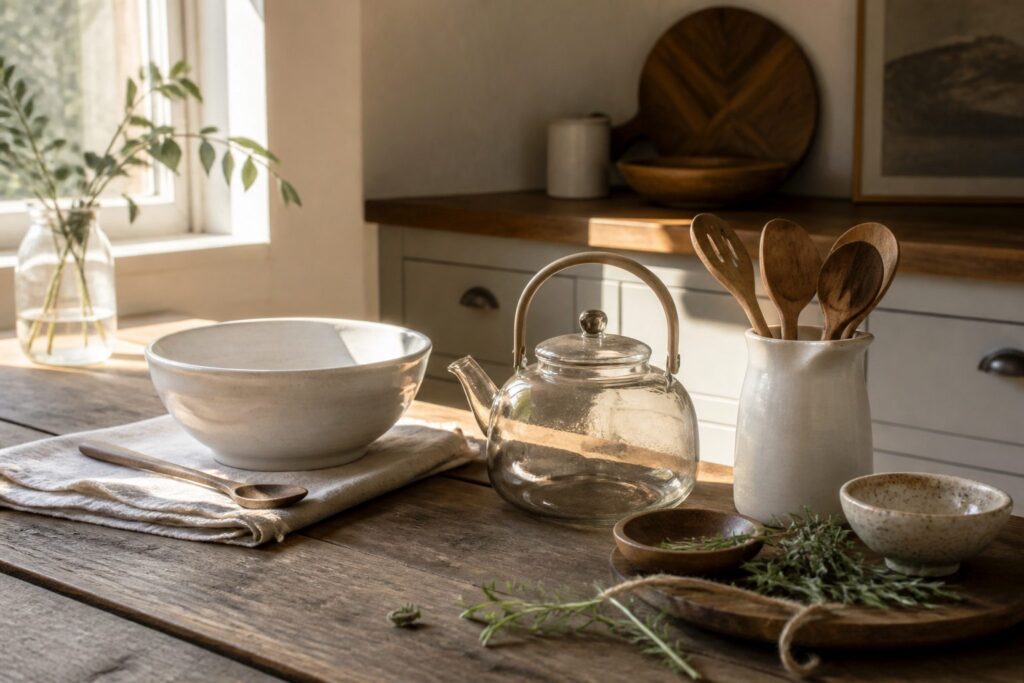
The items below run from a $12 weekly habit to a single cookware investment meant to outlast your cabinets, and the one that belongs in your kitchen depends on whether you treat counter space as storage or as a gallery you cook inside.
Most of the picks below trade some function for form, or vice versa, and the exact balance is what makes or breaks each one.
A mechanical timer that ticks loud enough to wake a partner, a capsule machine whose chrome bounces light but piles waste by Friday, a 0.9L kettle that sits at three mugs exactly: the condition is always specific, and the right choice is the one whose flaw you can live with.
1. Gooseneck Electric Kettle, Precise Temp, 0.9L
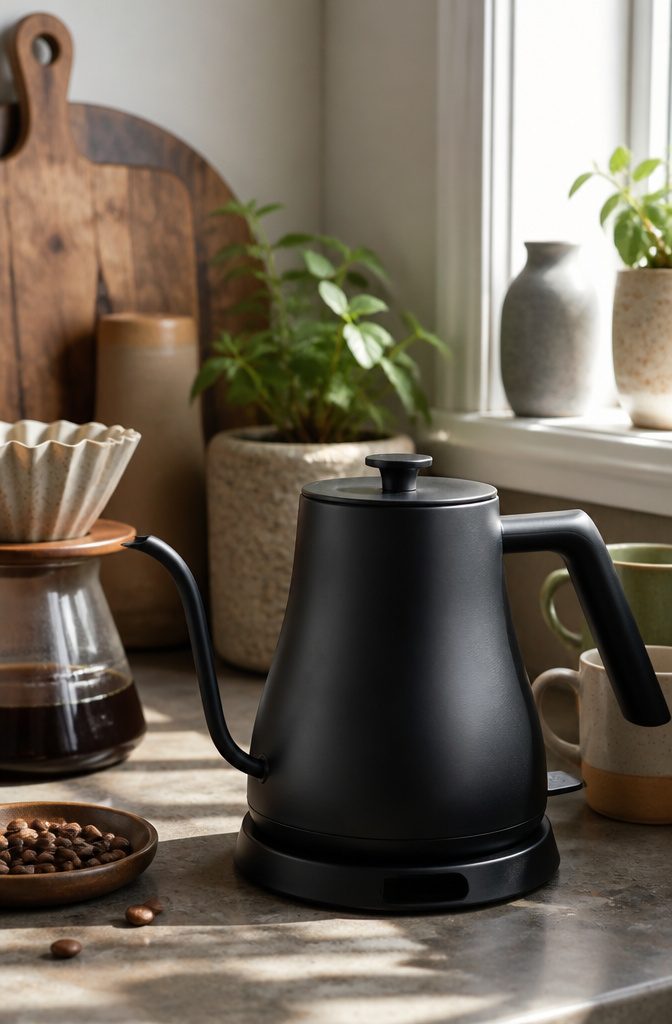
A gooseneck spout gives you the pour control that makes or breaks a cup of pour-over coffee.
The narrow curve lets you direct a thin, steady stream exactly where you want it, which means even saturation of the grounds and no splashing that cools the brew prematurely.
You can manage the same job with a standard kettle, but the wrist gymnastics involved read as impatient rather than skilled.
0.9L sits at roughly three standard mugs, which keeps the kettle light enough to maneuver while heating only the water you need for a session. Anything larger tends to encourage overfilling, and that water goes stale sitting around.
The precise temperature settings matter the moment you step away from coffee. Green tea wants water well below boiling, often around 175°F, while black tea needs a full rolling boil.
Having those presets saves the guesswork of hovering over a thermometer or, worse, winging it and scorching leaves that cost more per cup than the kettle itself.
A slim spout and matte or stainless finish reads as intentional on a counter in a way that bulbous plastic never does.
The vertical line of the neck gives the eye somewhere to rest, and the subdued surface catches light without glare. It is one of the few appliances that earns its permanent spot rather than cluttering it.
2. Nespresso Vertuo Coffee & Espresso Maker Chrome
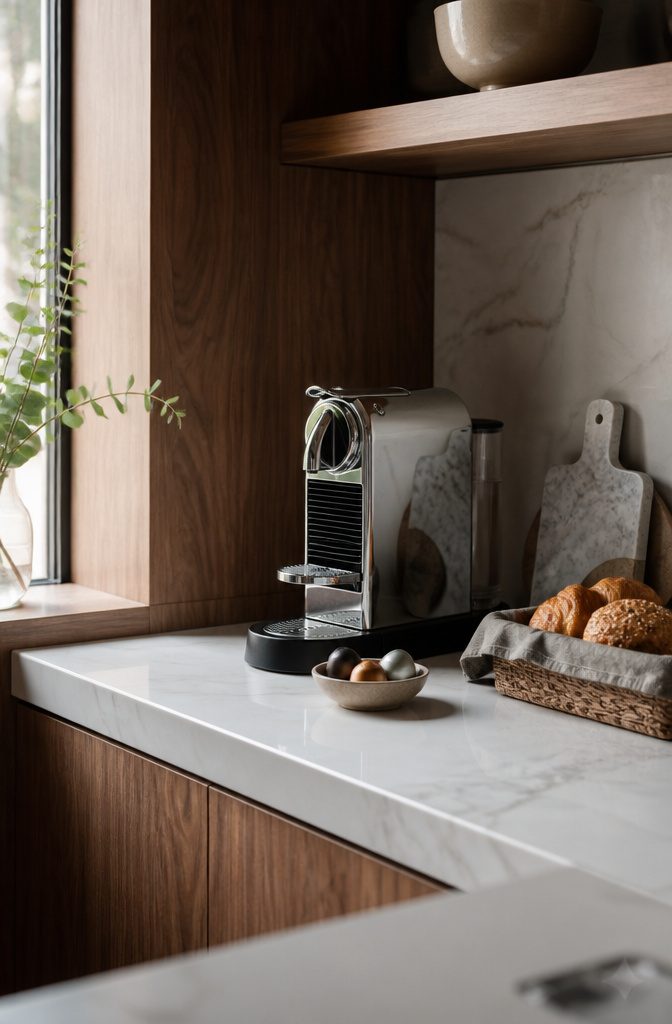
Chrome finishes earn their place in small kitchens by doing the one thing matte surfaces refuse to: bouncing available light back into the room.
A Nespresso Vertuo in chrome sits on the counter as a working mirror, catching window light or under-cabinet glow and throwing it toward walls that a darker machine would absorb into.
The dual function matters more than the look, though. One machine pulling both coffee and espresso means a single footprint replaces two appliances, and that reclaimed counter space is real square footage in a galley or apartment kitchen.
The capsule system is where I land on the trade-off.
The convenience is undeniable: no grinding, no dosing, no morning decision fatigue when you are half-asleep and measuring beans sounds like a math problem. Pop, press, drink.
But the waste accumulates fast, aluminum or plastic sealed inside foil, and municipal recycling rarely handles them cleanly. I would not pretend the environmental cost disappears because the pods are recyclable somewhere.
It is a genuine subtraction from the design win, and worth weighing before purchase. The chrome still looks sharp at 7 a.m., but the pile of spent capsules by Friday is a fact too.
3. Nahida Granite Green Milk Frother Wand, 3 Heads, 3 Speeds
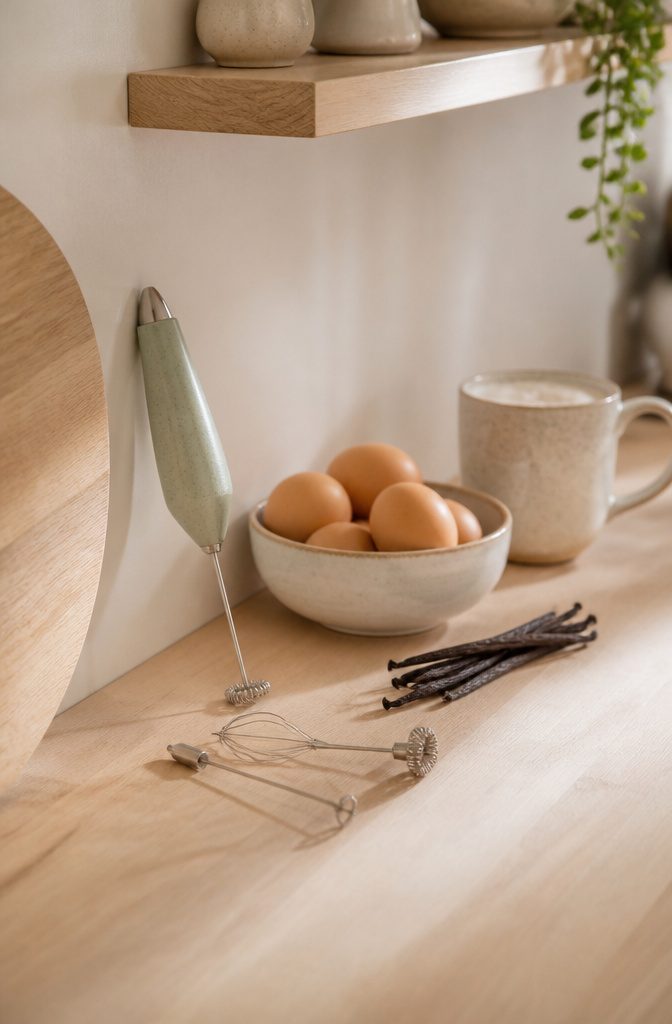
The granite green finish reads as a deliberate color accent rather than a novelty. In kitchens trending toward warm wood and matte black, it catches light without demanding attention, and the speckled surface hides water spots better than solid metallics.
Three swap-out heads turn a single wand into separate tools.
The standard coil froths milk for lattes; a balloon whisk head whips cream or matches small batches of dressing; the third head I would reserve for powdered supplements that clump in a standard fork.
Three speeds matter most when you scale down: low incorporates air without spraying, middle handles the daily capp foam, high powers through thicker oat or pea milks that base frothers simply churn.
Handheld wands win on counter space against any electric base unit. The full tool fits in a shallow drawer; there is no carafe to dry, no corded stand to wipe down, no footprint beside the toaster.
You will work harder and spend longer learning how to get the microfoam texture right. For renters or anyone whose kitchen doubles as a desk, that swap is usually worth it.
4. Square Glass Jars with Bamboo Lids Set of 5
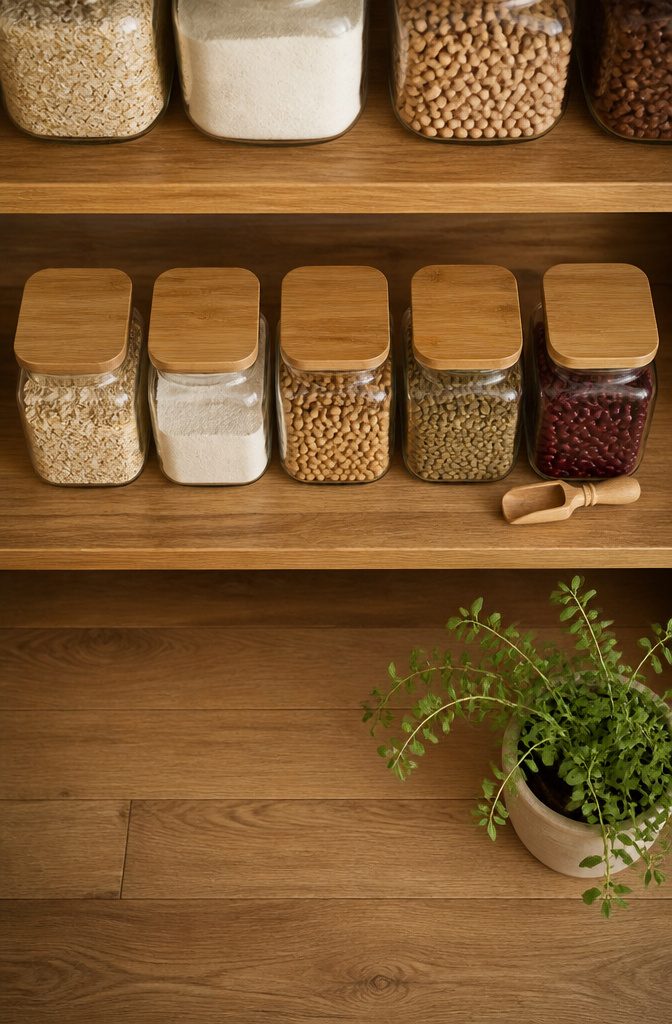
Square jars line up flat against one another where round ones leave a wedge of dead air between every curve.
That geometry alone makes them worth the swap for a small pantry or a city galley kitchen where shelf depth is already tight.
A set of five covers the dry goods a household of one or two actually needs: flour, oats, dried beans, rice, and one catch-all for nuts or pasta.
The count matters because a matched line looks intentional rather than accidental, and five fills a standard upper shelf without crowding it into clutter.
Bamboo softens the clinical feel of straight glass without hiding what is inside.
The tone of it reads warm against white tile or butcher block, and because the lids are transparently functional, you are not pretending the kitchen is a showroom.
The clear sides let you see at a glance which jar is running low, which saves the hassle of lifting lids before you write a grocery list.
Practical visibility and the look of it turn out to be the same thing.
5. Magnetic Hexagon Glass Spice Jars 20 Sets
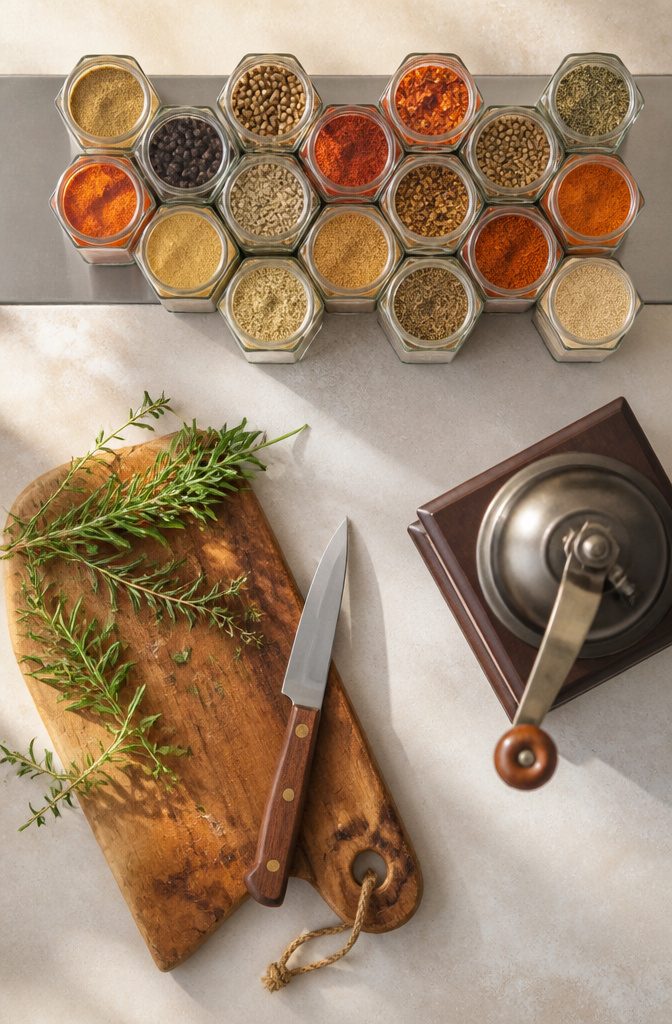
Hexagon glass jars settle edge-to-edge with no dead space, so twenty of them tile a magnetic strip or fridge panel into a continuous honeycomb field.
That repeating geometry does the heavy lifting visually; the eye reads the pattern before it registers individual containers, which is exactly why a full twenty matters.
Most cooks keep somewhere between fifteen and twenty core spices on rotation, and running short of jars breaks the rhythm into a mismatched patchwork.
The magnetic access, though, is the real win. Every jar lifts off one-handed, no rummaging through a drawer, no tipping over the cumin to reach the cardamom behind it.
The trade-off sits in the glass itself. Clear walls expose spices to light, and light fades color and weakens volatile oils over months.
I would keep the rack on an interior wall or cabinet side rather than the fridge front that catches morning sun, or I would accept that the trade is worthwhile and cycle through spices faster than they degrade.
Frosted or amber glass solves the exposure, but it also kills the visual rhythm that makes the hexagons worth buying.
6. Caraway 12-Piece Non-stick Ceramic Cookware Set
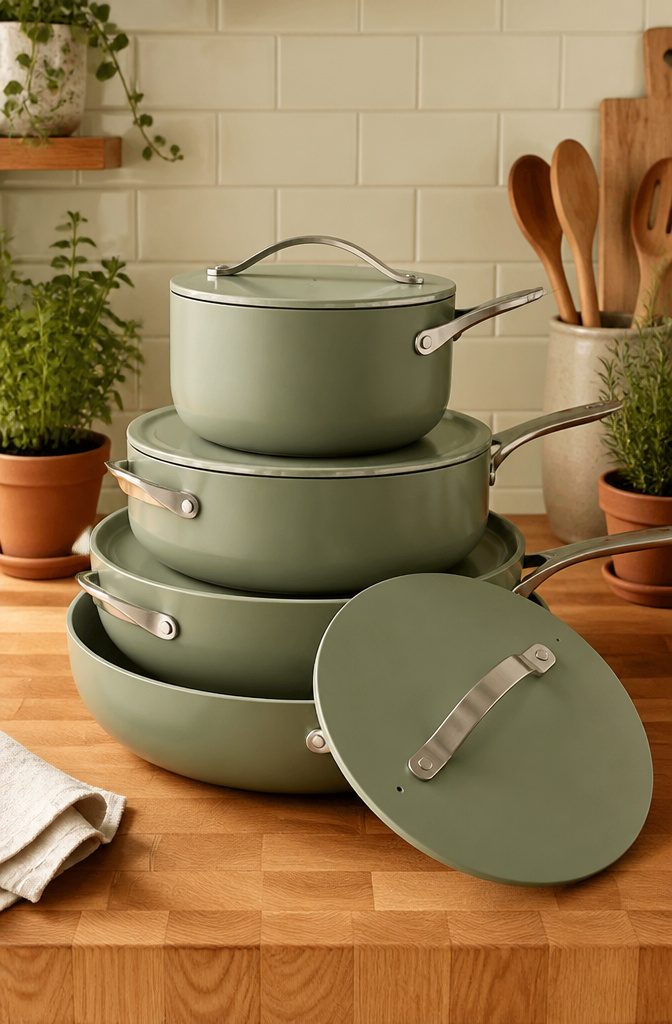
Twelve pieces sounds like excess until you actually map it: two skillets, two saucepans, a Dutch oven, and a sauté pan, each with a fitted lid, plus a couple of extras that fill the gaps between single-burner tasks and cooking for four.
Most home cooks rotate through exactly that range, not the fourteen-plus sets where half the pans hide in drawer purgatory.
The ceramic coating here replaces Teflon outright, and for anyone uneasy about PTFE at heat, that swap carries weight.
Ceramic discs faster than seasoned carbon steel though it shares the same visual warmth, and it asks for less oil than bare stainless.
You need patience: preheat low, wait the extra minute, and never blast it empty or the surface degrades in months not years.
What sells the set as kitchen color anchors are the exterior finishes, the mauves and sage greens manufacturers finally stopped treating as novelty.
Against white subway tile or oak shelving, a single pot left on the range functions as deliberate accent, not clutter.
The lid storage is where the set betrays its completeness. Magnetic in-cabinet lid hangers or a shallow wall rack solve it; the Dutch oven lid alone eats a whole drawer if laid flat.
I would rather sacrifice six inches of backsplash to a rail than fish through stacked lids every evening.
7. Gold Stainless Steel Measuring Cups & Spoons Set
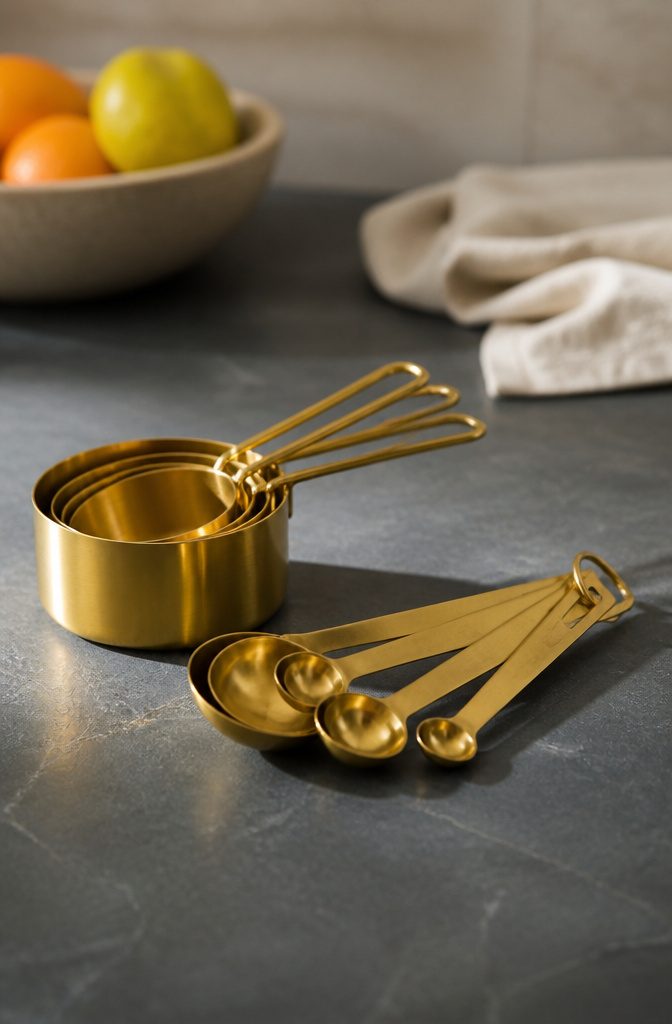
Warm metal against the cool surfaces most kitchens inherit from builders, gold measuring cups shift the room away from that clinical default without demanding a full renovation.
I like them best paired with white quartz or plain stainless steel, where the contrast reads intentional rather than mismatched.
A matching set stacks or nests as one unit, which matters more than the finish itself.
Drawer space is never generous, and a mismatched collection of singles, half the plastic and half metal, wastes inches with awkward gaps. One designed set slips into a slim slot and looks deliberate when you pull it open.
The plating does wear, and it wears predictably: where the rims meet other metal in the drawer, where the handles stack against neighboring cups, and at the back of each bowl where spoons scrape during leveling.
Brushed interiors hide this longer than mirror-polished ones. I would skip gold if you bake daily and hard, but for the cook who reaches for these twice a week, the dulling takes years to become visible.
8. Loyalfire 3 Tier Adjustable Stainless Steel Dish Rack
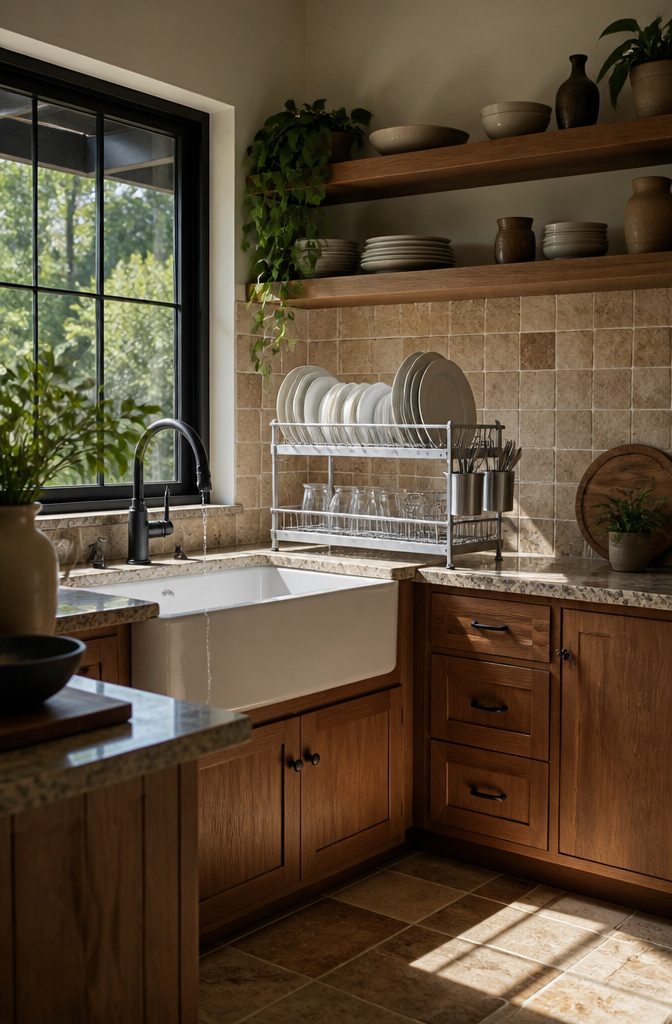
Three tiers give the Loyalfire rack its real utility: plates and bowls on top, utensils in the middle, glasses below where they sit stable and drip outward rather than pooling against a lip.
That separation matters more than total volume ever could, since a heap of mixed wet dishes is what turns a countertop into clutter.
The width adjusts, which saves it from the usual problem of overhang on a 20-inch apartment counter or wasted space on something deeper.
I would set it between half an inch and a full inch shy of the counter edge, not flush, to leave room for the drainage spout to angle into the sink without fought placement each time you wash up.
Stainless steel here is not a finish choice; it is a structural one. Plastic dish racks crack at stress points after two or three years of thermal shock, cycling from hot dishes to cold rinse water.
A permanent fixture should outlast the cabinets it stands on, and stainless earns its place through weight and heat tolerance alone.
Directional drainage, sloped toward one corner with a short extendable spout, keeps the rack itself from becoming a reservoir.
The best position sits the spout lip actually over the basin, not beside it, so you are not wiping a daily puddle from grout or caulk that never fully dries beneath.
9. AmorArc Ceramic Dinnerware Set, 36pc
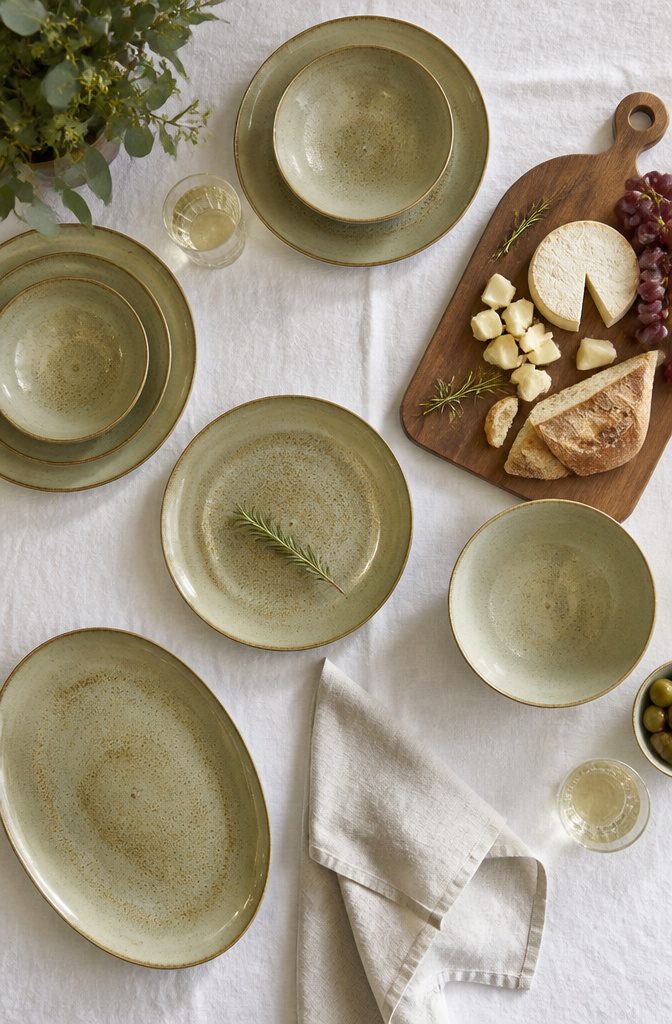
A 36-piece dinnerware set built around six full place settings gives you dinner plates, salad plates, and bowls without the gaps that leave someone eating cereal out of a measuring cup.
The weight of ceramic here matters more than the material itself.
A salad plate with real heft sits still when you fork into it, and the slight variations in glaze that read as handmade catch window light differently across the table than factory-perfect porcelain.
Those variations are the reason a full set outperforms mismatched plates for photography. The camera picks up the deliberate irregularity of one maker’s hand against a linen runner and reads it as a choice, not an accident.
Daily use benefits too. Six matching pieces stack evenly in a cabinet half the width of the jumble I used to keep, and pulling a complete place setting from one shelf beats hunting through four stacks for something that coordinates.
You will replace pieces more often. Chip one plate in a discontinued glaze and you are either living with the gap or rebuilding the whole look.
I would still take that over the visual noise of nine different sources every time, but I buy knowing the risk.
10. Solino Home Athena Linen Table Runner 14×90
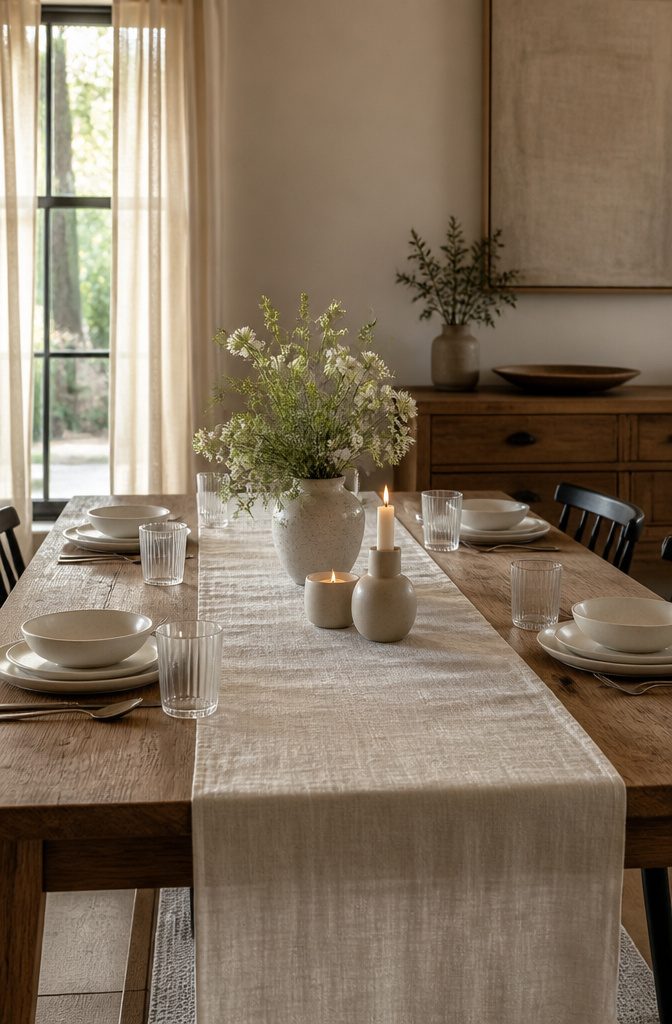
The 14 by 90 inches solve a specific problem for six to eight foot tables: long enough to read as a deliberate line across the surface without the overhang fight you get from shorter runners, short enough that standard place settings sit clear of the fabric.
On a 72 inch table you get eight or nine inches of drape each end; on 96 inches it pulls nearly taut, which some prefer.
Linen carries the texture work here.
Against a smooth wood or stone surface the slubbed, slightly irregular weave adds visual grip without competing for attention, the way a matte ceramic plate sits against a glossy glaze. It is the same reason painters understate the ground.
Full tablecloths demand commitment to a single color across the whole plane and need ironing to look intentional; a runner lets you block in a tone for roughly half the visual weight and stop.
The washing behavior matters for anyone who actually cooks. Linen softens with each cycle, shrinks some in the first hot dry, and never again presses to the crisp of cotton broadcloth.
I take that as feature rather than flaw. The relaxed wrinkle look, what makers sometimes call "air dried finish," reads as effortless in a kitchen where perfect starch would look try-hard within ten minutes of actual use.
Machine wash, tumble low or line dry, and the rumple settles into something intentional rather than neglected.
11. Zassenhaus Magnetic Retro Kitchen Timer Mint
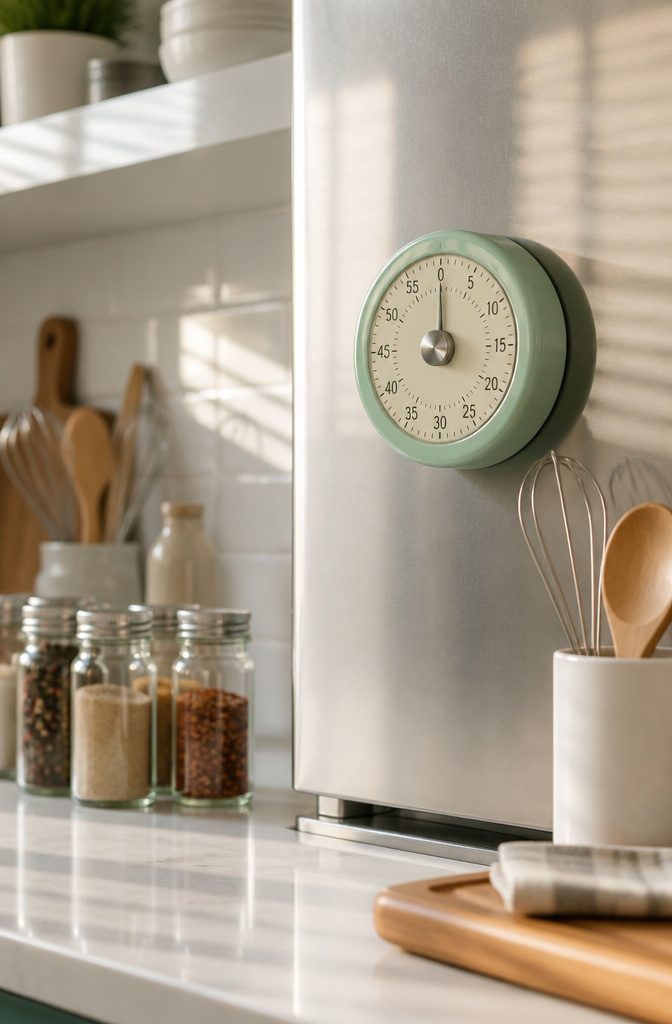
A mechanical kitchen timer runs on spring tension, not batteries, so it keeps working when your phone battery dies mid-recipe.
The Zassenhaus mint color reads as a genuine period accent rather than a pastel trend piece, which means it holds up against both actual vintage metalware and the clean lines of a modern kitchen where every other object is black, white, or stainless.
Magnetic backing lets it stick to the stove hood or fridge door, the two places I actually remember to check the time.
Retro styling in kitchen tools usually fails in one direction: either it looks like costume jewelry against real 1950s goods, or it clashes with flat-panel cabinets and quartz counters.
This one threads the gap because the shape is utilitarian and the color is restrained. A single mint object on a white fridge becomes a deliberate color note; grouped with three others it becomes a theme park.
It makes noise. A mechanical tick in a quiet kitchen divides people, and the bell at the end is louder than a phone vibration.
I would not buy this for a studio apartment with a sleeping partner, but for anyone who cooks with their hands dirty and needs to start the timer without unlocking a screen, the no-battery reliability wins.
12. Cutting Boards
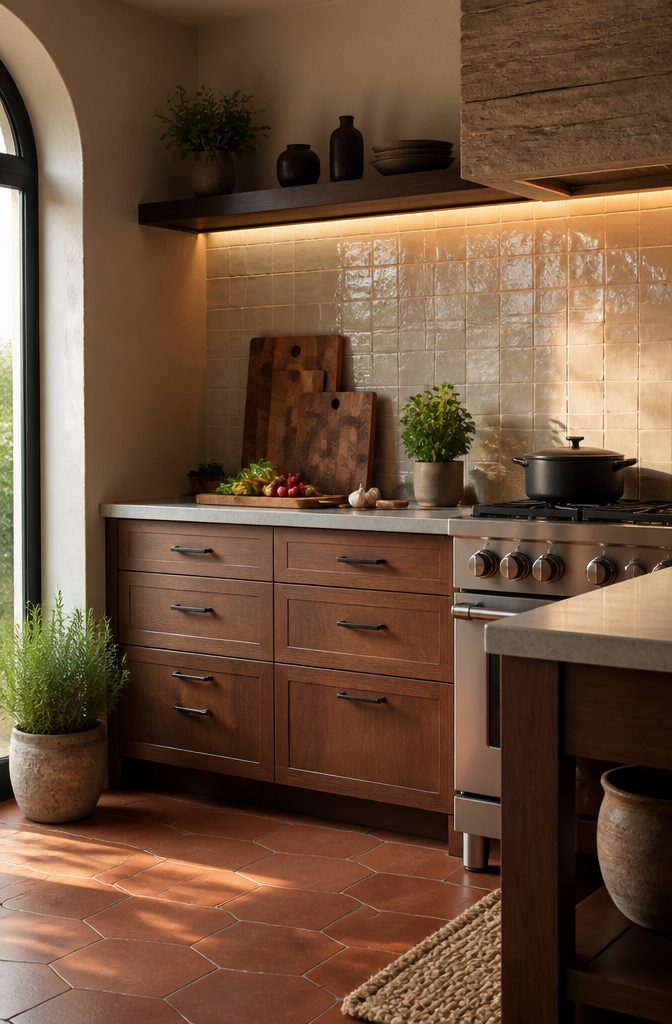
Edge grain boards give you stripes that read as deliberate, a surface chosen rather than leftover from the factory.
Wood does this best: maple or walnut ends up softer on knives than rock-hard bamboo, though bamboo costs less and shrinks less in a dry kitchen.
Composites claim the win on dishwasher tolerance but they feel like plastic and they sound like it every time a blade lands. I keep three, a 10 by 14 for meat, a 9 by 12 for vegetables, and a 6 by 9 for garlic and ginger.
The graduated sizes look planned on the counter, and when work is done they lean against the backsplash in descending order: a shallow shelf of useful sculpture.
Leaning storage means you actually grab the right board instead of defaulting to whatever sits on top. It takes up counter space; a cutting board stops being clutter and starts being the thing someone notices first.
13. Fruit Bowls
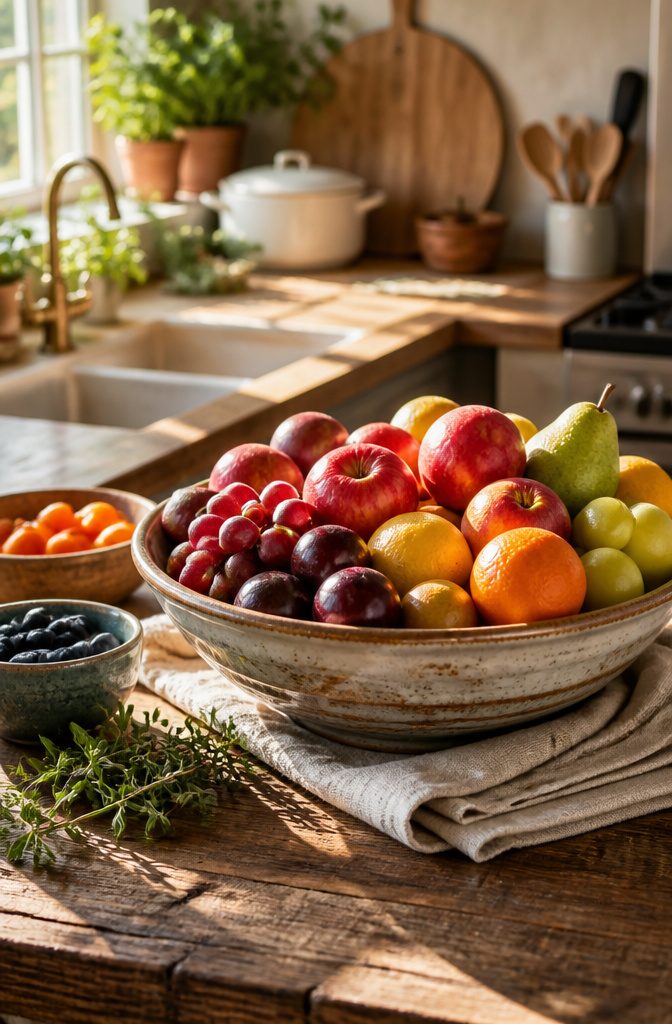
The right fruit bowl pays its rent in color that shifts from pears to blood oranges to stone fruit and back again, a living kitchen element no static decor can match.
Ceramic gives you weight and a glaze that plays against marble or butcher block; wire keeps the air moving so bananas and avocados hold longer, though you lose the drama of a single massed surface.
Wood warms a cold counter but needs a cloth liner if you are setting wet fruit directly down.
A bowl that holds one to three days of eating for your household stays full enough to look intentional without rotting before you reach the bottom. Anything larger, and you are storing produce in plain sight rather than displaying it.
The twelve-inch footprint is real estate I consider carefully in a small kitchen, but the trade-off tilts toward keeping it: people who see the fruit eat it, and a bare counter never drew anyone toward an apple.
14. Fresh Flowers or Greenery
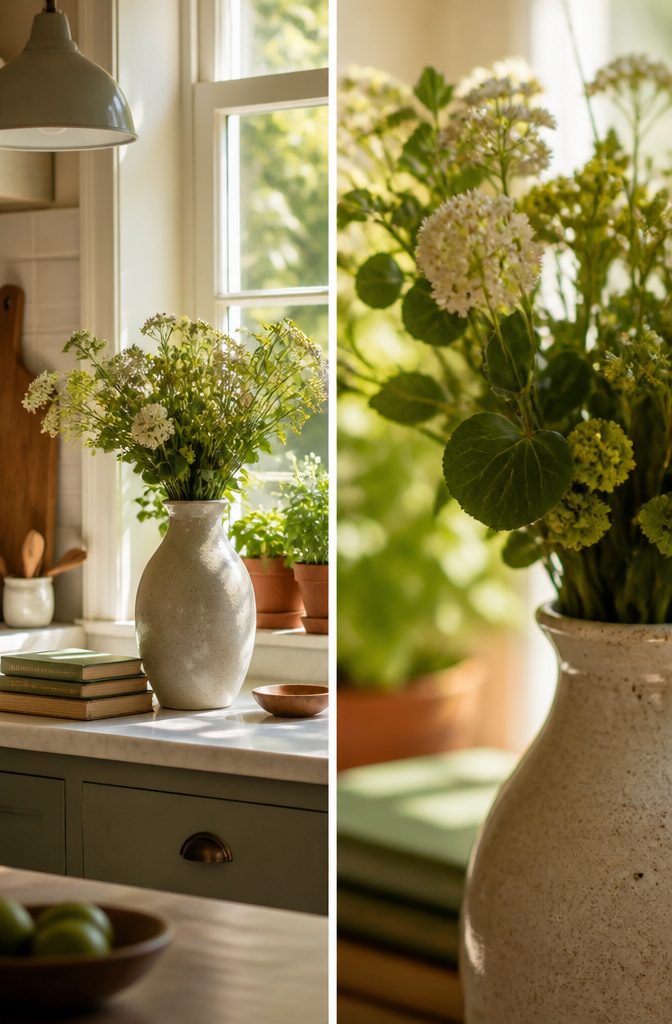
Fresh cut stems run about $12 to $20 a week if you pick them up with groceries, which adds to roughly $620 to $1,040 over a year.
That is enough to notice. Farmers market bunches cost more per stem but last longer because they were cut recently and handled less; grocery flowers often arrive already half-spent.
Foraged branches cost nothing if you have access, though the season is short and the variety is whatever is dropping in your neighbor’s yard.
A sturdy ceramic vase with a narrow neck keeps soft stems upright and hides cloudy water longer than glass does.
Greenery beats flowers on value: eucalyptus or lemon leaf lasts two to three weeks against four to seven days for most blooms.
Color fades fast, which is why I keep one small bud vase for a single tulip or daffodil and fill the rest with whatever leafy branch looks healthy.
Once a year, a $25 investment in a blooming potted plant from the grocery store gives you four to six weeks of living color, after which the pot goes outside or to a friend with a yard.
15. Trays for Kitchen Tools
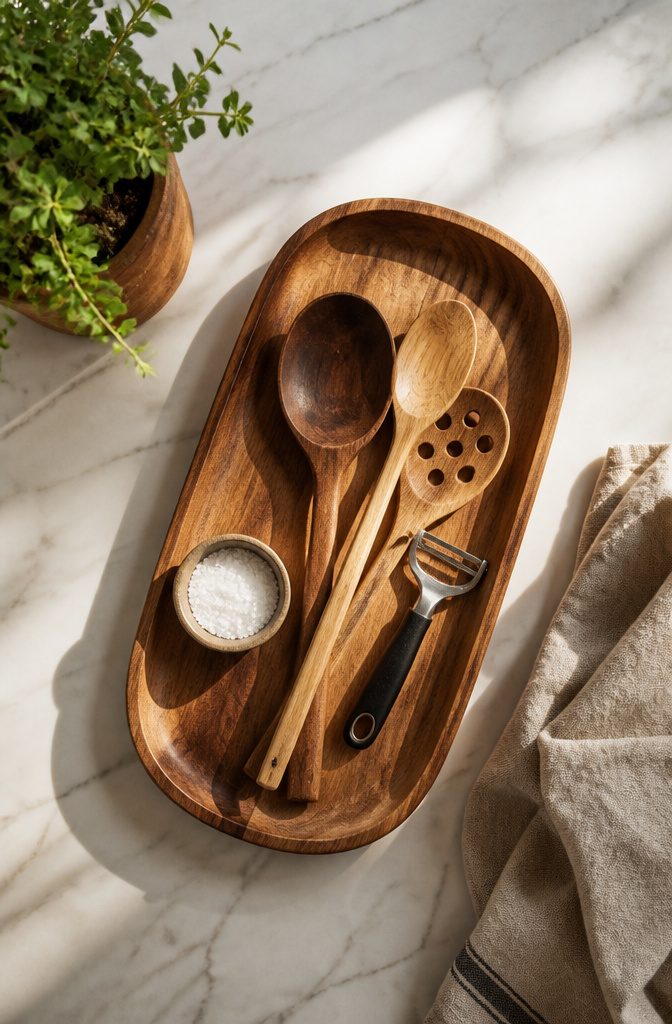
A tray on the counter turns milling about into a stationed operation.
Wood warps near the sink and needs oiling a few times a year, so teak or walnut earns its keep in dry zones while brushed steel or a slab of honed stone sit where splatter happens.
Keep the tray to things you reach for hourly and the drawer takes everything else: the peeler you need twice a week belongs out of sight, but the knife you use for breakfast, the spoon for stirring coffee, and the small dish of salt should stay in the open where your hand finds them without thought.
Wiping down gets easier: lift the tray, clean the empty rectangle, set it back. One move resets the whole station instead of shifting objects one by one.
A shallow lip, no more than half an inch, is enough to hold but not enough to trap crumbs. I would skip divided compartments entirely; they dictate your tools and the tools change.
16. Soap Dispensers
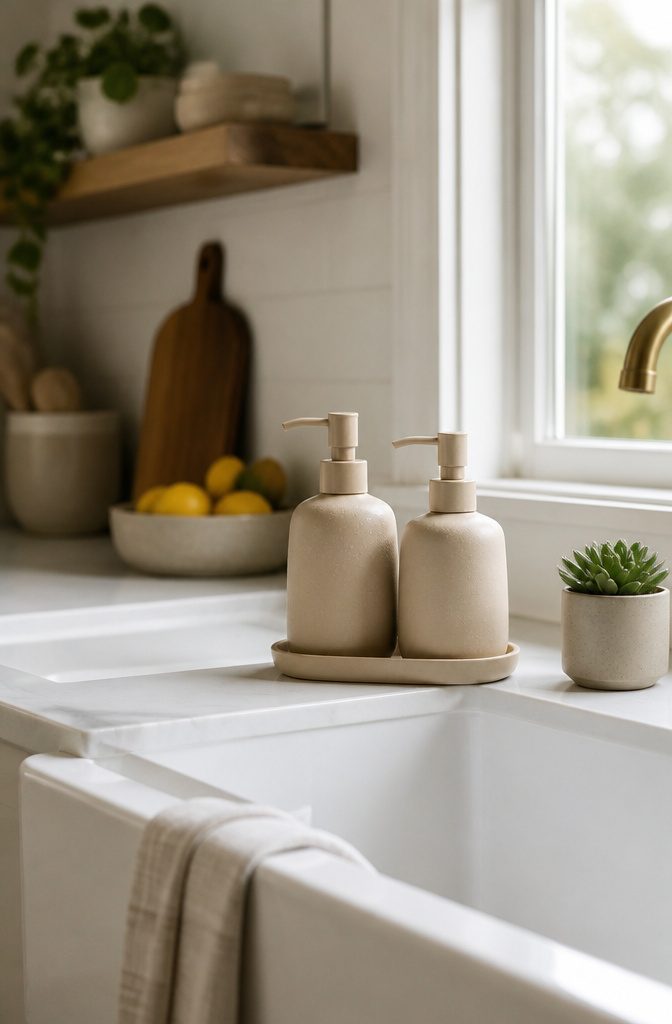
A matched pair of hand and dish soap dispensers does more for a kitchen’s look than either bottle alone.
The eye reads them as intentional, the same way matching hardware pulls a room together, and the sink edge is exactly where guests stand during every gathering you host.
That placement makes the dispensers impossible to ignore, which turns cheap bottles into a daily visual cost.
Matte ceramic or brushed stainless steel resist the hard water spotting that glass and high-gloss finishes collect in most Midwestern tap water.
I would skip anything with a narrow neck that traps residue; the pump mechanism should come apart for cleaning without tools.
The refill economy is straightforward once you commit to it. Bulk soap runs roughly a third the per-ounce cost of new bottles, and the break-even on a $25–35 dispenser set lands around three standard refills.
You have to remember to buy the jug before the countertop bottle empties. I keep mine under the sink, visible enough to notice when it gets light but out of the sight line that the dispensers themselves occupy.
17. Cookware or Tea Kettle
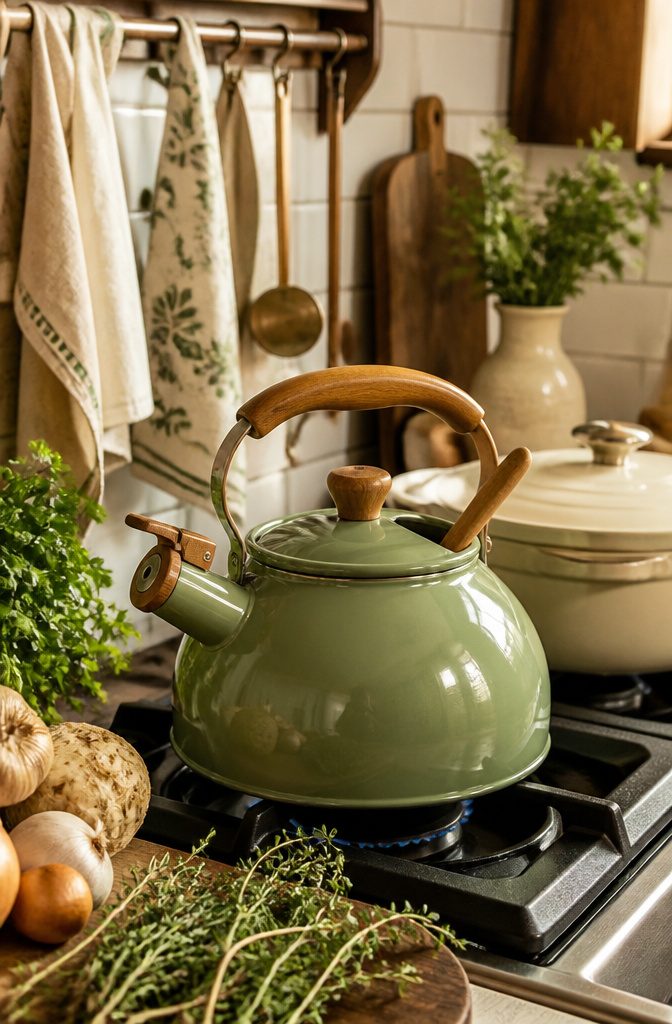
A stovetop kettle sits somewhere between cookware and decoration, and that ambiguity is exactly why it earns a place on this list.
The ritual of filling it, setting it on the flame, waiting for the whistle; those minutes slow a morning down in a way an electric gooseneck, faster and more precise, simply doesn’t.
I keep a small one in sage green on the back burner, used often enough that dust never settles on it.
For the cook who already owns the basics, enameled cast iron becomes the aesthetic statement worth the counter space.
A Dutch oven in cream or clay runs around seven and a quarter quarts, heavy enough toAnchor a stovetop arrangement and functional enough to justify leaving it out.
Copper does something similar but reads vintage, almost apothecary; it needs polishing to keep that warmth, which is either a meditative Sunday task or a dealbreaker depending on your tolerance for maintenance.
The Le Creuset enamel line costs more than bare cast iron, and the premium is partly for the color lasting decades without chipping. I think that’s worth it for a piece that never gets put away.
Aesthetic Against Function
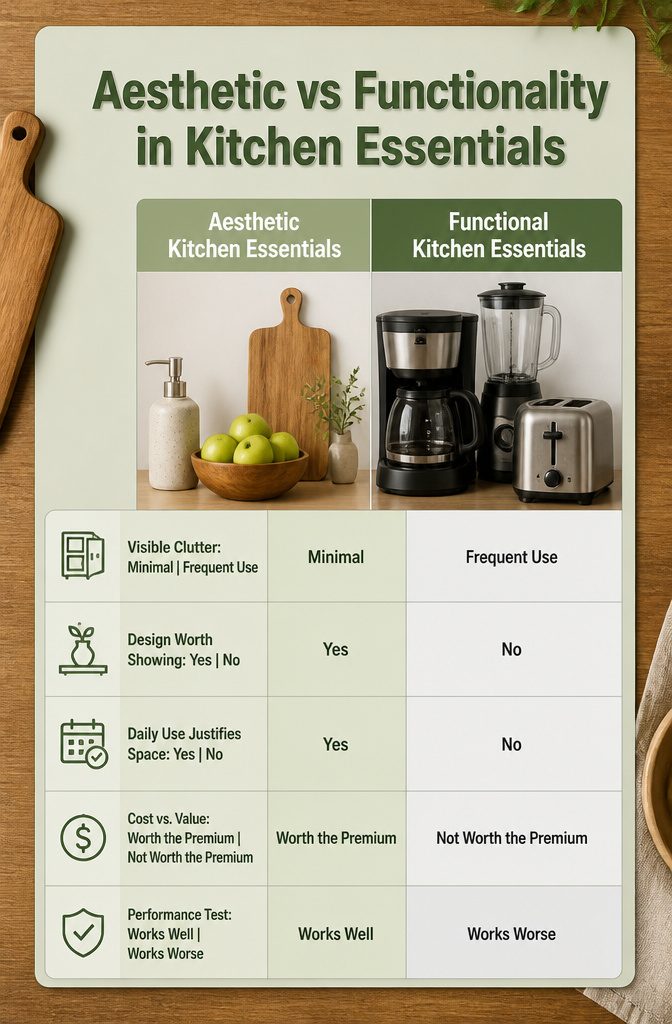
A coffee maker stays out because it runs all day, but a juicer or bread machine earns its counter space only when the design is exceptional enough that you’d rather look at it than store it.
That is the line I draw: daily use justifies visible clutter; occasional use does not, unless the object is beautiful enough to function as sculpture.
Neutral tones and natural wood read as calm rather than clutter. A leaning cutting board takes no prep space but adds warmth.
A fruit bowl does the same work as the crisper drawer while reminding you to eat the apple. These are not compromises; they are upgrades to both function and form.
Where I part ways is the blanket ban on small appliances.
A toaster you use twice a week is cabinet-bound. A ceramic soap dispenser replacing the plastic Dawn bottle is pure gain, zero trade-off.
The real test is whether the beautiful version performs as well: a glass oil cruet that drips down the side fails, no matter how nicely it photographs.
When the aesthetic version costs more and works worse, function wins. When it works the same and elevates the daily experience of the room, the slight premium pays out in the pleasure of seeing it.
Visible Storage
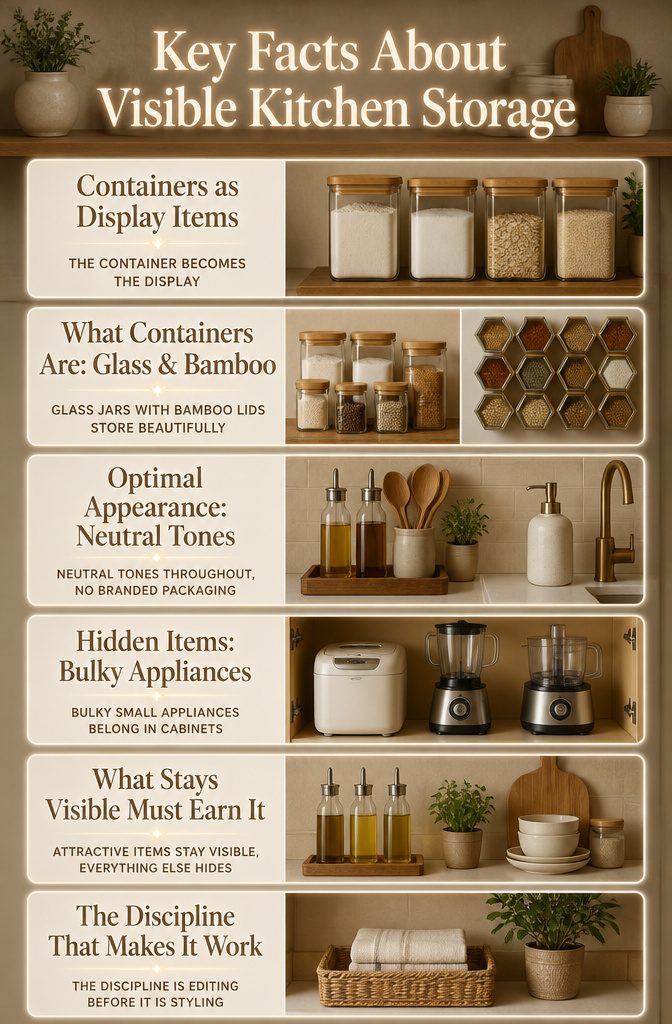
The organizing principle behind every "kitchen essentials aesthetic" pantry I have seen holds up because the container becomes the display.
Square glass jars with bamboo lids, whether the 17-ounce set of 12 or the smaller set of 5, store flour and sugar while turning them into something you would choose to look at.
Magnetic hexagon glass spice jars, the 20-set kind, carry the same logic to the wall: they save drawer space and they read as geometry rather than clutter.
The rule this only works with is the hard one: attractive items stay visible, everything else hides.
A plastic bread machine or utilitarian blender earns no exemption on the counter, and bulky small appliances belong in cabinets unless their design is exceptional.
Olive oil dispensers like the 11.8-ounce HOMCDALY set pass the test because the container replaces the store bottle entirely, and a wooden tray corrals the daily tools that must stay out.
Neutral tones throughout, no branded packaging left in place, a ceramic soap pump instead of the plastic Dawn bottle by the sink. The discipline is editing before it is styling.
What Earns the Investment
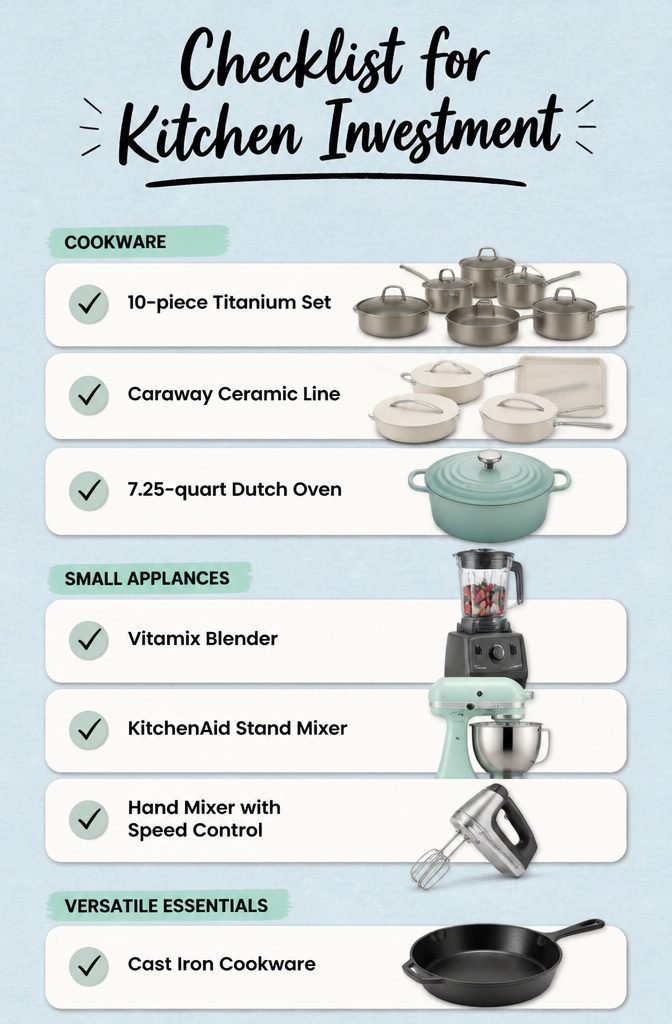
A 10-piece titanium set from Our Place replaces multiple pans and still ranks among the most loved aesthetic cookware, which tells you where the value sits.
The Caraway 12-piece ceramic line and the 7.25-quart Le Creuset Dutch oven both earn their price as pieces that cook well enough to justify the counter space they take as decor.
I put my money where the lifespan is: enameled cast iron lasts decades, and owners on Reddit note cheap oil dispensers leak from the spout within a season.
A Vitamix blender crossing four years of daily use, a KitchenAid stand mixer handling dough to frosting, a hand mixer with speed control that actually holds the bowl still, these are the small appliances that pay back the investment.
For quick sauces, a handheld blender cleans faster than a countertop unit and sees more rotations.
A food processor matters when you need cashews ground to a real dough consistency, a job blenders soften rather than cut. Cast iron and ceramic-coated bakeware age into their look rather than out of it.
The cheaper Carote 22-piece set or a pre-seasoned Flambo skillet fill the same function if your budget is tighter now, but the trade is usually weight and heat retention, and you will replace them sooner.
Frequently Asked Questions
What are the must-have kitchen essentials?
The must-have kitchen essentials that blend form and function include a gooseneck electric kettle with precise temperature control, a Nespresso Vertuo coffee and espresso maker, a handheld milk frother wand, square glass storage jars with bamboo lids, magnetic hexagon spice jars, a ceramic non-stick cookware set, gold stainless steel measuring cups and spoons, a three-tier adjustable dish rack, a ceramic dinnerware set for six, a linen table runner, a mechanical kitchen timer, wood cutting boards, a fruit bowl, fresh flowers or greenery, a tray for kitchen tools, matched soap dispensers, and either a stovetop tea kettle or enameled cast iron cookware as a counter anchor.
How can I make my kitchen look more aesthetic?
Make your kitchen look more aesthetic by replacing mismatched items with coordinated sets in warm metals, matte ceramics, or intentional colors like sage or mauve.
Store dry goods in square glass jars with bamboo lids, display spices in magnetic hexagon jars for a honeycomb pattern, and keep everyday tools on a shallow tray rather than scattered across counters.
Add living color with a fruit bowl and a narrow-neck ceramic vase for greenery or flowers, and choose appliances in finishes that catch light, such as chrome or matte stainless steel.
What kitchen tools are worth investing in?
Kitchen tools worth investing in are those that combine durability with daily use. Stainless steel dish racks outlast plastic through years of thermal shock.
A gooseneck kettle with precise temperature settings serves both coffee and tea drinkers accurately. Ceramic-coated cookware replaces Teflon for cooks concerned about PTFE, though it requires gentler preheating.
Gold-plated measuring cups resist visible wear for moderate bakers, and a mechanical kitchen timer operates without batteries when phones die mid-recipe. Good tools last years, not months.
What is a list of kitchen essentials?
A complete list of kitchen essentials covers preparation, cooking, serving, storage, and cleanup.
For preparation: cutting boards in graduated sizes, gold measuring cups and spoons, and a milk frother wand with interchangeable heads. For cooking: a gooseneck electric kettle, Nespresso Vertuo machine, and a 12-piece ceramic cookware set.
For storage: square glass jars with bamboo lids and 20 magnetic hexagon spice jars. For serving: a 36-piece ceramic dinnerware set and a linen table runner.
For cleanup: a three-tier stainless steel dish rack and matched soap dispensers. Finishing touches include a fruit bowl, fresh greenery, a tool tray, and either a stovetop kettle or enameled Dutch oven.
What are the 5 basic kitchen layouts?
It focuses on individual items and tools that fit within existing kitchen spaces, particularly small galley or apartment kitchens where counter space is limited and every item must justify its footprint through both function and appearance.
What is in style for kitchen decor?
Current kitchen decor style favors warm, muted colors over clinical defaults.
Mauves, sage greens, and clay tones on cookware function as deliberate accents against white tile or oak shelving. Matte finishes and brushed metals hide wear better than mirror-polished surfaces.
Linen table runners in natural weaves provide texture without demanding perfection, and mechanical timers in restrained vintage colors like mint serve as single color notes rather than theme park collections.
What looks good now are objects that look chosen because they are used, not displayed.





