
A first kitchen runs from a can opener to a Dutch oven, and the gap matters because most of us buy too fast and use too little.
The right sequence depends on whether you cook simple weeknight meals or batch-cook on weekends; that habit decides what earns your counter space first.
A thermocouple thermometer that reads in 2 to 3 seconds is the tool I would add before the fancy pan, because guessing at poultry temperatures wastes meat and the USDA numbers do not bend.
1. Measuring Cups
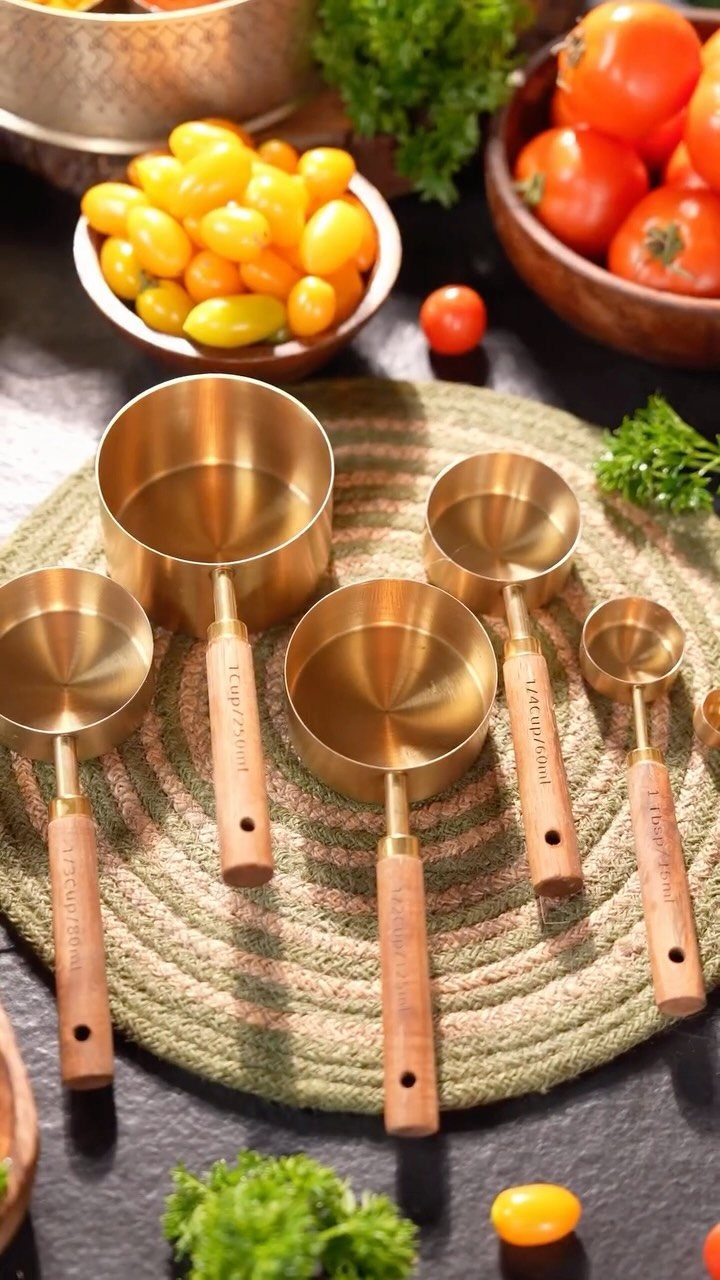
A good set of dry measuring cups handles flour, sugar, and the smaller volumes that make baking repeatable.
I prefer metal over plastic; it does not stain or hold odors, and the thin rim lets me level off a cup cleanly with a straight edge.
Wooden handles keep fingers cool and give something to grip when hands are wet.
For a first kitchen, skip the decorative ceramic sets.
They chip, and you cannot see inside to judge a half measure. Start with the basics: a quarter cup, a third cup, a half cup, and a full cup.
2. Cast-Iron Skillet
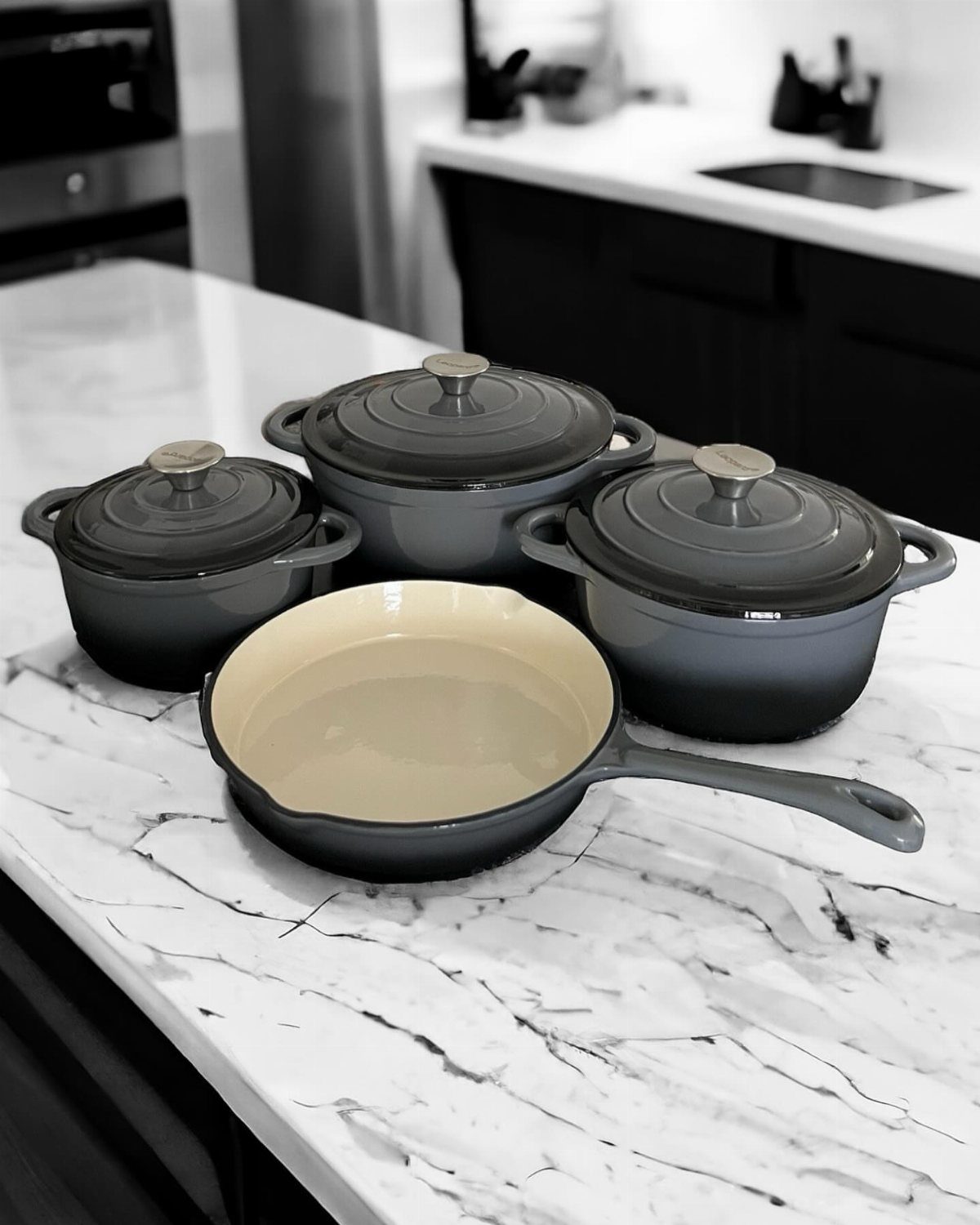
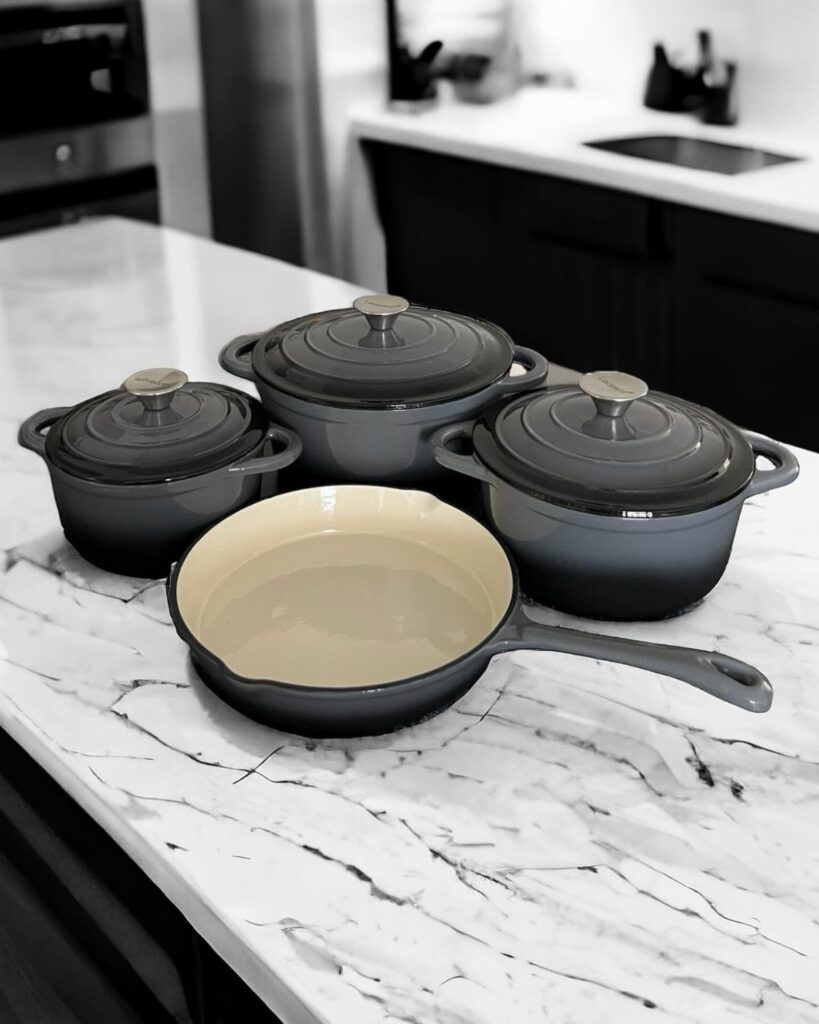
Enameled cast iron costs more than bare, but you will never season it and you can simmer tomatoes without stripping the finish.
Some skillets share their line with lidded pots, which matters if you want lids that swap between pieces later.
I keep one skillet for jobs that need high heat or a move to the oven: cornbread, reverse-seared steaks, a frittata.
Enamel coatings have heat limits, so check your broiler before sliding one under it. Bare cast iron handles more heat but demands upkeep; enameled trades that maintenance for a surface that will chip if you drop it hard.
3. Baking Dish
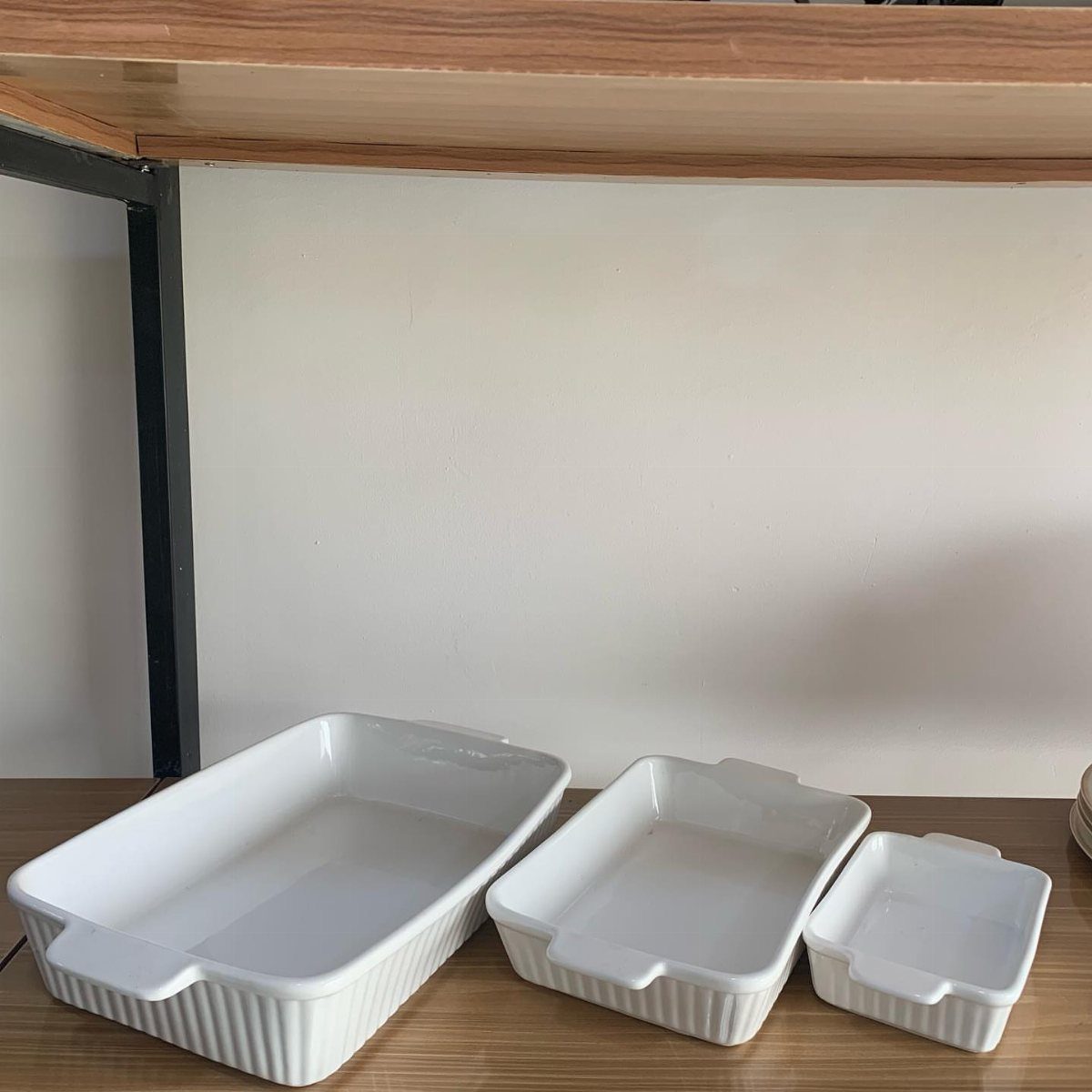
Three sizes covers most households: a small square for a crumble, a large rectangle for lasagna or a halved sheet-pan dinner, and something in between for roasting vegetables for two.
Ceramic holds heat well and looks decent enough to set on a table, though it will crack with thermal shock; do not move it straight from fridge to hot oven.
Glass is cheaper and lets you watch browning, but it heats unevenly and can shatter.
For a first purchase on a budget, I would take one large ceramic dish and add sizes only when a recipe I make often demands it.
4. Food Storage Containers
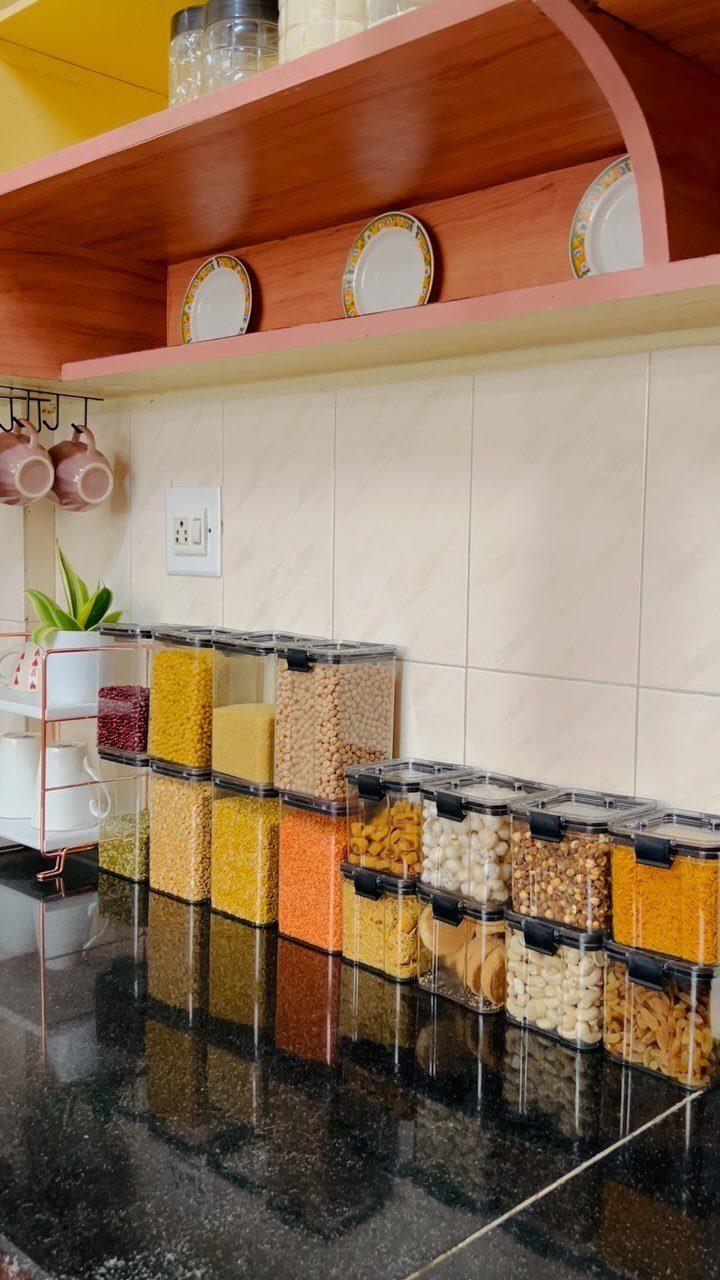
Square containers stack without wasting the gaps that round ones leave, and clear walls let you see when you are low on lentils before you start cooking.
Airtight lids matter more for pantry storage than for refrigerator leftovers; dry goods pick up moisture and pantry moths both.
I would rather have fewer matching pieces than a mismatched set that does not stack.
Buy for the shelf depth you have, not the counter you wish for. These sit beneath shelves, which tells me the owner measured; a container too tall for the space above it ends up living on the counter permanently.
5. Sauté Pan
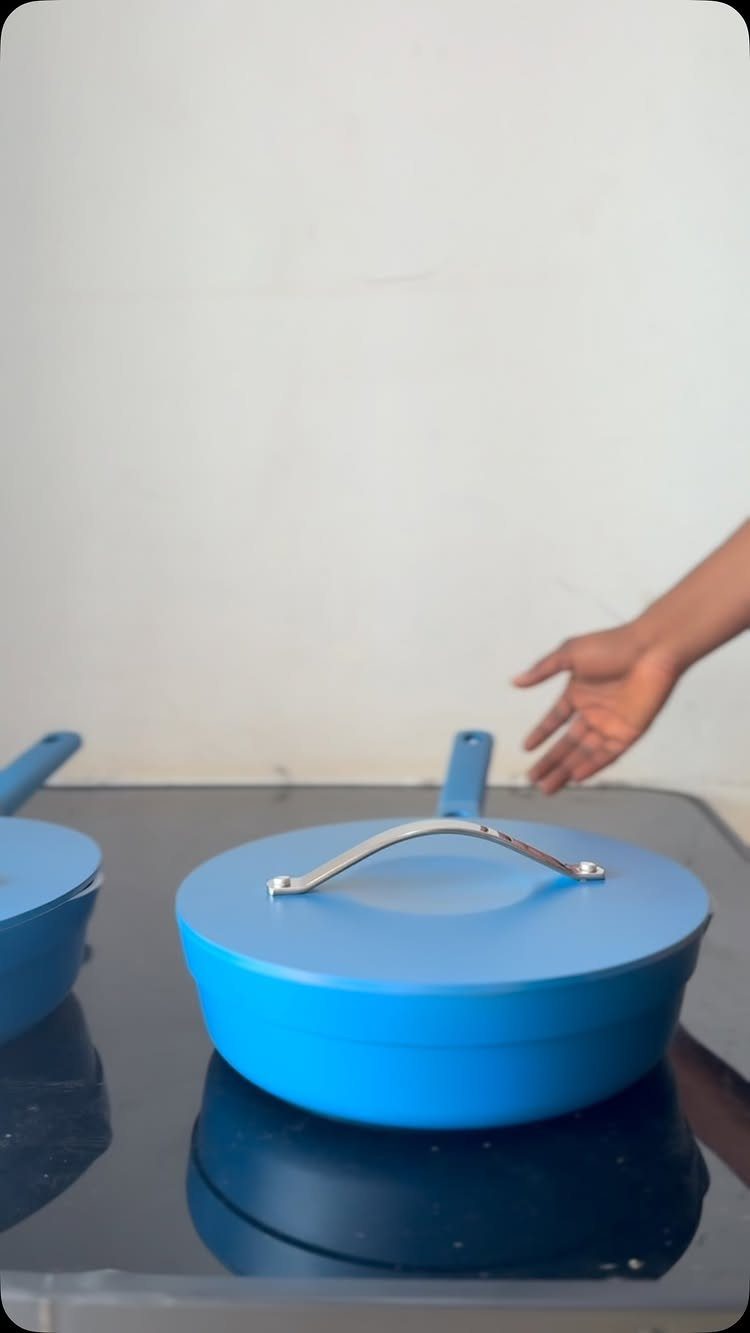
A sauté pan has straight sides where a skillet flares, which gives you more flat cooking surface and keeps liquid from sloshing when you stir.
The blue finish here is nonstick, and that matters for eggs or fish, though the coating will wear faster than the pan itself.
For a first pan, I would pick something in the medium range with a lid. That handles a pound of pasta in sauce, several chicken thighs, or a batch of fried rice.
Nonstick lets you use less oil, but you cannot crank the heat; above medium, the coating degrades. If you cook meat hard and fast, bare stainless or cast iron is the better first choice.
6. Instant-Read Thermometer
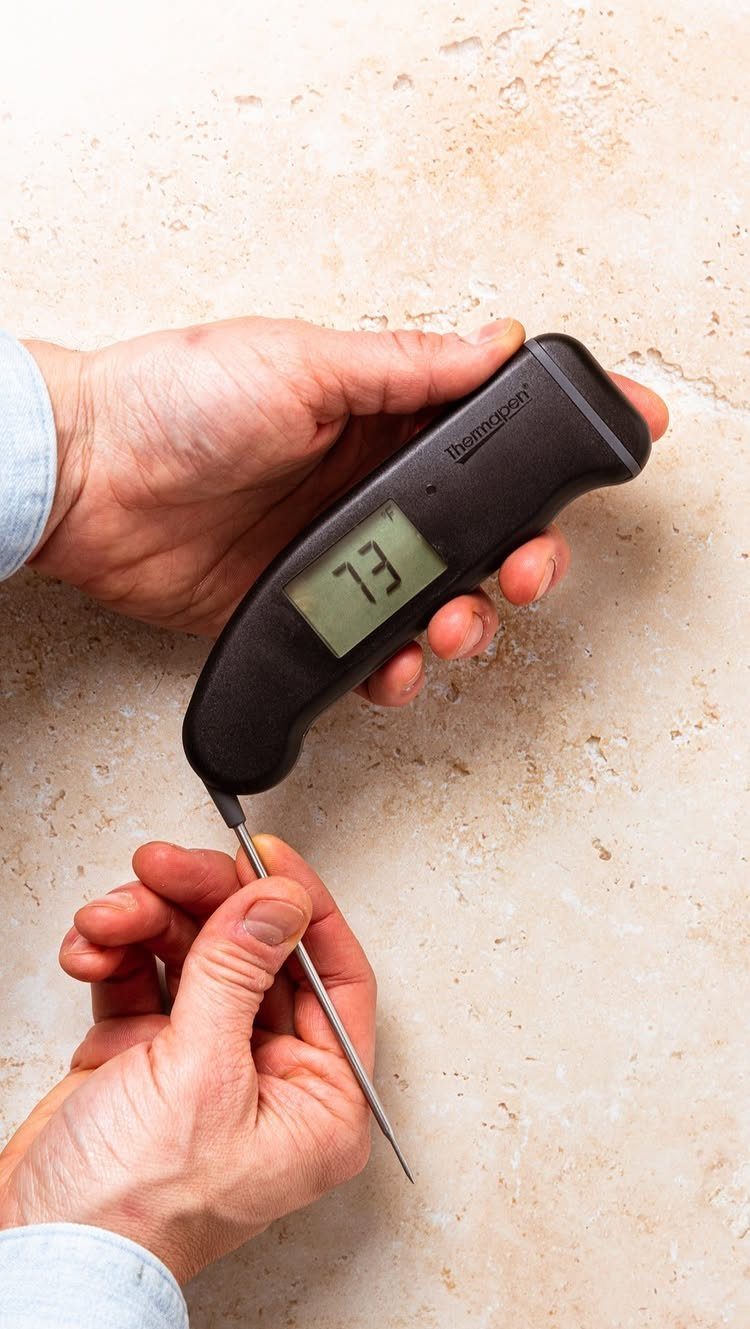
A thermocouple thermometer reads in 2 to 3 seconds, which is the difference between checking a chicken thigh and letting half the heat out of your oven.
A folding thermometer slips into the drawer that holds the oven mitts, where I will actually grab it.
I do not trust color or touch for poultry or thick chops. The USDA sets clear minimums for chicken and ground pork; those numbers are non-negotiable, and guessing wastes meat.
A cheap dial thermometer works but takes longer and drifts out of calibration. For someone building a kitchen from nothing, this is the tool I would add before the fancy pan.
7. Whisk
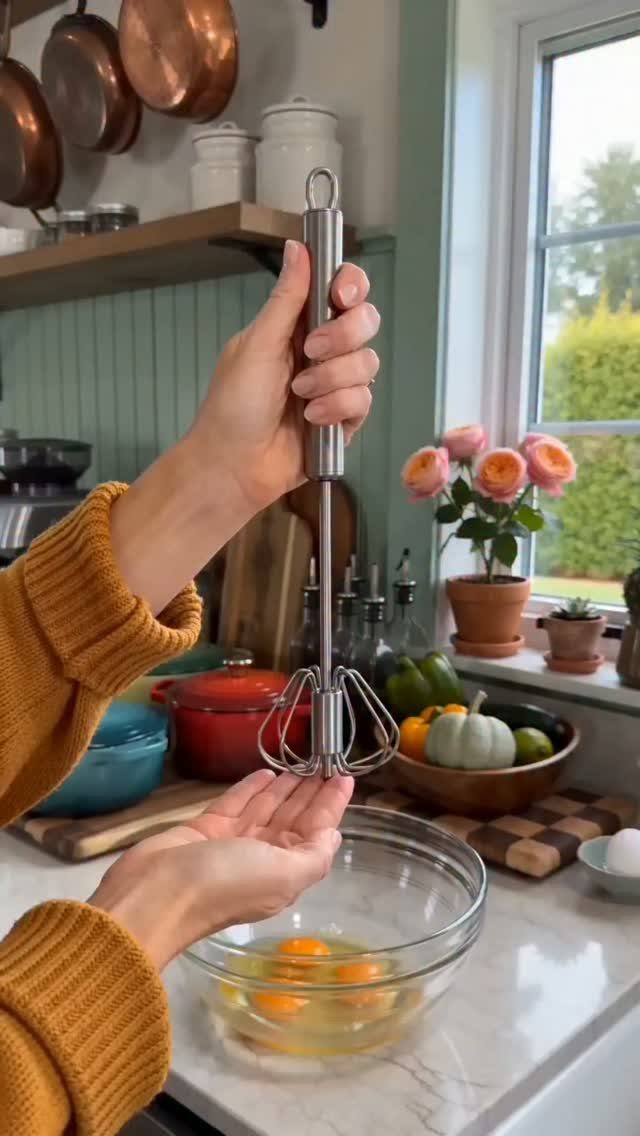
A rotary whisk spins its looped wires with a crank handle, which saves the wrist when you are working a dozen eggs or a thick batter.
All stainless steel construction means a whisk goes through the dishwasher without rusting at the joints.
For a first kitchen, I would pick this style over a balloon whisk.
It handles heavier jobs and stores flat in a drawer. The only trade-off is that it does not scrape a bowl clean the way a silicone-coated balloon whisk can; you will need a spatula for that.
8. Hands-Free Trash Can
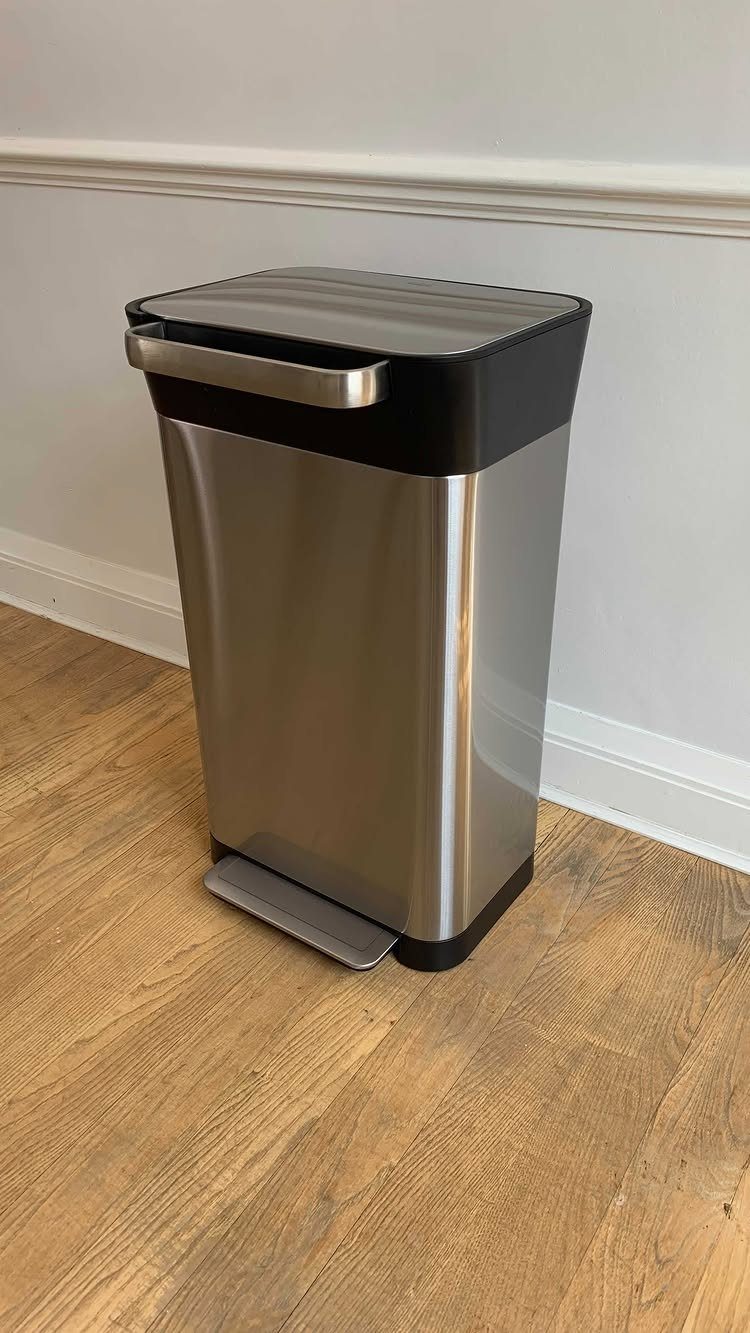
A step can opens without touching the lid, which matters when your hands carry eggshells or raw chicken trimmings. A rectangular shape sits flush against a wall or cabinet, where a round can wastes the gap.
I prefer steel over plastic for the body; it does not absorb the smell of old coffee grounds and wipes clean with a sponge.
Check that the pedal lifts the lid fully enough to scrape a plate in without catching the edge. A soft-close hinge is worth the small extra cost if you cook late and the kitchen sits below a bedroom.
9. Slow Cooker
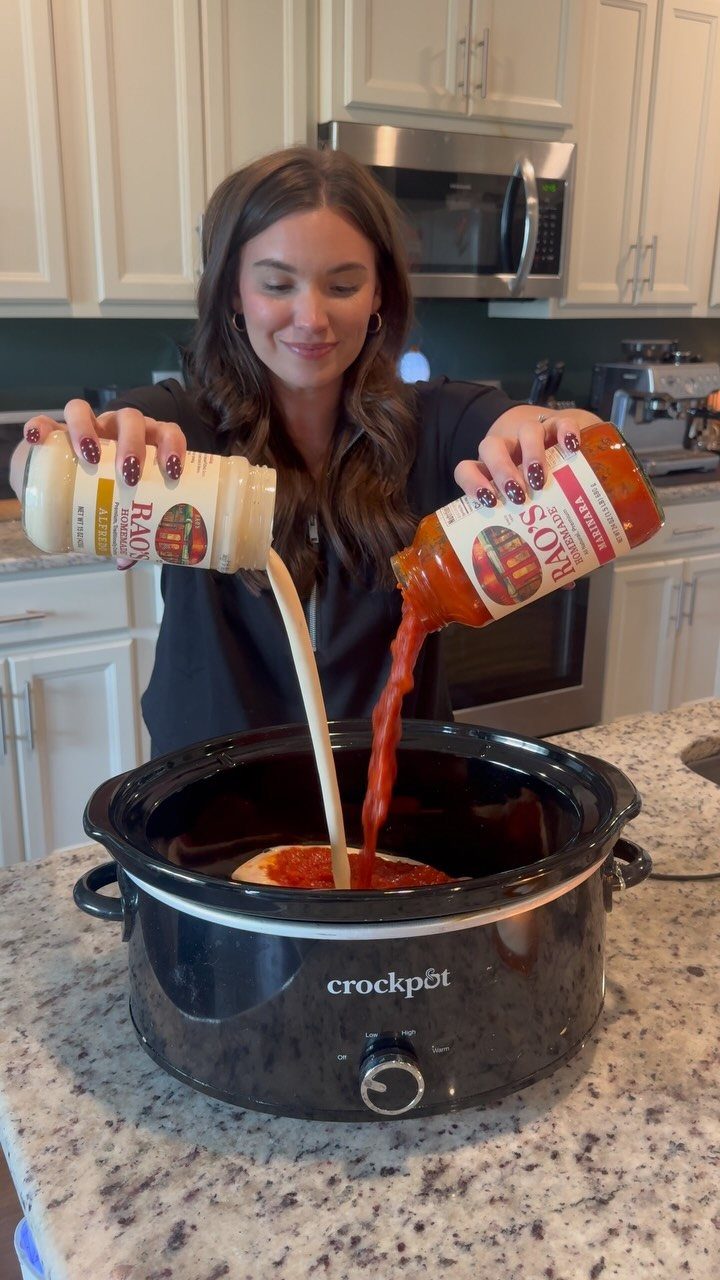
A slow cooker with a ceramic insert holds a steady low temperature for hours, which turns cheap cuts of pork shoulder or chuck roast into something that shreds with a fork.
A black finish is common and practical; it does not show the splatter that a light color would.
An oval slow cooker handles a whole chicken or a batch of chili for a small group. The low setting runs roughly 8 hours, high roughly 4; most recipes work on either, though low gives collagen more time to break down.
I would not buy one with preset programs I cannot override; manual dials fail less often and cost less.
10. Dutch Oven
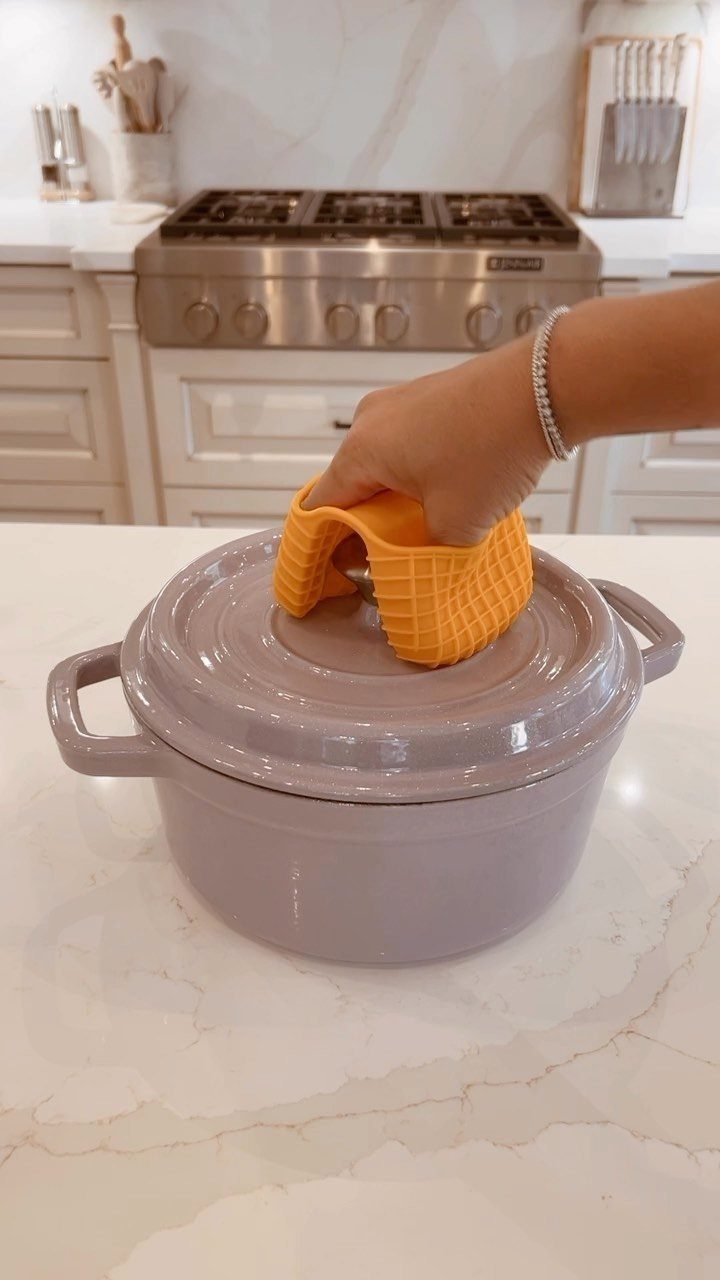
Enameled cast iron holds heat like bare cast iron but needs no seasoning, and a good finish goes straight to the table without apology.
The knob on the lid, gripped here with a silicone mitt, stays cool enough to lift but heats enough that I still use a pad.
A 5- to 7-quart round pot is the size I would buy first.
It braises short ribs, bakes no-knead bread, and simmers a pot of beans. The enamel can chip at the rim if you bang it with a metal spoon; wooden or silicone tools protect the surface.
Weight is the real cost: this is not the pot I reach for when I want to drain pasta quickly.
11. Colander
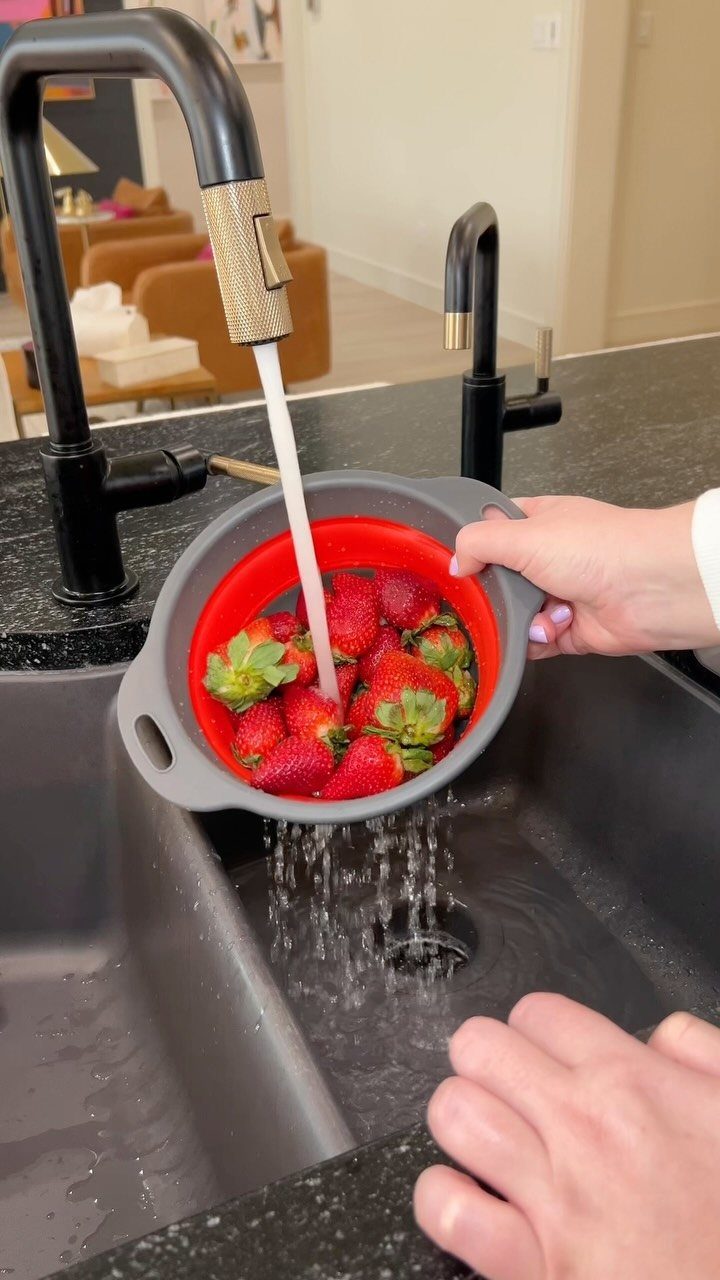
A two-piece colander and strainer set nests for storage, which the maker of this red and grey version likes for a small kitchen.
The feet that hold it above the sink basin let water drain without the bowl sitting in its own runoff.
I use a colander more often than I expect: rinsing berries, draining canned beans, shaking moisture off greens so oil will cling.
Plastic is lighter and cheaper than stainless steel, though it can take on the color of tomato sauce over time.
For a first purchase, a medium size with handles that hook over the sink rim keeps hands free and bowls stable.
12. Can Opener
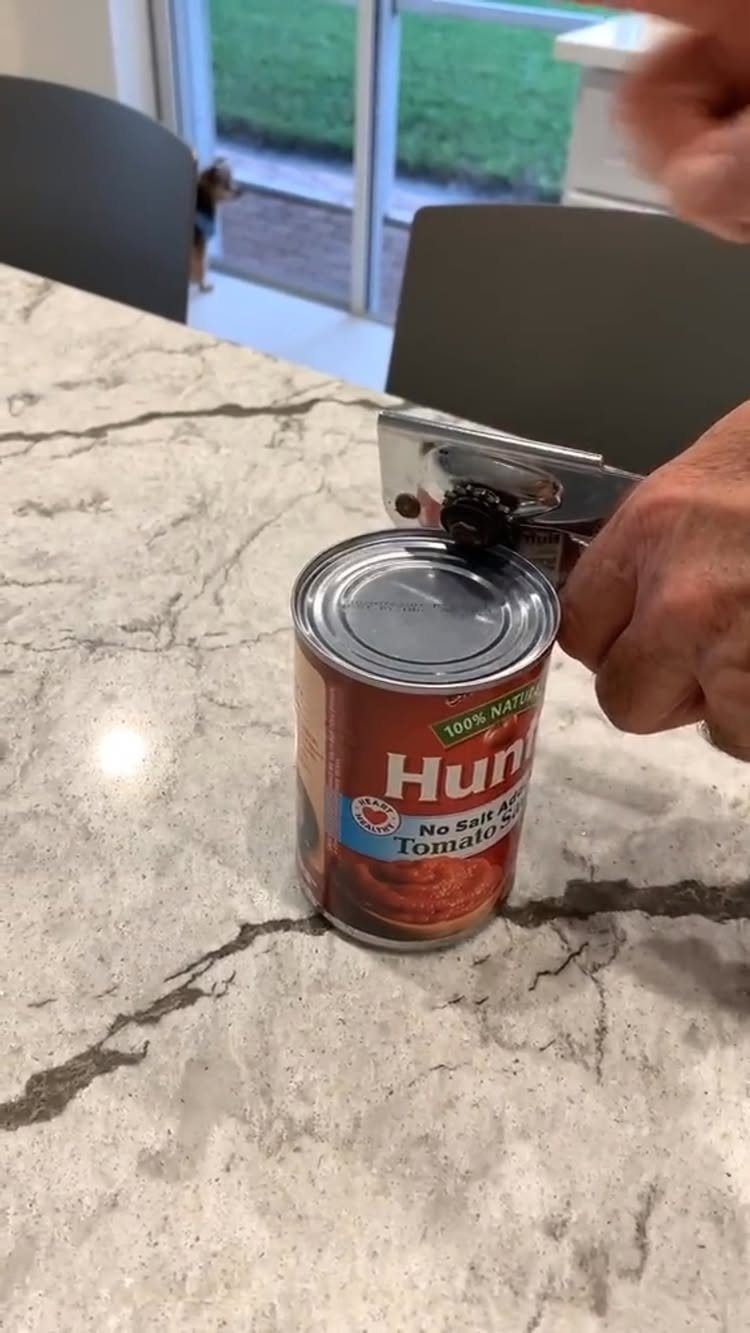
A manual can opener with metal construction outlasts the plastic-winged versions that strip gears on a thick can of tomatoes.
A side-cut opener leaves a smooth lid edge instead of a jagged one; I prefer this for safety, especially when children are around.
For a first kitchen, this is not the place to spend money on electric or battery-operated openers. A simple rotary opener fits in a drawer, works when the power is out, and costs less than the electric kind.
Check that the blade is replaceable or the whole unit is cheap enough to treat as disposable; a dull blade is how people cut themselves.
13. Blender
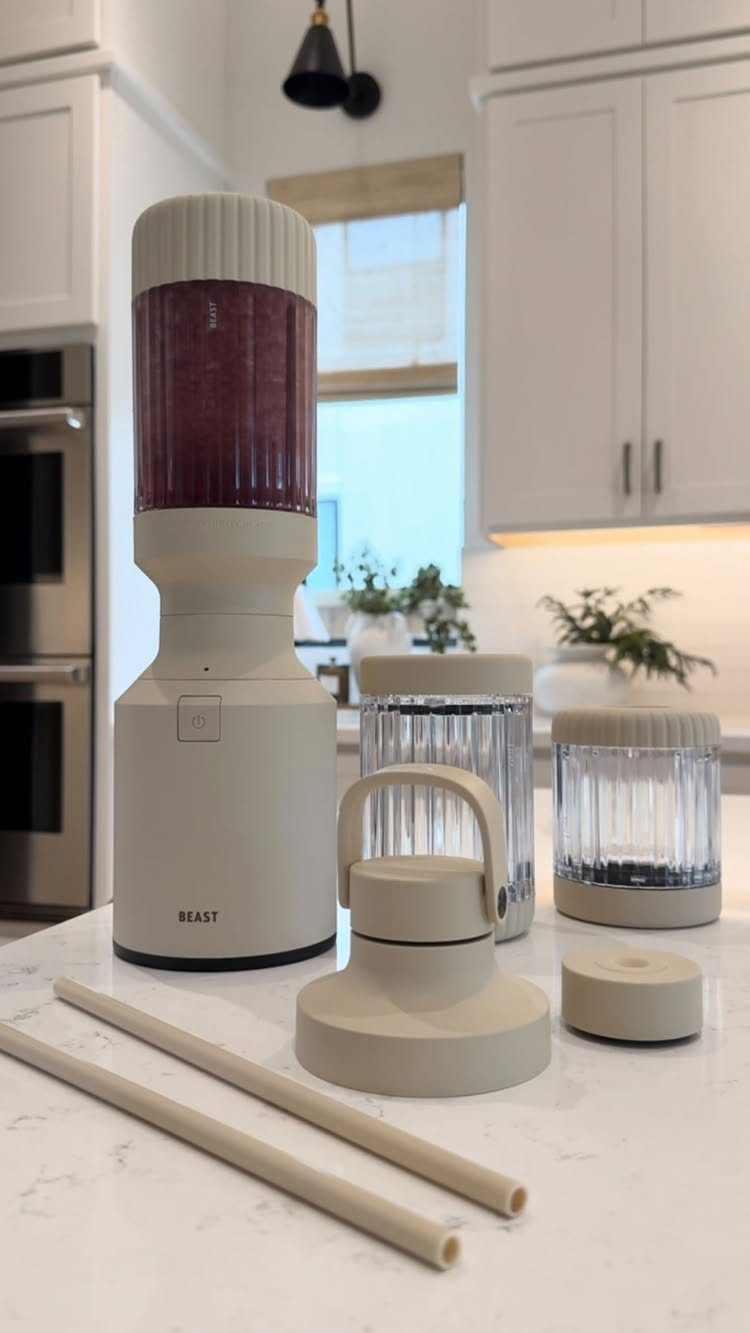
A personal blender with multiple cups lets one person make a smoothie and take it without washing the carafe.
The beige finish and matching accessories sit out without looking like an appliance graveyard, which matters when counter space is small and visible.
I would look for a motor base heavy enough that it does not walk when the load is thick. Cups that double as travel containers save cabinet space; lids and straws included mean fewer parts to buy later.
For a first kitchen, this handles soups, sauces, and morning drinks in one footprint. A full-size blender is worth adding only when you batch-cook soups or crush ice regularly.
Although it could do with a second cup for sharing out hot drinks whilst out and about, even once filled to its 1.2 litre capacity it still managed to feel light to carry and comes with a 50-year guarantee.
Quality Vs. Quantity
A single high-quality tool outlasts several cheap replacements, and the difference shows up in daily use.
Stainless steel, cast iron, and heavy-duty nonstick coatings each carry a higher upfront cost but wear slowly enough that the price per year drops below budget alternatives.
I look for pieces that handle more than one job: a sauté pan that works as a frying pan, a baking dish that moves from oven to table.
Dishwasher-safe construction saves time, though I hand-wash knives and anything with a living hinge regardless of the label.
The real test is whether I reach for it without thinking. A tool that frustrates me mid-recipe, whatever I paid, costs more in the long run than the one I trusted enough to buy once.
Choosing Essentials
Your cooking habits should drive what enters your kitchen first, not a generic checklist.
If you cook simple meals, a large pot, a medium saucepan, and a casserole dish cover most evenings; add measuring cups, tongs, and a spatula and you are functional.
Busy weeknight cooks get more return from time-saving tools than from specialty pieces. Food enthusiasts who batch-cook or experiment can justify a Dutch oven or a high-performance blender sooner, but only after the basics earn their counter space.
I would rather add slowly and use everything I own than front-load a cabinet with aspirational gear.
Start cooking, notice what is missing, and buy to fill that gap. A tool bought for a habit you do not yet have usually ends up in the back of a drawer.
Maintaining Tools
A ten-minute daily routine keeps a kitchen usable: wipe counters, rinse dishes, tidy surfaces before mess compounds.
Store knives and cutting boards near your prep area, where you actually reach for them. I sharpen my knives on a schedule, not when they feel dull; a sharp blade is safer and faster.
Every few months I pull out gadgets I have not touched and duplicates I accumulated; clutter makes the tools I need harder to find.
Quality pieces do not need coddling, but enameled cast iron deserves wooden or silicone tools at the rim, and nonstick coatings degrade above medium heat no matter what the marketing claims.
Frequently Asked Questions
What do you need in your first kitchen?
For your first kitchen, grab a big pot, a medium saucepan, a casserole dish, dry and liquid measuring cups, tongs, and a stiff spatula; that group handles pasta, rice, roasted chicken, pancakes, and most of what a beginner cooks.
You will also need at least one board you can scrub hard and a chef’s knife you can keep sharp; everything else in prep is optional until you are chopping daily.
What are the daily essentials for a kitchen?
Everyday utensils, basic cookware, and a short maintenance routine keep a kitchen usable.
What are some common names for kitchen tools and equipment?
A chef’s knife, cutting board, measuring cups and spoons, slotted turner, silicone spatula, locking tongs, whisk, peeler, mixing bowls, colander, and can opener form the basic set.
I use a rotary whisk with a crank handle for heavy batters and a side-cut manual can opener for safety.
A colander and a finer mesh strainer that stack together spare you a cabinet shelf in a galley kitchen or a first apartment with two feet of counter space.





