
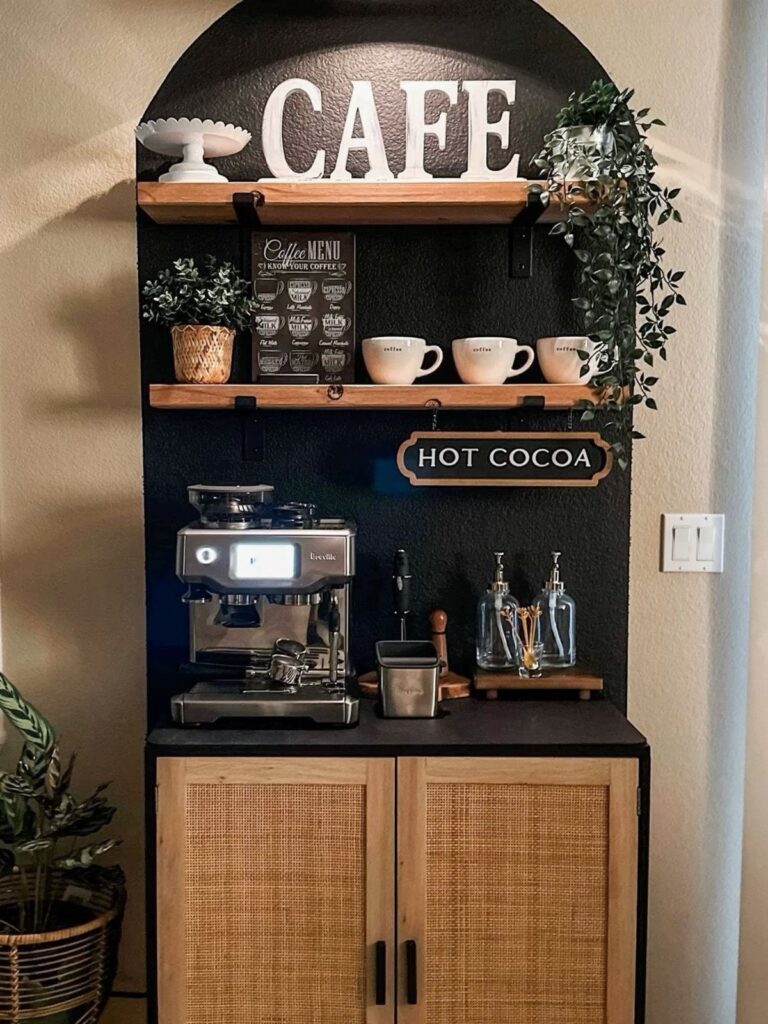
A coffee bar cabinet can be as simple as an organizer box on the counter or as involved as built-in millwork that needs a contractor and an electrician already on site.
The deciding factor is whether you own the walls or rent them; renters need portability, homeowners can consider hutch furniture or a closet conversion.
1. Floating Shelf Coffee Bar
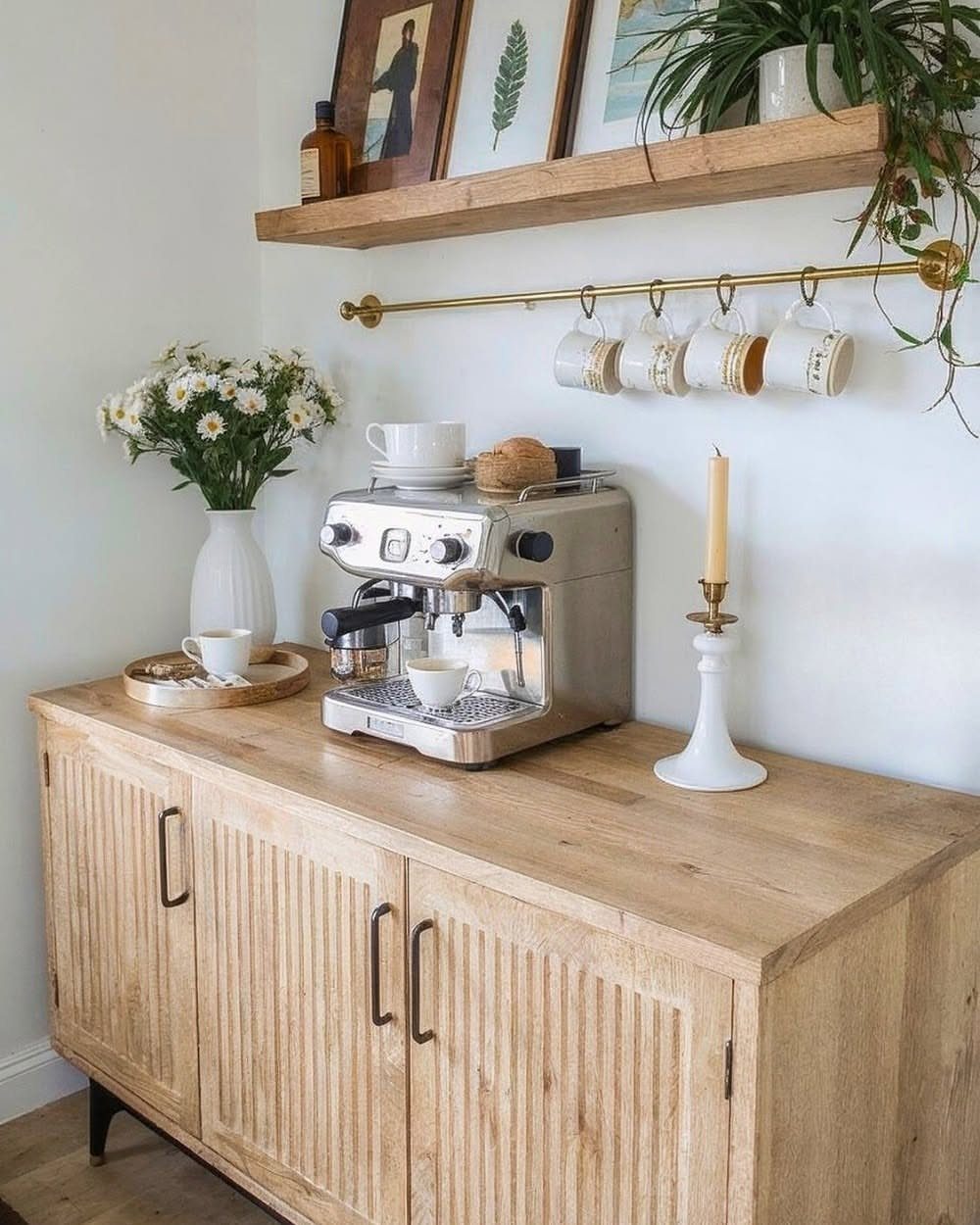
A floating shelf coffee bar keeps everything off the counter by building upward. Brass or black metal rails underneath the upper shelf add hanging storage without eating into the wall space.
I like this setup for apartments and galley kitchens where floor space is tight and every square foot matters.
Keeping it visually quiet takes some discipline: limit yourself to two colors of material and one or two small plants, or the wall starts to feel cluttered.
2. Kitchen Hutch Coffee Bar
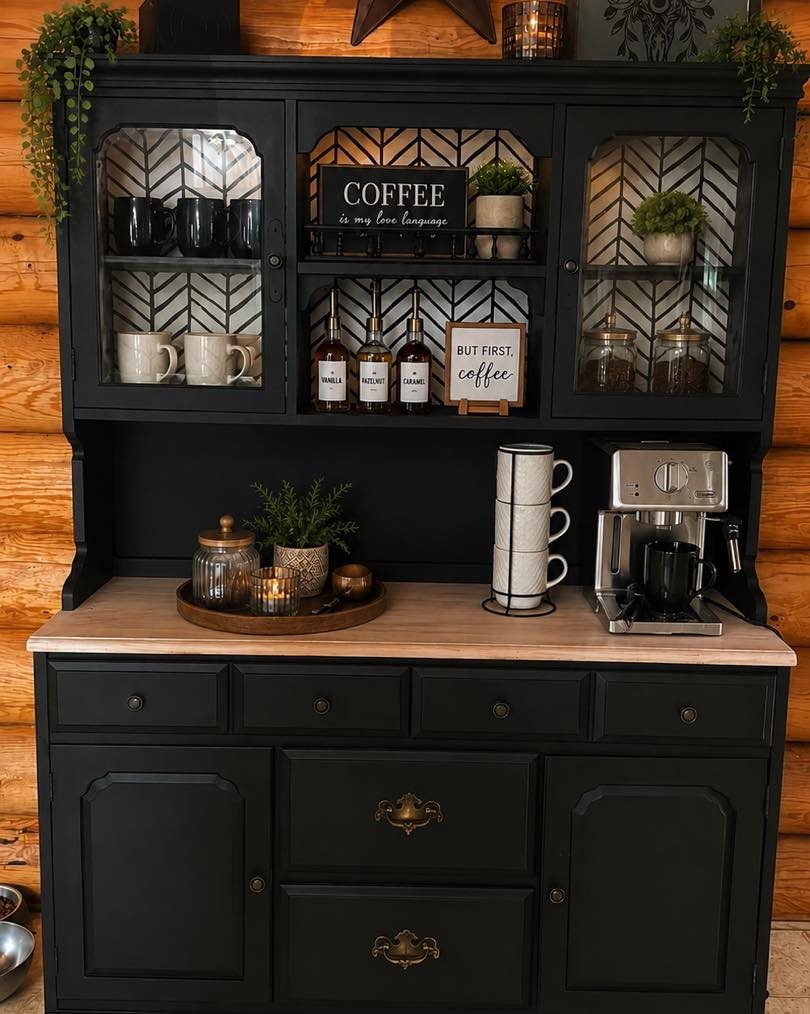
A kitchen hutch gives your coffee gear a home with doors that close. Painted black against raw wood is a combination I would not have guessed works, but the contrast keeps the signage and stacked mugs from looking like clutter.
Open shelving on top holds daily-use cups; the cabinet below swallows the grinder, extra filters, and the backup beans you bought on sale.
I would skip the word-art signs and let the hutch itself read as the statement. A hutch of moderate width fits most kitchens without requiring a wall renovation; measure your available floor space and traffic path before you shop.
Check that your tallest machine clears the interior shelf height before you buy; espresso machines with top-fill water reservoirs need breathing room above the reservoir lid to swing open and pour.
3. Built-In Coffee Bar
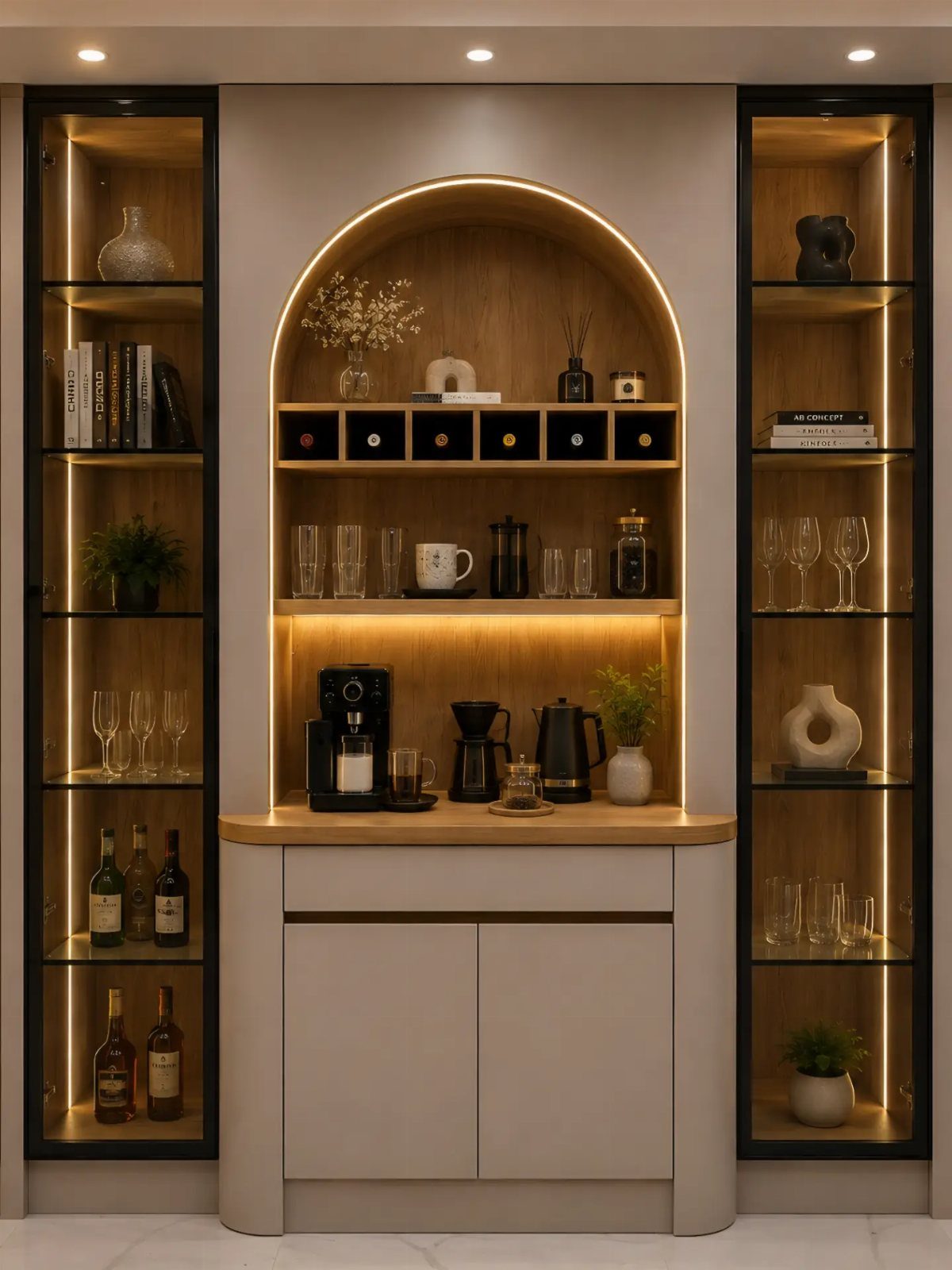
Built-in coffee bars borrow space from existing cabinetry, usually by converting a wall oven niche or a pantry recess. Backlit glass shelves behind the machine let you spot the right mug before your eyes adjust to morning light.
This is the most expensive route on the list.
Custom millwork is the cost that stops most people, and you need a cabinet line that can match or complement your existing kitchen; get quotes from two or three local shops before you commit.
I would only pursue it during a larger renovation, when the electrician is already on site to add the shelf lighting and any dedicated outlet you need for a higher-draw machine.
If you’re the kind of person who starts every morning with a fresh, steaming ( or iced !) cup of coffee, then you’ll understand the allure of carving out a dedicated coffee bar in your home.
4. Coffee Bar Cart
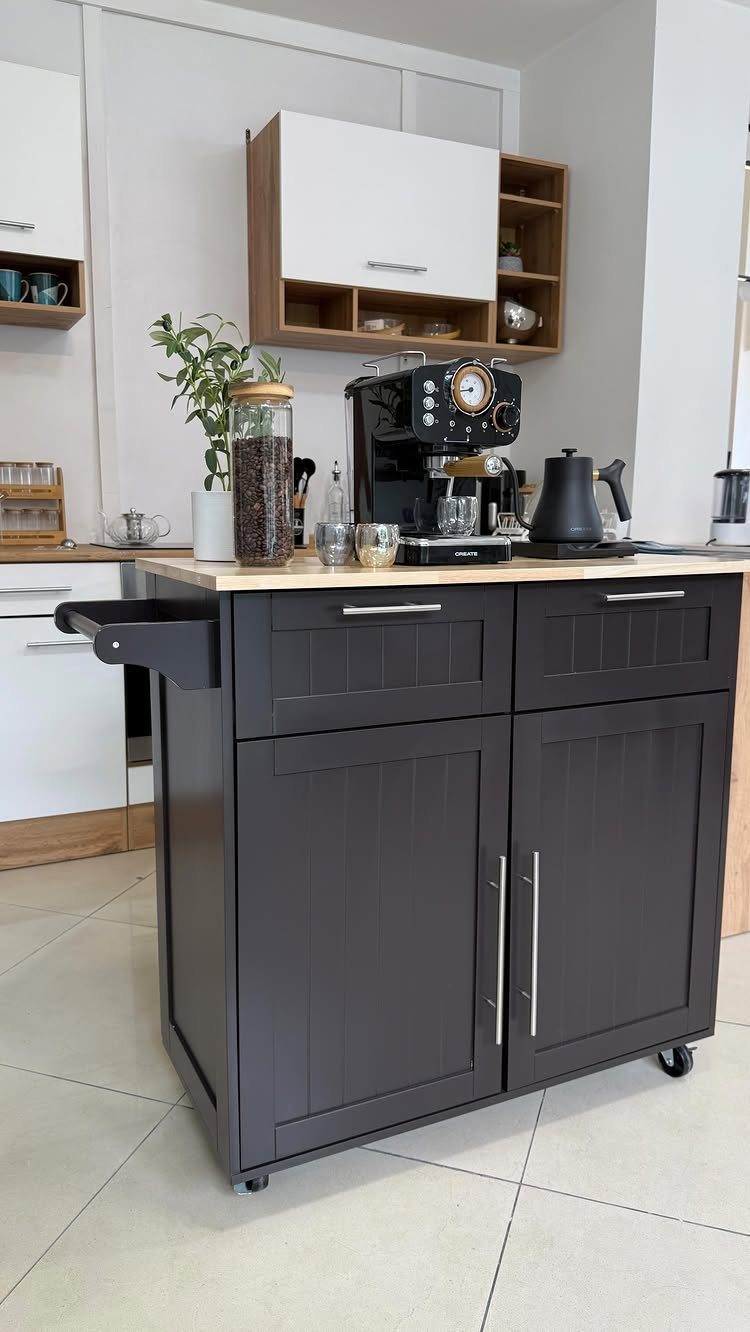
Wheels change how a coffee bar functions. Roll it to the outlet in the morning, park it against the wall when you need the floor space for something else.
A dark gray frame with a wood top reads warmer than all-metal versions and holds up better to drips and heat than painted surfaces.
Look for locking casters; cheap ones drift on hard floors.
A cart with at least one drawer beats open shelving for storing filters and tamping tools you do not want to dust daily. I have seen these repurposed as bar carts later, which matters if you tend to reorganize seasonally.
5. Multi-Purpose Cabinet Coffee Bar
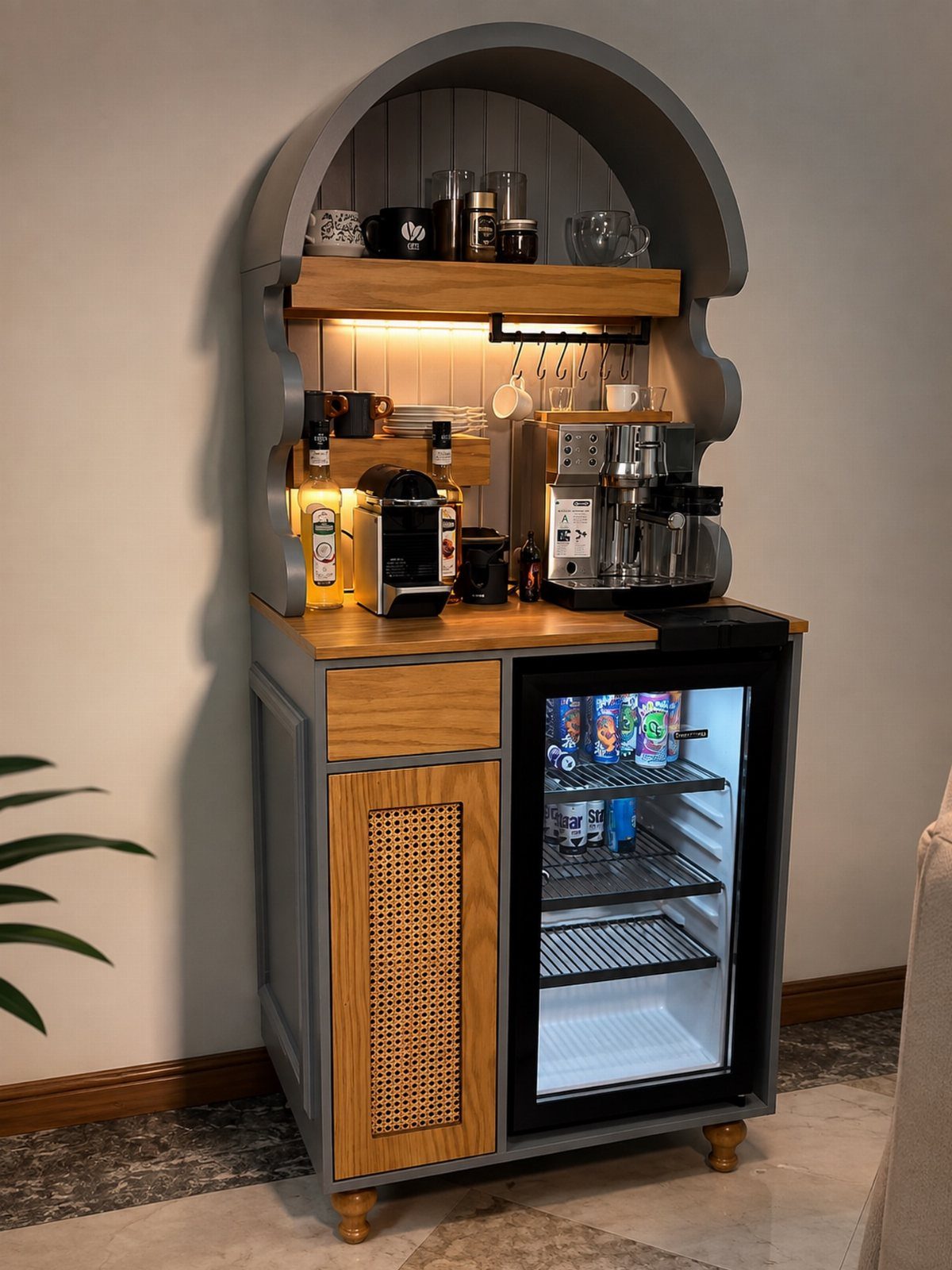
One cabinet, multiple drinks. A well-proportioned gray unit houses espresso gear on top, a coffee maker beside it, and a glass-door mini fridge below for cold brew, milk, or canned alternatives.
The fridge is the detail that separates this from a standard coffee station; it means you are not walking to the kitchen refrigerator for oat milk in the early morning half-dark.
I would size the fridge to the cabinet rather than the reverse. A slim beverage refrigerator fits most standard cabinet widths and draws less power than a full dorm fridge; check the interior dimensions against your tallest bottle before ordering.
The downside is noise; compressors hum, and a cabinet with thin backing does little to muffle it. Leave an inch of ventilation gap behind the unit or the warranty voids itself with heat damage.
6. Butler’s Pantry Closet Coffee Bar
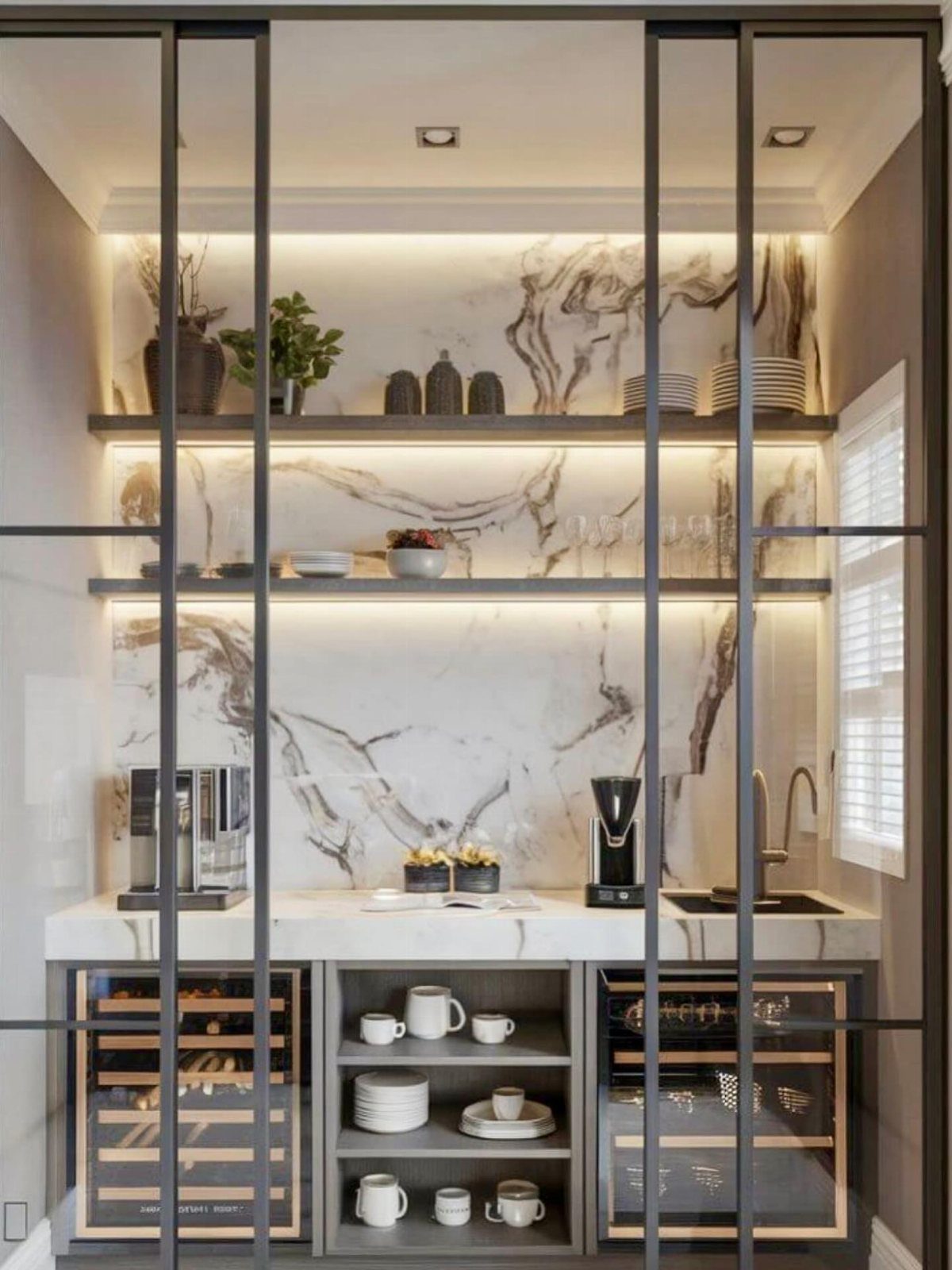
A butler’s pantry closet coffee bar asks whether you have a shallow room off the kitchen that currently stores nothing you use.
A butler’s pantry closet coffee bar earns its keep with a small prep sink tucked into the cabinetry: rinse portafilters, fill kettles, wash the milk pitcher without crossing into the main kitchen traffic pattern.
This reads luxury because it is. The wine coolers flanking the workspace push the utility toward entertaining, and the illuminated shelving turns storage into display.
I would only commit to marble if the closet has a door that closes; soft stone etches with acid from coffee and citrus, and a closed room keeps the casual splashes invisible.
7. Countertop Coffee Organizer Box
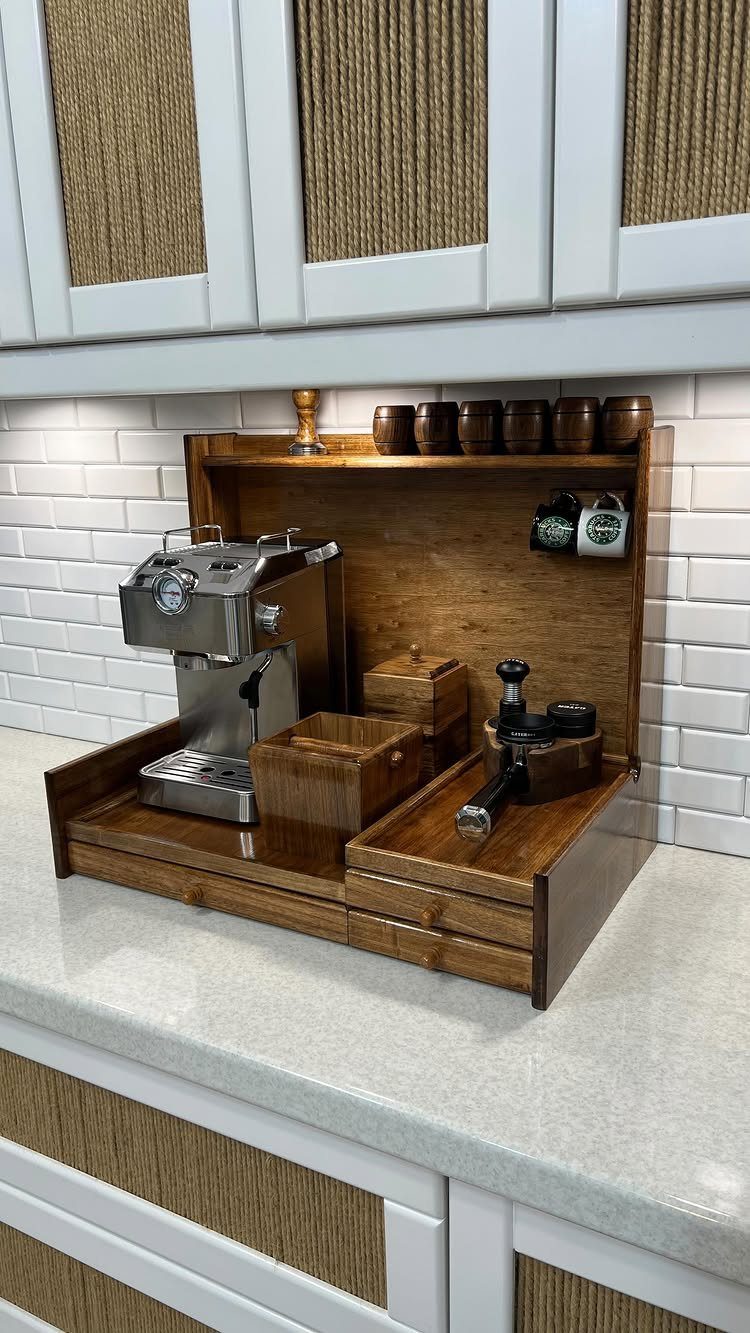
A countertop organizer box corrals espresso gear into one footprint without drilling walls or moving furniture.
2 drawers below, an upper shelf for cups, and the machine centered with knock box and tamper within arm’s reach is the layout that keeps the workflow tight.
I would choose bamboo over painted MDF for anything that sits near steam and drips daily; solid wood swells less and does not off-gas in a warm kitchen.
Measure your machine depth plus room for cord clearance before ordering, and check that the drawer slides clear your counter’s front lip.
The trade is raw counter space; a box this size takes a real bite of work surface that does not come back.
Best for renters or anyone who wants the morning ritual contained and portable.
Choosing the Right Location
Where you put it shapes how you use it more than the style of the cabinet itself.
I would place any coffee station within arm’s reach of a grounded outlet; espresso machines and grinders pull serious wattage, and extension cords across kitchen traffic are a hazard code inspectors flag.
Natural light is pleasant for morning rituals, but direct sun degrades beans in clear canisters fast; a spot with diffused eastern light beats a southern window.
Integrate into existing circulation paths rather than cutting new ones. A coffee bar that forces a detour between sink and refrigerator dies from neglect within a month.
Dining areas and living rooms work if your routine involves guests or a spouse on a different schedule; the kitchen still wins for pure efficiency.
Measure your traffic lane width before committing to anything with depth; you need enough room for comfortable passage with a cabinet door open.
Storage Solutions
Vertical storage buys you function in a small footprint. Shelves above the machine keep daily mugs accessible; I would reserve eye-level shelves for the two or three you actually use and store the rest higher.
Drawers with dividers swallow the small stuff that otherwise migrates across every surface: filters, pods, the extra gasket you bought on impulse. Baskets labeled by function beat open bins that collect mystery contents; "stirrers" and "backup" are enough.
Closed storage with doors protects against dust and kitchen grease, which accumulates faster above ranges and toasters than most people notice. A mix of open and closed lets you display the pretty pieces and hide the utilitarian clutter.
In tight kitchens, multi-functional furniture earns its square footage: a wine rack that doubles as coffee storage and occasional prep surface handles three jobs where three separate pieces would not fit. The Toronto apartment at 500 square feet proves the math.
Functional Design
A cabinet that serves only your morning routine fails half its potential. I design for the guest who arrives at 10 AM on a Sunday: can they find a mug, locate the beans, operate the grinder, and clean up without asking?
One obvious self-serve zone with visible mugs and a clear path to the machine handles this; backup supplies stay behind a door or in a drawer so the main area does not overwhelm.
Weekday efficiency comes first. The grinder, the portafilter, and the milk pitcher should each land in the same spot every time without thought.
Guest access expands naturally from that foundation: the same mug hook you use daily becomes the obvious place for a visitor to reach.
Keep the main traffic route through the room clear; a coffee bar that blocks the path to the patio or the bathroom creates friction every time the house is full.
Frequently Asked Questions
How to style a coffee bar area?
Two colors of material and a single plant, maybe two small ones, is where I stop; anything more and the eye loses the calm a coffee corner needs.
I pass on the word-art signs. The cabinet or hutch has enough to say on its own.
Brass or black metal rails under a floating shelf give you hanging storage that does not chew up wall space, and black paint against raw wood keeps a stack of mugs from reading as mess.
Can you use a sideboard as a coffee bar?
Yes. A sideboard gives you the surface and storage a coffee setup needs, with cabinets or open shelves for the supplies.
What is a coffee station?
A coffee station is a dedicated area for preparing and enjoying coffee.
You need counter space for the machine and grinder, storage close enough to grab a mug or filter without stepping, and a surface that shrugs off water rings and splashes.
It needs a grounded outlet within easy reach, and it should sit where people already walk instead of making them go around.





