
The ideas below run from a stack of cinder blocks you can shift in an afternoon to a rooftop terrace that needs a structural engineer before you lay the first stone, so the right choice comes down to how permanent you want this to be.
A dry-stacked block grill tears down in October and leaves bare ground by spring, while a brick fireplace with a domed pizza oven shares a foundation you will not move if you redesign the yard next year.
I would check my roof’s load capacity before dreaming of stone countertops above the city, and I would measure 3 meters of open space behind any gas unit before I measured the grill itself.
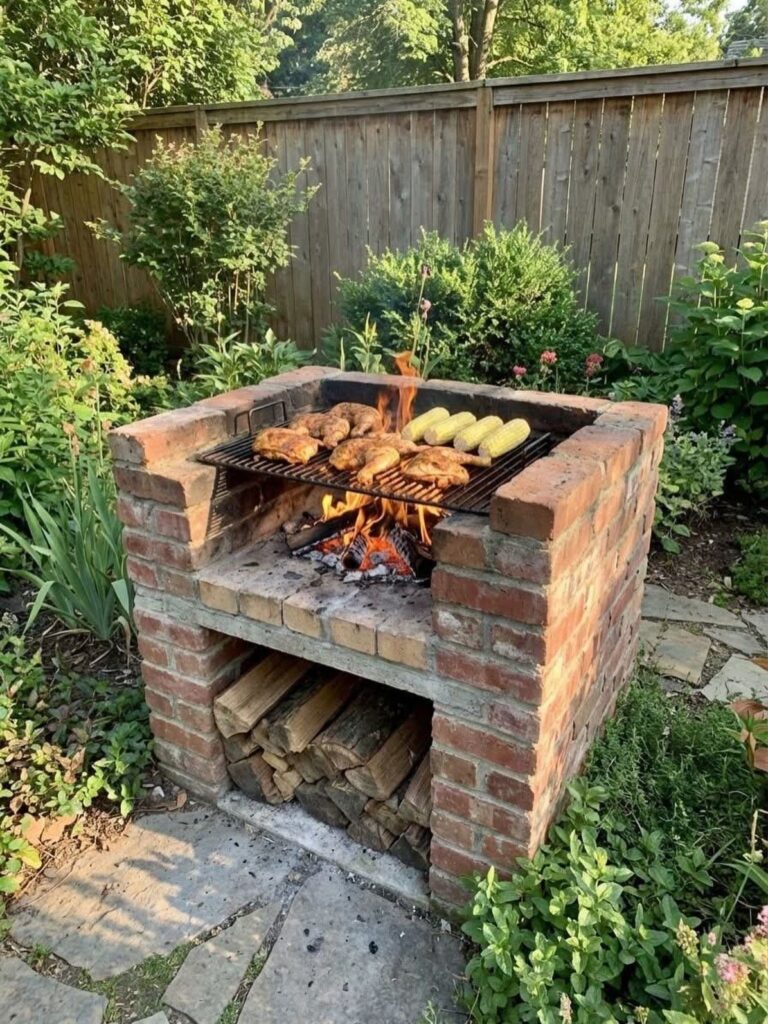
1. Brick Barbecue with Storage
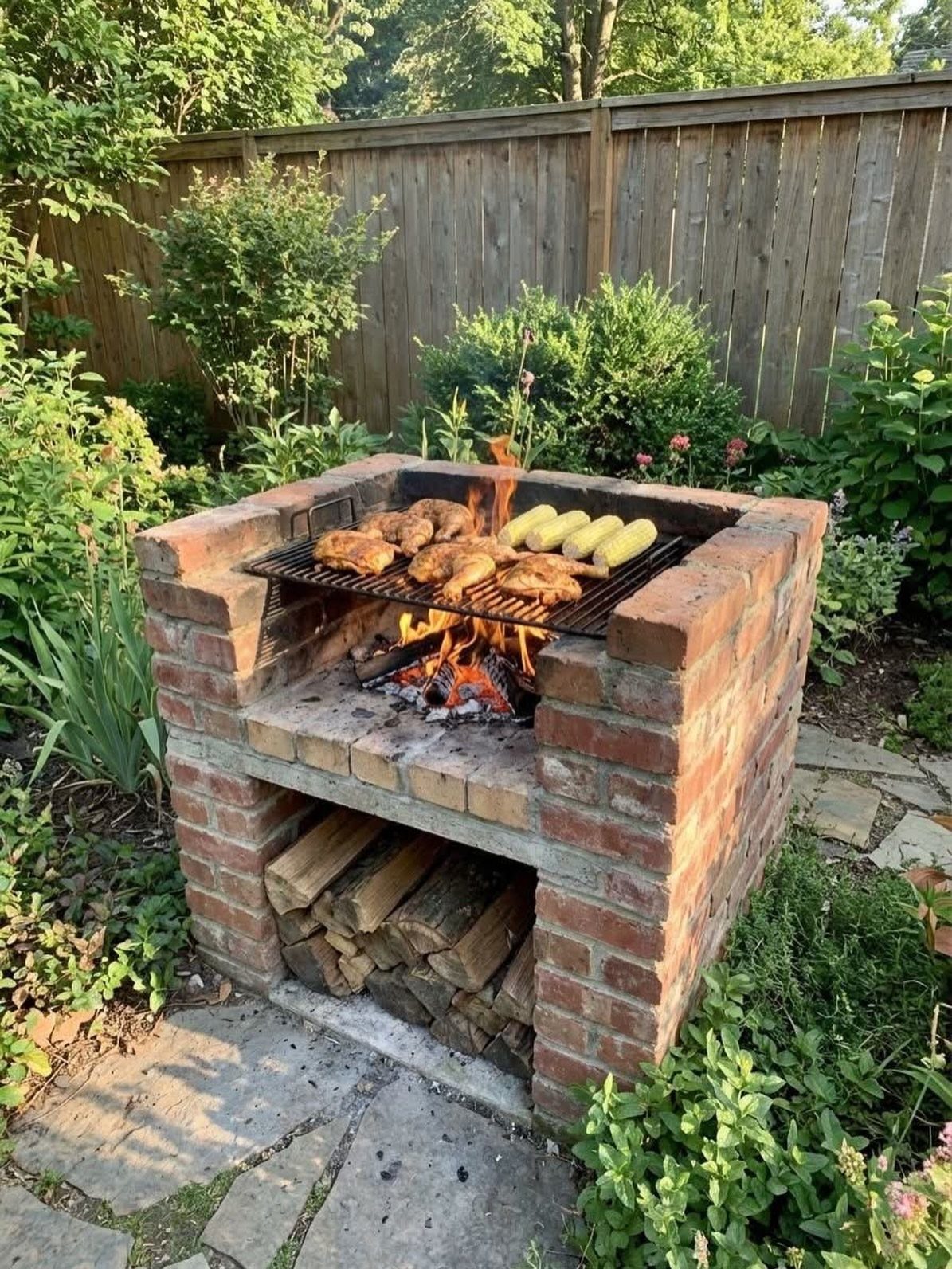
A brick barbecue with built-in storage underneath keeps your fuel dry and your cooking zone organized in one permanent structure.
I like this setup for anyone tired of hauling a propane tank or bag of charcoal from the garage every Saturday evening.
The firebox sits at a comfortable height for tending food, while the compartment below holds a weekend’s worth of hardwood split small.
You will need a level pad of concrete or compacted gravel first; the brickwork itself is straightforward stacked construction with a simple lintel over the fire opening.
Plan on a weekend to lay it up if you have some masonry experience, longer if you are learning as you go.
2. Simple Shelter
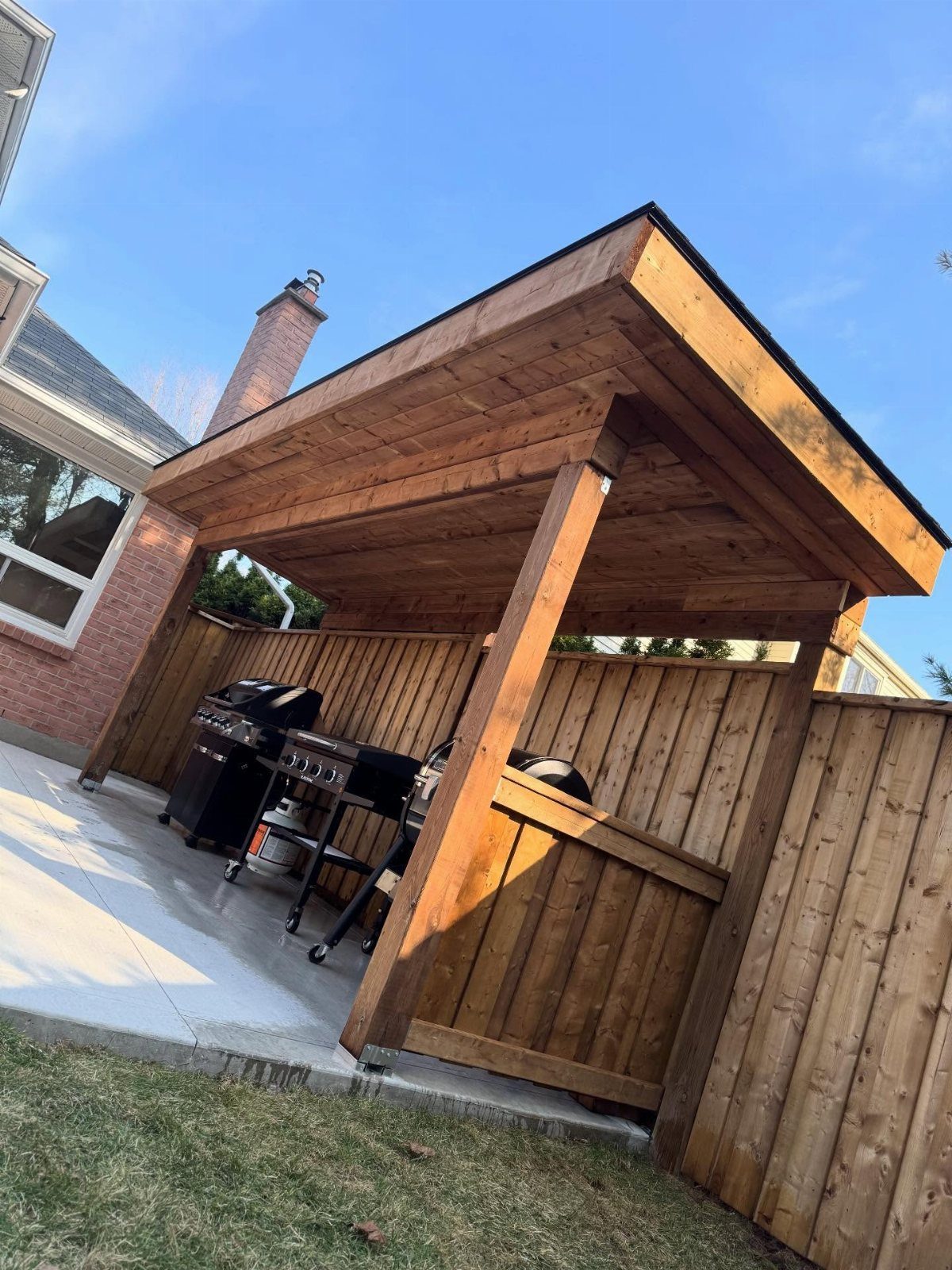
Rain or harsh sun can make grilling miserable fast, and a simple lean-to shelter fixes that without the cost of a full pavilion.
A basic post-and-beam frame with a corrugated or shingled roof, pitched to shed water away from the cooking area, gives you shelter without complication.
I would set the posts in concrete and keep the roof height low enough to feel sheltered but high enough that heat and smoke escape easily; around eye level or a bit above at the front edge works for most people.
This suits renters less, since it is semi-permanent, though you could build it as a freestanding unit you leave behind or take apart.
3. Outdoor Kitchen
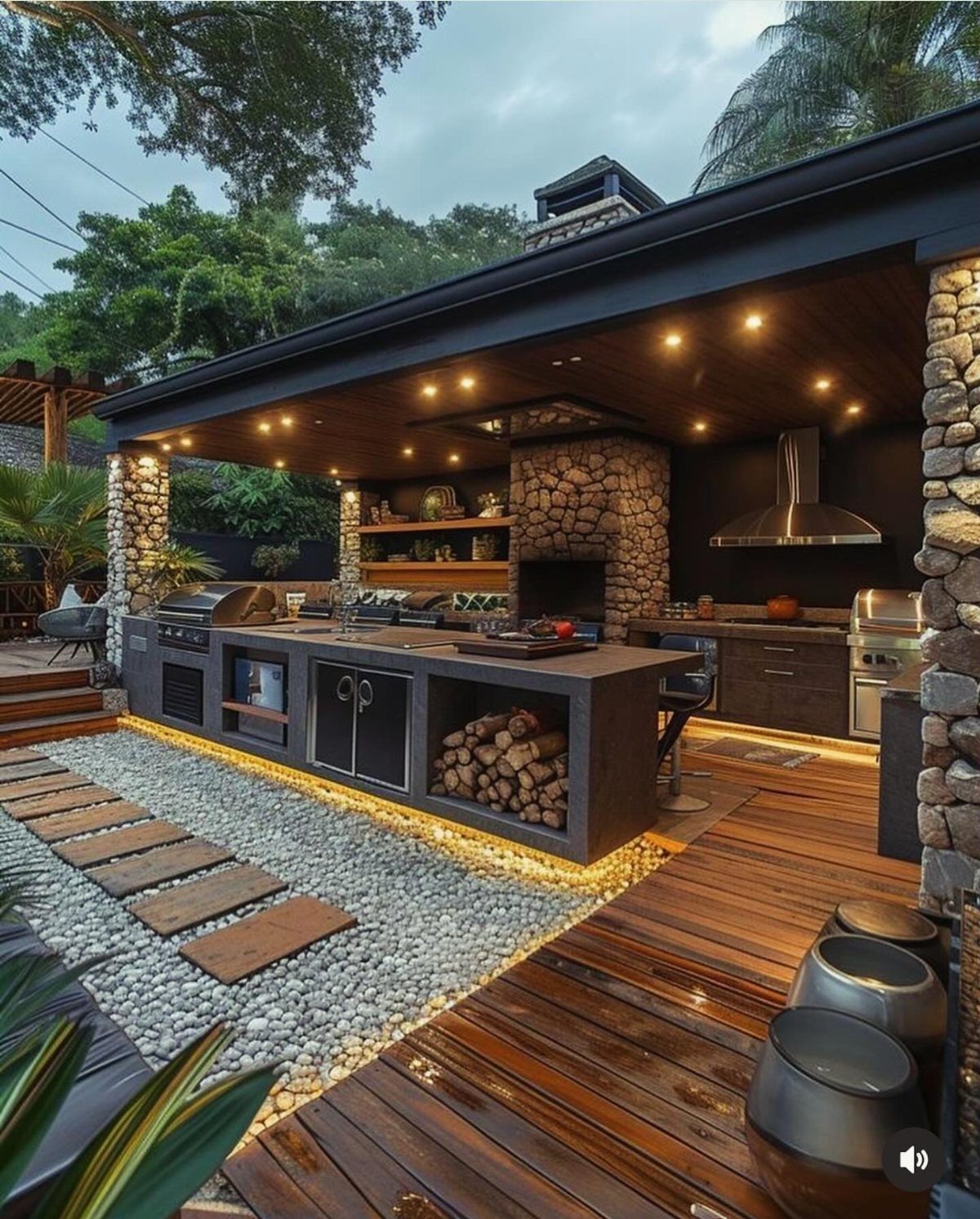
Stone surrounds and under-counter lighting turn a grill into something that anchors a whole deck, not just a corner of it.
A built-in gas or charcoal unit set into a stone or stucco surround with counter space on both sides scales from modest to full luxury.
I would want enough prep surface on each side to stage plates and tools without crowding the grill, and more if you cook for groups regularly.
Run electrical for those lights and for a small refrigerator or ice maker if your budget allows; doing it during construction costs a fraction of adding it later.
This is the direction to go if you entertain often and want the cook to stay part of the party.
In a larger garden, a barbecue area could include an outdoor kitchen, which can be around 3-4m long, including work surfaces, plus a seating area for guests.
4. Built-In BBQ Island
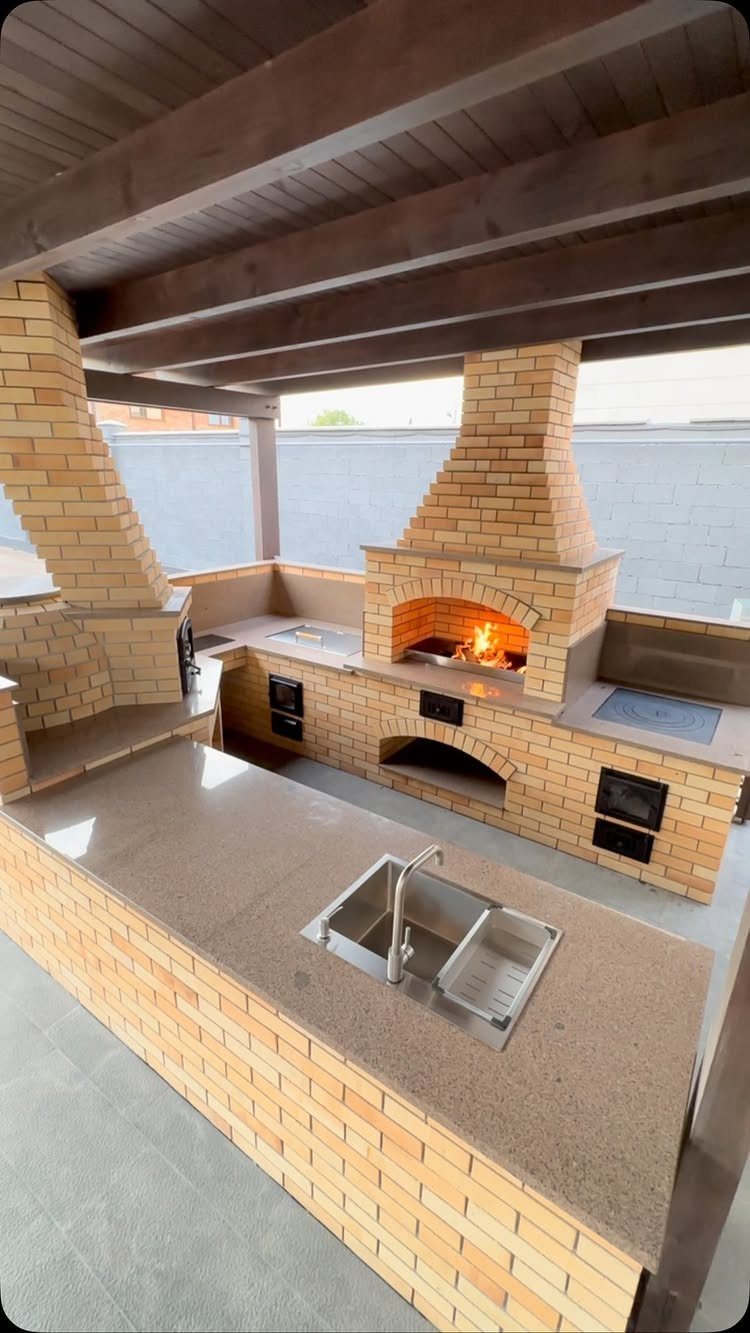
A brick island with a pizza oven and sink turns the backyard into a second kitchen that happens to be outdoors.
A wood-fired oven beside the grill with a full counter run and a pergola overhead gives shade, though I would keep the slats high enough that smoke still rises clear.
The double chimney handles both fire sources; if you build this, plan the flue paths before you lay the first brick, since retrofitting is nearly impossible.
Expect to spend serious money and time here, or hire a mason who has done outdoor kitchens before.
A setup that handles everything from Tuesday burgers to a full dinner party without running inside for water or a board to cut on.
5. Firepit Grill
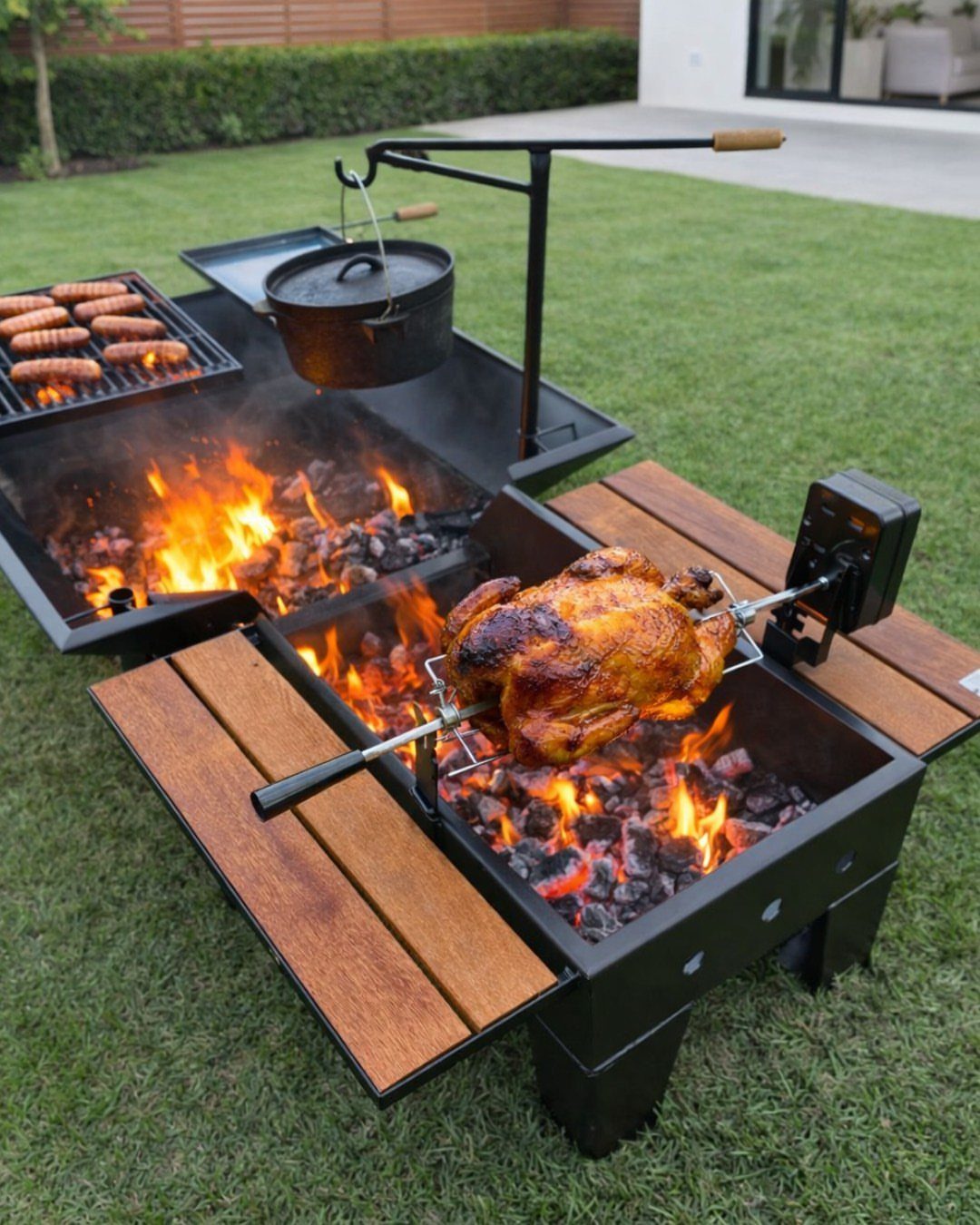
Cooking over an open fire pit with a grate and rotisserie attachment gives you three methods in one rig: direct grilling, slow roasting on the spit, and Dutch-oven cooking hung from a tripod or side arm.
A charcoal or wood model that breaks into sections for moving or storage suits me better than a permanent pit, since needs change season to season.
A motorized rotisserie takes the work out of turning a chicken or a small roast; check that the motor housing is rated for outdoor use and has some weather protection.
This suits yards where you want the fire itself to be part of the evening, not just the heat source hidden inside a metal box.
6. Rooftop BBQ Terrace
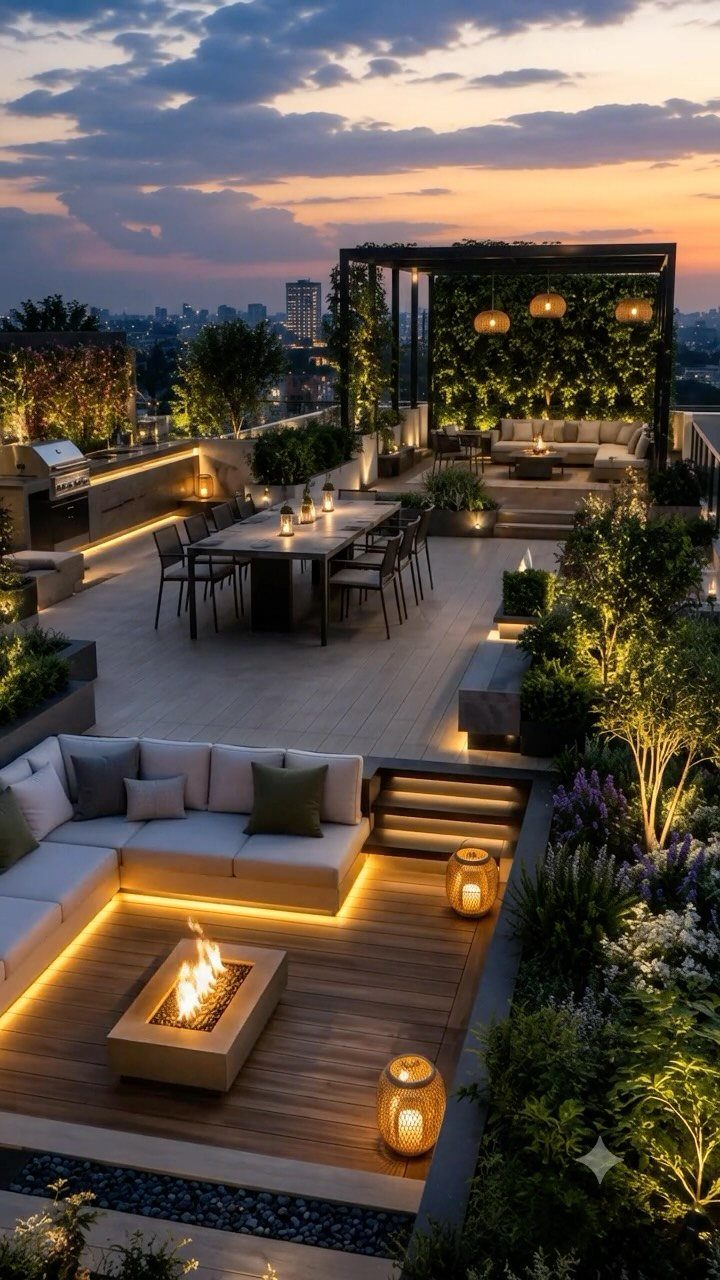
A rooftop terrace with a built-in grill station, dining area, and fire pit lounge makes the most of a view you already paid for but probably do not use enough.
Integrated lighting and sunken seating keep sightlines open across the cityscape, and I would copy that priority exactly: nothing tall between you and the horizon.
Weight is your main constraint up here. Check with a structural engineer before you add masonry, stone countertops, or a full outdoor kitchen; many roofs need reinforcement for that load.
Gas is easier than wood or charcoal for most buildings, since open flame restrictions are common and hauling fuel up an elevator gets old fast.
This is for the city dweller who has the square footage and the budget to match.
7. Brick Fireplace and Pizza Oven
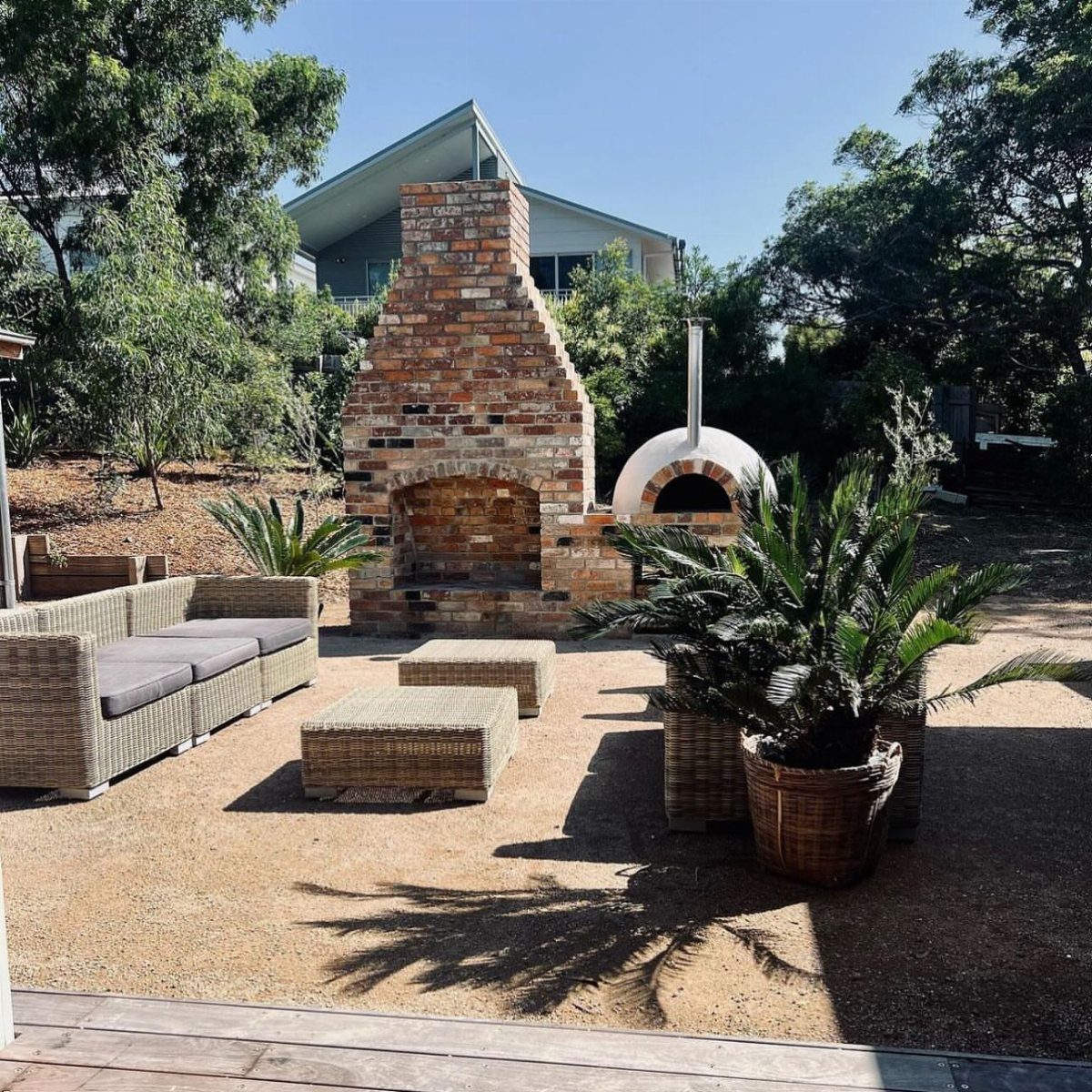
A brick fireplace with a domed pizza oven beside it turns a gravel patio into a room you only use when the weather is good.
The fireplace gives you warmth across spring, summer, and fall and a place to settle after eating; the oven, fired well before dinner, cooks a pizza fast once the floor is hot enough.
I would build the oven first and let the dome cure before adding the fireplace wall, since the two share a foundation and you do not want to crack fresh masonry with vibration.
Wicker lounge seating keeps the feel casual and moves easily when it rains.
This suits someone with the square footage for both fire and seating zones and the patience for weekend brickwork. The trade is permanence: you are not moving this if you redesign the yard next year.
8. Balcony BBQ Station
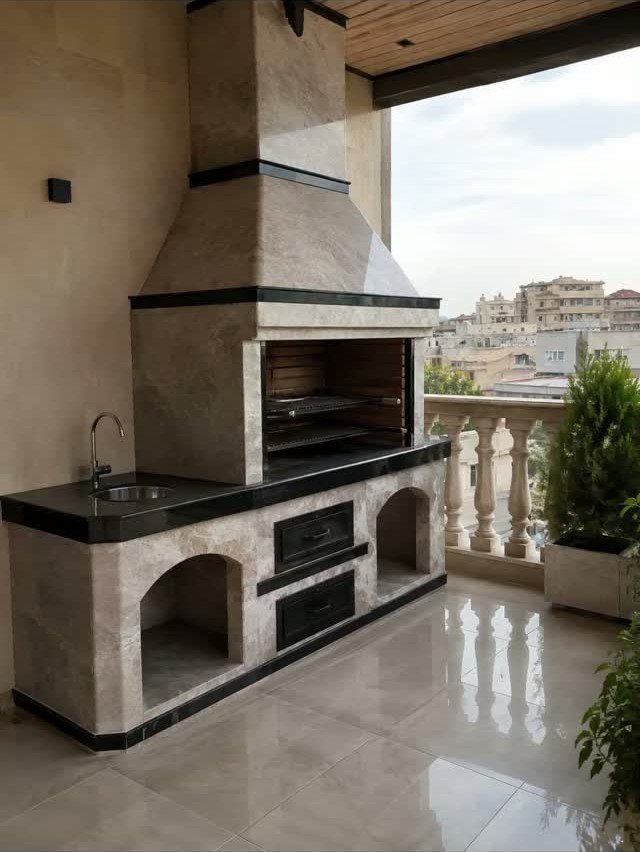
Stone balusters and a city view mean you are working with weight limits and building codes from the start, not discovering them after you pour the pad.
A built-in station with a tall chimney, grill, and prep sink handles the full cooking flow in a footprint that might be six feet wide.
Gas lines up from below are easier to approve than open flame in most municipalities, and a sink needs drainage to a greywater system or a planned route down to the street.
I would choose a stone veneer over a steel frame rather than solid masonry; you keep the look and lose hundreds of pounds.
This is for the balcony owner who wants the full outdoor kitchen experience and has the budget for structural consultation. The sink is the detail that separates a cooking station from a place you actually want to work.
9. DIY Cinder Block Barbecue
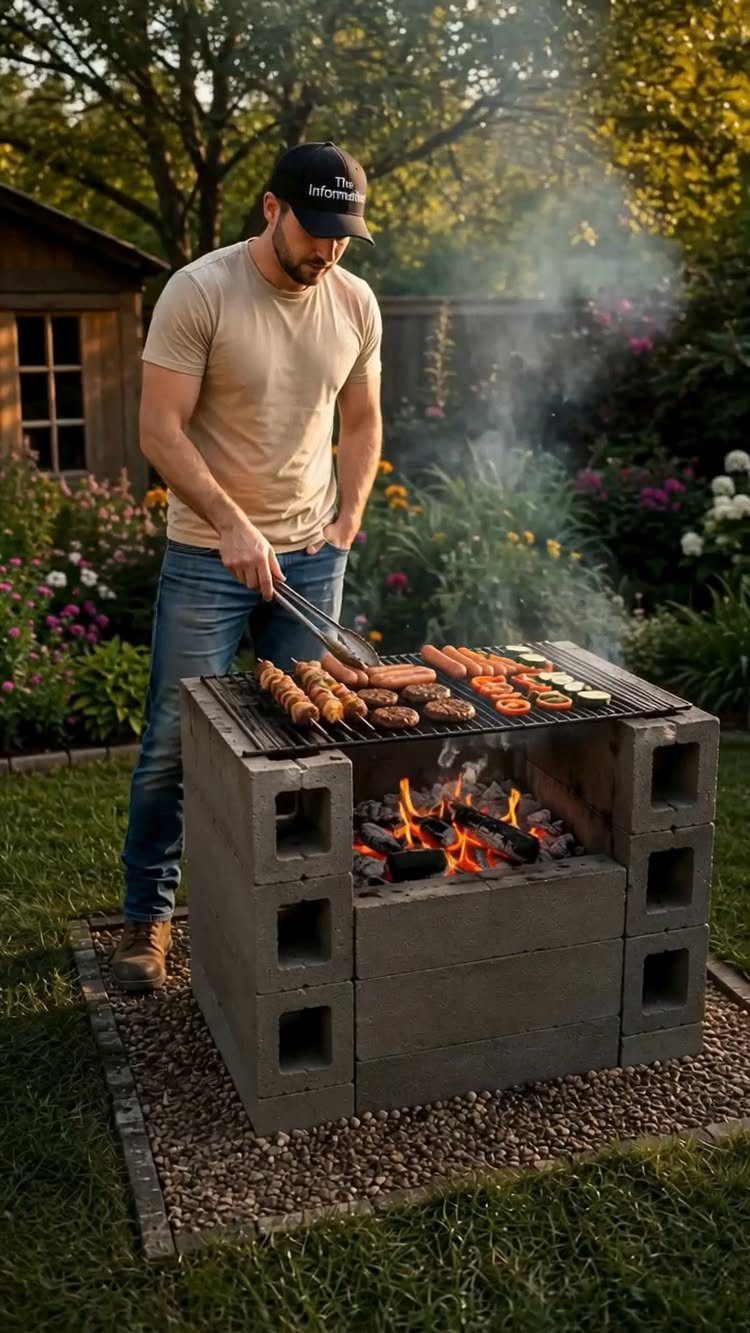
Cinder blocks stacked dry, with a grate laid across the top, give you a working grill this afternoon for the cost of the blocks and a bag of charcoal.
No mortar, no permit, no permanent footprint: level a patch of ground, set the base course, and leave gaps for air to feed the coals from below.
I would use standard concrete blocks and plan on replacing them after a season of hard heat; the thermal cycling cracks them eventually. 3 courses high puts the cooking surface at a comfortable height for most adults.
This fits the gardener who wants to grill now and decide later, or anyone working a rental or a borrowed patch of yard.
The trade is stability, a stack shifts if bumped, and you will want to keep a fire extinguisher within reach since the open coals sit exposed. Tear it down in October and the space is bare ground again by spring.
Organizing a Barbecue Area
Prep tables matter more than most people think. I would want a surface at waist height where I can stage plates, tools, and ingredients without reaching across hot grates.
Wall-mounted hooks or a rail system keep tongs, brushes, and thermometers in sight and off the ground; a cart with casters adds workspace where you need it and stores away when you do not.
A designated eating zone with plates, napkins, and condiments laid out lets guests serve themselves and keeps the cook from playing waiter.
Outdoor lighting extends the useful hours without anyone fumbling for a flashlight, and a lidded bin nearby means cleanup happens before the mess hardens.
A small refrigerator and sink, if your setup allows, fold storage and washing into the same zone so you are not jogging back to the house for ice or to rinse a cutting board.
That integration is what separates a cooking spot from a kitchen that happens to be outside.
Choosing Barbecue Types
Gas, charcoal, and hybrid designs each answer a different pattern of use.
Gas fires fast and asks little of you between cooks; I would go this direction if I grilled twice a week or more and wanted to start cooking in minutes.
Charcoal takes longer to light and leaves ash to dispose of, but the heat profile and smoke flavor it gives off are why some cooks never switch.
A hybrid tries to offer both, though in my view it usually serves one side better than the other.
Gas grills need breathing room behind them, more than most people measure for.
I check the manual’s clearance number against my wall or fence line before I decide on size; a unit that fits the patio can still fail the safety gap.
For two or three cooks a season, a compact model that stores in a shed between uses keeps your money in your pocket and your patio clear.
If you cook year-round, a built-in or weather-resistant design saves the trouble of wheeling cover and uncovering every time the weather cooperates.
Safety Considerations
Placement is the decision that prevents most barbecue problems before they start. Keep gas and electric units clear behind them; the back surfaces run hot enough to scorch hedges, window frames, or any artificial wall covering.
3 meters of open space from trees, wooden furniture, thatched roofs, and your house is the distance to aim for.
In a small yard that may not be possible, so buy a size you can set back far enough without crowding the patio or blocking traffic.
Ventilation matters under any roof or pergola; smoke that cannot rise and disperse will pool where people breathe.
I would set the grill close enough to the kitchen for convenience but not right beside the back door, since smoke follows the path of least resistance and that path is often straight indoors.
Have a fire extinguisher rated for grease fires within reach, and know how to use it before you need it.
Frequently Asked Questions
Where to put a grill in the backyard?
Set it at least 3 meters from trees, wooden furniture, your house, or anything that can burn.
Gas and electric units run especially hot at the back, so check the manual’s clearance number and measure it against your wall or fence before you buy.
How to build an outdoor barbecue area?
A flat, stable base comes first, concrete or packed gravel both work. After that, I decide how permanent I want this setup to be and what I can spend, then pick the structure from there.
A dry-stack cinder block grill takes an afternoon and costs only blocks and charcoal, while a brick barbecue with storage needs a weekend of masonry but keeps fuel dry and organized in one place.
For a full outdoor kitchen, plan electrical and drainage during construction; adding them later costs far more.





