
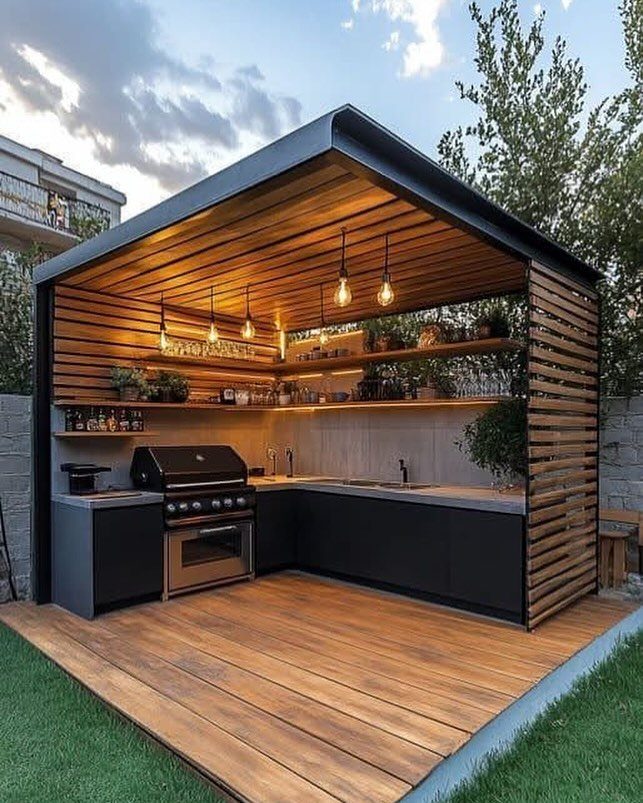
What decides which one is yours is how much of the cooking you want to do under shelter and how much structure your patio can carry without crowding out the seating.
The detail that matters most, and the one I would check first with a spirit level on the paving, is whether the surface tilts even slightly; grease and sliding plates on a slope turn a cookout into a burger avalanche.
1. Outdoor Kitchen with Bar
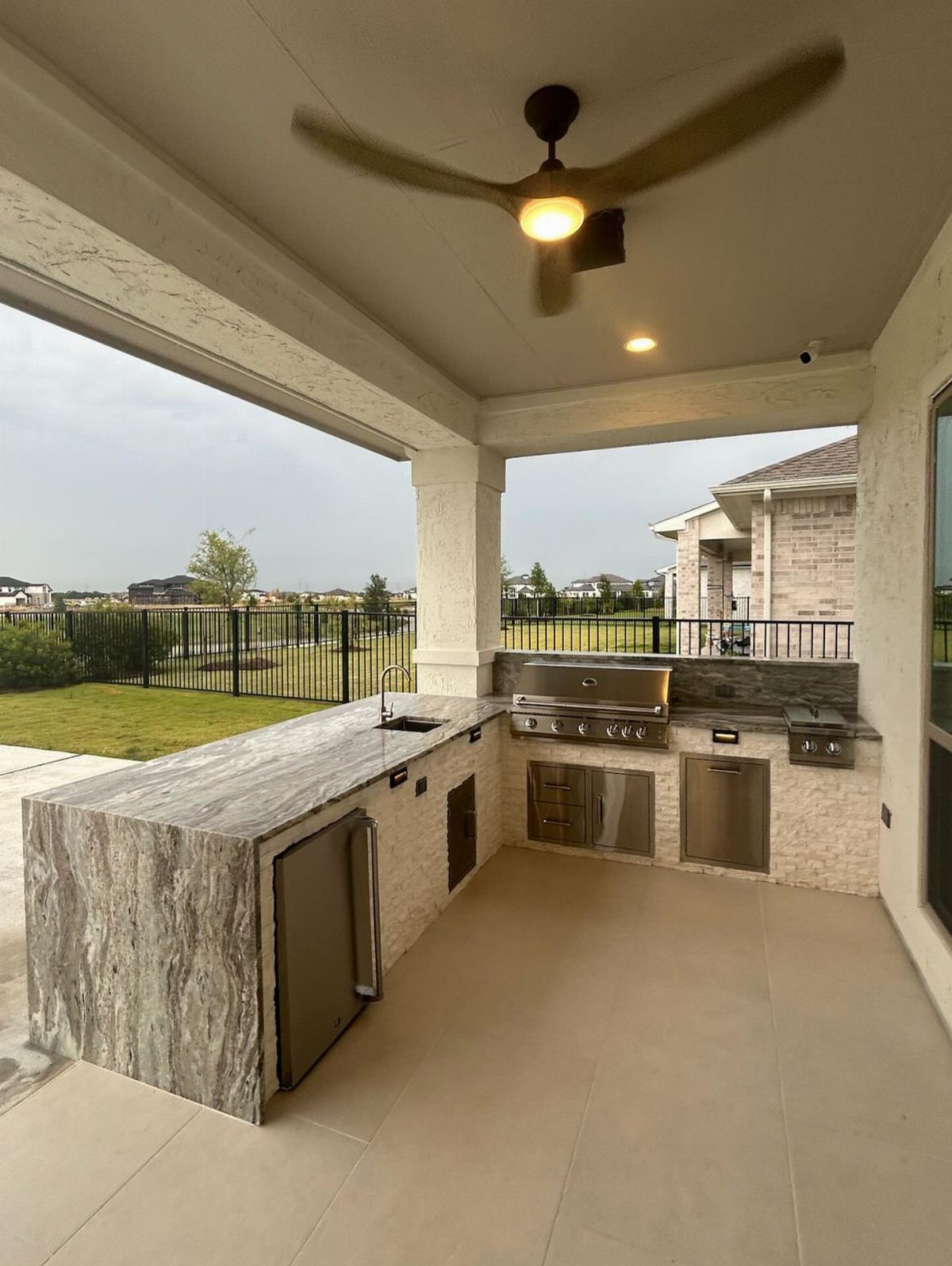
An outdoor kitchen with a bar lets guests sit where the cooking happens instead of drifting away while you work.
The marble or stone counter runs long enough for plates and drinks on one side and the grill, fridge and sink on the other, so you face the yard and your company at once.
I like the waterfall edge on the bar side; it looks finished from the seated angle and sheds rain cleanly.
For a small patio, an L-shape tucks into a corner and still seats a few. Budget builds start with a prefab grill cabinet and a poured concrete top you form yourself.
One of the most important things to consider when planning an outdoor grilling station is where to put it so it works best for your lifestyle, says Russ Faulk, Chief Designer and Head of Product at Kalamazoo, a luxury outdoor kitchen provider.
2. Pizza Oven Combo
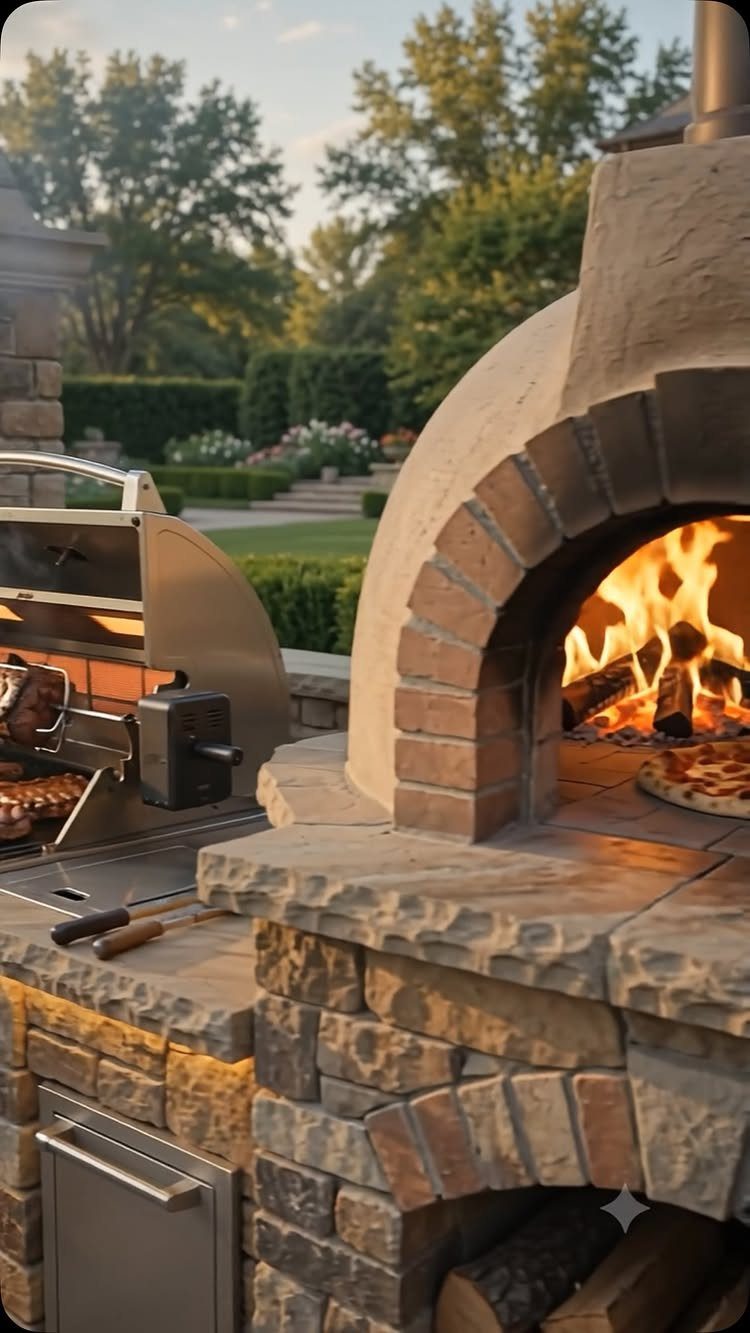
A pizza oven beside your grill covers two temperatures and two rhythms: the oven runs screaming hot for Neapolitan pies while the grill handles burgers and vegetables at a fraction of that heat.
The stone or brick shell around the oven stores heat for hours, so you can bake bread after the pizza crowd leaves.
Wood-fired ovens need dry hardwood, a long preheat, and practice reading the floor temperature with cornmeal or an infrared thermometer. Gas-assisted hybrids cut the preheat way down; I would choose one if weeknight use matters more than the wood flavor.
3. Built-In Grill with Prep Space
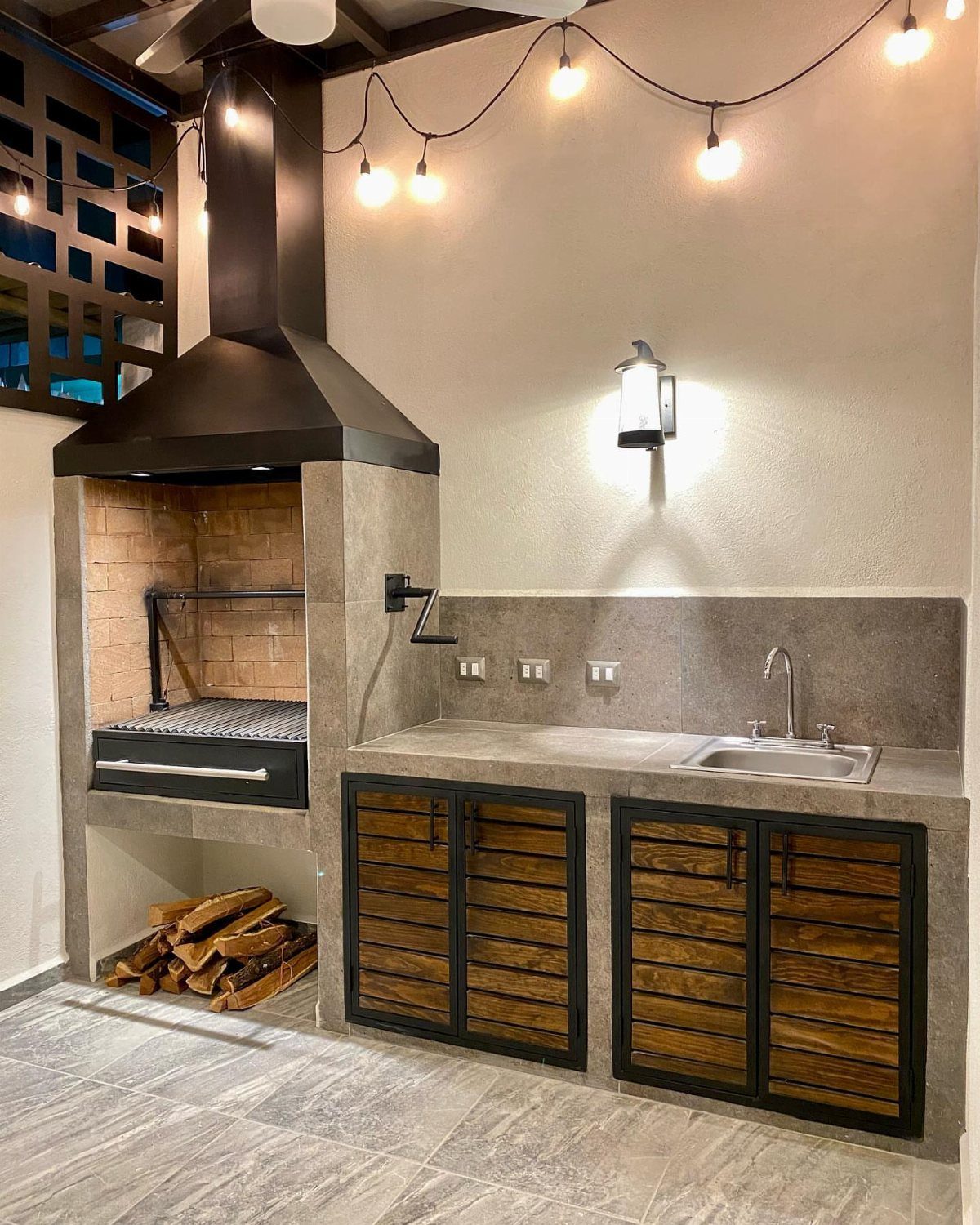
Built-in grills with prep space keep you from running indoors for plates, tools or a cutting board.
Concrete counters running the full width of the grill with cabinets below for fuel, pans and cover storage, and a brick-lined firebox with a vent hood that handles Argentine-style parrilla cooking over wood or charcoal.
A minimum workspace on each side of the grill body is what I consider usable; less than that and you are stacking, not prepping.
The vent hood matters if you grill under cover or in a narrow yard where smoke drifts toward windows. Pour the counter with a slight away-from-the-house pitch so grease and rain run off.
4. Integrated Sink & Prep Station
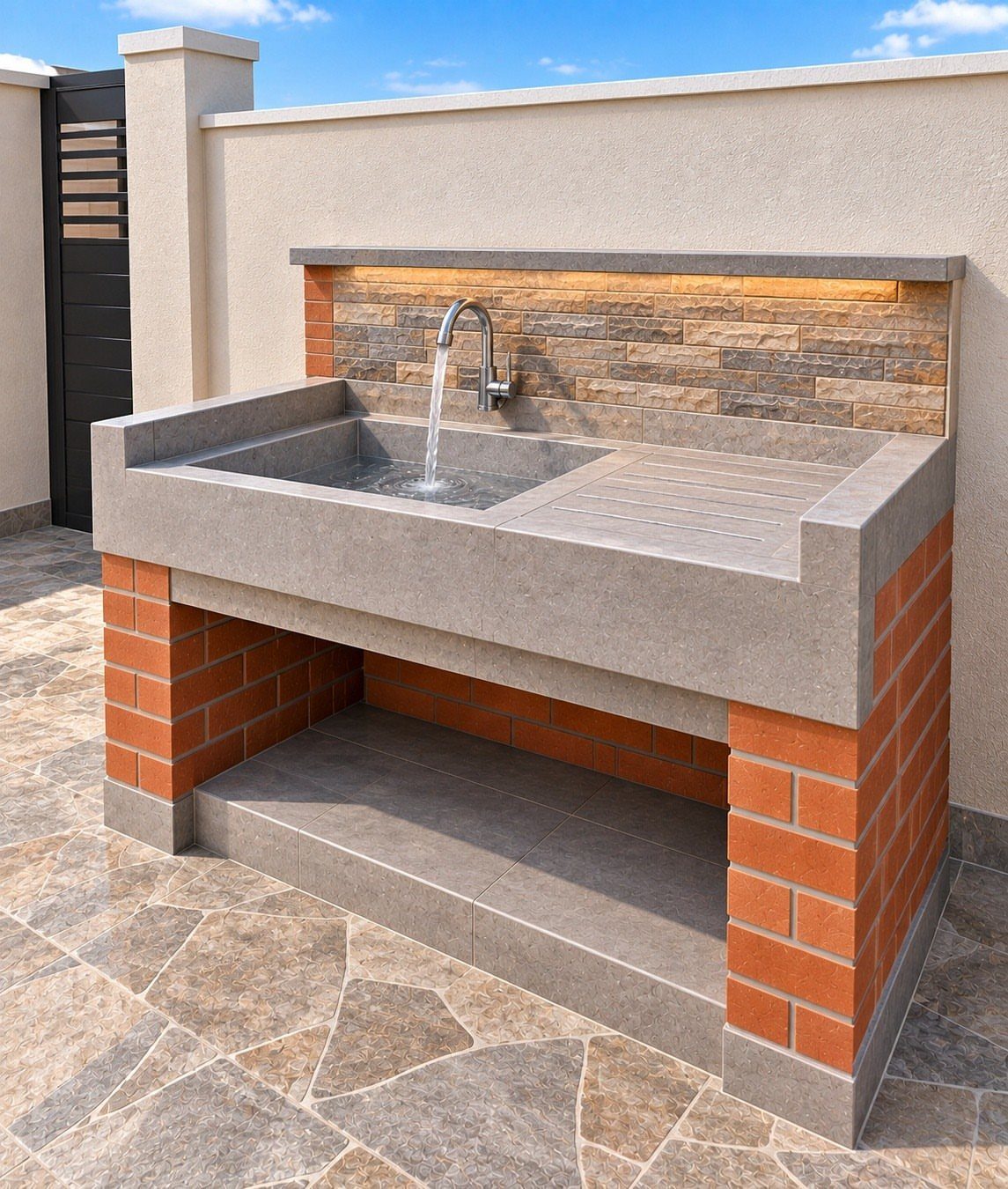
An integrated sink and prep station means rinsing vegetables, washing hands and filling pots without tracking through the house.
A grooved drain board beside the basin is the detail that makes it work; water runs back into the sink instead of pooling on the counter.
You will need a cold water line and a drain, or a hose bib and a bucket if you are keeping costs down.
I would run the plumbing if the station sits close enough to an exterior wall; the convenience compounds over a season.
The open shelf below holds bins for compost, recycling and trash in one trip, which matters more than it sounds when you are elbow-deep in fish or chicken.
5. Grill Area with Dedicated Smoker Space
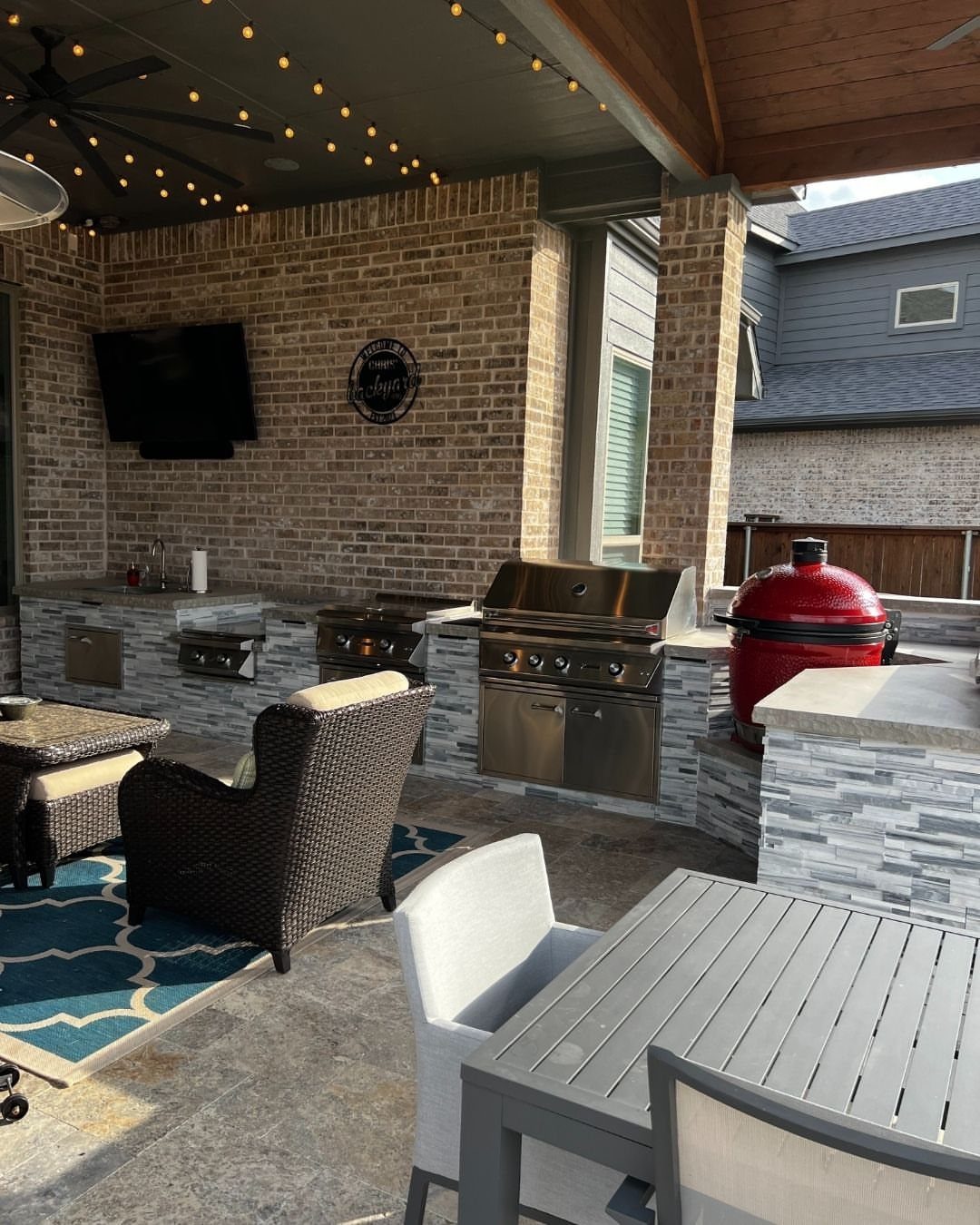
A dedicated smoker space beside your main grill lets you run low-and-slow barbecue while the gas grill handles the quick stuff.
The ceramic kamado holds temperature for a long stretch on a single load of lump charcoal, which is what you want for brisket or pork shoulder.
I set my smoker on a stone or concrete pad, not wood decking; the exterior stays hot enough to scorch. Allow clearance on all sides for airflow and safe access.
The gas grill and smoker share the counter run for resting meat and staging pans, but keep them far enough apart that the smoker’s exhaust does not blow across the grill’s burners.
6. Sheltered Barbecue Station
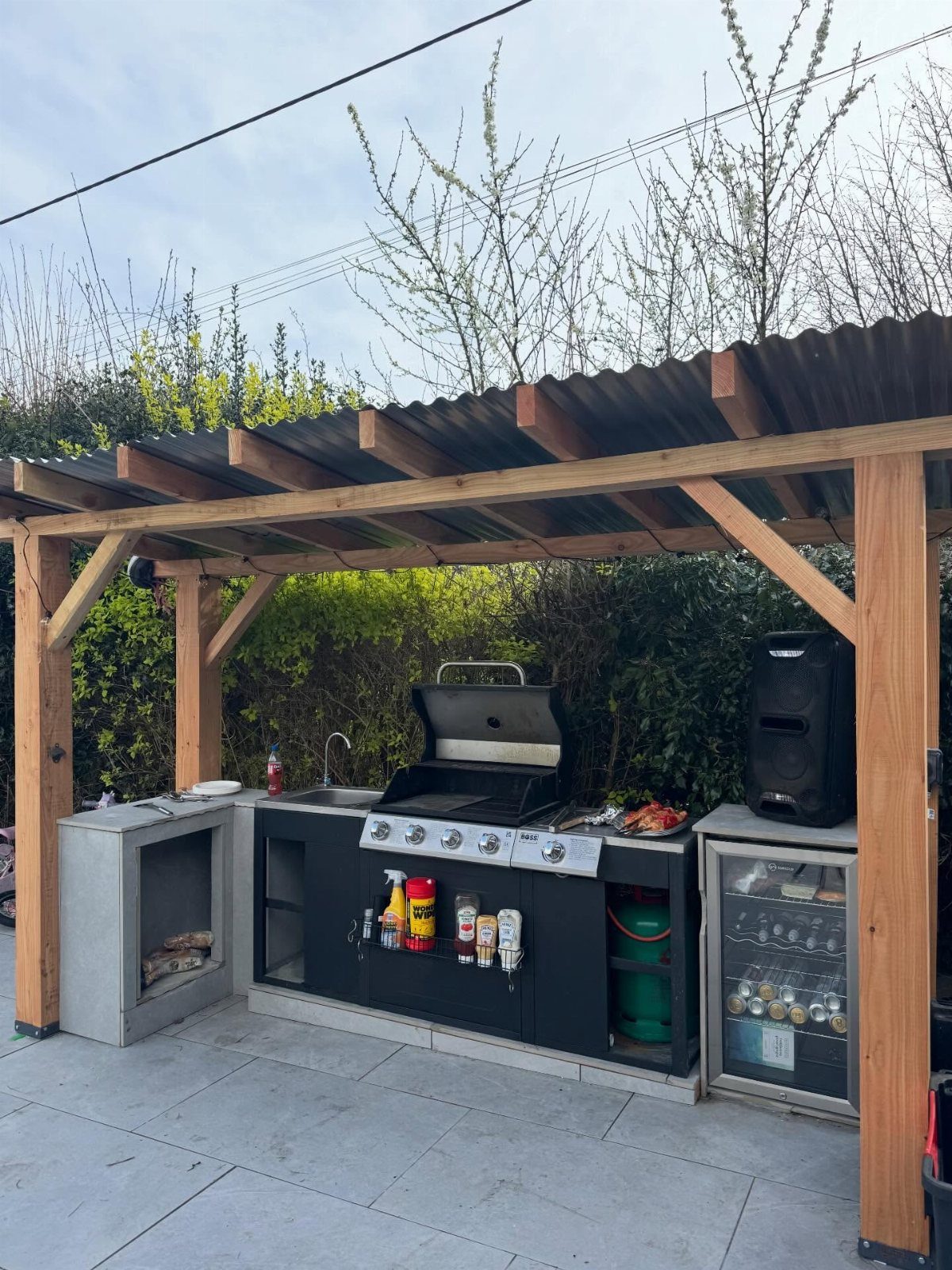
A sheltered barbecue station buys you cooking days in weather that sends uncovered grillers inside.
A corrugated metal roof on timber posts sheds rain and blocks the sun directly overhead without walling you in; you still get the breeze and the sight lines that make outdoor cooking worth doing.
The slope of that roof matters. I would pitch it enough so leaves and snow slide, and I would leave the sides open or use roll-down canvas rather than fixed walls.
Fixed walls trap smoke and turn the shelter into an oven in July. A mini-fridge and sink under cover keep you dry during prep, which is half the battle on a drizzly Saturday.
7. Covered Grill Station
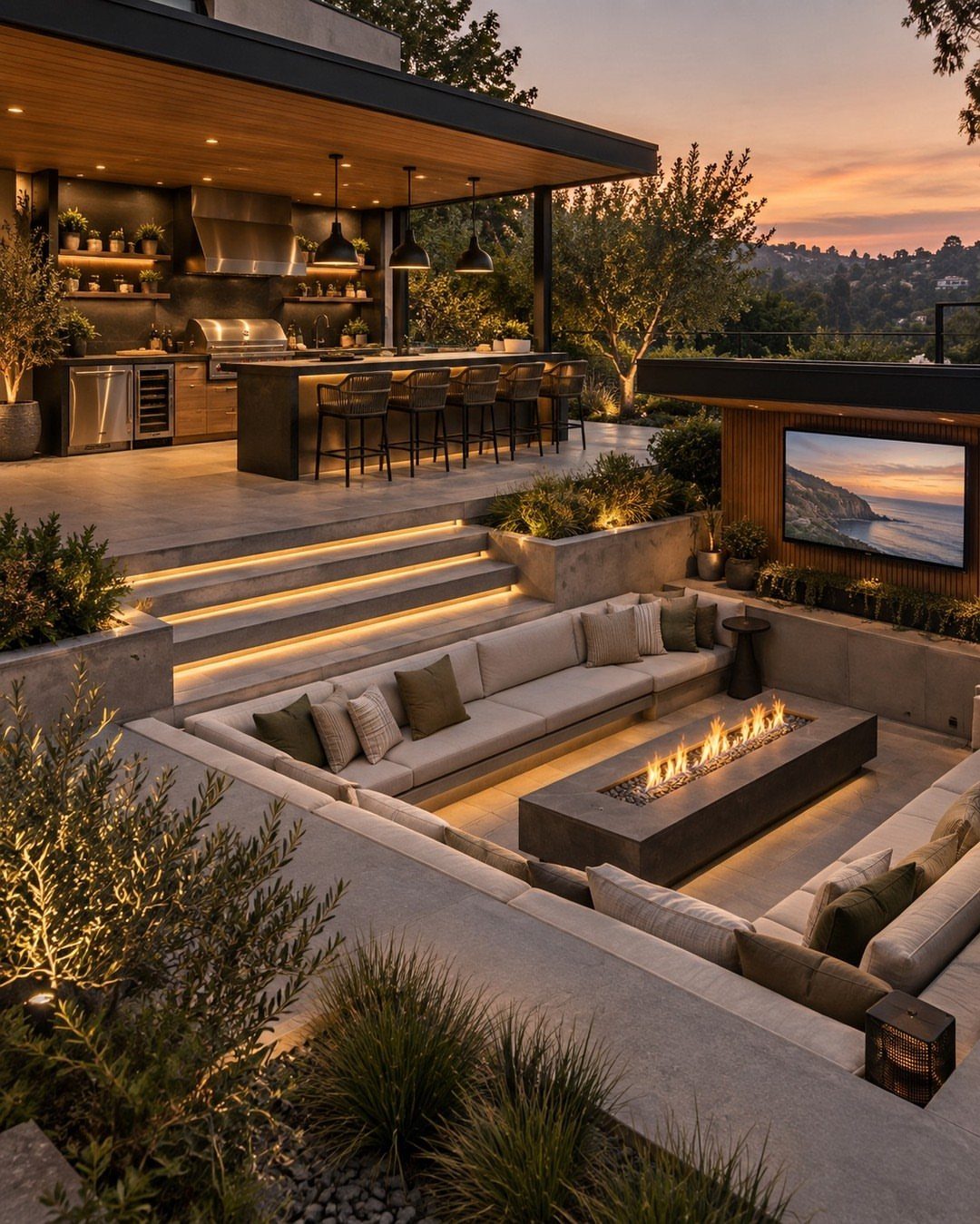
A covered grill station keeps the cook dry and the grill lit through weather that shuts down open patios.
A covered grill station needs real depth to work; this one runs two levels, with cooking under roof and a lounge below around a fire, which means the shelter is deep enough for furniture and traffic to move through.
I would run the roofline high enough that smoke rises and disperses before it pools; lower ceilings yellow fast and smell like a diner.
A ceiling fan helps, but a vent hood over the grill body is what actually pulls grease and combustion out.
If your patio sits tight to the house, tie the roof into the existing gutter so runoff does not sheet down between structures.
8. Vertical Planters
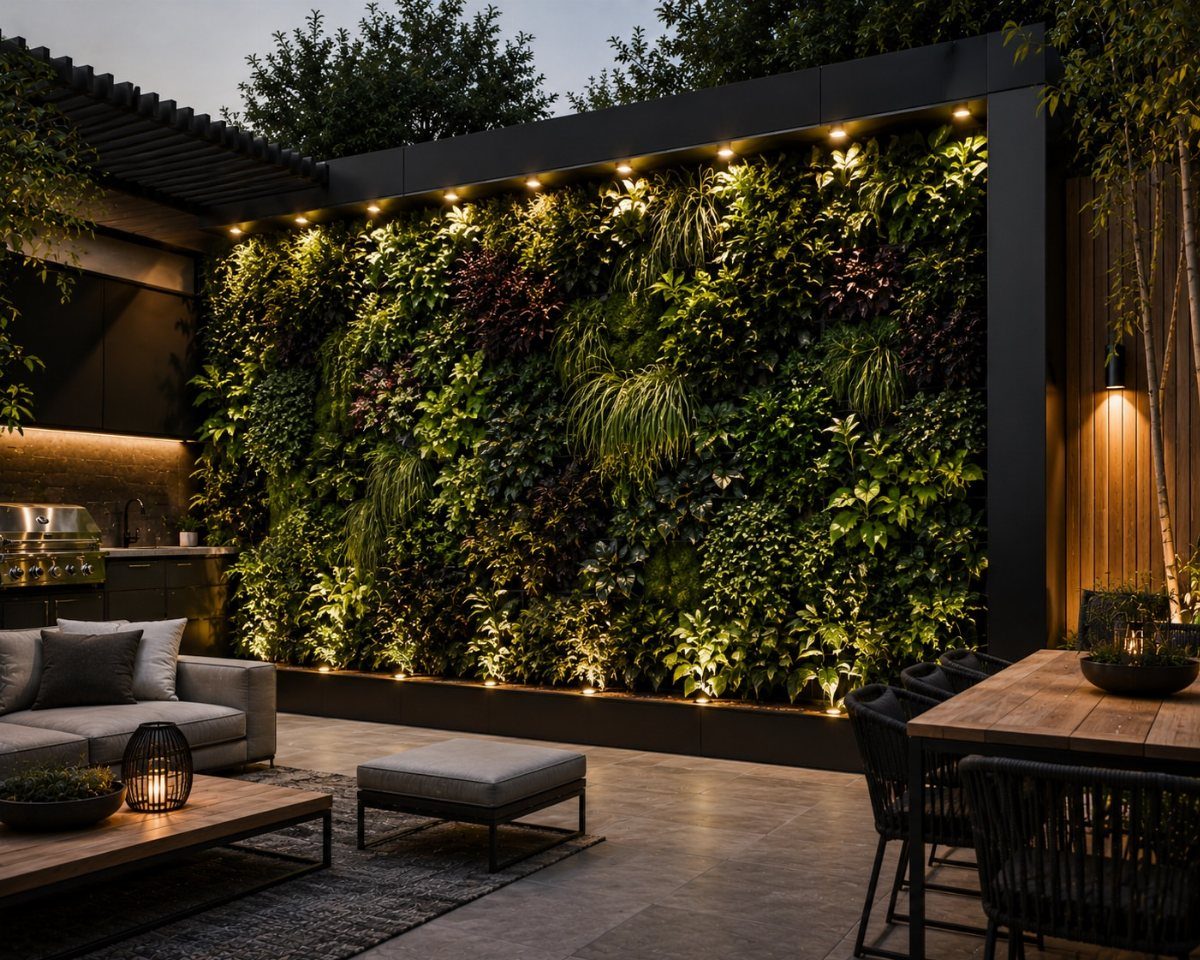
Vertical planters stack greenery where ground space does not exist, which matters on a small patio or balcony where every square foot competes.
A living wall that works is dense, irrigated and lit, not a token row of pots; it reads as architecture rather than decoration.
A modular pocket system with a recirculating pump keeps maintenance sane; hand-watering a tall wall turns into a chore that gets skipped.
I would choose shade-tolerant varieties like ferns and pothos unless the wall faces south and you are prepared to mist daily.
The irrigation line needs winter drainage if you are in a freeze zone, or you are rebuilding it in spring.
9. Brick Barbecue with Wood Storage
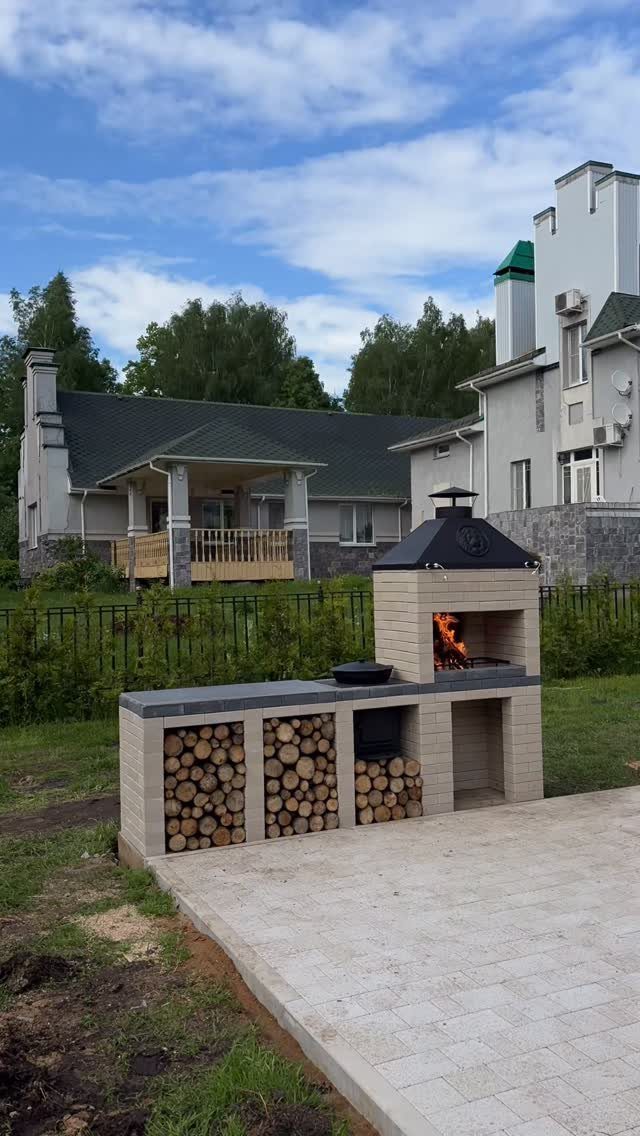
Brick barbecues with built-in wood storage keep fuel dry and close, which means you actually use the thing instead of abandoning it when the firewood is across the yard.
Light brick and open niches give a permanent, settled look that a rolling kettle never achieves.
You can build one from scratch with firebrick for the firebox and standard brick for the shell, or hire a mason if you do not trust your corners.
The storage bays need a slatted or open base so air circulates and moisture does not turn your oak into mold. I would size the wood niche for about a face cord; anything smaller and you are restocking mid-season.
10. Patio Grill and Entertainment Lounge
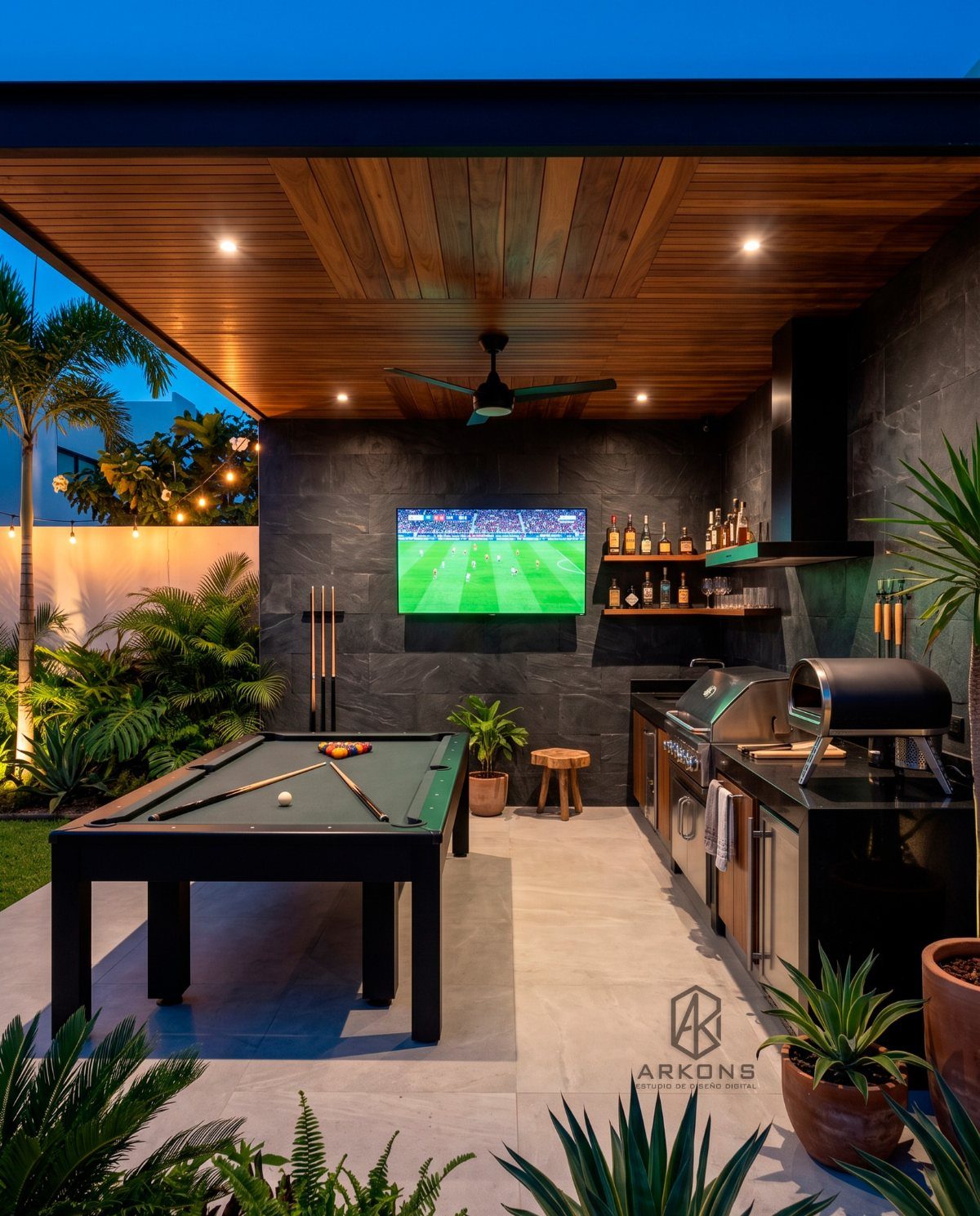
A patio grill and entertainment lounge lets the cook stay in the conversation instead of exiling himself to the flame while everyone else shoots pool.
A full outdoor kitchen runs grill station, pizza oven, pool table, wall-mounted TV, all under a solid roof with a vent hood overhead.
The hood is the detail that makes this work; without it, a wood-fired oven and a grill under cover coat every surface in grease and leave guests coughing.
I would put the TV on a full-motion mount so it angles toward the seating or the cooking zone, and I would run conduit for power and cable before the ceiling goes up.
Pool tables need level and cover; an outdoor-rated felt survives humidity better than standard baize.
Choosing the Right Location
I mark a 10–15 foot arc from the back door and check what falls inside it; that distance keeps smoke out of the kitchen without making the cook carry plates across the whole yard.
That distance keeps smoke out of the house without turning a rainy burger run into a sprint.
From there, I look up and around for what the list entries do not mention: low branches overhead, hedges or artificial living walls behind the grill back, and any corridor where wind accelerates between structures or fences.
Gas and electric units run hot at the rear, so backing one into a hedge or against window frames is a mistake I see often.
A spirit level on the paving is non-negotiable. Even a slight tilt sends grease and sliding plates one direction, and "burger avalanche" is the polite term for what follows.
I check for puddle-prone spots too; wet feet and hot metal do not mix. I set the grill perpendicular to the prevailing wind so gusts slide past instead of fanning flames or blowing smoke into the cook’s eyes.
Materials for Durability
Stone, concrete, or stainless steel for the counters; that part is straightforward. What the list does not dwell on is what happens below and around them.
For flooring, I would choose stone pavers, textured tile, or poured concrete.
Brick works too, though it settles unevenly over freeze cycles where I garden. Wood decking is the one to skip; it warps under spill drip and stains from grease that no sealant fully blocks.
Weather-resistant cabinetry matters as much as the counter.
Rain, sun, and pests will find your utensils and fuel if the box is not built for it. I would look for cabinets rated for exterior use, with seals that close tight.
Shelter overhead is where I would spend carefully. A pergola topped with polycarbonate panels blocks the sun but still lets light through; the space stays bright enough to read a thermometer or spot a charring edge.
On a smaller budget, a large patio umbrella achieves much the same; it will not last as long, but it moves where you need it. For the counters themselves, granite or stainless steel handle heat without complaint.
If I were trimming cost, repurposed slate from a salvage yard is the hack I would try first; it is dense, local, and cheap if you have the eye to spot flat pieces.
Safety Considerations
Vent hoods and clearances matter, but I also want a flat, stable surface under the whole setup; a tilted grill sends pans sliding and tips grease where it should not go.
I would keep the grill at least 10 feet from covered areas, hanging plants, outdoor furniture, posts, overhead structures, trees, bushes, and ground-level plants.
That is the minimum, not the generous choice. For a compact setup, plan roughly 10 by 10 feet total; fuller arrangements want 12 by 16.
Within that, the grill and prep zone need about 4 by 6 feet, seating for four wants 8 by 8, and walkways should run 3 feet wide so the cooler does not become a tripping hazard.
A fire extinguisher belongs within arm’s reach, not back by the door. I would also mark a no-play zone that children understand; hot surfaces stay hot long after the flame is off.
Frequently Asked Questions
Where should I put my BBQ in my small backyard?
I mark a 10–15 foot arc from the back door and check what falls inside it; that distance keeps smoke out of the kitchen without making the cook carry plates across the whole yard.
Then I look up for branches hanging low, check what sits behind the grill back, and feel for any pinch point where wind gets fast between fences or walls.
What do you need for a small outdoor BBQ area?
A compact setup wants roughly 10 by 10 feet total, with the grill and prep zone taking about 4 by 6 feet of that.
Within that space you need the grill body, counter space on both sides for plates and tools, and storage below for fuel and pans.





