
The outdoor pizza oven kitchens below run from freestanding carts on wheels to custom masonry builds that start high and climb fast.
What decides which one is yours is whether you own the ground you cook on and how much of it you have; renters and testers need the mobility that permanent foundations rule out.
A dual-fuel oven on a cart, propane for quick weeknight pizza and wood pellets when you have the evening to tend a fire, offers more practical flexibility than any single feature once you are actually cooking outdoors week to week.
1. Traditional Wood Fired Oven
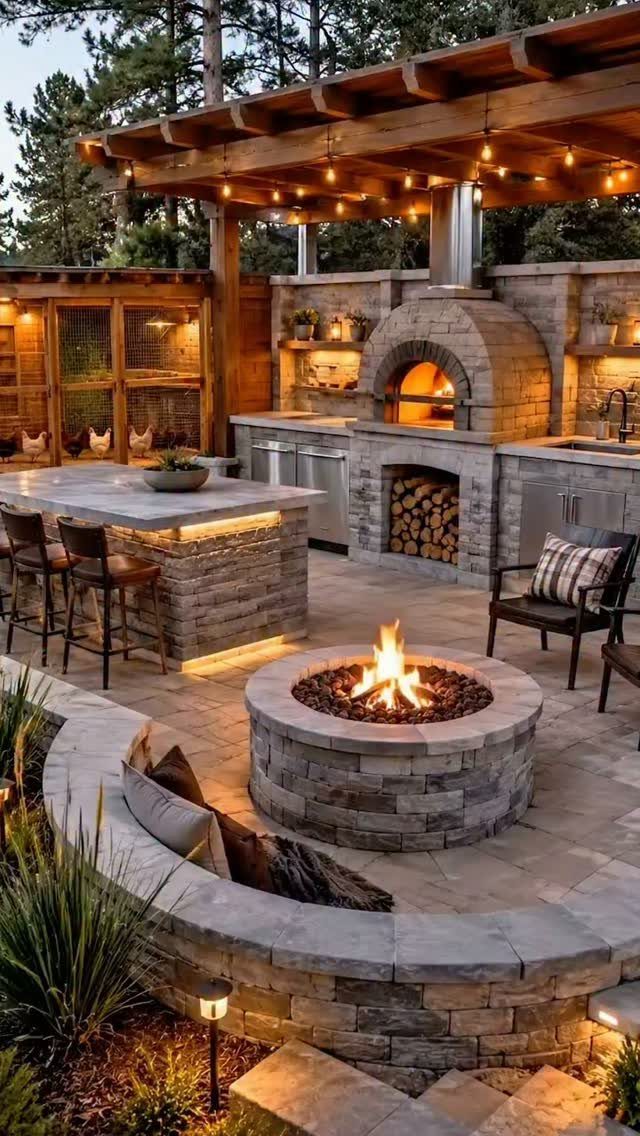
A permanent stone oven with a wood box underneath anchors the whole patio. This suits cooks who want the real thing and have the square footage to build it.
I would not try to go cheap on the foundation; frost heave cracks a slab that was never thick enough. Plan on 2 weekends for a kit, a month for custom masonry.
Heat management is where you earn your keep.
Wood takes time to reach temperature, and you tend the fire through the bake. That rhythm appeals to some cooks and exhausts others.
2. Semi-Enclosed Pizza Oven with Bench
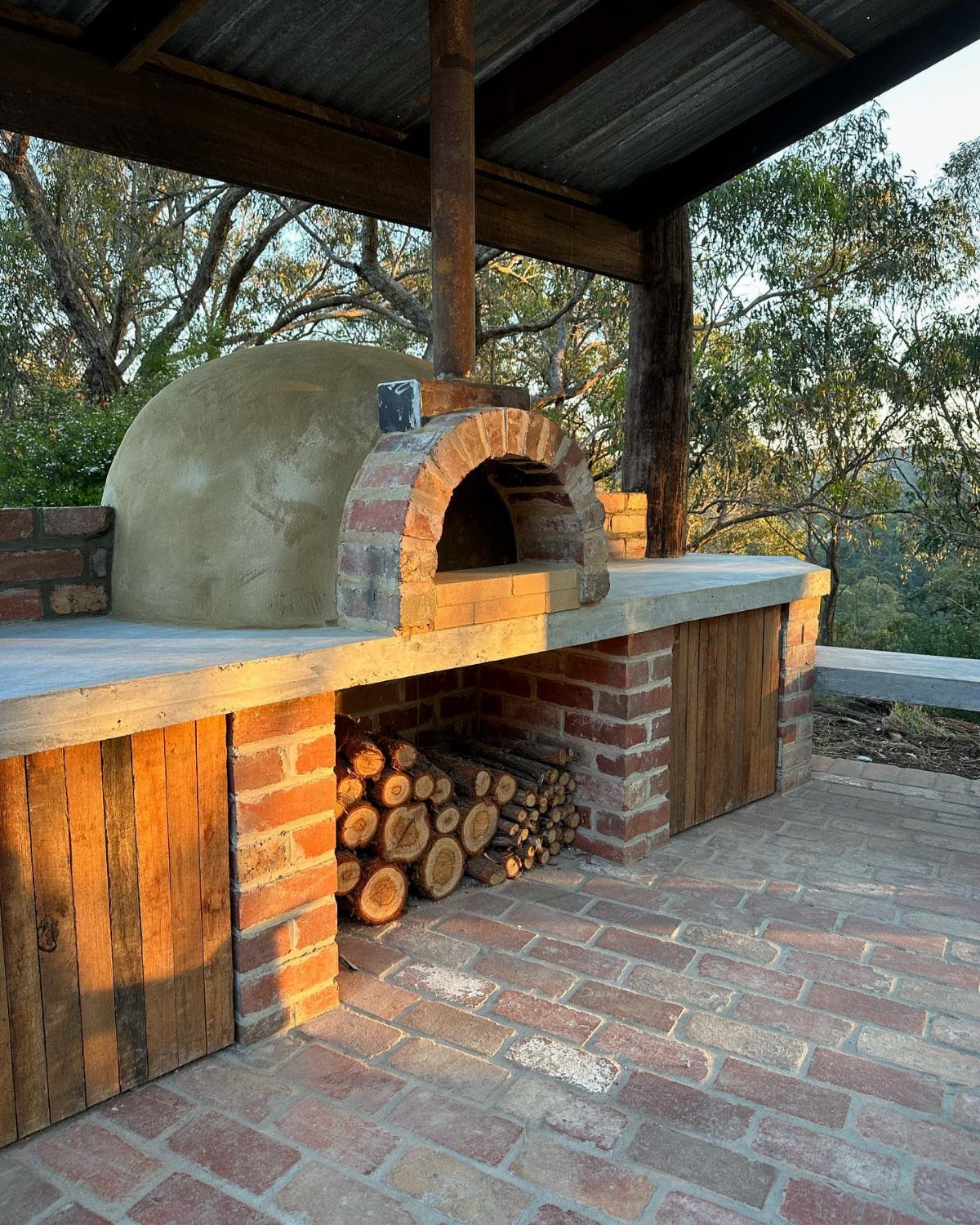
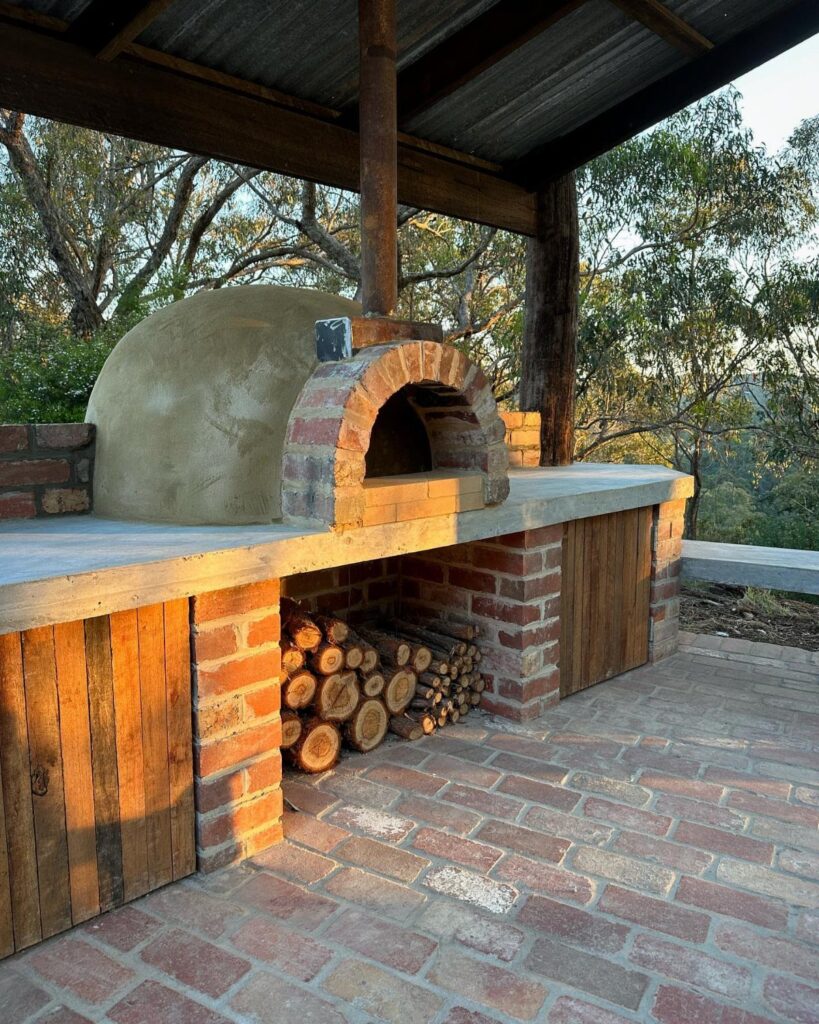
Timber framing overhead turns a working corner into something that feels like a room. The dome sits at counter height, wood stacked beneath, everything under a roof that is open on the sides.
I like this for small yards where the oven faces a fence or the neighbors’ windows; the shelter blocks sightlines without walls.
Brick and concrete handle weather fine, but the timber needs a penetrating sealer reapplied on schedule in the Midwest. The roof structure adds cost above an open build.
The bench doubles as prep space and seating. That matters more than it sounds when you are stretching dough and someone wants to lean in and talk.
3. Portable Dual-Fuel Pizza Oven
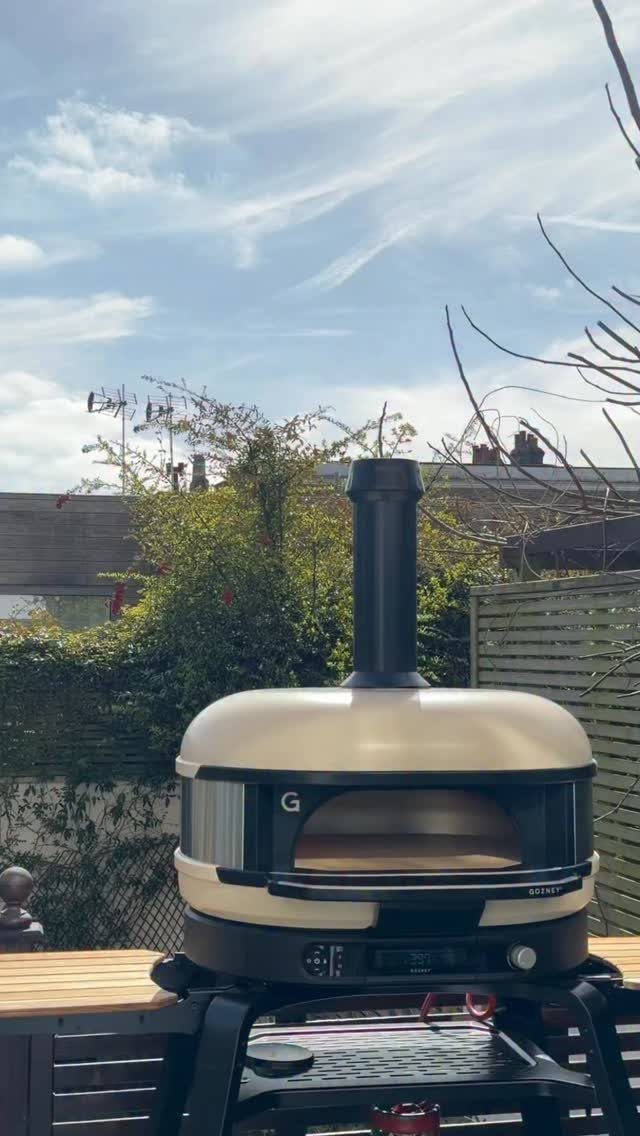
Cream and black, mounted on a cart with side shelves: this is the setup I would buy if I were starting now and did not know my final layout.
Propane gets you to temperature fast; switch to wood pellets when you want the flavor and have the time.
The Gozney version is not cheap once you add the cart.
Weight matters with the stand, so plan on help to move it or one person with a hand truck and patience. I keep mine under a cover between uses; the finish lasts longer.
Dual-fuel means you are not choosing a religion on day one. That flexibility pays off the first time you want pizza on a Tuesday and nobody feels like building a fire.
4. Large Patio Oven
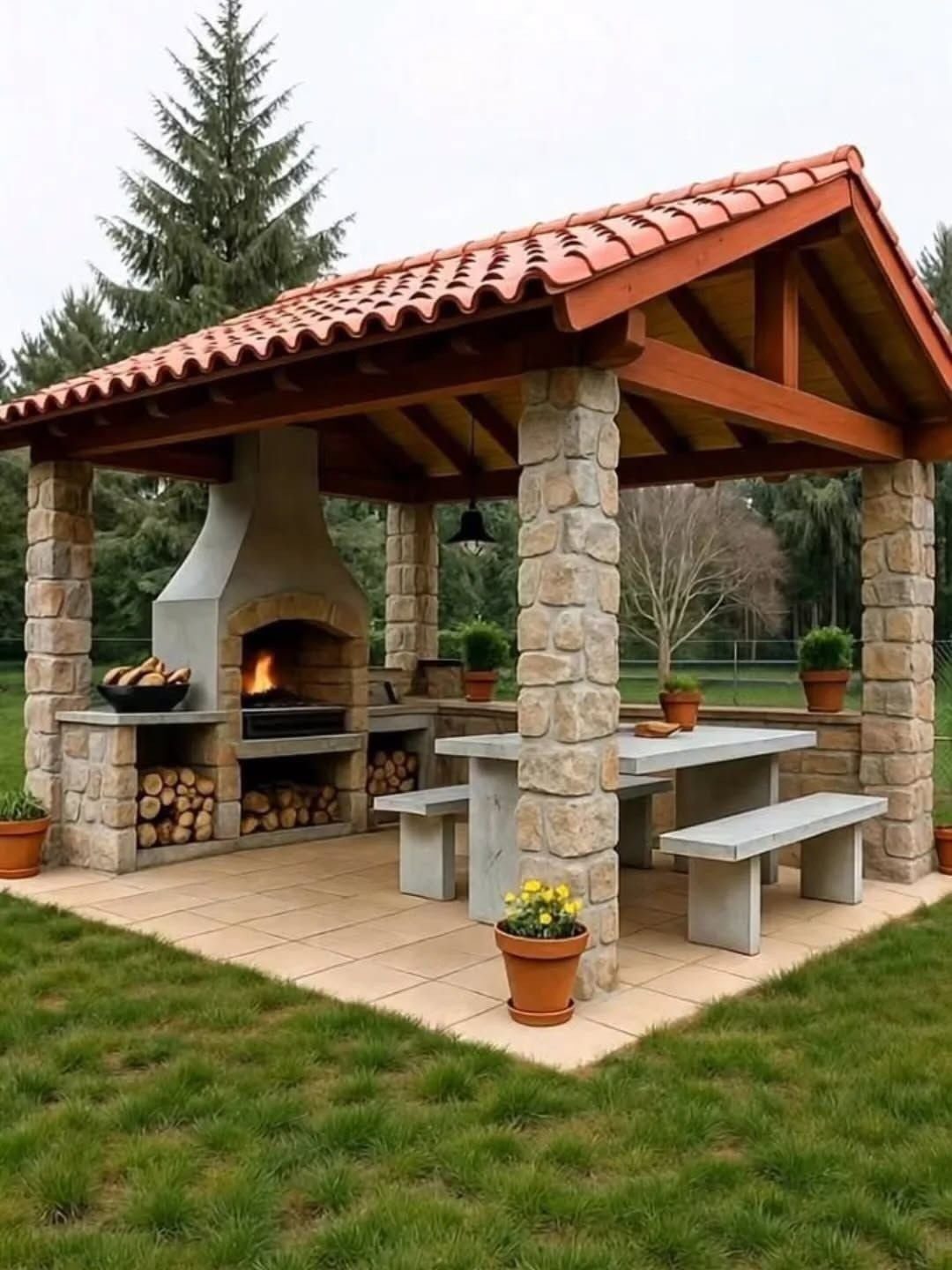
The oven opening is large enough for multiple dishes, not just pizza, and the roof lets you work through weather that sends other cooks inside.
I would not attempt this on a standard residential lot.
You need 400+ square feet, proper setback from property lines, and a slab rated for the mass. Cost starts high and climbs fast with custom stone.
Food travels a short distance from flame to plate, still crackling.
5. Modern Kitchen Island Setup
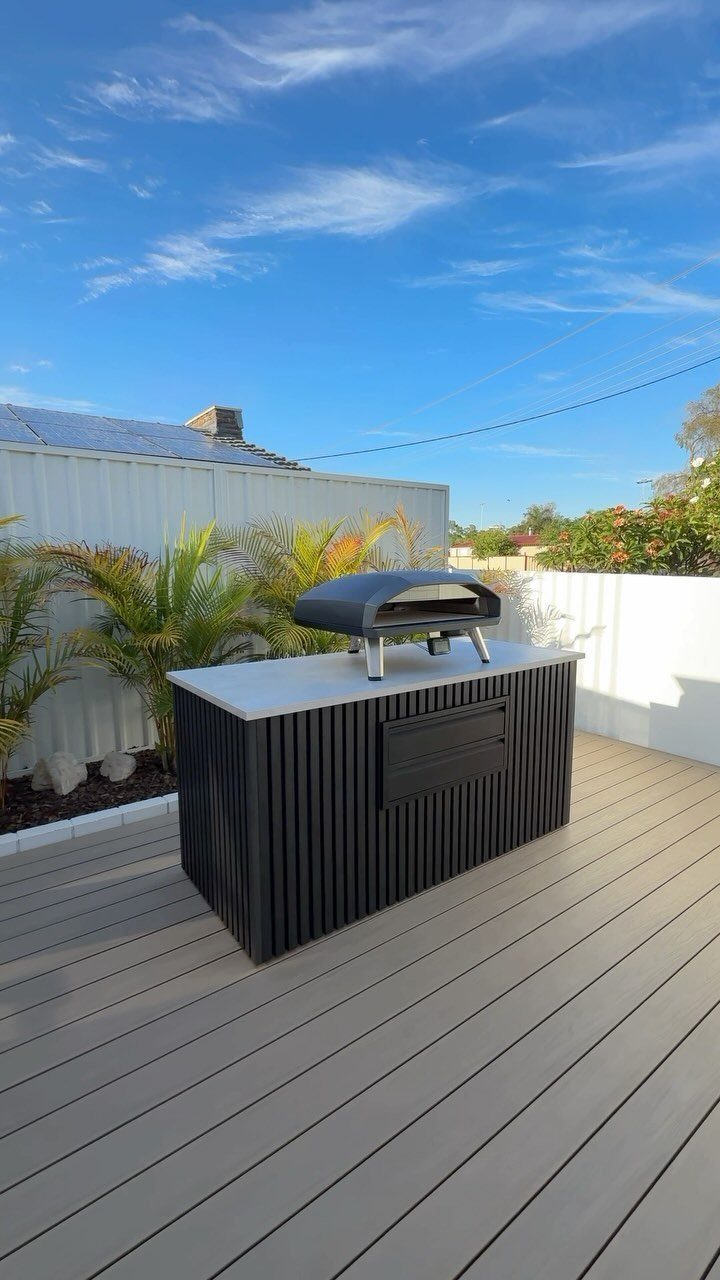
Black ribbed cladding, white countertop, oven sitting on top like an appliance: this reads kitchen, not campsite. The composite deck underneath tells me the builder thought about weight and chose a unit that did not need a masonry pad.
I prefer this look for homes where the outdoor kitchen sits close to the house line.
The visual language matches indoor appliances, so the transition feels intentional. The island and oven together are a mid-range investment, more if you are running gas lines.
The countertop needs to be stone or porcelain; laminate scorches at pizza temperatures and I have seen the marks.
6. Curved Outdoor Countertop Station
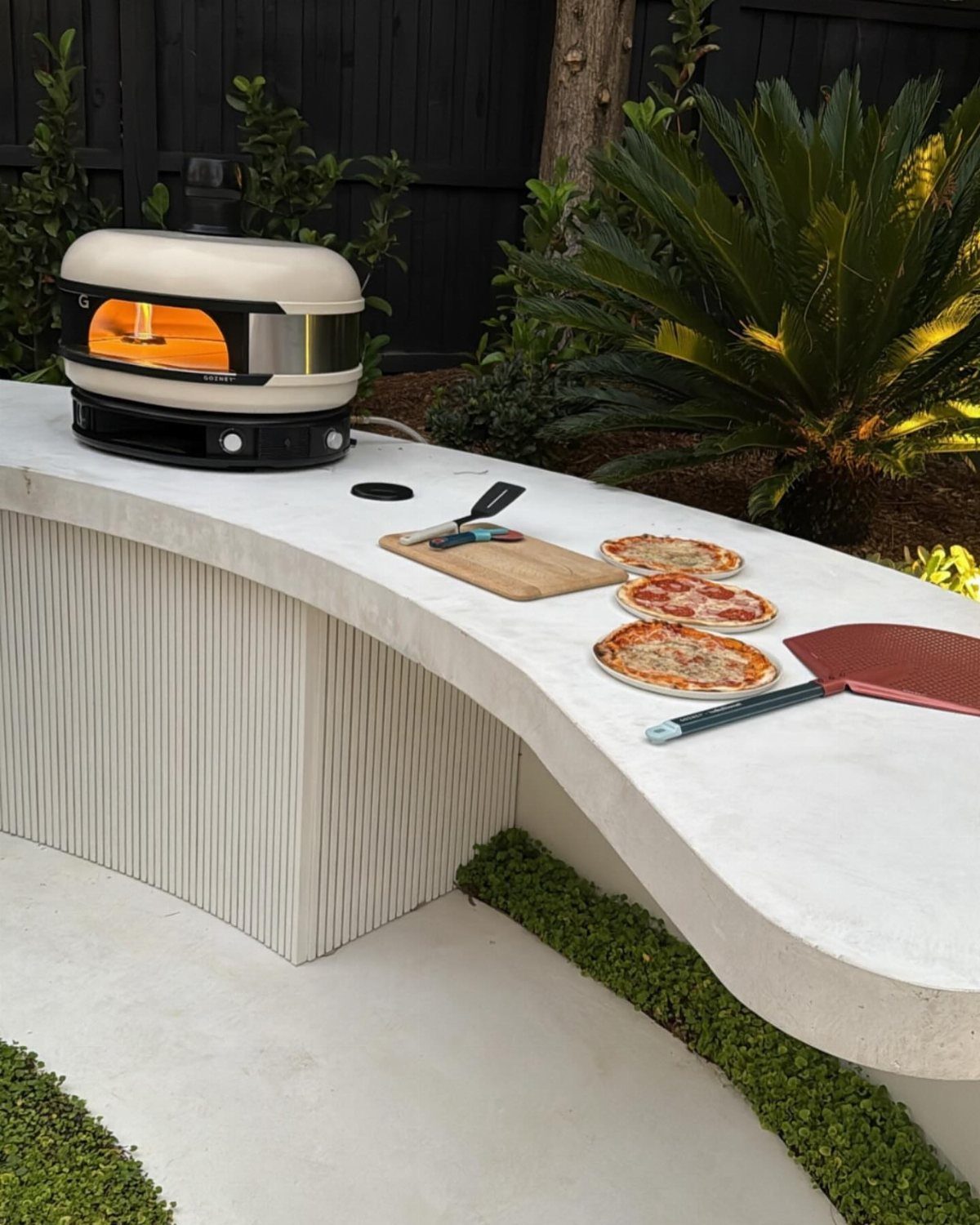
A curve in the counter changes how the space moves. You work the oven from one angle, serve from another, and the greenery behind softens what could read as a utility wall.
Concrete is the right material here; it takes the curve without seams and handles the thermal shock if your oven sits on a pad.
I would pour thick with rebar, or go thicker if the span is long. Cost per square foot installed runs higher for integral color.
The prep tools laid out, peel ready: this is the scale that fits a weeknight. 3 pizzas, a salad, done in under an hour.
7. Dedicated Metal Cart Station
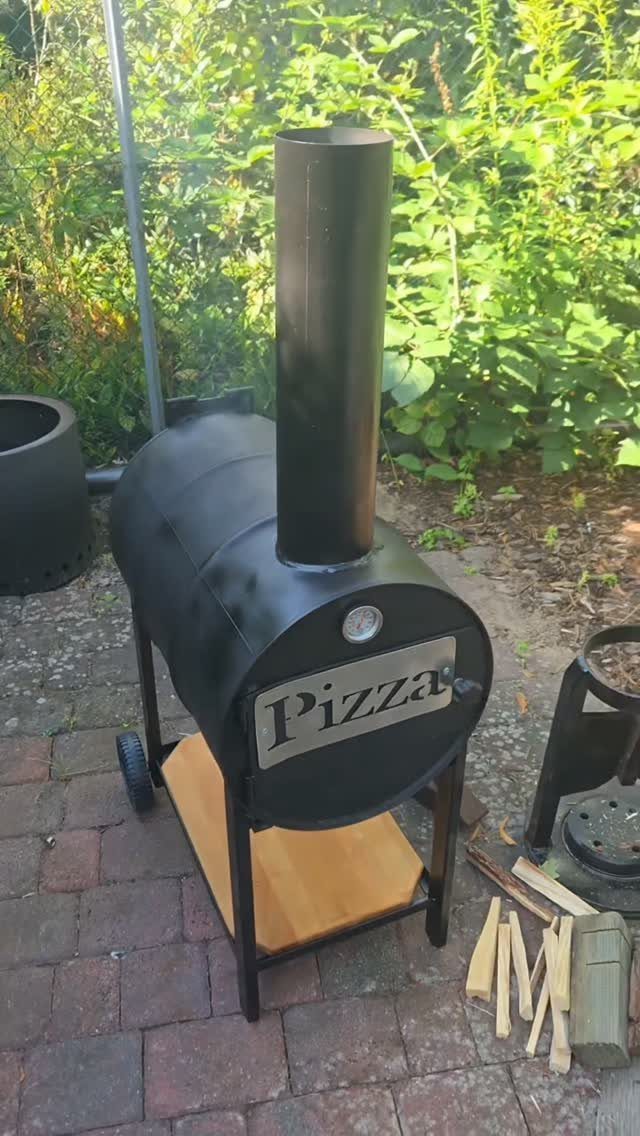
A freestanding cart with a chimney oven on top keeps everything mobile. The wheels matter more than they look; you roll it to cover when weather turns, or to a different corner of the patio when the sun shifts.
I would not expect this to replace a built kitchen.
The shelf below stores wood or tools, but prep space is the cart top and nothing more. That suits cooks who work inside and carry dough out.
Brick pavers underneath handle the heat without complaint. No slab, no permit, no permanent footprint.
For renters or anyone testing whether outdoor pizza becomes a habit, this is the lowest-stakes entry point.
Choosing the Right Outdoor Pizza Oven
Size, fuel type, and cooking capacity matter most when you are choosing between these setups.
A portable unit like the Gozney with dual-fuel covers both propane and wood pellets, which lets you decide per meal rather than per season. Fixed masonry holds heat longer but commits you to one spot and one fuel.
The Ooni Koda 2 Pro reaches 950 degrees with a tapered flame for even distribution; the Ooni Volt 2 electric hits 850 degrees using top and bottom coils.
Electric means no fuel storage and no flame to tend, though you lose the wood flavor entirely.
The Solo Stove Pi Prime is compact and budget-friendly with a reversible pizza stone, which matters if you flip it to even out wear.
Forno Bravo builds its ovens into the wall itself, which buys back floor space and finishes flush against a bar-height counter. That works when square footage is tight and you want the oven to read as built-in rather than parked.
Benefits of Outdoor Pizza Ovens
A pizza oven that reaches 850–950 degrees cooks in 60–90 seconds, which is the temperature range where crust chars and leopard-spots without drying out.
That speed changes how you host: guests eat hot slices as they come out, standing around the oven rather than waiting for a whole pie to hit the table.
Wood and gas both hit these temperatures, but wood adds smoke compounds that gas does not replicate.
The Forno Bravo customers in the compiled designs all cite year-round access to wood-fired cuisine as the common thread, which tells me the fuel choice is about more than heat.
A reversible pizza stone, as in the Solo Stove Pi Prime, doubles the usable life of the surface that takes the most abuse.
Even cooking without turning, which the Ooni Volt 2 promises with its coil arrangement, matters more to a beginner than to someone who has learned to rotate by instinct.
Two heating elements and a plethora of temperature controls help the Volt reach temps of up to 850 degrees in a mere 20 minutes. And once the oven’s hot, the pizza cooks in as little as 90 seconds.
Installation and Placement Tips
A stable surface is non-negotiable. The modern kitchen island setup uses composite decking rated for the oven’s weight, which avoids the masonry pad a stone build demands.
Frost heave will crack a slab that is too thin or too shallow; in the Midwest, I would pour below the frost line and add rebar regardless of oven type.
Proximity to seating is about smoke and conversation both.
A pergola or roof over an outdoor pizza oven creates shelter that keeps rain off the cook, though it does not stop smoke from drifting toward guests if the wind is wrong.
The bar-style in-wall installation saves room by embedding the oven into a counter run.
That placement puts the oven at working height and keeps the floor clear, which reads as intentional design rather than appliance parking. Rollaway carts need level pavers; uneven brick lets a wheel sink and the whole unit tilt mid-bake.
Frequently Asked Questions
What is the best outdoor pizza oven for my outdoor kitchen?
The right oven depends on whether you want flexibility or permanence.
A portable dual-fuel unit like the Gozney lets you switch between propane for speed and wood pellets for flavor, which I would choose if I were still figuring out my layout.
What should I put my outdoor pizza oven on?
A stable surface rated for the weight is non-negotiable. Fixed masonry needs a concrete slab poured below the frost line with rebar; frost heave cracks anything too thin or shallow.
A portable unit on a cart can sit on level brick pavers, which handle heat without a slab or permit.





