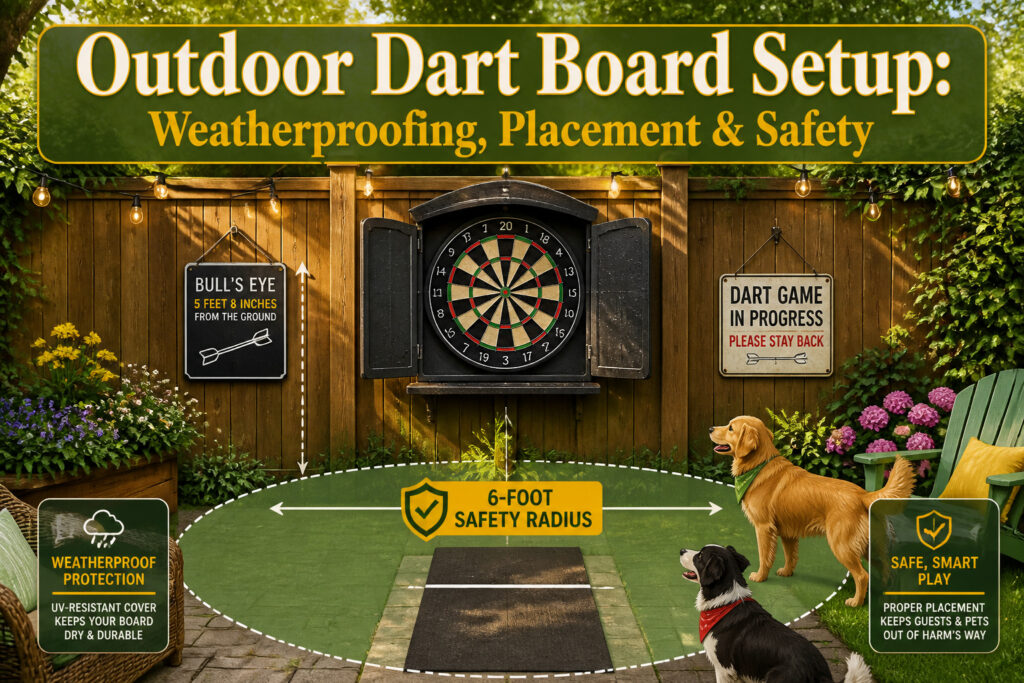
An outdoor dart board setup is a bristle board mounted outside with weather protection, proper spacing, and safety buffers in place. It works only if you accept that sun and moisture will destroy an unprotected board in a single season; the sisal fibers warp, the spider wire lifts, and the whole face turns fuzzy without a UV-resistant, waterproof cover. The bull’s eye still sits at regulation height, 5 feet 8 inches, but the throw zone now needs a 6-foot safety radius and a "Dart Game in Progress" sign to keep wandering guests and dogs clear of steel tips.
Weather-Proofing Your Dartboard
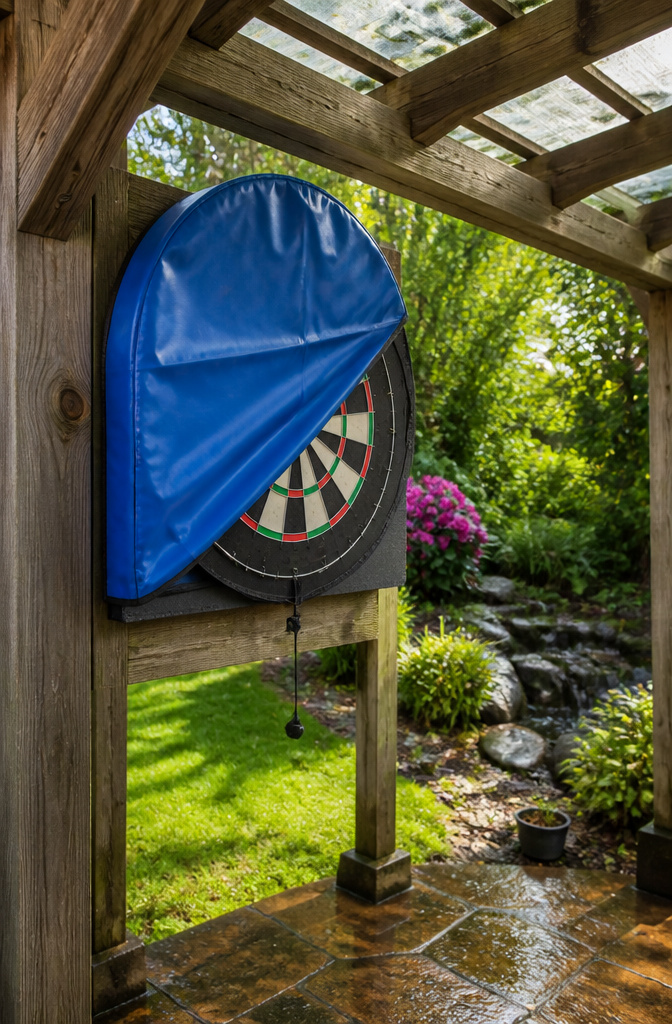
Standard bristle boards left in rain or sun will warp, fade, and lose their shape within a season or two. The sisal fibers dry out and separate under UV exposure, and once moisture gets in, the board swells and the spider wire lifts. I learned this the hard way with a garage-sale find that went from playable to landfill in one humid summer.
UV-resistant plastics, composite fibers, and weather-treated sisal are the material options that actually hold up outside. Weather-treated sisal handles moisture better than standard grade, though it still wants protection. Plastics and composites shrug off rain but can feel dead under the dart; some players miss the familiar thud of fiber.
A cover is non-negotiable if the board sits idle for more than a day or two. It needs to be both UV-resistant and waterproof, not just one or the other. A waterproof cover that passes sunlight will still let the board cook, and a UV-blocking fabric that soaks through defeats itself in the first storm. The good ones fit snug and fasten at the bottom so wind does not turn them into sails.

Proper Size: This dartboard cover measures 24"D x 3"H and fits most dartboards on the market. Please carefully measure your dartboard before placing your order to ensure the best fit

High Quality Material: The Dart Boards Dust Cover is made of heavy-duty polyester material, scratch-resistant and durable, it provides effective dustproof protection for dart boards, keep it clean and avoid water and dust affecting the service life

Dustproof Coverage: Measuring 24x3 inches, this cover keeps your dartboard clean and free from dust, ensuring optimal gameplay and extending the life of your dartboard for years to come.
Finding the Perfect Spot
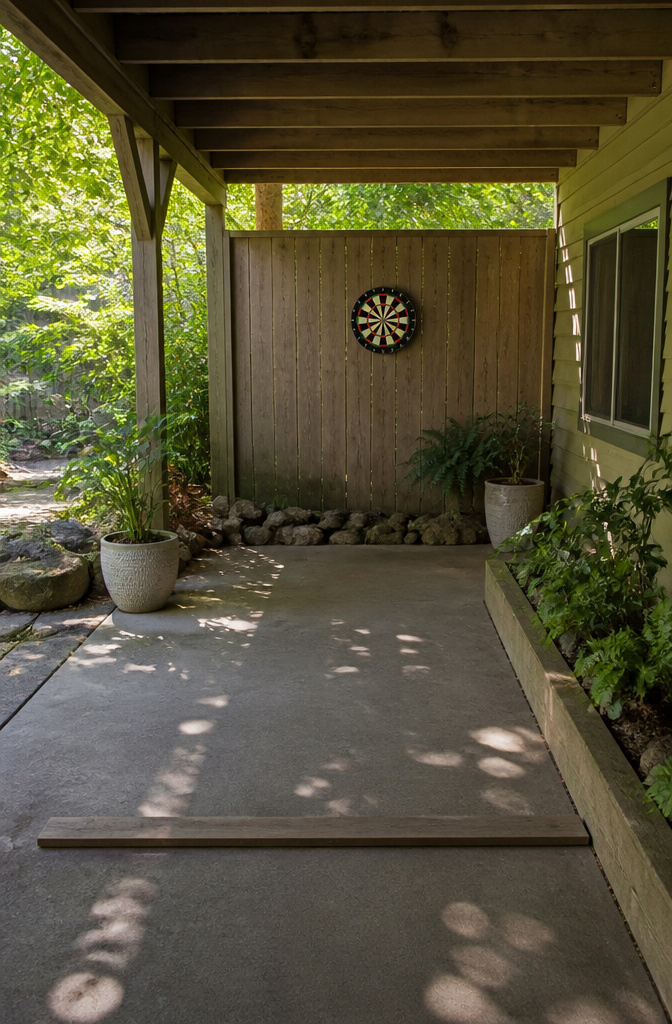
The first outdoor dartboard I mounted went on a fence post with nothing overhead, and within two seasons the cabinet had warped enough that the door would not latch. A covered spot changes everything. Under a gazebo, carport, or even a deep porch overhang, the board stays dry enough to stop swelling and the players stay comfortable enough to finish a full cricket game without squinting into sun glare or packing up at the first drizzle.
The numbers matter once you have that shelter. The bull’s eye sits at 5 feet 8 inches from the ground, measured to the center of the ring, and the oche, or throw line, is 7 feet 9.25 inches from the board’s face. These are the official measurements for a standard 18-inch bristle board, and there is no good reason to approximate them. Seven feet nine reads close enough until your steel-tip darts start landing a quarter inch outside the wire you are aiming at.
Space behind the throw line needs at least 5 feet of clearance, and the area around the board wants a 6-foot radius in every direction. That radius keeps bystanders clear of bounce-outs and gives the thrower room to step back without clipping a chair or a planter. Measure it before you mount anything. A cramped setup is a setup that gets used twice and then ignored.

Protect Dartboard: The dartboard cover provides protection to prevent dust and water from entering the dartboard, keeping it clean and pristine, saving you the hassle of cleaning and making it easy to use next time.

Sealing system to rainproof digital monitor against moisture intrusion and water damage; two louvered vents with moisture screen that prevent heat buildup and intruders (big and small)

Sealing system to rainproof digital monitor against moisture intrusion and water damage; two louvered vents with moisture screen that prevent heat buildup and intruders (big and small)
Ensuring Safety Outdoors

A wobbly board is the first hazard most people miss. Heavy-duty brackets, not the lightweight hardware that came with the cabinet, are what keep the mount steady when someone bumps it or a gust hits. Freestanding boards need anchoring that matches the bracket standard, or they tip.
The throw zone matters more outdoors than in because the background is open. A 6-foot safety radius around the board gives anyone nearby room to pass without crossing the line of flight. Children, dogs, and guests who have had a few drinks tend to wander into that space unless something stops them.
Signage does more work than most setups bother with. A simple "Caution: Dart Game in Progress" sign at the edge of the active area reminds people to stay clear. During a gathering, the board looks like decoration until a dart flies past someone who assumed no game was on.

OFFICIAL SIZE – Regulation 18” x 1.5” dartboard suitable for recreational or local competitive steel‑tip play

TOURNAMENT-LEVEL PERFORMANCE: Built to professional tournament specifications, delivering consistent scoring and match-ready performance for players of all levels

COMPLETE DART BOARD SET FOR ADULTS: Includes a regulation sisal bristle dartboard, dedicated cricket scoreboard with chalk and eraser, 3 ViperStrike steel tip darts, mounting hardware, throw line marker, and measuring tape
Choosing the Right Dartboard
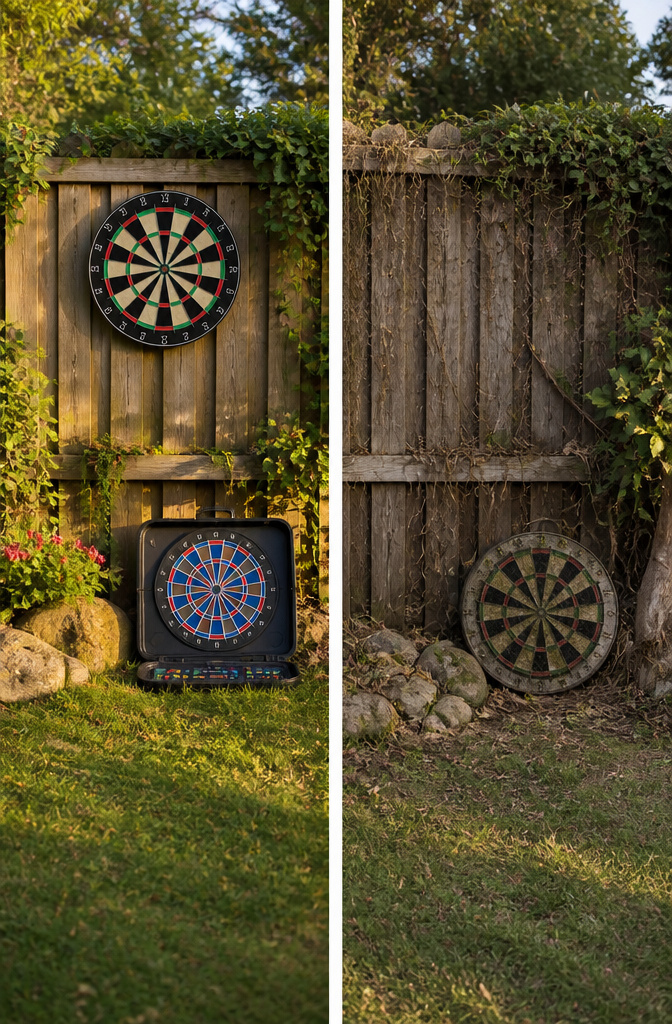
Bristle boards handle outdoor conditions in ways electronic boards simply cannot. Sisal fibers self-heal after steel-tip hits, and a few afternoons of humidity will not ruin a board that already lives through basement summers. Electronic boards, with their sensors and displays, belong in fully covered areas, a three-season room or better, or they will fail quickly.
For outdoor use, the Unicorn Eclipse Pro and Winmau Blade 5 both offer regulation-size bristle faces at roughly similar price points. The Blade 5 widens the scoring area and cuts down bounce-outs through improved deflection, a practical edge when you are playing on a patio with concrete underfoot. The Viper Shot King runs cheaper, with a staple-free bull, thin radial spider wire, and a removable scoring ring. Any older or less valuable board you already own is preferable for outdoor duty, since weather and sun will age it faster no matter what you paid.

Secure and Stable: Easy to install to the wall, and the dartboard hang easily and securely on the installed mount, they come with pads to stop the board from moving, so you have no excuse for missing the mark!

TRACK SLIDER SYSTEM: attach the slider to your dartboard and the track to your wall, then slide the board into place, with no trial and error

Wide Compatibility - The portable dartboard bracket, which darts and board are excluded, is compatible with all darts board
Selecting Darts for Outdoor Play
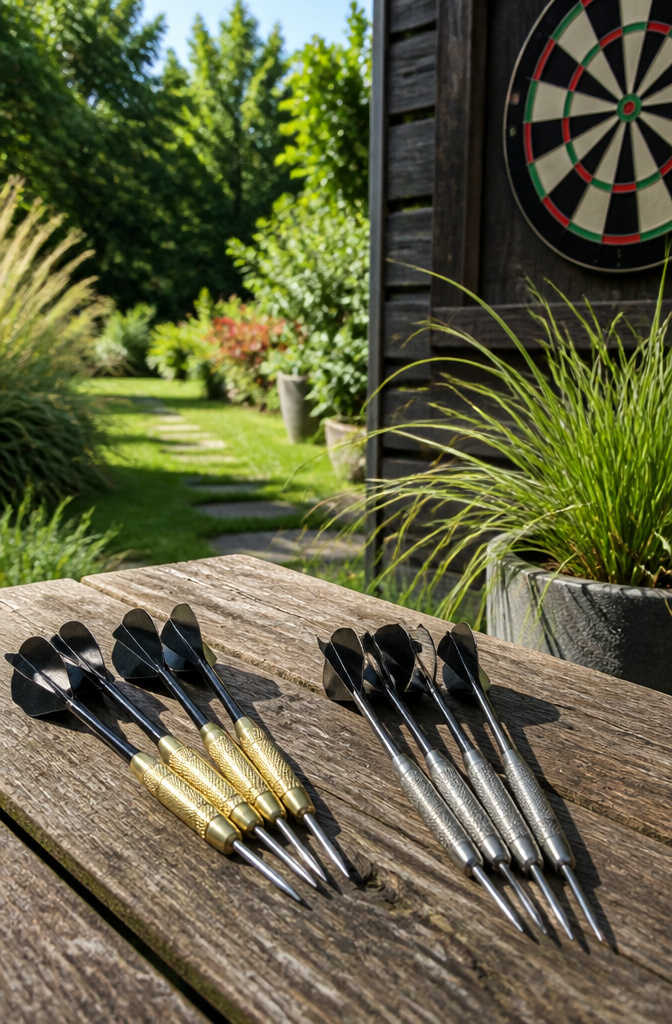
Any steel tip dart will punch a bristle board outside, but moisture and rough handling turn a precision tool into a rusting liability fast. The move is to buy a cheap secondary set and leave the expensive tungsten darts indoors. A $15–$20 set of basic brass-barrel darts takes the abuse of wind, humidity, and the odd throw that sails past the board into mulch or grass. Brass corrodes slower than plain steel anyway, and when one eventually walks off into the hostas, the loss stings less.
Standard indoor darts, especially those with higher tungsten content, rely on tight weight tolerances and fine grip machining that pitting ruins. Outdoor play also means darts hit dirt, concrete, or siding when you miss, not a forgiving cabinet backboard. The cheaper set absorbs that wear while the good pair stays dry and straight in its case. Just remember to bring even the outdoor set inside when you are done. A dart left on the patio overnight is a dart that will throw wrong by morning, if you find it at all.

Metal Tin Sign Premium Quality: 8×12 Inch. Made from metal material, this decorative sign is built to last and withstand wear and tear.

🔥➁【PERFECT SIZE】8x12 inches.==Rustic Wooden Signs Wooden Wedding Signs Wedding Decor Ring Bearer Sign Bride Sign Rustic Wedding Kids Floral Sign Wedding, Party,dog animal signs,kitchen and home decoration,funny wall decoration,Garage coffee bar posters signs,retro signs

In-depth Dartboard Guide: This vintage tin sign features detailed illustrations and descriptions of dartboard anatomy, perfect for enthusiasts learning the nuances of the game.
Dartboard Types Compared
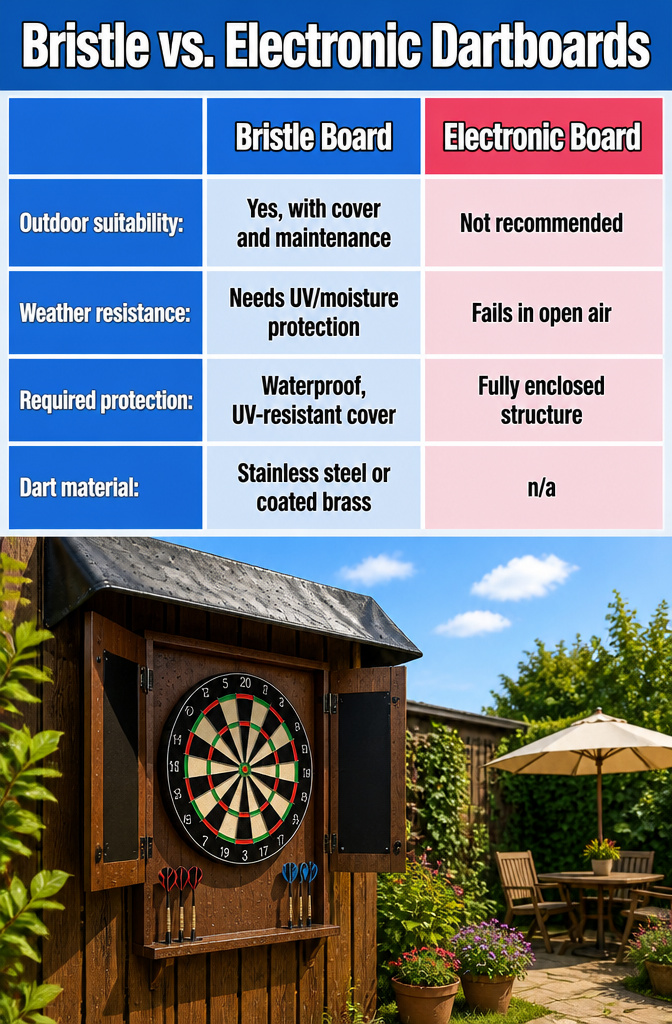
The question of bristle versus electronic comes up fast once you move the game outside. I looked into both when I was planning my own outdoor dart board setup, and the gap between them is wider than most people expect.
Bristle boards built from sisal or weather-treated sisal can survive outdoors, but only with active protection. Sun and moisture are the real enemies: UV breaks fibers down over time, and humidity swells the board, loosens the wiring, and invites mold. A waterproof, UV-resistant cover is non-negotiable if you want the board to last more than a season. You will also want stainless steel or coated brass darts with polymer flights, since standard hardware corrodes or warps quickly outside.
Electronic boards are a different story. The circuitry, display, and button contacts make them genuinely unsuited to open-air use. Moisture finds its way in, temperature swings stress solder joints, and direct sun degrades plastic housings. The only workable path is a fully enclosed, three-season room where the board never sees actual weather.
| Attribute | Bristle Board | Electronic Board |
|---|---|---|
| Outdoor suitability | Yes, with cover and maintenance | Not recommended |
| Weather resistance | Needs UV/moisture protection | Fails in open air |
| Required protection | Waterproof, UV-resistant cover | Fully enclosed structure |
| Dart material | Stainless steel or coated brass | n/a |
For an outdoor dart board setup you will actually use, bristle is the practical choice. The electronic option only works if your "outdoor" space is essentially indoors with a view.

Year‑Round Dartboard Protection: Shields your dart board table from dust, dirt, spills, and moisture to maintain a clean, play‑ready surface. Perfect for game rooms, garages, patios, and covered outdoor areas.

Easy Installation: The lightweight and flexible design allows for quick installation and removal, making it simple to set up or store your dartboard whenever needed, enhancing your game experience.

DURABLE MATERIAL: The dartboard storage bag is crafted from premium oxford fabric, designed to protect your dartboard and darts from wear and tear, ensuring longevity for all your gaming needs. Note: Bag Only
Mounting Options

Three ways to mount a board outside, and each has a spot where it clearly wins.
- Wall or barn mount keeps the board rigid and level, which matters more than most people think until their first wobbly throw. A backing surface or cabinet protects siding from stray darts and the holes that follow. On an old barn, the cosmetic stakes drop; on a house, the backing is not optional.
- Standalone posts with a surround is the route for open yard play with no suitable wall in reach. Two posts, a board between them, and a protective surround for the gaps where darts miss. The setup costs more space and lumber, but it puts the safety buffer where you control it, not where your house’s siding happens to be.
- Tree mount with french cleats gets the board up without posts or walls, though finding a trunk at the right angle and getting the height level takes patience. The cleats keep screws from biting direct into bark, and a backing board on the cleats gives you a flat face to work with.

Sealing system to rainproof digital monitor against moisture intrusion and water damage; two louvered vents with moisture screen that prevent heat buildup and intruders (big and small)

Sealing system to rainproof digital monitor against moisture intrusion and water damage; two louvered vents with moisture screen that prevent heat buildup and intruders (big and small)

✿ 【Sturdy Build】 : Shield your dartboard with confidence. This cover boasts a reinforced waterproof seam design and is constructed with rugged 600D Oxford cloth material to effectively prevent leaks and tears, giving your board optimal protection against damages and moisture
Accessories That Extend Life
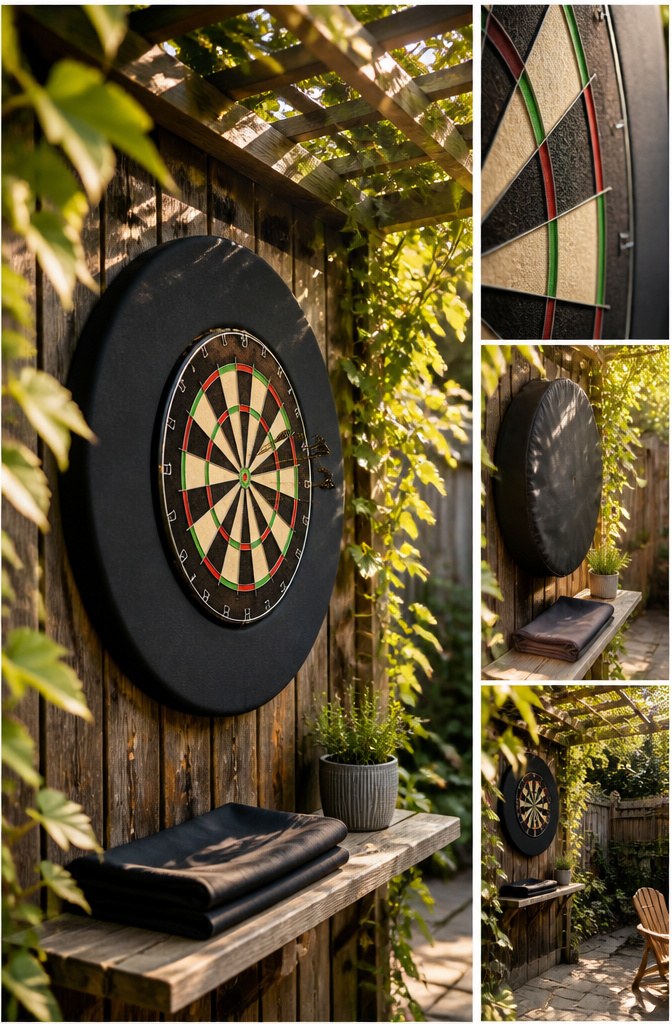
A cover left me unconvinced until I watched a board left bare through one humid Indiana summer. The sisal swelled, the wires rusted, and the whole face turned fuzzy. A UV-resistant, waterproof cover is not optional gear; it is the difference between a board that lasts seasons and one that lasts weeks. The sun breaks down fibers even when rain never touches them, so the cover needs both protections, not just water resistance.
Dartboard surrounds matter more outdoors than they do in the house. Drywall behind an indoor board is predictable, but exterior surfaces range from soft vinyl siding to hard brick or concrete that will chew flights and split shafts on a bounce-out. A proper surround absorbs that impact and keeps both darts and wall intact. I would not hang a board outside without one, and the softer or harder the backing surface, the more the surround earns its place.

【Premium Woodworking Craftsmanship & Elegant Design】VONEZONE's 18-inch dart boards for adults has 6 dart storage holes on the bottom of the board.Add a touch of sophistication to your home bar, game room, or private lounge with our meticulously crafted wooden dartboard cabinet. Crafted from high-quality, durable wood, it serves not only as a dartboard stand but also as a piece of wall art, adding a touch of rustic charm and sophisticated style to your entertainment space;

COMPLETE SET IN ONE BOX: the board, six steel tip darts in two sets of three, mounting hardware, a throw line and a measuring tape all ship together, so there is nothing else to buy first
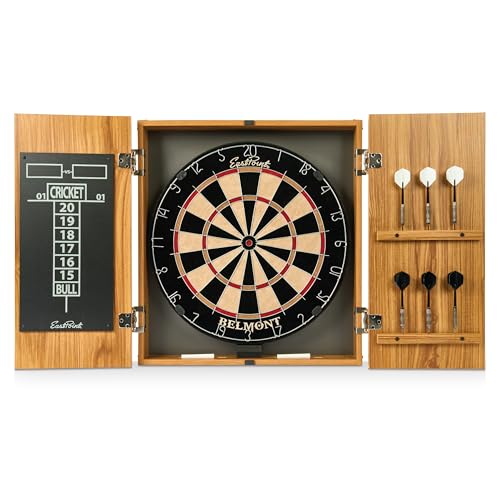
OFFICIAL DARTBOARD CABINET: The EastPoint Sports Belmont Bristle Dartboard Cabinet Set features an 18-inch dart board with cabinet, ideal for dart board set enthusiasts and indoor games for adults. Crafted from durable self-healing sisal fiber, it ensures longevity and consistent performance
Frequently Asked Questions
Can you put a dartboard outside?
Yes, but only with deliberate planning for weatherproofing and safety. Standard bristle boards warp, fade, and lose shape within a season or two left exposed to rain or sun, so you need UV-resistant or weather-treated materials, a waterproof and UV-resistant cover, and a sheltered mounting spot. The throw zone also needs a 6-foot safety radius and signage to keep bystanders clear of bounce-outs.
What dartboard should I use for outdoor play?
A bristle dartboard is the practical choice, and any older or less valuable board you already own is preferable. Weather and sun will age it faster no matter what you paid, so sacrificing your best indoor board makes little sense. If you need to buy, the Viper Shot King runs cheaper with a staple-free bull and removable scoring ring, while the Winmau Blade 5 and Unicorn Eclipse Pro offer regulation-size faces at similar mid-range prices.
How do I protect my dartboard from the elements?
A cover that is both UV-resistant and waterproof is non-negotiable; one without the other fails in the first storm or cooks the board in sunlight. The cover should fit snug and fasten at the bottom so wind cannot lift it. Mounting under a gazebo, carport, or deep porch overhang also keeps the board dry enough to stop swelling and the players comfortable enough to finish a full game.