
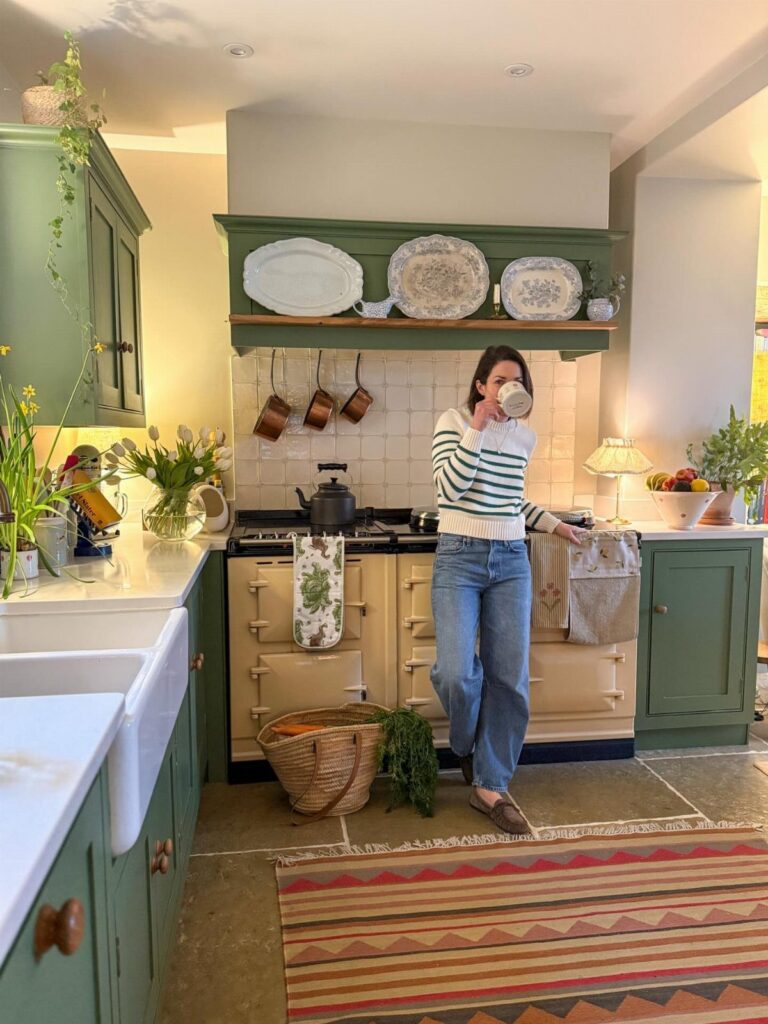
These ideas for an English home style kitchen run from open shelving over the sink to a full AGA cooker that needs reinforced flooring beneath its weight.
What decides which ones belong in your room is whether you are buying the look or building the function: the brass can be hardware jewelry on a cabinet you open twice a day, or it can be the simplest pull on a drawer you reach for all the time.
The thread that ties the list together is that tolerance for imperfection: 3/8 inch grout lines on stone floor flags, wide enough to match the stone itself rather than frame each tile.
1. AGA Cooker
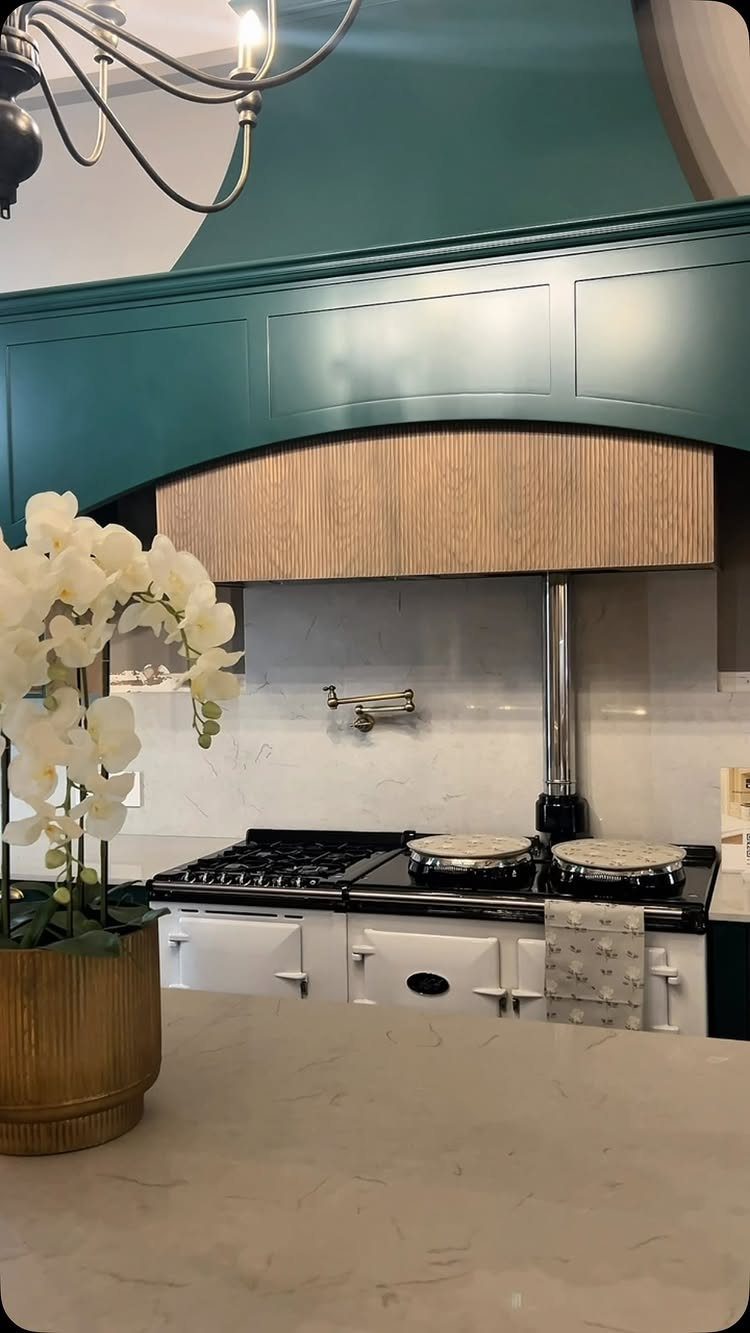
A cast-iron AGA cooker anchors the room the way a hearth once did: heat radiating steady and slow, hot plates always ready, the kettle never far from boiling.
For a compact kitchen, this is a lot of appliance; the smallest two-oven model still runs wider than most full ranges and costs more too.
I would want the space to breathe around it, and a fuel source that matches what the house already has.
If the budget or the square footage says no, a standard range in cream or black gives some of the look without the commitment.
2. Open Shelving
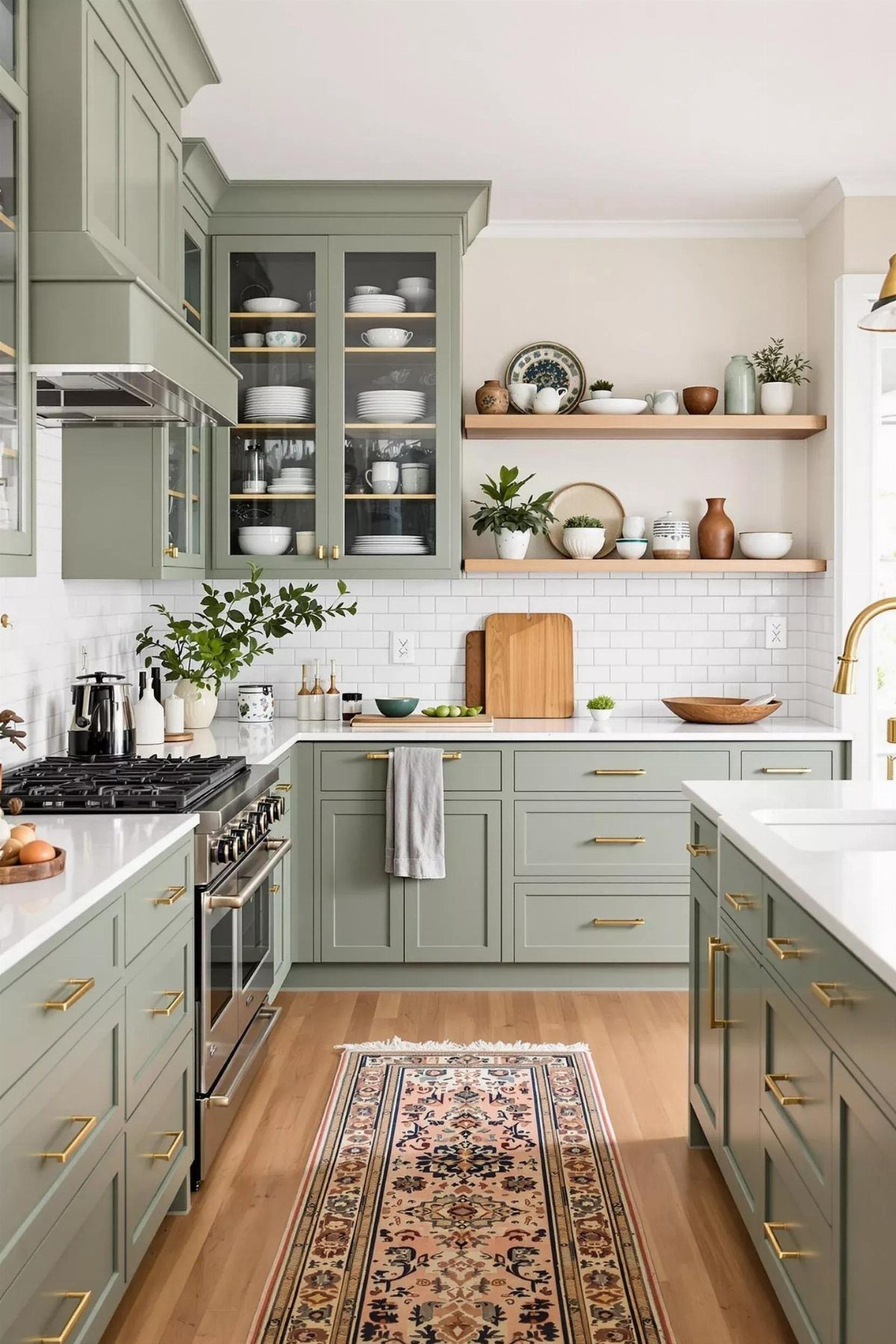
Open shelves replace upper cabinets, and the change is as much about air as storage.
The green paint stops where the wall opens up, wood brackets carry the load, and what sits out becomes part of the decoration: pottery with the glaze variations left visible, a plant that tolerates the grease and steam.
I have lived with open shelving, and the truth is dust settles, grease films form, and everything you own is on display all the time. This suits the cook who washes dishes promptly and owns a matching set worth showing.
For the rest of us, a single shelf over the sink or a narrow ledge for daily plates keeps some of the feeling without the full performance.
3. Timber Flooring
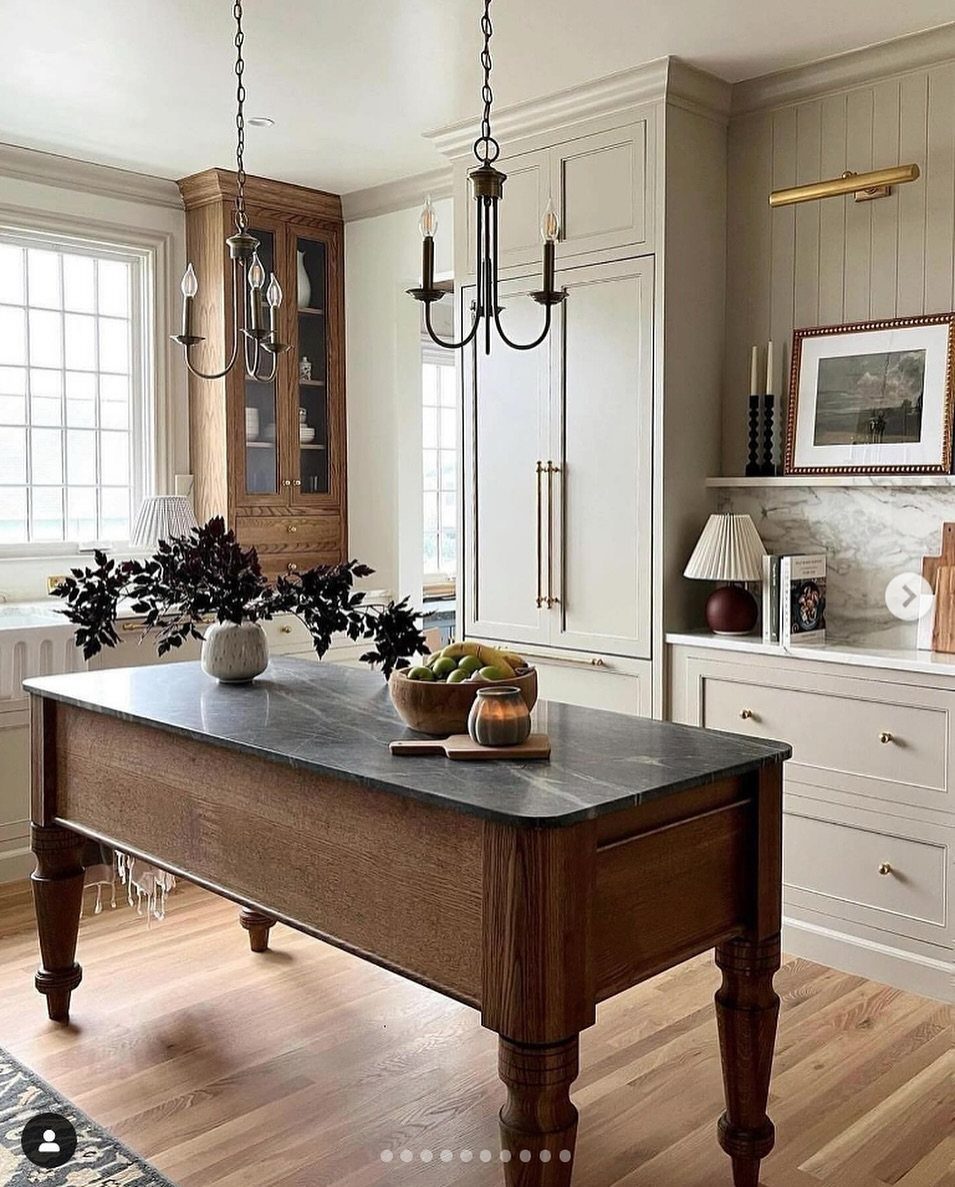
Wide plank timber flooring runs pale enough to catch the light from the windows and scuffed enough to suggest it will hide the next mark.
The planks sit parallel to the long wall, which draws the eye toward the garden door and the pantry beyond.
In a kitchen, wood takes more care than tile; I would want a hard species, oak or maple, with a matte finish that does not telegraph every footprint, and a maintenance oil kept handy for the spots near the sink.
Engineered planks handle the humidity swings better than solid wood, and the good ones wear their veneer thick enough to sand once if the years demand it.
4. Muted Color Palette
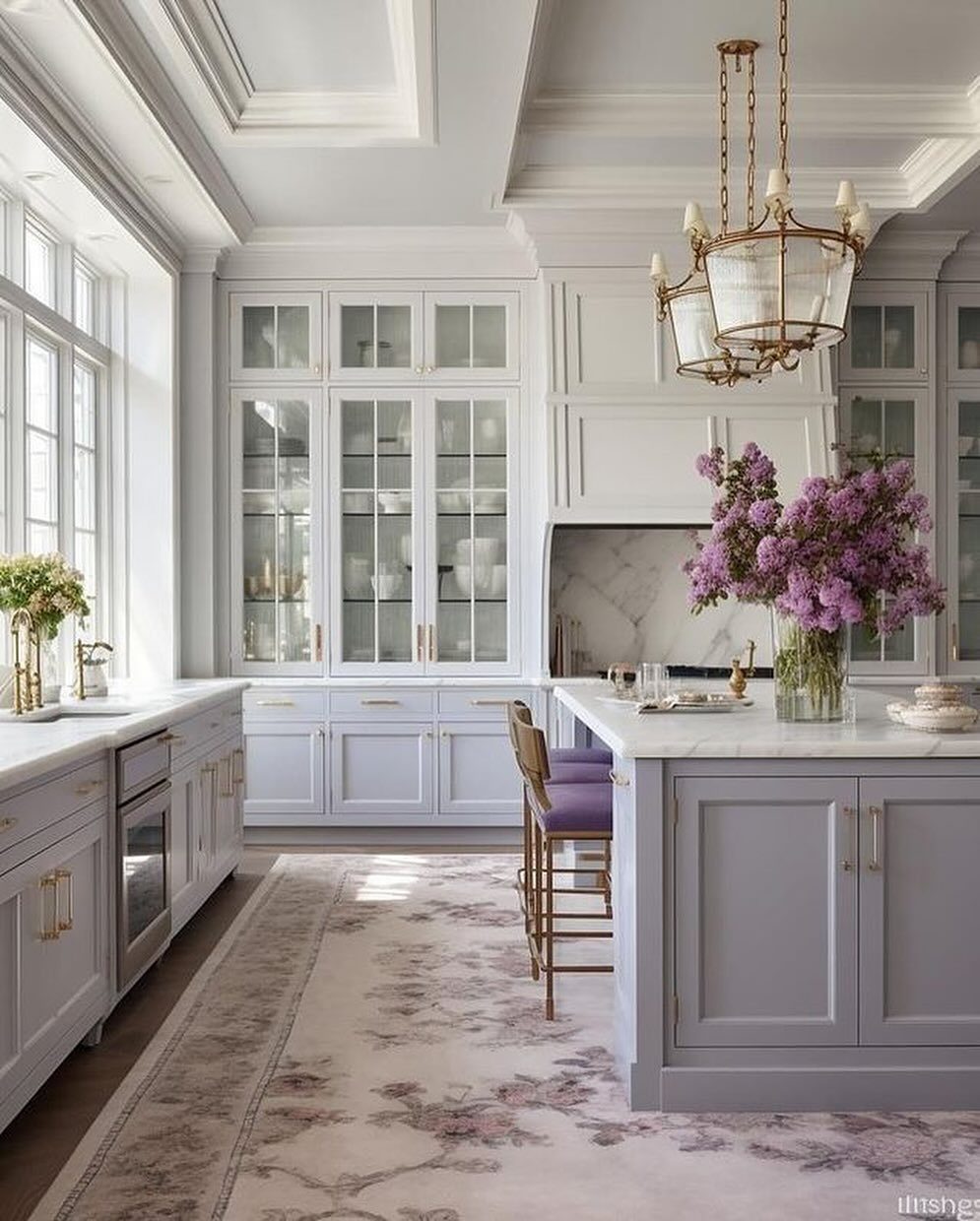
A muted color palette is the trick: color that behaves like a neutral, shifting with the day rather than declaring itself at once. The marble counters carry the same restraint, veining in gray on white rather than drama.
I would build this around a single color note, the cabinets or the walls or a runner, and keep the rest in the family of warm whites and soft grays.
The risk is drift toward blandness; one element needs texture, the rough plaster of a wall or the grain of a wooden stool, to keep the eye interested.
5. Larder
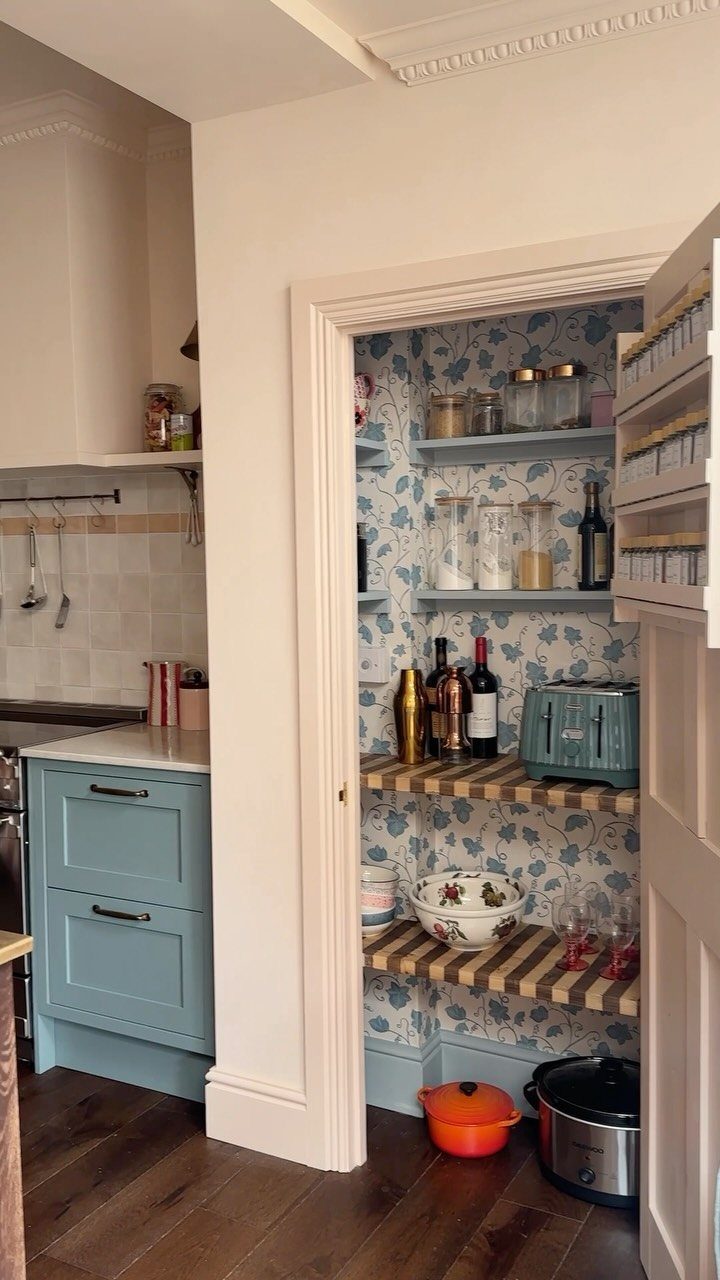
The blue cabinets outside set the tone, but inside it is wood and wallpaper and the slight chill of an interior room without a window.
I would site it on the north wall if possible, away from the sun, and fit the shelves to the jars I actually use: deep enough for a mixing bowl, shallow enough that nothing hides behind anything else.
A pull-out drawer at counter height holds the appliances that clutter most counters.
6. Shaker-style Doors
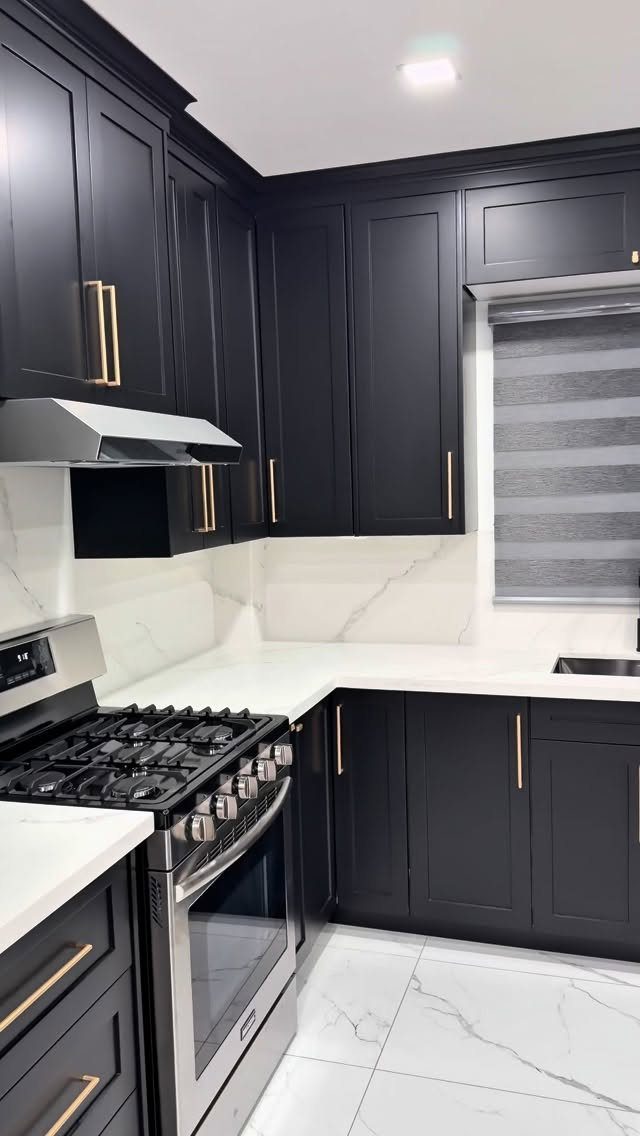
Shaker doors carry a flat center panel and a frame of straight rails and stiles, nothing molded or routed into curves, and that plainness is their strength.
Black cabinets read as almost modern until brass handles warm them, a pairing that works because the door itself asks for so little.
Paint grade is the usual choice; the frame takes color evenly and the flat panel shows nothing of the wood beneath.
I would order a sample door and live with it on the counter for a week, checking how the light falls across that flat surface at breakfast and at dusk.
Matte finishes hide the fingerprints that high-gloss collects; eggshell or satin sits in the middle and wears well.
7. Rounded Corners on Cabinetry
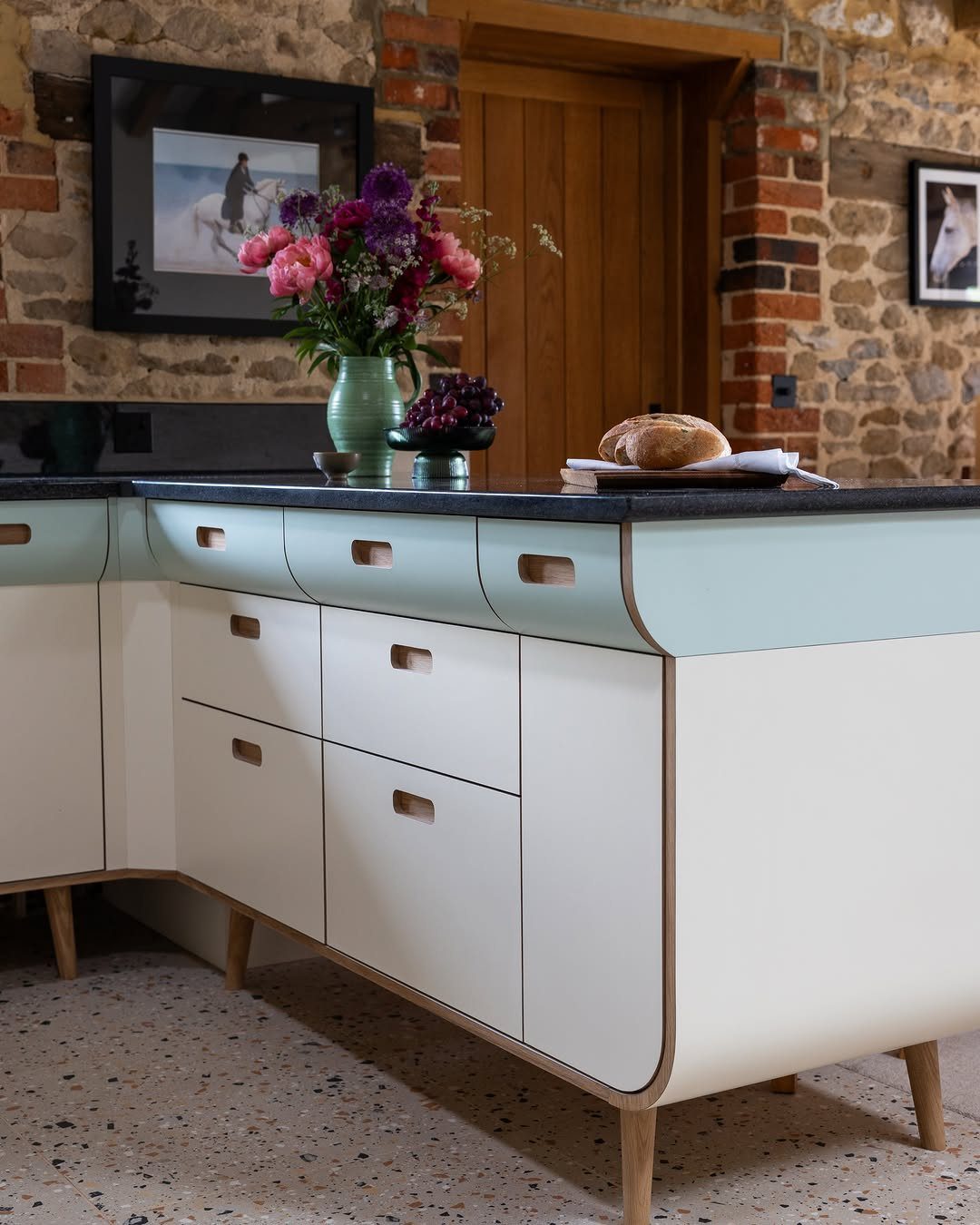
Rounded corners soften the geometry of a kitchen without drifting into outright curves. The island shows it best: the cabinet box itself carries the radius, not just the door, and the cutout handles echo that cottage note.
A modest radius is enough to catch a hip without losing the box shape that stores efficiently.
Paint grade works here since the curve is the feature, not the grain. The trade is that custom shops charge more for radius work than for square corners, and stock cabinets will not manage it at all.
8. Butler’s Sink
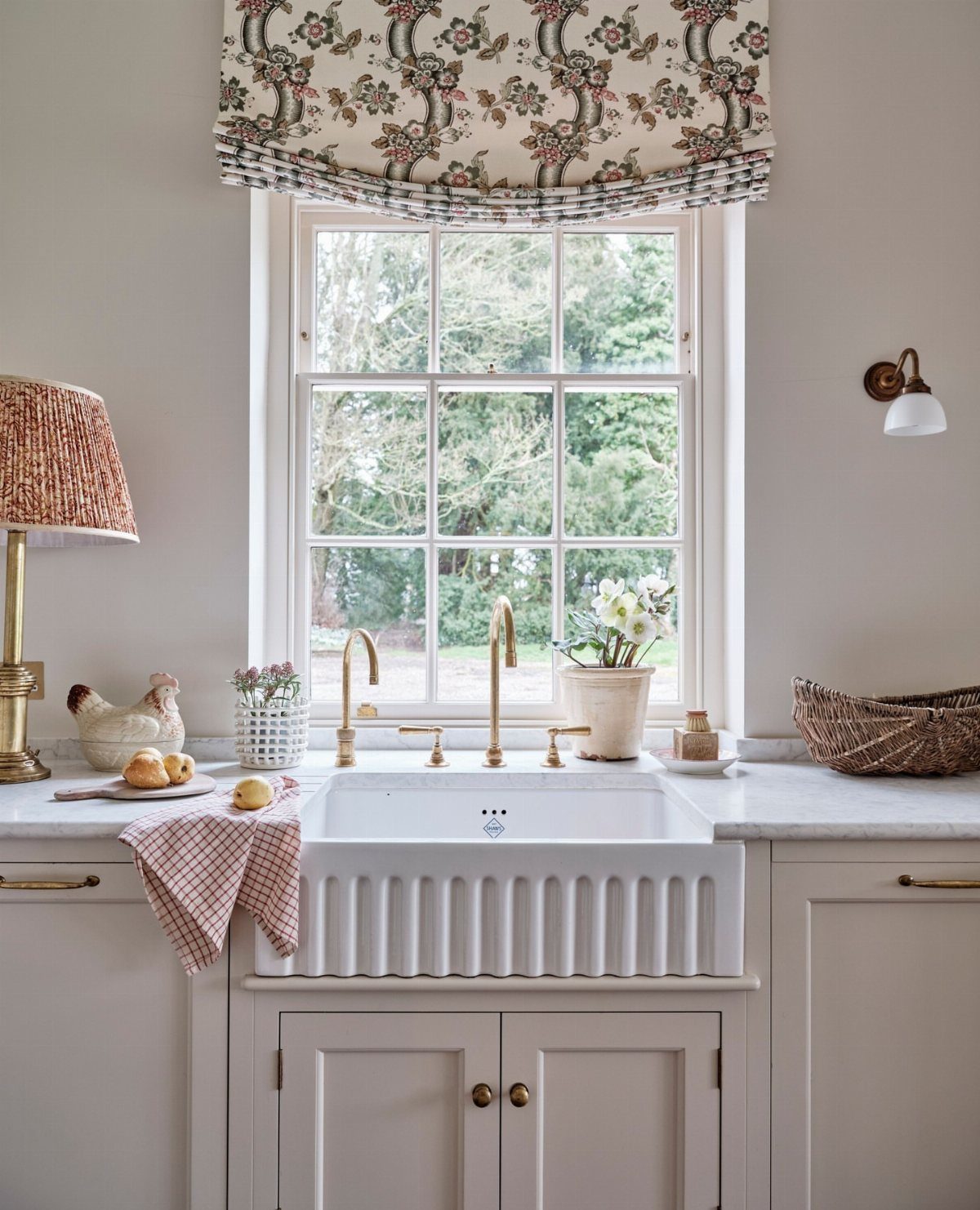
A butler’s sink sits proud of the counter, the front apron taking the splash and the wear so the cabinet below stays dry.
A ribbed or fluted face reads as ceramic, probably fireclay, and the depth is the point: pots stack, the dog bowl fits, you rinse greens without aiming a spray.
I would set it under a window if the plumbing allows, since the posture is forward and the view matters.
Brass bridge faucets suit the scale; a standard single-post looks undersized. The weight demands a reinforced cabinet base, and the apron front limits under-sink drawer hardware.
9. Butcher Block Worktops
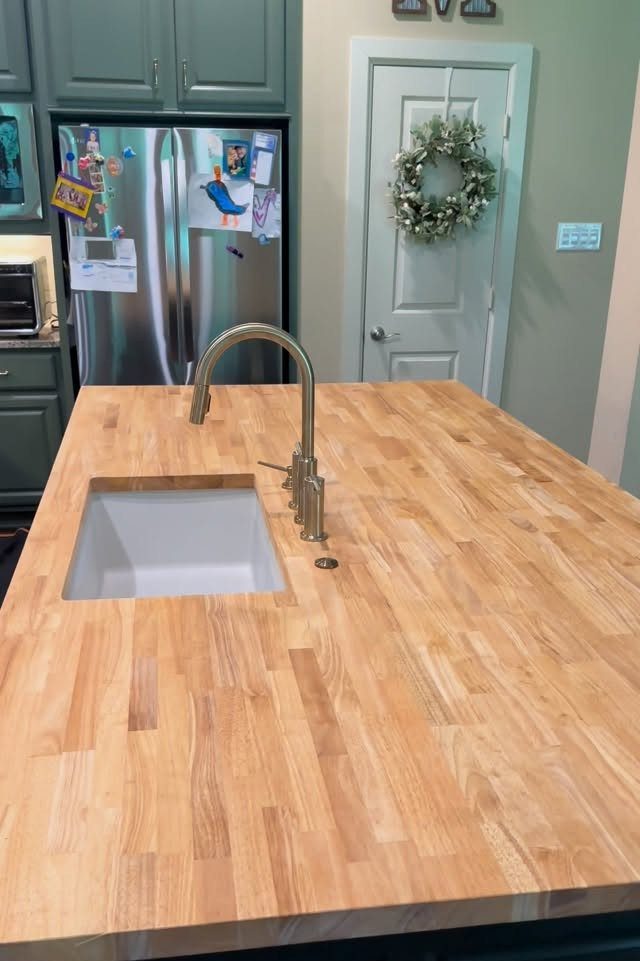
Butcher block brings a wood surface where stone or laminate would sit flat and cool.
The grain runs the length of the island, boards edge-glued to show their end grain or their face, and face grain is the easier live-with for a kitchen that sees more slicing than chopping.
I would want hard maple or oak, finished with food-grade mineral oil that renews quickly every few weeks, or a varnish that seals more permanently but scars permanently too.
An undermount sink means the block was cut and sealed on site; water pooling at that seam is the failure point to watch.
10. Countertops and Backsplashes
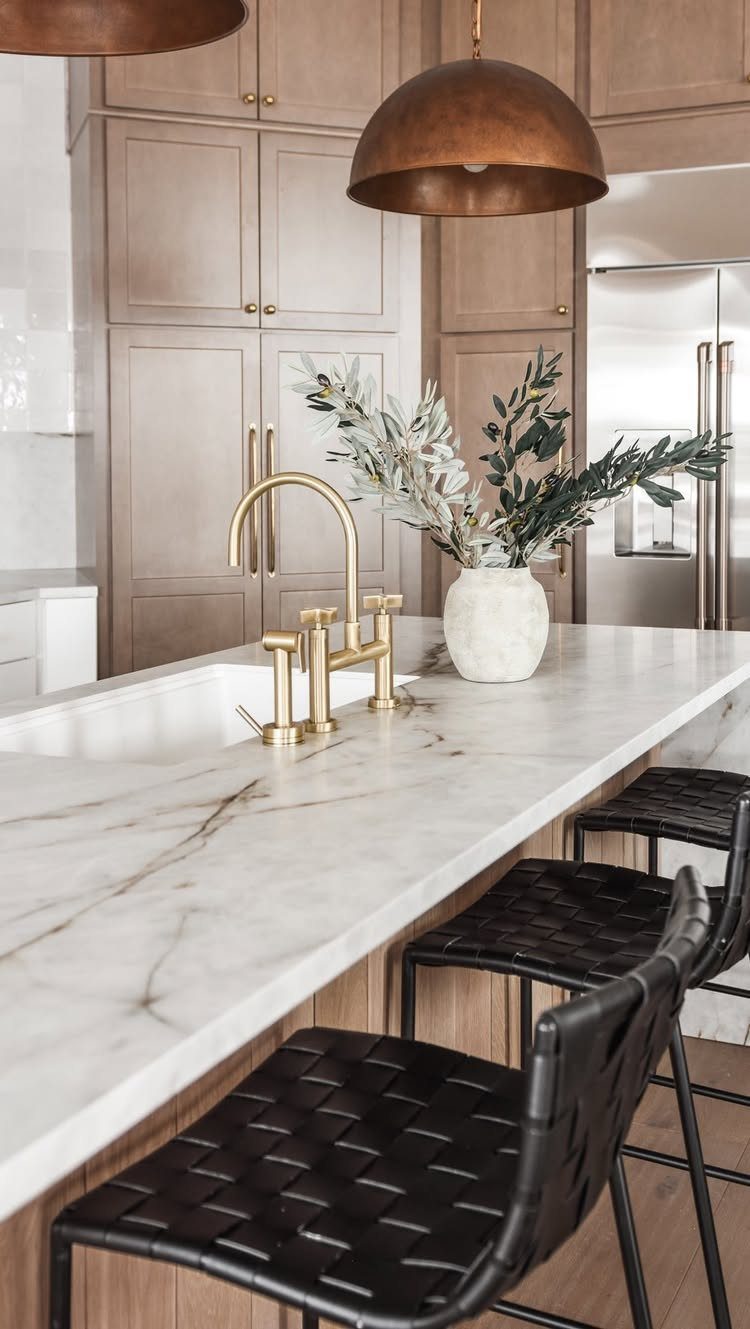
Marble with soft gray veining, honed rather than polished, reads as older than the gleaming quartz that fills most showrooms now.
The honed surface hides the etch marks that lemon or tomato will leave, though it does not prevent them; I would treat the patina as earned, not ruined, or else choose a harder stone.
A full slab backsplash from the same lot keeps the flow uninterrupted, and the cost runs roughly double a standard splash.
For a tighter budget, a marble-look porcelain tile at the wall gives some of the movement without the maintenance anxiety.
11. Exposed Ceiling Beams
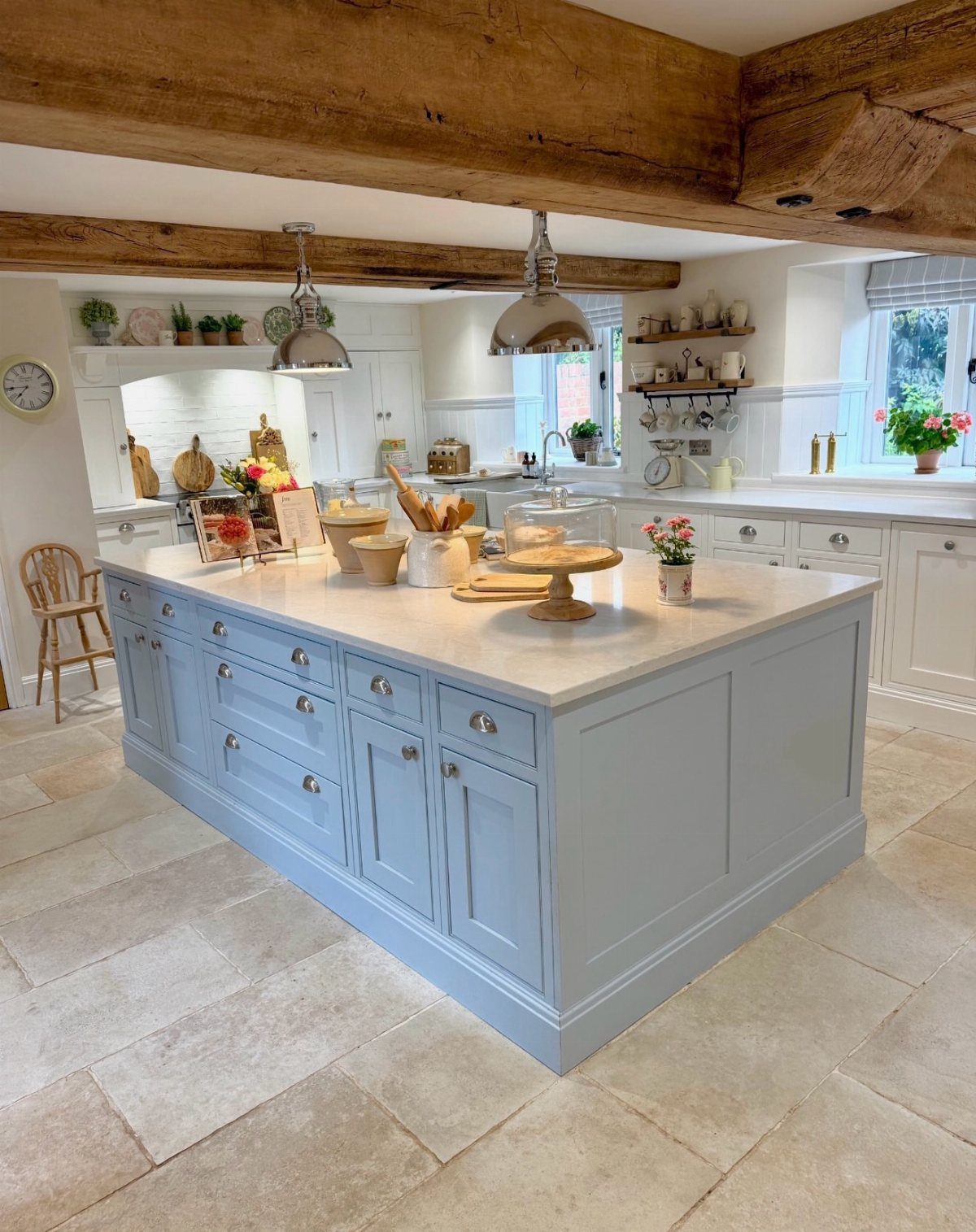
Heavy timber beams across the ceiling drop the visual height and raise the age of the room, a trick that works only where the ceiling starts high enough to spare.
Beams that are structural, or were once, carry the irregularity of hand-hewn finish, and that is what sells the effect; resawn and distressed new timber passes if the distressing is restrained.
I would stain them darker than the floor to anchor the ceiling, or limewash them pale against a darker plaster for a barn conversion feel.
The obstacle is hiding modern wiring and ductwork; a false beam with a chase solves it, though the hollow sound when tapped gives it away.
12. Brass and Bronze Fittings
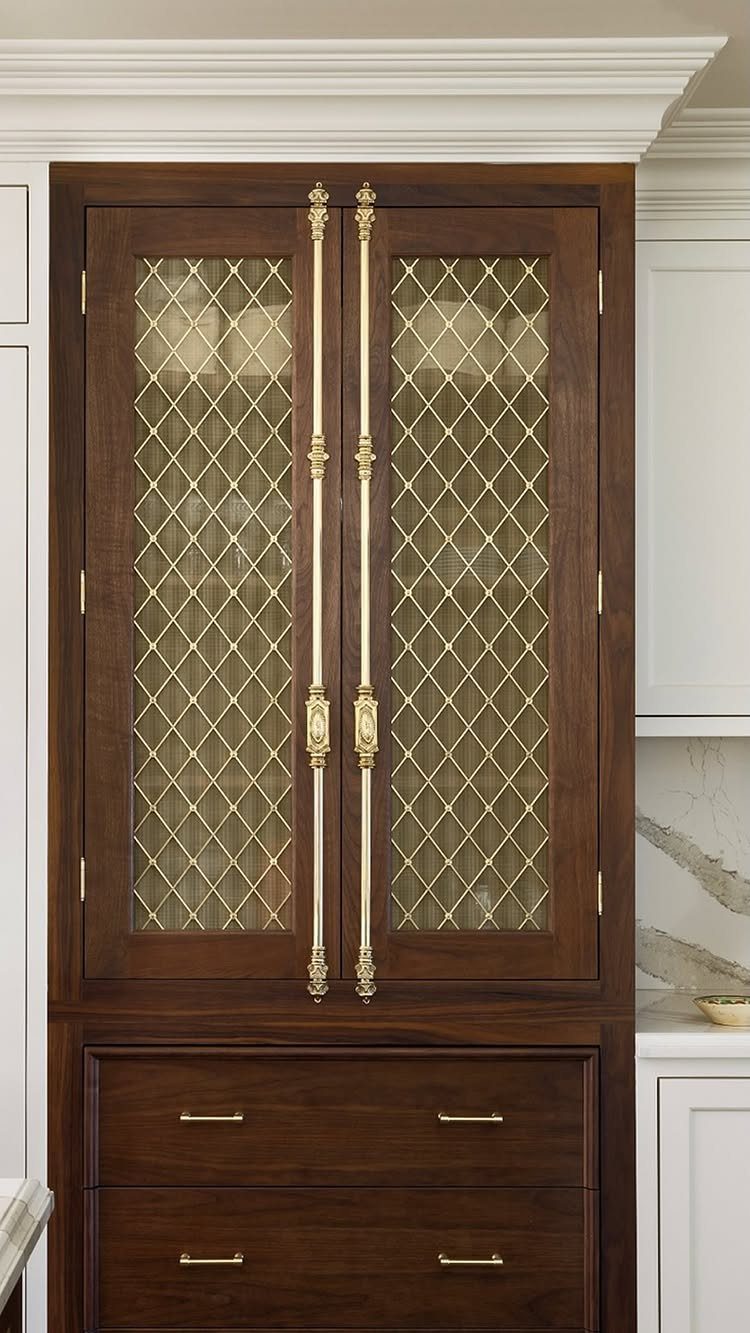
Brass darkens, bronze already starts there, and both warm a kitchen that white chrome would chill.
Cremone bolts are hardware jewelry, the latch rod visible through the mesh, and I would use them where the doors open often enough to enjoy the motion.
For daily drawers, simpler pulls wear better; the ornate plate backs collect grease near the range. Living finishes, unlacquered brass or oil-rubbed bronze, change with touch and time, which I prefer to the frozen shine of PVD coatings.
13. Glass-Fronted Display Cabinet
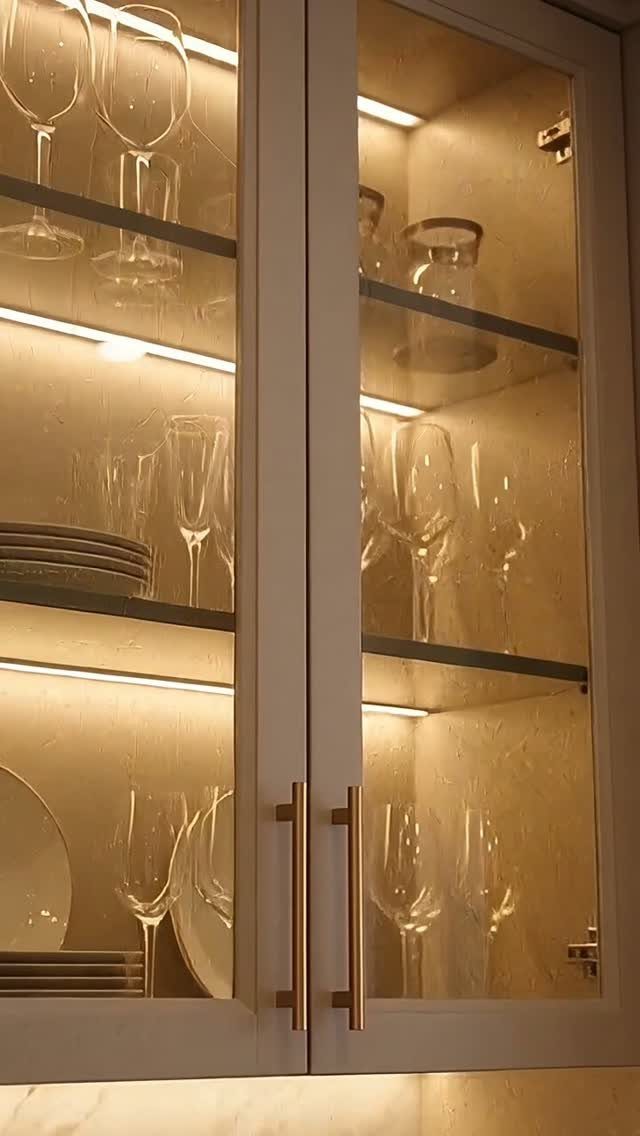
Glass doors on a cabinet turn storage into display, and the warm light inside means the contents read even after dusk.
I would wire the LED to a door switch so it illuminates only when opened, or to a dimmer if the cabinet faces a dining area where the glow should stay subtle.
Brass bar pulls suit the formality; wood knobs would read as country, which is its own choice.
The risk is committing every shelf to arrangement; keeping one cabinet plain and solid nearby gives the daily clutter somewhere that does not deserve a stage.
14. Decorative Plate Display
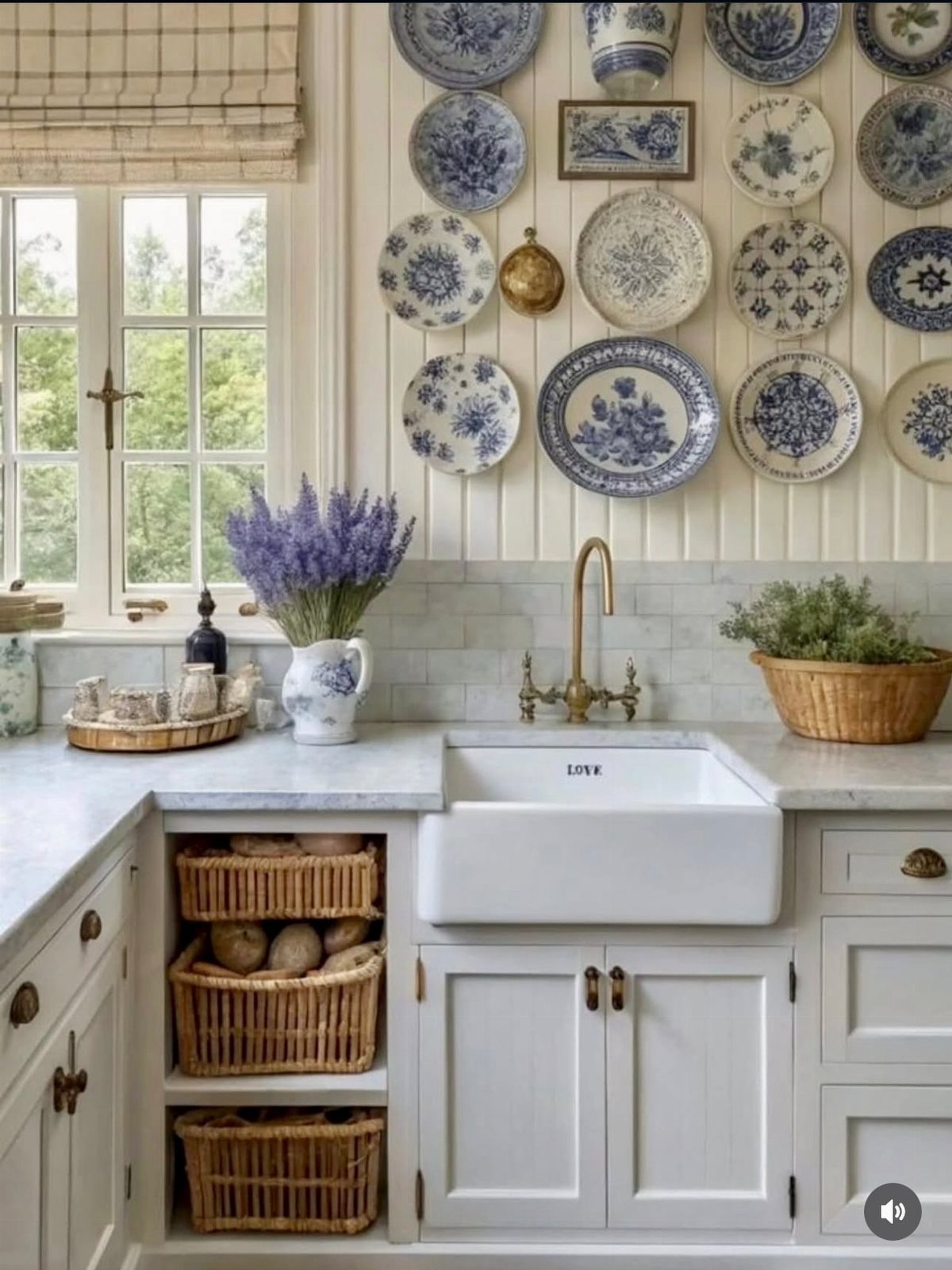
Blue and white plates against a wood-paneled wall carry the Delft tradition without needing actual Delft; transferware from any era gives the same rhythm.
I would hang them with invisible plate wires, the kind that hook over the rim and hide behind, rather than the spring clips that grip the edge and show.
Odd numbers group more naturally than even, and a vertical stack beside the sink fills the narrow space where a cabinet would crowd the elbow.
The plates must be secure; a dropped plate in a kitchen is a hazard, not a story.
15. Stone Floor Tiles
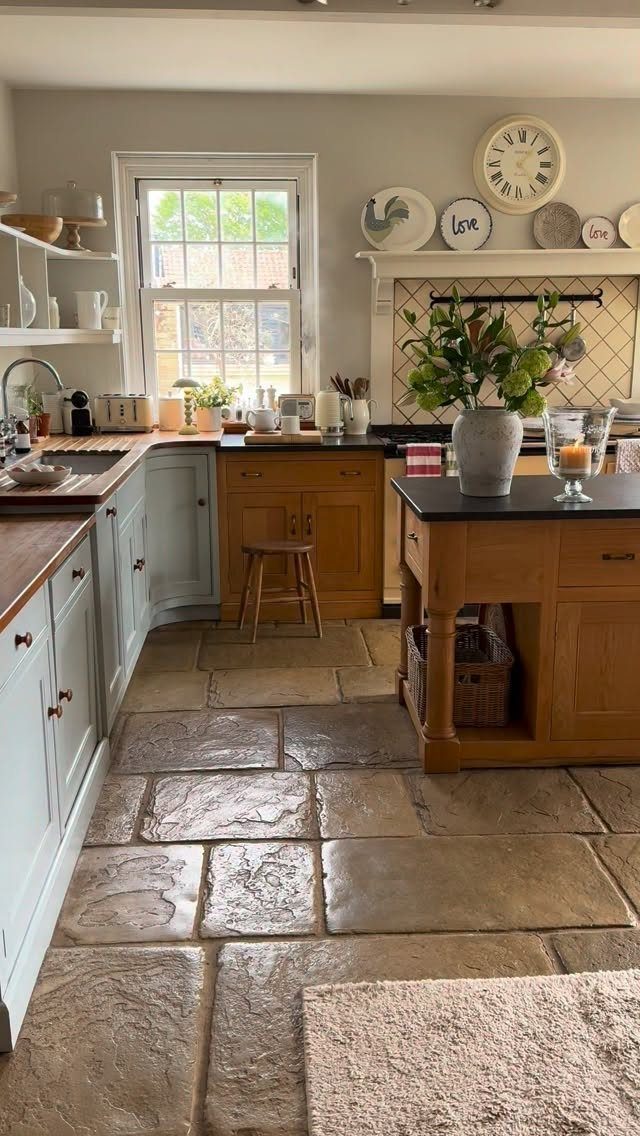
Large stone flags run cool underfoot and uneven enough to catch a heel, a texture that reads as centuries old even when newly laid.
I would want them sealed against the grease and acid of kitchen life, and the grout lines kept wide, 3/8 inch or more, in a tone that matches the stone rather than contrasting.
Underfloor heating solves the cold; without it, rugs at the sink and stove are practical, though they hide the floor that cost the money.
The weight demands a slab foundation or a confirmed joist rating; these are not tiles for a second-story retrofit.
16. Hanging Copper Pots
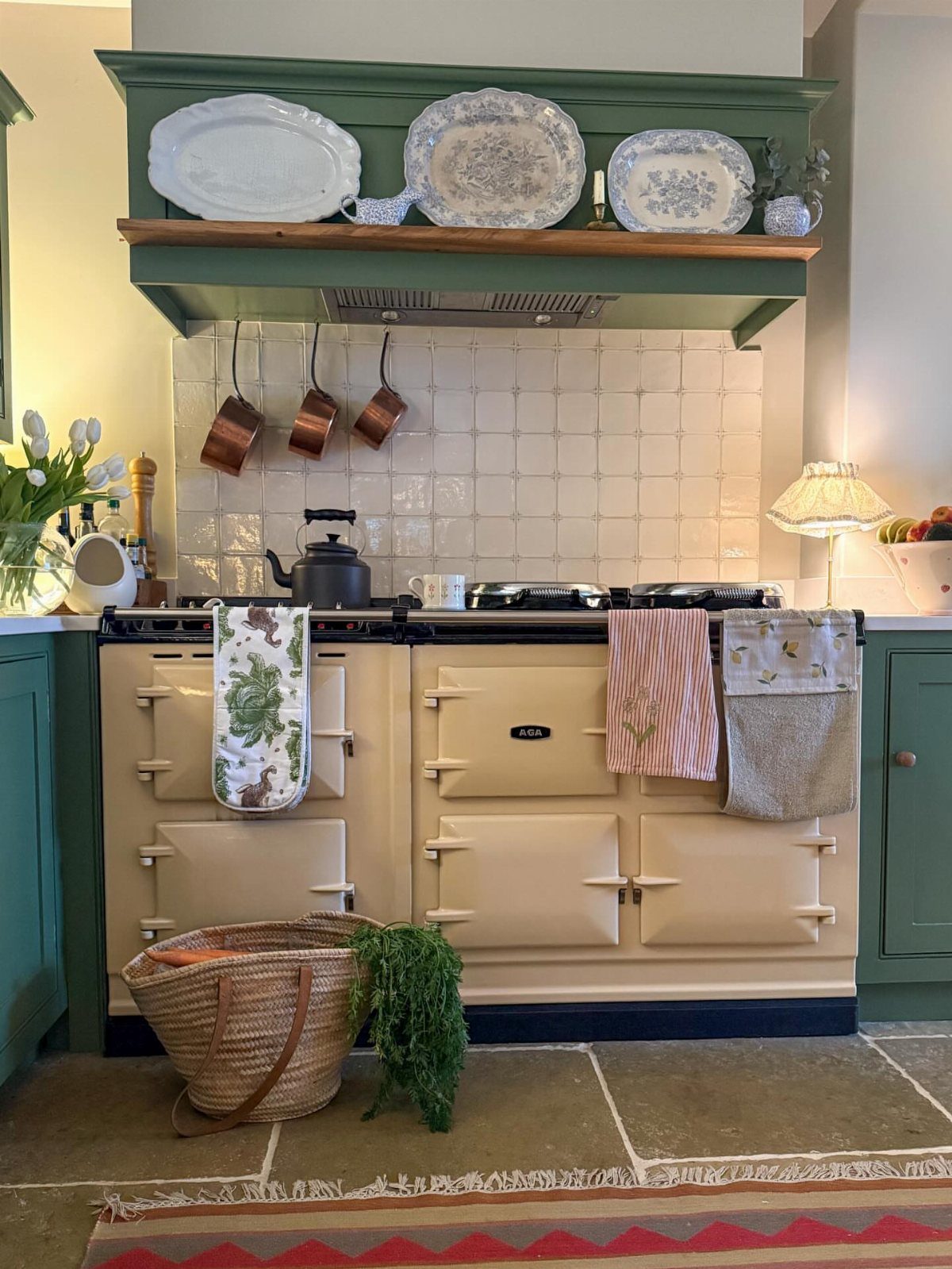
Copper pots hung in a row above the range turn tools into ornament, and the polish catches the light from below as well as from the window.
I would hang them from a wrought-iron rail bolted to the wall studs, not a ceiling rack that sways when the door slams, and I would want a hook per pot so none nest and scratch.
The maintenance is real; unlined copper tarnishes to brown then green, and the polish is a quarterly chore. Lacquered copper stays bright and dead; I prefer the living finish and the work it asks.
Timeless Design Principles
An English kitchen builds its character from contradiction: the same space holds a farmhouse table worn by generations and an induction cooktop that responds to a finger tap.
The collected look depends on resisting the urge to match. A green cabinet against a warm white wall, brass hardware that has darkened unevenly, a plate display that grew one piece at a time rather than by the set.
The flounce helps, café curtains or a skirted sink base, but the effect fails if the underlying structure is not sound.
The pairing succeeds when the structure is contemporary and the warmth sits in the details you can touch and see.
I would start with the permanent elements in materials that age, wood and stone and unlacquered metal, and add the decorative layers after the function is settled.
The patina arrives on its own schedule; the worst mistake is buying it new.
Mixing Old and New Elements
The range cooker is the fixed point, Aga or otherwise, and everything else negotiates around it. A Belfast sink against plain cabinetry makes the point: the sink holds the story, the cabinet gets out of the way.
Brass taps and copper utensils warm the room in small doses, though my own daily hardware stays simpler; the ornate work belongs where the hands go less often.
The larder or pantry cupboard is the element I would not modernize past recognition. A sleek range cooker updates the cooking function, but a well-stocked pantry with wood shelves and wallpaper inside rewards opening the door twice a day.
The balance tilts toward old or new depending on which wall you face; I would let the working side of the kitchen run contemporary, the storage and display side run traditional, and trust the room to absorb both.
Creating a Cozy Atmosphere
Warmth in an English kitchen comes from layering rather than a single bold stroke.
The green cabinets that have become common, sage to olive to deeper forest, read as color without shouting; paired with white countertops they stay paintable when the mood shifts.
Earthier tones, terracotta or ochre, suit a room with strong morning light; in a darker space they can close in.
Hard finishes stay neutral in my kitchen, the stone and the wood and the tile, and the paint and textiles carry the seasonal weight.
A table and chairs instead of an island changes how the room breathes; the Scandinavian eat-in tradition suits the English mood precisely because it is less efficient, more lingering.
The lighting matters most after dark: warm LEDs inside a glass cabinet, a pendant low enough to pool light on a surface, nothing overhead and alone.
“The English-style kitchen oozes conviviality and relaxation, with sleeping dogs and warmed by range cookers,” says Patrick O’Donnell, international brand ambassador at beloved British paint brand Farrow & Ball.
Frequently Asked Questions
What is an English style kitchen?
An English style kitchen layers warmth and character over a sound structure: painted cabinets in sage or olive, unlacquered brass that darkens with touch, open shelves with pottery and daily plates on display, and a farmhouse table where an island might sit.
The look is collected rather than matched, with stone or wood floors that show age and a larder or pantry that rewards opening twice a day. Modern function sits underneath; the warmth is in the details you handle.
What is the British kitchen trend?
The current British kitchen trend moves away from the severe gray-and-black or all-white kitchens of past decades toward spaces that read as heritage, lived-in, and personal.
Green cabinets from sage to deep forest, warm vintage hardware, café curtains, and quirky personal touches like hanging pots and decanted dry goods replace the low-personality fitted look.
The British trend runs toward cozy, characterful kitchens that put craftsmanship and personal touches ahead of showroom perfection; vintage hardware, handmade crockery, and hanging pots matter more than flawless finishes.
What is the new look for kitchens in 2026?
Color and character lead for 2026, with grandmacore kitchens taking over: dramatic greens and blues on cabinets, vintage-inspired floor tile, patterned wallpaper, and personal styling that resists the matched-set showroom feel.
Warmth in 2026 kitchens builds up through layers, not one dramatic move, and some of the most interesting rooms are swapping the island for a table where people actually sit down to eat.
What are the types of kitchens?
An English kitchen lives in the tension between old and new: a farmhouse table holding its own against an induction cooktop, green painted cabinets set against warm white walls, a traditional larder sharing space with a contemporary cooking wall.
These pair old storage and display with new function, letting the working side run modern while the pantry and display side stay traditional.





