
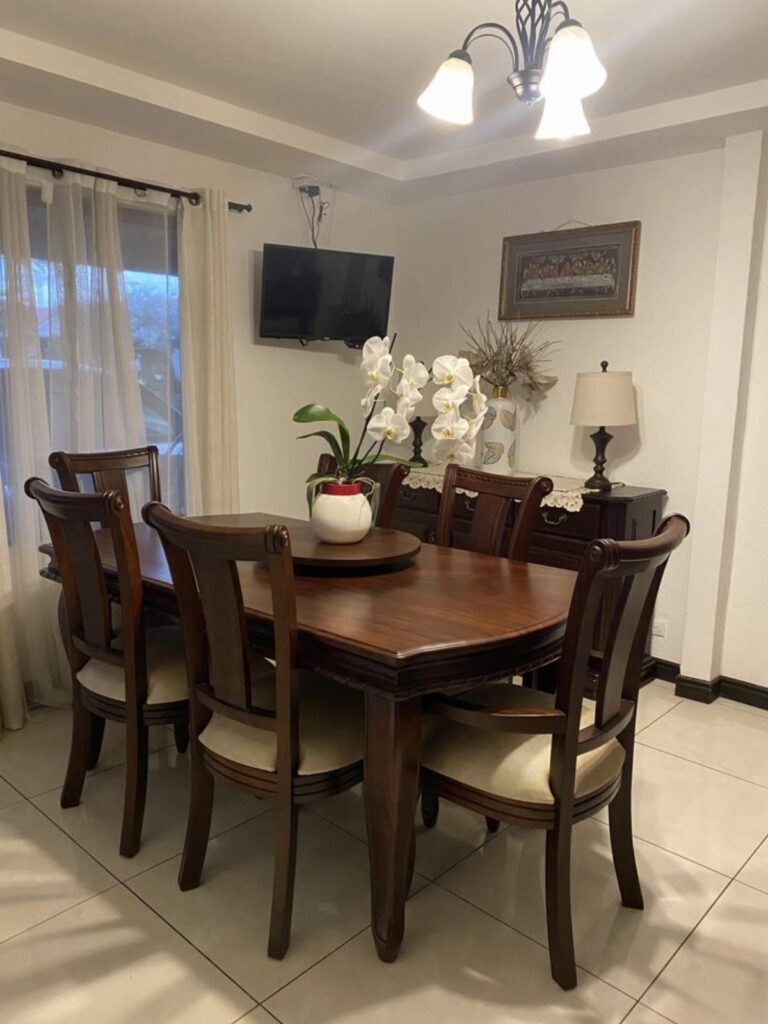
A wood dining table runs from a casual light oak breakfast setup to a live edge slab that demands its own clearance measured at the widest point, not the center.
The deciding factor is how much daylight the room holds: light wood expands a small space with big windows, while dark walnut against charcoal walls needs that confidence and at least one oversized pendant to avoid the cave effect.
On extendables, a geared slide that stays level when loaded beats a drop-in board every time, and rounded corners on a 60- to 84-inch table soften the silhouette more than you would expect.
1. Light Wood Dining Tables
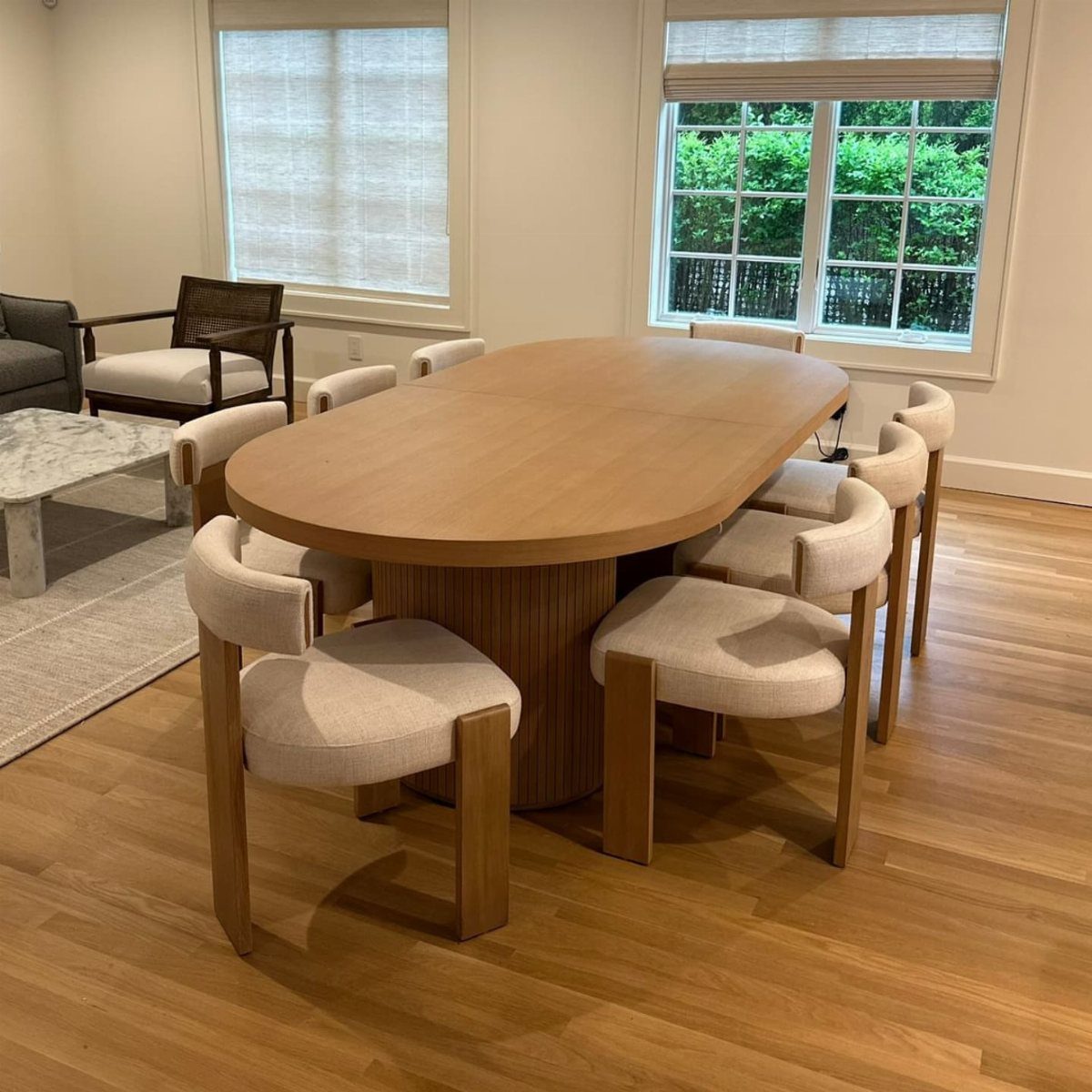
A light wood table reads as floor space you did not have to give up.
Oak, ash, or maple in a natural finish bounces daylight around a smaller room instead of swallowing it, and against white or cream upholstery the whole setup stays casual enough for breakfast and pulled-together enough for company.
I would put this in a room with big windows or at least a generous white wall. Light wood reads as relaxed without trying hard.
2. Dark Wood Dining Tables
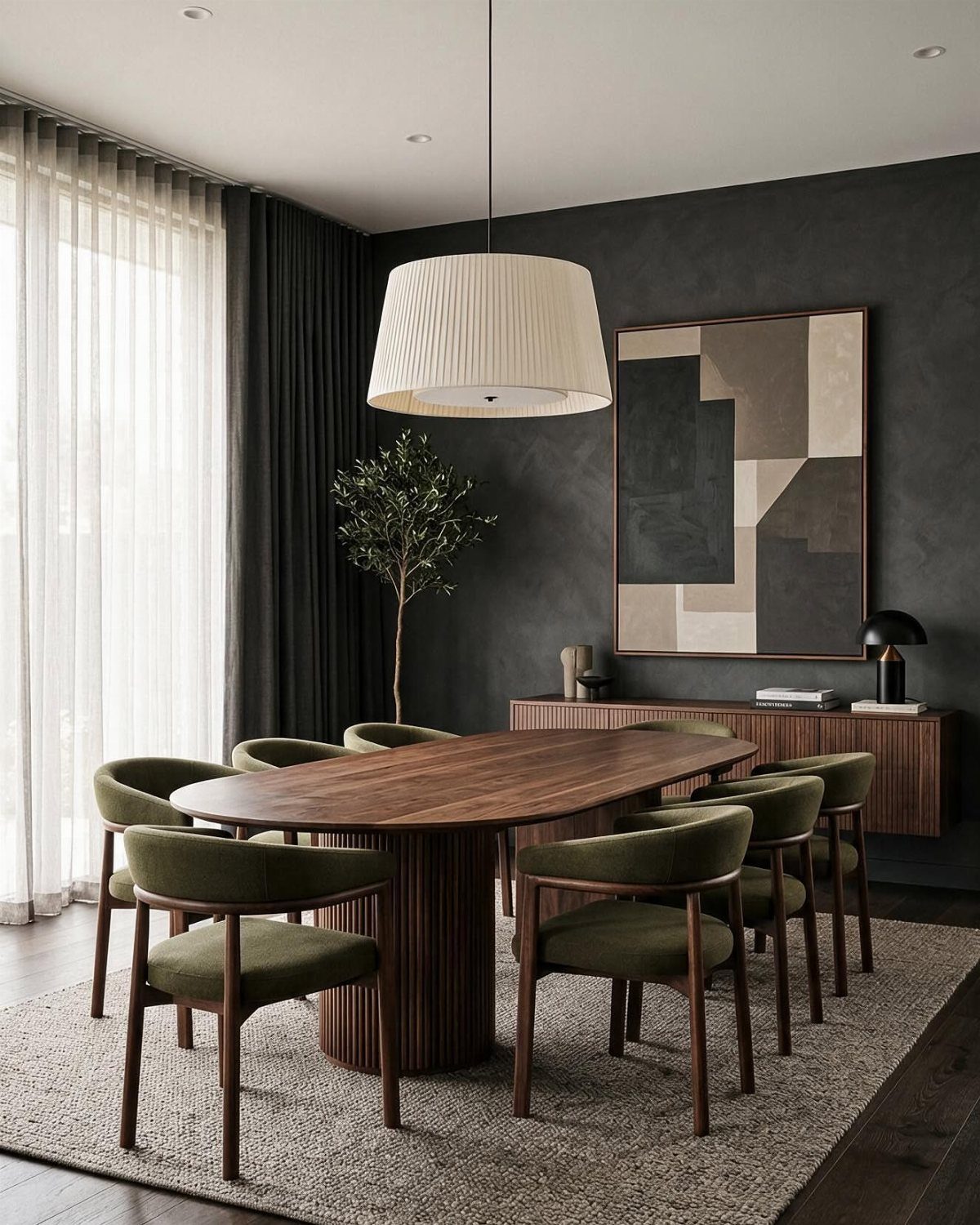
Dark wood asks for confidence and rewards it with depth. A walnut or mahogany oval against olive or charcoal reads grown-up, not gloomy, especially when the chairs carry some color of their own.
The risk is a cave effect in a tight space with small windows.
My fix is simple: keep the walls mid-tone or lighter, add one oversized shade or pendant overhead, and let the table be the heaviest thing in the room.
3. Extendable Dining Tables
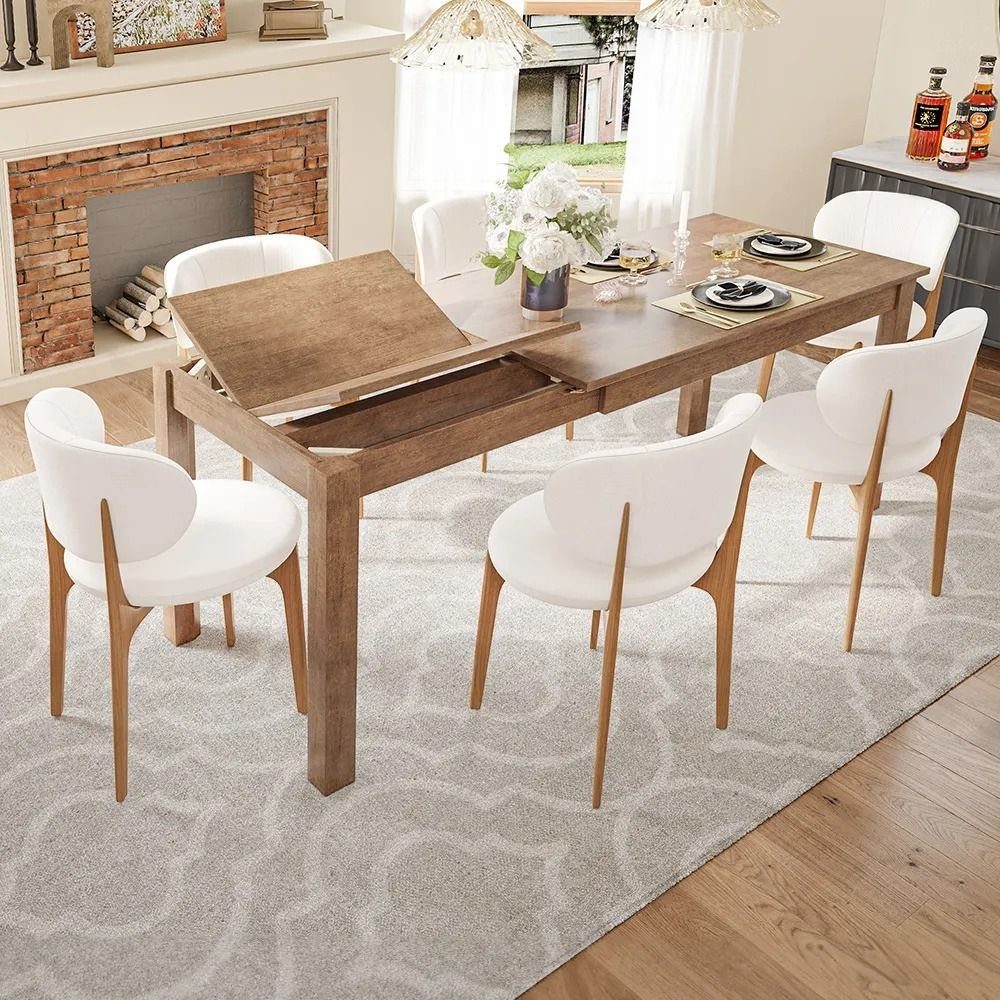
An extension leaf is the piece I recommend to anyone who hosts a couple times a year and curses their table every other day.
The mechanism matters more than the wood species: a geared slide or synchronized pull runs smoother than a simple drop-in board and stays level when loaded.
Budget for the hardware. A cheap hinge sags, and a sagging leaf defeats the purpose.
4. Trestle Tables
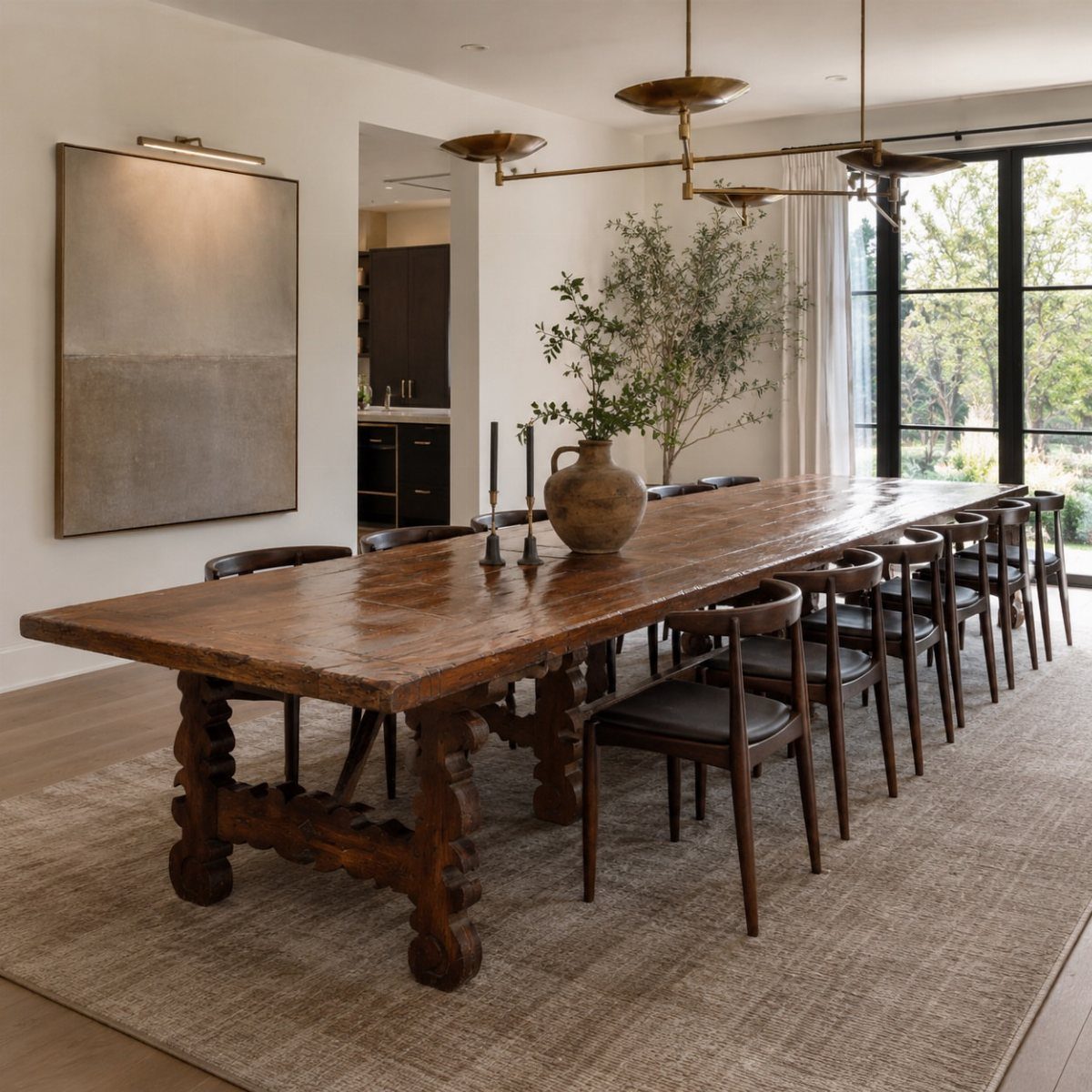
A trestle base spreads the load across 2 heavy supports joined by a stretcher, which means no corner legs to bump and more flexible seating.
The span limits you.
A long trestle table needs a center support or it will rack over time. Check the underside before you buy.
5. Dining Table Centerpieces
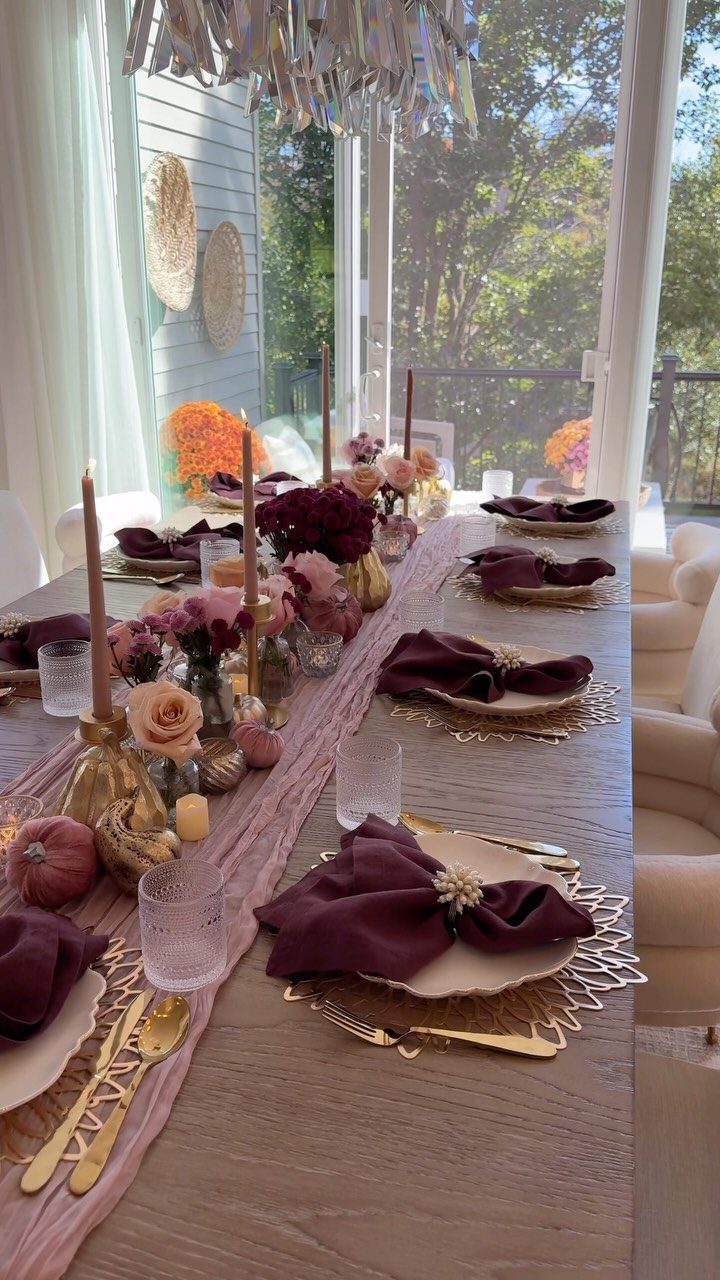
A centerpiece is a visual pause, not a permanent installation. Keep the centerpiece low enough that guests can see each other across the table; a runner, seasonal fruit, and taper candles all work if nothing rises above eye level.
My rule: build it in layers low enough to talk over.
Start with the textile, add one organic shape, one light source, and stop. Swap the gourds for lemons in June, keep the structure.
6. Dining Table with Upholstered Chairs
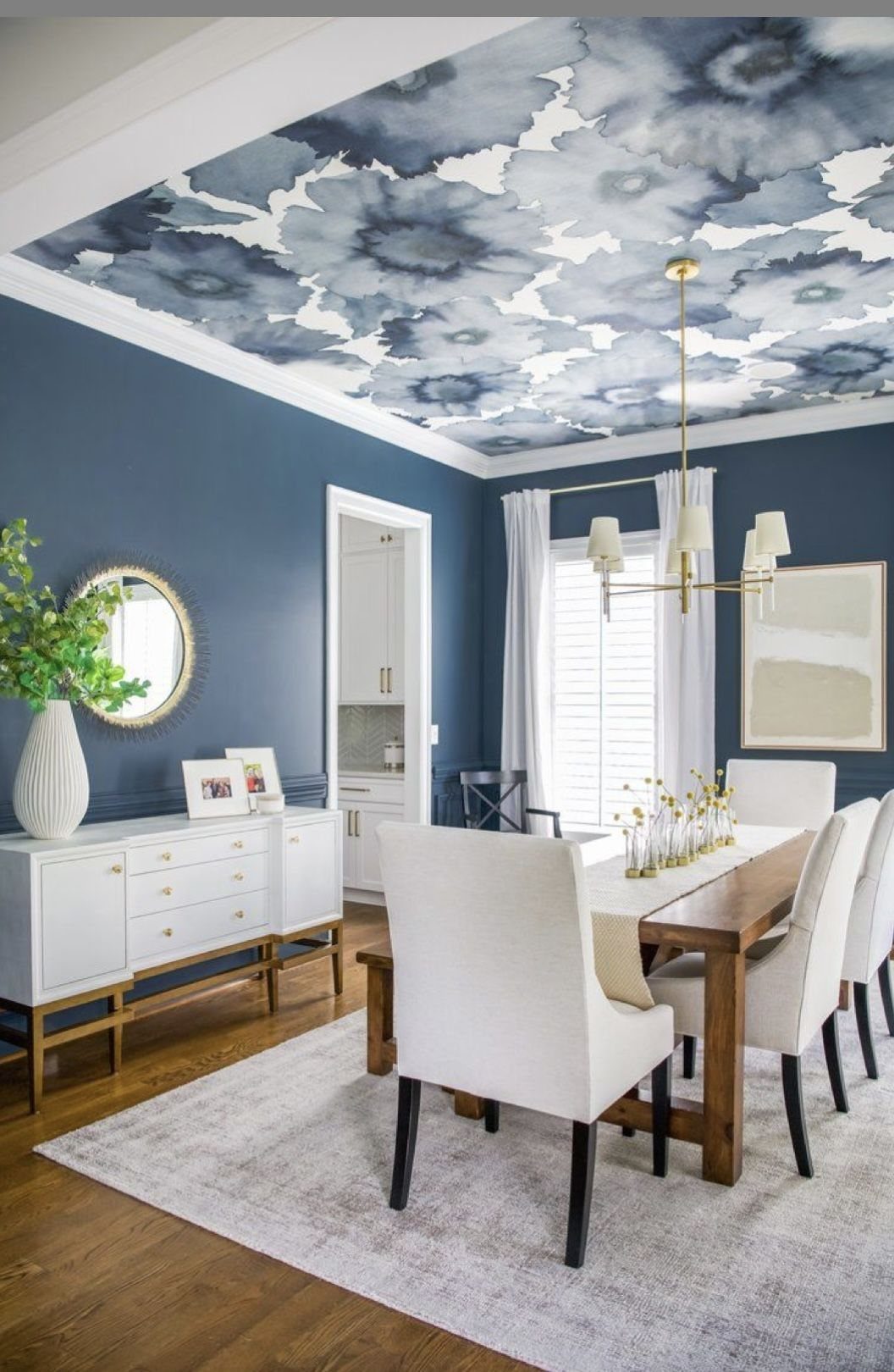
Upholstered chairs at a wood table soften the whole equation. White linen against a blue wall is crisp, but performance fabric or leather holds up to actual meals better; I would order swatches and spill something on them on purpose.
A bench on one side keeps the look from going too matched-set and tucks in tighter when the table is not full. The mix is the point.
Bassett Furniture’s custom design program allows you to put your spin on your dining tables, kitchen tables, or breakfast table. Choose from oak, walnut, and other woods and a wide selection of wood finishes.
7. Wood Tables with Live Edges
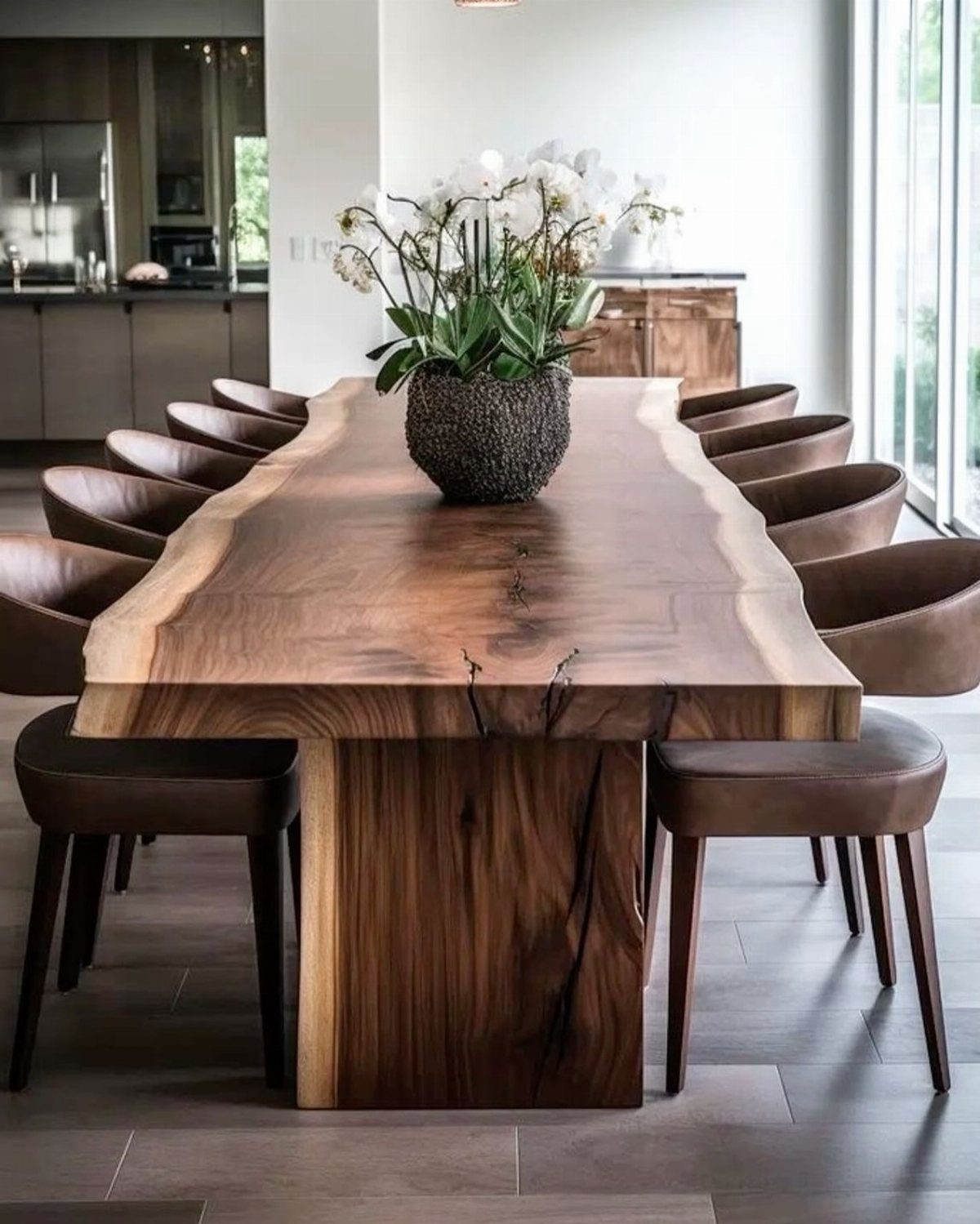
A live edge keeps the tree’s outer contour, bark stripped and the grain sealed, so no 2 tables match. The irregular line runs lengthwise and softens the geometry of a room full of right angles.
This is a statement piece that asks for space around it.
In a tight dining area the protruding curve steals walkway; I would give it the same clearance on every side as any table, but measure at the widest point of the edge, not the center.
The slab thickness matters for seating comfort: once it gets thick enough, your thighs hit wood.
Pair it with simple chairs. The table already carries enough noise.
Best Decorative Items
A vase on a dining table should be heavy enough that a guest leaning to pass the salt does not tip it. Ceramic or thick glass wins over thin crystal for daily use.
Candles need holders with some weight and a lip to catch wax; a bare taper on wood will scar the finish before the evening ends.
Short holders keep the sight lines open across the table; a single tall pair only works when you set them far enough apart that the span between them carries the height.
A decorative tray collects the clutter of salt, pepper, and napkins into one moveable unit. Choose one you can lift with one hand; you will want to clear it for homework or a puzzle on a Tuesday.
Trends for Dining Room Tables
Mixing materials is the direction I see most often now: a wood table with metal legs, or a wood top on a painted base.
The contrast reads as considered rather than accidental when the finish on the wood is natural and the metal is matte black or aged brass.
Natural finishes are holding over stained ones.
The wood looks like wood, grain visible, color from the species rather than a dye. Oak, ash, and walnut in clear oil or lacquer are the common choices.
Extendable designs are not new, but the hardware has improved. A table that expands from 60 inches to 84 inches with a removable leaf, rounded corners, and groove detailing in the apron is a current standard shape.
The rounded corners matter more than they sound like they would; they soften the silhouette when the table is at full length.
Color Combinations
Light wood with neutral tones is the safer pairing and the one I would start with if the room gets good daylight.
The risk is flatness; I add contrast with black chair legs, a dark metal light fixture, or matte black hardware on a sideboard.
Walnut or mahogany against olive or charcoal walls is a specific combination that works because the warmth of the wood keeps the gray from going cold.
Cream ceramic, cut branches with the green still on, plain glass, and white plates against a dark table finish the job without asking for more.
Metallic accents with dark wood should be limited to one tone per room. Brass candlesticks, a brass pendant, and brass chair legs together read as a choice; mixed metals on a dark table read as whatever was in stock.
Frequently Asked Questions
What are the trends for dining room tables in 2026?
The strongest trend I see for 2026 is mixed construction: wood surfaces paired with metal understructures, the metal finished in matte black or aged brass rather than bright chrome.
Clear finishes are pulling ahead of stains, with oak, ash, and walnut left in oil or lacquer that lets the grain read rather than hiding it under pigment.
What do you put in the middle of your dining room table?
A centerpiece needs to sit below eye level so people across from each other still have sightlines.
My own formula runs in layers: a runner first, then one living element like fruit or branches, one light source from tapers, and I force myself to quit there.
The bones stay put all year; I trade gourds for lemons once June arrives.
What are the best decorative items for a dining table?
A heavy ceramic or thick glass vase will not tip when someone leans to pass the salt. Tapers need heavy holders with a drip edge, because a naked candle will etch wood before the meal finishes.





