
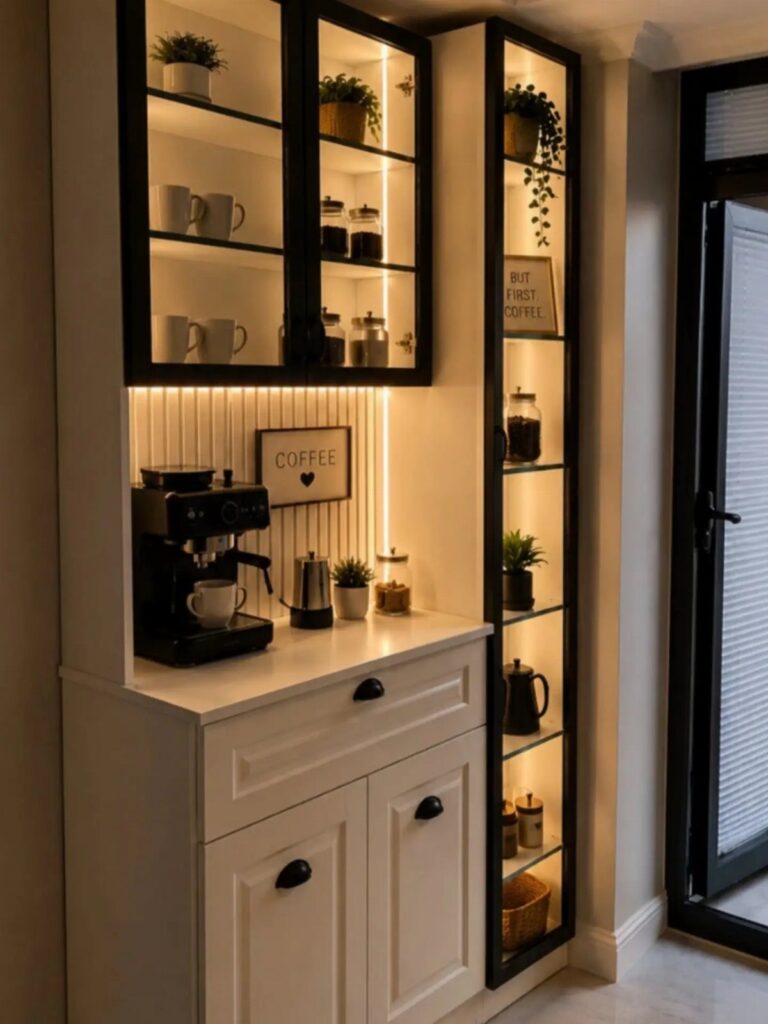
A DIY coffee bar armoire can be as simple as a compact fridge setup or as finished as a full appliance station with marble top and LED strip lighting, and the right pick depends on whether you are building fresh or rescuing something with dovetailed drawers already in it.
1. Coffee Station with Coffee Machines
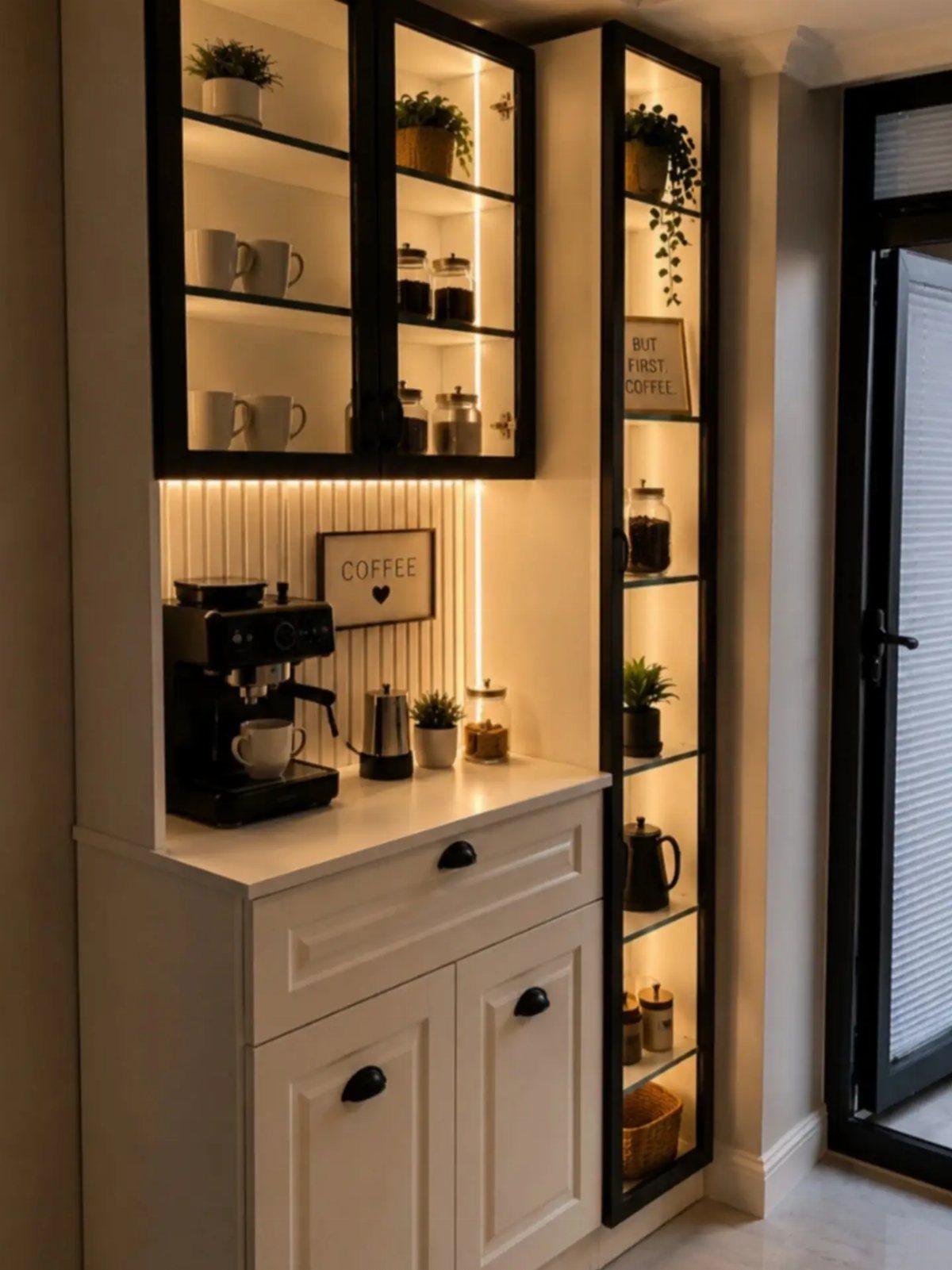
A dedicated coffee station keeps your machines behind closed doors until the timer goes off. I like this setup for small apartments where counter space is rented, not owned.
The glass-front upper cabinet lets you stage mugs like a small shop display, and the interior lighting means you can find the dark roast without opening the door in the early morning.
If you are already running a espresso machine and a drip brewer, measure your tallest carafe before you buy the armoire; I have seen people cut a shelf only to find their thermal pot still does not fit.
2. Repurposing an Old TV Armoire
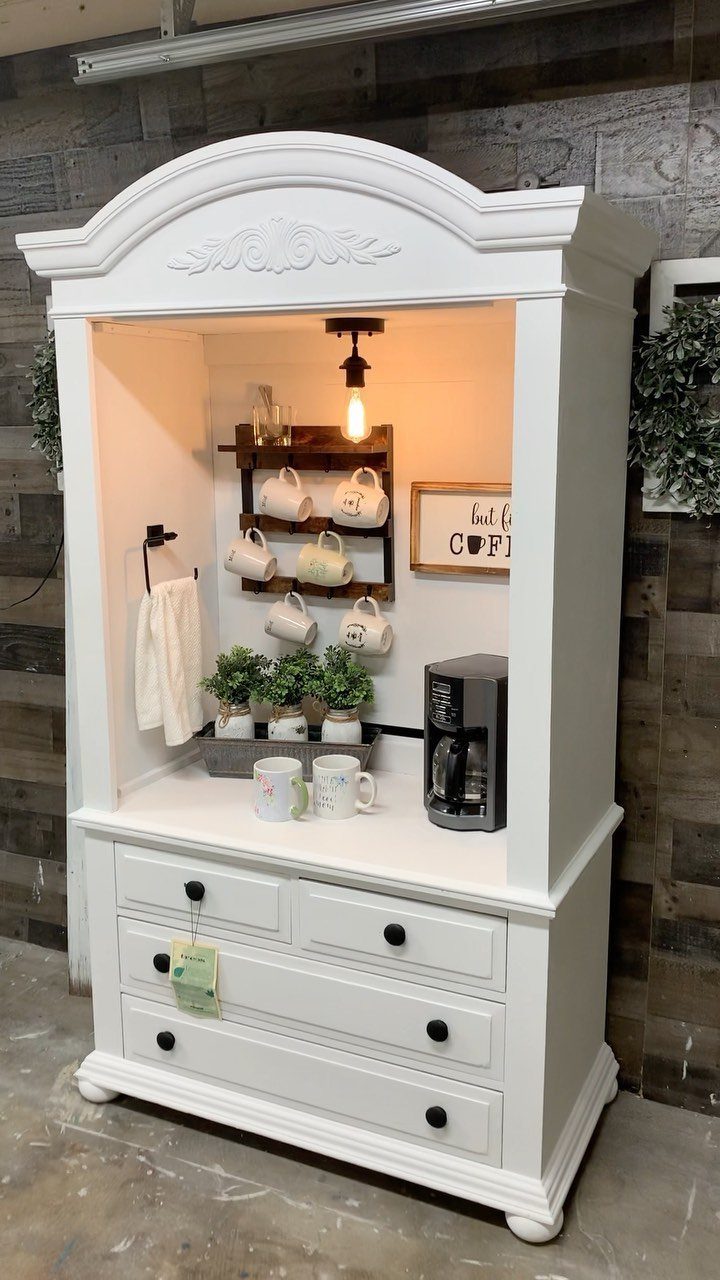
Old TV armoires are thick on Craigslist and Facebook Marketplace because flat screens killed them.
Their depth, built for tube televisions, swallows a coffee maker and grinder with room to spare. I would strip the interior mounting hardware rather than fight it, then add a mug rack where the TV once sat.
A rustic plank wall behind one of these does half the visual work; painted white, the same piece reads farmhouse instead of salvage.
Check that the doors still hang square before you haul it home. A sagging door on a coffee bar gets old fast.
3. LED Lighting
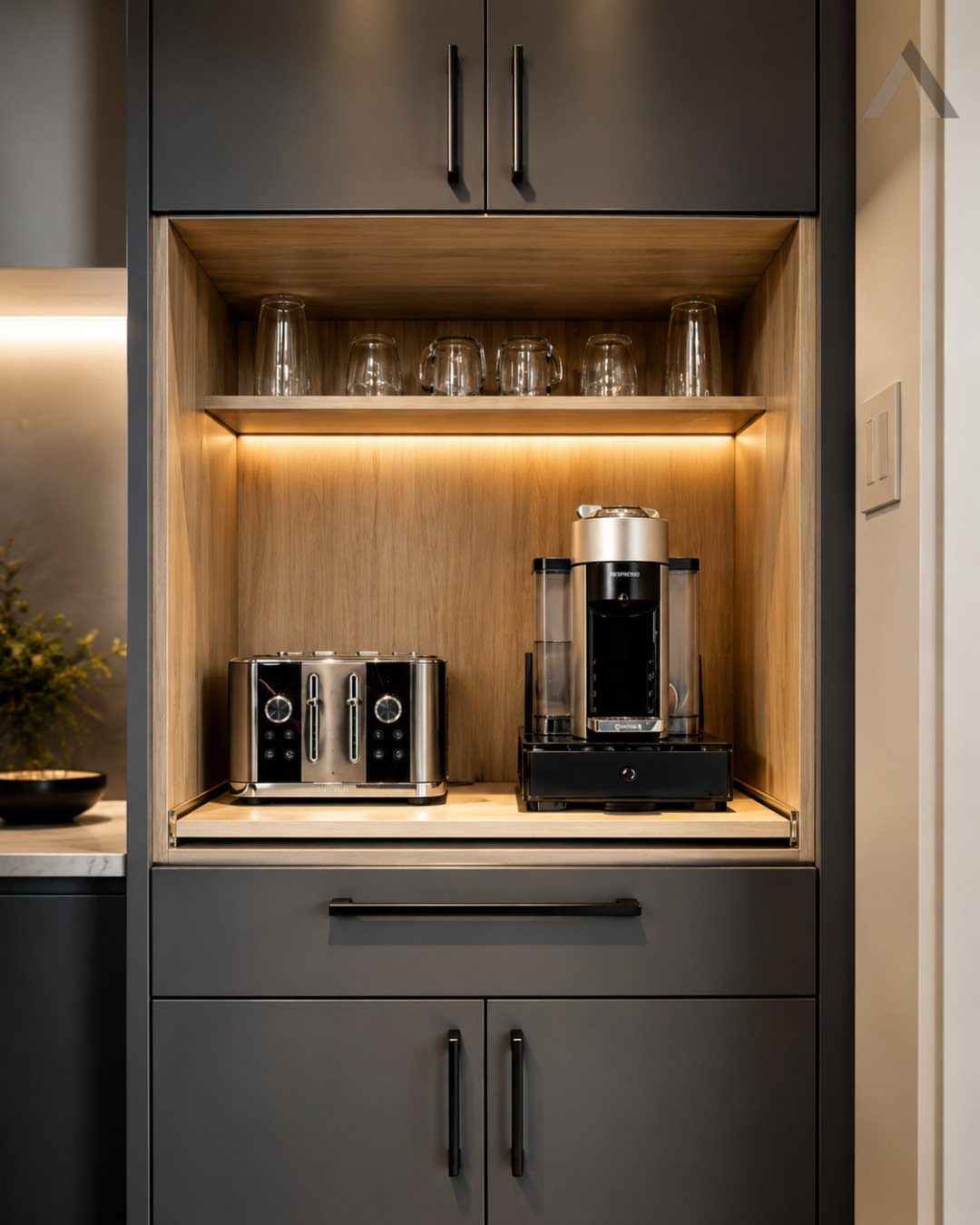
LED strip lighting turns a dark cabinet into a stage for your morning ritual. The warm strip under the shelf is the cheap part; the wood liner behind it is what makes the glow look expensive.
I would use adhesive-backed tape, not puck lights, because the strip throws an even wash without hot spots on your mugs.
A low-voltage kit with a dimmer is inexpensive and installs quickly if you have an outlet inside or nearby. The wood lining is optional, but without something to bounce the light, the effect flatlines into a convenience store cooler.
4. Coffee Bar with Storage
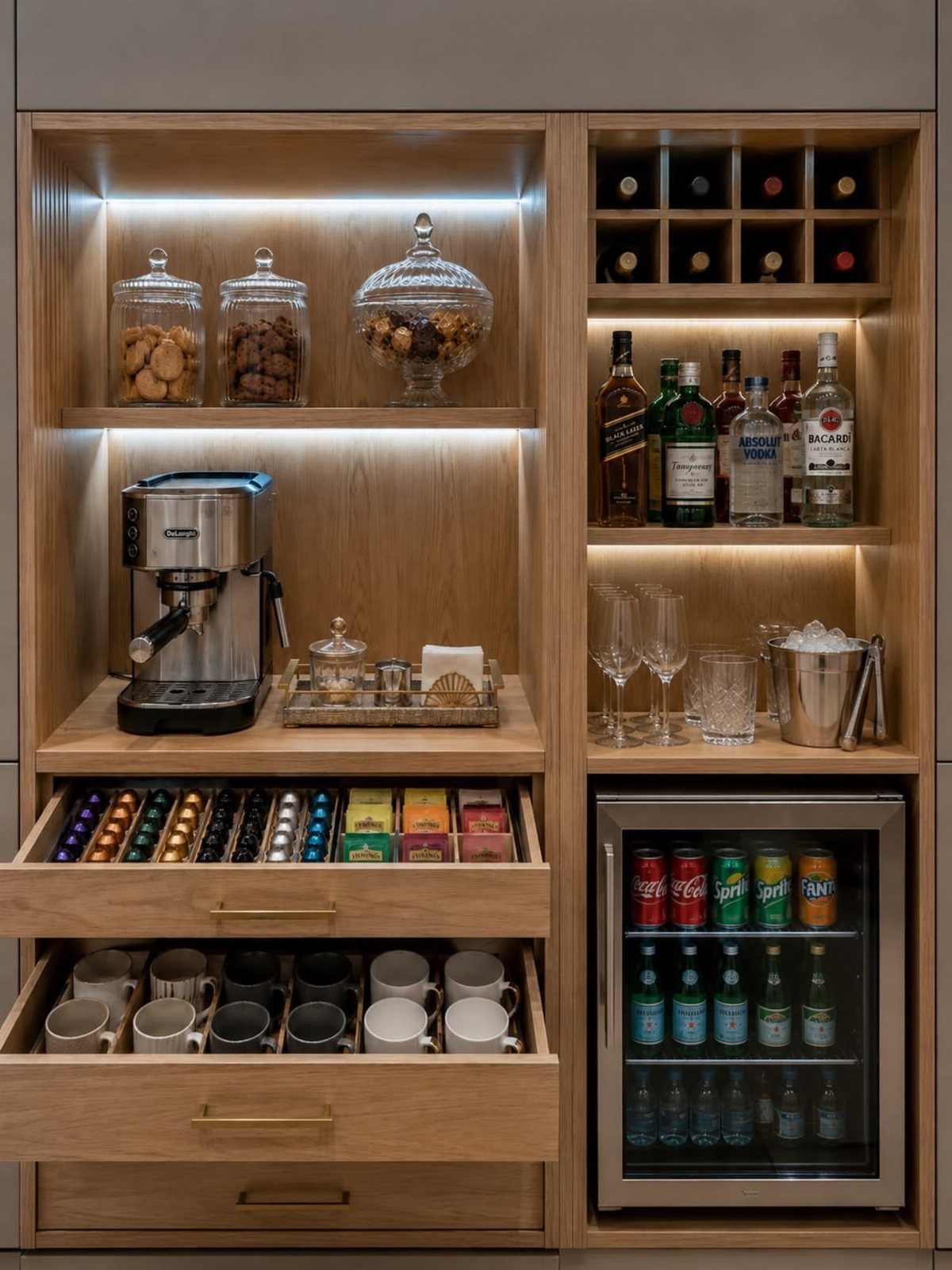
This is the armoire for people who collect mugs faster than they collect houseplants. Open drawers hold pods and cups at hand height, while a mini fridge below means milk never crosses your kitchen proper.
I would build for the fridge first, since its ventilation gap is non-negotiable, then size the drawers around what is left.
Liquor storage on the same shelf is a choice; I keep mine separate to avoid grabbing the wrong bottle before noon, but the integrated look is hard to argue with if you entertain.
5. Built-In Beverage Fridge Station
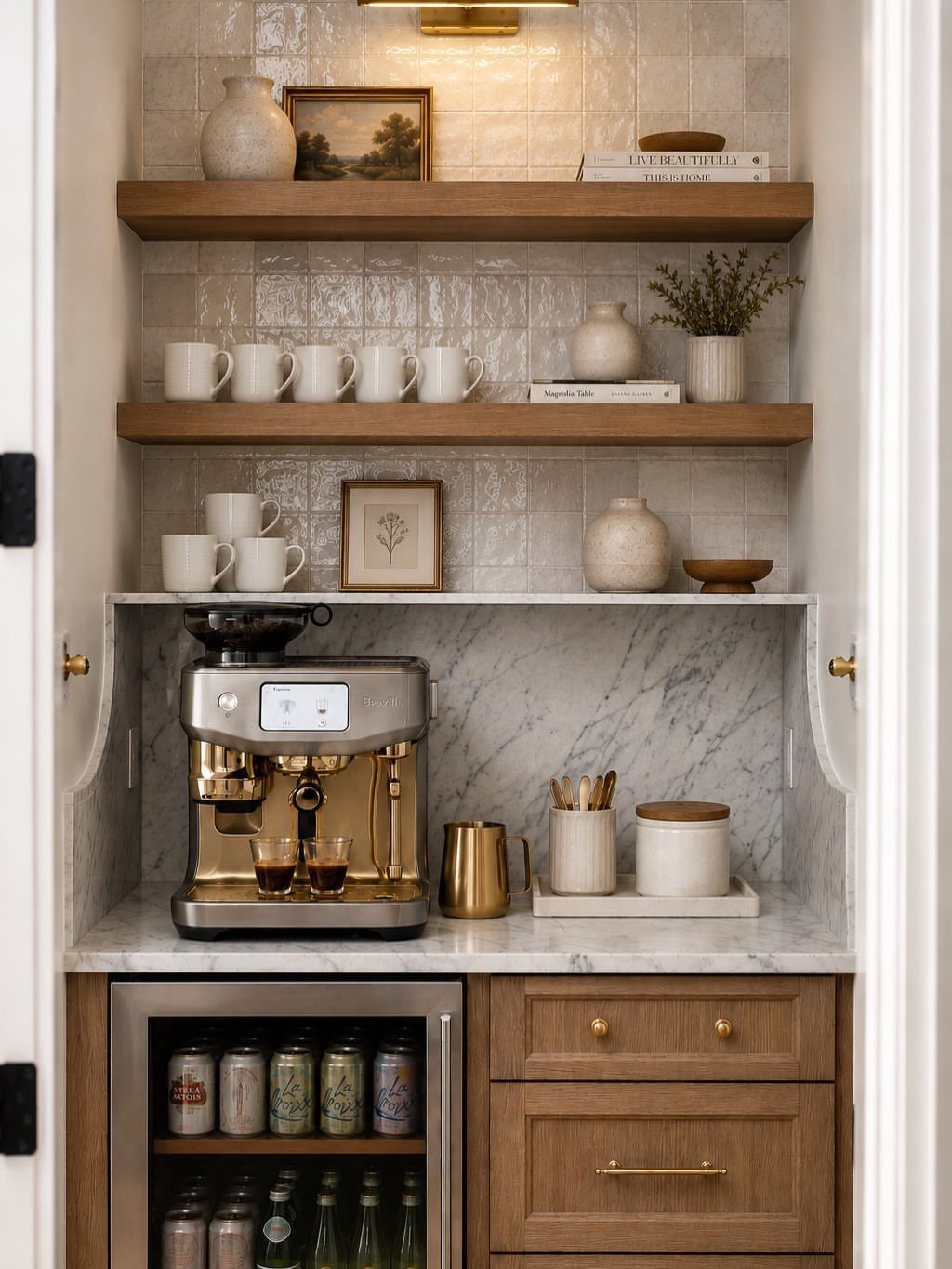
A built-in beverage fridge below the counter turns a coffee bar into a self-contained drink station.
A marble top is the visual anchor; wood floating shelves above keep it from reading too cold. I would budget for a wider undercounter fridge, since the narrow models hold barely a six-pack and regret sets in fast.
The glass door reads as display, not appliance, which matters when the cabinet faces a dining area. Leave a little clearance on the sides for air circulation or the compressor will run loud and short-lived.
6. Seasonal Decorated Coffee Cabinet
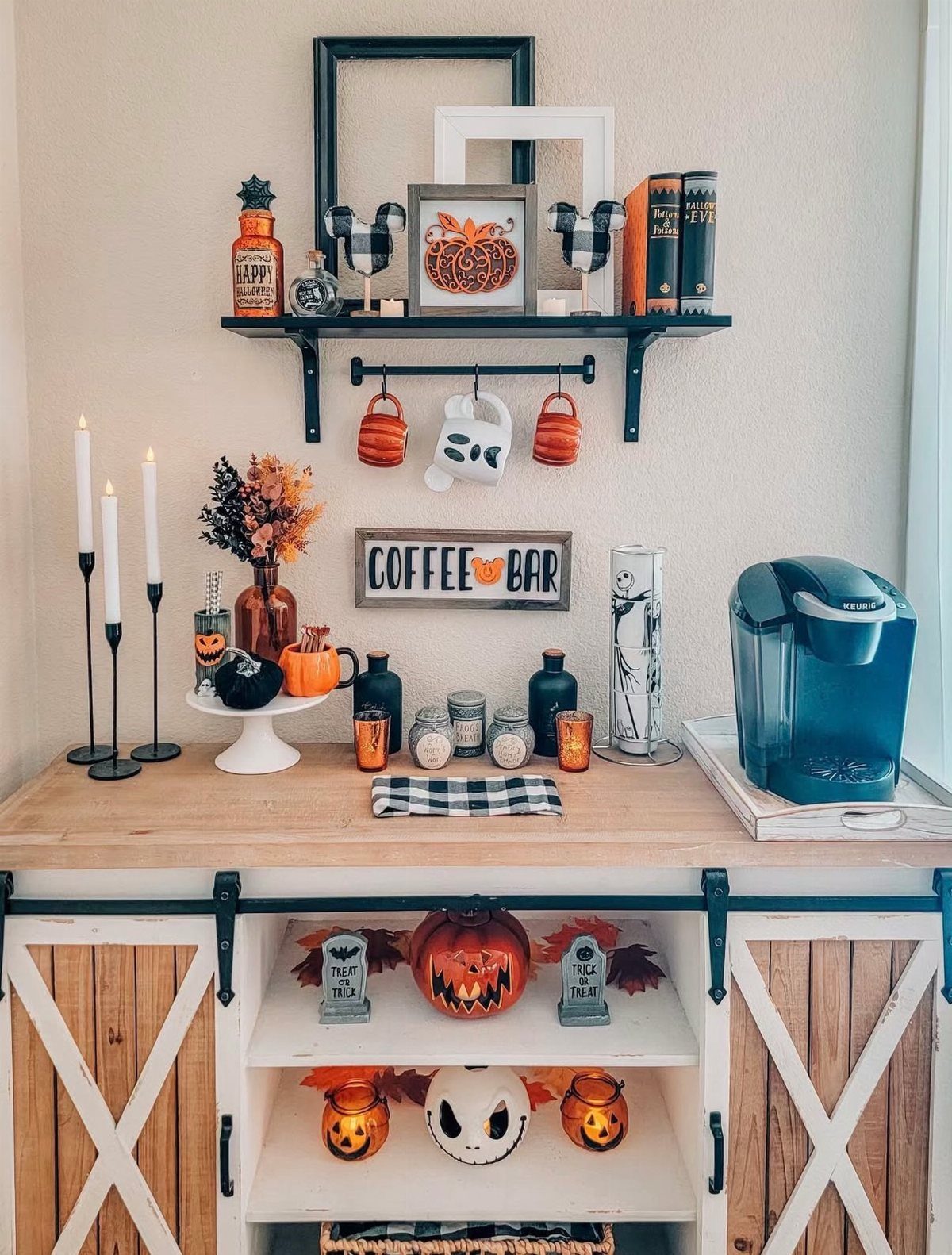
Seasonal styling on a coffee bar costs little and reads as effort. A Halloween setup uses pumpkins, a candle, and themed mugs; the wooden countertop warms what could read as party-store disposable.
Keep the machine itself neutral and swap the surrounding pieces with the seasons. Storage for the off-season decor is the hidden cost, a bin per holiday if you do it right.
A wooden top like this one takes stain and dings better than painted laminate, which matters when you are setting ceramic pumpkins on it every October.
Placement Considerations
I place a coffee bar by how I actually use it, not where it looks best in a photo.
Proximity to a trash bin matters more than most people realize until they are sweeping spilled grounds off the floor every morning.
A manual espresso machine makes this non-negotiable; even a drip brewer leaves filters and spent pods to deal with. I also think about where I drink the coffee.
If you have a chair you always end up in, the armoire belongs within easy reach of that spot, not across the kitchen. The same logic applies to seating areas you use for guests.
In a small apartment, one corner may be your only option, but if you have choices, put the walking distance to the sink and the garbage can ahead of the view.
Materials for DIY Projects
Plywood and MDF are the standard choices for building out an armoire interior, and I reach for plywood when I want something that will survive daily use.
It holds screws better than MDF, which matters for drawer slides and shelf brackets that take weight. MDF works fine for painted panels that do not carry load, and it machines cleanly for routed edges.
I use solid wood for any surface that shows: face frames, doors, and the countertop itself. It dents instead of crumbling, and it takes stain or paint without the fuzzy edge MDF leaves.
For paint, I prime MDF heavily at the edges where it likes to drink moisture. A painted finish on plywood needs the same attention to end grain, though veneer-core plywood swells less than MDF if water gets in.
Repurposing Furniture
Old furniture with good bones is worth more as a coffee bar than as landfill.
A bureau with drawers below open shelves gives you the same storage logic as a built-in, and the existing joinery is usually better than what flat-pack furniture offers.
I look for pieces where the drawer boxes are dovetailed and the case is hardwood; particleboard case goods sag under the weight of machines and mugs.
I strip out interior mounting hardware rather than work around it, then build fresh for what I am installing.
Check that doors hang square and drawers slide before you commit to hauling anything home, because fixing a twisted case is skilled work that most DIY budgets do not cover.
Frequently Asked Questions
How can you make a home coffee station?
A dedicated cabinet or armoire is the cleanest way to build one, since it hides machines and mugs behind doors until you need them.
A good armoire needs at least 18 inches of depth front to back so the machine sits without the door hitting it, and I check that the hinges still pull flush before I haul anything home.
Strip out any old mounting hardware inside and build fresh for what you are installing, rather than trying to work around it.
Where should a coffee station be placed in a kitchen?
Put it near your garbage can first, then near where you actually drink the coffee.
I put the station as close to the trash as I can get it; nothing makes me regret a layout faster than tracking wet grounds across clean tile because the can was 3 steps too far.
I also want it within easy reach of my usual chair, not across the kitchen, and walking distance to the sink beats a good view.





