
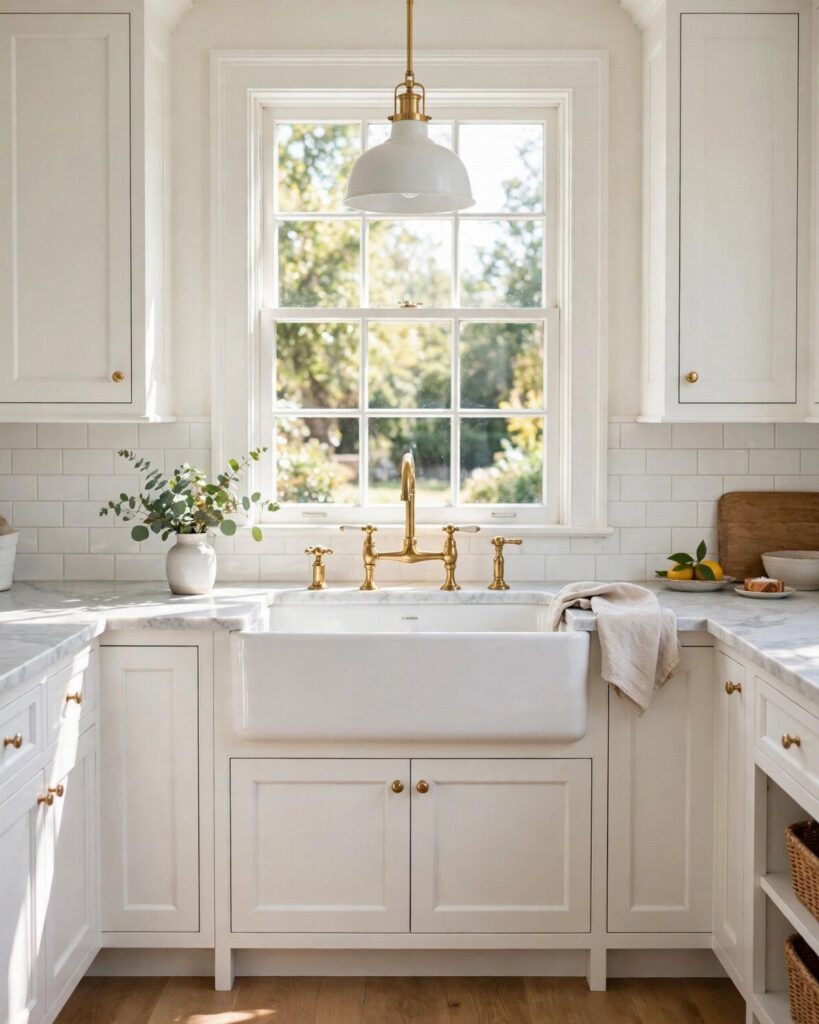
A white farmhouse kitchen can run from a pair of brackets and a plank of open shelving to a coffered ceiling that costs high per square foot and climbs fast.
The deciding factor is how much you can change: open shelves, a pitcher of lavender, and plates that lift off hooks by afternoon ask nothing of the structure, while a fireclay farmhouse sink needs a reinforced cabinet base and a large window over the prep area takes a professional install.
1. Farmhouse Sink
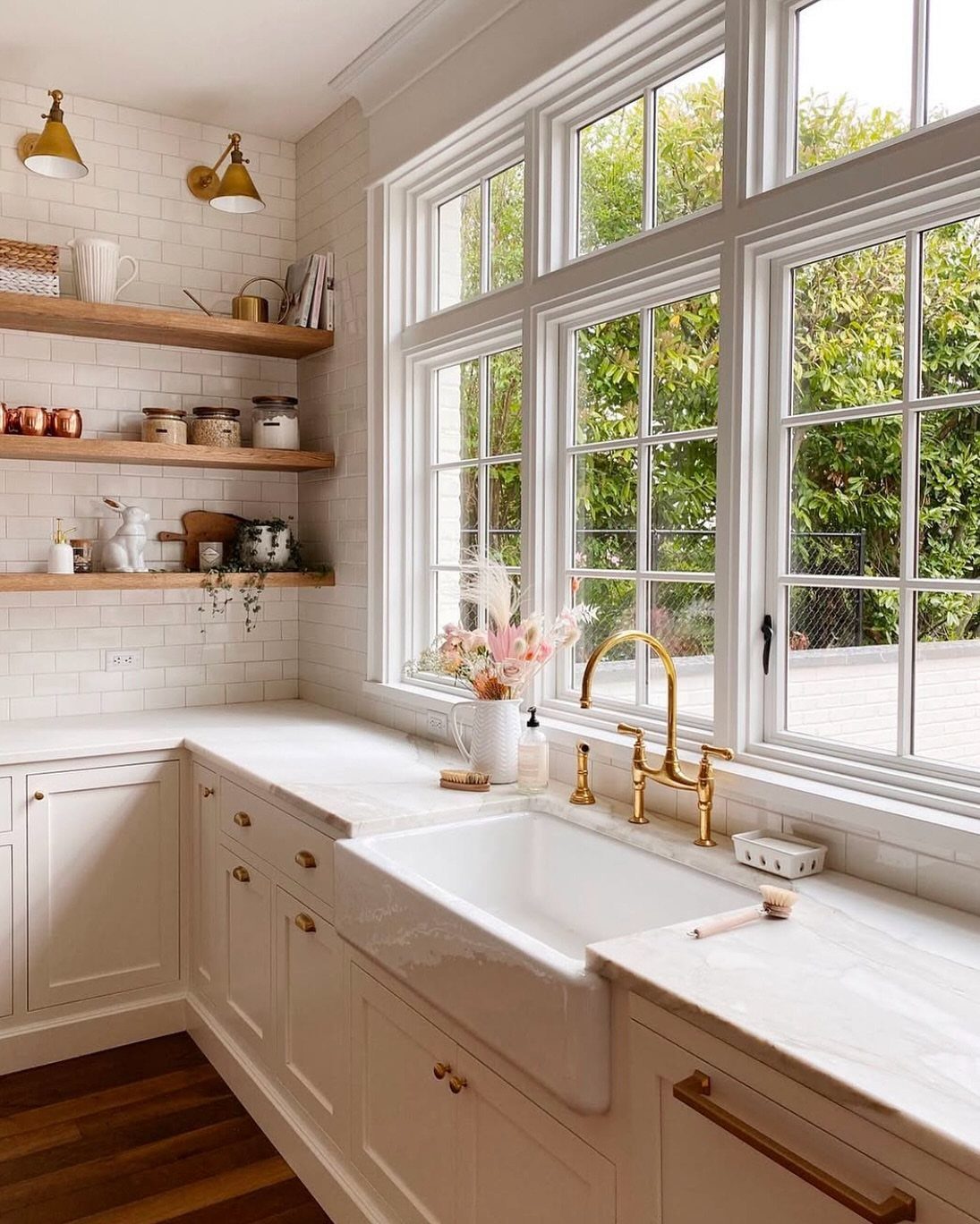
An apron-front farmhouse sink carries the whole look. The raised front panel, originally designed to catch splashed water from a pump, now reads as deliberate farmhouse shorthand.
For a renovation on a tight budget, this is where I would put money first. The sink is the visual anchor, and everything else can be simpler around it.
Fireclay costs more than cast iron with enamel, and both run heavier than standard cabinets can handle without reinforcement. I would check the cabinet base before ordering; retrofitting support is not hard, but forgetting it is expensive.
2. Open Shelving
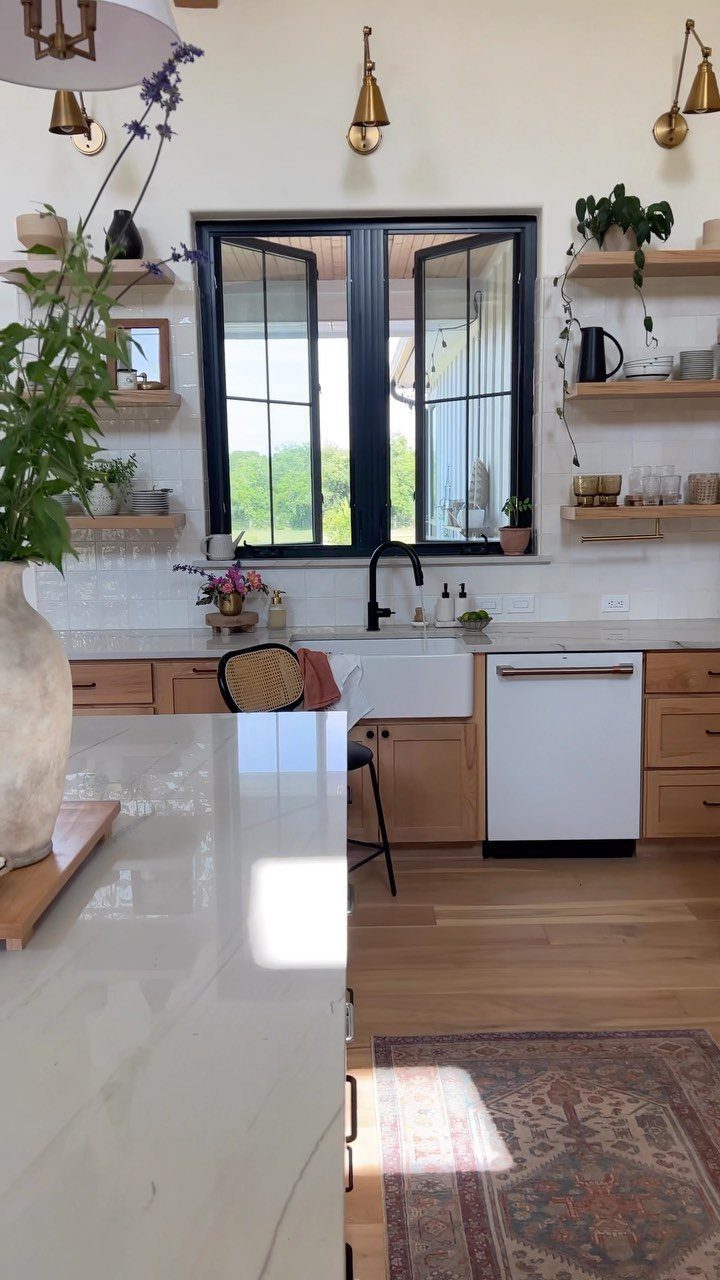
Floating shelves in pale wood keep a white kitchen from feeling sterile. Shelves above the counter and beside the window borrow light and make dishware part of the room’s texture.
I like this for renters or anyone tentative about open storage because the commitment is low: 2 brackets, a plank, done.
Dust and grease settle on open shelves fast; items you use weekly stay cleaner than display pieces. I would stick to plates, bowls, and a few wooden tools, not the full pantry.
3. Glass Cabinet Doors
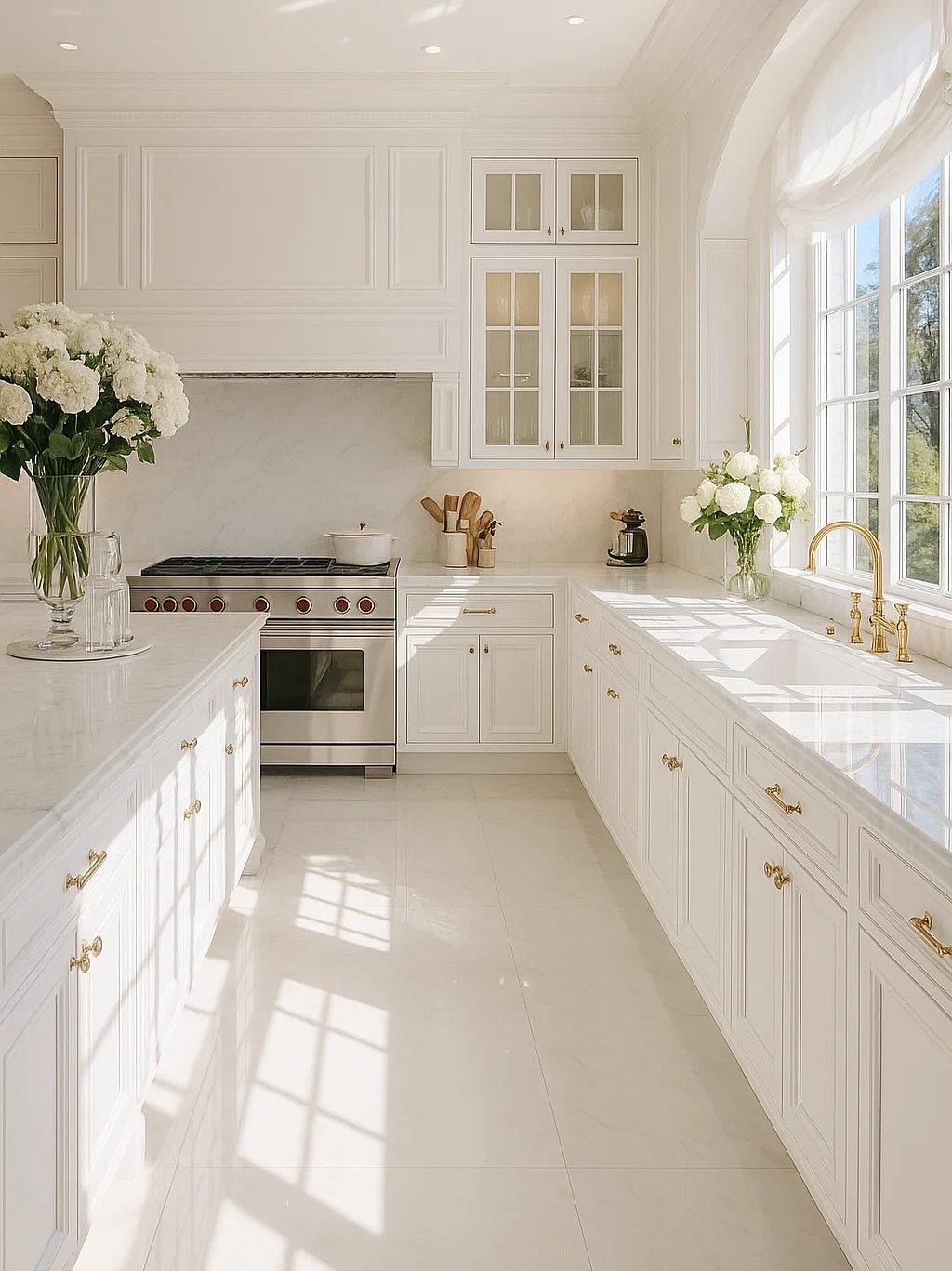
Glass-front uppers let dishware do the decorating. A single cabinet with glass doors, holding glassware that catches window light, is a small move with outsized effect.
This suits the collector, the person who owns plates worth seeing.
For everyone else, it is a reason to edit: mismatched everyday tumblers read as clutter behind glass. I would limit it to one bank of cabinets, uppers only, and keep the rest solid to hide the practical mess of cooking.
4. Natural Wood Countertops
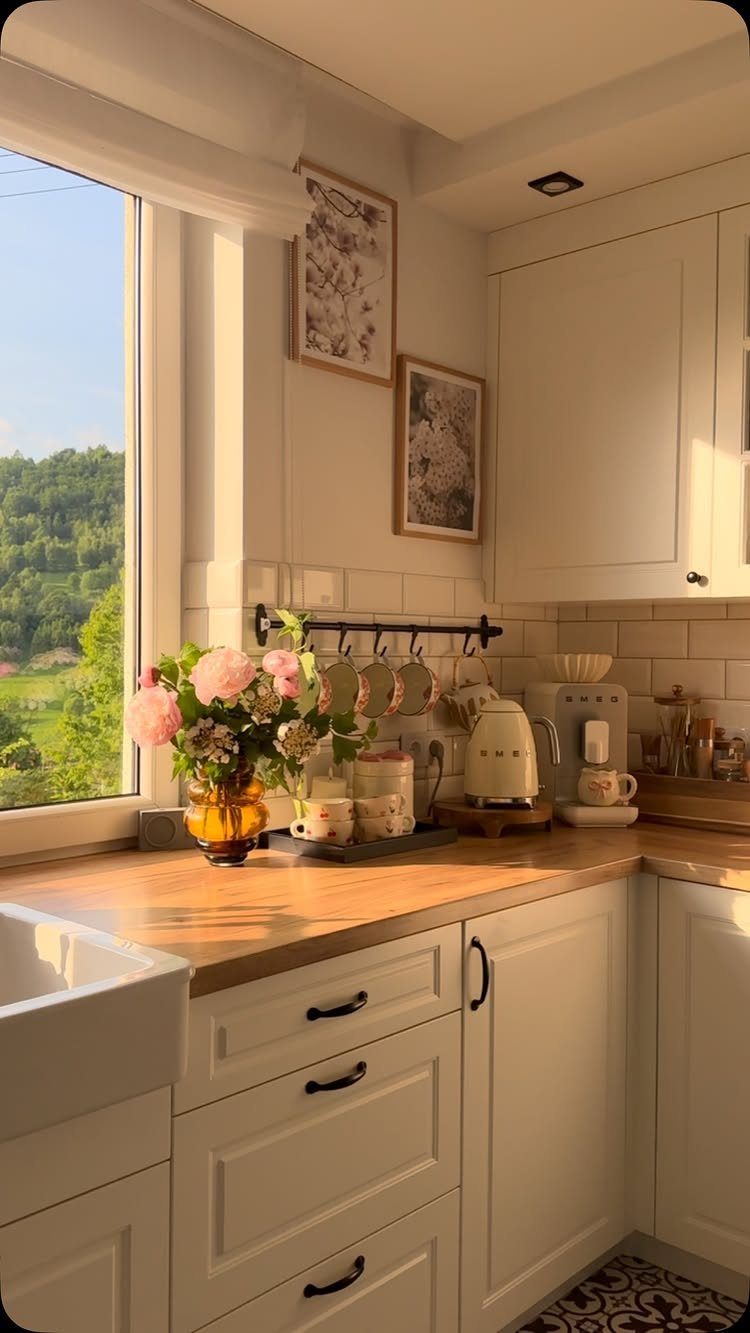
Butcher block counters bring warmth against white cabinets without competing for attention. Straight, clear grain like this reads as maple or birch to me, quieter than the busier oak I see elsewhere.
These need oiling monthly with food-safe mineral oil, more often near the sink. Water is the enemy; I would keep a small cutting board beside the sink for wet tasks rather than cut directly on the counter.
Natural wood counters undercut most stone and age visibly, which I consider a feature, not a flaw.
5. Warm Whites
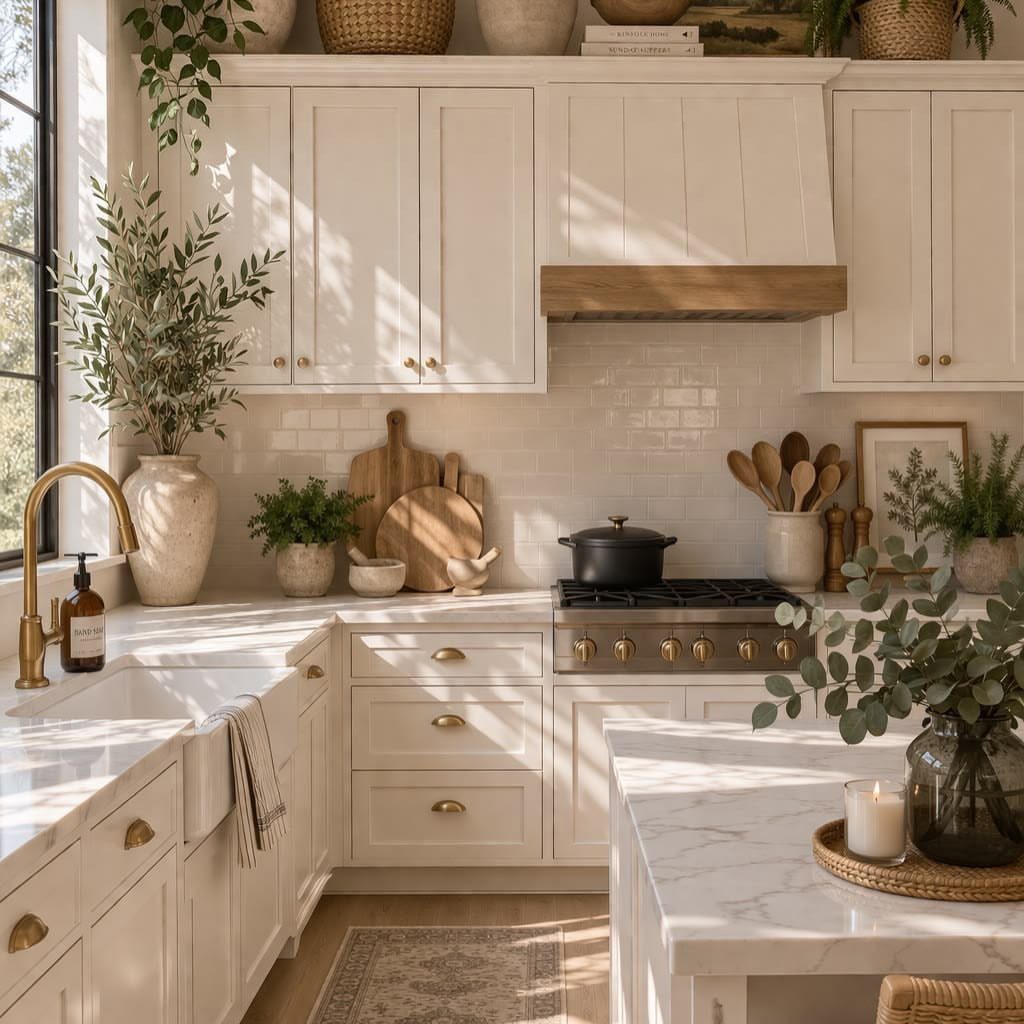
Warm whites avoid the clinical chill that cool undertones can bring to a kitchen.
I would test samples at the hour you actually use the kitchen.
Light shifts color dramatically through the day, and a white that reads warm in morning sun can turn muddy after dark. Buy quart samples, brush them on poster board, and live with them through a full light cycle before committing.
6. Farmhouse Decor
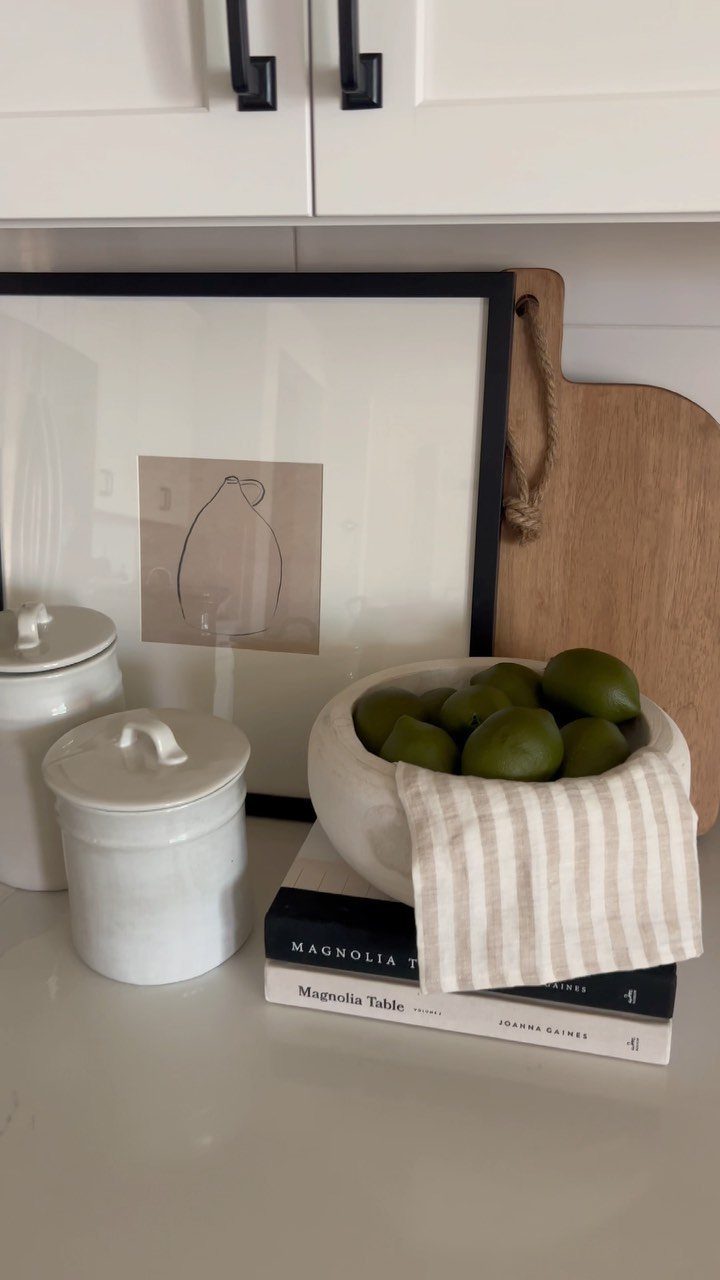
A cutting board, canisters, and stacked cookbooks bring in material that is not painted or manufactured. Wood, ceramic, paper, and a single bowl of fruit add up to a kitchen that looks lived in rather than staged.
I would start with one wooden board leaned against the backsplash and build slowly.
The trap is overloading every surface; 3 objects per counter section is my limit before it shifts from collected to cluttered. Rotate seasonally, use what you own, and the charm holds without buying "rustic" decor by the cartload.
7. Planked Ceilings
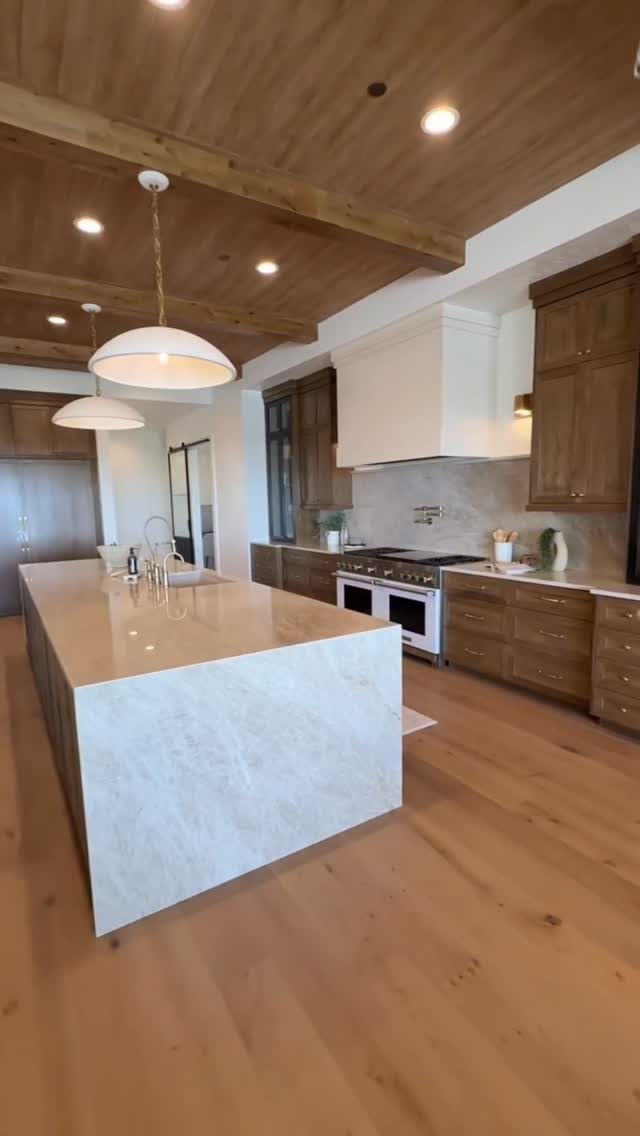
Wood overhead draws the eye up and warms a white kitchen from above. Beams add rhythm; planks alone, run lengthwise, make a low ceiling feel higher.
This is labor, not a weekend swap. A contractor runs installation by the square foot, more if the existing ceiling needs stripping.
I would budget for engineered planks over solid; they move less with humidity and take paint or stain evenly. Natural wood planks overhead with exposed beams give the farmhouse look without darkening the room.
8. Colorful Decor Items
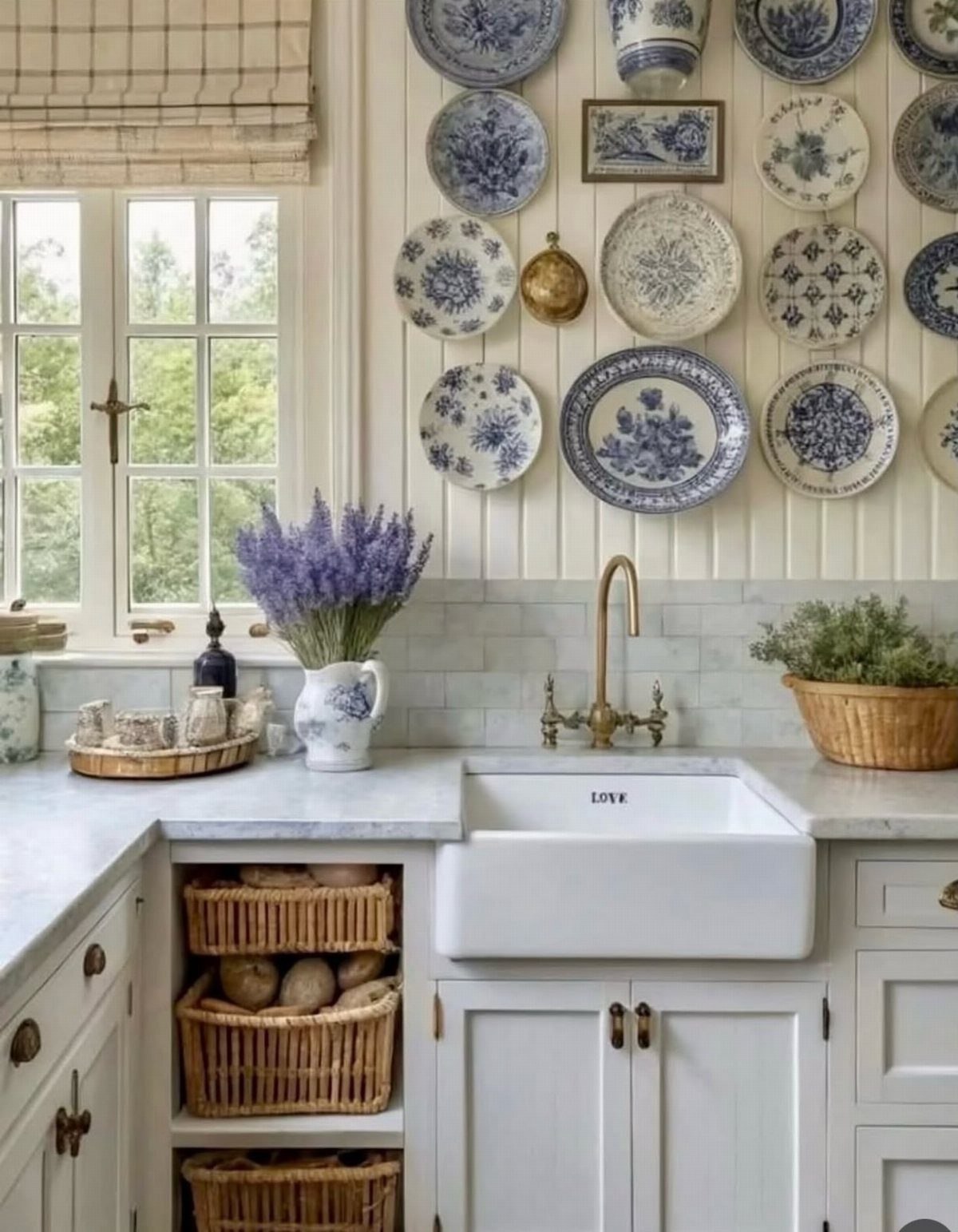
A white kitchen is a neutral stage; one or two saturated objects do the work of a whole palette swap.
Blue-and-white plates on the wall, a pitcher of lavender on the counter: the color lives in the object, not the architecture.
This suits the renter or the commitment-shy. Plates lift off hooks, the pitcher moves to a shelf, and the room returns to blank white by afternoon.
I would pick one color family and repeat it three times, tops: wall, counter, table, done. More than that and the eye bounces without resting.
9. Subway Tile Backsplash
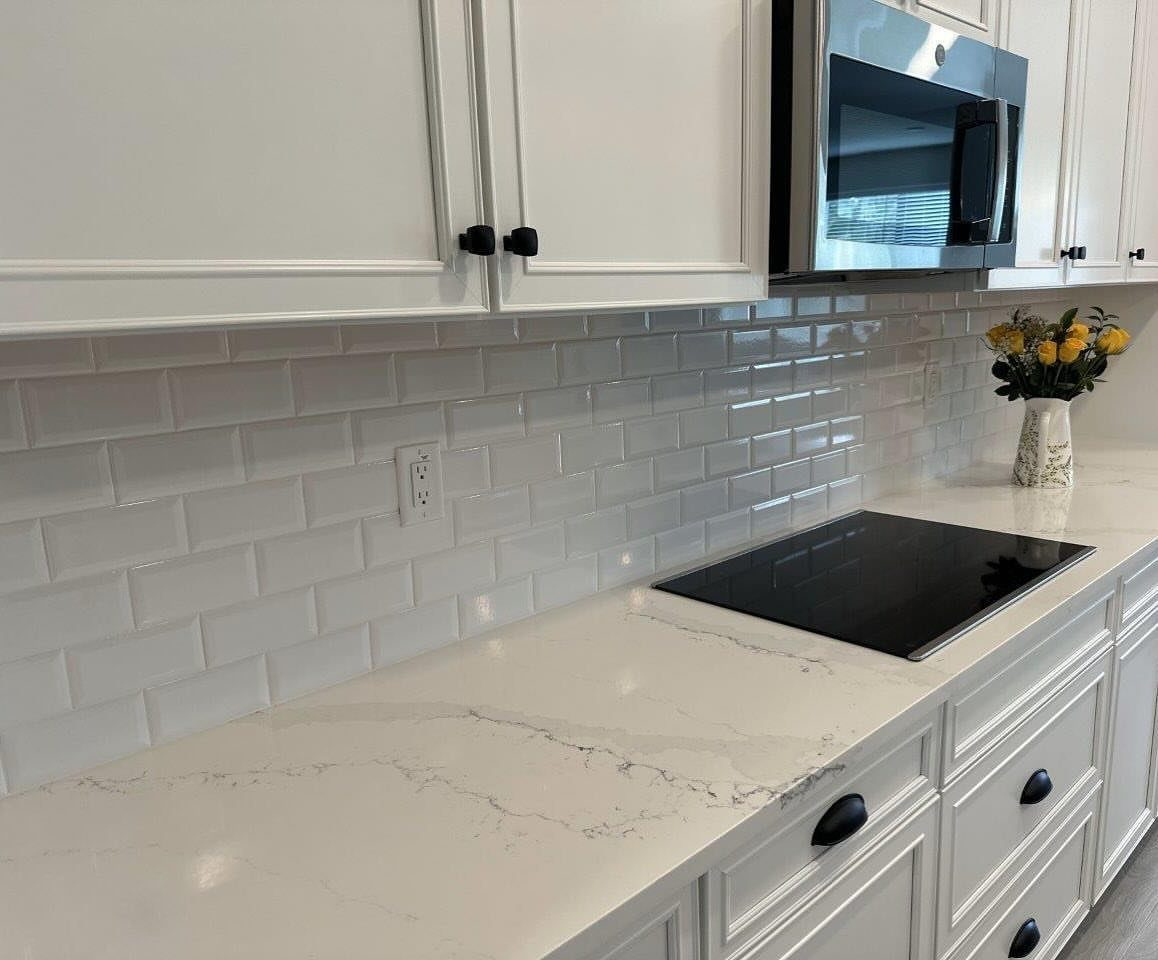
Glossy white beveled subway tile catches light and bounces it around a small kitchen. The bevel adds shadow lines that flat tile lacks; the gloss wipes clean behind a stove.
Standard subway tile runs a few dollars per square foot, with installation extra. I would set it in a running bond, half-offset, the classic pattern that hides slight size variation.
Dark grout turns the grid into a statement; white grout disappears and reads as solid surface. Either works, but the choice is permanent: changing grout color means re-grouting.
10. Coffered Ceilings
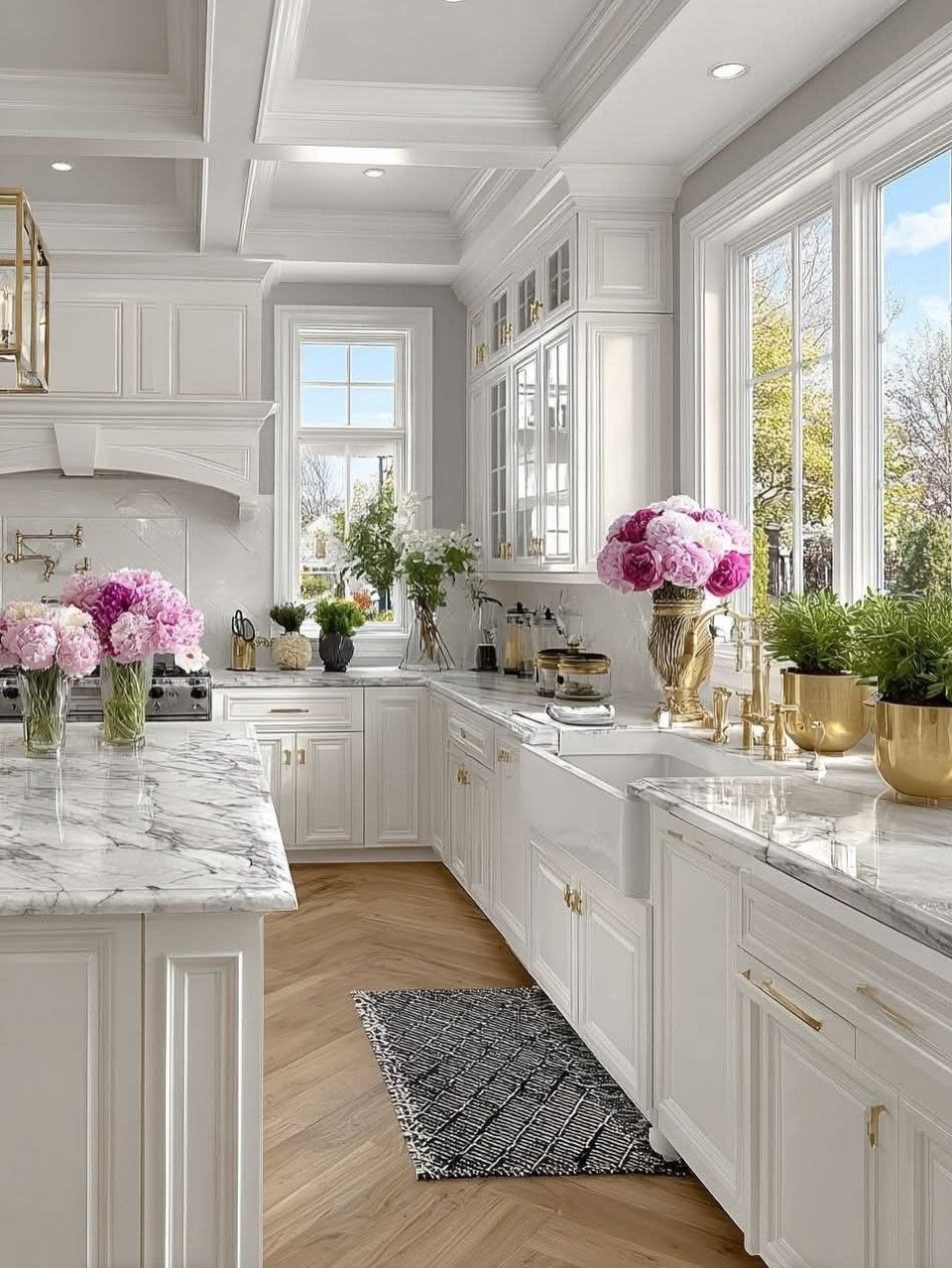
A coffered ceiling boxes the overhead into a grid of recessed panels, formal without being fussy. In white, it reads as texture rather than color, architectural interest that does not compete with cabinets or counters.
This is the most expensive ceiling move on this list. Materials and labor start high per square foot and climb fast with custom millwork.
I would keep it for a kitchen with tall ceilings; the recesses eat height, and a low coffered ceiling can feel oppressive. Painted white throughout keeps it airy.
11. Honed Carrara Marble Countertops and Backsplashes
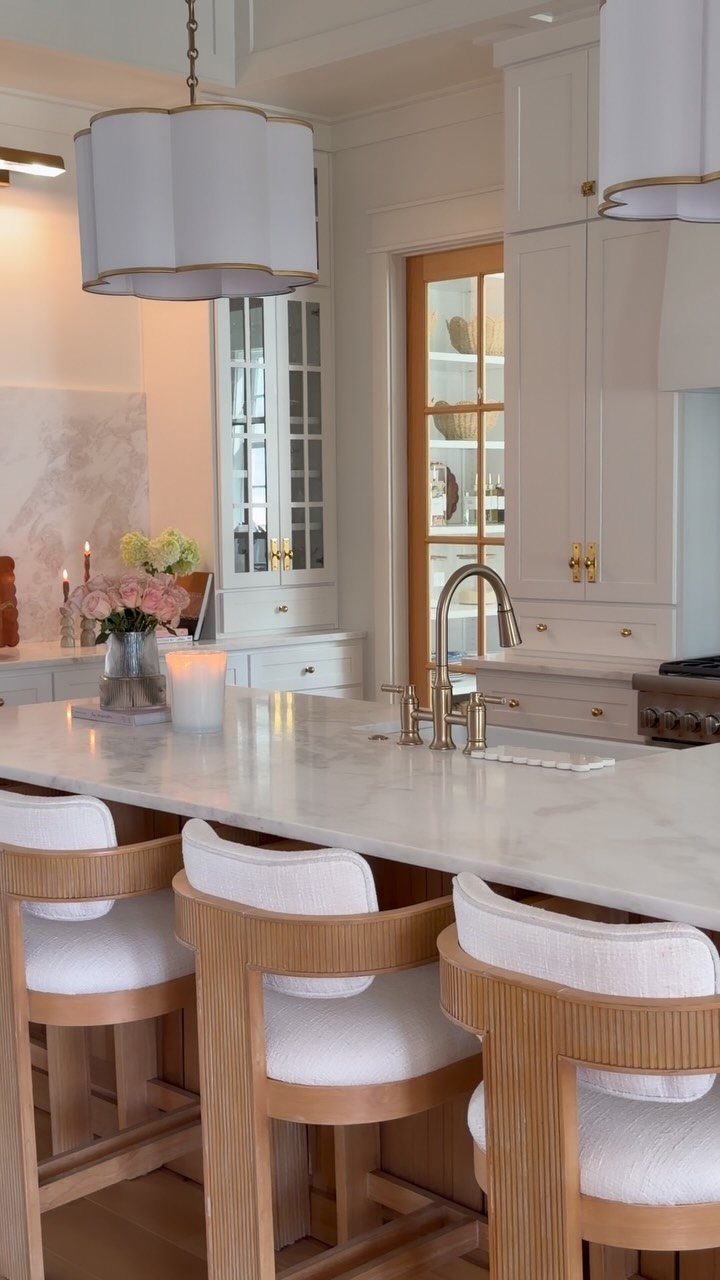
Honed Carrara marble carries soft grey veining through a matte surface that absorbs light rather than reflecting it. The honed finish, ground smooth but not polished, hides etch marks from lemon or tomato better than a glossy polish would.
Marble is porous; regular sealing is non-negotiable.
I would not put it near a coffee station or a home bar unless I enjoyed patina, because etching happens regardless. A full slab backsplash eliminates grout lines and lets the veining run continuous.
12. Crown Molding
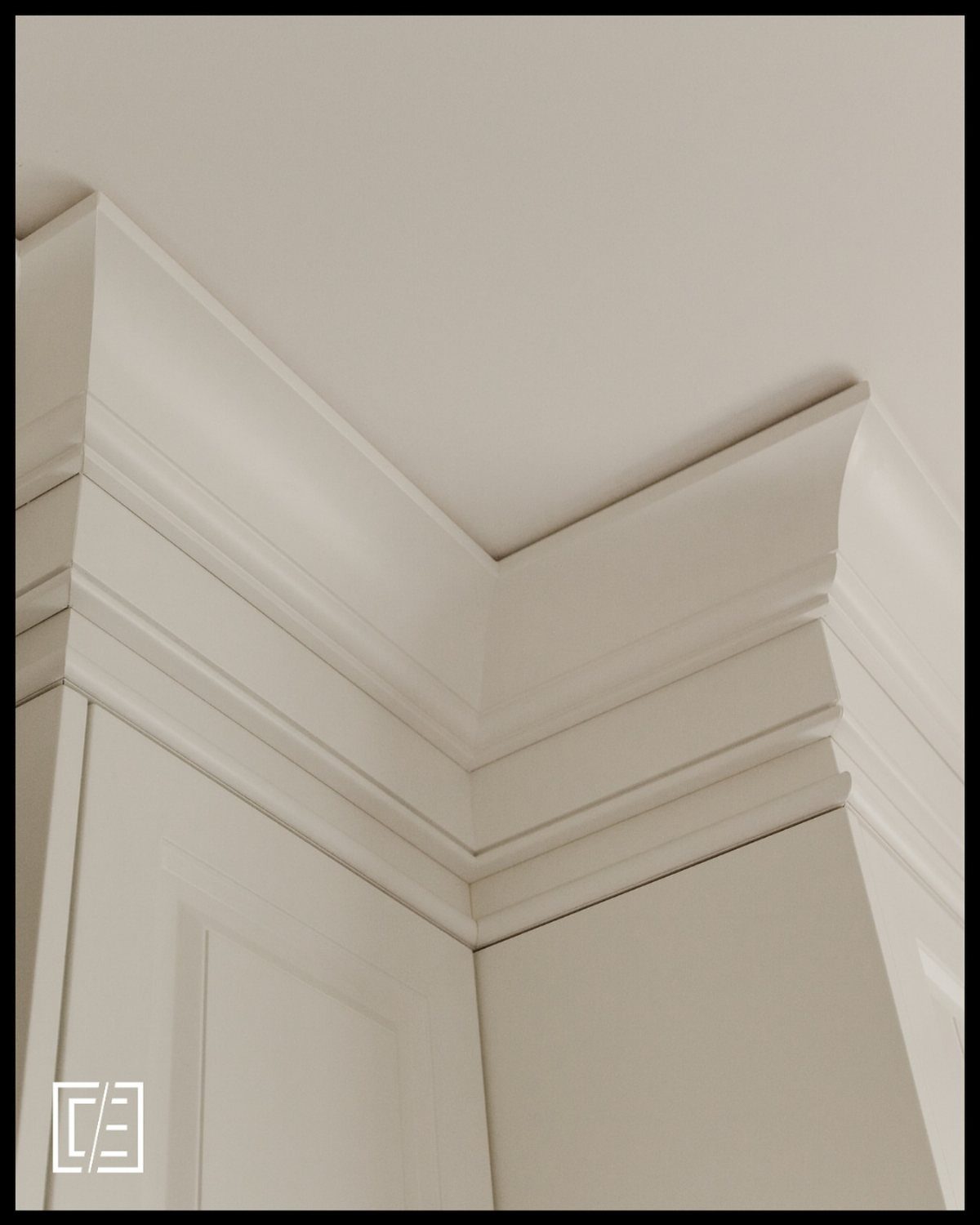
Crown molding closes the gap between cabinet and ceiling with a profile that reads as finished carpentry. In white on white, the shadow line does the work, not the color contrast.
Stock molding from a lumberyard costs pennies per foot; custom runs to dollars. I would match the cabinet door profile if possible, simple with simple, detailed with detailed.
Installation is fussy: corners must be coped or mitered tight, and caulk hides only so much. A painted finish forgives more than stained wood, which is why white crown dominates farmhouse kitchens.
13. White Shaker Cabinets
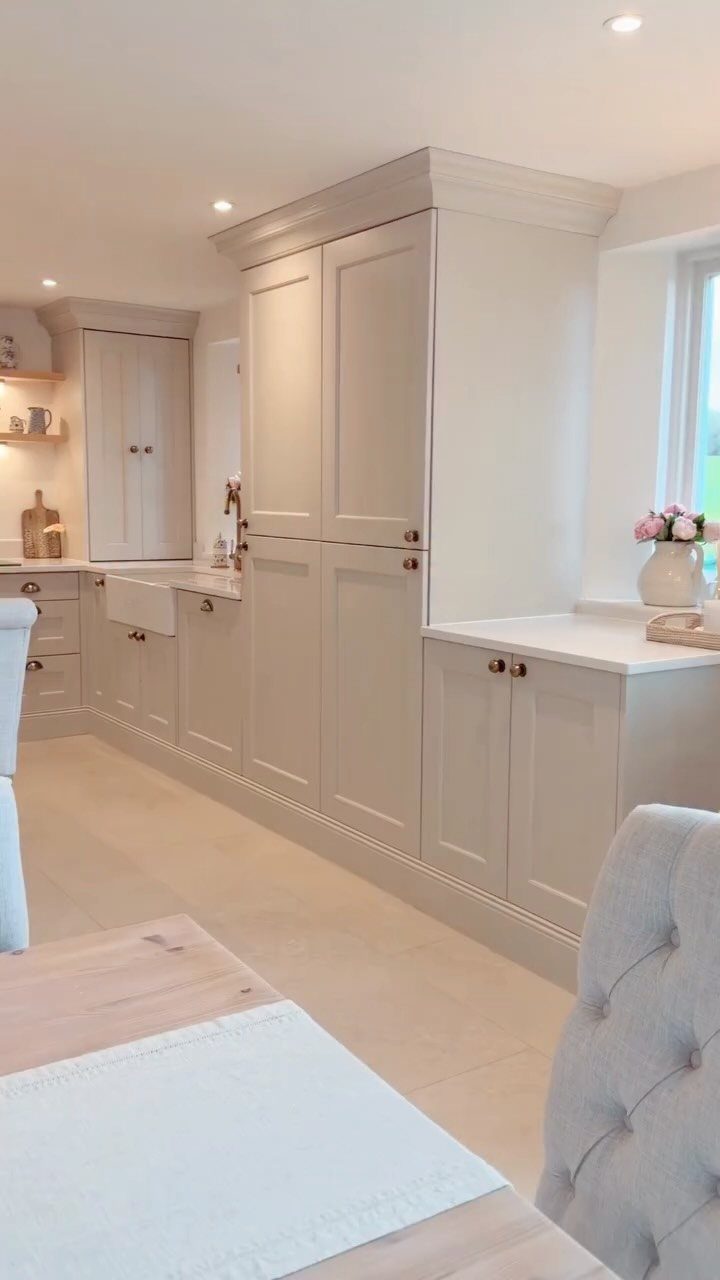
Shaker doors with their flat center panel and square frame read as farmhouse without trying hard. The style has lasted 2 centuries because it stays quiet; white paint keeps it bright against darker floors or counters.
I would order sample doors before committing to a full kitchen.
Cabinet makers vary the rail width and the depth of the profile, and those millimeters change the whole feel. Off-white or cream softens under warm bulbs where stark white turns cold.
14. Large Windows
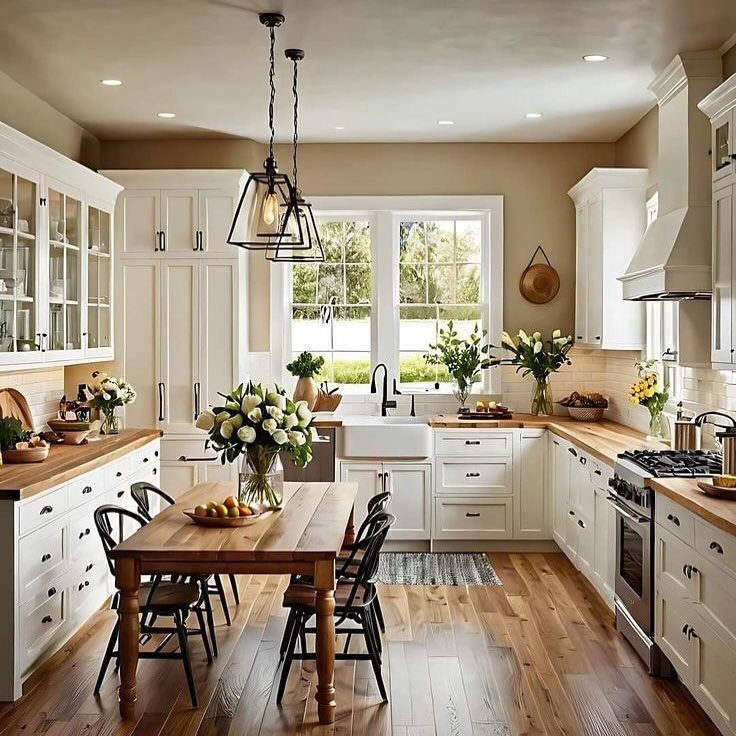
A wall of glass turns the kitchen into a greenhouse in the morning and frames the yard as a living picture the rest of the day.
This is the one item on the list that demands professional installation; a failed seal or sagging frame costs more than the window did.
I would plan the sink and prep areas to face the glass, not the wall, since the view is half the point. South-facing windows need consideration in summer; a simple linen shade beats integrated blinds for repairability.
15. Vintage Hardware
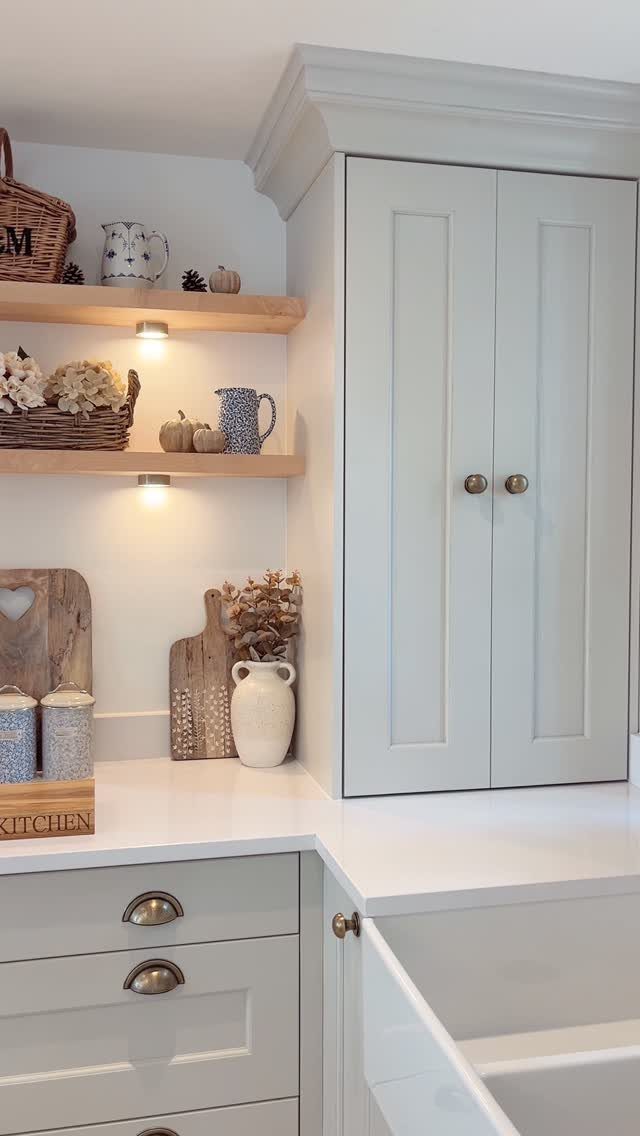
Cup pulls and round knobs in aged brass or iron change how the cabinets feel without changing the cabinets.
Hardware is measured by center-to-center spacing; standard sizes run smaller for drawers and single holes for doors. I would buy one of each finish and live with them for a week before ordering the full set.
The patina on vintage-style brass darkens with finger oils, which I prefer to the factory-bright look, but it is a real change, not a promise on a tag.
16. Statement Lighting
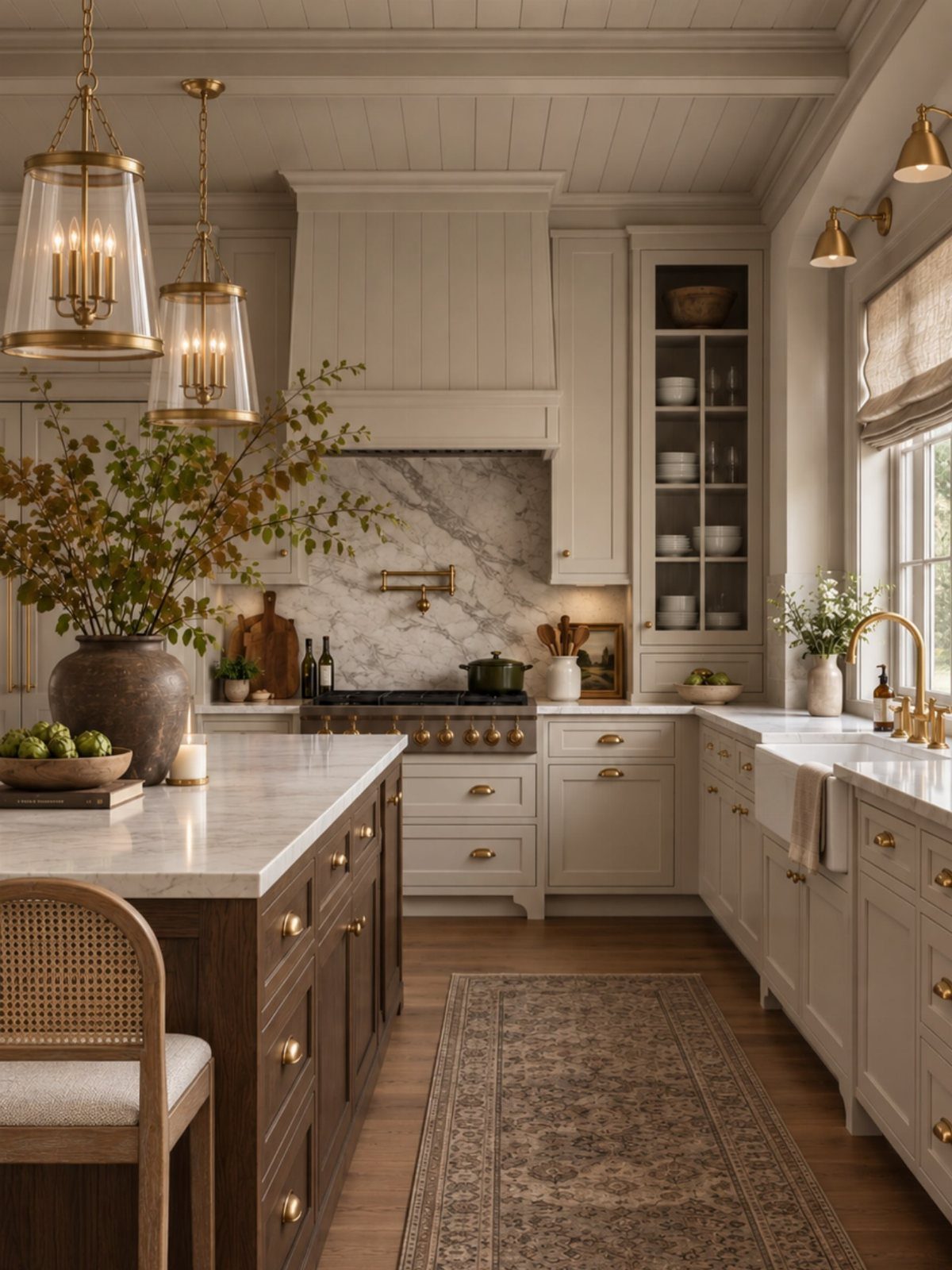
2 lanterns over an island give the kitchen its jewelry: scale, material, and a glow that pools on the counter below.
Brass warms a white room; black iron grounds it. I would hang pendants low enough to light the work, high enough that heads do not meet glass.
Dimmable bulbs are non-negotiable; full brightness at dawn is harsh, and the same fixture dialed down after dinner reads as atmosphere. A single large fixture over a small island beats two that crowd each other.
17. Farmhouse Table
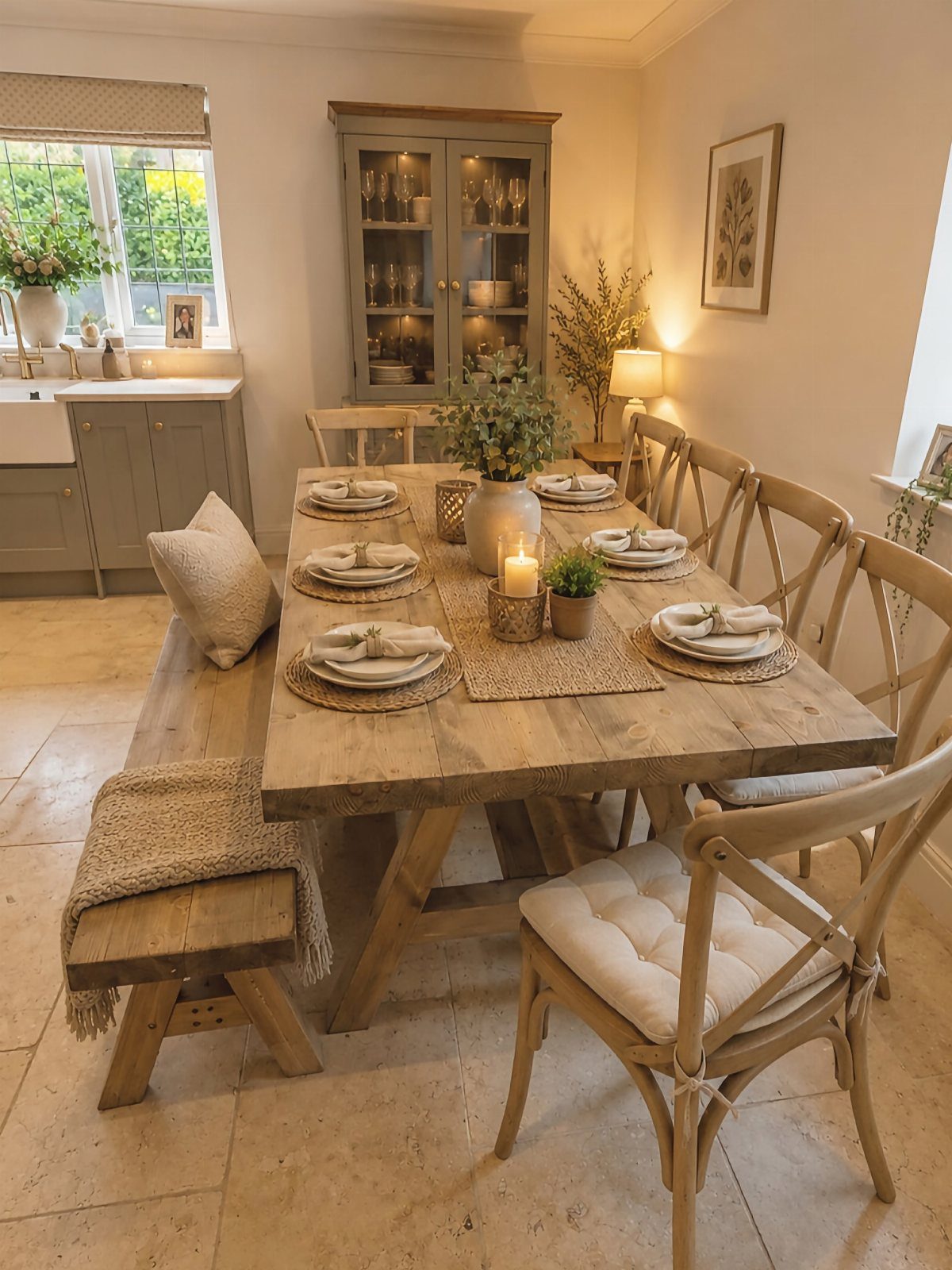
A long plank table with a bench on one side holds more people than chairs alone and suits the farmhouse habit of feeding whoever stays.
Pine dents easily, oak lasts longer, reclaimed wood carries its own history and nail holes. I would allow generous table length per seated person; a standard farmhouse table seats a family with elbow room, more squeezed.
The cross-back chairs visible here stack for sweeping and borrow from French bistro design, which pairs naturally with farmhouse plainness. A table this size needs delivery; plan the path through doorways before ordering.
Choosing the Right White
Cooler whites read crisp; warmer whites read cozy. Helen Shaw at Benjamin Moore suggests muted whites with a subtle gray undertone for a softer, more contemporary feel that stays bright without turning stark.
Farrow & Ball offers School House White, Old White, and Wimbourne White. Benjamin Moore counters with Chantilly Lace, Simply White, and White Dove.
I would test before committing. Paint a swatch on poster board and carry it from the morning window to the evening sink, watching how the light shifts it.
Buy quart samples, not chips. The hour you actually cook matters more than the hour you shop.
A good general rule of thumb is that cooler whites will give your space a crisp, airy look, while warmer whites feel calm and cozy. White walls and cabinetry can also help a small kitchen feel larger!
Maintaining a White Kitchen
White kitchens stay popular because the color does not date, says Daniel Bowler of Eggersmann.
White reads as a blank canvas for backsplashes, accessories, and mixed materials. It enlarges small spaces and holds its own in open plans without fighting adjacent décor.
The catch is maintenance. White shows every scuff and splash.
I would choose surfaces for wipeability: glossy tile behind the stove, painted cabinets with a scrubbable finish, solid-surface counters without grout lines to stain. Durable materials beat delicate ones in a working kitchen.
A white scheme does not have to read sterile; it sits as comfortably in a country cottage as in a contemporary home, but only if you accept the upkeep as part of the choice.
Mixing Styles
A farmhouse kitchen gains life when modern and traditional elements share the room. A professional-style range and stainless steel hood introduce contemporary function without overwriting farmhouse character.
I would add personality through textiles and small objects rather than big color commitments. Woven pendant lights, a striped rug, a pale blue vase with flowers: these layer in warmth and playfulness without taking over.
Ariel Okin’s approach to a c.1901 brownstone works here too: honor the home’s heritage with the architecture, then add modern sensibility through upholstery, lighting, and seating. The result feels crisp and warm at once.
Frequently Asked Questions
What is the best white color for farmhouse kitchen cabinets?
Cooler whites read crisp, while warmer whites read cozy.
Cream keeps its dignity under Edison bulbs. Pure white goes chalky and flat in the same glow.
Are white kitchens out in 2026?
Some designers are pushing color hard for 2026, but white still draws buyers who want the kitchen to outlast three trend cycles.
White forgives nothing: a tomato splatter, a shoe scuff at the toe kick. I would spend the money on scrubbable paint before I would chase the latest shade.
What style is replacing a farmhouse?
Modern and minimalist styles are gaining popularity, but farmhouse remains beloved.
What color is replacing white kitchens?
Soft greens, blues, and moody earth tones are becoming popular alternatives to white.
Navy holds the room without swallowing it, especially when the walls stay white and the hardware goes brass. I like a dark island against white perimeter cabinets; the weight drops to the floor and the ceiling still feels high.





