
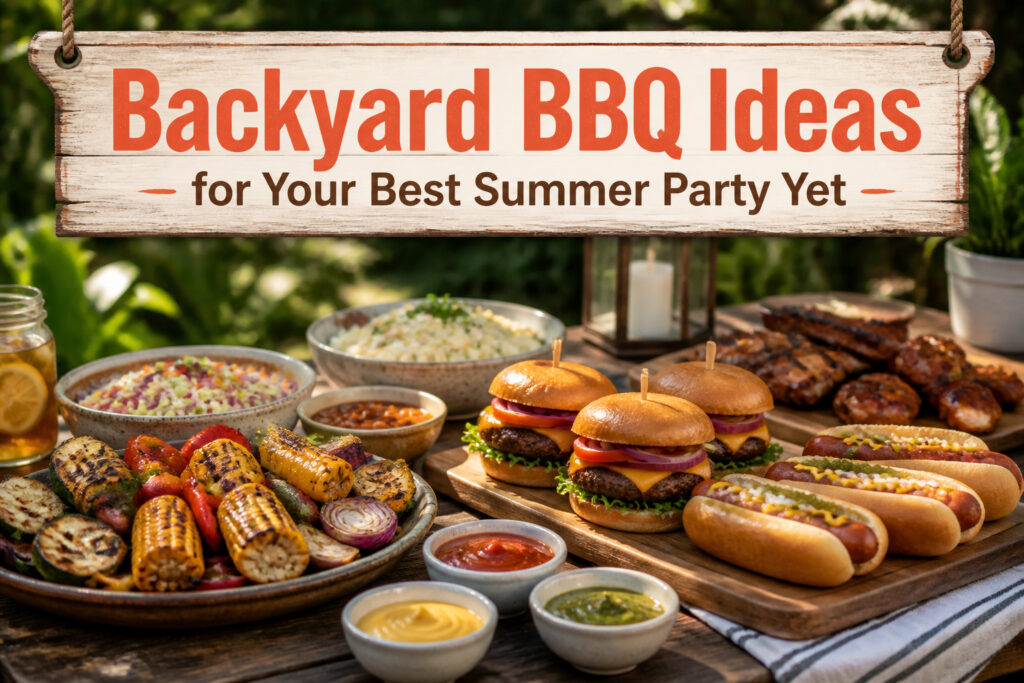
The right backyard BBQ idea depends on how much cooking you want to do while guests are actually in front of you. A full brisket demands twelve to sixteen hours at 225–250°F and goes on well before anyone arrives; smash burgers and hot dogs let you stay in the conversation. That single choice, low-and-slow versus fast-and-social, filters every other decision on this list.
1. Classic Americana Cookout

Smash burgers and hot dogs are the move when your yard is small and your grilling confidence is still building. The patties cook fast, the dogs just need a turn or two, and neither asks for the twelve-hour commitment that low-and-slow barbecue demands. Plan on one main protein per guest, plus a little extra if burgers are your center plate; hot dogs make the easiest backup for late arrivals or kids who eat in shifts.
Gingham tablecloths and mason jars set the tone without much spend, but the food does the real work. Grilled corn and a simple slaw round the plate, and apple pie closes it out with something nobody has to Google. Regional hot dog styles, Chicago to slaw-topped, turn the same few ingredients into a conversation; a small topping bar with style cards keeps guests busy while you finish the last batch of patties.
The mistake I watch newer hosts make is overbuilding. One big protein, one easy backup, two sides, and dessert is the frame that actually fits a backyard this size. Anything more and you are managing plates instead of talking to anyone.
2. Tropical Luau
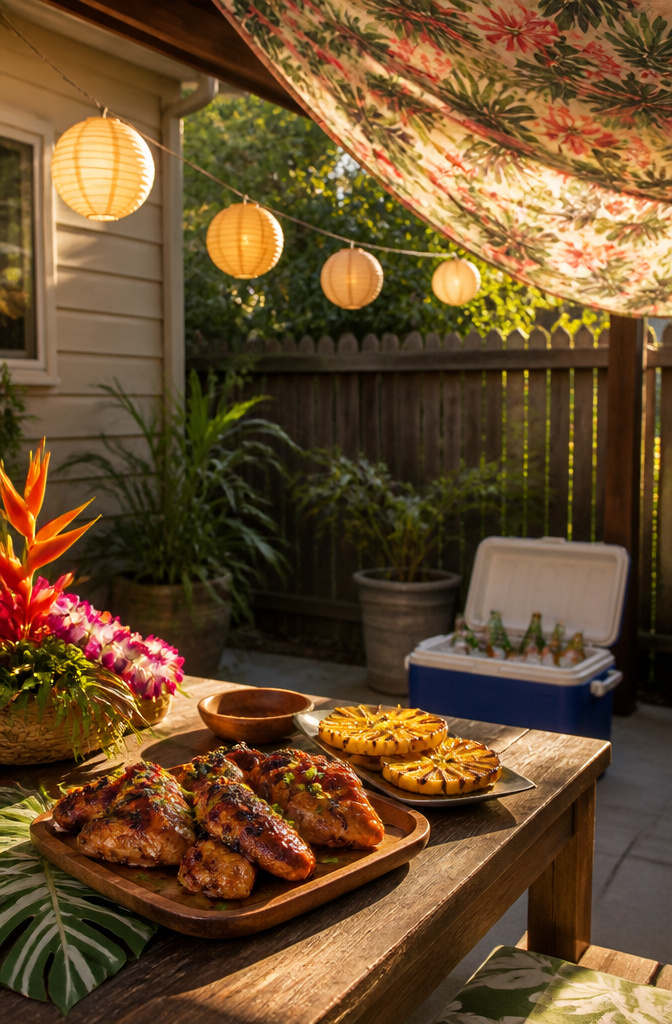
Huli huli chicken and grilled pineapple turn a Fort Wayne backyard into something that feels far from Indiana for an afternoon. The chicken gets its name from the Hawaiian word for "turn," and the constant rotation over heat builds a glaze that caramelizes without burning. I tried this on a Weber kettle in a narrow lot off State Boulevard, and the smoke drew neighbors before the meat was ready. The pineapple needs to go on while the coals are still screaming hot, before the chicken goes on to finish over gentler heat. Charring the fruit takes maybe ninety seconds a side.
Atmosphere came from what was already around: a bedsheet strung between fence and porch rail for shade, a playlist someone else made, paper lanterns from a drawer left over from a birthday. Buying tiki torches felt like a step too far for one party. The sheet worked until the wind picked up, and then it became a sail that knocked over a pitcher. After that, clothespins and a heavier blanket. Leis from a party store sat on the picnic table; most guests put them on, a few left them as napkins. The look mattered less than the smell of soy and ginger drifting toward the alley, which did more to set the mood than any decoration.
3. Southern Smoke Fest

A full brisket needs the 225–250°F range and a solid twelve to sixteen hours, so the smoker goes on well before guests arrive. Plan on ½ pound of meat per adult once trimmed; a fourteen-pound raw brisket feeds about twelve hungry people and leaves just enough for a late-night sandwich.
The sides matter as much as the smoke. Creamy mac and cheese, baked beans, and pasta salads all improve after a night in the fridge, which means less kitchen chaos while the meat stalls. A vinegar slaw or pickled onions on the table cut through the fat without demanding precise timing. The brisket itself can rest, wrapped, for a couple hours without suffering; the sides can sit at room temperature through the afternoon. That combination, low effort at service and high payoff on the plate, is what makes this format work for a backyard full of people who mostly want to talk and refill their plates.
4. Backyard Beer Bash
A backyard beer bash lives or dies on the pairing logic, not the bottle count. I learned this the hard way at a cookout where I filled a cooler with IPAs I liked and watched guests wince through every bite of bratwurst. The bitterness amplified the fat instead of cutting it. Now I think in terms of weight: a malty amber or clean lager against grilled brats, something with enough backbone to stand up to char but enough sweetness to let the pork read as pork.
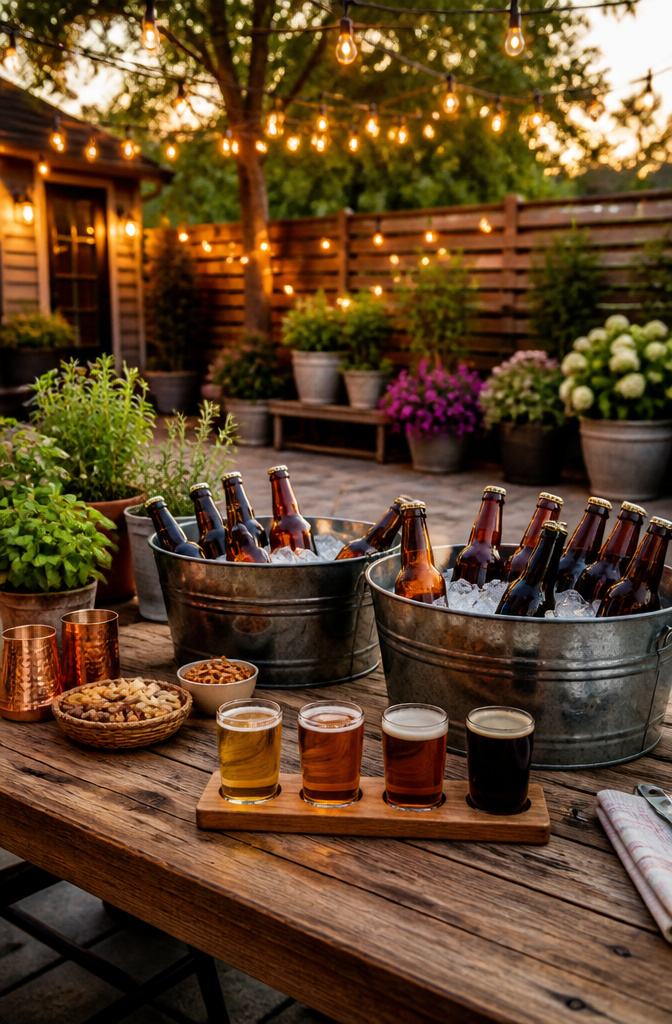
From a distillery restaurant perspective, the move is curation over volume. A flight board with four local pours invites comparison the way a rib-off invites rivalry. Fort Wayne’s craft scene offers enough range to build this without repeating styles: a lighter ale for opening, something with smoke or caramel malt for the mid-course brat, a dry finish to reset.
The self-serve setup matters as much as the selection. Metal tubs with ice keep bottles cold and hands moving, separate from the food station so the grill line doesn’t bottleneck at the cooler. A simple scorecard at the flight station, nothing elaborate, just space for a name and a checkmark, turns casual drinking into the kind of low-stakes competition that keeps people at the table past sunset.
5. Rib-Off Showdown
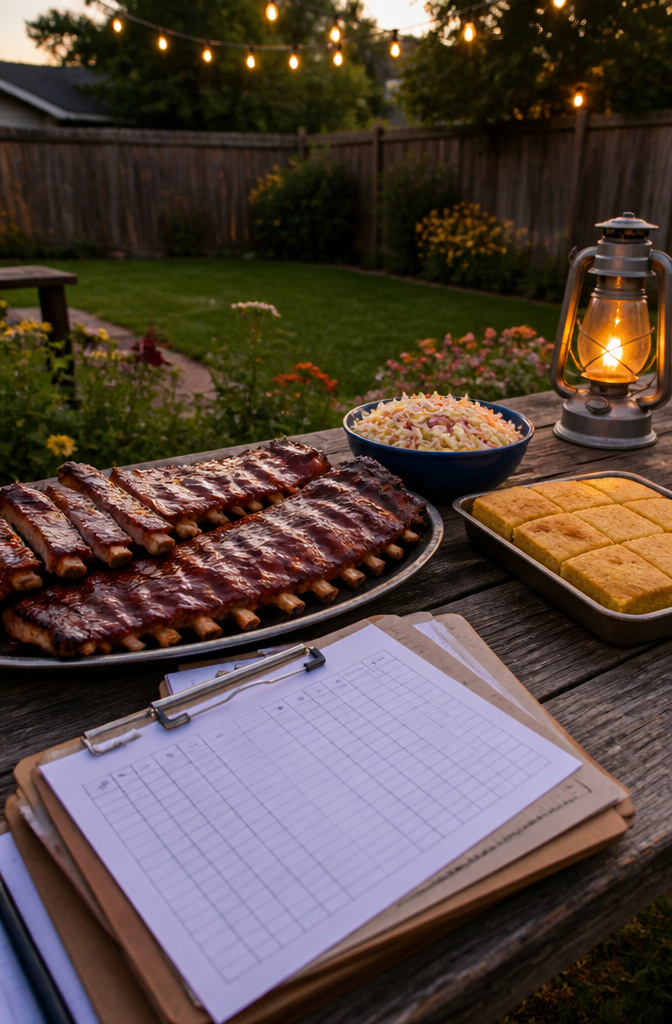
A rib-off turns guests into judges without demanding competition-level expertise. Pick two or three styles, maybe baby back against St. Louis with a beef rib wildcard, and let the bark and texture speak for themselves.
The 3-2-1 method keeps timing honest across the board: three hours naked in smoke, two hours wrapped with a little braising liquid, one hour back out to set the glaze. It is not the route a purist takes to a trophy, but it delivers tenderness your neighbors will actually finish.
Judging stays simple. Hand out scorecards with three lines: appearance, taste, tenderness. One to five, add them up. A prize for best bark and another for most original rub gives the backyard show-offs something to chase. No one needs a Kansas City Barbeque Society certification to tell which rib pulls clean from the bone and which fights back.
6. DIY Skewer Party
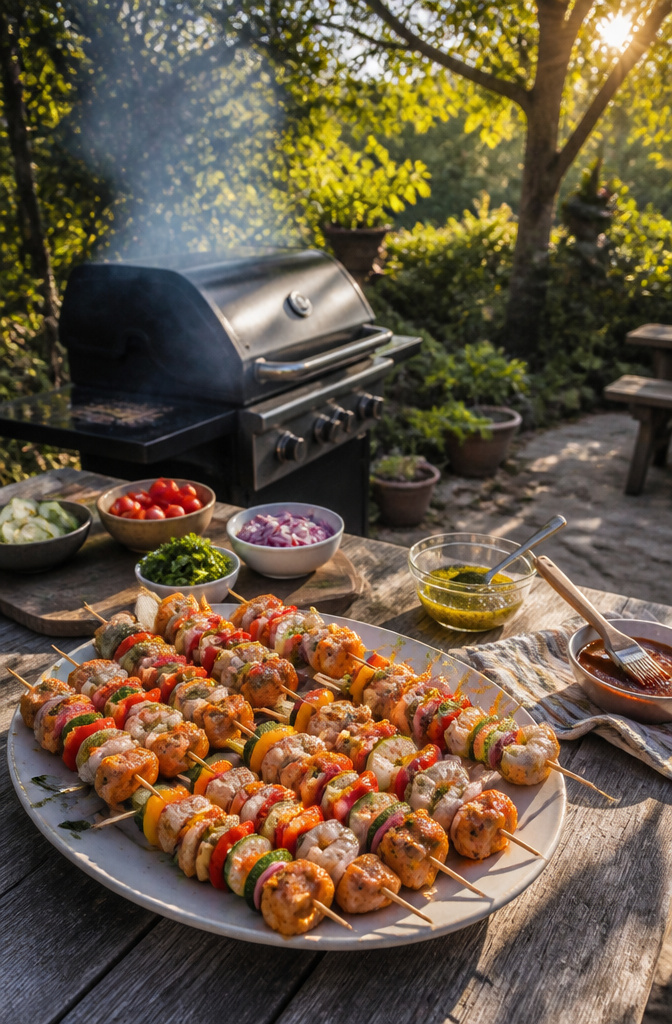
The summer I tried to hand guests raw chicken and a pile of metal skewers, the whole thing collapsed in about ten minutes. Cross-contamination anxiety set in, the line backed up, and someone dropped a half-loaded skewer into the grill grates. What actually works is prep the day before: proteins cut and marinated in separate containers, vegetables sliced and stored, sauces mixed and labeled. The sources that handle this well set up a true assembly line, not a free-for-all.
Chicken, shrimp, and steak cubes hold their shape on a stick; mushrooms, peppers, pineapple, and zucchini survive the heat without turning to mush. Metal skewers beat bamboo because they do not char and splinter. The real payoff is host freedom. While guests thread their own combinations, you are not plating or timing proteins or answering "is this done?" every ninety seconds. Separate tongs for proteins and vegetables keep the vegetarians relaxed. The engagement builds naturally; people talk through their choices, compare skewers, and the cooking becomes part of the evening rather than a performance you put on alone.
7. BBQ Pizza Night
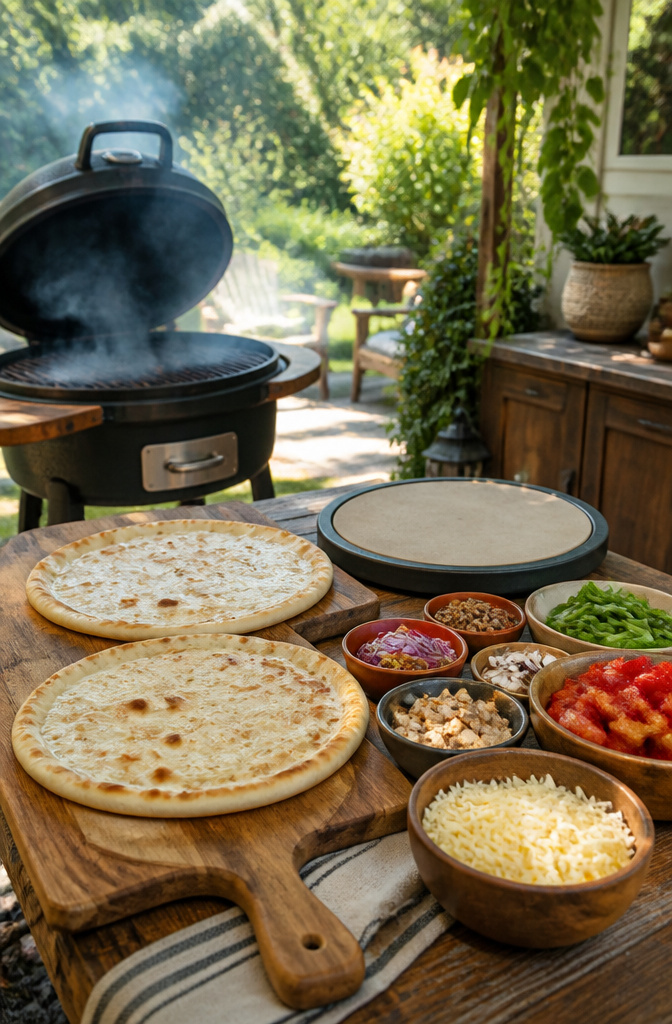
Par-grilling the dough before guests arrive saves the night. I learned this the hard way after watching a raw ball tear through the grates and land on the coals. Now I stretch each portion, brush one side with oil, and lay it oiled-side down for two minutes until it firms up and shows light char marks. That par-grilled shell travels to a sheet pan, cooked side up, ready for toppings.
Keep the grill between 300 and 350°F for this. Any hotter and the bottom burns before the cheese melts; cooler and you lose the snap in the crust. A pizza stone helps even things out if your grill runs hot in spots, though a Green Mountain Grill or a Halo Versa Pizza Oven handles the temperature control for you.
Toppings need the same discipline. Precook anything that sheds water. Raw mushrooms, fresh tomatoes, and thick-cut peppers will steam the center into soup. I stick to sauce, cheese, and meats that are already cooked. Brisket from yesterday’s smoke works better than raw sausage. Guests still get the fun of building their own pie, but the result actually makes it to the plate intact.
8. Pulled Pork Sliders

Pulled pork was practically made for BBQ sauce, and the forgiving nature of pork shoulder means most of the work happens before guests arrive. A standard ratio to work from is 3 cups pulled pork for 12 slider buns, plus sauce to moisten without drowning. I like to smoke the shoulder a day ahead, pull it while still warm, then refrigerate the meat and sauce separately. The fat firms overnight and gets skimmed easily, and the pork reheats beautifully in a slow cooker set to low.
Bun choice matters more than most people think. A sauced slider needs bread with some structural integrity; soft grocery-store potato buns turn to paste within minutes. Look for brioche-style slider rolls or toasted dinner rolls with a slight crust. If the party runs long, set out the pork and sauce in a warm dish and let guests build their own. That keeps the bread intact and the line moving, which matters more than any centerpiece presentation when people are hungry and the grill is still hot.
9. Grilled Corn on the Cob
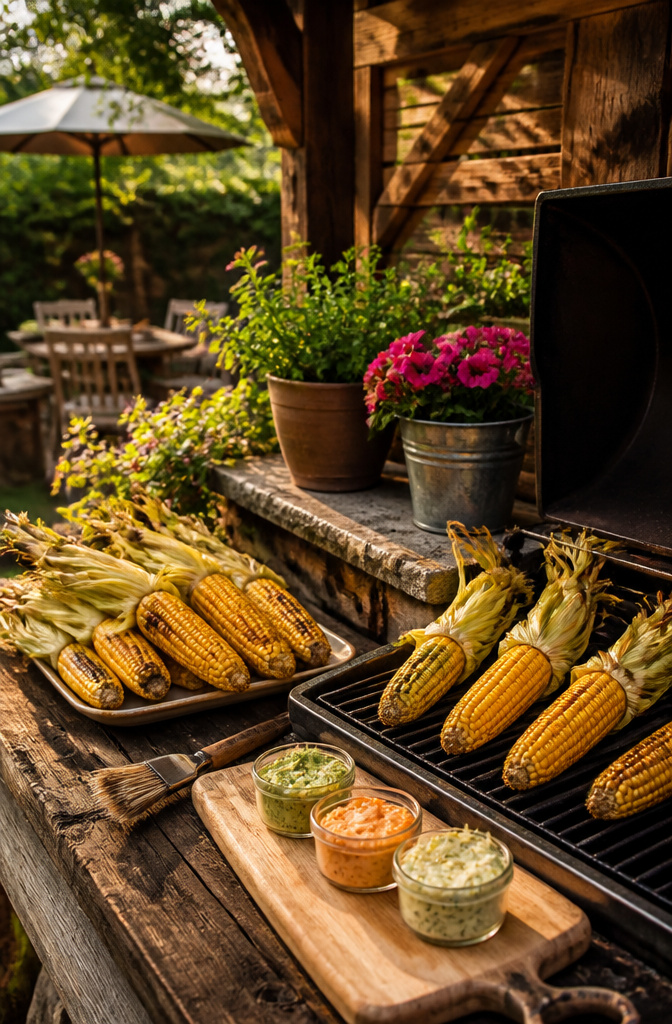
Corn on the cob belongs at every backyard fire, though the usual boiled-and-buttered version misses what smoke can do. Fifteen minutes over medium-high heat, turned every few minutes, gives kernels that slight char without the leathery chew that comes from leaving them too long. I pull back the husks, strip the silk, and fold the husks into handles before they hit the grate. For a group, a sheet pan holds two dozen ears staged and ready; someone swaps finished ones for fresh while the host is still pouring drinks.
Flavored butter works only when it respects the smoke already there. Chipotle-lime fights it. So does anything too sweet. What reads as right is compound butter built on fat itself: rendered bacon drippings whipped into softened butter with minced garlic and a little smoked paprika, or anchovy butter with lemon zest and cracked black pepper. The salt in both needs no extra. Slather it on hot so it melts into the rows, not alongside on a knife where it cools to grease.
10. Dessert Station

By the time the coals are dying, nobody wants the host hovering over the fire pit with tongs. A DIY dessert station fixes that. Set out graham crackers, chocolate bars, marshmallows, and long skewers on a folding table near the seating area. Guests toast their own marshmallows while the host actually sits down.
Ice cream sundaes work the same way. A cooler of vanilla beneath bowls, two or three sauces, and toppings that do not require precision. Peanut butter chips, crushed pretzels, jarred cherries. The line serves itself.
For guests who started drinking when the brisket went on, skip anything that demands timing or balance. No flambé, no spun sugar. Warm pineapple slices from the grill, served plain beside the ice cream, give the same satisfaction without the risk. S’mores are forgiving even when attention spans are not; a burnt marshmallow still gets eaten.
The fire pit does the work. The host drinks their own drink. That is the point of the backyard setup: the cooking ends, the gathering does not.
Meat Selection and Portions

Brisket, ribs, chicken, and smoked sausage are the four cuts that actually hold up to backyard cooking without demanding a competition rig. Pork ribs in particular forgive a temperature swing better than most anything else on the grill, which matters when you’re managing coals between greeting guests and refilling drinks.
The half-pound of cooked meat per adult guest rule has saved me from both shortage and waste more than once. Raw weight deceives; brisket loses nearly half its mass to fat cap trimming and moisture loss over a long cook. Start from that finished half-pound and work backward, or you’ll be the host who runs out right when people loosen their belts.
In Fort Wayne, the quality of what’s available shifts with the season more than most shoppers notice. Summer holiday weekends clear out the good beef rib racks fast at the usual grocery spots, so midweek shopping two or three days ahead beats the Friday rush. For brisket with the fat still properly intact, the butcher counter at The Fresh Market on Jefferson has been more reliable than the pre-packaged case, though their premium grade sells out by Thursday most weeks. The Kroger on Dupont Road carries decent St. Louis-style pork ribs year-round, but the membrane is often already removed, which costs you a barrier that keeps moisture in during a low-and-slow cook. Ask the meat counter to set some aside with membrane on if you call ahead.
Smoked sausage is where I cut corners without apology. Kunzler’s from the deli case at S&S Food Market grills up fine, and the price gap against mail-order Texas links lets you double the brisket order instead.
Marinades and Rubs
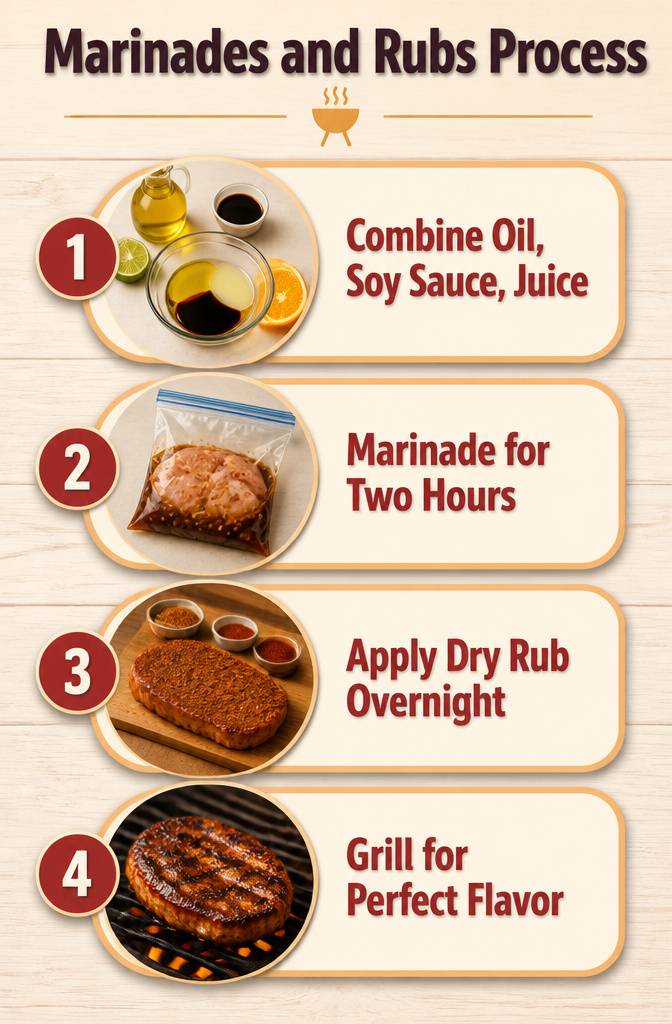
Oil carries flavor into meat in a way water never will. The fat molecules in olive oil dissolve aromatics and carry them past the surface, while soy sauce delivers salt deep enough to season pork, chicken, or steak all the way through. Citrus juice does something else entirely: the acid begins breaking down proteins on contact, which tenderizes but also means marinade time is a hard limit. Much past two hours for smaller cuts and the exterior turns mealy.
A balanced base runs equal parts oil, soy sauce, and juice. A quarter cup of each handles roughly one pound of meat. Orange juice with brown sugar and garlic reads sweet-heat; lime with cilantro and jalapeño goes brighter; pomegranate with red wine and rosemary skews dark and resinous. The acid component matters more than the specific fruit.
Dry rubs work on the surface, not inside. Smoke paprika, garlic powder, brown sugar, and a measured pinch of cayenne build a crust that caramelizes over direct heat. That same sweet-savory blend crosses over from ribs to chicken to grilled vegetables without losing its point.
The real decision is timing. Marinades need those two hours, maybe four for thick chops. Rubs want longer, overnight if possible, to let salt pull moisture to the surface and then reabsorb, carrying flavor with it.
Side Dishes That Hold

Coleslaw is one of those sides that actually improves after a night in the fridge, the cabbage softening just enough and the dressing soaking in properly. I make mine the day before every cookout now, after learning the hard way that same-day slaw stays too crunchy and the flavors never quite marry. Baked beans follow the same logic, and the slow cooker is the tool that makes this practical: brown sugar, molasses, bacon, and onion go in early, and the pot does the work while everything else gets handled. The beans taste better after sitting, which is useful when the grill demands attention at the last minute.
Grilled vegetables are the exception that needs fire right before serving. Zucchini, peppers, and asparagus go from properly charred to limp in about ten minutes off the heat, so I plan these for when the meat is resting and the coals are still hot. Serving without a second table means using the grill itself as a holding station, the upper rack or a cool corner keeping beans and slaw warm while vegetables finish. Stack plates on the prep table, not the food, and let guests assemble as things come off.
Atmosphere on a Budget

Small yards force a choice most hosts miss: guests remember how the evening felt, not whether the chairs matched. Last summer I watched a neighbor spend two hours arranging rented folding furniture while a single strand of overhead lights and a phone in a cup did the actual work of making people stay late and talk.
Bluetooth speakers kept low enough for conversation matter more than playlist curation. The sources back this: volume that competes with talking kills the party, not the absence of Southern rock or blues. Cornhole or giant Jenga in a corner gives guests somewhere to drift between bites, which matters more than seating count in a space that tops out at eight or ten bodies.
Lighting is where cheap reads as intentional. A $12 strand of warm LEDs along a fence line, a few mason jar candles on the table, and the yard shrinks to human scale after sunset. Guests notice the glow, not the hardware store receipt.
Music, light, and one low-key game turn constraint into intimacy. The rest is anxiety the host feels alone.
Drink Pairings Beyond Beer
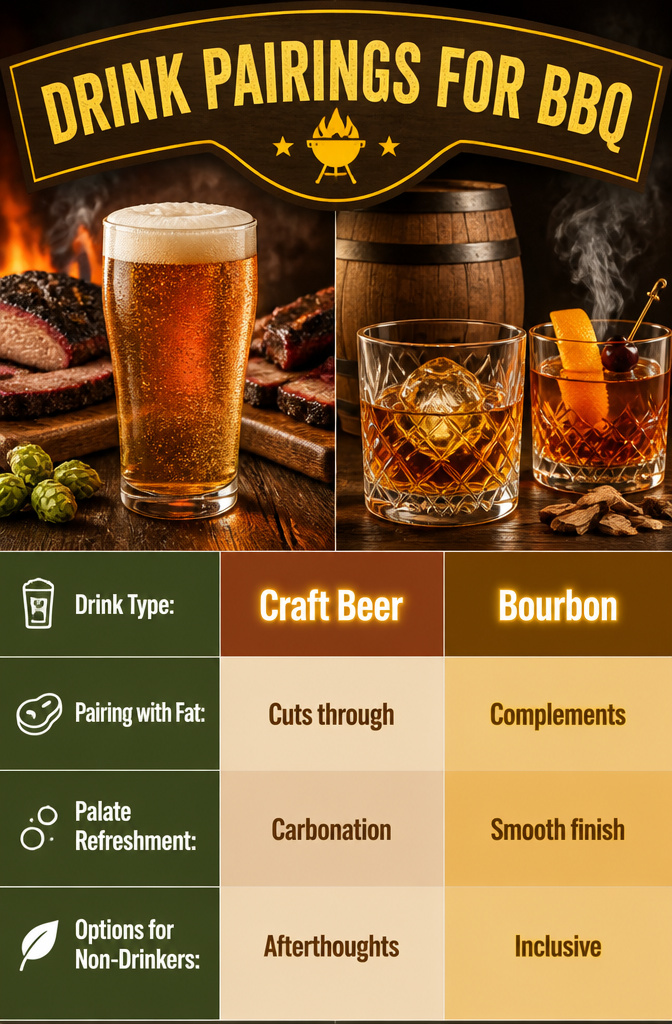
Craft beer still anchors most backyard barbecues, and for good reason. An IPA’s bitterness cuts through fat on brisket or ribs the way sweeter drinks cannot, and the carbonation scrubs the palate between bites. But branching out keeps a long afternoon from flattening into sameness.
At a distillery, the approach starts with smoke. Bourbon shares DNA with barbecue, both drawing character from charred wood, so a neat pour or a smoked old fashioned extends the flavor rather than competing with it. For something lighter, bourbon lemonade or a watermelon margarita refreshes without abandoning the thread. Non-drinkers deserve the same thought: agua fresca, sparkling water with citrus, or fruit-infused iced teas keep the table inclusive. The mistake is treating them as afterthoughts. Set drinks in their own zone, chilled in metal tubs, so guests flow through without bottlenecking at the grill.
Frequently Asked Questions
What are the best meats for a backyard BBQ?
Brisket, ribs, chicken, and smoked sausage hold up best for backyard cooking without requiring competition-level equipment. Pork ribs forgive temperature swings better than most cuts, which helps when you are managing guests and the fire at the same time. These four proteins span a range of cooking times and skill levels, so you can match the main course to your schedule and grill setup.
How much food do I need for a BBQ?
Serve one main protein per person, and add a few extra when burgers anchor the menu; about half a pound of cooked meat per adult covers trimmed loss and second helpings. Brisket shrinks dramatically during a long cook, so working backward from that finished half pound prevents a mid-party shortage. Keep hot dogs ready as an easy backup for late arrivals or kids who eat in shifts.
What sides go well with BBQ?
Coleslaw, baked beans, and grilled vegetables are the classic trio, while mac and cheese or pasta salad add heft for bigger crowds. Slaw and beans both taste better after a night in the fridge, which frees you up while the meat finishes. Grilled vegetables like zucchini, peppers, and asparagus should hit the fire right before serving so they keep their char instead of going limp.