
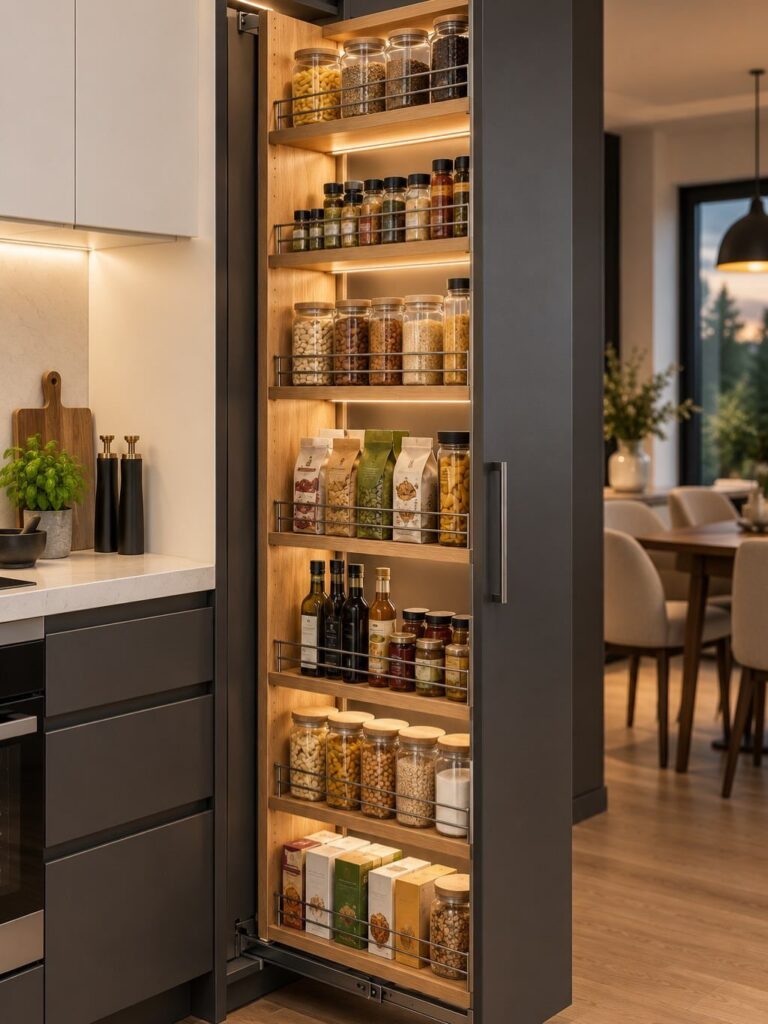
The ideas below run from simple bamboo risers to a wired bar cabinet with display lighting, so the first question is whether you own your cabinets or rent them.
Renters will live in the rolling cart and the over-the-sink rack; owners can screw in the pull-out slides and the lift-up hinges.
1. Stacking Shelves in Cabinet
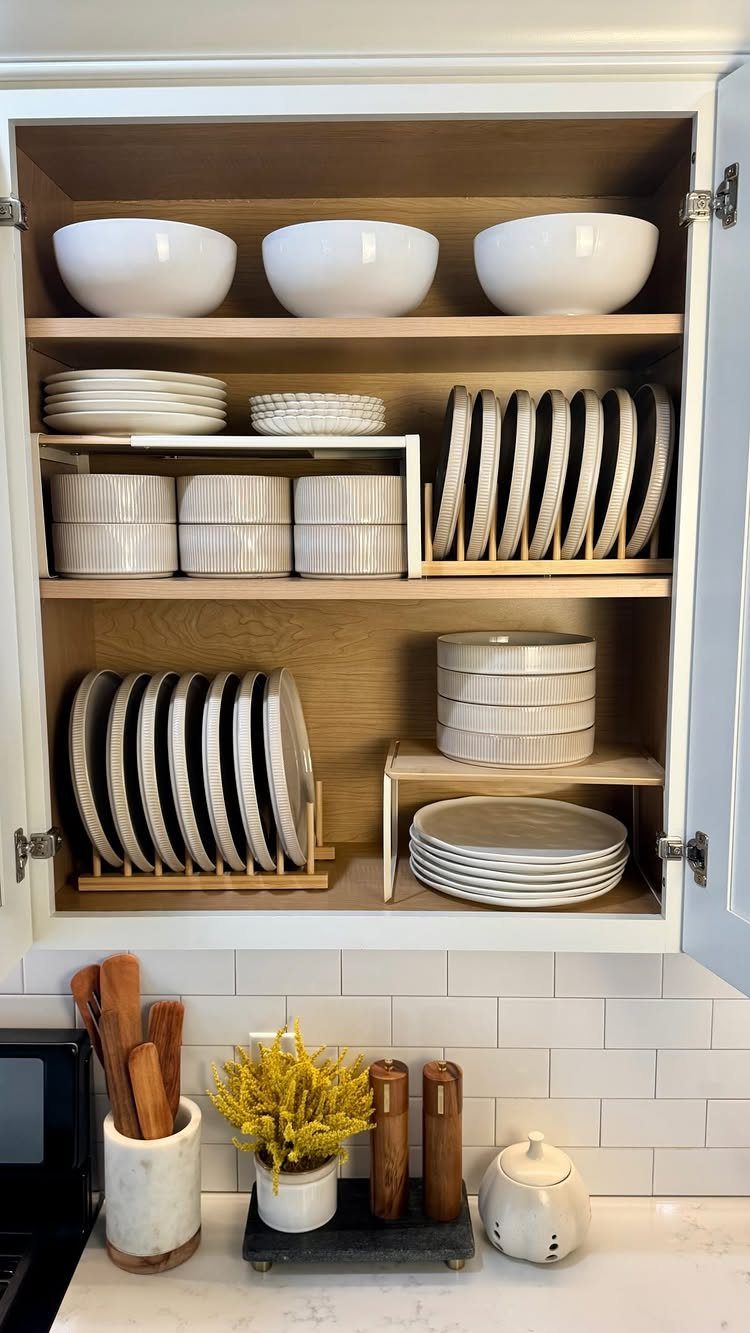
A set of small wooden risers turns one cabinet shelf into two or three, which matters more than it sounds in kitchens where cabinet space is fixed and square footage is not.
I like bamboo here because it handles the weight of stacked plates without adding much itself; a low riser still leaves room for cereal bowls above dinner plates in a standard upper cabinet.
No installation, no hardware, just set them where you need them and rearrange when your collection changes.
2. Pantry Organization
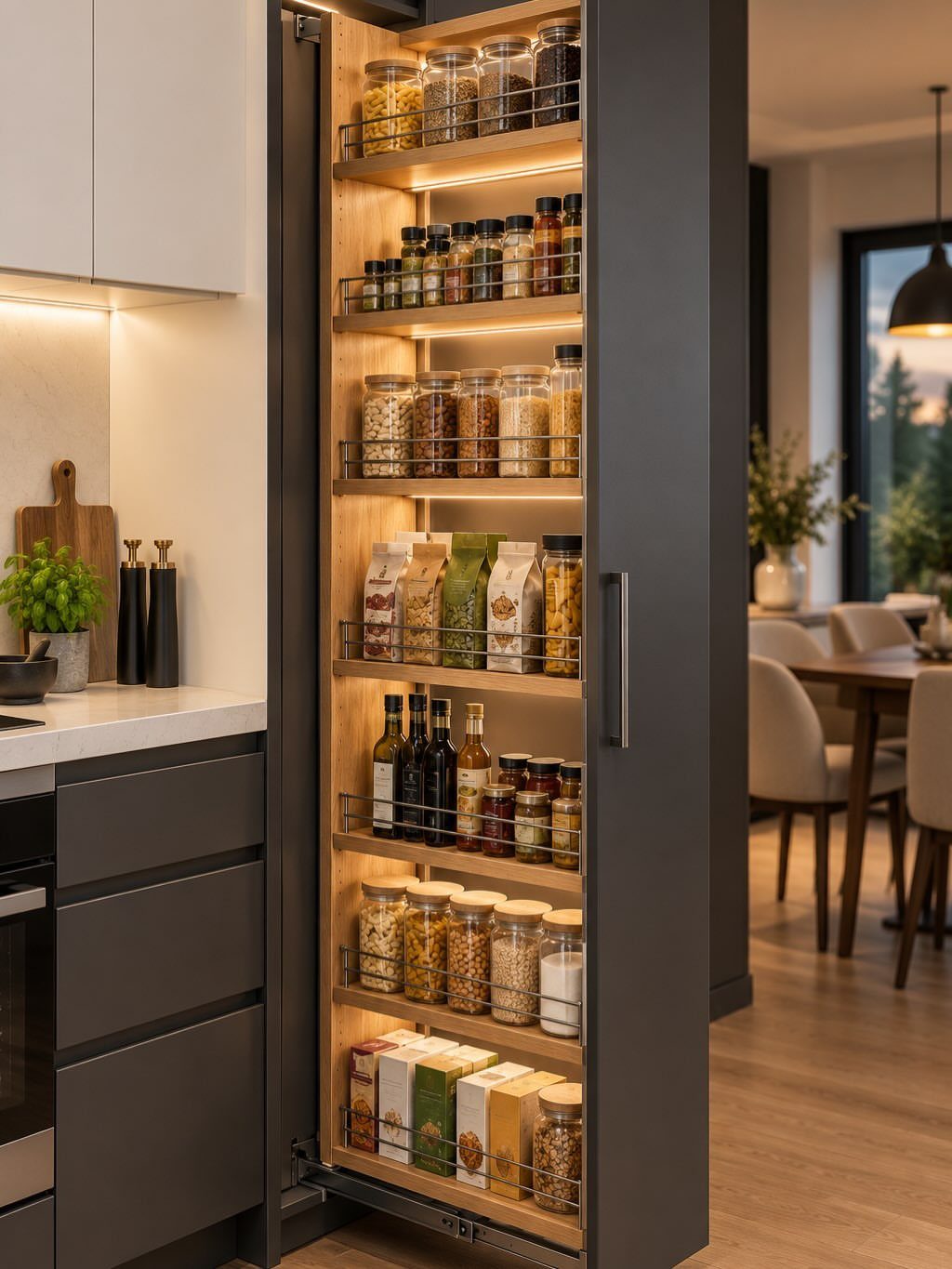
Glass jars with matching lids turn a pull-out pantry into something you can read at a glance, and that speed matters on weeknights when you are hunting arborio rice and finding orzo instead.
Dry goods stay fresher in clear containers on open shelves with integrated lighting; I would add a label on the lid, not the front, so it stays visible from any angle.
The up-front cost of the jars pays back in reduced waste from forgotten bags left open in back corners, though oils and vinegars stay in their original bottles to avoid rancid buildup in pours.
3. Pull-out Cabinet Drawers
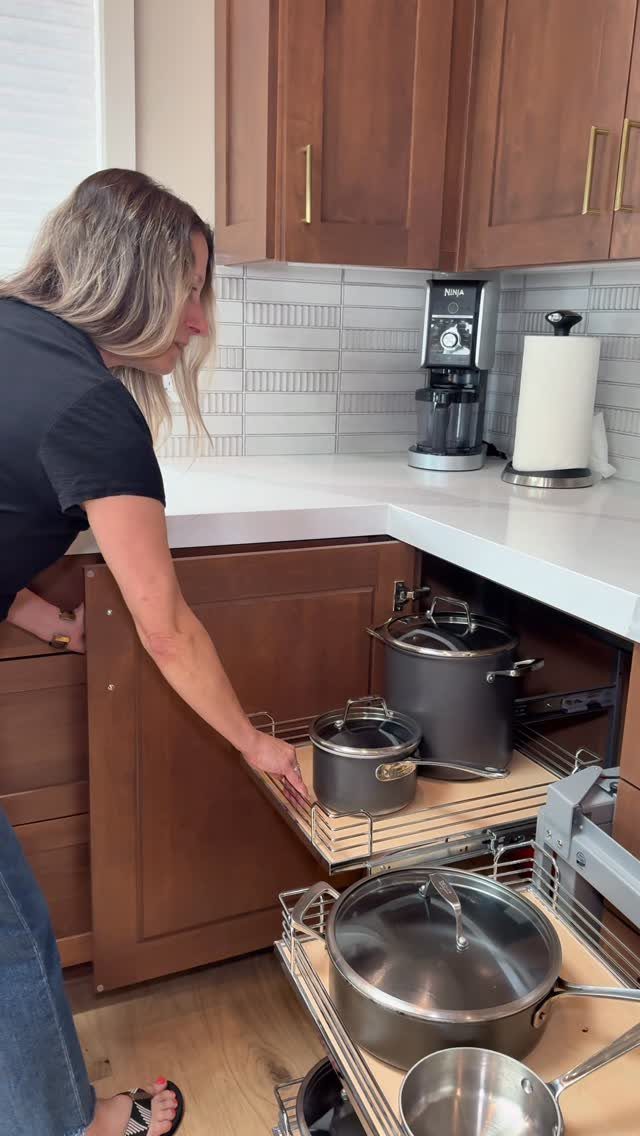
Wire-frame pull-outs on full-extension slides bring the back half of a deep base cabinet to you, which ends the kneeling-and-reaching ritual that makes corner cabinets notorious.
Installation means removing the existing shelf, screwing the slide hardware to the cabinet sides, and dropping the frame in. A drill with a cabinet-hardware jig keeps the slides level, which is the whole job; crooked slides bind and eventually fail.
4. Countertop Lazy Susan
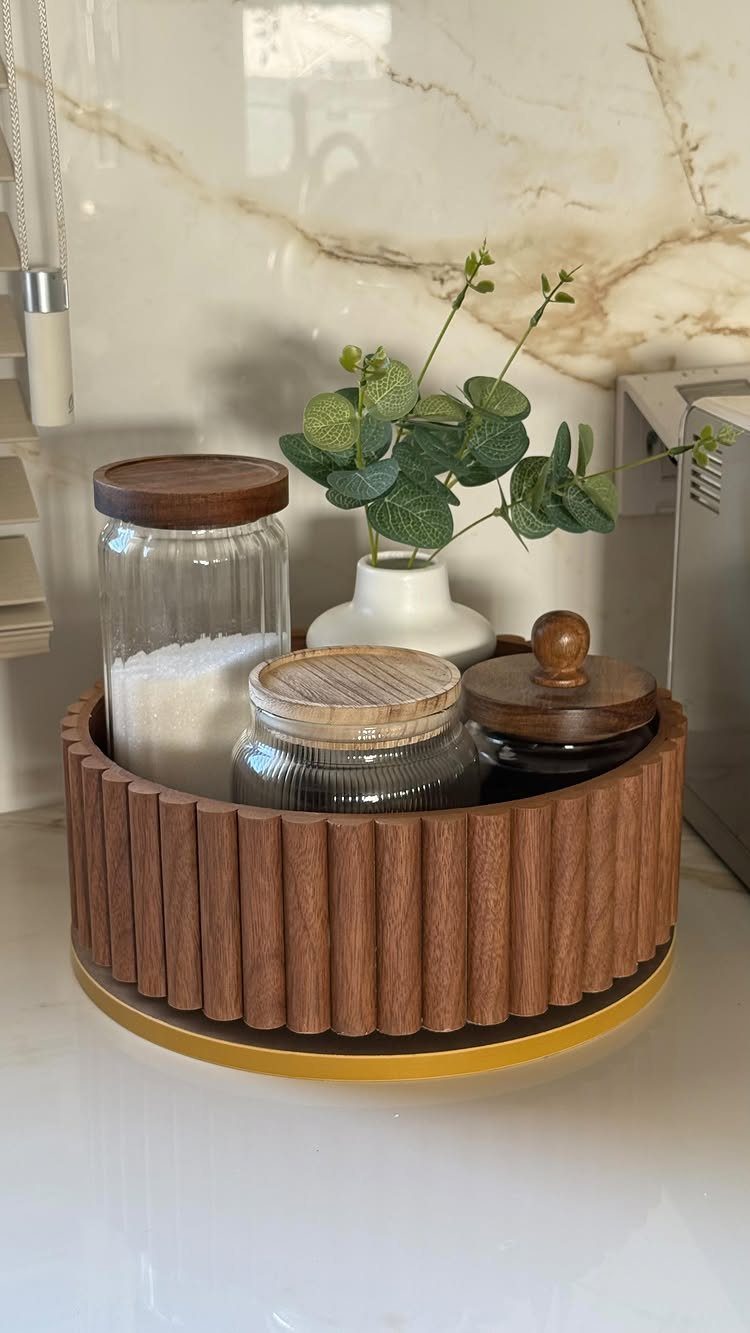
A lazy Susan on the counter corrals the jars and bottles that otherwise migrate to corners and collect grime.
I keep mine to items I use in combination, oils and vinegars or morning supplements, so the rotation actually saves steps rather than just moving clutter in a circle.
5. Pull-out Trash Drawer Next to Sink
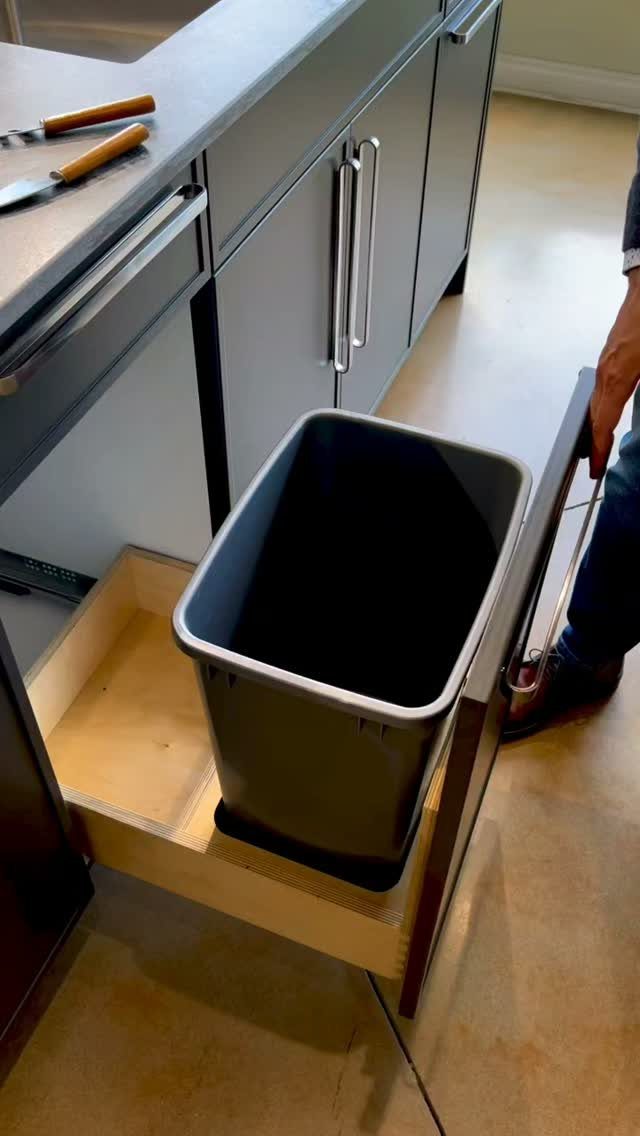
A pull-out drawer for trash sits where you generate it, which means the peelings go in without dripping across the floor to a freestanding bin. Full-extension soft-close slides keep the action tidy and keep small children from slamming.
6. Junk Drawer Organization
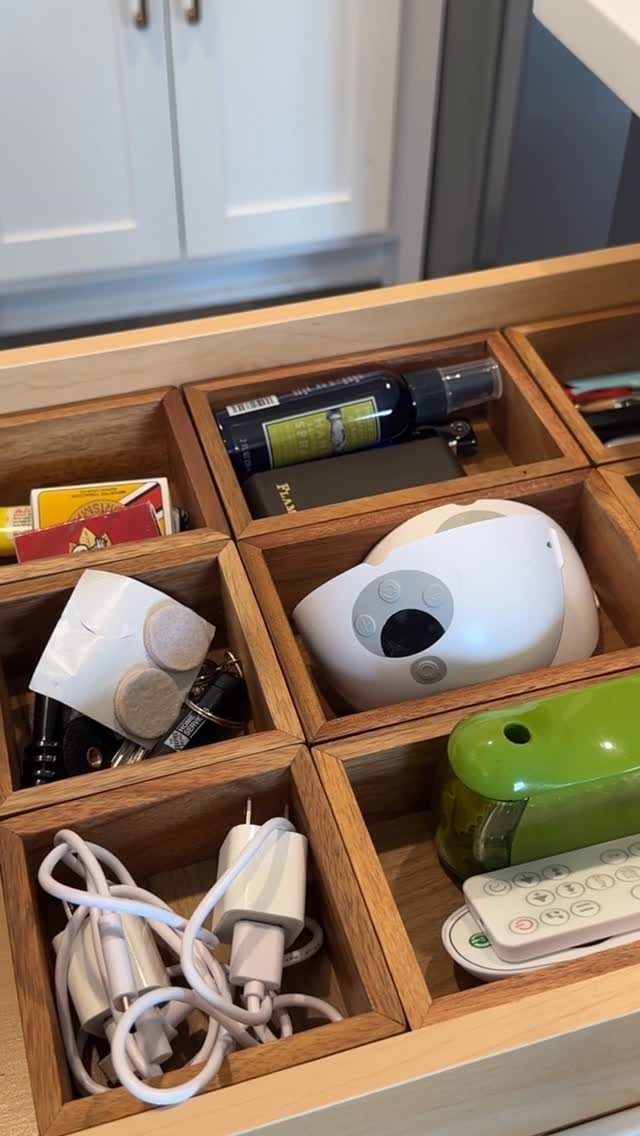
Small wooden boxes inside a drawer create zones for the objects that have no natural home: the spare phone cable, the tape measure, the birthday candles you use twice a year.
Measure your drawer’s interior depth and width, then subtract half an inch total for easy removal and cleaning.
7. Small Appliance and Drinkware Hutch
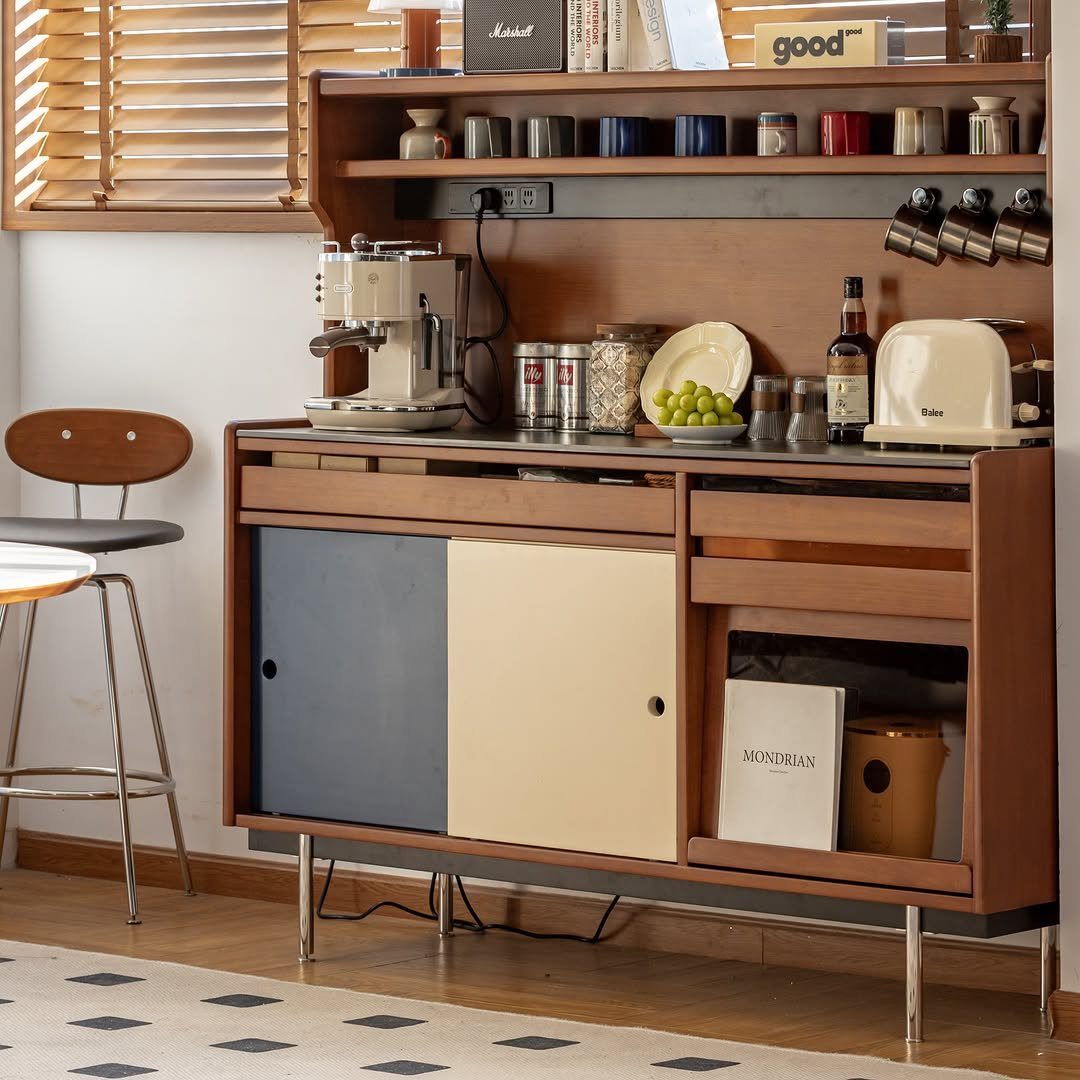
A mid-century hutch gives small appliances a dedicated home off the counter, which buys back the prep space most small kitchens lose to the espresso machine and toaster.
Open shelves above hold the cups you actually use; a closed lower section hides the backup supplies. The counter-level surface stays shallow enough that nothing blocks the wall behind it, or the hutch becomes a cave.
8. Kitchen Island with Storage
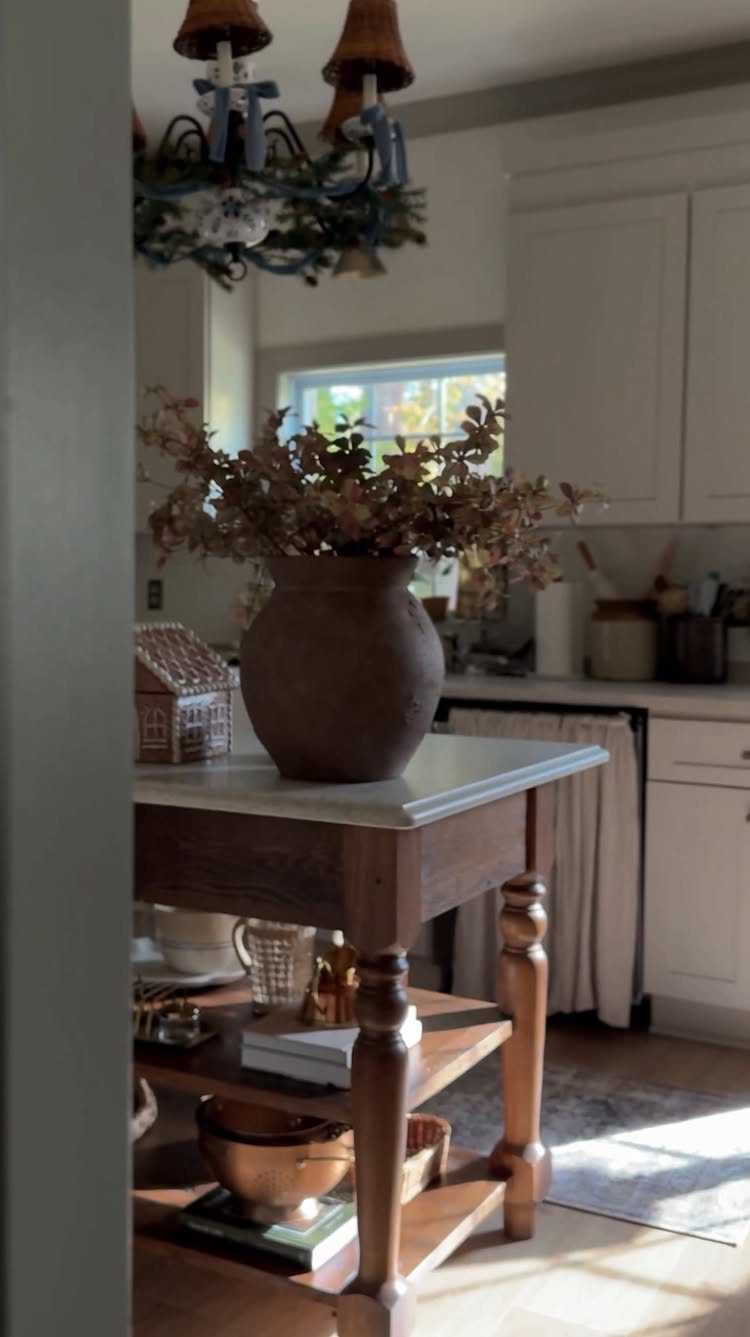
Open shelves on a kitchen island put the pots you reach for daily at hip height, no bending or stacking required.
Stone tops add weight and cost; a wood surface takes a beating and refinishes easier if you chop directly on it.
I like islands on casters for rentals, though a fixed island anchors a room better and carries more overhang for seating.
9. Stacked Pots and Pans
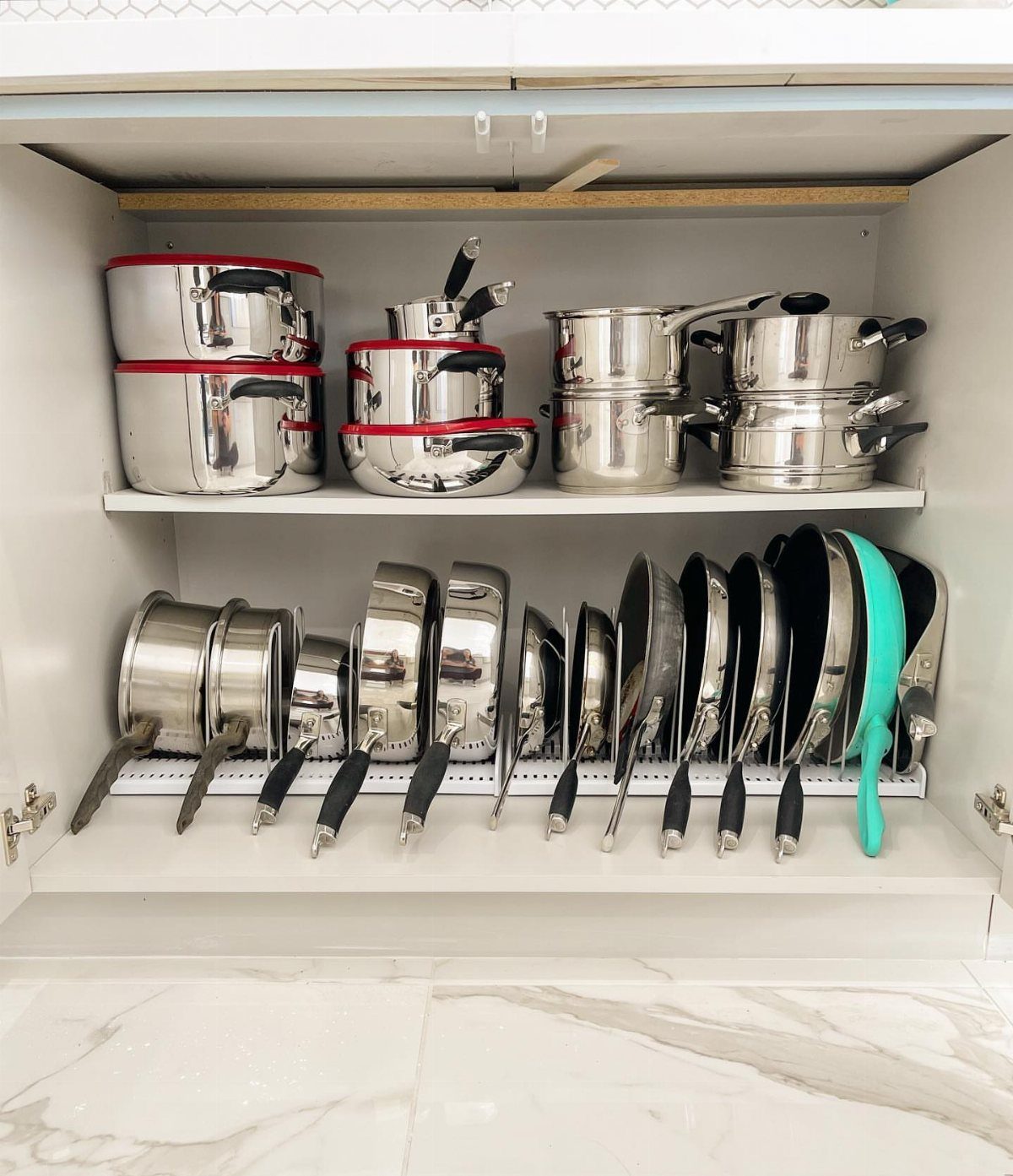
Pans stacked flat multiply a cabinet’s capacity, but the one on the bottom stays there until you lift everything above it.
A wire organizer on the lower shelf stands pans on edge like files in a drawer; each slides out independently and the handles face one direction for a cleaner look.
I would reserve vertical storage for the skillets and saucepans I use most, since they earn the prime real estate.
10. Knife Block Drawer
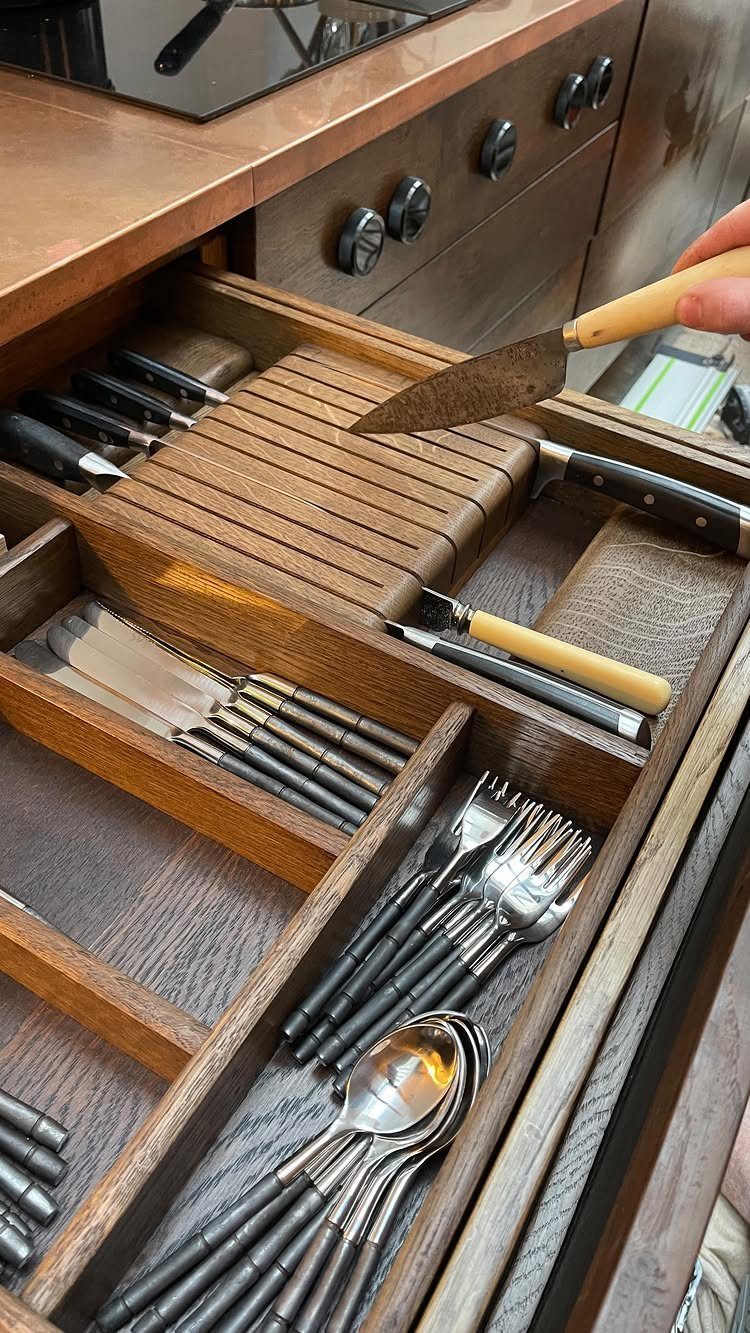
The bottom row takes chef’s knives and bread knives; the upper row handles paring knives and steak knives you pull out less often.
Slots sized to the blade keep edges from knocking together, which matters more for carbon steel than for stainless.
11. Under-sink Storage Bins
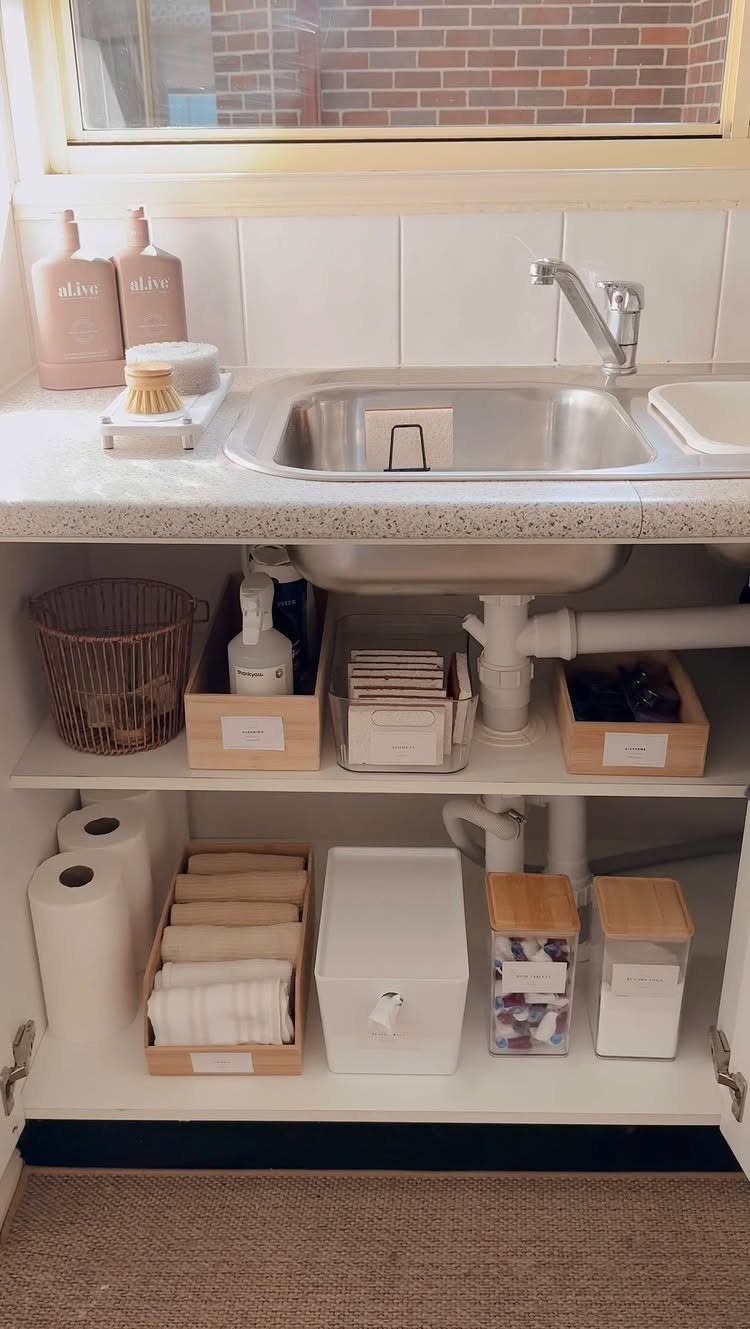
Under-sink space is awkward by design: pipes, disposal, and water lines leave no clean rectangle to fill. I would measure the pipe clearance before buying any bin, since a half-inch mistake wastes the whole purchase.
12. Vertical Baking Sheet Cabinet Organizer
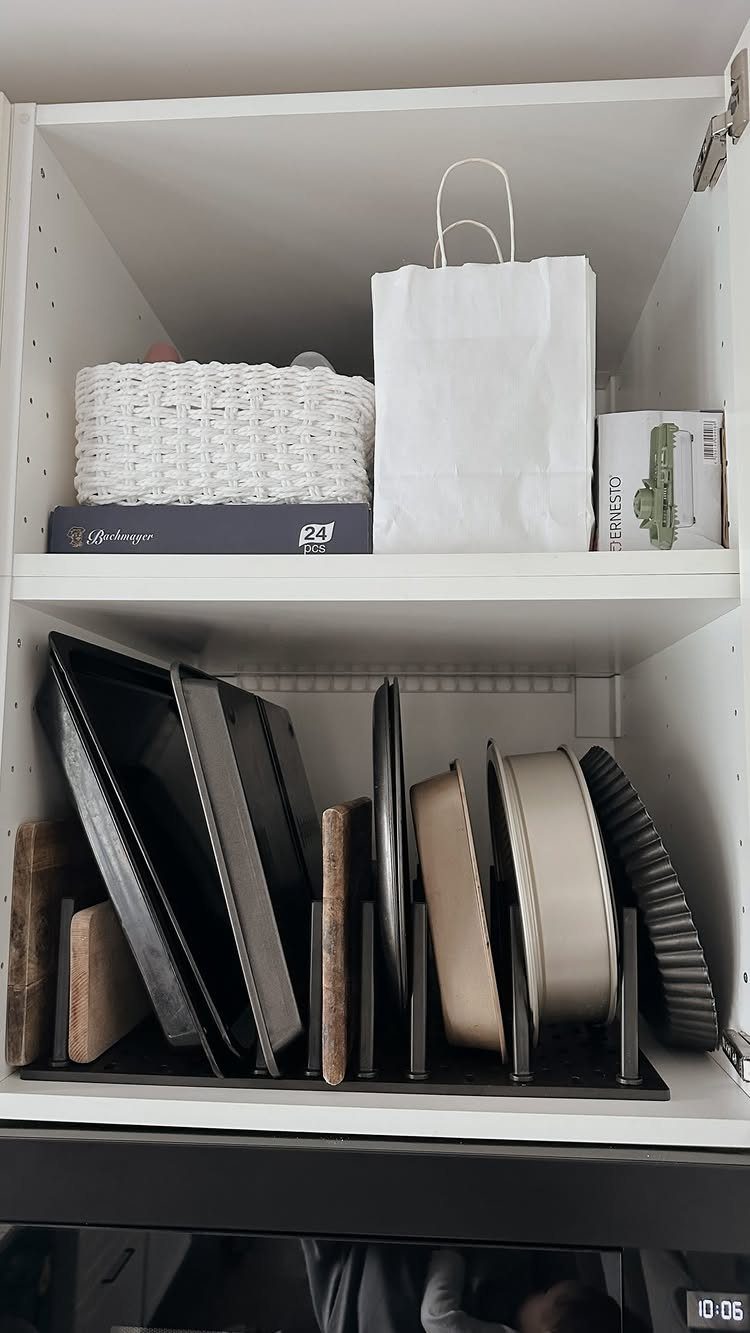
Baking sheets stored flat slide to the back of a cabinet and stay there for months. A wire divider rack on the shelf stands them on edge like magazines; each sheet, pan, and cutting board separates without sticking.
The rack screws to the shelf base or sits unsecured if you prefer to lift it out for cleaning. I would place the tallest items toward the back so shorter ones still slide free without tipping the whole row.
13. Over-the-sink Drying Rack
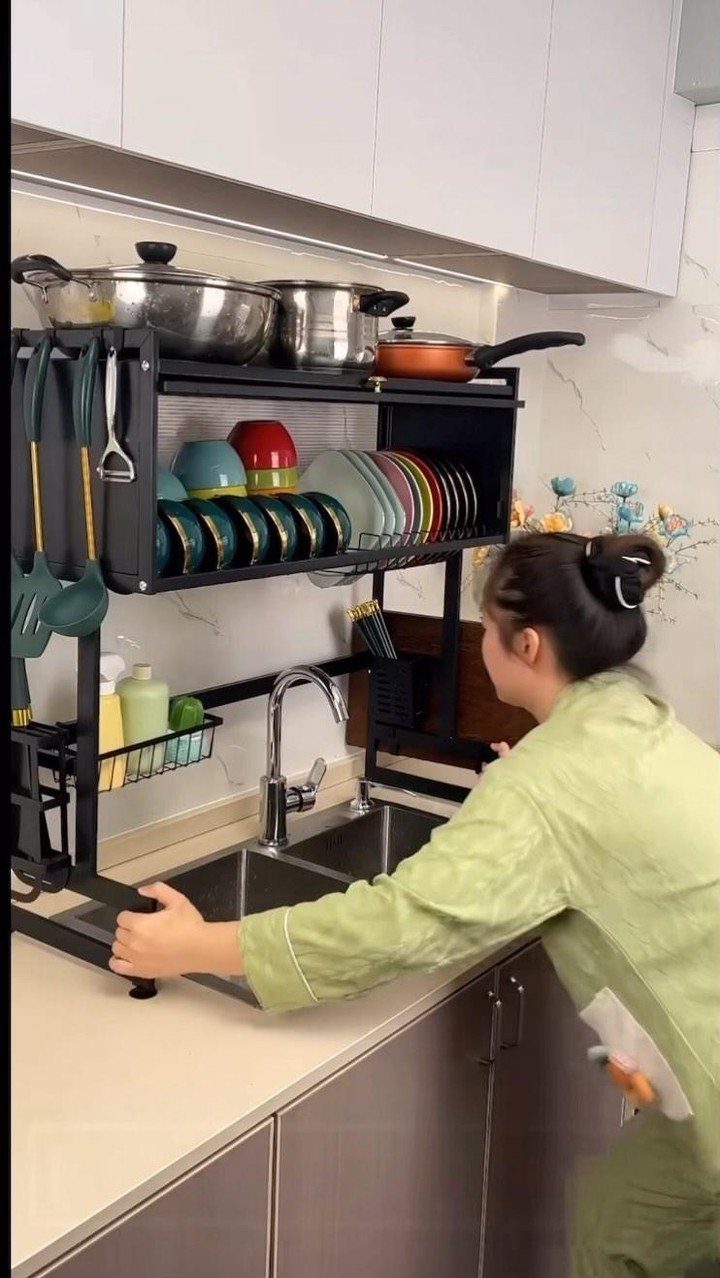
An over-the-sink rack turns dead air above the basin into drying space for a full load of dishes.
The tiers handle bowls below and plates above while utensils drip straight into the drain. I would check my faucet height before ordering; a gooseneck that does not clear the top bar turns the rack into an obstacle.
14. Barrel-shaped Bar Cabinet
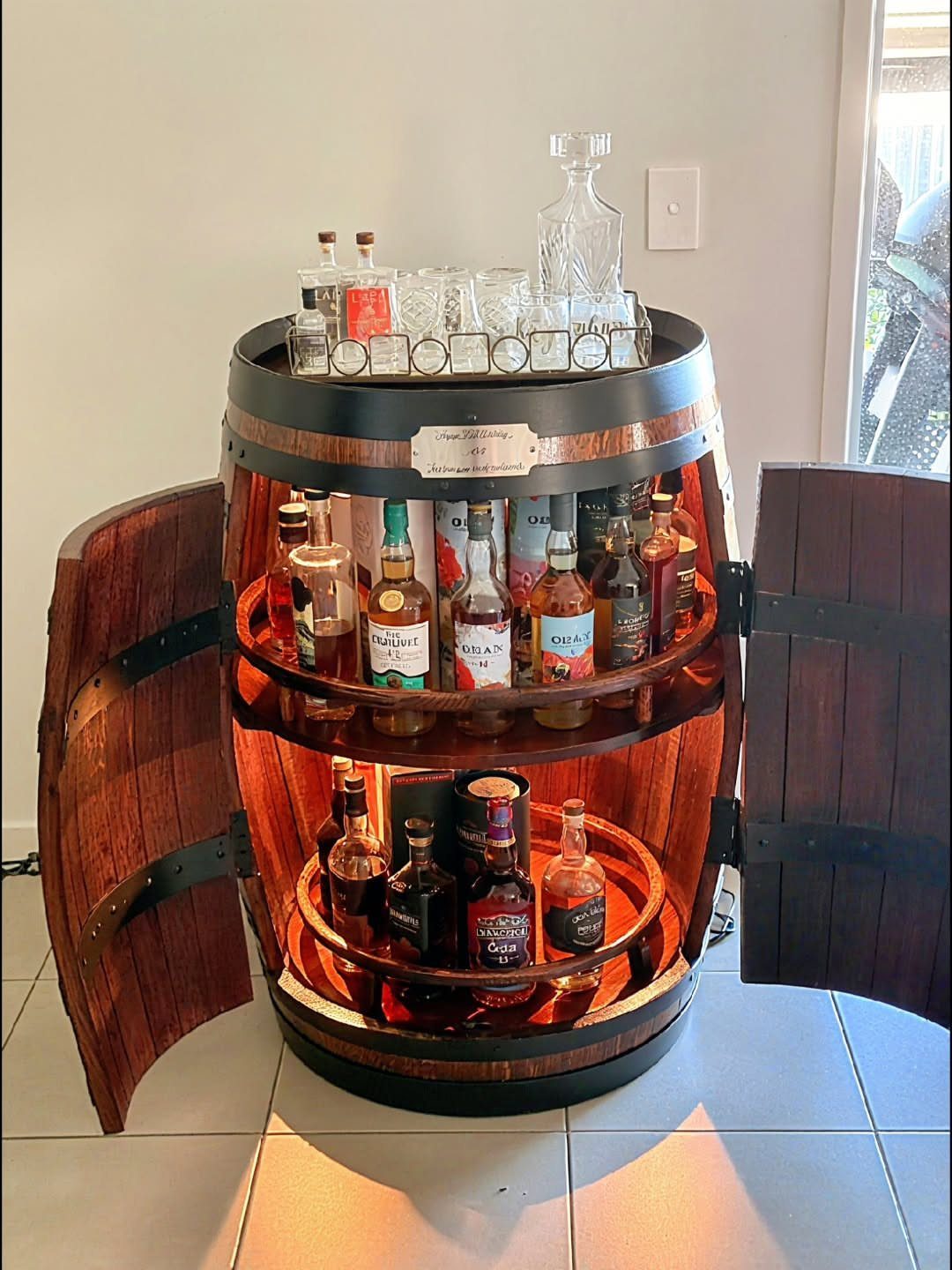
A barrel cabinet reads as furniture first and bar second, which suits dining rooms where a traditional hutch would look too formal.
The curved staves and metal hoops give it real presence; interior lighting is the detail that makes bottles readable after dark. I would wire it to a switched outlet so the glow does not run all evening unnoticed.
15. Spice Drawer Organization

A shallow drawer keeps spice jars on their backs with labels facing up, which ends the squat-and-read routine of a wall rack. I would keep the set to the dozen I reach for weekly and store backups elsewhere.
16. Open Under-counter Shelving
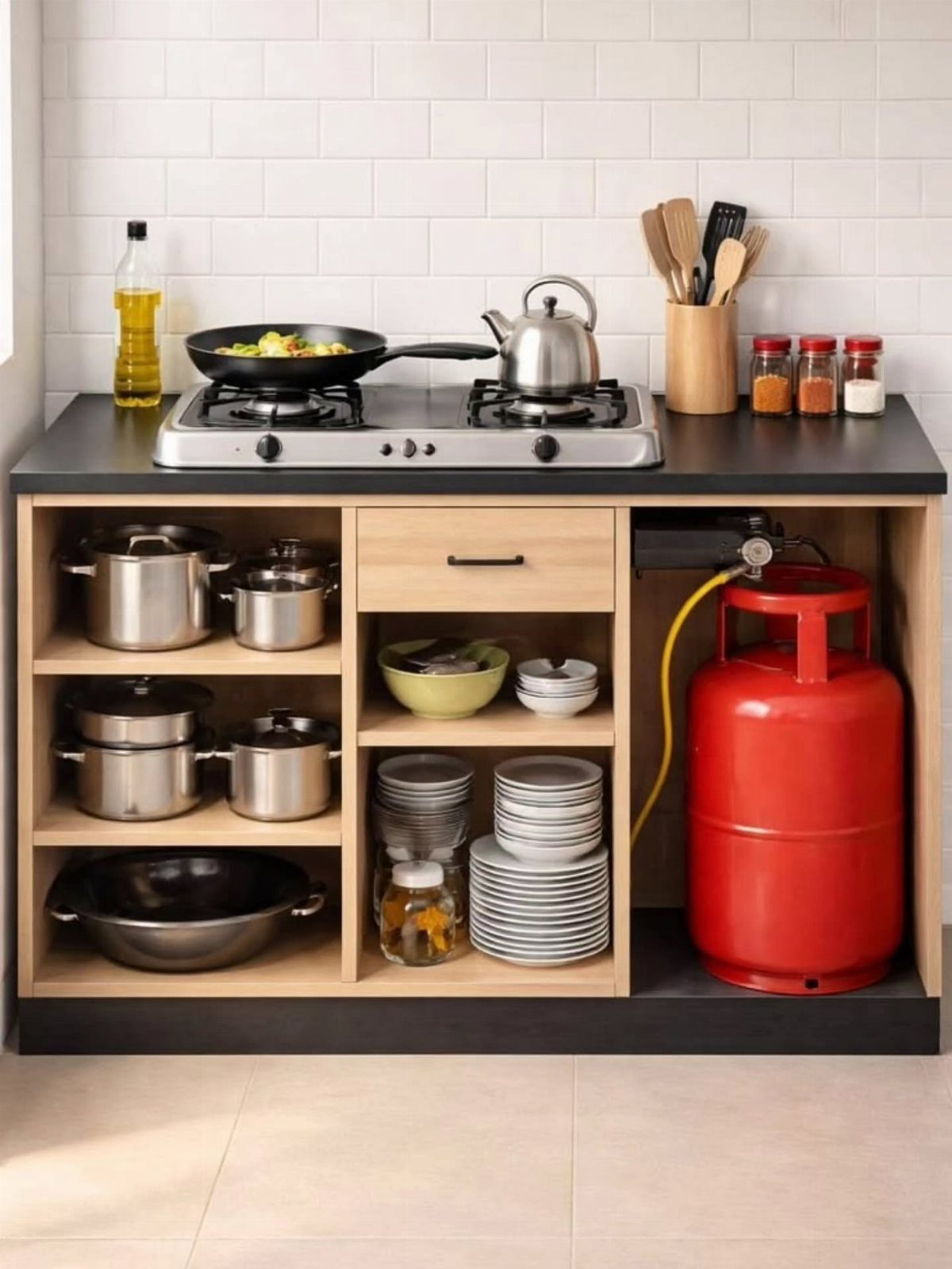
Open shelves under the counter put the cookware you use daily at thigh height, no door to open and no dark cabinet to search.
The trade is dust and grease from the cooktop above; I would limit these shelves to stainless steel and enameled pieces that wipe clean, and keep anything porous behind doors.
17. Lift-up Cabinet Door System
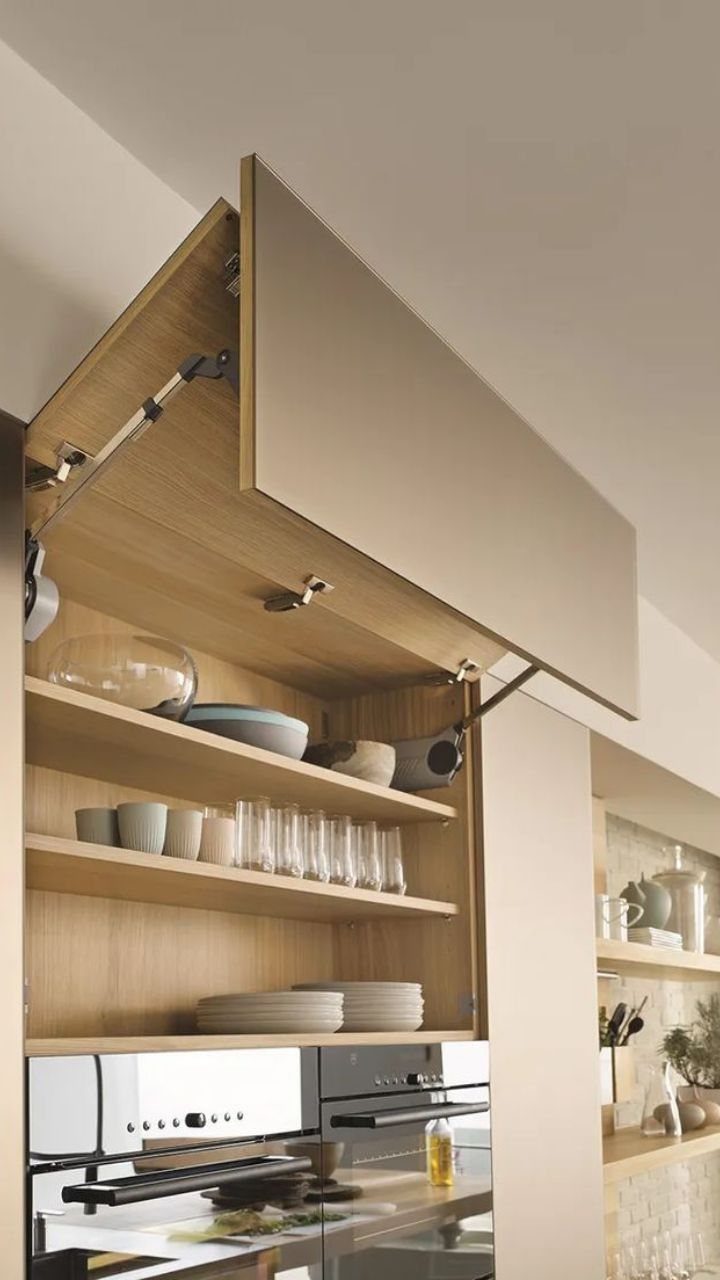
Lift-up hinges hold a cabinet door overhead while you load or unload, which frees both hands and keeps the swing arc clear in galley kitchens where a standard door would block the aisle.
The hardware costs more than butt hinges and needs precise alignment; a door that drifts shut mid-reach is worse than the original problem.
18. Cutlery and Utensil Drawer Dividers
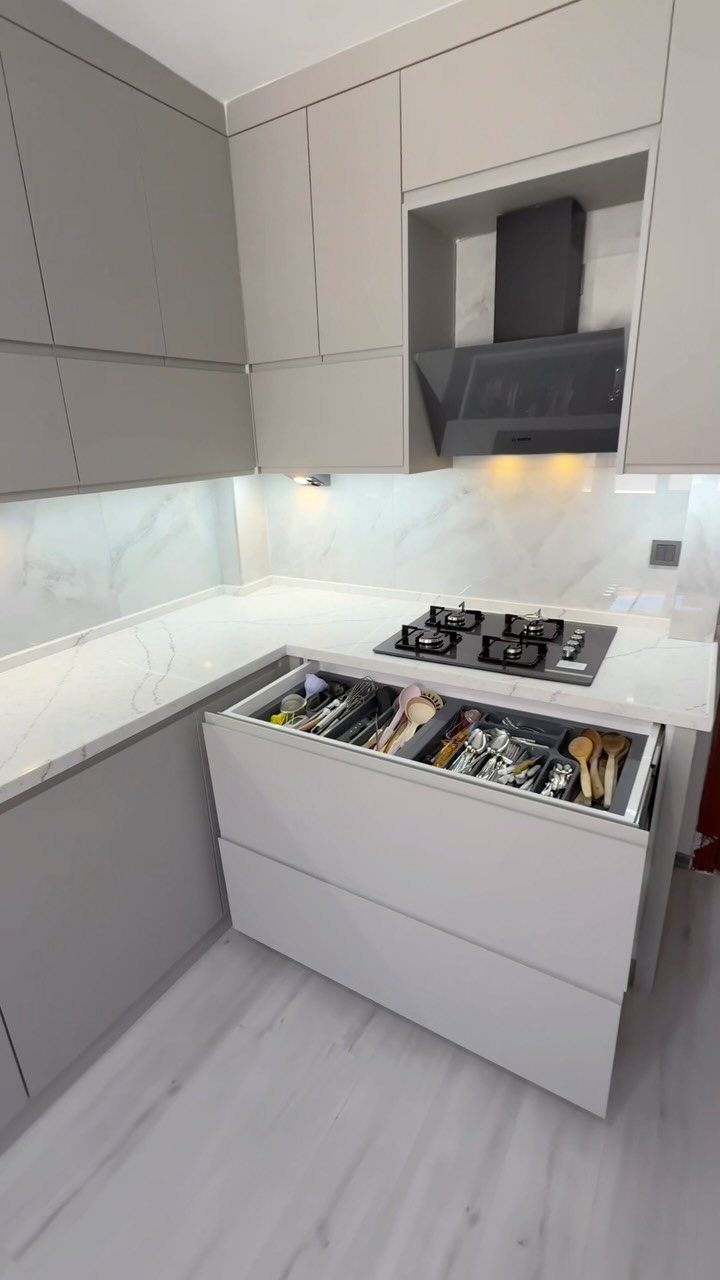
Dividers sized to the drawer turn one open box into zones for forks, spoons, spatulas, and the one whisk you use for eggs.
Wood dividers expand and contract with humidity; bamboo or a composite stays truer in kitchens that steam up.
I would measure the drawer interior, buy dividers a half-inch under in each direction, and let the spring tension or a rear stop handle the rest.
Note: Your drawer has to have a minimum depth of 3¼ inches, so there’s enough clearance for the knife handles to fit when they’re resting in their slots.
19. Rolling Kitchen Cart with Shelves
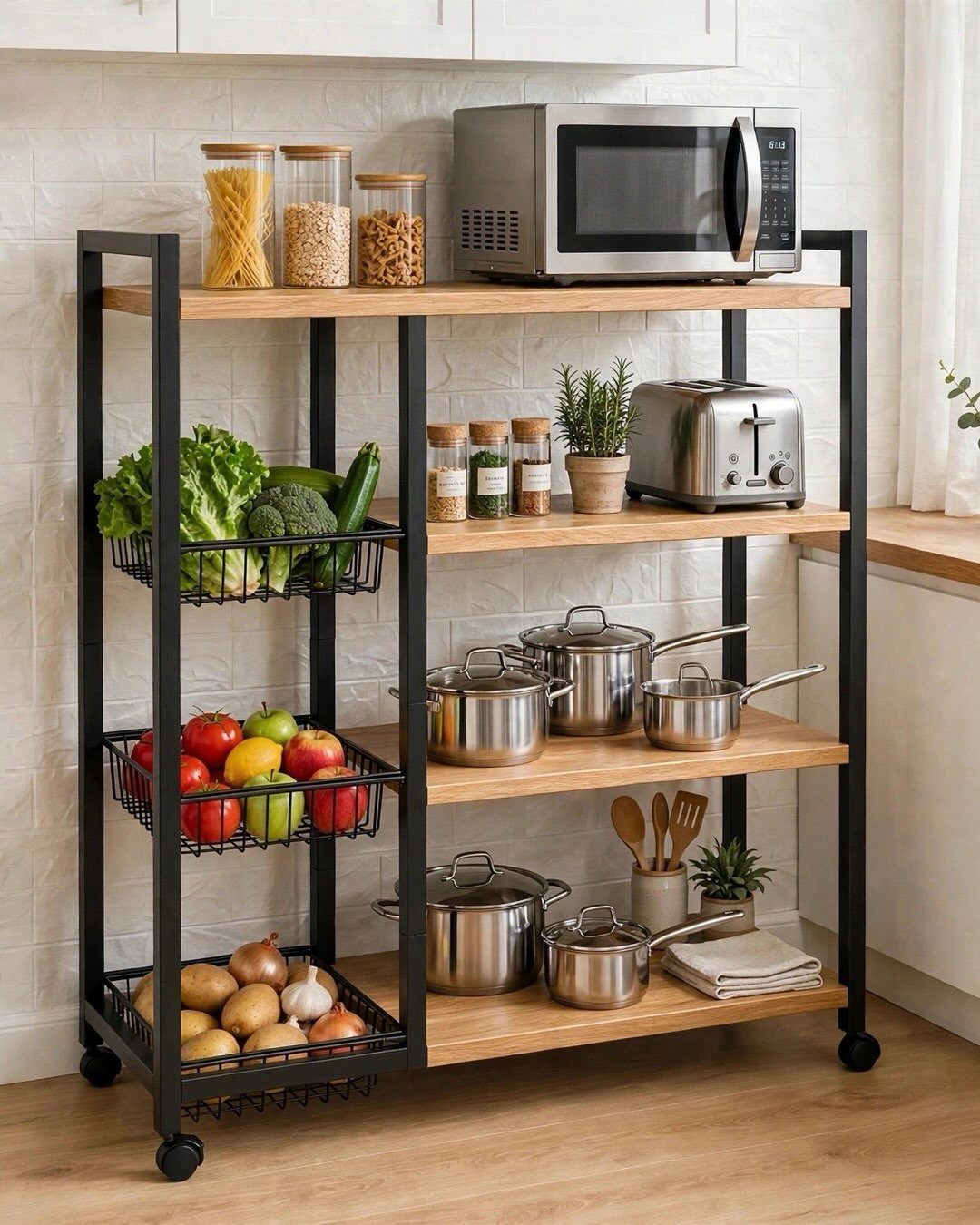
Casters turn a narrow cart into an extra prep surface that follows you to the stove or tucks against a wall when company arrives.
I would load the top with the microwave or stand mixer that otherwise eats counter space, keep bowls and produce in the wire baskets below, and park it where it blocks the least traffic.
A black metal frame handles weight without bulk; wood shelves warm up the look if your kitchen runs cold. Check the casters lock, or the cart drifts every time you lean on it.
20. Countertop Mini Cabinet with Fluted Glass
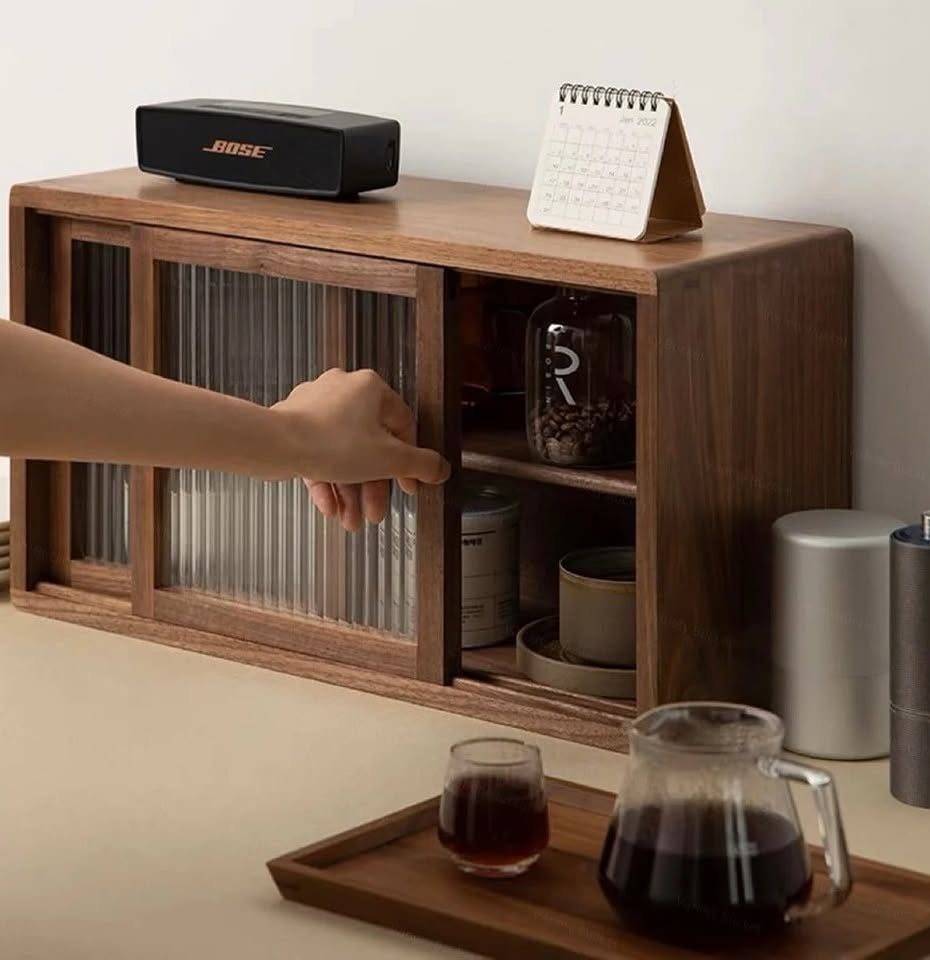
Fluted glass obscures the clutter without hiding it entirely, which reads calmer than clear glass when jars and small boxes do not match. The sliding doors save the swing space a hinged front needs on a crowded counter.
This belongs on the counter only for items I reach for daily, coffee supplies or breakfast things, since anything less frequent earns its spot inside a full cabinet.
The ribbed texture catches light; place it where a window or under-cabinet bulb grazes the surface, not where it sits in shadow and goes unnoticed.
21. Glass-door Cabinet with Display Lighting
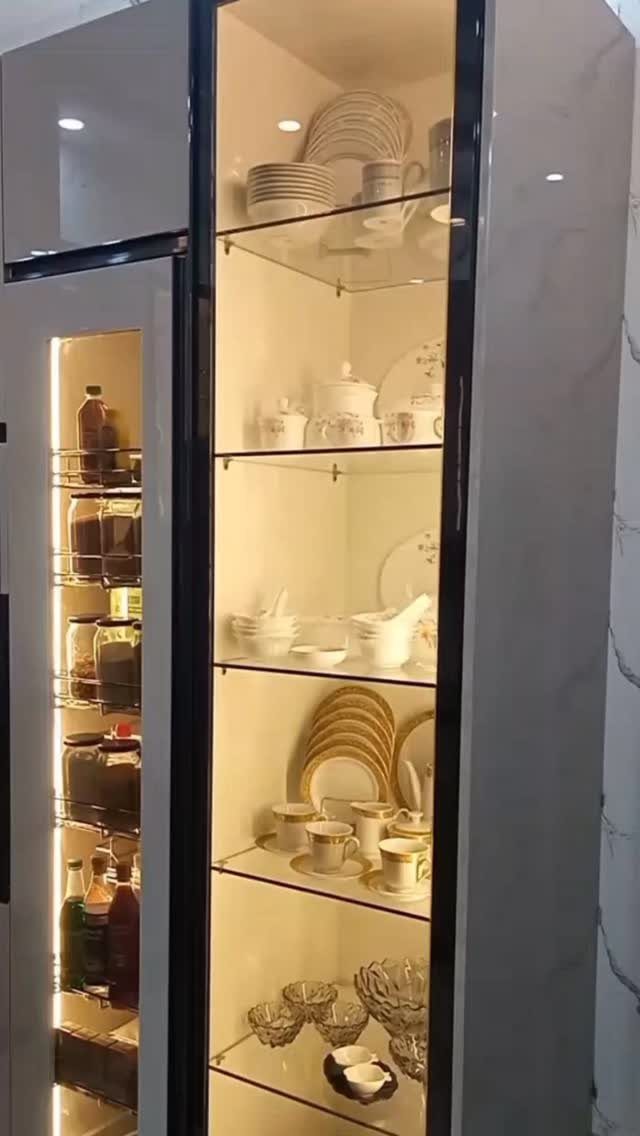
Interior lighting turns dish storage into something intentional, the kind of cabinet you leave visible from the dining room.
Glass shelves keep the glow even from top to bottom; wood or laminate would block it in bands. I would stack white or pale dishes inside, since dark colors swallow light and read as silhouettes.
Pair one lit cabinet for display with another for dry goods; the combination keeps everyday storage close while the lit one shows off the good jars.
Wire the lights to a switch, not a plug you reach behind the unit to find.
22. Countertop Rotating Spice Rack
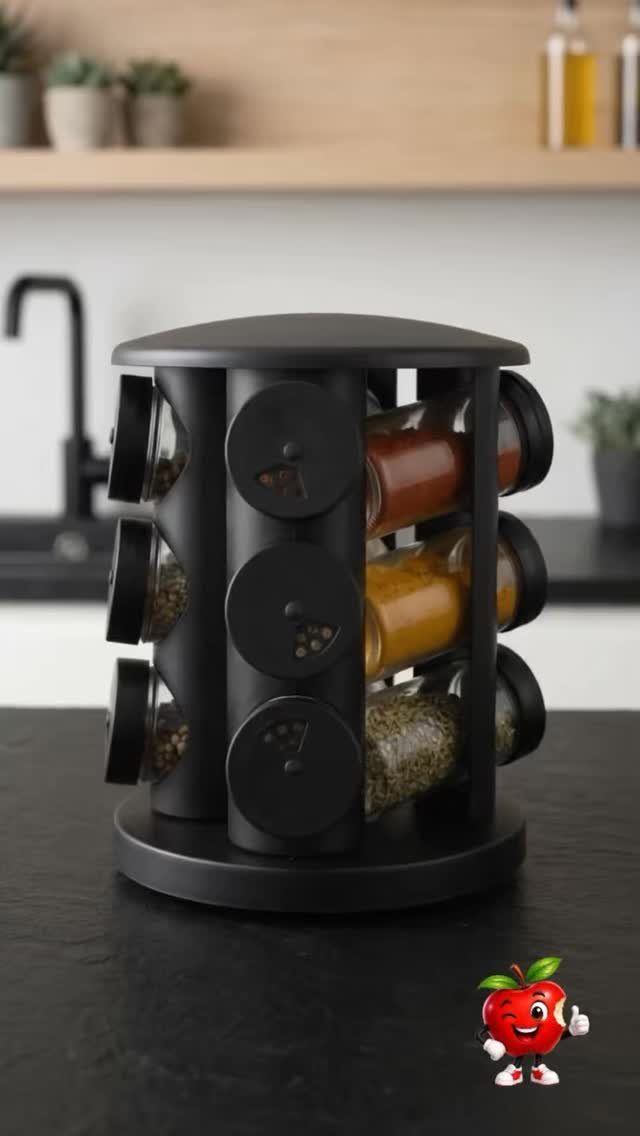
A spinning base brings the jar at the back to the front in a quarter turn, which ends the reach-and-knock routine of a static rack.
A carousel loaded with every jar I own turns into a game of chance; I limit mine to the spices I cook with weekly.
Black finish suits dark counters and appliances; brass or white reads cleaner in a pale kitchen. Check the jar diameter against the rack slots before buying, since an eighth-inch mismatch leaves jars tilting or stuck.
23. Narrow Pull-out Cabinet Rack
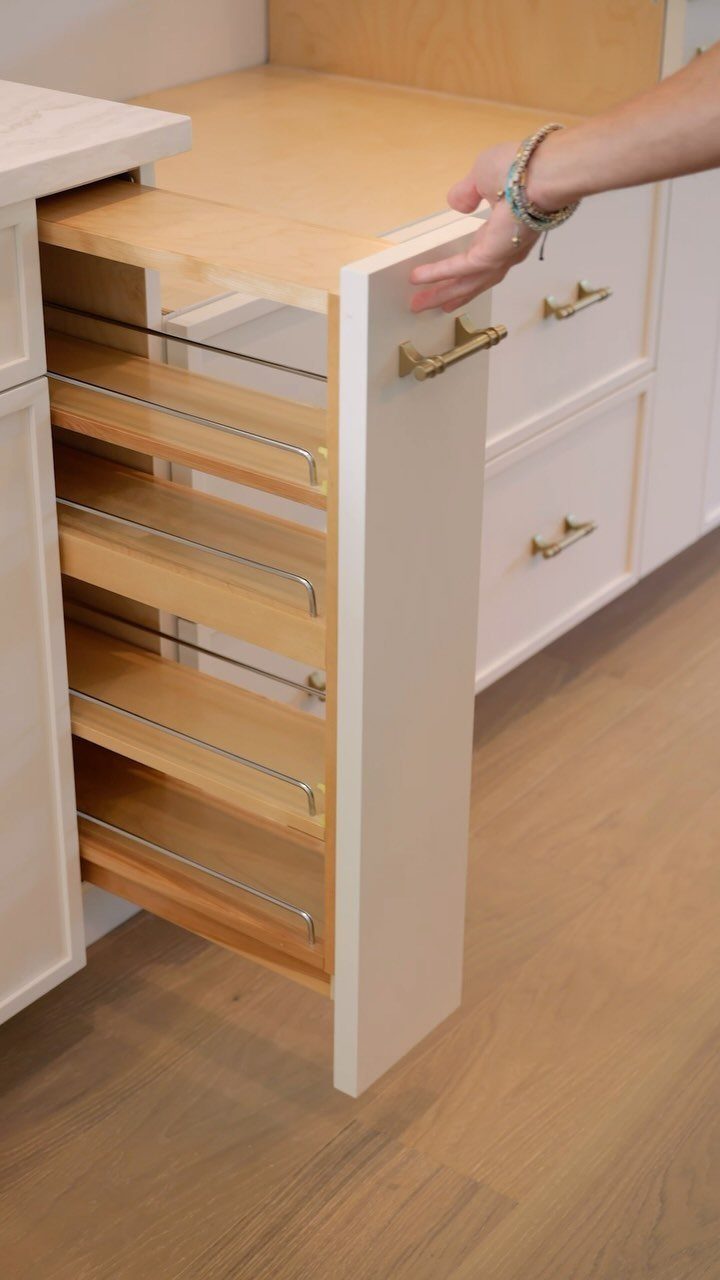
A slim pull-out fills the gap beside a range or sink that standard cabinets leave dead, turning filler strip space into storage for oils, spices, or cutting boards.
The guard rails keep jars from tipping when the rack slides fast; I would load the heaviest items on the bottom shelf to keep the center of gravity low.
Gold hardware on white cabinets needs matching pulls on surrounding doors or it reads as an afterthought. Full-extension slides matter here; a rack that stops halfway leaves the back row unreachable.
24. Floating Wall Shelves
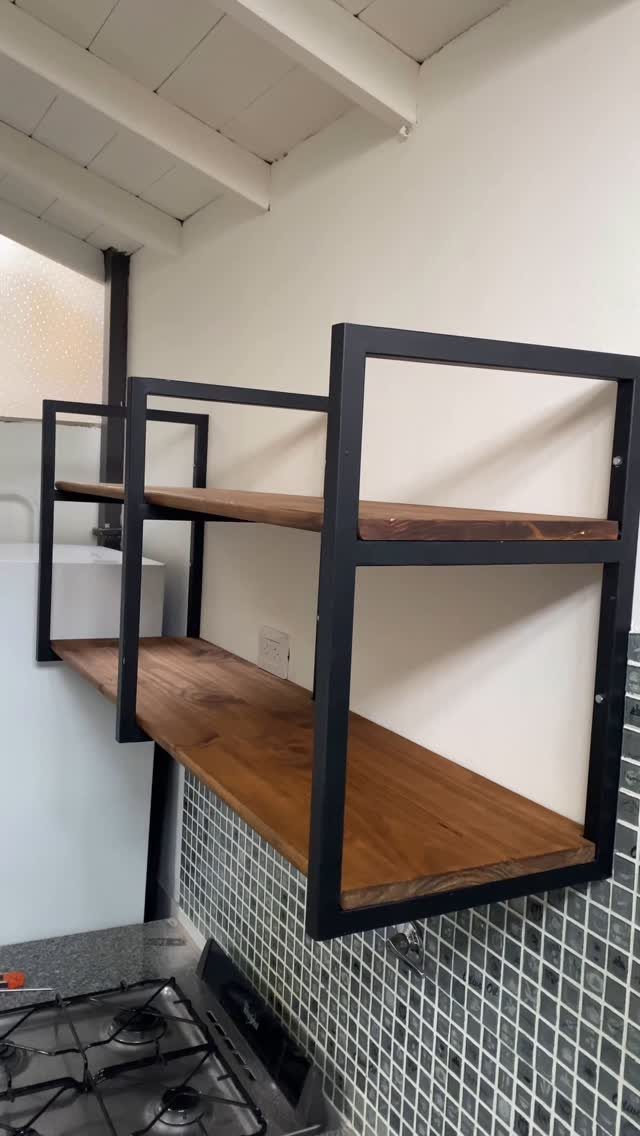
Open shelves above the stove keep the cookware you grab constantly within arm’s reach, though they trade cabinet dust for grease from sautéing below.
I would limit these to stainless or enameled pieces that wipe clean; cast iron and wood take the hit and need more care.
Black metal brackets carry visual weight; in a lighter kitchen I might paint them to match the wall so the shelves seem to float.
Mount into studs or use heavy-duty toggle bolts, since a loaded shelf pulls hard on plaster or drywall.
25. Dedicated Water Bottle Cabinet
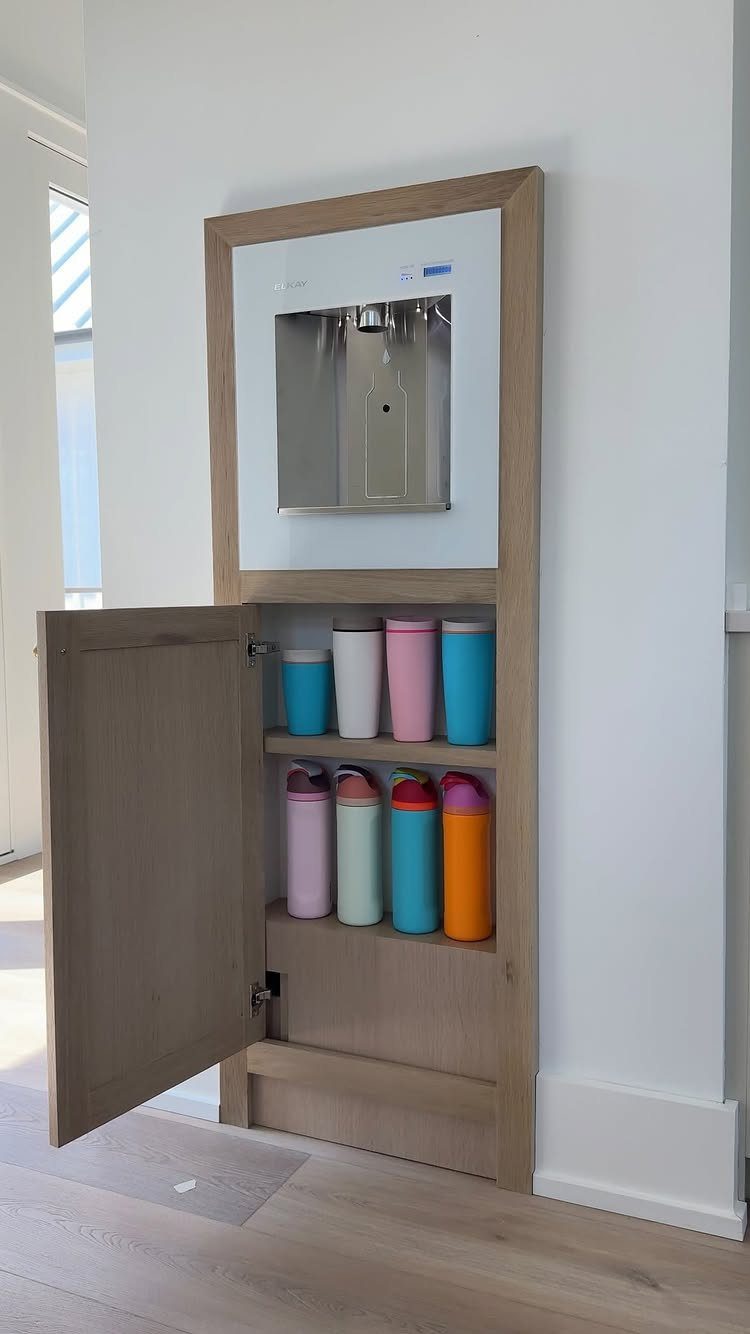
A tall cabinet compartment sized for bottles standing upright ends the toppling tower of reusables that falls from a shelf every time you reach for one.
An open front keeps grabs fast; a door would hide the jumble but adds a step. I would line the floor with a silicone mat to catch drips, since a bottle put away damp mildews fast.
This suits households where everyone carries their own; assign a row per person and the hunt for the right color ends.
26. Vertical Plate Racks in Cabinet
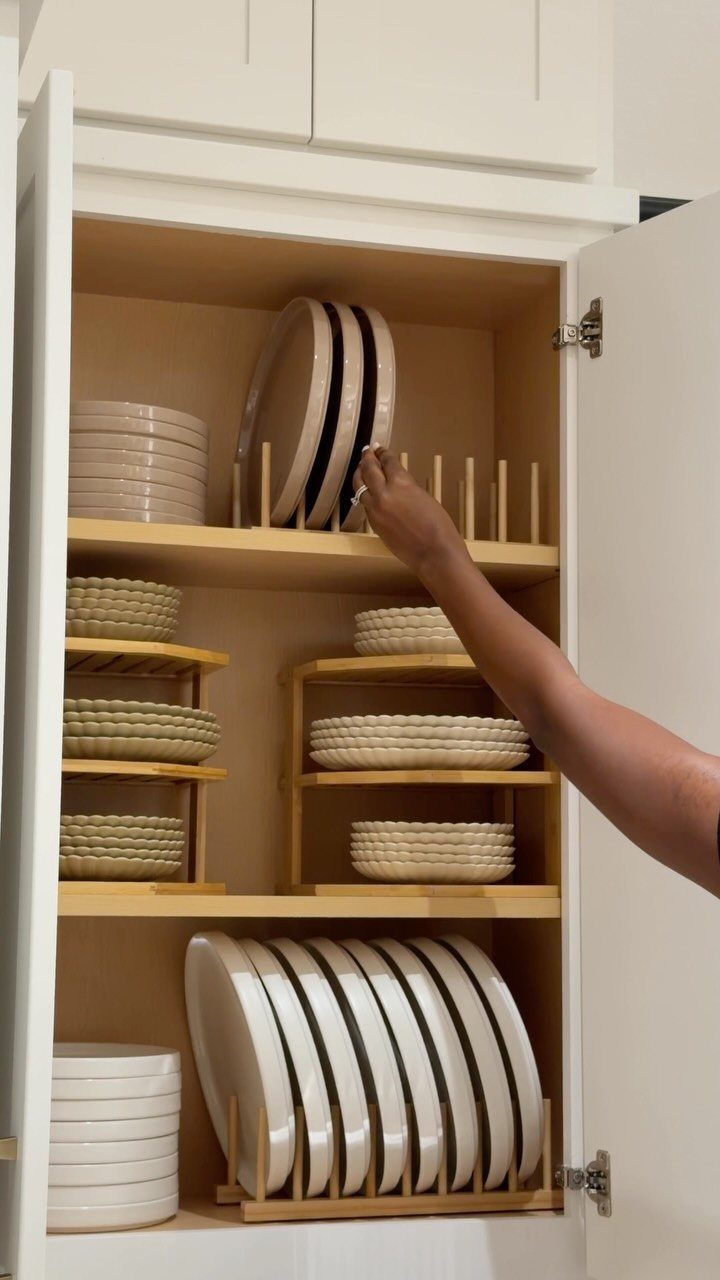
Wooden pegs on a shelf stand plates on edge like books, so each one slides out without lifting the stack above it. Vertical plate racks beside bowls on corner risers use the same shelf depth twice over.
I would space the pegs to my largest dinner plate and accept that salad plates rattle a little; too tight and the rack refuses new pieces.
Bamboo pegs match the risers and handle humidity better than raw wood, which swells and jams in summer.
Decluttering Advice
I start every kitchen reorganization with 3 bags: trash, donate, and sell.
Anything I do not use weekly goes in one of them. Rearranging clutter into prettier containers still leaves the clutter; the bins just delay the mess.
I also watch for items that belong elsewhere, the toys stashed in cabinets, the tools that wandered from the garage. Relocating those clears space before I decide what stays and where it lives.
Maximizing Vertical Space
Reserve the easy-reach shelves at eye and waist level for the pans you grab every morning, because those spaces hold the roasting pan I pull out twice a year and the backup stockpot, not the daily skillet.
I stack bowls on a riser above plates, or cans above jars, and each level stays visible and accessible.
Labeling Importance
A label maker lives in my kitchen drawer now, not the office.
I label the container, not the shelf, so the name moves with the contents. Dry goods get the item and the date; I cannot tell all-purpose flour from bread flour by sight, and month-old rice looks the same as fresh.
Labels also stop me from buying a third bag of arborio rice because the open one hid behind the orzo. The up-front time pays back in fewer duplicate purchases and less guessing at what is inside.





