
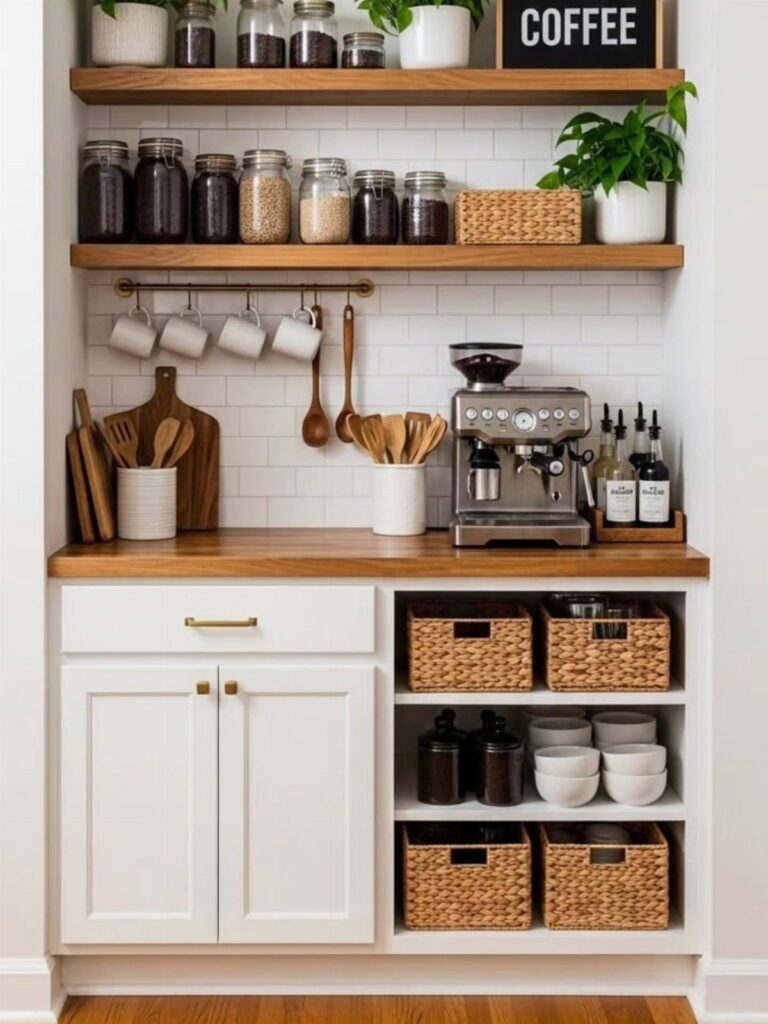
These 21 setups range from a freestanding shelving unit to custom arched millwork with backlighting, so the deciding factor is how much of the wall or floor you can give up and for how long.
A renter working a narrow kitchen leans toward a rolling cart or pantry door; an owner with wall to open builds in shelves and tile.
I keep coming back to the measurement for appliance garage clearance, your tallest carafe or cup warmer in inches, because that single figure separates the installs that slide smooth from the ones that jam on the door frame.
1. Coffee Station Within a Pantry
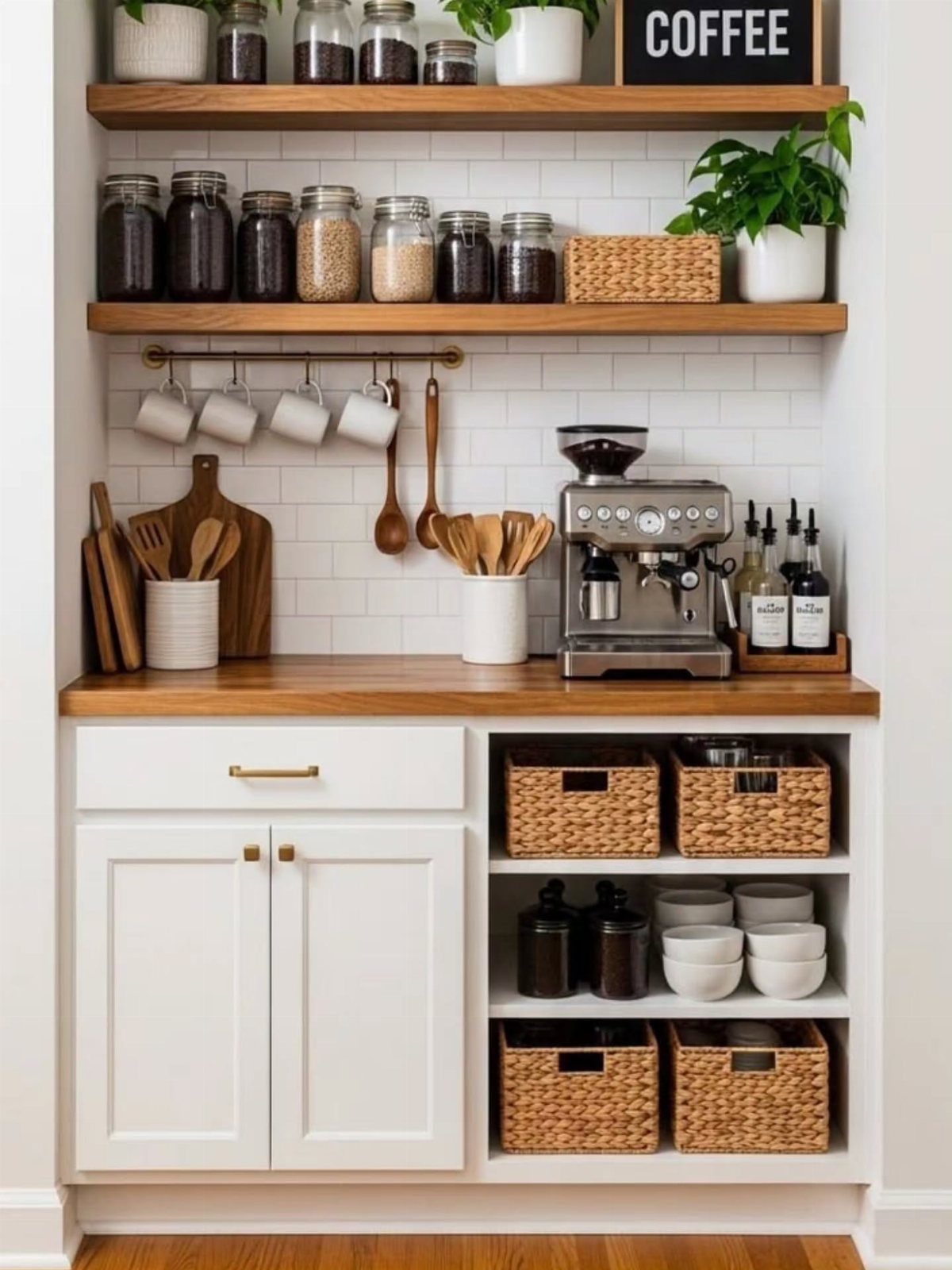
A pantry coffee station tucks the whole ritual behind a door that already exists. I like this for renters and anyone in a small kitchen: you are not giving up counter space you do not have.
The setup needs a shelf or two at working height, an outlet if you are running electric, and enough depth to pull a mug forward without rapping knuckles.
Baskets below hide filters and backup beans from sight. The trade is walking there each morning; the win is walking away and closing the door.
2. An Appliance Garage Coffee Station
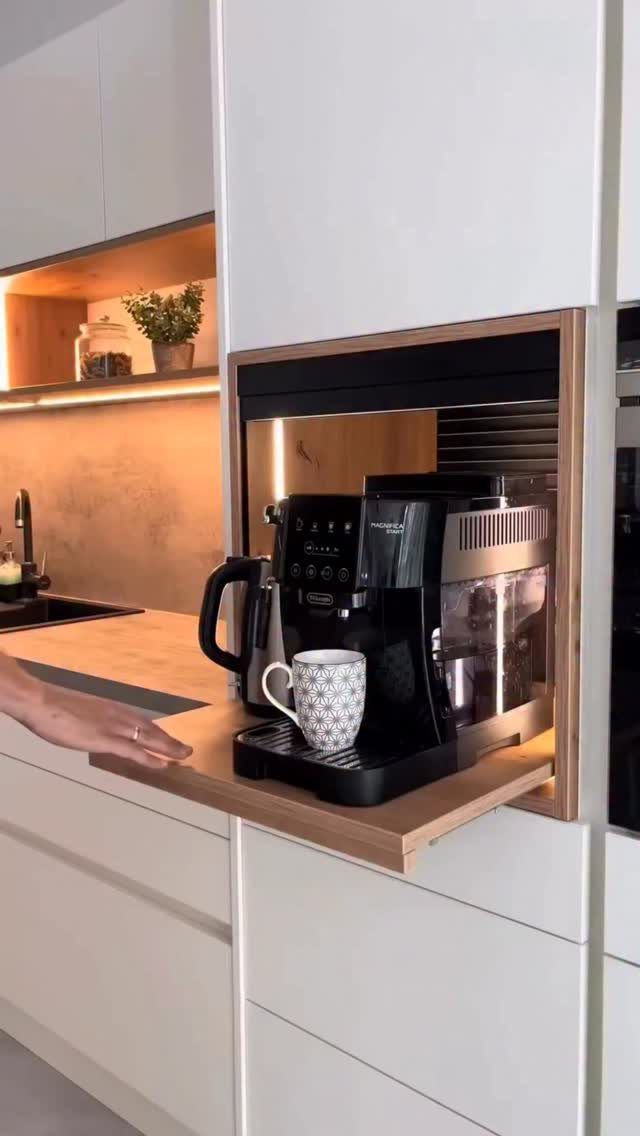
An appliance garage slides out when you want coffee and disappears when you do not. I would put this high on my list for households where one person drinks espresso and the other needs the counter for baking.
The pull-out shelf must clear the door frame with the machine on it, so measure your tallest carafe or cup warmer before you buy the cabinet.
Most kitchen cabinet lines now offer a version with the lift-up or roll-top door already sized to common appliances. Expect to pay more than a standard base cabinet, though not by much.
3. Cozy Coffee Nook
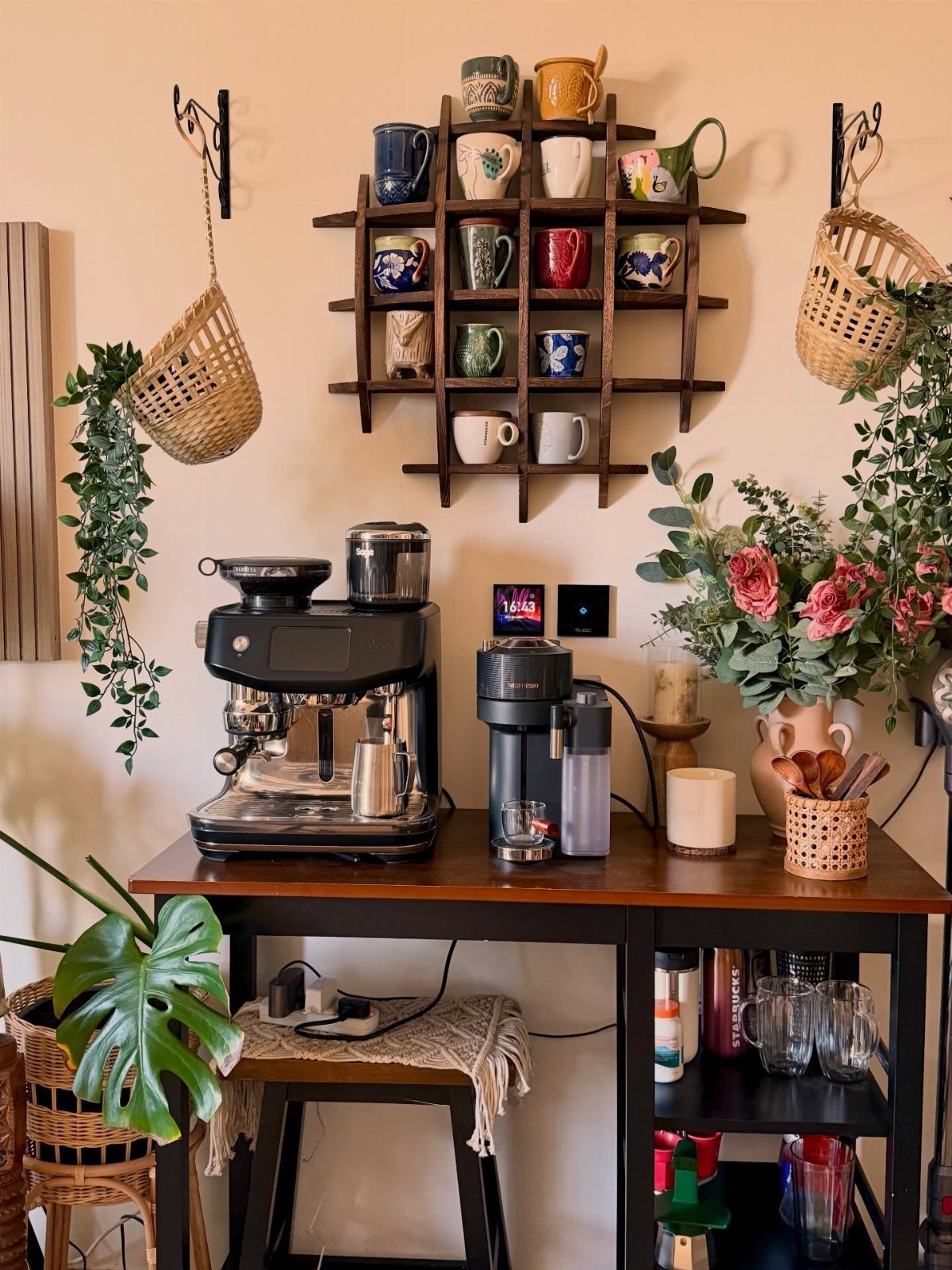
A dedicated nook turns coffee into a destination rather than a pit stop.
A cart works best when you are still figuring out where the morning light falls or might move in a year. 2 shelves above the machine keep daily cups in reach; a rail or hooks add storage without eating depth.
Plants and cut flowers do well here because the nook is a place you linger, so the eye has time to notice them. Shallow counters mean juggling the grinder and the pour-over dripper; give yourself enough depth to work.
4. Coffee Station with Vintage Decor
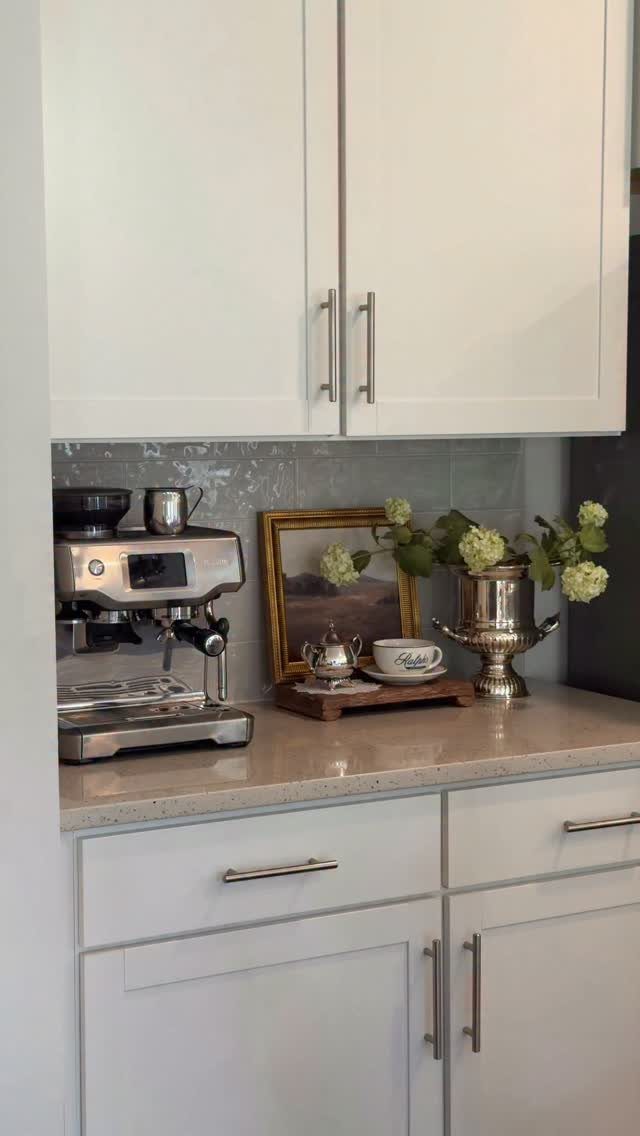
Vintage decor gives a coffee station the feel of a found object rather than a planned corner.
A silver urn and framed landscape read as collected over time, which is the effect you want: one or two pieces with patina against a clean counter.
I hunt estate sales for heavy silverplate that does not need polishing to look good; a little tarnish reads as warmth.
The risk is clutter, so I keep the machine and daily tools modern and let the single vintage piece carry the mood. One strong item beats a crowd of small ones.
5. Modern Coffee Station
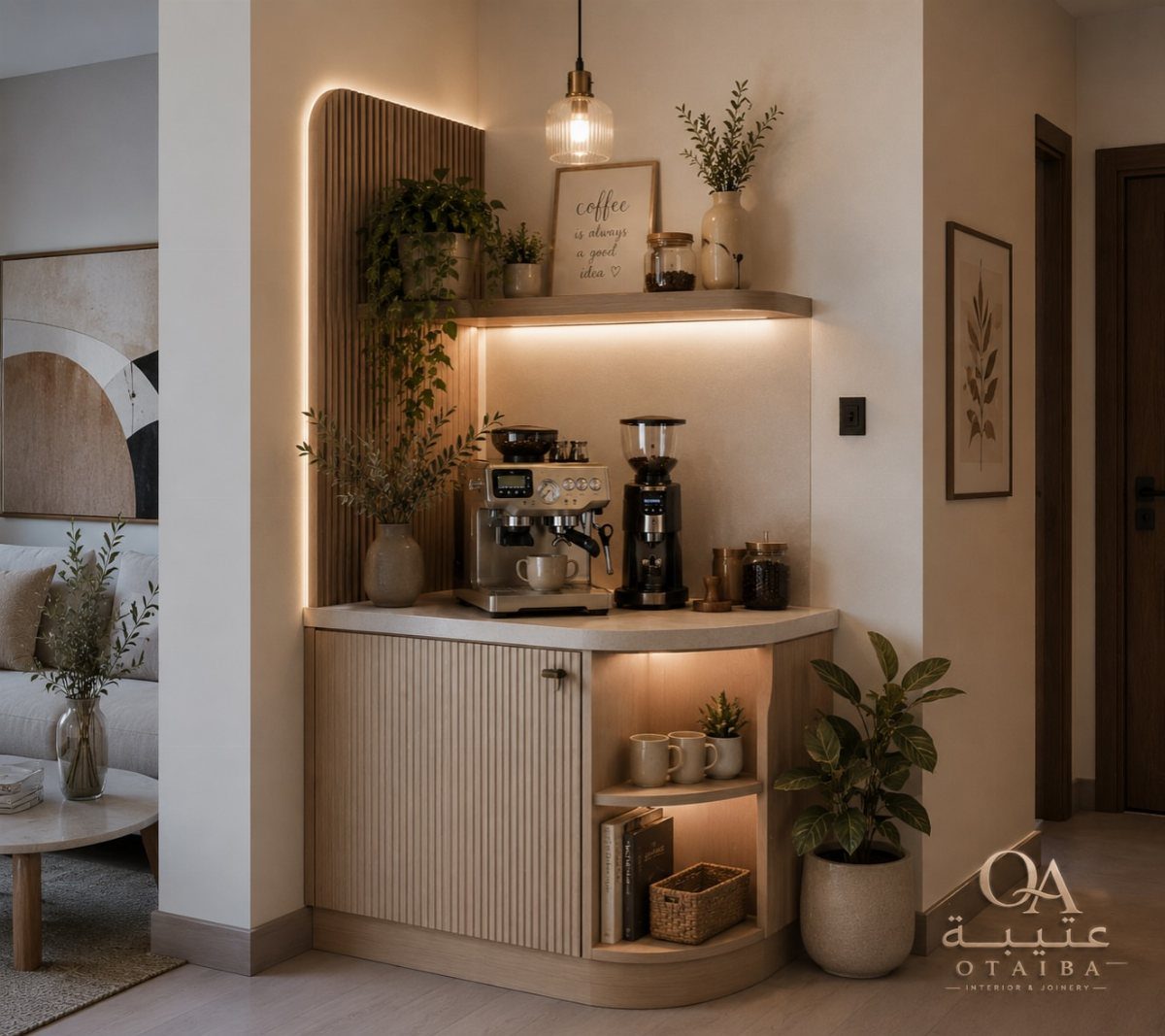
Curved wood and accent lighting make this station read as furniture, not an afterthought.
I would aim here only if the budget stretches to custom or semi-custom millwork; the fluted detail and integrated glow are hard to fake with stick-on strips.
The warm tone of the wood matters as much as the shape, oak or walnut both work against most wall colors where a gray would turn cold.
Task lighting above the machine matters; ambient below changes how the corner feels in early morning hours. Plan for ventilation if the machine puts out steam.
6. Coffee Station with Layered Shelves
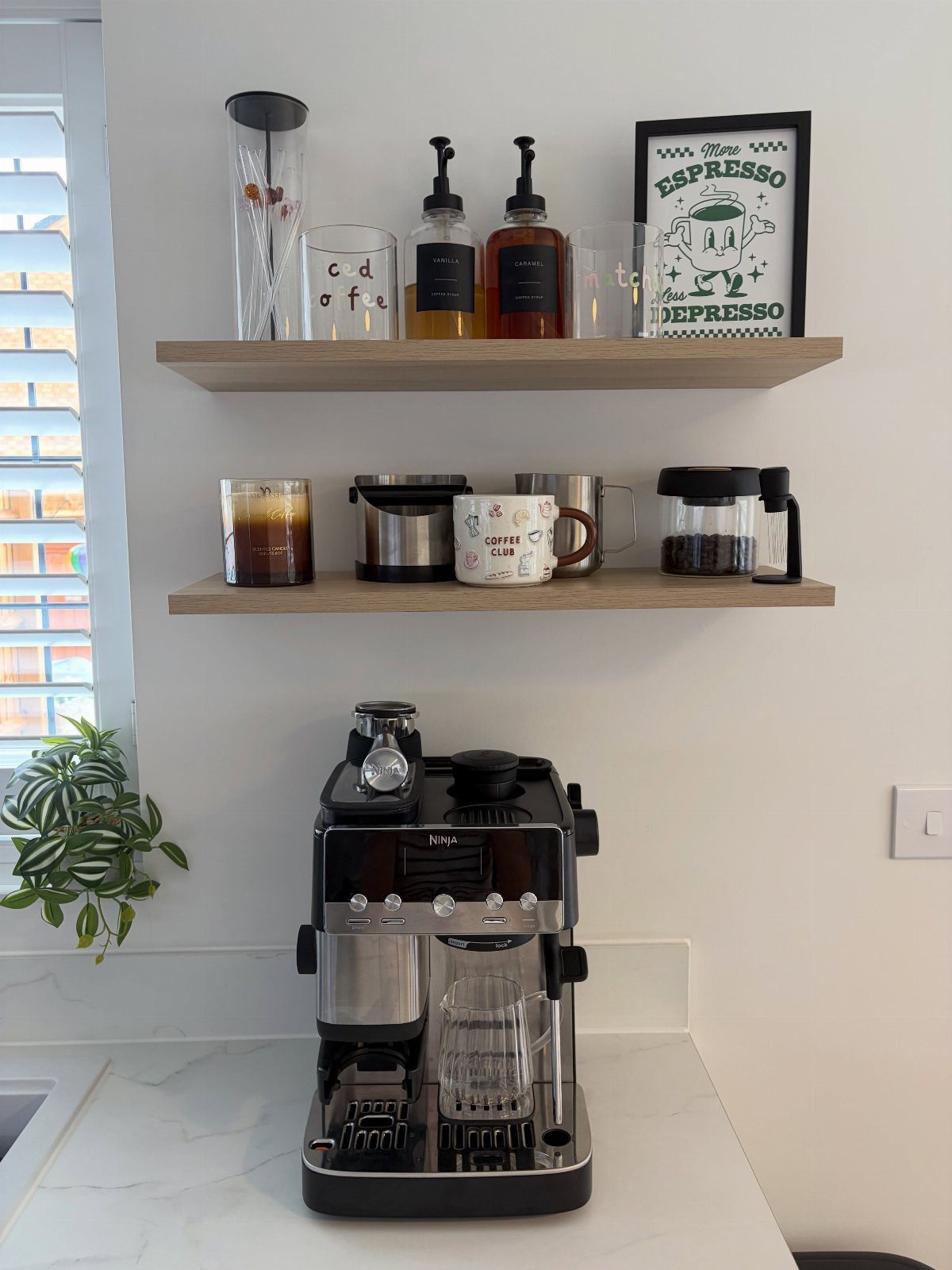
Layered shelves let a coffee station grow upward when it cannot grow outward.
Two floating shelves carry syrup, beans, and a small framed print; I would add a trailing pothos or two on the upper shelf where leaves fall clear of the machine.
Keep the lowest shelf high enough that a tall mug or scale still fits on the counter.
I center the lower shelf well above the counter and the upper one with enough gap between for tall canisters or a small plant. This shape suits renters who can patch a few screw holes later but need storage now.
7. Coffee Shop–Like Coffee Bar
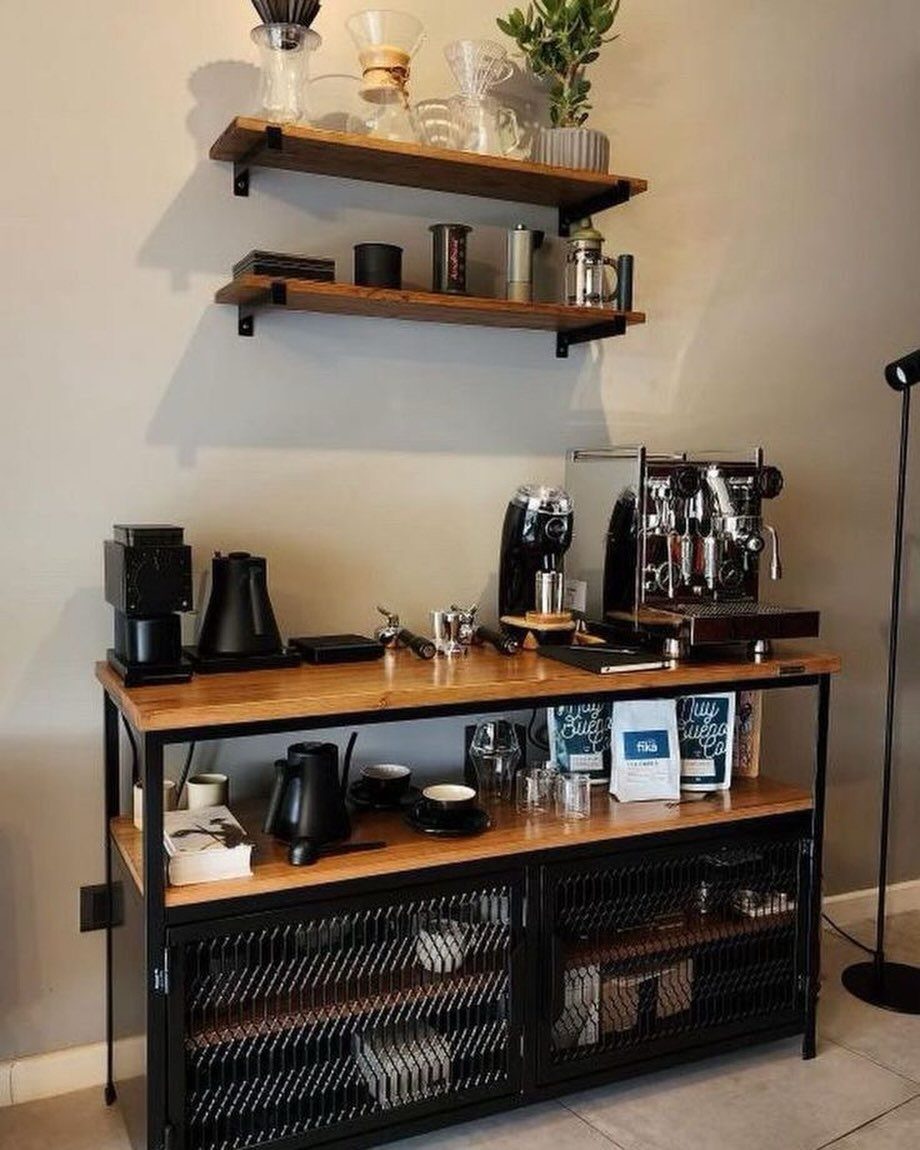
A coffee shop–like bar brings the third-place feeling home with open shelving and gear you can actually see.
I would start with a rolling cart or narrow console against a wall, then add one professional-looking piece: a bottomless portafilter, a glass dripper, or a labeled bean jar.
The risk is buying equipment for looks that outpaces your morning routine.
A hand grinder and a simple pour-over stand read as serious without the counter clutter of a full espresso setup. Keep the tallest items, the grinder and the kettle, toward the back so sight lines stay clean.
8. Matching Eggshell Color Coffee Bar
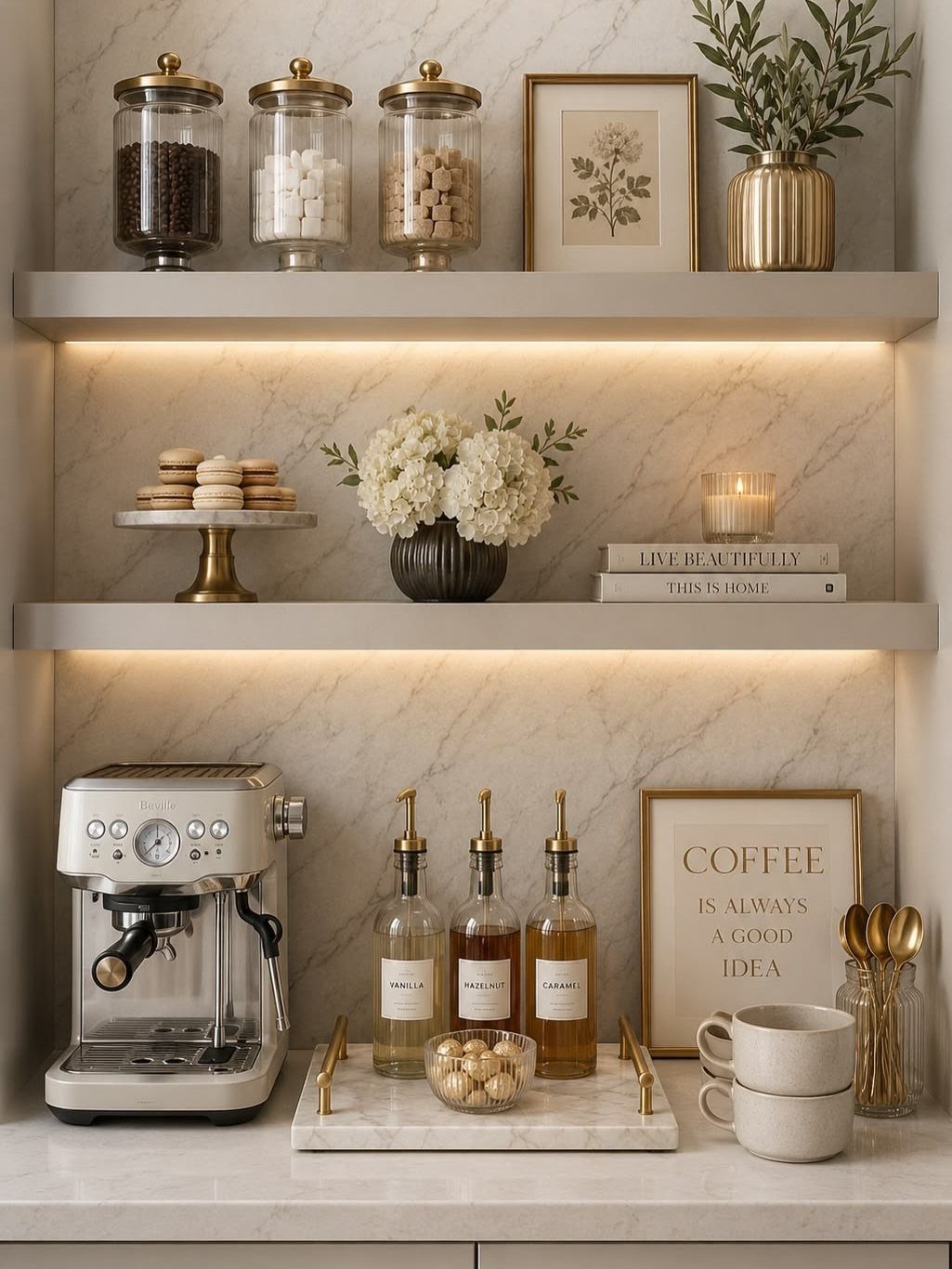
Matching the machine to the wall color erases visual noise in a small kitchen. The cream espresso maker against marble tile reads as one surface, which is the point: the station disappears until you use it.
I would extend the tone to the cups and the syrup bottles, then let the brass or gold hardware carry the contrast. The trade is that a colored machine limits your next choice; you are buying into a palette.
White, black, or steel swap more easily if you repaint. For renters or the indecisive, a neutral machine and matching accessories move with you.
9. Coffee Bar with Tile Backsplash
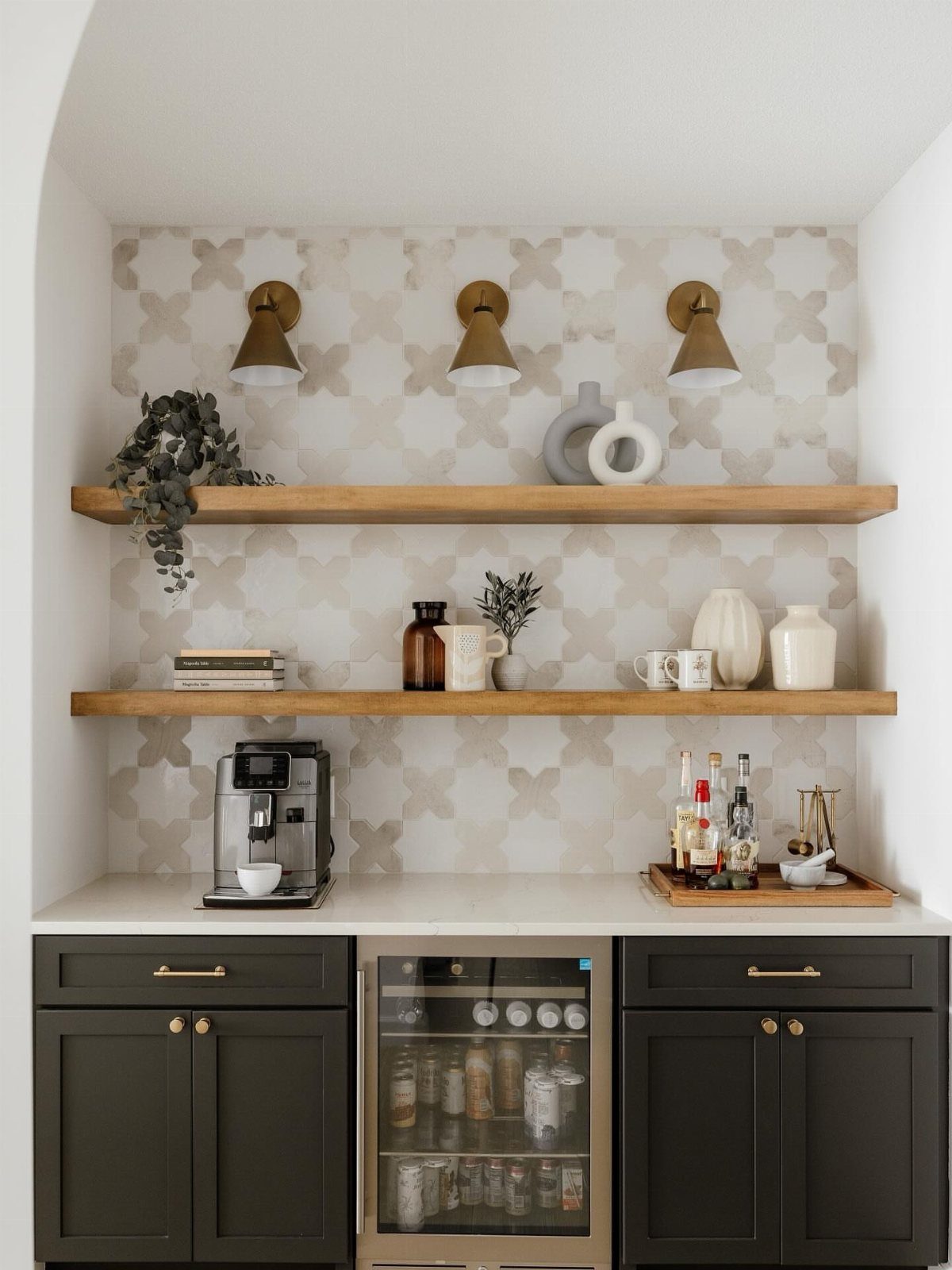
A tile backsplash gives a built-in station the permanence of a real kitchen job without the full renovation.
Patterned cement or zellige behind the machine catches splashes and steam that paint cannot handle; I would run it from counter to the underside of the shelf, not to the ceiling, to keep costs in check.
Dark lower cabinets and brass sconces set the palette; the tile is the statement, so the shelves stay simple wood.
Grout choice matters; a darker shade hides coffee stains better than bright white. This one suits owners who can commit to a wall.
10. Rustic Coffee Station
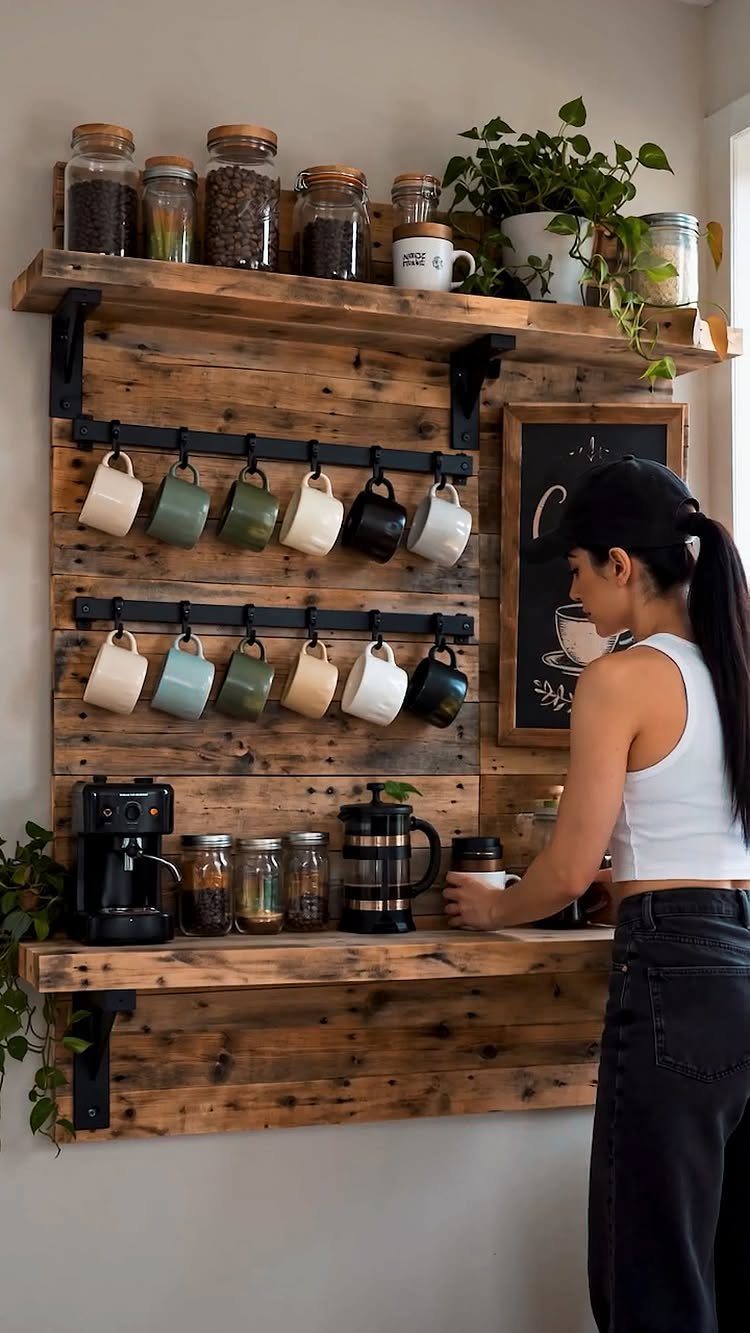
Rustic wood and exposed hardware turn a wall-mounted station into something that looks assembled rather than installed.
Reclaimed barn board or a live-edge shelf carries the mood; I would seal it with a food-safe finish because coffee oils and water rings find raw wood fast.
Hooks under the shelf for mugs save the depth that a rack would eat.
A French press and mason jars read as tools, not decor, which is the balance: one or two intentional pieces, not a costume. This style forgives a small budget better than most.
11. Midcentury Modern Coffee Bar
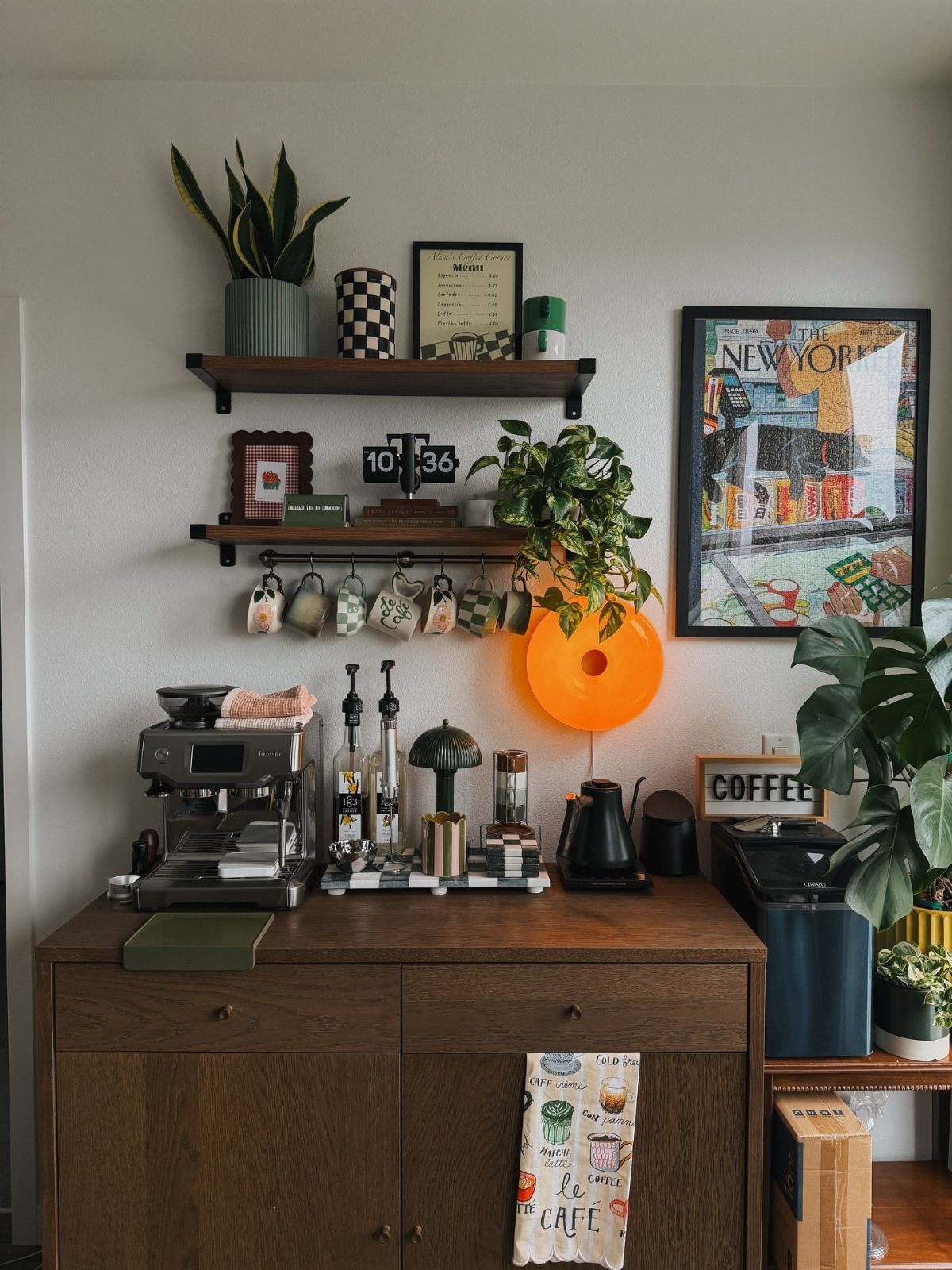
Midcentury lines mean tapered legs, warm wood tone, and nothing that fights the wall. A low credenza or sideboard at counter height works as the base; the espresso machine sits on top, with storage below for beans and filters.
I would add one period piece, the flip clock or the orange sconce, and stop there. Floating shelves above keep the vertical line clean but need careful spacing: too high and they float, too low and the machine feels boxed.
The plants soften the geometry without breaking it. This look asks for restraint; every item earns its place.
12. Coffee and Wine Bar
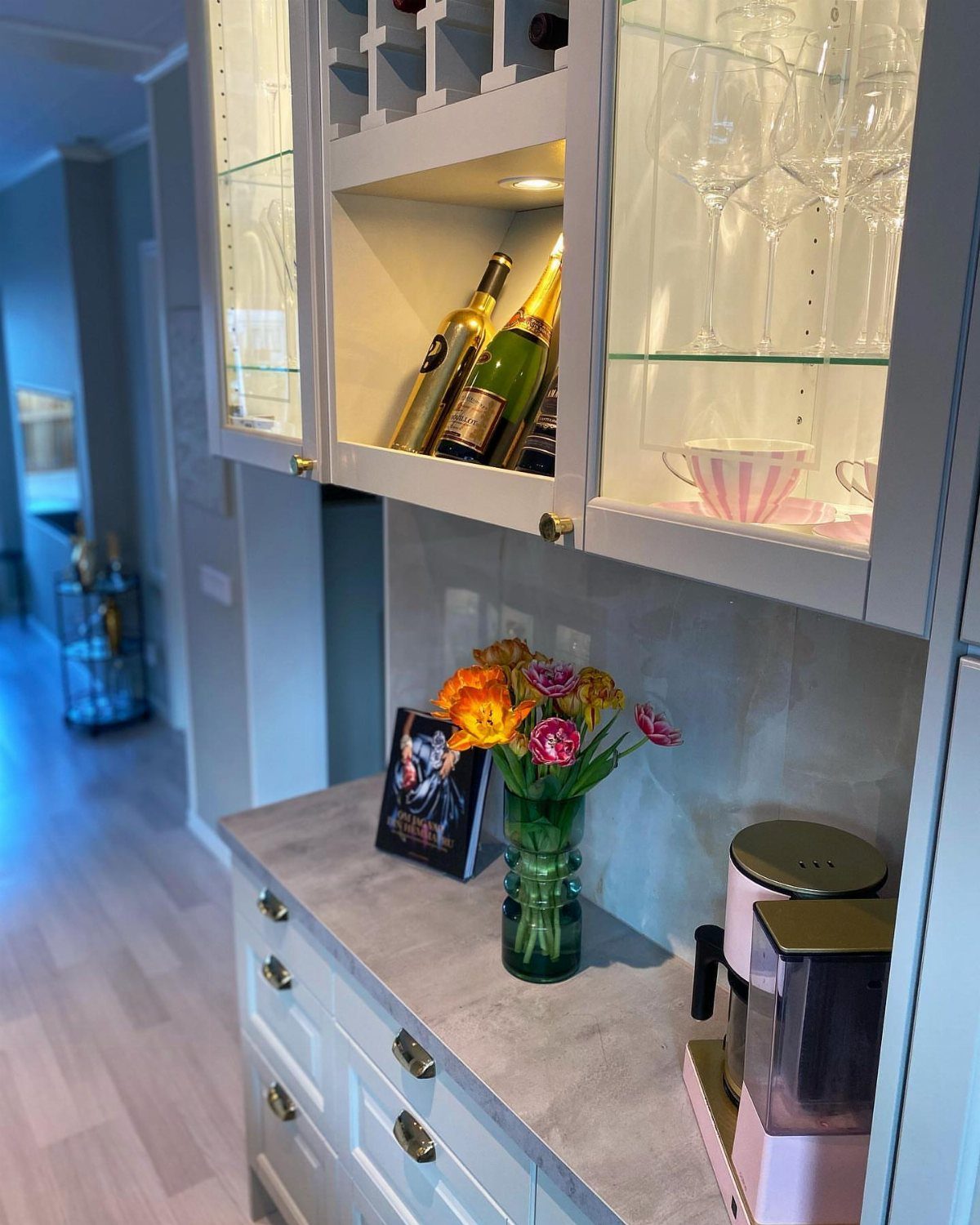
A dual coffee and wine station makes sense when the morning and evening rituals share one wall.
Upper racks for bottles and a lower counter for the machine use the same footprint twice; glass-front cabinets keep stemware from dust without hiding it.
I would separate the zones by height, coffee below and wine above, so the morning brain does not fumble for a mug among bottles. A pink machine shows personality; a neutral one lets either collection dominate.
Temperature is the problem: wine storage above a machine that vents heat is poor planning. Keep the fridge, if you have one, in the lower cabinet.
13. Coffee Station with Plants
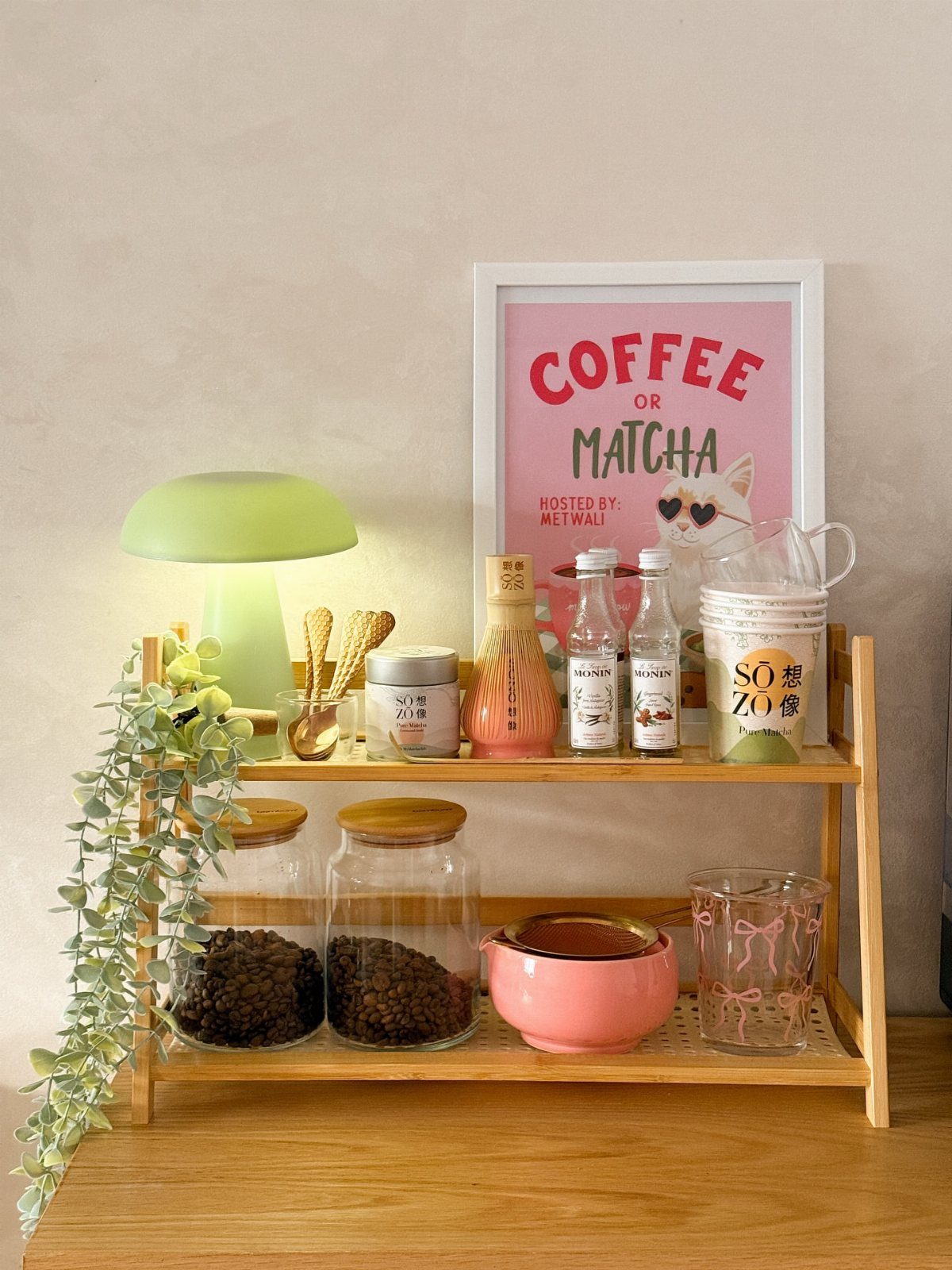
Trailing greenery softens the hard edges of a shelf setup without asking for much light. I would stick to pothos or a faux version near steam; real ferns fry and succulents stretch in low kitchen light.
One vine framing the shelf is enough, two is a hedge. The trade is dust on leaves; the win is a corner that feels alive before the first cup brews.
14. Minimalist Coffee Station
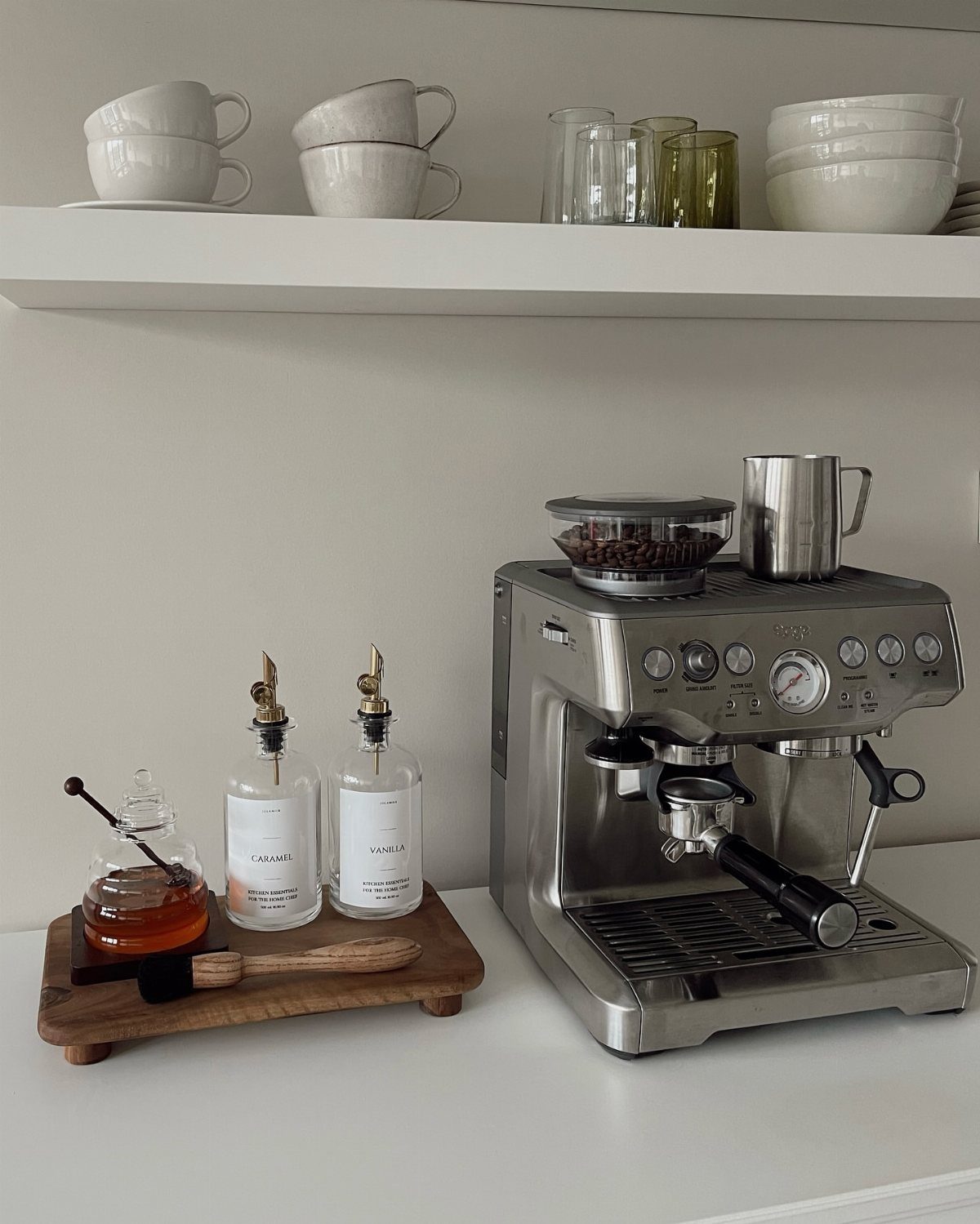
A wooden tray corrals syrup bottles into one moveable unit, which is the whole trick: the counter reads clear because the clutter has a border.
I would label bottles plainly, the way a cafe does, so guests do not guess between caramel and vanilla before the sun is up. White shelving above keeps dishes visible but not shouting.
This suits renters who cannot alter walls and anyone who finds calm in empty space. The risk is looking sterile; one warm wood tone prevents that.
15. Coffee Station with Chalkboard
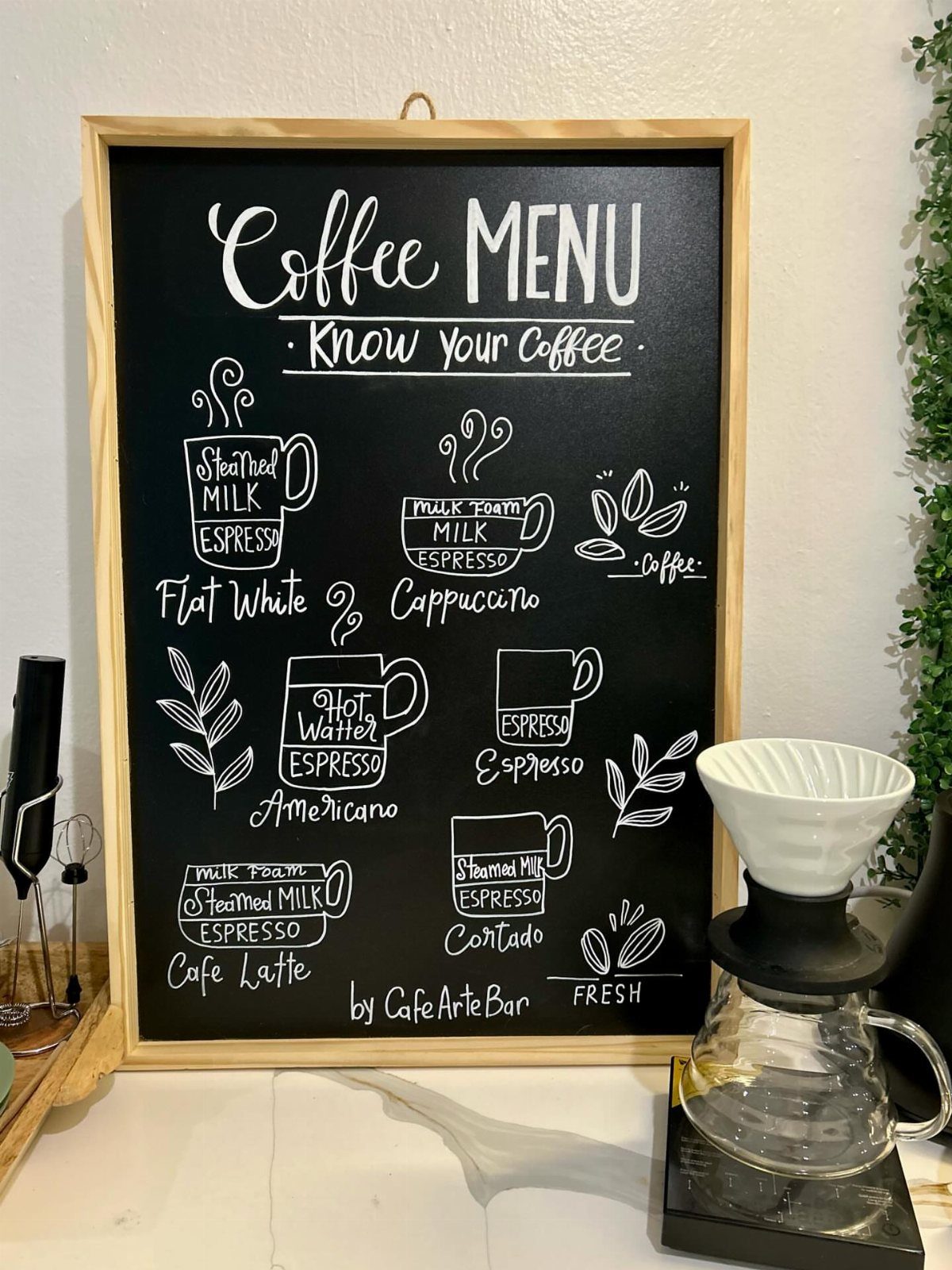
A framed chalkboard turns your morning order into a small ritual of decision.
I would keep the menu short, just a handful of drinks, so the board stays legible from across the room. A pour-over carafe and electric frother sit ready beneath; the board sets the pace.
Chalk pens write sharper than traditional sticks but need a damp cloth to erase. This one suits households where guests make their own cup or where the same question repeats daily.
16. Coffee Station with a Drawer
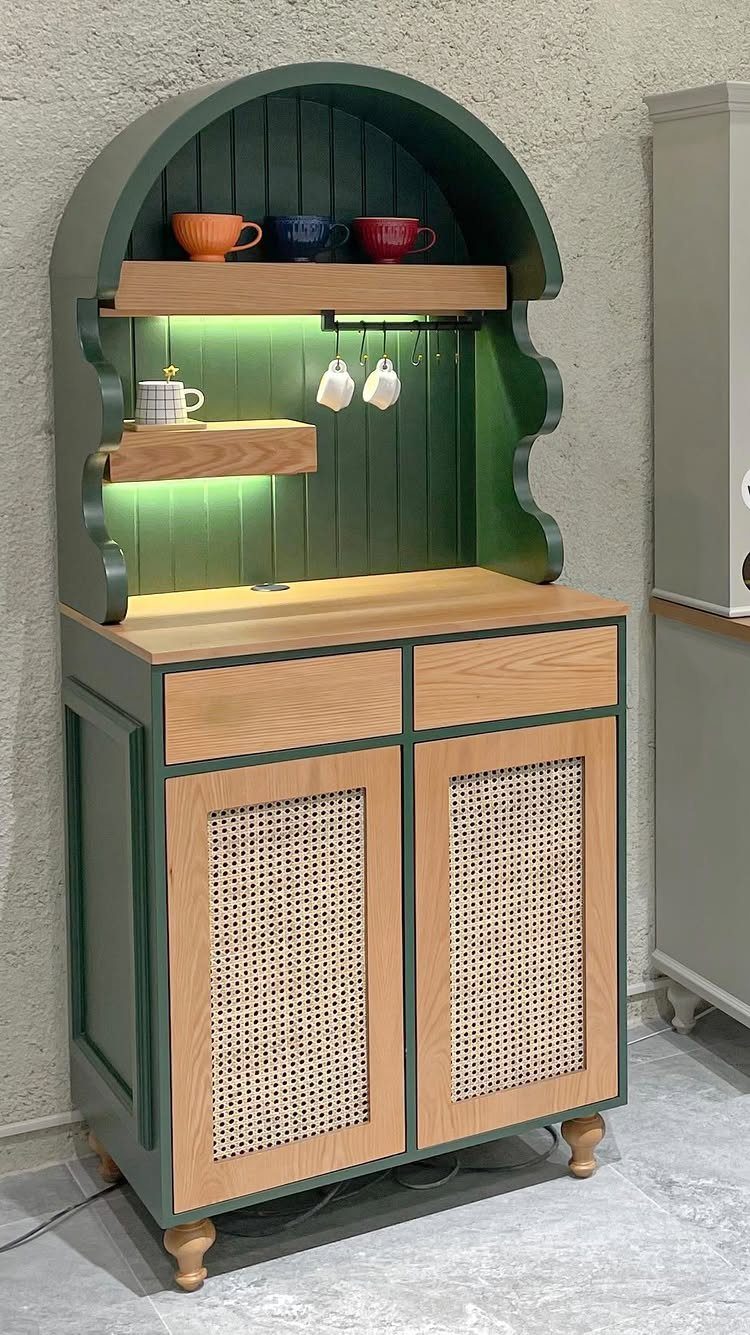
A drawer hides the backup supply, filters, and the scale you use only on weekends.
I would line it with a nonslip mat so the grinder does not slide when pulled. Cane webbing filters light without showing full clutter, which keeps a hutch looking tidy even when storage is packed.
LED strips under the shelf need a switch you can find by feel; I would place it at the frame edge, not the back.
This setup asks for a foot and a half of wall depth and rewards anyone tired of counter chaos.
17. Built-In Arched Coffee Station
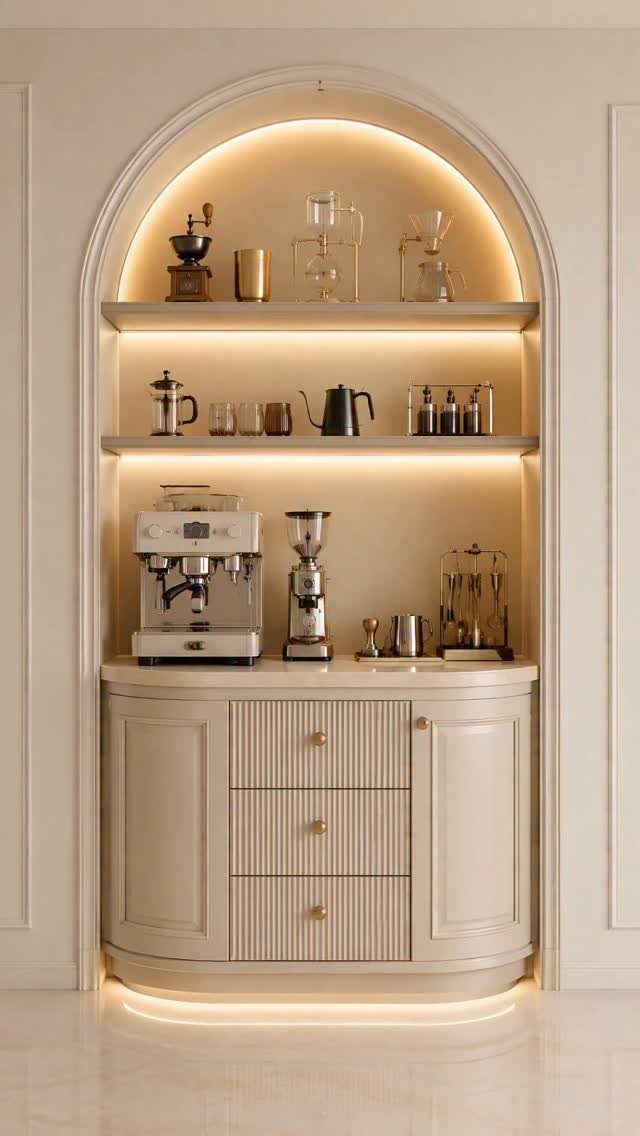
An arched alcove turns a coffee corner into architecture. Backlit shelves let you read labels without flipping on the kitchen overheads; I would run the lighting on a dimmer for early mornings.
A built-in arched coffee station demands a wall you can open, so owners only, and a budget for custom millwork. What you give up is flexibility; what you get is a station that becomes a selling point later.
18. Countertop Wooden Organizer
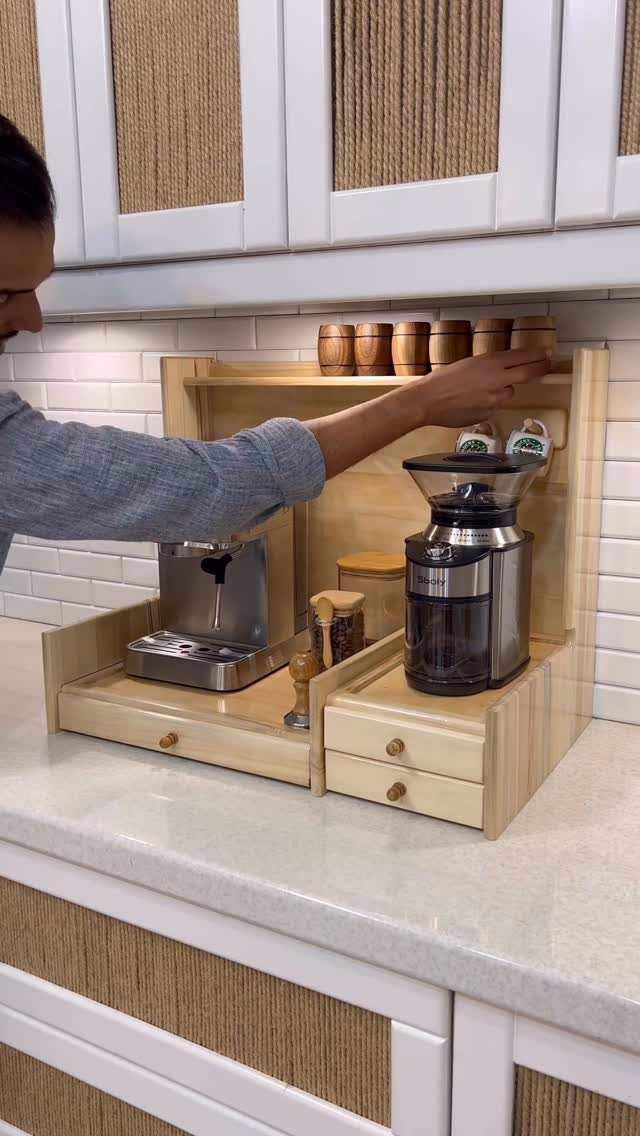
Tiered levels buy back counter depth by stacking upward.
The grinder sits on the step below the machine, so both spouts clear a mug on the base. Light wood reads Scandinavian, dark reads traditional.
This moves with you, which is the point for renters, and costs less than built-in. The trade is wiping coffee dust from two surfaces instead of one.
19. Cinder Block Coffee Station
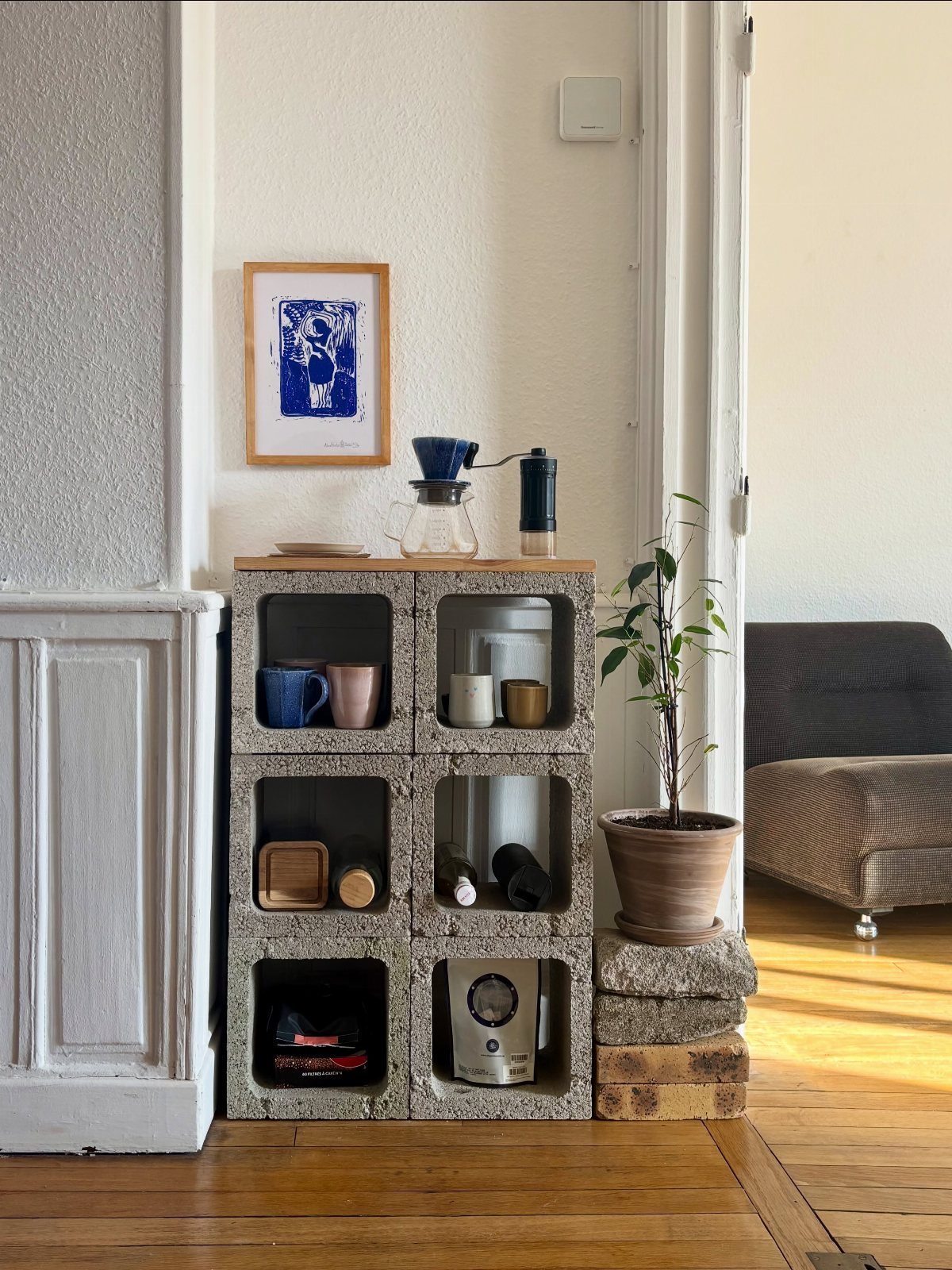
Cinder blocks stack into shelving that costs less than a single shelf bracket from a kitchen store.
The holes become cubbies for mugs and beans; a board across the top gives you a level surface for the dripper and grinder. I would seal the board with polyurethane because concrete wicks moisture and raw wood warps.
Paint the blocks matte black or leave them gray; either reads as intentional industrial. This suits anyone who moves often and leaves the blocks behind, or who wants a station today without a trip to the lumberyard.
The weight is the trade; you will want help to assemble it and a wall behind to lean against.
20. Freestanding Shelving Unit Coffee Station
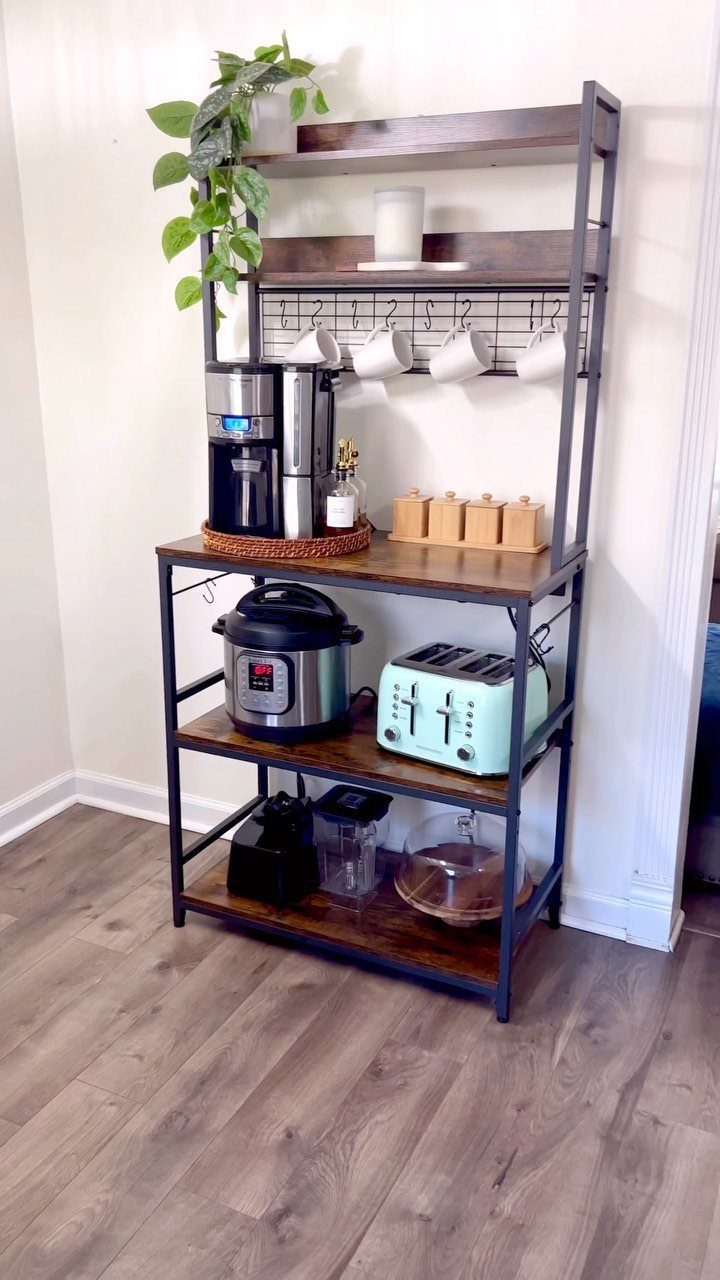
A baker’s rack uses height when floor space is all you have. The black frame and wood shelves fit most kitchens without fighting existing cabinets; hooks along the side rail hang mugs where they dry and stay visible.
I would keep the small appliances, the toaster and blender, on the lower shelves so the coffee zone at eye level stays calm. A trailing vine on the top shelf softens the vertical line without needing counter space.
This moves with you and adjusts to the next kitchen’s layout. The open sides mean dust; a quick weekly wipe keeps the gear ready.
21. Kitchen Island Coffee Station
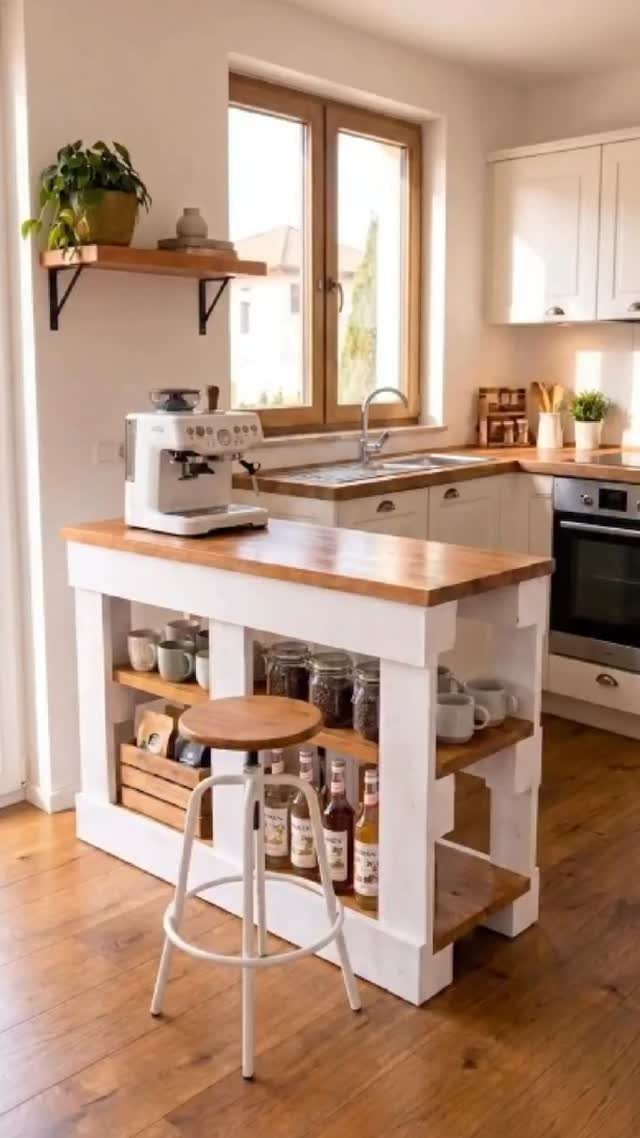
A freestanding island turns the coffee station into a brief sit-down, not just a pour-and-go. The butcher block top takes tamping and drips better than laminate; open shelves below keep mugs and syrups in reach from a stool.
I would face the machine toward the room, not the wall, so the ritual has an audience of one.
The white frame and wood top suit kitchens that already mix those tones. This asks for a narrow slice of floor space and rewards anyone whose morning needs a pause before the day starts.
Essential Coffee Bar Equipment
A grinder matters as much as the machine, maybe more. Pre-ground coffee loses aromatics within minutes; whole beans hold them until you break them.
Burr grinders give an even particle size that blade grinders chop at random, and the evenness shows in the cup. For espresso, the grind adjustment needs to move in small steps; for pour-over, you have more room to experiment.
A milk frother extends the menu without extending the gear list.
Electric wands heat and foam in one step; manual ones cost less and take more practice. Either way, whole milk froths easiest, oat milk works for most diets, and skim often collapses.
Mugs stay warm if you rinse them with hot water first.
Two sets, one for daily use and one for guests, keeps the math simple. Sugar and cream live in lidded containers; coffee oils turn rancid in open air, and sugar clumps with humidity.
Design Tips for a Stylish Coffee Corner
Wood warms a corner that metal and plastic would cool.
Oak or walnut reads as furniture against painted cabinets; pine softens in a year or two of steam and handling. The grain direction matters on open shelves, horizontal planks feel calmer than vertical ones.
Glass catches fingerprints and coffee splatter both, so I would use it where I wipe daily, not above eye level. Frosted or ribbed glass hides clutter better than clear; the light still passes through.
Eggshell machines against matching cabinets erase the machine as an object. The effect works only if you commit to the tone across the kettle, the grinder, and the canisters.
One mismatch breaks the spell. For flexibility, white or steel machines move between kitchens and wall colors without negotiation.
A framed menu or board gives guests the information you are tired of repeating.
Organizing Your Coffee Bar
Labeled containers turn a drawer of identical bags into a system.
I would label by roast date or origin, not by vague names like "breakfast blend" that mean different things to different roasters. Glass jars show levels; metal or ceramic blocks light that degrades beans.
The counter holds only what the hand reaches for in the first thirty seconds. The mug, the machine, the grinder if you grind per cup.
Everything else lives below, in the drawer or cabinet you open with the same motion. Syrups in a shallow tray slide out as one unit; the tray contains drips that would otherwise pool and stick.
The texture reads as deliberate, not as a cover-up, though it functions as both.
A nonslip drawer liner costs little and saves the morning sound of the grinder sliding into the cabinet back.
Frequently Asked Questions
What goes on a coffee station?
A coffee station needs the machine, mugs, and whatever your hand reaches for in the first thirty seconds: the grinder if you grind per cup, plus a tray for syrups.
Everything else, backup beans, filters, the weekend scale, belongs in a drawer or cabinet below. Labeled containers by roast date or origin keep identical bags from becoming a jumble.
What are some unique cafe design ideas?
The cafe look at home, for me, hinges on open shelving and one piece that reads as deliberate: a bottomless portafilter left on the counter, a glass jar with the roast date taped to it, a small scale.
I stop when the setup starts taking longer to arrange than the coffee takes to make. For a true third-place feeling, face the machine toward the room so the ritual has an audience.





