
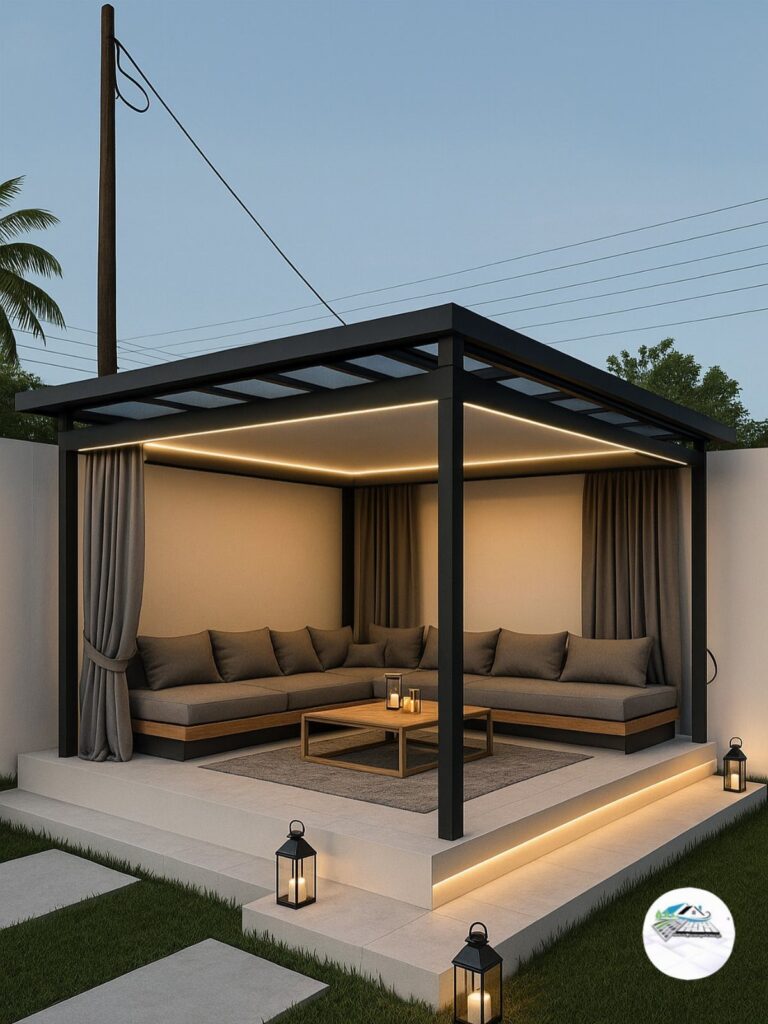
The real divide is not money but permanence: anything that needs a permit or a truck of concrete is a different project than a planter you wheel in come November.
1. Add Planters
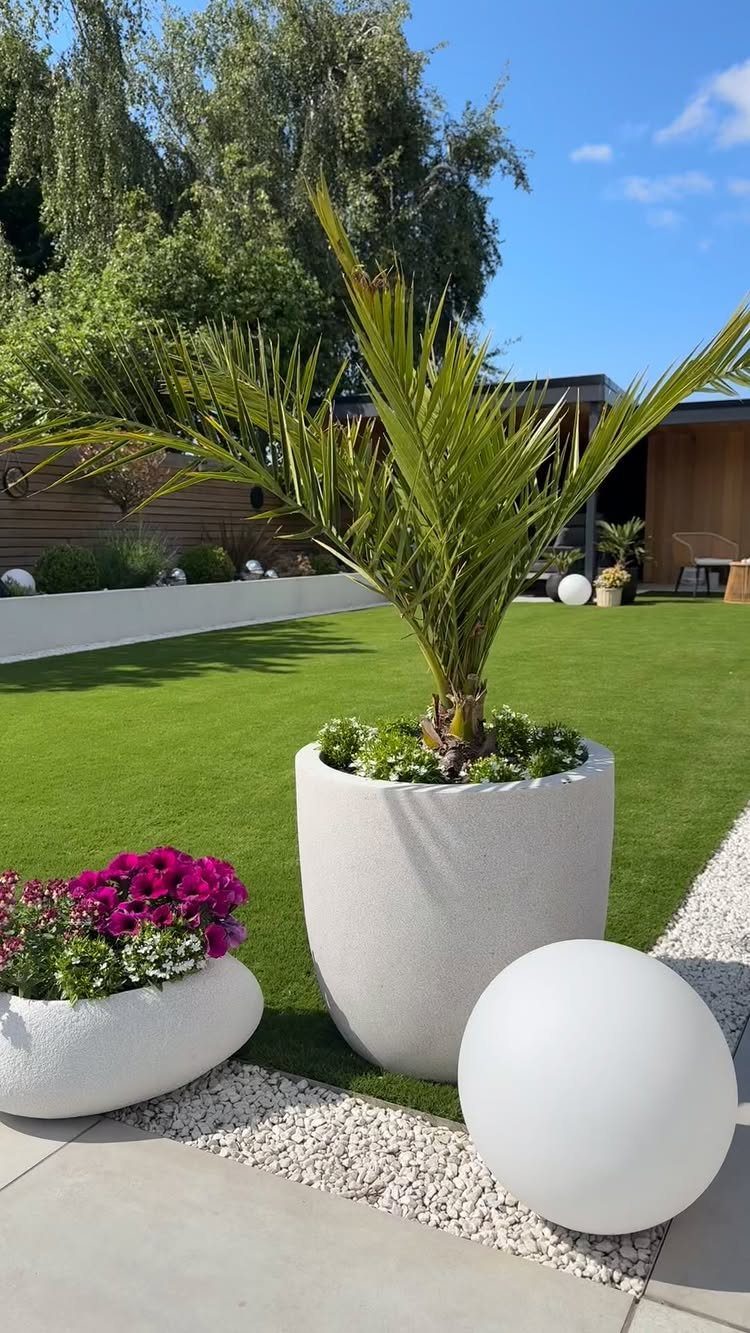
Rounded planters soften hard edges and bring height to flat stretches of lawn. White or pale stone reflects summer heat, which roots appreciate in zones 6 and 7.
I would go with a wide pot; anything smaller dries out too fast on a July afternoon in Indiana and needs twice-daily watering. Pair a tall palm form with something low and spreading at the base.
A battery-powered orb light set between them gives you evening definition without running conduit.
2. Use String Lights & Lanterns to Set the Mood
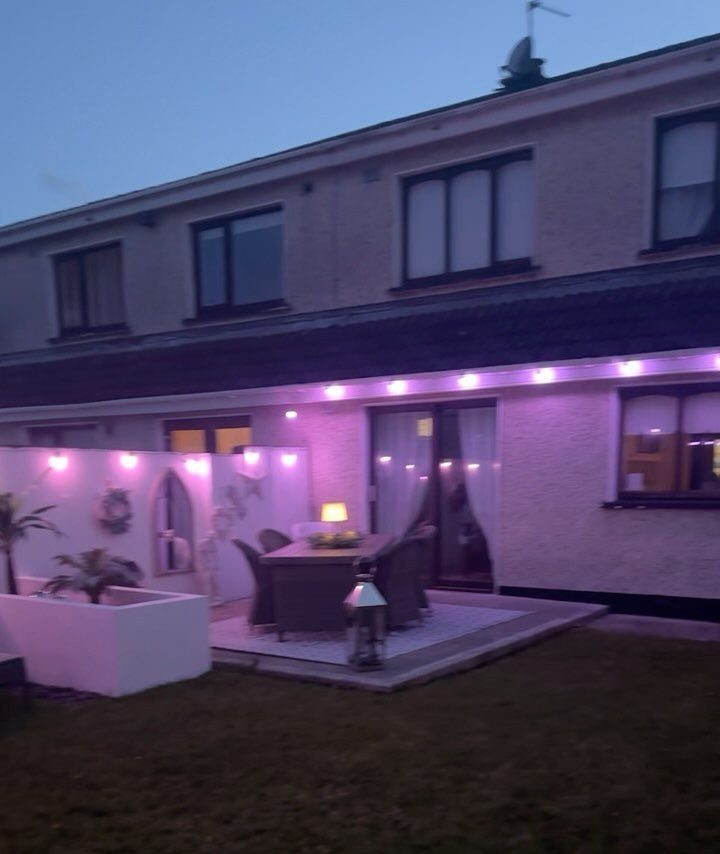
Purple-tinted string lights read as mood, not utility, and that distinction matters.
Standard warm-white bulbs illuminate; these shade the space toward dusk even after dark. I hang mine on a dimmer, whether plug-in or battery, because full brightness kills the effect.
Lanterns on the ground fill the gap where overhead lines do not reach.
A single heavy-glass floor lantern, compact enough to sit on the floor, anchors a dining corner without competing with the table. Solar cells fade too fast for this job; plug-in or rechargeable lithium cells give consistent output through October.
3. Backyard Conversation Area
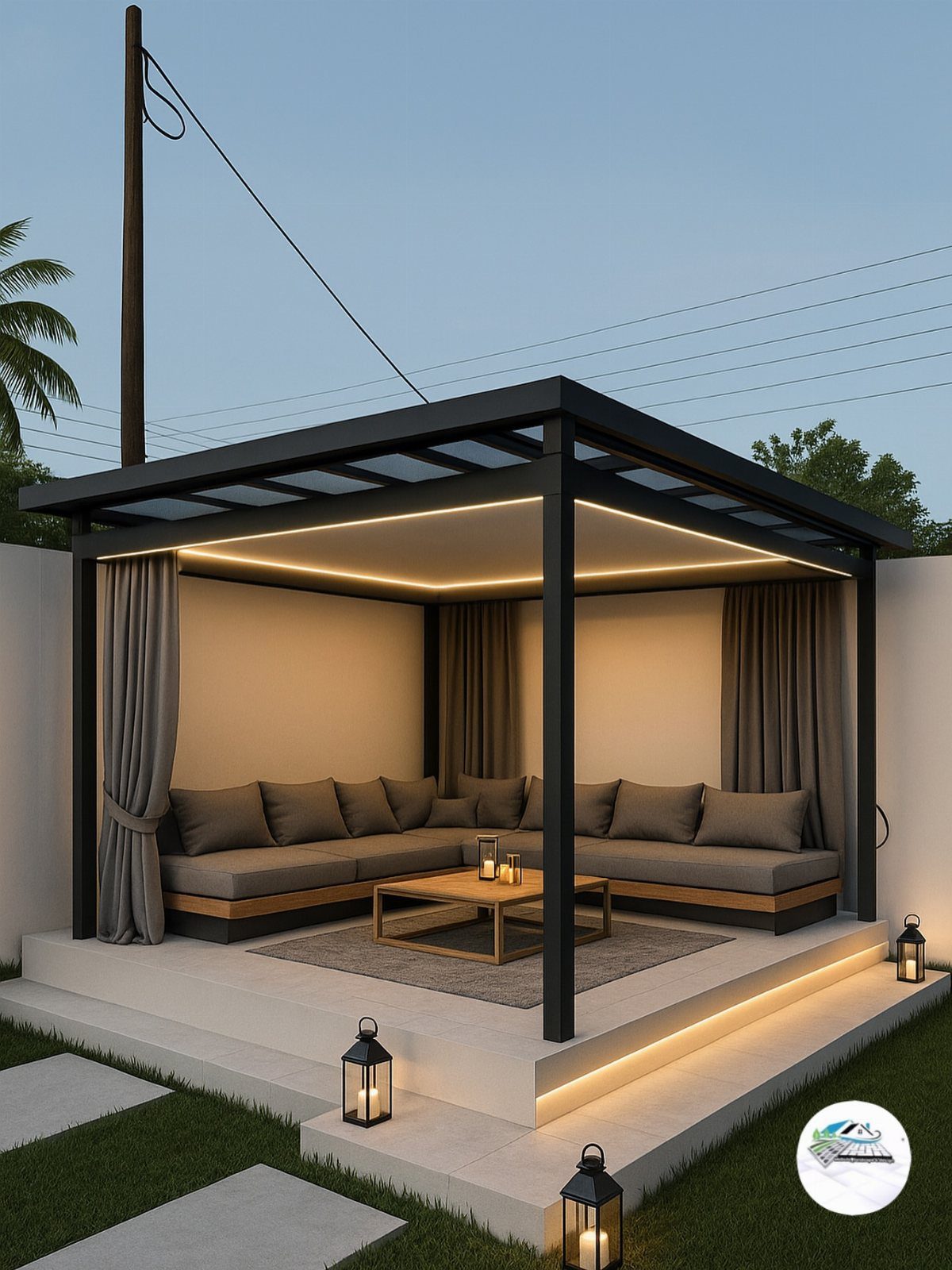
The shape matters: 2 facing lengths let a group talk without craning necks, which a sofa-plus-chairs arrangement rarely manages.
I would build the platform first, even a low treated frame with composite decking, to keep furniture legs out of wet grass and mud through spring.
Strip lighting on the pergola beams, hung curtains for late-season wind, and lanterns at the perimeter turn the structure into something you use from May through October. The curtains also hide the neighbor’s garage, which is not nothing.
4. Add a Fire Pit
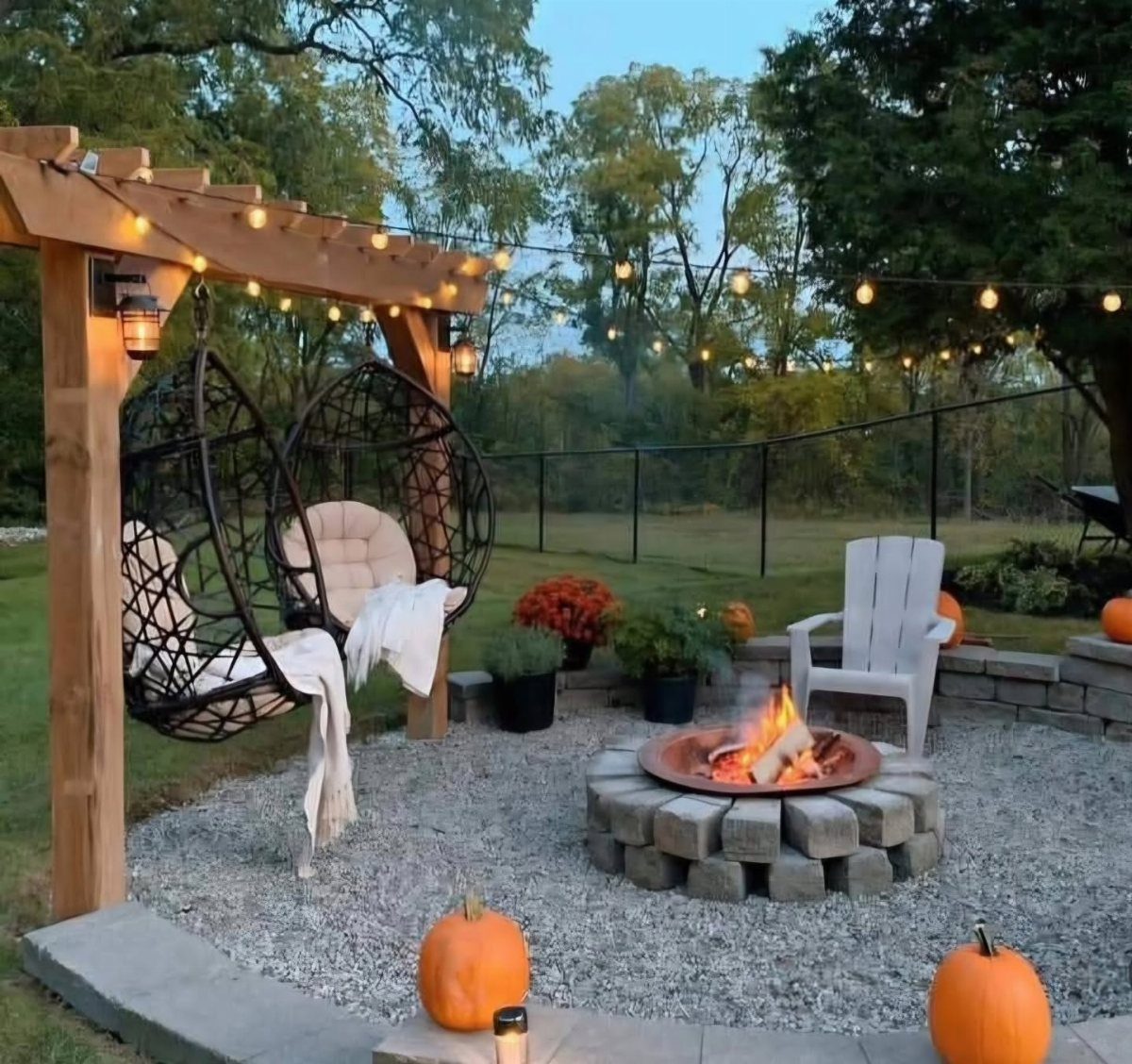
A fire pit gathers people in a way no other patio feature does. Stone or concrete block, sized for a real fire, burns wood or propane depending on your county’s burn ordinances; check those before spending money on anything permanent.
Gravel underneath, deep enough to matter, over landscape fabric catches sparks and keeps mud from splashing the seating. Egg chairs under a pergola nearby give you the hanging option without committing the whole group to swaying.
String light overhead, not directly above the flame. Pumpkins in October, herbs in June; the pit stays useful even unlit.
5. Incorporate Sculptural Accents

The sculptures sit directly on turf, which works only if you move them monthly to let the grass recover; I would set them on wide pavers sunk flush with the lawn, or commit to a gravel bed and stop fighting it.
A carved basin doubles as a bird bath or, plugged, as a reflecting surface.
Abstract forms age better than representational ones outdoors; a figure you tire of quickly is a harder replacement than a shape that asks nothing specific. Size to the space: one large piece beats three small ones in most suburban yards.
6. Decorative Dining
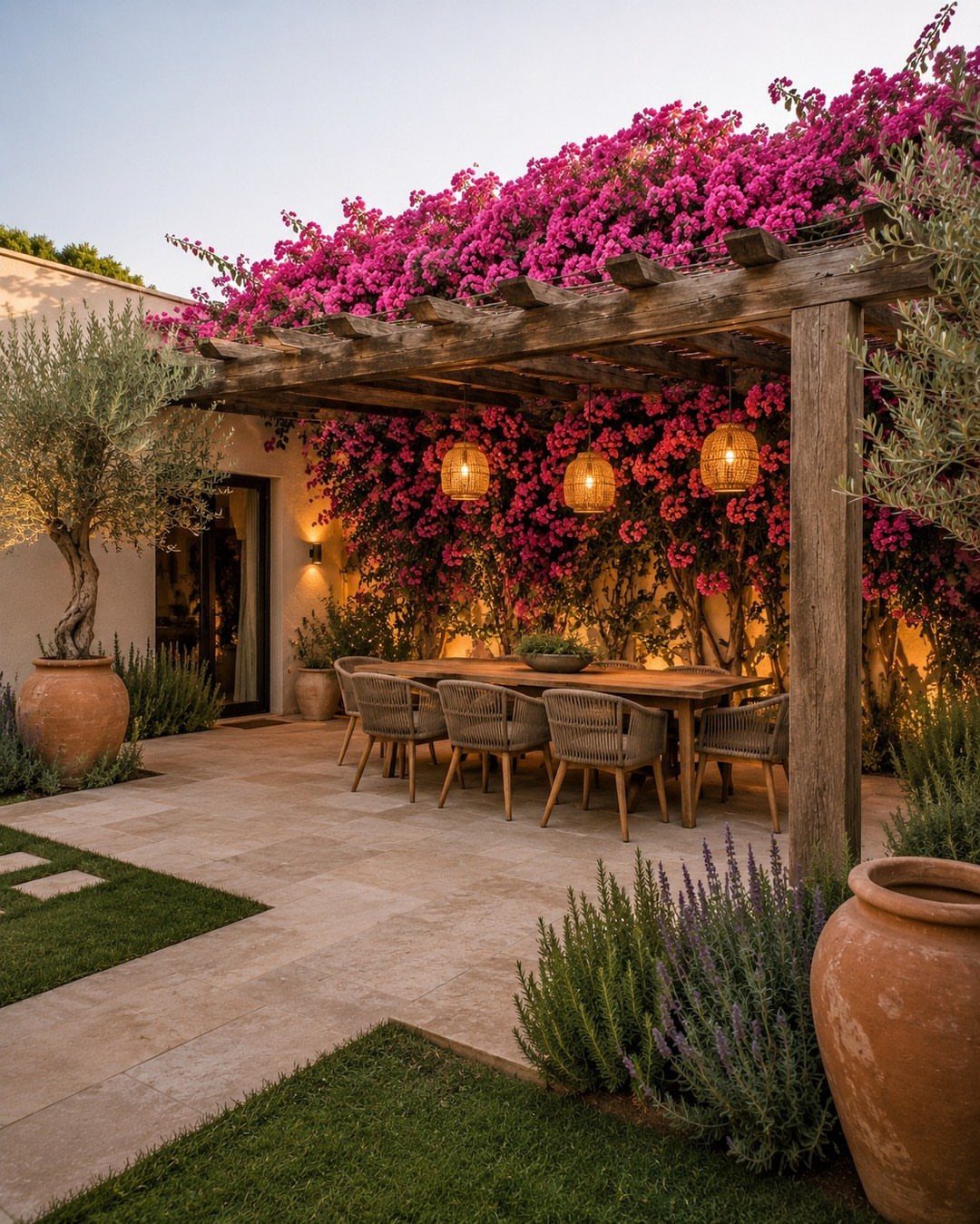
A dining table under flowering vines turns Tuesday dinner into something you remember.
Wicker lanterns, not metal, soften the overhead structure and move easily when wind picks up. Stone underfoot stays cooler than wood or composite in August and cleans with a hose.
The table itself can be simple; the setting does the work. I would spend money on the pergola frame and the climbers, buy the table used, and replace it when the wood warps.
7. Outdoor Pillows, Throws, and Rugs
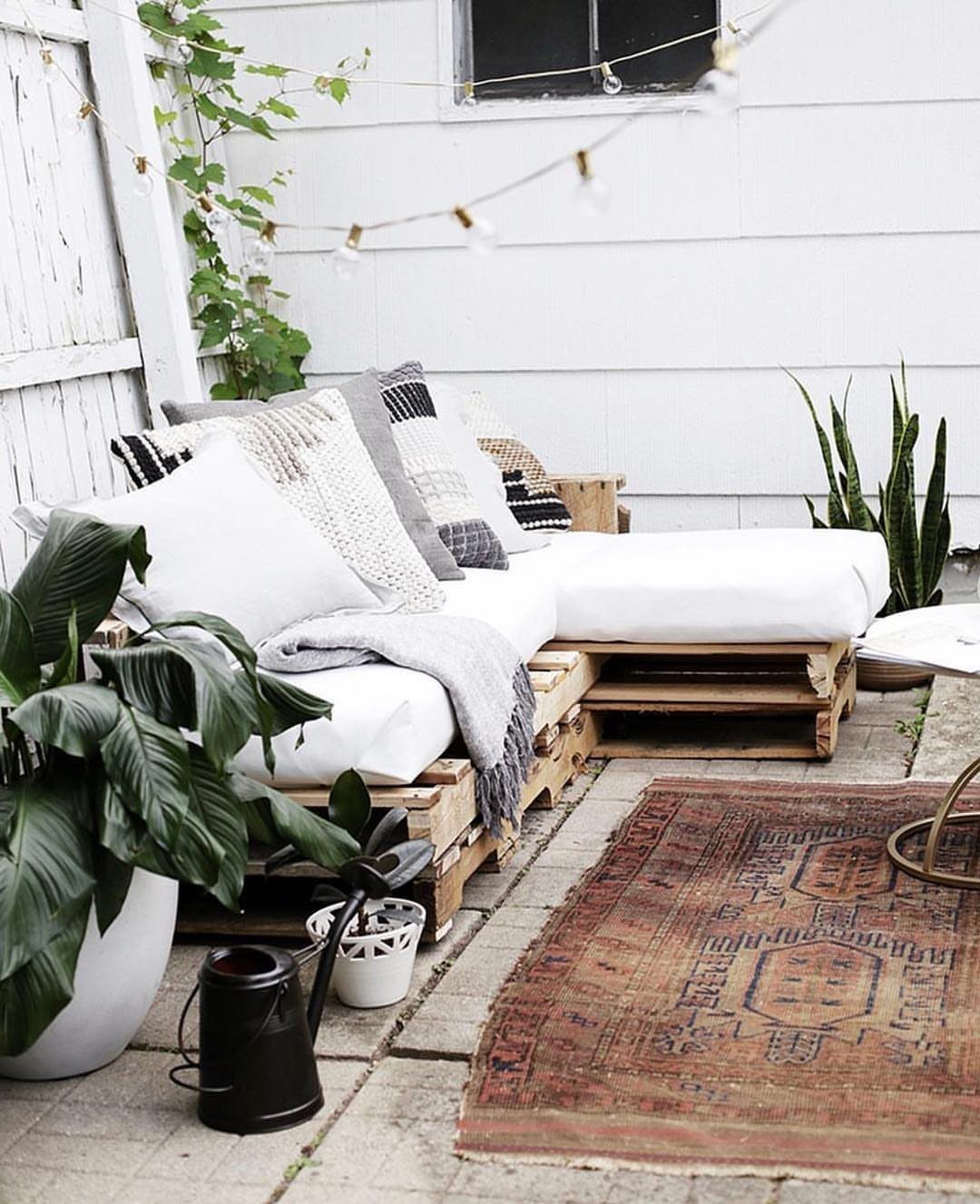
Pillows and throws soften pallet seating the way upholstery softens indoor frames, but outdoor fabric has to earn its place.
Solution-dyed acrylic, not cotton, survives UV and mildew; Sunbrella and similar grades run more per pillow than bargain fabric but last multiple seasons where unsealed fabric fails in one.
A low-pile polypropylene rug underfoot drains after rain and hosed cleans in minutes. I would size it to the seating footprint, not the whole patio; a 5×7 foot piece anchors a pair of chairs without claiming territory you walk across.
A throw in wool or faux fur looks warm but I would swap it for a synthetic knit; the look stays, the storage gets easier.
8. Swap the Standard Umbrella
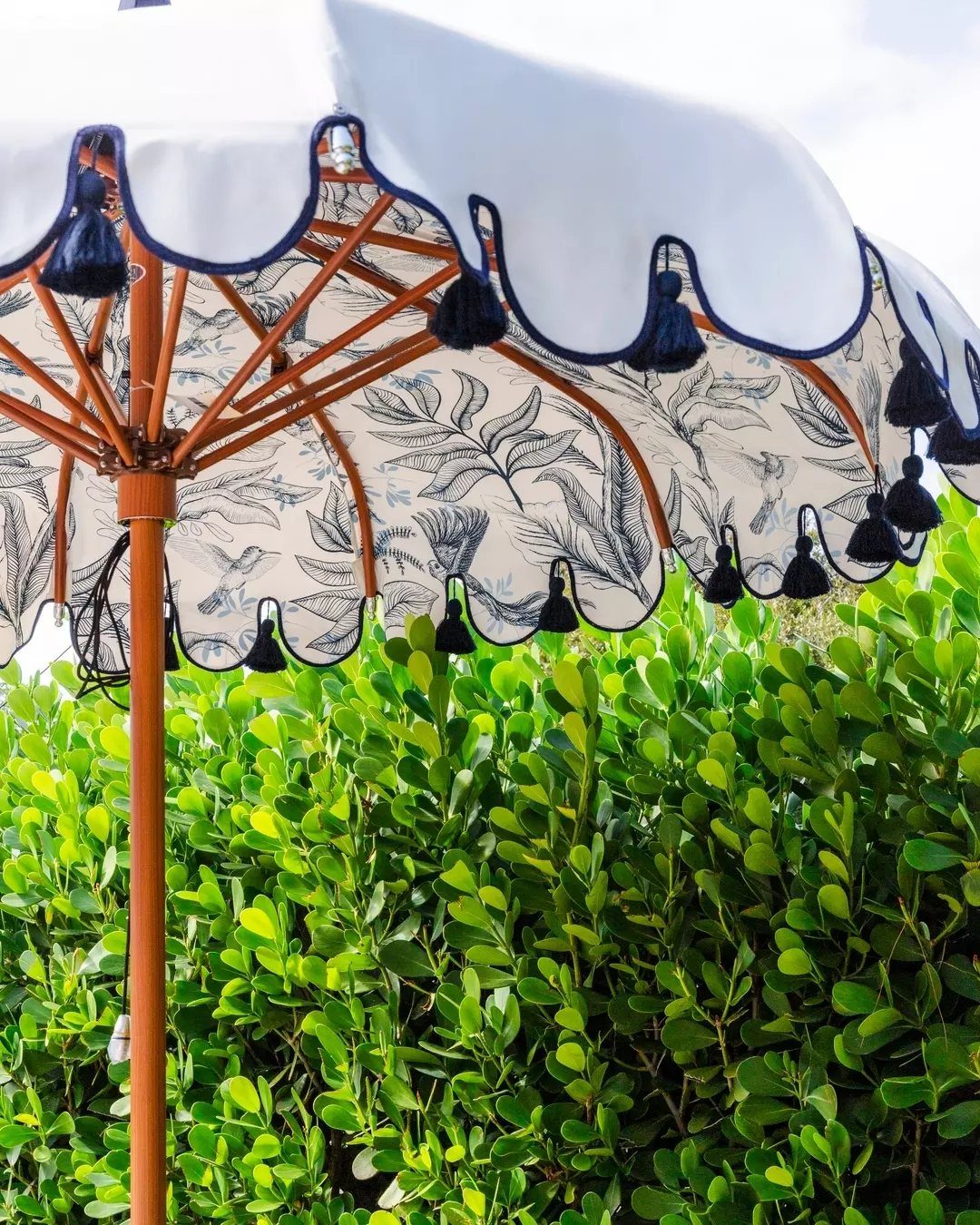
A standard umbrella shades; this one decorates. The scalloped edge and printed underside turn the canopy itself into a ceiling you notice, not equipment you ignore.
The tassels move, which matters on still afternoons when nothing else does.
The pole diameter has to match the table; decorative lines often run thicker than standard holes expect, and a wobble ruins the whole effect. Navy on white stays legible longer than pastels, which show pollen and dust by mid-June.
9. Add a Full Bar Outside
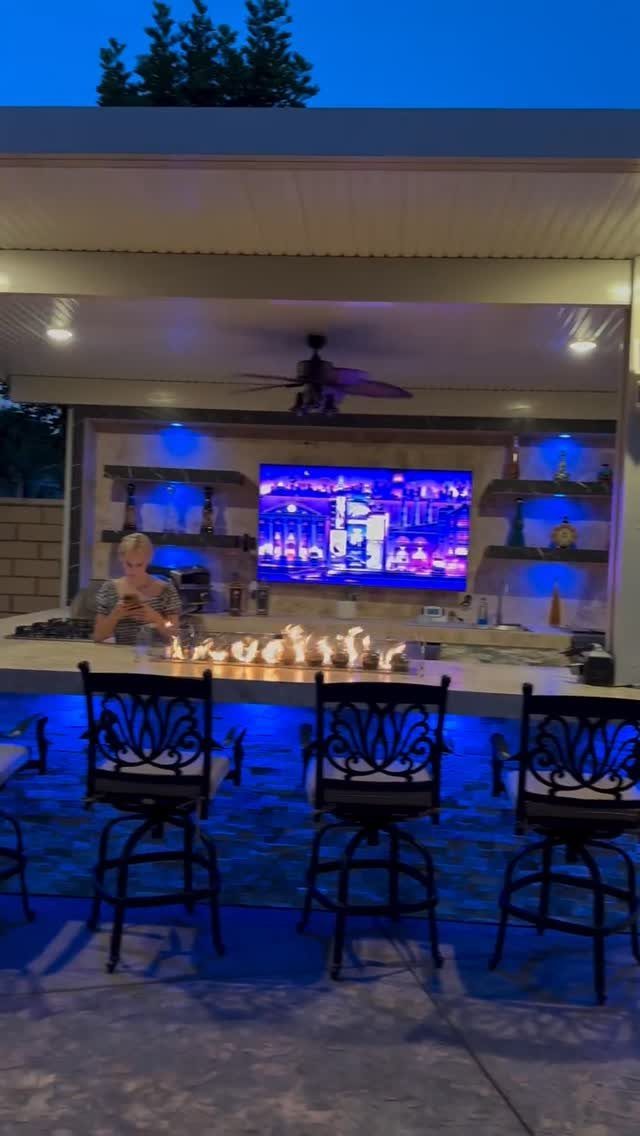
A bar outside keeps the host with the guests instead of running indoors for ice and refills.
The fire strip in the counter is electric, not gas, which means no fuel line and no permit in most counties; it gives heat without flame, enough for October shoulders but not for cooking.
The television works only where glare permits. I would mount on a full-motion arm, not fixed, so the screen angles away from western light by hour.
Blue LED undercounter lighting is cheap to add and defines the space after dusk without competing with the fire strip. Bar stool height and counter height have to pair; measure before ordering, as outdoor lines vary.
10. Add a Swing
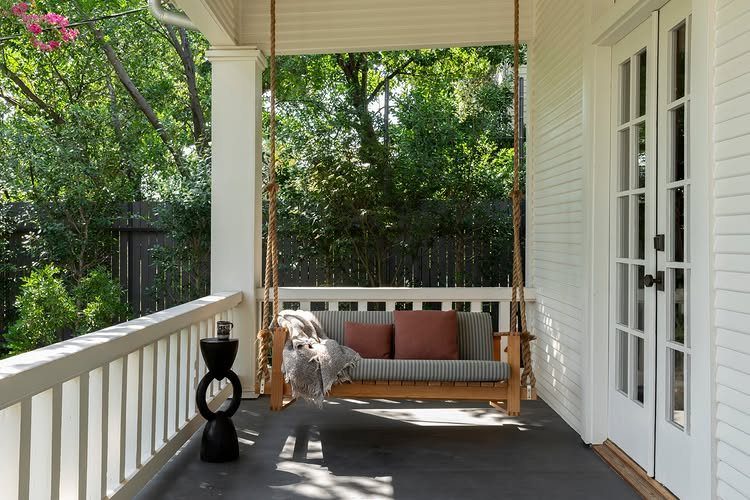
A porch swing suspends from joists, not ceiling drywall, and the hardware carries the load while the cushion only sits on top.
2 eye bolts through solid blocking, spaced to the chains, carry real weight without the creak that says trouble.
A fur throw photographs well and chills fast after sunset; a cotton waffle weave stays useful longer. The small side table holds what the swing cannot: a drink, a phone, a book you set down to do nothing at all.
11. Embrace the Versatility of Plants
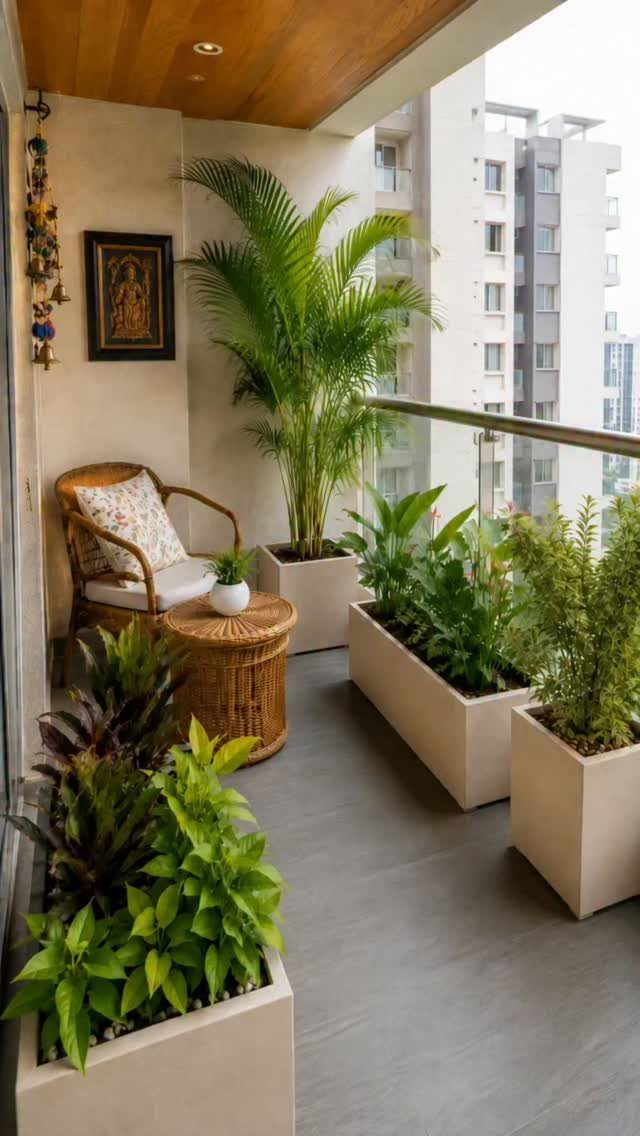
A narrow balcony becomes a room when plants define its edges. I would cluster planters at the rail, not center, to keep the walking path clear and give the plants the brightest real estate.
Wicker furniture weathers; resin wicker lasts longer but the weave is coarser. More plants, fewer pieces: the trade-off gives you movement and sound, leaves brushing the railing when wind comes through.
12. Outdoor Vignette
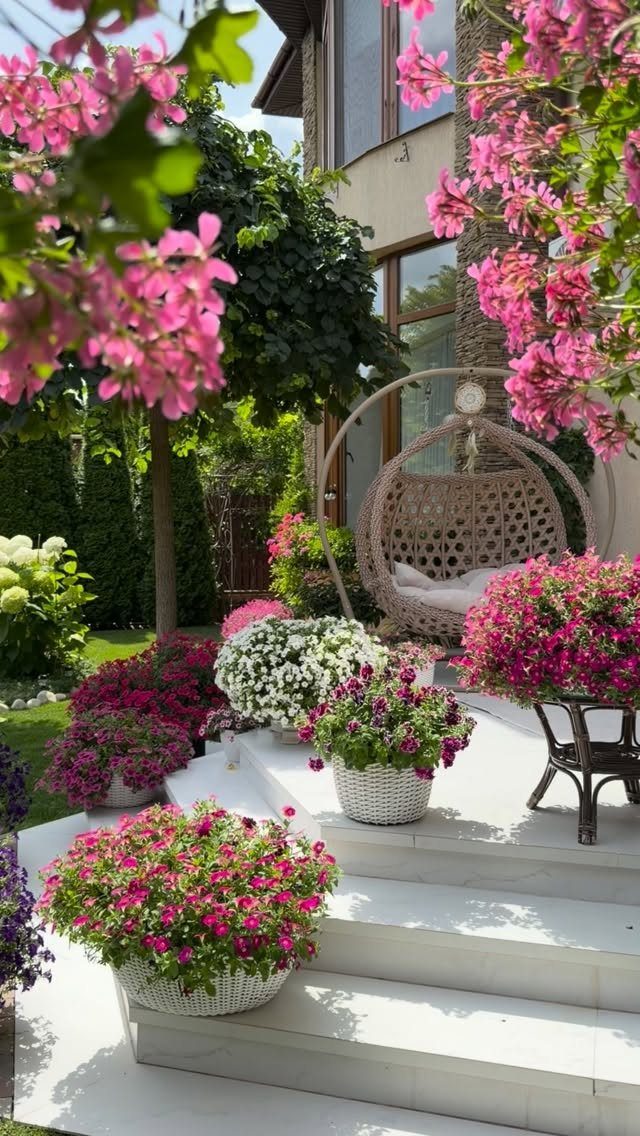
Colorful petunias in matching white baskets repeat the same note up the steps, which turns a climb into a procession.
The egg chair at the top earns its spot by facing back toward the house, not out; you sit to look at what you made, not to escape it.
I would hang the chair from a beam rated for dynamic load, not static; swinging adds force a stationary chair does not.
The cushions here are pale, which shows water stains; a quick-dry foam insert helps, but a darker cover hides what foam cannot prevent.
The stone underfoot stays cool, drains fast, and costs more than poured concrete; I would spend there before upgrading the chair itself.
13. Weathered Wood Furniture
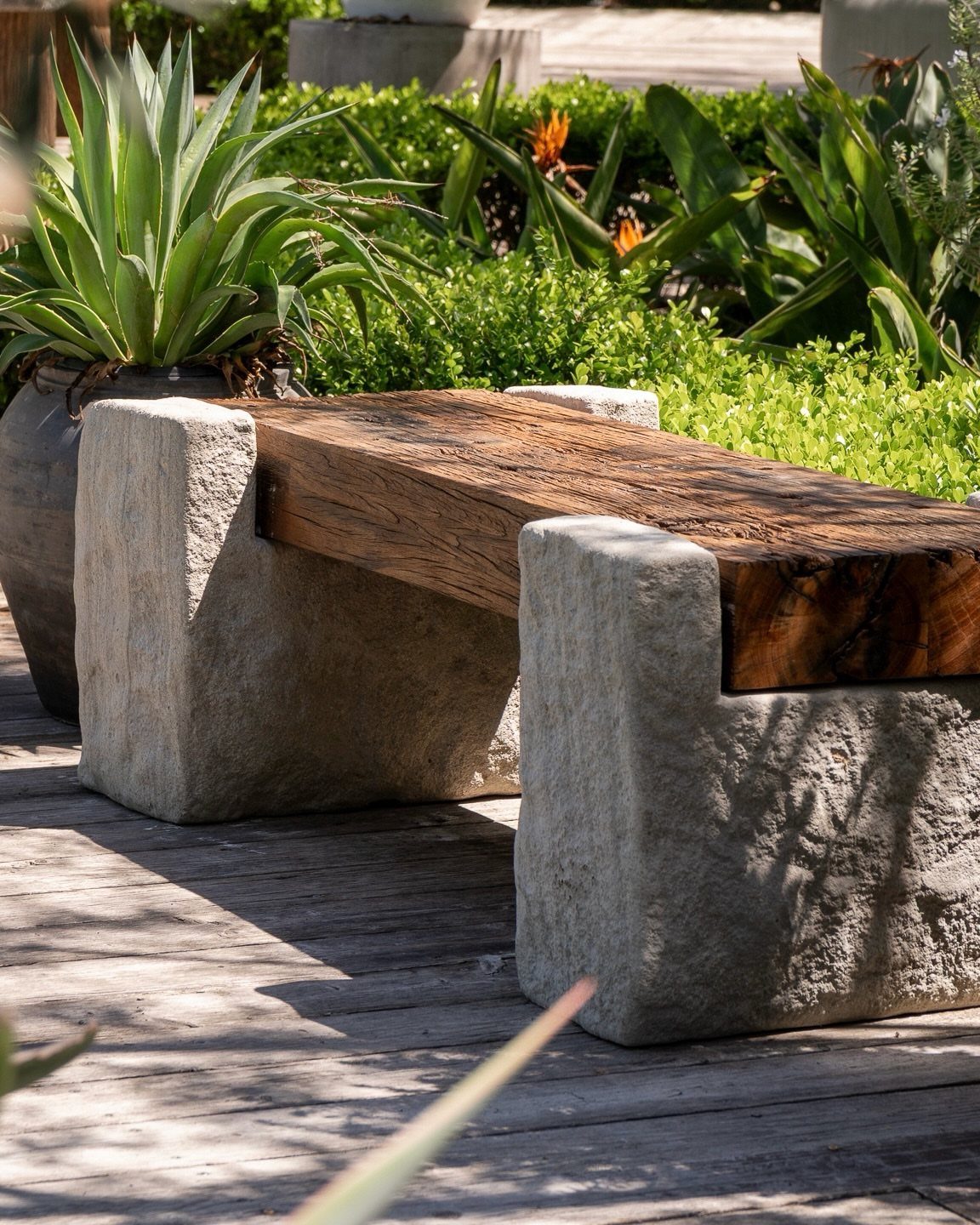
Stone ends carry the load; the wood beam only spans between them. That split of labor lets the wood age without structural risk, and weathering reads as intention rather than neglect.
I would leave the beam unfinished and let it silver, re-oiling only if cracks open wide enough to catch a finger. The stone stays cool in July, which you notice fast when you sit down with coffee.
14. Incorporate a Fountain
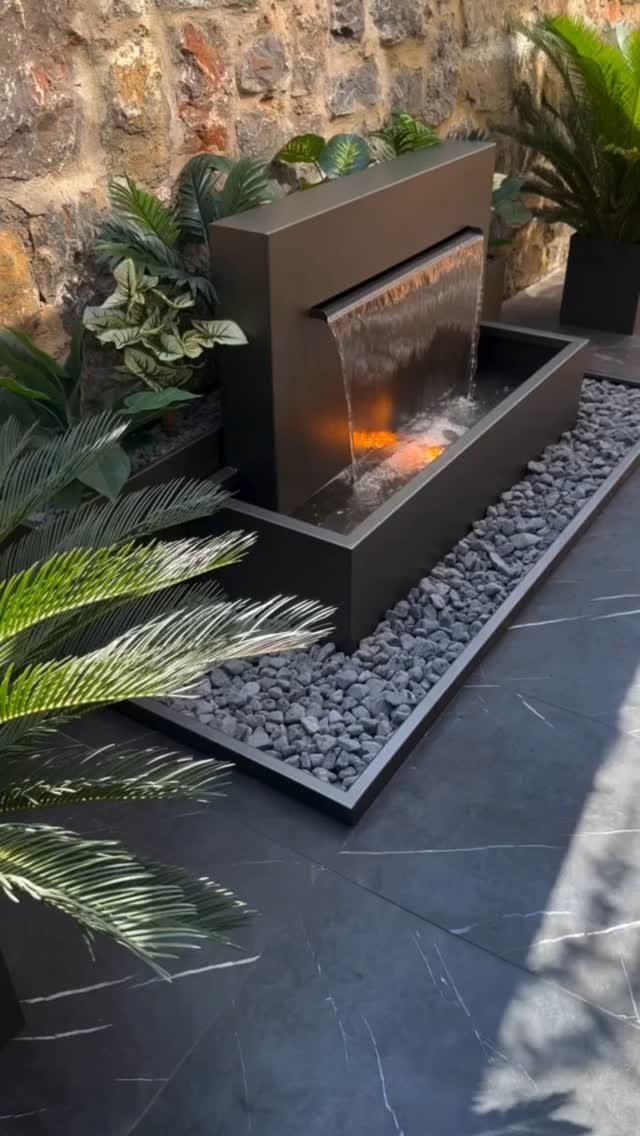
Falling water masks traffic noise better than any outdoor speaker, and the light on the sheet turns it into something you watch after dark. The basin needs depth; shallow ones splash out and run dry by afternoon.
A submersible pump, rated for continuous duty, sits in the lower trough behind the stone fill. I would run the cord through conduit buried to the patio edge; an above-ground cord is a trip I do not need.
Dark gravel around it catches leaves less than pale stone, and the ones that land show up so you remove them before they rot.
15. Add Statement Planters
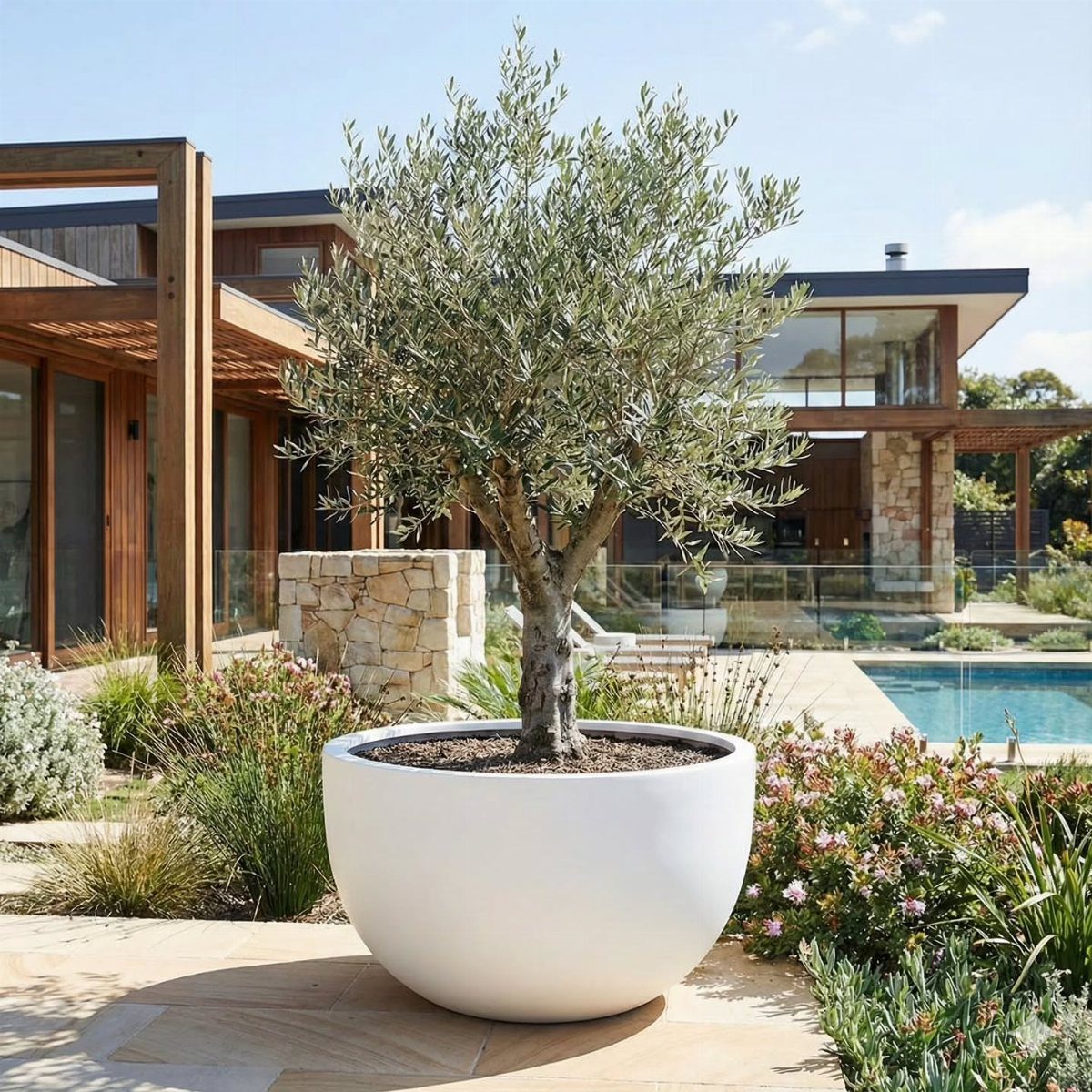
A single large planter at a threshold or pool edge reads as architecture, not gardening. The white glaze reflects heat, which the olive’s roots tolerate but a maple’s would not.
The bowl shape needs drainage; one hole is never enough for a container this size.
I would drill three, set on a bed of gravel, and let the saucer sit visible rather than burying it. The tree itself stays movable this way, though at this scale you will need help and a hand truck.
16. Incorporate a Trellis
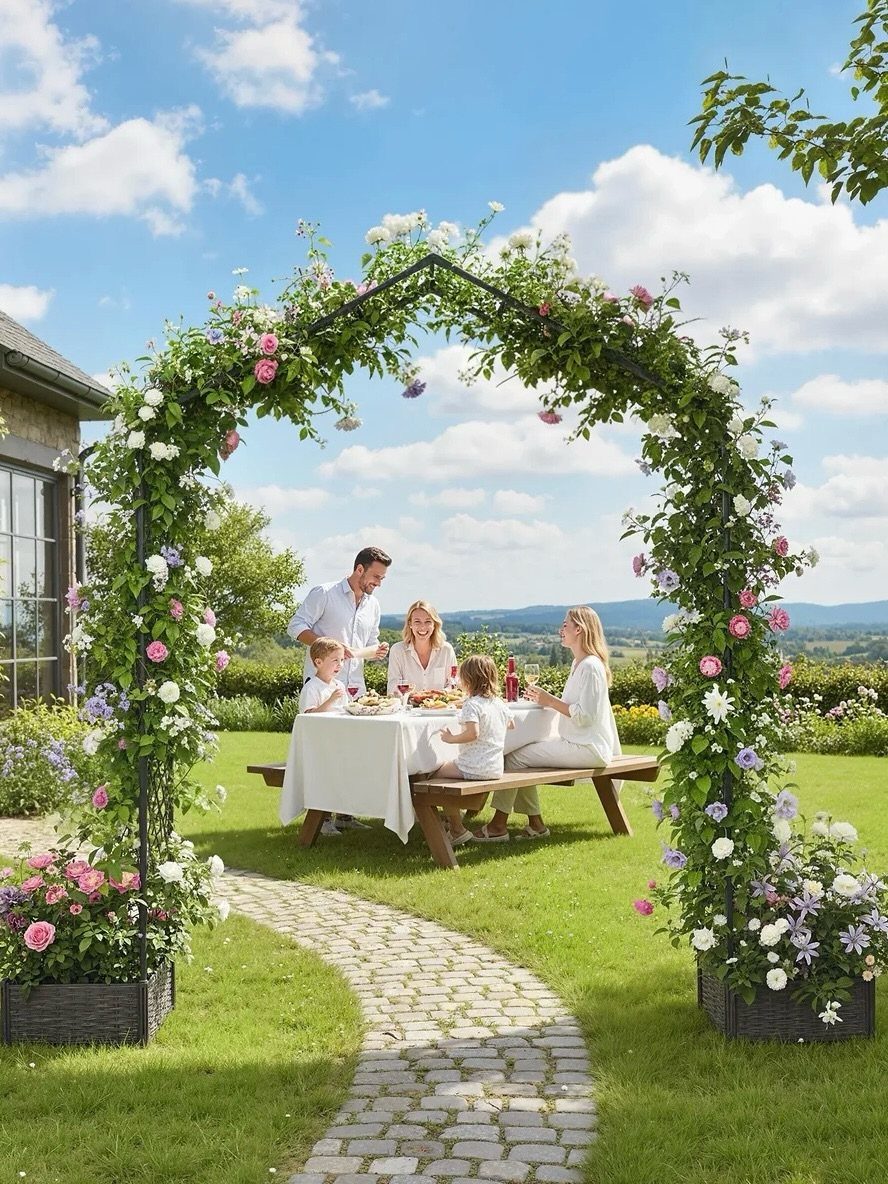
A tunnel of bloom over a table turns eating into an event you cannot replicate indoors. The arbor carries its own weight; the flowers only dress it.
I would plant two climbers, not one, on opposite posts: a clematis for spring, a rose for June through September, so something is always in progress.
The wood needs ground-contact rated preservative or it rots where the posts enter soil; metal anchors set in concrete last longer but cost more and read colder.
Check the span rating before you buy; a picnic table needs more width than a bench.
17. Built-In Bench Seating
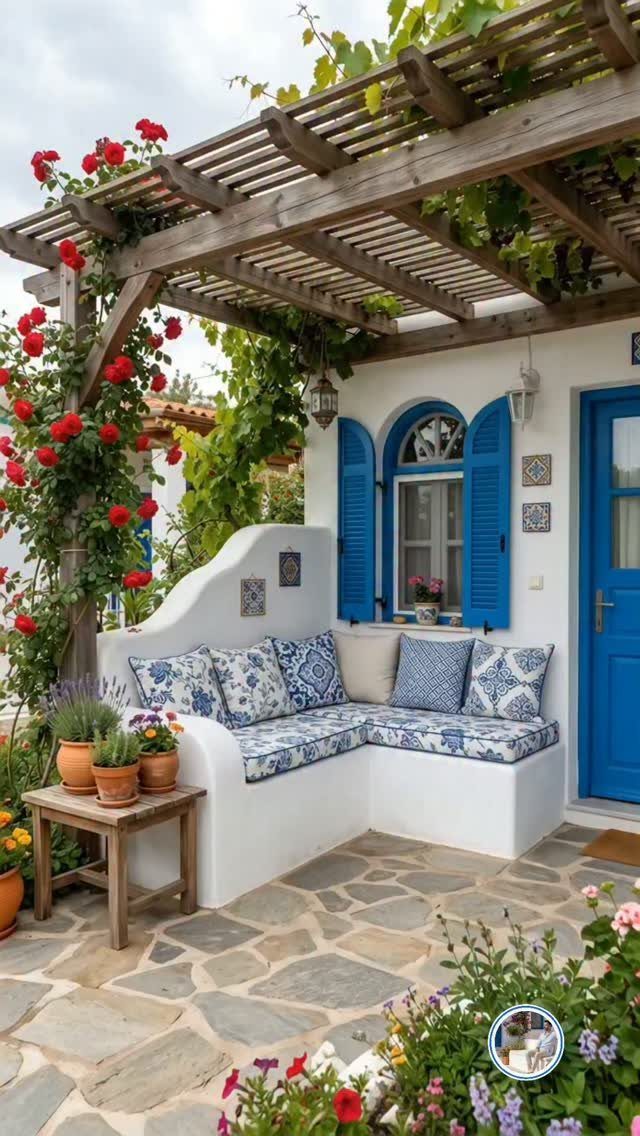
An L-shaped bench uses corners that freestanding furniture wastes, and the back against 2 walls means cushions stay put without ties that tangle.
The whitewash is paint, not stain, and it will chalk onto dark pants; I would accept that or switch to a transparent sealant and let the wood gray.
The cushion foam has to be open-cell outdoor grade, not the stuff from an indoor reupholstery shop, or it stays wet for days.
A corner seat fits more bodies than chairs would in the same footprint; you lose the option to rearrange for smaller groups.
18. Outdoor Daybed
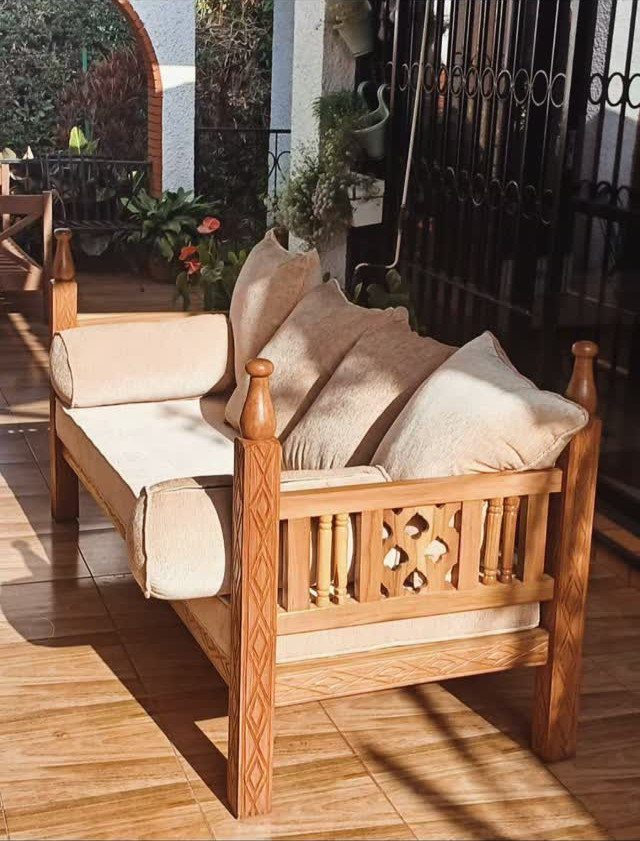
A daybed asks for a wall or a gate behind it; without something at your back the space reads as parking, not refuge. The carved frame here is hardwood, dense enough to hold detail but heavy to move come October.
I would size the cushion in a Sunbrella or similar acrylic, not the cotton-look fabrics that feel nicer until the first rain.
The pillow count for the nest effect adds up fast; past a point you are storing them in garbage bags all season.
A daybed this deep needs a side table within arm’s reach or you will never use it for more than photographed stillness.
19. Stone Outdoor Fireplace
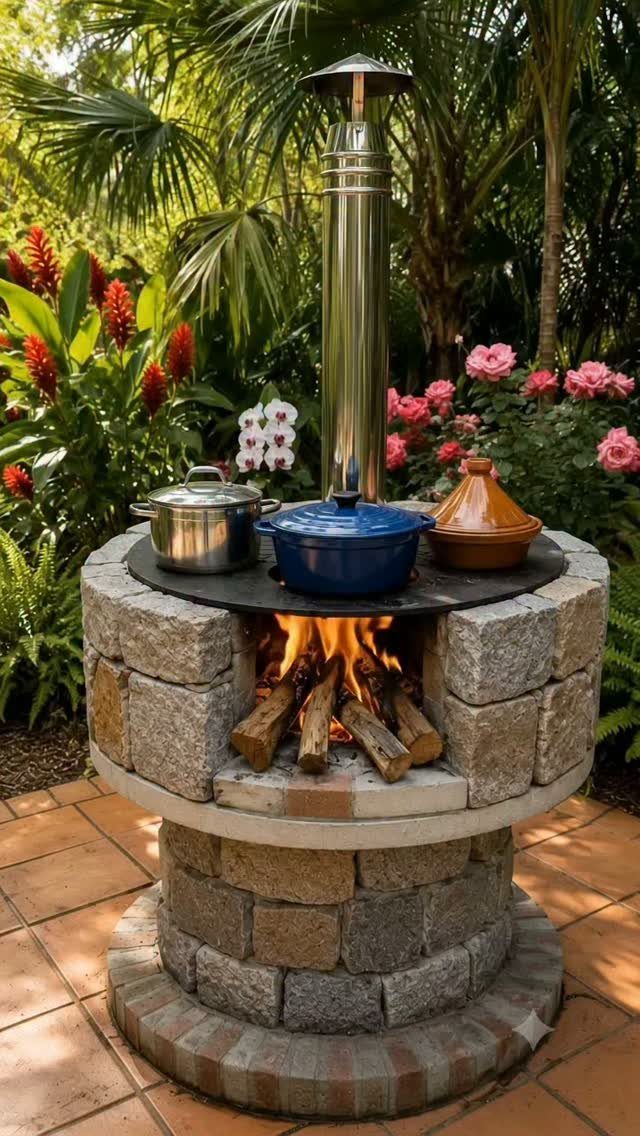
Stone this heavy asks for a footing poured below frost line, not a slab skimmed on grade; the chimney needs lateral bracing or it leans before long.
The flat top cooks as the fire below burns, which turns the fireplace into a working kitchen piece, not just a place to stare at flames.
I would face it in local fieldstone rather than veneer; the thickness buys you thermal mass that radiates heat for an hour after the logs collapse.
A metal cook surface, not stone, takes the direct flame without cracking and lifts off for cleaning. The garden right up against it means sparks matter; keep plantings low and succulent, not dry grasses that carry fire.
Use of Color
Color outside works best when it talks to the house, not at it. A Spanish hacienda shade structure behind a shingle-style home reads as costume, not design; the architecture sets the palette whether you planned it or not.
I would pull the trim color into a planter glaze, the roof tone into cushion piping, and stop there.
Greenery is color too, and cheaper than reupholstering.
Baskets on a covered porch add warmth that bare siding lacks; weather-resistant planters in white, gray, or blue-and-white ceramic do the same on open patios. The plant inside supplies the shift from season to season, not the container.
One saturated accessory beats five competing ones. A single cobalt planter against neutral stucco holds attention; scatter the same blue everywhere and the eye slides past all of it.
While an outdoor space presents an opportunity to create the feeling of permanent vacation, assure those vibes also match your everyday. Designer Christopher Boutlier advises clients to approach a garden project by first assessing the home’s architecture.
Durability Considerations
Iron and natural stone earn their place by how they age, not by how they arrive.
Iron settles into a dark rust patina that reads as history; stone lightens or darkens with rain and sun but stays structurally sound. Both keep looking better as they age, which is rare in outdoor furniture.
Shade is a material choice too. A light-colored rug underfoot absorbs less heat than stone or concrete; shade, scaled to the space, keeps the seating area usable through the hottest afternoons.
I would ground the dining set with the rug first, then layer pattern on cushions where feet do not press.
Heated seating extends the calendar without the industrial look of freestanding heaters.
At night, group pendants low for warmth rather than brightness, and keep bulbs warm-toned; cool LEDs read as parking lot, not patio. Path lighting and a few uplights on trunks do the rest.
Creating Zones
A rug under the table marks the dining zone faster than any fence.
One large piece anchors the space; two small ones read as leftovers. The same rule holds outdoors as in: the rug should fit the furniture grouping, not the whole patio.
Where the yard is deep enough to split, pavers or built-in planters draw lines you can still walk across.
A low hedge or paired trees keeps the flow open; solid walls make corridors, not rooms. I would use containers massed together for temporary boundaries, since they move when the party scale changes.
A daybed between zones does double duty: seating when you need it, visual bridge when you do not.
Woven chairs around a metal fire pit, separated from the dining cluster by that daybed or a run of planters, give you 2 distinct spaces without building anything permanent.
Frequently Asked Questions
What is the 3-5-7 rule in decorating?
The 3-5-7 rule suggests grouping items in odd numbers, specifically 3, 5, or 7, for a balanced look.
I do not rely on this rule in outdoor spaces, where one large piece usually beats several small ones. A single statement planter or one properly scaled rug anchors a zone better than clusters of competing items.
What are some good decorations for my outdoor house?
Planters, string lights, outdoor rugs, and built-in seating all earn their place.
I would start with a wide pot for height and softness, add purple-tinted string lights on a dimmer for evening mood, and ground the seating area with a low-pile polypropylene rug sized to the furniture footprint, not the whole patio.





