
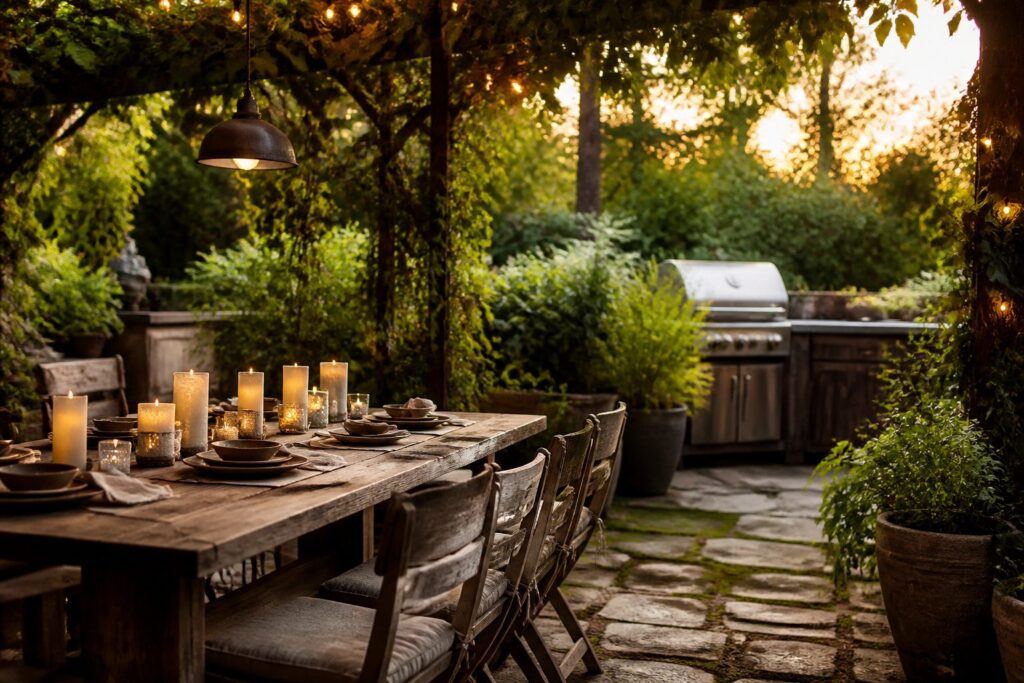
A dream outdoor living space is a planned outdoor area built for daily use, not occasional decoration.
The difference between a patio you pass through and one you live in usually comes down to whether the cooking, seating, and shade were designed together or pieced together after the fact.
A basic outdoor kitchen alone starts near $35,000 installed, which is why most homeowners working with a $500–800 annual garden budget build in stages across five years rather than borrowing against a full professional threshold.
Outdoor Kitchens
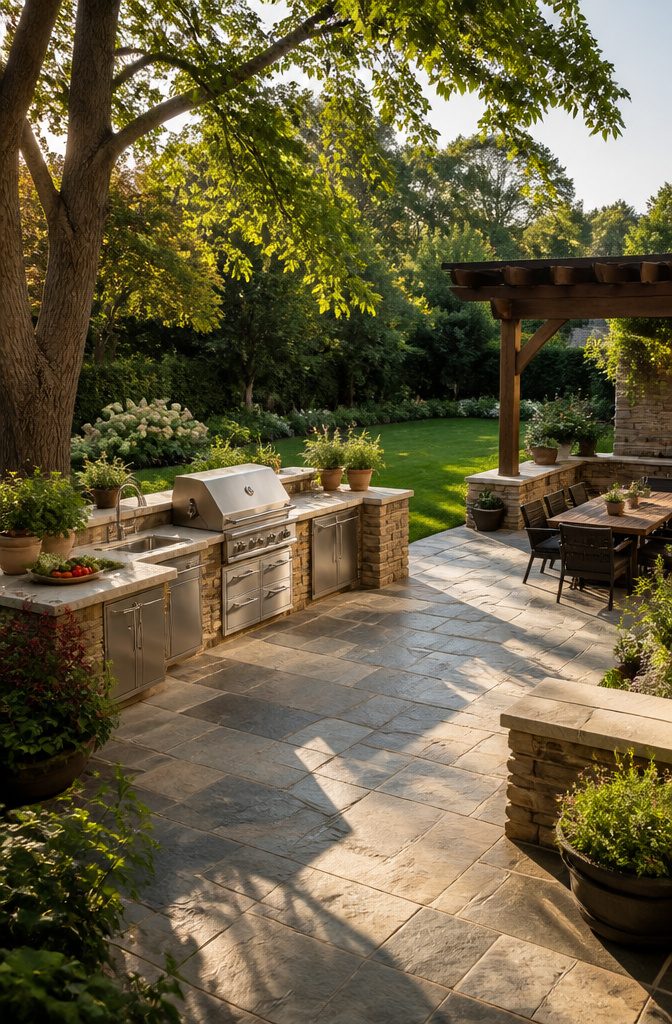
An outdoor kitchen turns the yard into the room people actually want to gather in.
A basic setup starts at a $35,000 investment for full design with grill, sink, and counter space, which sounds steep until you count the summers you will host out there instead of shuttling plates through a back door.
For that price you get function that anchors the whole dream outdoor living space: the cooking stays where the conversation is, and the host stays with guests.
I would not build one smaller than that threshold. A standalone grill on the patio is fine for burgers, but it does not pull people around it the way a working kitchen does.
The sink matters more than most first-timers guess. It lets you prep, rinse, and reload without breaking the flow of the evening.
Modular systems like Belgard Elements cut installation time and hold up to weather, which is worth weighing against custom stone work. Natural stone and wood read warmer, though they demand more upkeep.
My call: modularity wins unless you have mason you trust and time to maintain it. Either way, the outdoor kitchen is where the indoor host stops being a server and starts being present.
Fire Pits
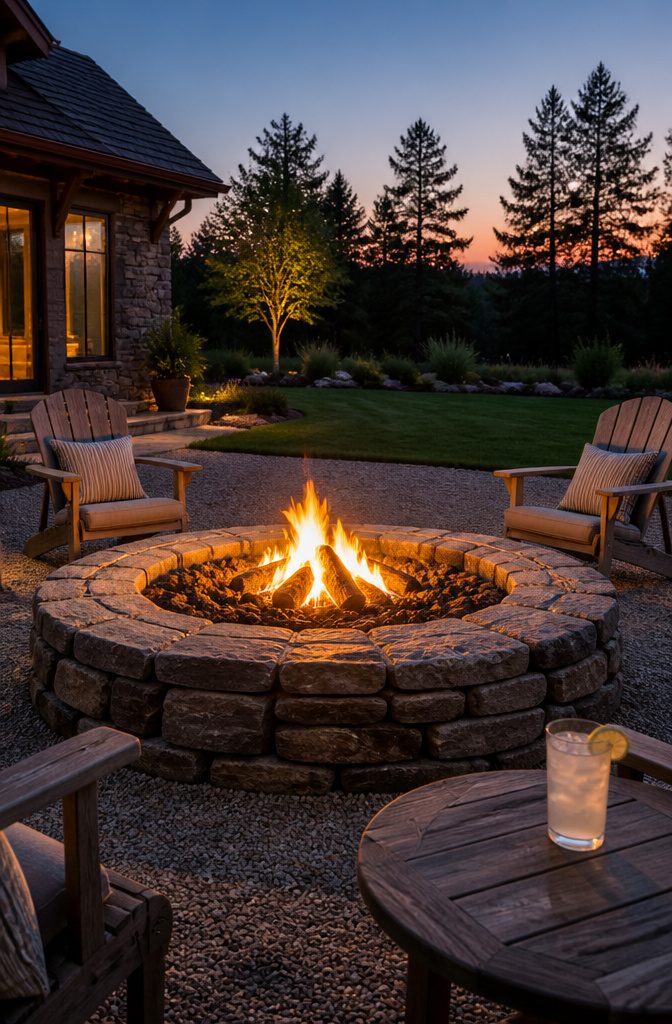
A fire pit extends usable hours outdoors more reliably than any other single feature, which is why designers report it as one of the most requested additions to a dream outdoor living space.
Built-in stone or metal installations anchor the patio permanently and match existing hardscape for cohesion; portable models suit renters or anyone who rearranges seasonally.
Either way, seating must encircle the feature completely. Without chairs gathered close enough for actual warmth, the pit becomes decoration rather than a gathering spot.
Some owners contrast the fire zone with gravel for rustic effect; others run the same paving through for visual unity.
The function barely changes. What shifts is the mood: the same flames read formal against cut stone, informal against rough aggregate.
I would spend the money on a built-in only where the patio layout has stayed fixed for several years already; portability costs less and lets you test whether your household actually gathers around fire before committing to masonry.
Year-round use is possible in principle, though in practice most owners in cold-winter zones store portable units from first heavy snow.
Pergolas and Shade Structures
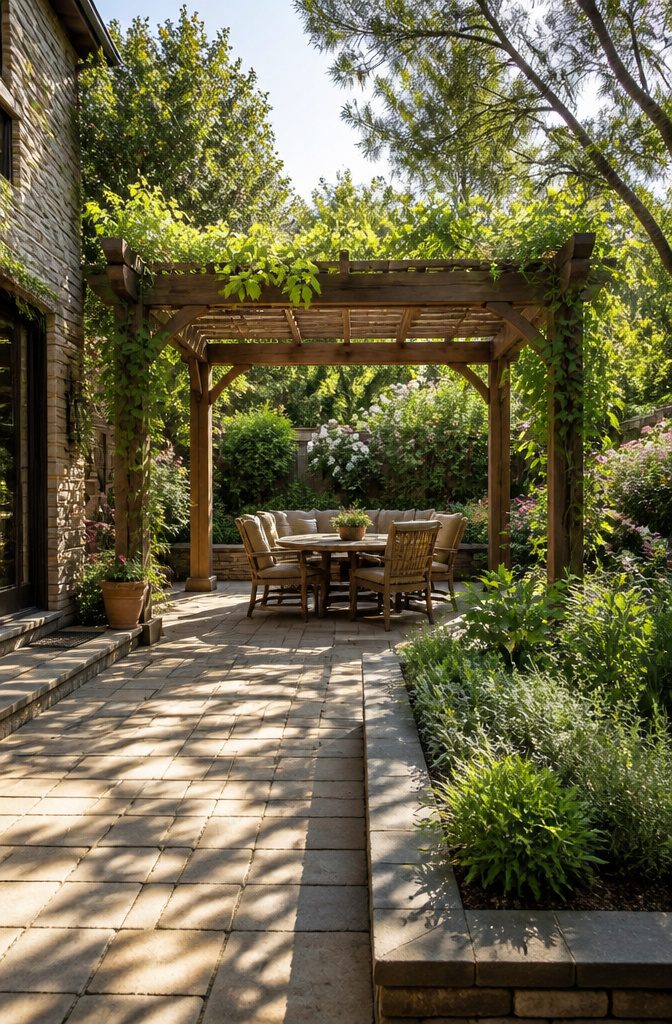
A pergola or shade structure defines an area without boxing it in. In a full-sun yard, it turns what would be a midday no-go zone into usable square footage by cutting direct exposure while still letting air move through.
I think of it as building a room with a ceiling but no walls.
Material matters more than style here. A custom louvered pergola lets you adjust the slats as the sun tracks, so the same structure works at 10 a.m. and 3 p.m.
Fixed-beam versions or a custom trellis cost less but lock you into one shade pattern, which usually means heavier shadow at noon and gaps when you actually need them for morning coffee or evening dinner.
The real return is functional hours added to your day.
Without shade, many Fort Wayne backyards sit empty from June through August during the hours people are actually home. With it, you pick up weekday evenings and weekend afternoons that would otherwise go to the couch.
A gazebo or screened porch extends the season further, though I find the pergola is exactly right for most small yards. It gives enough enclosure to feel like a destination without the footprint or permit headaches of a full addition.
Climbing plants soften the beams over time, but do not count on clematis or wisteria for shade that first season unless you also run a temporary fabric panel.
Two systems working together is not a failure of design. It is just honest gardening.
Water Features
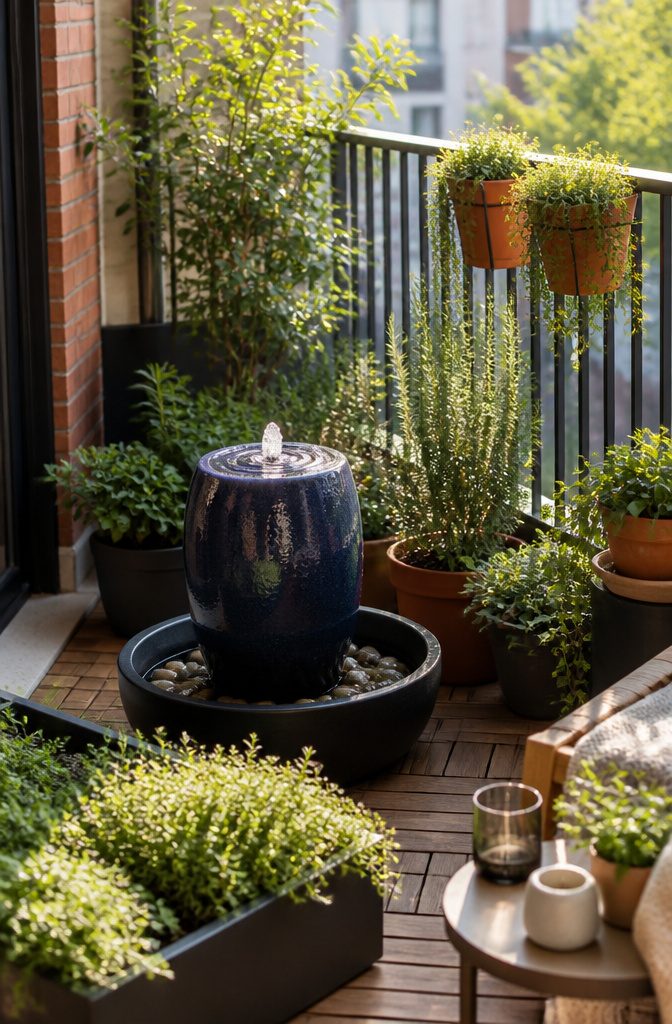
The kind of water feature that actually works in a small yard rarely looks like the ones in magazines.
A recirculating fountain the size of a planter, sitting on a patio table or balcony rail, sends up a thin stream that falls back into its own reservoir.
The motor hums at about 40 decibels, roughly the level of a quiet refrigerator, which is enough to mask traffic noise from a nearby street without becoming its own distraction.
Moving water does something else that still water cannot. Even a 2-foot tiered fountain in a corner of a patio creates evaporative cooling in a radius of a few feet.
The effect is psychological as much as physical; the brain reads the sound and the shimmer as lower temperature, which makes a south-facing balcony more bearable on a July afternoon.
Ponds and pools demand more care than most new gardeners expect.
A 50-gallon basin under a fountain needs the pump cleaned every two to three weeks if leaves fall nearby, and liners degrade in direct sun within five to seven years.
For a renter or anyone keeping annual plant spending around $500, the smaller recirculating units pay for themselves in avoided maintenance. Containers with built-in pumps run on standard outdoor GFCI outlets and winter indoors in a closet.
I would put the money into one good fountain rather than stretching for a pond I could not keep clean. The tranquility comes from the motion and the sound, not the volume of water.
Outdoor Furniture
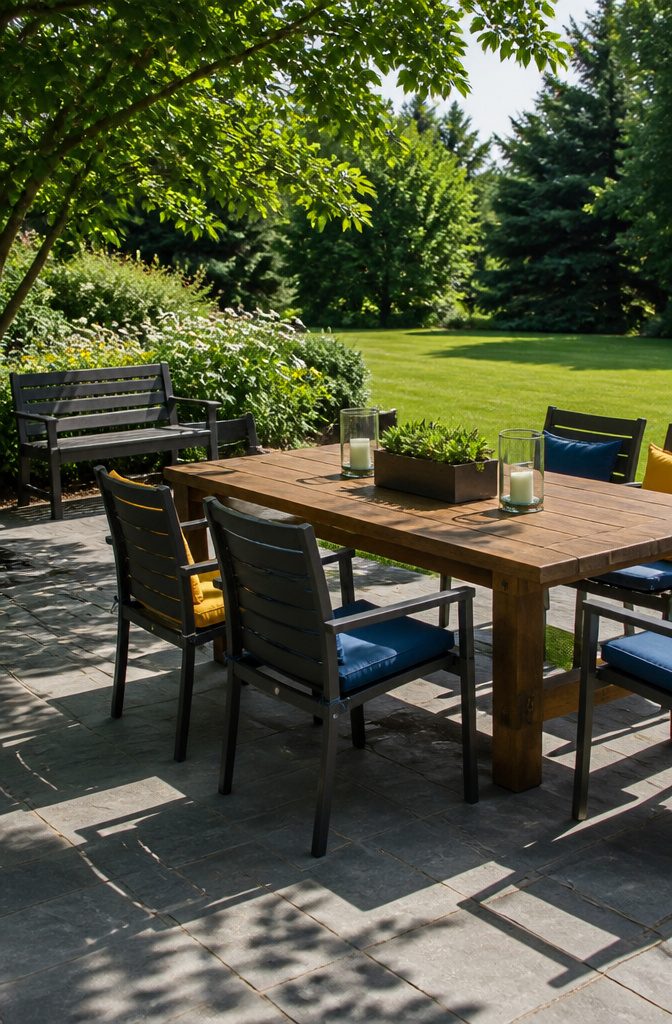
Seating is where most $500–800 annual garden budgets disappear, so the material choice matters more than style. Aluminum costs least upfront and stays put in wind, though the powder-coated finish will chip after a few seasons of dragging chairs across concrete.
Wicker has the look most people picture for a dream outdoor living space, but natural cane rots; the resin version lasts longer and still weighs enough that it will not chase you across the patio in a storm.
Wood demands oiling every spring and will gray whether you treat it or not, yet nothing else sits quite right after years of sun.
Recycled plastic has come far from the hollow lawn chairs I remember; solid HDPE versions now mimic painted wood grain, never need staining, and survive full sun without the surface temperature of metal, though the weight can feel toy-like when you lift one.
For a small balcony where storage is indoors all winter, I would take aluminum. For a yard where furniture lives outside year-round, recycled plastic earns back its higher price in saved maintenance time.
Wood still wins on pure comfort if you keep up with it, but that is a second job you are signing up for, not a feature.
Lighting
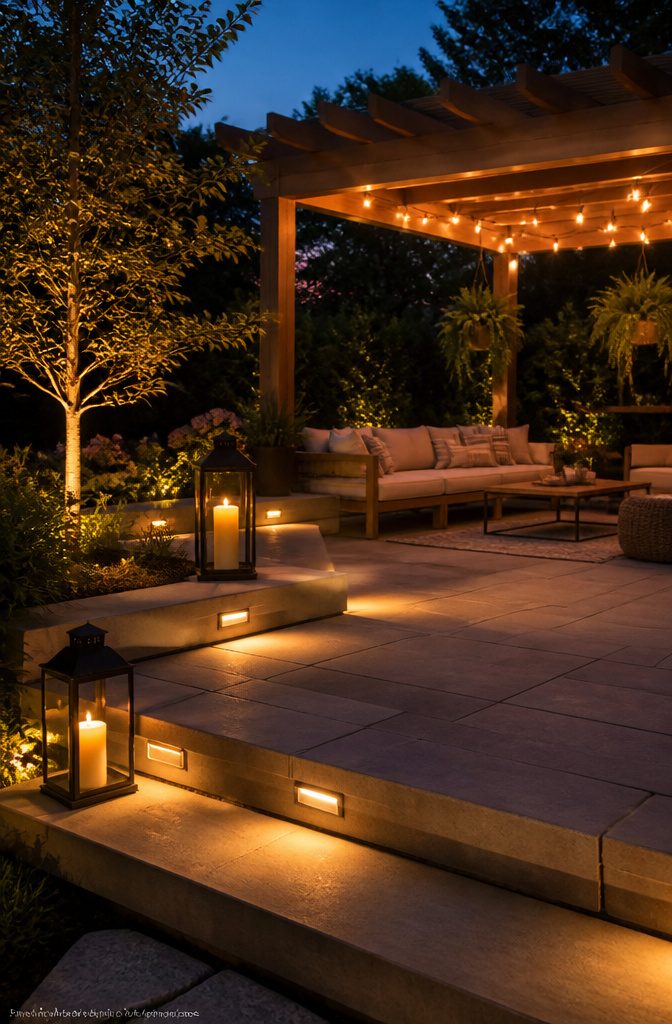
String lights, lanterns, and built-in fixtures each solve a different problem in a dream outdoor living space, and pairing them is what buys you useful hours after dusk.
I see string lights strung under a pergola as the entry-level move; they cast a soft, even wash that lets people move around without fumbling.
Lanterns do the opposite job, creating pockets of focused light exactly where you want intimacy. Built-in fixtures in risers, posts, or deck boards extend the architecture itself into evening, turning stairs and edges into readable terrain rather than trip hazards.
Layering all three matters more in small spaces because every element carries double weight there.
A string light overhead establishes general brightness, a lantern on the dining table drops the scale to conversation level, and a riser light along the step edge keeps feet finding the next tread safely.
The depth comes from the contrast between those layers, not from any single fixture trying to do everything.
A fire pit nearby adds living warmth, but it is still a localized source; without the surrounding light structure, guests cluster too close or retreat indoors when the glow fades.
Three distinct temperatures of light working together let a compact yard function as two spaces, day and night, rather than one that shuts down at sunset.
Landscaping
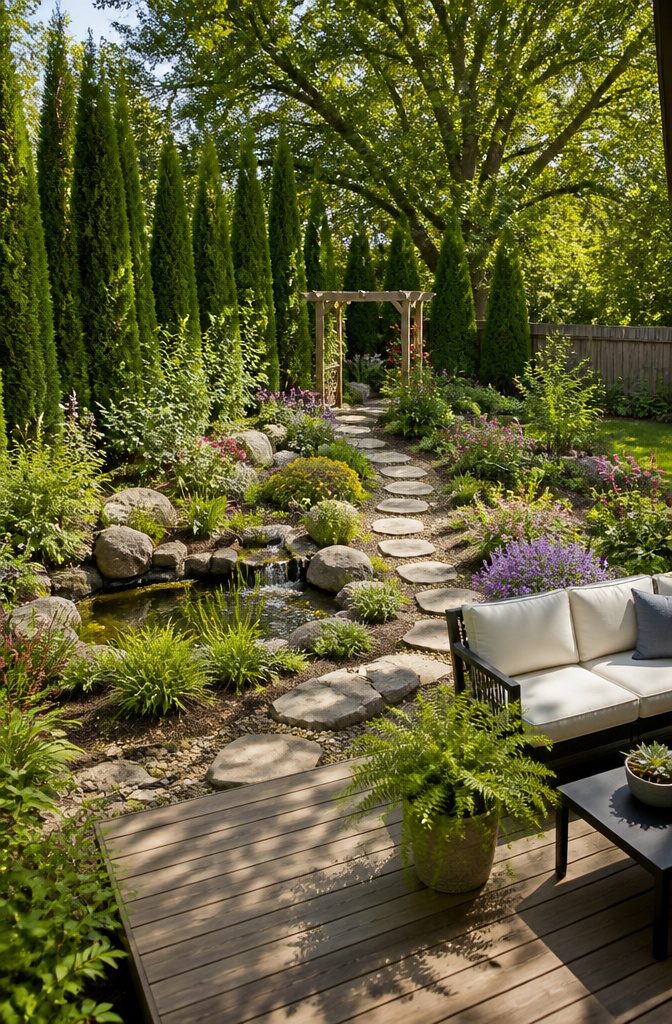
Plant selection for a Fort Wayne yard sits on the 5b/6a border, which means a shrub rated hardy to zone 5 may sulk through a bad winter while a zone 6 favorite can turn to mulch in February.
I start from the published range and treat the lower number as the one that actually counts, because the boundary is not a wall.
A serviceberry or arrowwood viburnum handles that uncertainty better than something that needs the warmer end to survive.
Vertical planting changes what privacy costs on a small lot. A row of arborvitae or a trellised north side wall adds the screening a fence would give, but without the hardscape installation and the price that comes with it.
Wall planters or espaliered fruit trees do the same in tighter footprints, drawing the eye up and keeping the ground plane open for the actual living.
The rule I follow: if the plant can do the structural job, let it, and spend the savings on better soil.
What you save in money, you spend in time. A privet hedge fills in two to three years; a wooden privacy wall goes up in a weekend.
I still prefer the green solution where light allows, because a living screen shifts with the seasons instead of sitting there like a box.
Multi-functional Spaces
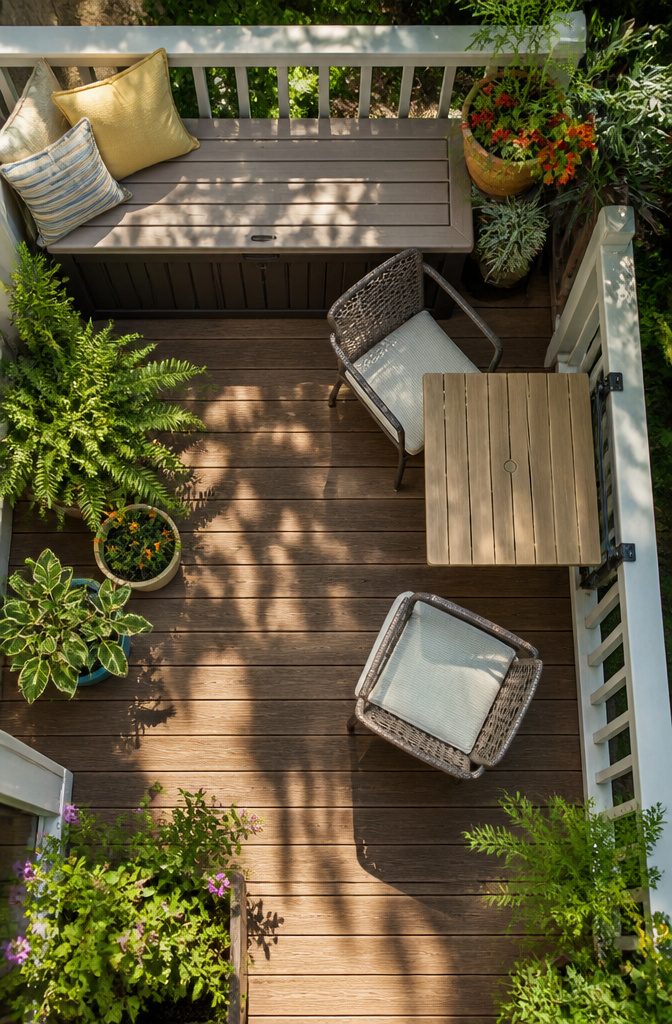
A bench that stores cushions, tools, or hose nozzles buys back floor space a single-use chair would lose.
In a small yard or balcony, that trade is non-negotiable. I look for seating with storage built in first, because it cuts clutter without adding another box.
Fold-down tables mount to walls or railings and disappear between meals. A ledge that drops flat for two plates, then lifts to free the walkway, lets the same ten square feet serve dinner and morning coffee.
Cooking, lounging, and dining never all happen at once in a tight space, so the layout should hand each function the room when its turn comes.
Covered and open-air zones both matter. A roofed corner holds the grill and a slim counter for prep; three steps away, an open patch takes the chaise.
The House Plan Company sees this split in the plans buyers request now, with orientation and weather patterns deciding which task goes where.
I put cooking under cover and lounging in the light, because smoke needs venting and skin does not.
What These Spaces Return
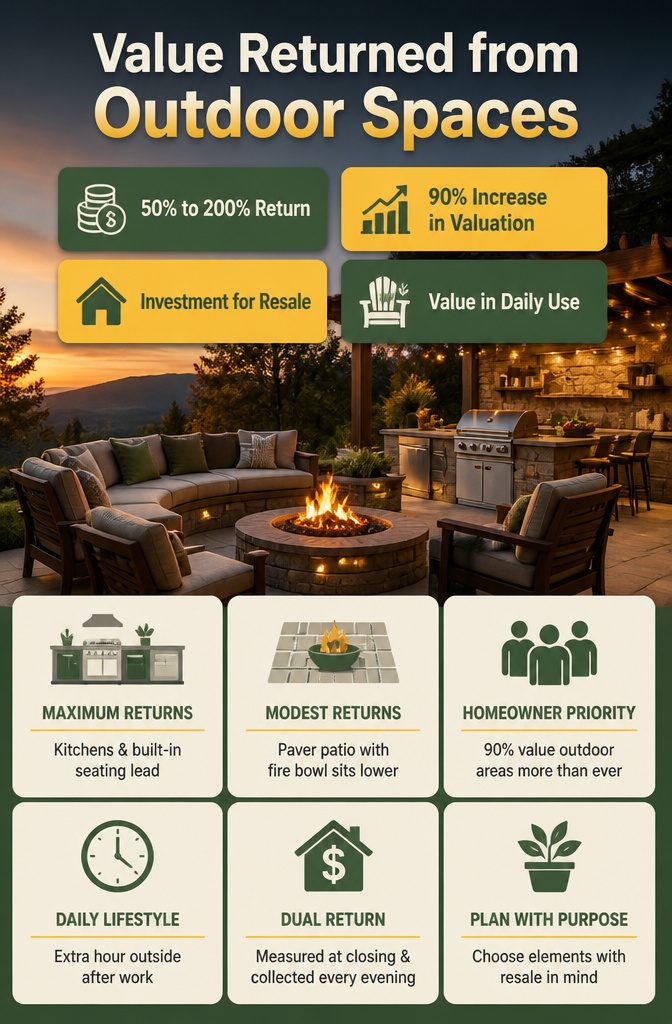
A finished outdoor living space returns somewhere between 50% and 200% of what you put into it, depending on which features you install.
That upper bound belongs to full kitchens and built-in seating that extend actual square footage; a simple paver patio with a fire bowl sits lower.
The spread is wide enough that you should choose your elements with resale in mind, not just the present summer.
What I notice is that nearly all homeowners describe the return differently once they live with the space. A 2021 report found that 90% of Americans valued their outdoor areas more than ever before, and that shift in habit looks permanent.
The math on home value still matters if you sell, but the daily use, the grilling in open air, the extra hour outside after work, tends to outweigh the appraisal figure in conversation.
You build it as an investment, but you keep it because the indoors finally stops feeling like a cage on good days.
My own read is that the return splits in two: the one you measure at closing, and the one you collect every evening you step outside instead of turning on the television.
Plan for both, but do not pretend they are the same thing.
Building for Year-Round Use
Fort Wayne’s four-season reality means an outdoor space built only for June evenings sits idle half the year, and that idle time is expensive.
The question is whether to adapt the whole area or divide it into zones that live differently through different months.
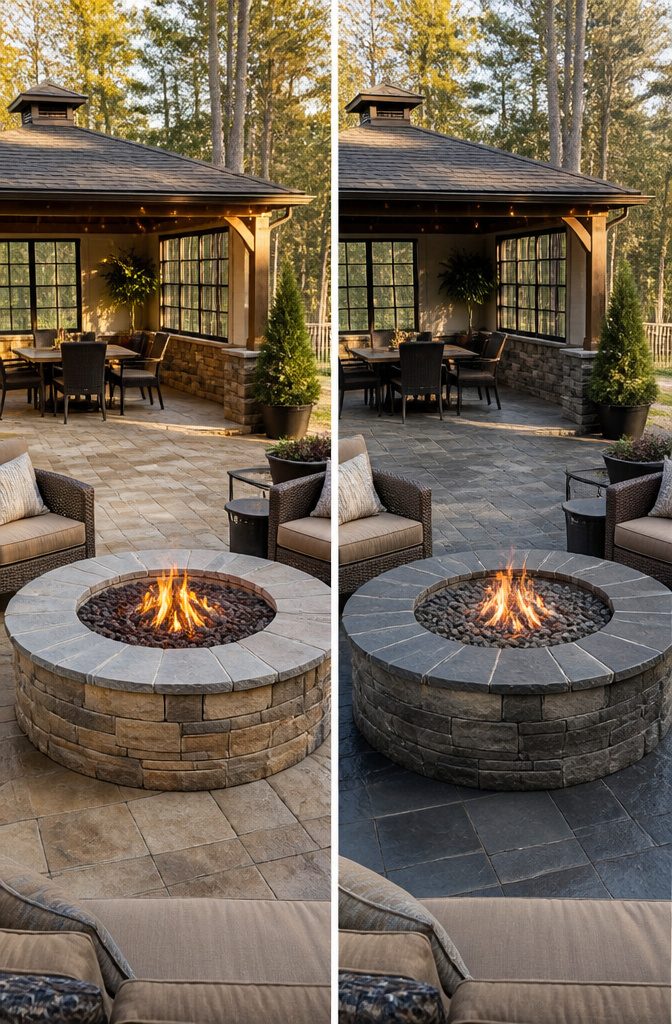
I come down on the side of targeted zones. A built-in stone fire pit with seating arranged for close gathering handles the social work of October through March without requiring you to heat empty square footage.
Portable models trade some presence for the option to store, but I have seen too many of them end up under tarps and forgotten.
For real cold-weather use, the seating matters as much as the fire feature; without it, people drift inside after twenty minutes.
Summer defense runs on airflow and shade. A pergola with adjustable slats or a well-placed deciduous tree blocks the western sun without trapping heat the way a solid roof can.
Cross-ventilation, the kind you plan by noticing where the breeze actually moves through your yard, matters more than any fan.
The option that bridges both is a screened structure with Eze Breeze windows, the kind that turn a three-season gazebo into something closer to year-round.
It is not cheap, but it functions as a greenhouse for plants in shoulder months and holds heat when the fire pit would be too exposed.
For zone 5 gardeners, that extra six to eight weeks of usable space in either direction often justifies the cost.
Budgeting Real Numbers
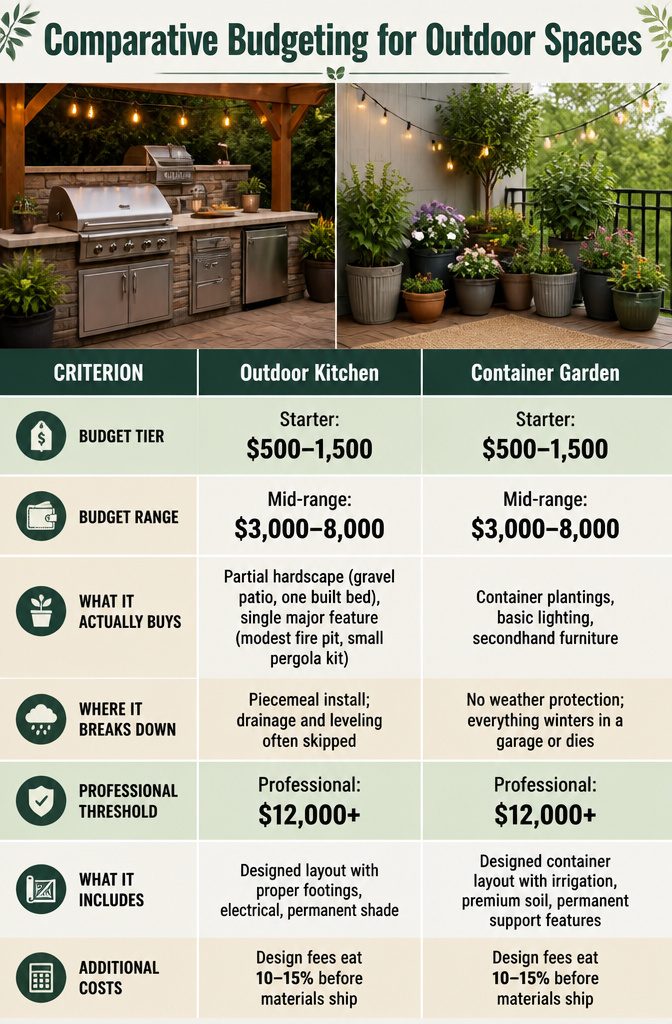
A $500–800 annual garden budget reshapes what "dream outdoor living space" means in practice.
Most full outdoor kitchens run about $35,000 installed; that figure sits in another universe from container soil and string lights. Working the numbers, I split the spread into three tiers that clarify where stopgap ends and professional planning begins.
| Tier | Budget Range | What It Actually Buys | Where It Breaks Down |
|---|---|---|---|
| Starter | $500–1,500 | Container plantings, basic lighting, secondhand furniture | No weather protection; everything winters in a garage or dies |
| Mid-range | $3,000–8,000 | Partial hardscape (gravel patio, one built bed), single major feature (modest fire pit, small pergola kit) | Piecemeal install; drainage and leveling often skipped |
| Professional threshold | $12,000+ | Designed layout with proper footings, electrical, permanent shade | Design fees eat 10–15% before materials ship |
I land hard on the mid-range tier for most readers at this budget.
A $600 annual spend across five years gets you near that $3,000 floor, and that buys a stable gravel patio with container-defined rooms plus one reliable feature you use weekly. The full kitchen with built-in appliances?
That waits until the house itself gets refinanced or the inheritance lands. The real luxury is knowing which tier you’re in and refusing to borrow against the next one.
Keeping It Up
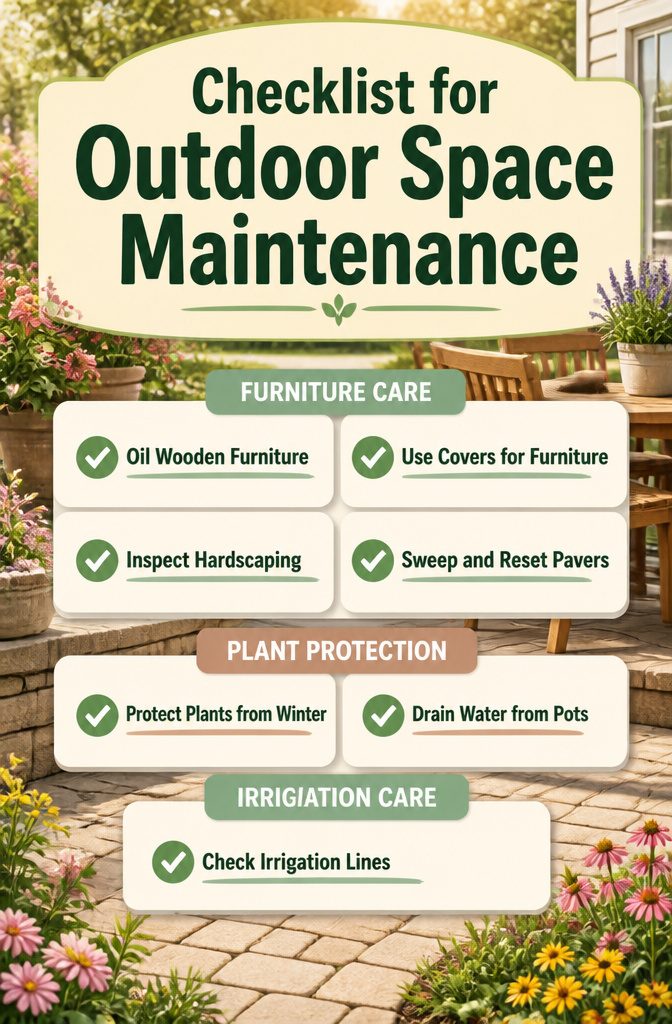
A dream outdoor living space only stays dream-worthy if you actually keep it up. In Fort Wayne, that means planning around freeze-thaw cycles that will crack what you neglected and warp what you forgot to cover.
Teak or eucalyptus furniture left out through winter without oiling will gray and check within two seasons.
I oil mine in late September, then move it under a covered area or use fitted covers with vents so condensation does not pool underneath.
Plastic resin furniture fares better left out, but the frames still weaken when ice forms inside hollow legs; I tip mine against a wall so water drains.
For hardscaping, spring inspection matters more than most bother with.
Freeze-thaw lifts pavers and opens joints; I walk the patio after the last frost, reset anything shifted, and sweep in polymeric sand before the first summer rain sets it. Waiting until June means weeds have already colonized the gaps.
Plants in containers above ground roots die back harder than those in soil. I group pots against the house foundation, wrap ceramic ones in bubble wrap, and switch to resin or metal for anything I know I will forget.
Irrigation lines need blowing out before Halloween in this zone; a single late freeze bursts un-drained PVC.
The cost of skipping this: replacing a $600 dining set every four years instead of fifteen, or rebuilding a wall that heaved.
Frequently Asked Questions
How much does it cost to create an outdoor living space?
A fully designed outdoor kitchen starts around $35,000 installed, while a starter tier of container plantings and basic furniture runs $500–1,500. Most homeowners at a $500–800 annual garden budget land in the mid-range tier of $3,000–8,000 after saving across several seasons.
What are the benefits of an outdoor living space?
You get daily use out of evenings spent outside instead of indoors, plus a return of 50% to 200% of your investment at resale depending on features installed.
A 2021 report found 90% of Americans valued their outdoor areas more than ever before, and that shift looks permanent.
How do you build an outdoor living space?
Start by choosing your tier: starter budgets buy containers and temporary pieces, mid-range gets you partial hardscape with one reliable feature, and $12,000+ brings professional design with proper footings and electrical.
Most readers saving $600 annually should target the mid-range floor across five years.
What is an outdoor living space called?
Designers and homeowners often call it an outdoor room or outdoor living room. The term fits because a well-built one functions as actual square footage where you cook, gather, and relax rather than just a yard with a grill.
How can I add color to my outdoor living space?
Container plantings draw the eye without permanent installation, and climbing plants like clematis soften pergola beams over time.
For immediate effect, colorful furniture in resin wicker or painted recycled plastic brings hue that survives full sun without the maintenance of natural wood.





