
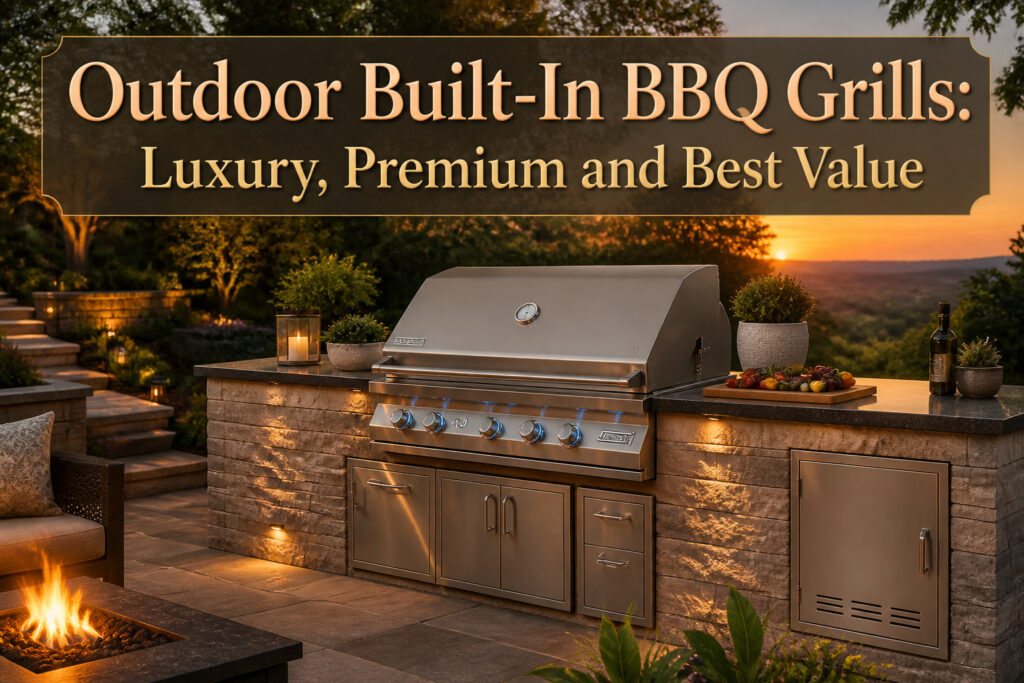
An outdoor built-in bbq is a permanent gas grill installed into a custom island or counter, replacing the wheeled cart with stone, brick, or stucco that matches your patio. The catch is that the cutout must account for finish materials, thermal expansion, and gas access panels your contractor may forget to include, or you will be dismantling masonry to reach a failed regulator two seasons later. The $13,329 Twin Eagles Eagle One 42-Inch sits at the top of what I have seen spec’d for residential installs, with infrared rotisserie and a dedicated sear zone that separate it from grills costing half as much.
Luxury Built-In Grills
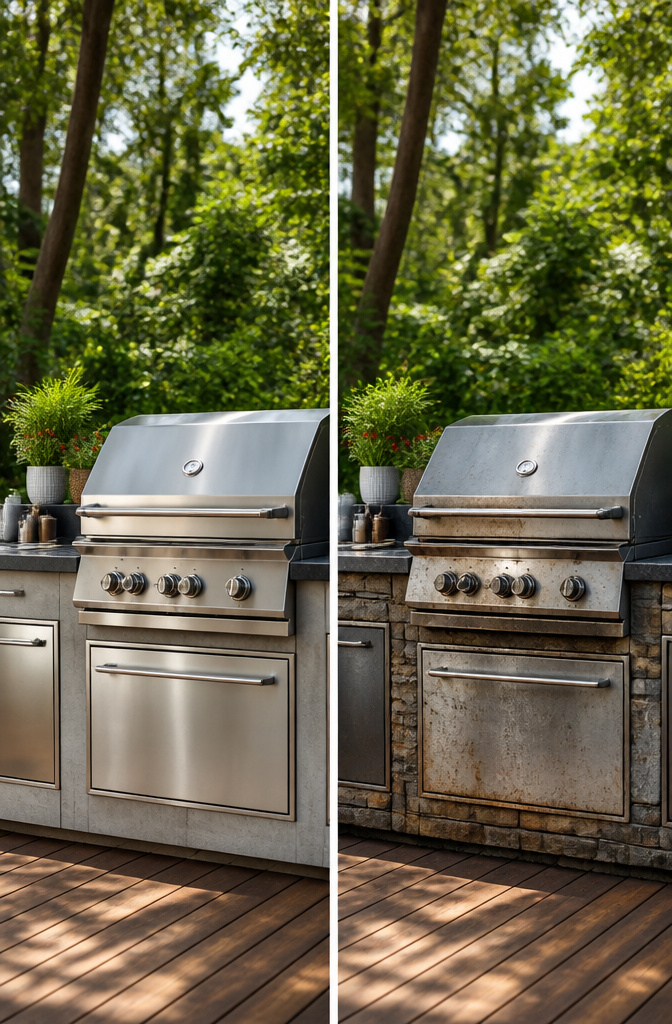
Luxury built-in grills start where most outdoor kitchens top out. The $13,329 Twin Eagles Eagle One 42-Inch sits at the peak of what I have seen spec’d for residential installs, with infrared rotisserie and a dedicated sear zone that separate it from grills costing half as much. Fire Magic lands closer to earth at $8,548.20 for the 30-inch Echelon Diamond E660i, though calling that earth is relative. Lynx splits the difference at $10,739 for its Professional 54-Inch, and Alfresco runs $11,999 on the AIPG 42-inch.
The outlier is American Made Grills. Its Atlas 36 Inch lists at $3,795, which reads like a typo against the others until you handle one. The welds and gauge of the steel body match what Twin Eagles and Lynx were doing five years ago, before their current price climbs. Whether that counts as luxury or simply a lag in repricing depends on how much you trust the name to hold resale.
What separates these five is not BTU counts, which manufacturers inflate anyway. It is the metal: 304 stainless at minimum, with Lynx and Twin Eagles moving to heavier gauge fireboxes and cast brass burners that do not warp across a decade of thermal cycling. The sear zones run 1,000°F plus, hot enough that the learning curve is real. I have watched more than one owner char the first month’s steaks while dialing in the infrared.
Premium Built-In Grills
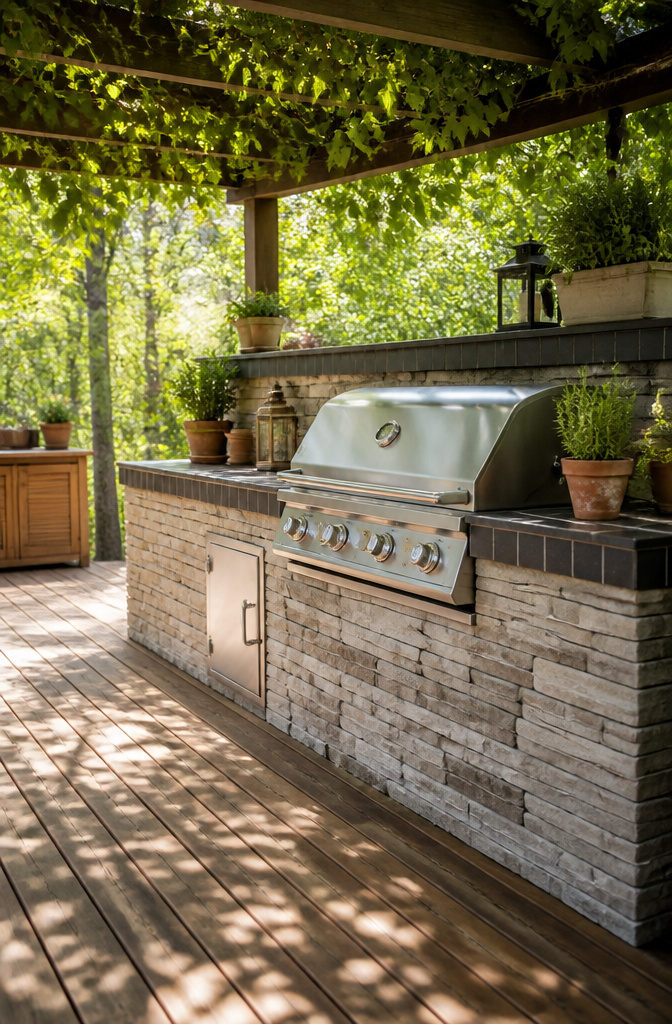
Premium built-in grills sit in a middle space that took me a while to understand. The money goes toward heavier gauge stainless steel than value tiers, better ignition systems, and cooking grids that will not warp in three seasons, but you stop short of the hand-welded seams and custom burner configurations that push luxury prices toward five figures.
American Outdoor Grills and Delta Heat both occupy this ground. The AOG T-Series 36″ Built-In Natural Gas Grill with Backburner runs $3,351.60, which is roughly double a decent value option and roughly half what a comparable luxury built-in demands. What you keep at that price: a backburner for rotisserie work, consistent flare-up control, and a body that will not look dated in your outdoor kitchen in eight years. What you give up: the thicker cooking chamber insulation that holds heat steady in January, the slide-out drip trays that clean in seconds, and the phone call where the manufacturer remembers your serial number.
Delta Heat competes here with similar construction and a slightly different burner layout. Between them, the choice comes down to which control layout feels right in your hand and which local dealer will service what they sell. Neither brand builds in the service network of Weber or the parts availability of Napoleon, so the premium price includes some faith that your grill will not need major surgery.
Best Value Built-In Grills
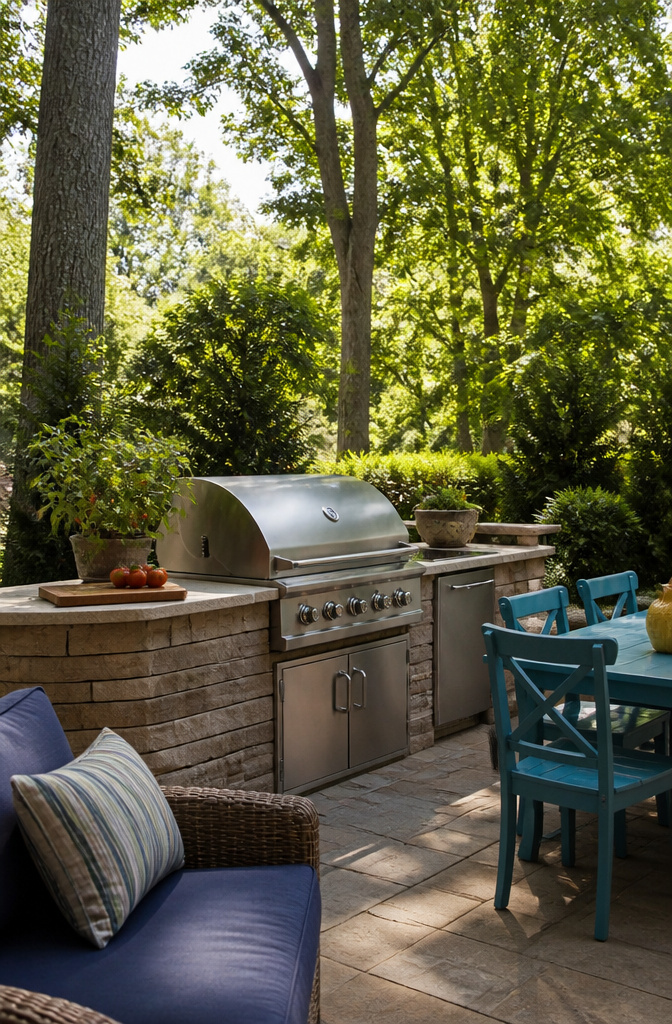
Most first-time outdoor kitchen builders land in the best value tier, and manufacturers know exactly how to meet them there. The smart cuts happen in places you will not miss: interior lighting that runs on AA batteries instead of wired LEDs, a single-zone burner layout rather than independent controls for every knob, and cast aluminum firebox liners where premium lines use welded stainless. These save hundreds without touching what actually cooks the food.
Where value grills do not cut corners matters more. Look for brass or stainless burner tubes, not plated steel, because those are what fail first and cost the most to replace. The cooking grates should still be solid cast iron or heavy stainless; thin wire grates are the giveaway that a grill will cook unevenly and rust out in three seasons. A decent value grill also keeps its warranty on the firebox and burners for at least five years, not one.
The grill that punches above its price usually hides its savings in the cart, or in this case the lack of one. Built-in models skip the mobile base entirely, and that is where a lot of the cost drops away before anything touches the cooking. What convinced me, reading through a dozen of these, is that the best value buys are often last year’s premium burner design in simpler trim. The fire does not know what year it is.
Build Quality and Materials
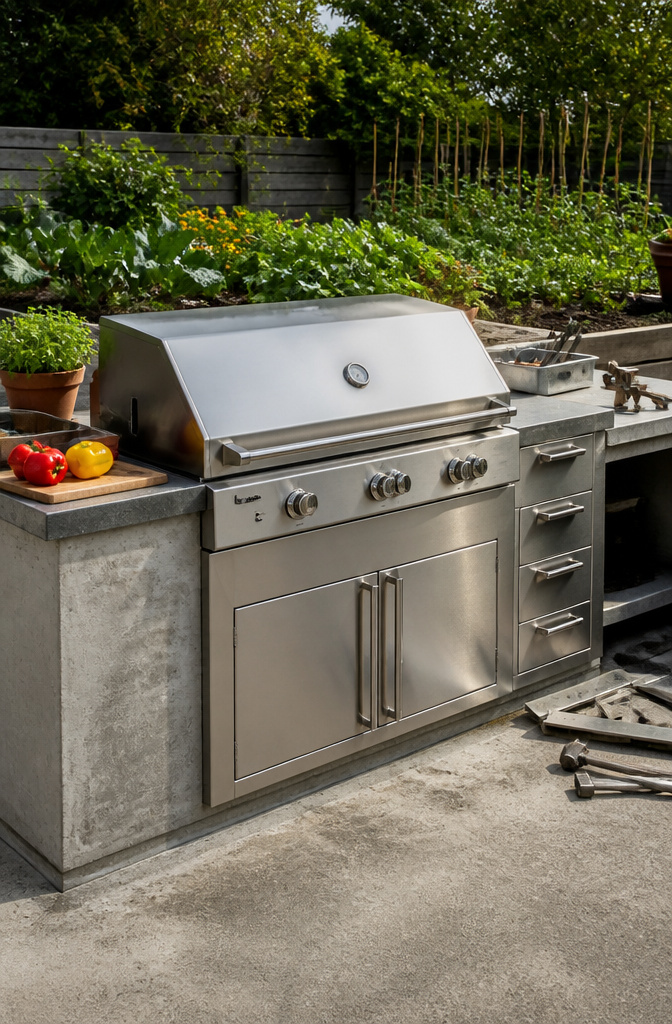
Stainless steel grade is where most buyers trip up on paper, and the difference shows up three summers later when the lid starts weeping rust. 304 stainless steel carries enough nickel to shrug off salt air and acid from tomato drippings; 430 looks identical in the showroom but sheds its passivation layer once the seasoning builds, especially around the welds. I learned to check the spec sheet for the actual ASTM number, not the marketing word "commercial-grade."
Burner design matters more than the BTU total the salesman recites. Cast brass ports tolerate moisture and food acid; stamped steel costs less until the orifices clog with grease carbon and the flame turns into a yellow licker that scorches one corner of the grate. Welded seams on the firebox keep grease from migrating into the cart frame; folded edges create a capillary seam that wicks spills exactly where you cannot reach to clean.
What separated the ten-year grills from the three-year units, reading through the teardown accounts, came down to whether the manufacturer bothered to weld the burner mount tabs or simply bent sheet metal to friction-fit. The latter rattles loose, tilts the burner, and guarantees hot spots you will fight every Memorial Day until you replace the whole assembly.
Cooking Performance and BTUs
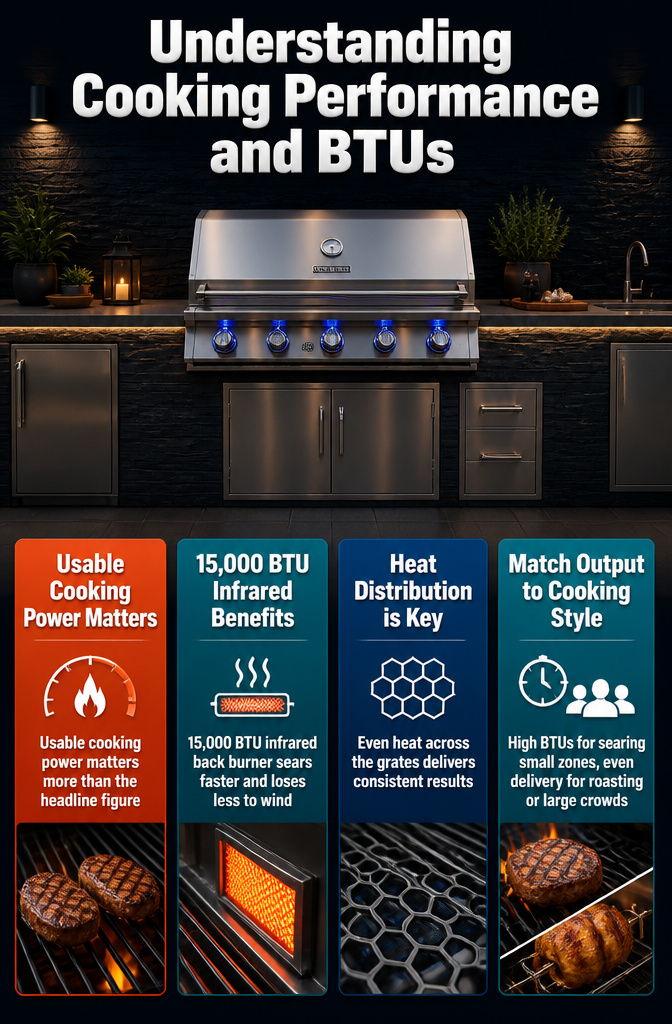
The first number most buyers notice on an outdoor built in bbq is the BTU total, and the marketing knows it. A grill that advertises 75,000 BTUs sounds like it should outperform one at 50,000, but usable cooking power matters more than the headline figure. BTUs measure heat output per hour, not how much of that heat reaches your food or how evenly it spreads across the grates.
Infrared burners change the equation entirely. A 15,000 BTU infrared back burner concentrates intense, direct heat that sears faster than a standard burner of equal or even higher rating, and the sealed design loses less to wind and air gaps. Rotisserie systems paired with that infrared back burner use the same concentrated output to cook evenly without the flare-ups that dry out meat.
Heat distribution separates grills with similar totals. Twin Eagles builds around this with a 5-Part Grilling System and hexagonal grates designed for retention and consistent marks, suggesting the engineering matters as much as the raw count. For fast searing over small zones, high BTUs in a compact infrared sear zone beat spread-out power. For slow roasting or cooking for a crowd, even delivery across the full surface wins. Match the output to what you actually cook, not to the biggest number on the label.
Cooking Space and Layout
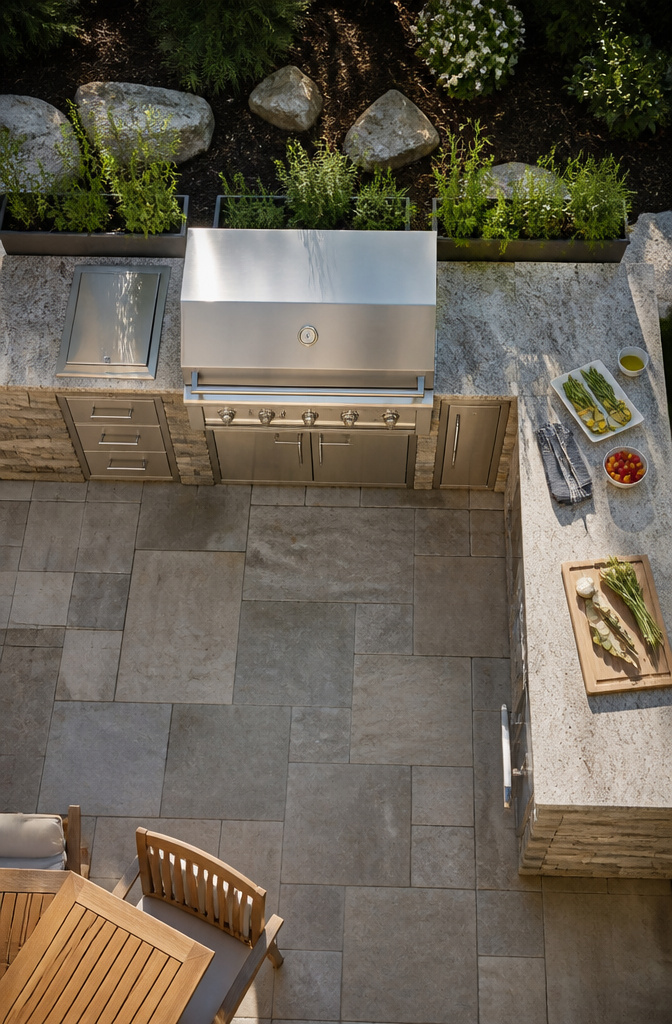
Usable grilling area and total surface are not the same thing, and the gap between them is where money gets wasted on an outdoor built in bbq. Manufacturers love advertising the full square-inch count with warming racks and side shelves included. What actually matters is the primary grate where the heat concentrates and the food sits.
A 42-inch grill with 770 square inches of grilling area sounds impressive, but three people eating burgers do not need it. The rule is simpler than the sales floor lets on: budget about 100 square inches of primary grate per person you cook for regularly. Two people, 200 square inches. A family of four with weekend guests, 400 to 600. Anything beyond that is patio space you will not use and burners you will run at half capacity.
Warming racks add flexibility but do not count toward that number. They hold finished food or toast buns while the main grate stays active. If your cooking habits rarely extend past quick weeknight proteins, a large warming rack paired with a modest main surface serves you better than the reverse.
The 42-inch Alfresco LXE and its 770 square inches target buyers who entertain often or run multiple courses simultaneously. For the couple who grills twice a week and never hosts, a 30-inch unit with 500 square inches wastes fuel, cover space, and the upfront cost difference. Match the grate to the guest list you actually have, not the one you imagine.
Fuel Type and Hookup
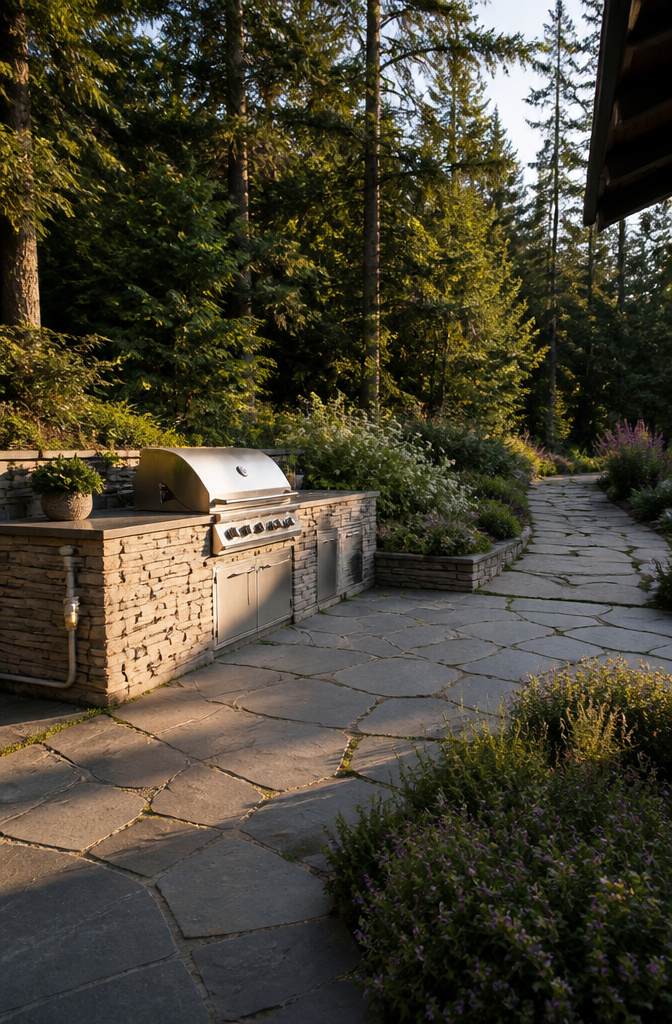
Built-in grills run on propane or natural gas, and the choice between them is not one you can reverse later without buying a new grill. Natural gas requires a fixed line run by a licensed plumber from your house supply to the island. The grill stays where you put it, and you never swap tanks. Propane needs a hidden compartment sized for the tank, plus room to swap it when empty, and a regulator that matches the grill’s pressure rating.
Some models ship as propane-only or natural gas-only, and the manufacturer does not offer a conversion kit. Others can convert, but the kit costs extra and the warranty may require a professional to install it. Either way, the fuel type decides your island layout before you cut a single piece of stone or frame an opening. A natural gas line stubbed in the wrong spot, or a propane compartment too shallow for the regulator, and you are rebuilding, not adjusting.
Decide the fuel before you build the island. The plumber’s bid and the tank compartment dimensions should sit in your plan on day one, not after the grill arrives.
Warranty and Manufacturer Support
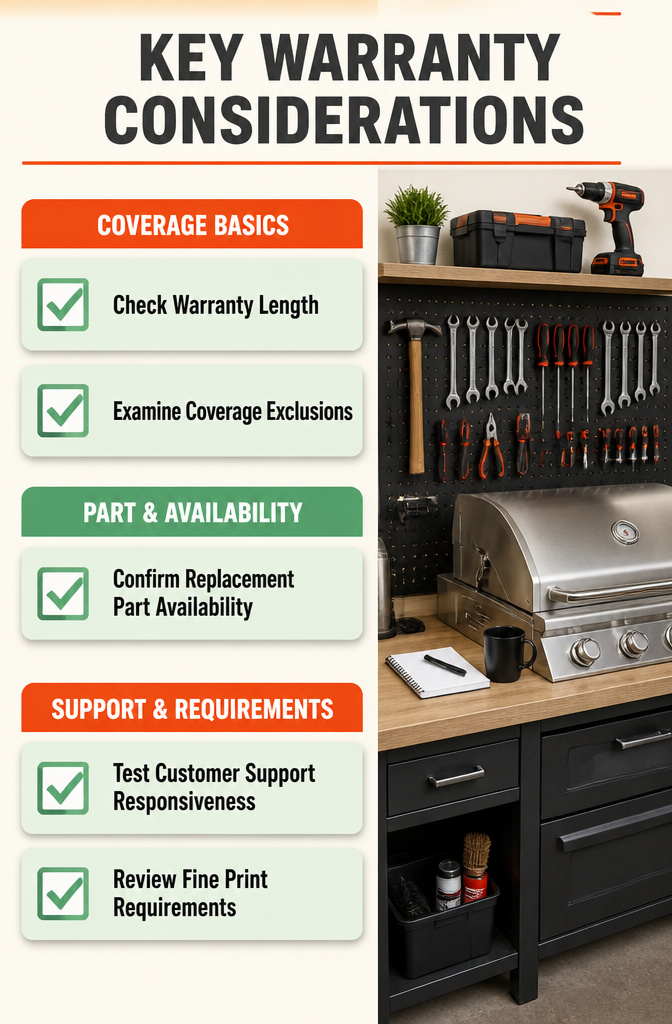
A ten-year warranty on the firebox sounds generous until you read the rider that excludes rust-through after the first year. Most outdoor built in bbq makers split coverage this way: the heavy cast housing gets the long promise while burners, ignition modules, and cooking grates carry their own shorter terms, often two to five years. The gap matters because grates and burners take the direct abuse.
What convinced me, reading through the stack of these policies, is that warranty length tracks replacement cost, not durability. A lifetime pledge on a part that corrodes predictably in a coastal climate or a snowy zone is a bet that you will move or sell before you file. The fine print usually demands original-owner registration, professional installation records, and annual cleaning receipts. Skip one step and the lifetime becomes nothing.
Test the support before you buy. Call the number at 7 p.m. on a Saturday and see if a human answers, or if the line rolls to a dealer who has never seen your model. Ask whether they stock replacement burners for a grill they sold eight years ago. The answer tells you whether the warranty is a working tool or a sales sticker.
Outdoor Kitchen Options and Customization

Modular outdoor kitchen systems revolve around a few core pieces that extend what the grill itself can do. Side burners, refrigeration drawers, and storage modules are the usual starting points, and some brands build entire ecosystems so every panel and handle lines up without the buyer having to think about it.
Weber approaches this with a mix-and-match system: refrigerator modules, side burner modules, double drawer modules, door modules, corner modules, even a washing module with a sink and tap. The idea is that you plan step by step and combine any sets to match your layout. That flexibility sounds ideal until you start matching widths and depths across years of production and realize the "unlimited possibilities" marketing does not guarantee every module slots together cleanly.
Bull Outdoor Products, which pioneered the outdoor kitchen island concept, takes a more integrated route. Their DuraBull collection specifically combines refrigeration and grilling in pre-designed configurations rather than leaving the pairing to the buyer. They also offer custom BBQ kitchen islands with bars, sinks, and fire pits built as complete units. The tradeoff is real: Weber’s modular approach lets you add one piece at a time, but the finished look depends on your patience for alignment. Bull’s custom configurations cost more upfront and lock you into their ecosystem, yet the result avoids the mismatched panels that make some outdoor kitchens look assembled rather than designed.
For a small patio or balcony gardener already stretching a $500–800 annual budget, the question is whether you need the ecosystem at all. A side burner handles sauces and sides without running inside, and a refrigerator drawer keeps prep close. Beyond that, each added module is another point where water, grease, and winter weather can find a gap.
Installation and What I Learned the Hard Way
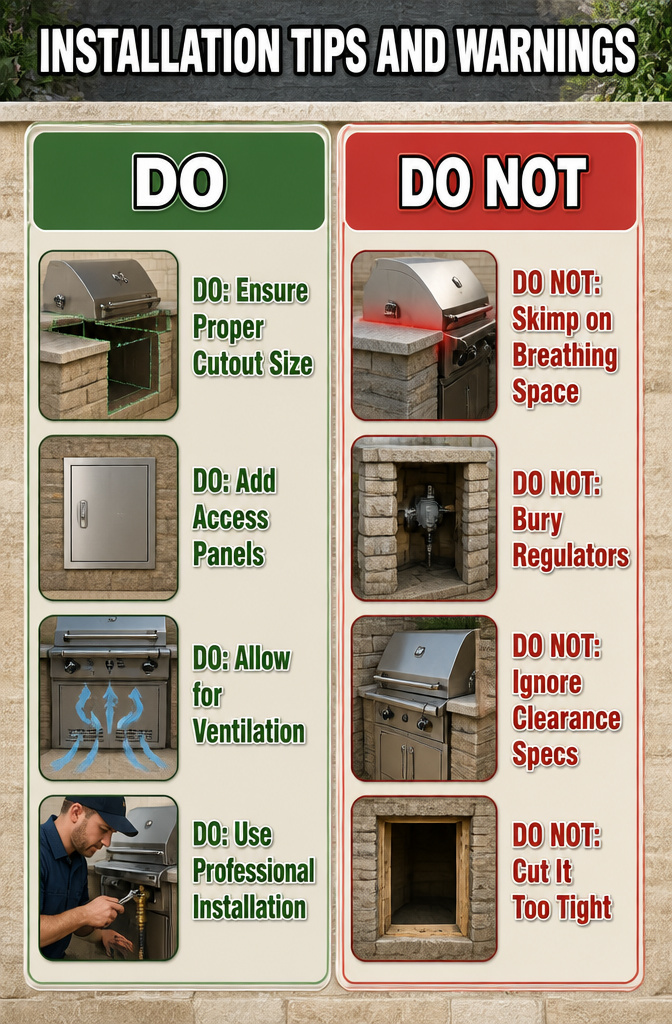
The gap between a grill’s specified cutout and what the island builder actually leaves is where most outdoor built in bbq installations start going wrong. I watched a contractor frame a 36-inch opening for a 36-inch grill, then skin it with stone that stole another inch all around. The unit dropped in too tight, the lid scraped the counter edge, and the heat shield ended up closer to combustible material than the manufacturer allowed. Cutout dimensions need breathing room for finish materials, for thermal expansion, and for the simple reality that stone and stucco do not land exactly where the drawing says.
Access panels are the other detail that looks like an afterthought until you need one. Regulators for natural gas hookups require periodic inspection and replacement, and burying one behind a permanent stone face means cutting masonry later or leaving it unreachable. The builder who did my neighbor’s island skipped the panel entirely; when the regulator failed two seasons in, the repair required dismantling a section of counter.
Ventilation matters more with gas than charcoal because the risk is invisible. Manufacturer clearance specs exist for airflow, not just for fire safety: a grill choked on its own exhaust runs hotter on one side, stresses the burner, and cooks unevenly. The island needs to breathe so the grill can breathe. Professional installation is not about avoiding work yourself; it is about having someone whose license depends on getting the gas connection and the airflow right.
Price and Long-Term Value
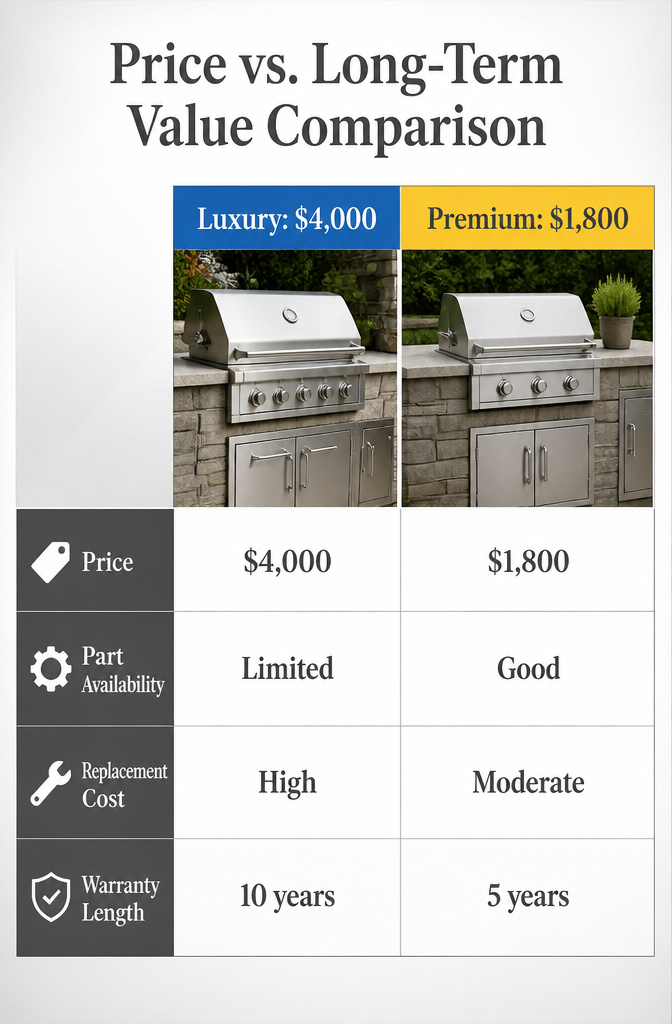
A $4,000 grill that cannot source replacement burners five years later is not a luxury purchase; it is a very expensive mistake. That is the split I keep coming back to when I weigh price against long-term value in an outdoor built in bbq.
The math is straightforward once you look past the sticker. A mid-tier grill at $1,800 with available parts and a ten-year track record of holding up often costs less per season than a name-brand unit at twice the price that needs full replacement when the proprietary ignition system fails. Depreciation hits hardest on models whose components are locked behind custom fittings. When the manufacturer discontinues a bracket or a burner shape, your island cutout becomes a very specific-sized hole with nothing left to fill it.
The sources I trust on this break value into three brackets: luxury, premium, and best value. What surprised me, reading across them, is how little correlation exists between bracket and actual longevity. Some best-value brands outlast premium competitors specifically because they standardize their parts. A grill earns its cost when you can replace the element that breaks instead of the whole unit.
Replacement part availability matters more than warranty length, because a twenty-year warranty on a defunct part number is just paperwork. Check whether burners, heat plates, and ignition modules are stocked by third-party suppliers before you buy. If only the manufacturer sells them and the company is two years old, that is a bet, not a plan.
Frequently Asked Questions
What are built-in grills?
Built-in grills are permanently installed into outdoor kitchen islands, either prefab or custom-built, and fire up with a knob twist or button push. They run on propane or natural gas, and unlike freestanding units they become a fixed part of your patio or deck layout. The installation is meant to be permanent, so the fuel choice and cutout dimensions need to be right the first time.
How do I choose the right built-in gas grill?
Start with fuel type, since natural gas needs a fixed line and propane needs a hidden tank compartment, and switching later usually means buying a new grill. Match the cooking surface to your actual guest list, about 100 square inches of primary grate per person, and check that the cutout leaves room for finish materials and thermal expansion. Then weigh burner quality and parts availability against the warranty length; a long promise means little if the company does not stock replacement burners five years out.